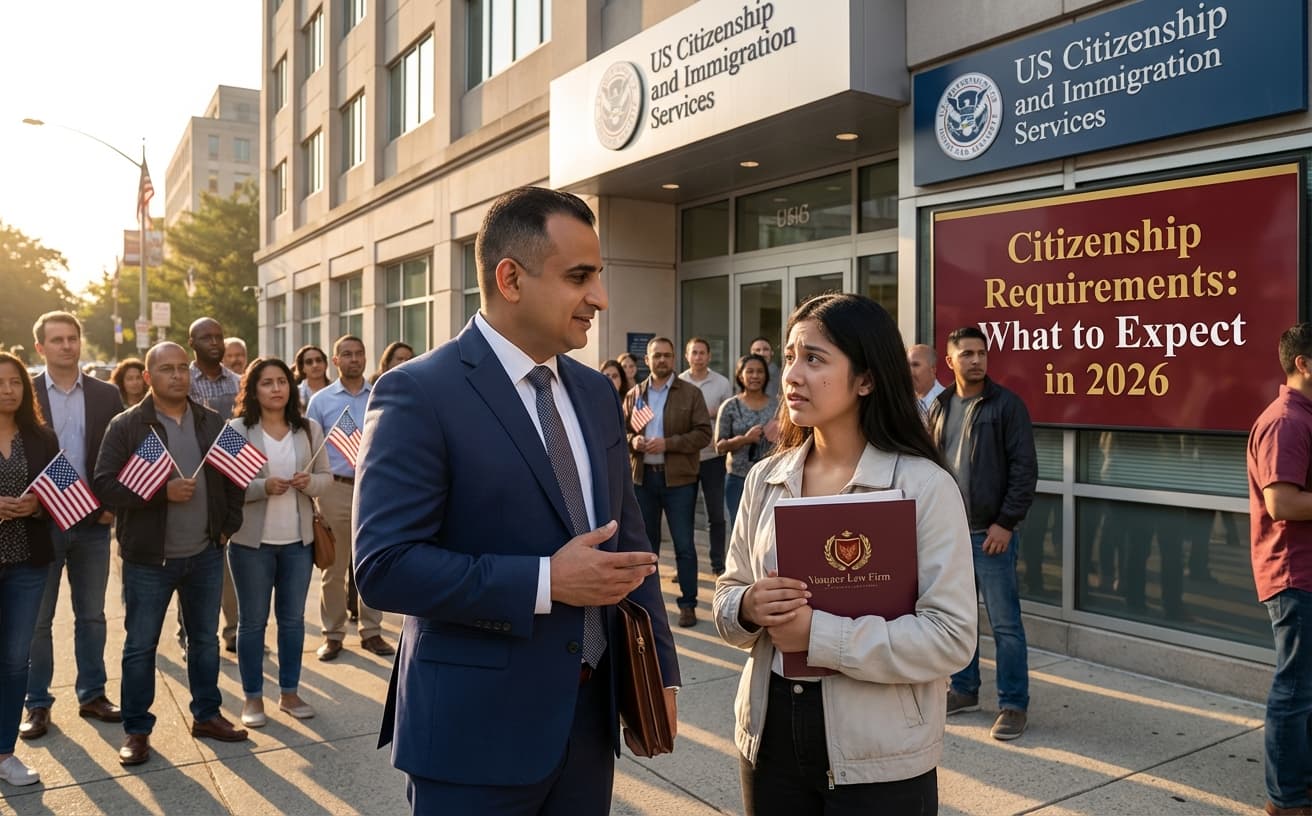
What You Need to Know About Citizenship Requirements in 2026
Understand U.S. citizenship requirements in 2026, including eligibility and the naturalization process. Contact Vasquez Law Firm for a free immigration consultation.
Published on March 4, 2026
Talk to an immigration attorney
Free call. A clear plan for your case.
Free & confidential · Se habla espanol · 24/7
Have questions? Talk to an attorney - free evaluation.
Call 1-844-967-3536Free Tool
Check Your USCIS Case Status Now
Enter your receipt number - get the official USCIS status in English or Spanish. No registration.
What You Need to Know About Citizenship Requirements in 2026
Navigating the path to U.S. citizenship can be a complex journey, filled with specific legal hurdles and extensive documentation. As of 2026, understanding the current citizenship requirements is crucial for anyone aspiring to become a naturalized citizen. This guide will help you understand the eligibility criteria, application process, and what to expect during your naturalization journey. Whether you reside in Raleigh, North Carolina, Florida, or anywhere else nationwide, Vasquez Law Firm is here to provide dedicated support.
Need help with your citizenship application? Our experienced immigration attorneys are ready to fight for you. Se Habla Español.
Schedule Your Free Case Evaluation
Or call us now: 1-844-967-3536
Quick Answer
To become a U.S. citizen through naturalization in 2026, you generally must be at least 18 years old, be a lawful permanent resident (Green Card holder) for a specific period, demonstrate continuous residence and physical presence in the U.S., show good moral character, and pass English and civics tests. Additional citizenship requirements may apply based on your specific circumstances.
- Be 18 years or older.
- Hold a Green Card for at least 3-5 years.
- Demonstrate continuous residence and physical presence.
- Show good moral character.
- Pass English and civics exams.
- Be willing to take an Oath of Allegiance.
Understanding U.S. Citizenship Requirements
U.S. citizenship is a significant milestone, offering numerous rights and responsibilities. The primary path to becoming a U.S. citizen for most immigrants is through naturalization. This process is governed by federal law, specifically the Immigration and Nationality Act (INA), and requires applicants to meet stringent criteria established by U.S. Citizenship and Immigration Services (USCIS).
The core citizenship requirements revolve around your immigration status, your time spent in the United States, and your commitment to the country's principles. These requirements are applied uniformly across the nation, whether you are applying from Raleigh, North Carolina, or Miami, Florida. Understanding these foundational elements is the first step toward a successful application for naturalization.
It's important to note that while the federal requirements are standard, the application process can be intricate, often benefiting from the guidance of an experienced immigration attorney. Attorney Vasquez at Vasquez Law Firm has over 15 years of experience helping individuals navigate these complex legal waters, ensuring clients are well-prepared for each stage of their citizenship journey.
The Five Key Requirements to Become a U.S. Citizen
Many aspiring citizens often ask about the essential criteria for naturalization. While the full list of citizenship requirements is extensive, five fundamental conditions form the backbone of eligibility. First, you must be a lawful permanent resident (Green Card holder) for a specific period, usually five years, or three years if married to a U.S. citizen. Second, you must meet certain age requirements, typically being 18 years or older at the time of filing Form N-400, Application for Naturalization.
Third, applicants must demonstrate continuous residence and physical presence in the U.S. for the required statutory period. This means not taking extended trips outside the country that could break your continuous residence. Fourth, you must show good moral character for the statutory period leading up to your application. This involves having a clean criminal record and adhering to community standards. Finally, applicants must demonstrate an attachment to the principles of the U.S. Constitution and be willing to take an Oath of Allegiance. This is often assessed through the civics test and interview.
Step-by-Step: The Naturalization Process
The journey to U.S. citizenship involves several distinct stages, each requiring careful attention to detail and timely action. Understanding these steps can help demystify the process and prepare you for what lies ahead. From filing your application to attending your interview, each stage is critical.
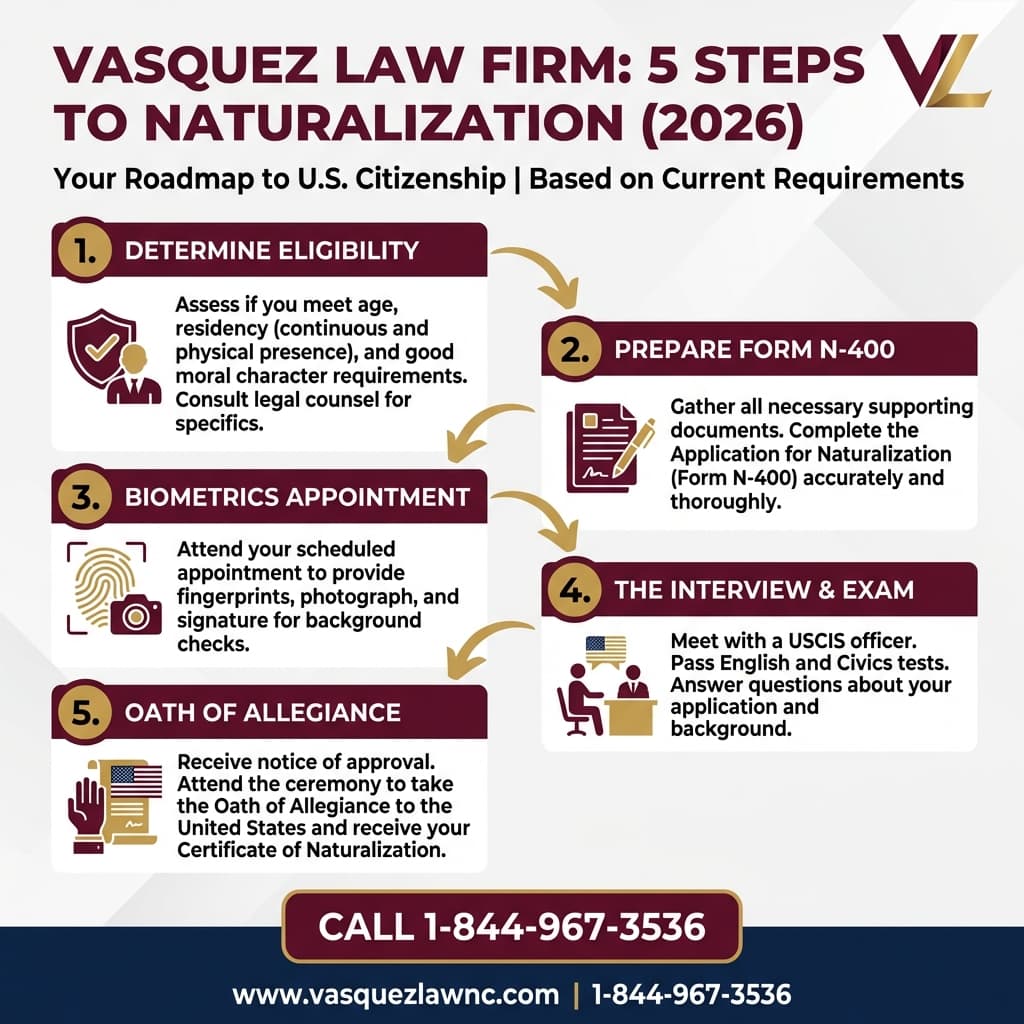
- Determine Eligibility: Before anything else, ensure you meet all the basic citizenship requirements, including age, lawful permanent residency period, continuous residence, and good moral character. Use the USCIS website or consult an attorney to confirm your eligibility.
- Prepare and File Form N-400: Complete Form N-400, Application for Naturalization, accurately and thoroughly. Gather all necessary supporting documents, such as your Green Card, marriage certificate (if applicable), and travel history. Pay the required filing fees.
- Attend Biometrics Appointment: After filing, USCIS will send you an appointment notice for a biometrics collection. This involves fingerprinting, photographs, and a signature, used for background checks.
- Attend the Naturalization Interview: You will be scheduled for an interview with a USCIS officer. During this interview, the officer will review your N-400 application, test your English proficiency (reading, writing, and speaking), and administer the civics test.
- Receive a Decision: After the interview, USCIS will issue a decision. If approved, you will receive a notice for the Oath of Allegiance ceremony. In some cases, a decision may be delayed for further review.
- Take the Oath of Allegiance: This is the final step. At the ceremony, you will take an oath to the United States, officially becoming a U.S. citizen. You will then receive your Certificate of Naturalization.
Each of these steps requires precision. Mistakes can lead to delays or even denials. Vasquez Law Firm can assist you through every stage, ensuring your application is strong and complete.
Required Documents for U.S. Citizenship Application
When applying for naturalization, having all the correct documents is paramount. A missing or incorrect document can cause significant delays or even lead to a request for evidence (RFE) or a denial. This checklist covers the most common documents required for U.S. citizenship requirements, but remember that individual cases may require additional specific items.
- Form N-400, Application for Naturalization: The completed and signed application form.
- Photocopies of Permanent Resident Card (Green Card): Both front and back.
- Photocopies of State-Issued Identification: Driver's license or state ID.
- Photocopies of Marriage Certificate and Divorce Decrees (if applicable): If you are applying based on marriage to a U.S. citizen or have been married previously.
- Photocopies of Travel Records: All passports, travel itineraries, and entry/exit stamps for the past five years (or three years if married to a U.S. citizen).
- Certified Court Documents: If you have ever been arrested, cited, or convicted of any crime, regardless of the outcome, you must provide certified court dispositions.
- IRS Tax Transcripts: For the last five years (or three years if applicable), demonstrating compliance with tax obligations.
- Proof of Selective Service Registration: If you are a male who lived in the U.S. between ages 18 and 26.
- Two Passport-Style Photos: Meeting USCIS specifications.
Organizing these documents can be overwhelming. Our firm can help you compile a comprehensive packet, ensuring every piece of evidence supports your eligibility.
Timeline: What to Expect for Naturalization in 2026
The naturalization process timeline can vary significantly based on factors such as the USCIS service center processing your application, the complexity of your case, and current backlogs. While it's difficult to provide an exact duration, understanding the general stages can help manage expectations for citizenship requirements.
- Form N-400 Filing to Biometrics Appointment: Typically 1-3 months. USCIS will send a receipt notice, then a biometrics appointment notice.
- Biometrics Appointment to Interview Scheduling: This stage can take anywhere from 6 to 12 months, sometimes longer. USCIS conducts background checks during this period.
- Interview to Decision: In many cases, a decision is made at the interview or within a few weeks. However, some complex cases may require additional documentation or an extended review, potentially taking several months.
- Decision to Oath Ceremony: If approved, the Oath of Allegiance ceremony is usually scheduled within 1-2 months after your interview.
Overall, the entire naturalization process, from filing N-400 to taking the Oath, often ranges from 8 to 18 months, but could extend further. Staying informed about USCIS processing times and having legal counsel can help you navigate potential delays effectively.
Costs and Fees: What Impacts the Price of Citizenship
Pursuing U.S. citizenship involves several costs, primarily associated with filing fees and, for many, legal assistance. Understanding these expenses upfront is important for financial planning for citizenship requirements.
- USCIS Filing Fee for Form N-400: As of 2026, the filing fee for Form N-400 is typically $725, which includes the biometrics service fee. This fee is subject to change, so always verify the current amount on the USCIS website before filing.
- Attorney Fees: Legal fees for immigration attorneys vary widely based on experience, location (e.g., Raleigh, NC, vs. Miami, FL), and the complexity of your case. While not mandatory, hiring an attorney can significantly improve your chances of success and reduce stress by ensuring all citizenship requirements are met.
- Document Translation Fees: If any of your supporting documents are not in English, you will need to pay for certified translations.
- Medical Examination Fees: In some rare cases, or if you have certain medical conditions, you might need a medical exam, which incurs additional costs.
- Travel Expenses: For biometrics appointments, interviews, and oath ceremonies, especially if you live far from a USCIS office.
Fee waivers may be available for certain low-income applicants. Consulting with Vasquez Law Firm can help you understand all potential costs and explore any available options for fee reductions.
Common Mistakes and How to Avoid Them
Even minor errors in the naturalization process can lead to significant setbacks. Avoiding these common pitfalls is essential for a smooth application process and meeting citizenship requirements.
- Incomplete or Inaccurate Form N-400: Failing to answer all questions truthfully and completely, or making errors in dates and addresses. Fix: Double-check every field, cross-reference with previous applications, and seek legal review.
- Insufficient Supporting Documentation: Not providing all required evidence or submitting uncertified copies when originals or certified copies are needed. Fix: Create a comprehensive checklist and ensure all documents are properly prepared.
- Failing to Meet Continuous Residence or Physical Presence: Taking long trips outside the U.S. that break your continuous residence period without proper planning. Fix: Track your travel history meticulously and consult an attorney about potential impacts of travel.
- Issues with Good Moral Character: Having a criminal record, failing to pay taxes, or other actions that demonstrate a lack of good moral character. Fix: Address any past issues transparently, provide all court dispositions, and consult an attorney about rehabilitation.
- Poor English Proficiency or Civics Knowledge: Underestimating the difficulty of the English and civics tests. Fix: Study diligently using official USCIS materials, practice speaking English, and consider taking classes.
- Missing USCIS Appointments: Failing to attend biometrics or interview appointments without proper rescheduling. Fix: Keep track of all notices, respond promptly to USCIS communications, and inform your attorney of any changes.
- Not Disclosing All Information: Hiding information about past arrests, marriages, or other significant life events. Fix: Be completely honest and transparent with USCIS; omissions can lead to severe penalties.
If you only remember one thing: Honesty and thoroughness are your greatest assets throughout the naturalization process. Always provide accurate information and all required documentation.
Citizenship Requirements: Nationwide Application
U.S. citizenship is a federal matter, meaning the core citizenship requirements and application process are the same across all states, including North Carolina and Florida. There are no state-specific variations in eligibility criteria for naturalization. USCIS, a federal agency, manages all applications for citizenship nationwide.
North Carolina, Florida, and Nationwide Considerations
While the laws are federal, the practical experience of applying for citizenship can vary slightly depending on your local USCIS field office. For instance, processing times might differ between the Raleigh, NC, field office and the Miami, FL, field office. However, the legal standards you must meet remain consistent.
Regardless of whether you are in North Carolina, Florida, or any other state, the principles of continuous residence, physical presence, good moral character, and English/civics proficiency are uniformly applied. Vasquez Law Firm serves clients across both North Carolina and Florida for immigration matters, offering localized support within the federal framework. Our attorneys are familiar with the nuances of various USCIS field offices and can provide tailored guidance.
When to Call a Lawyer Now for Citizenship Requirements
While some individuals successfully navigate the naturalization process independently, certain situations strongly warrant the immediate assistance of an experienced immigration attorney. Don't hesitate to seek legal counsel if any of these triggers apply to you regarding citizenship requirements.
- You have a criminal record, even if it seems minor or was expunged.
- You have previously been denied a Green Card or other immigration benefits.
- You have spent significant time outside the U.S. during your permanent residency.
- You have received a Request for Evidence (RFE) or Notice of Intent to Deny (NOID) from USCIS.
- You have concerns about your English proficiency or ability to pass the civics test.
- You have multiple marriages or divorces, or complex family situations.
- You have failed to pay taxes or have other financial issues that could impact your good moral character assessment.
- You were placed in deportation or removal proceedings at any point.
- You feel overwhelmed or confused by the application forms and supporting documents.
- You simply want to ensure your application is as strong as possible to avoid delays or denials.
An attorney can identify potential issues early, help you gather necessary evidence, and represent you during interviews, significantly increasing your chances of a favorable outcome. Vasquez Law Firm offers comprehensive support for all aspects of the naturalization process.
About Vasquez Law Firm
At Vasquez Law Firm, we combine compassion with aggressive representation. Our motto "Yo Peleo" (I Fight) reflects our commitment to standing up for your rights. We understand the profound impact immigration matters have on individuals and families, which is why we approach every case with dedication and personalized attention.
- Bilingual Support: Se Habla Español - our team is fully bilingual and ready to communicate effectively in both English and Spanish, ensuring you fully understand your case.
- Service Areas: We proudly serve clients across North Carolina, Florida, and provide nationwide immigration services, bringing our expertise directly to you.
- Experience: With over 15 years of helping clients navigate complex legal matters, Attorney Vasquez has a proven track record of achieving favorable outcomes.
- Results: Our firm has handled thousands of successful cases across multiple practice areas, from immigration to personal injury and criminal defense.
Attorney Trust and Experience
Attorney Vasquez holds a Juris Doctor degree and is admitted to practice in both the North Carolina State Bar and Florida Bar. With over 15 years of dedicated legal experience, he has built a reputation for providing personalized attention and achieving favorable outcomes for his clients. He is committed to guiding individuals through the intricate legal system with clarity and confidence, especially when it comes to crucial steps like meeting U.S. citizenship requirements.
Don't face your legal challenges alone. Our team is here to help you every step of the way, providing expert guidance on citizenship requirements and more.
Call today: 1-844-967-3536 | Se Habla Español
Frequently Asked Questions
What are the new requirements to become a U.S. citizen in 2026?
As of 2026, the fundamental citizenship requirements remain largely consistent: age 18+, lawful permanent resident status for 3-5 years, continuous residence, physical presence, good moral character, English proficiency, and civics knowledge. While specific policy adjustments or fee changes may occur, the core statutory eligibility criteria have not undergone significant federal reform this year. Always check the USCIS website for the most current updates on any changes to forms or procedures.
What documents are needed for citizenship?
Key documents for naturalization include your Green Card, state ID, passports, marriage/divorce certificates (if applicable), certified court dispositions for any arrests, and tax transcripts. You'll also need two passport-style photos and your completed Form N-400. Depending on your specific case, additional evidence such as Selective Service registration proof or other immigration documents may be required. A comprehensive review by an attorney can ensure all necessary paperwork is included.
What are the five requirements to become a U.S. citizen?
The five primary citizenship requirements are: 1) Being a lawful permanent resident for the required period (usually 5 years, or 3 years if married to a U.S. citizen); 2) Being at least 18 years old; 3) Demonstrating continuous residence and physical presence in the U.S.; 4) Exhibiting good moral character; and 5) Passing the English and civics tests, along with taking an Oath of Allegiance to the U.S.
How long does it take to get citizenship after filing N-400?
The total processing time for naturalization after filing Form N-400 typically ranges from 8 to 18 months, though this can vary significantly. Factors influencing this timeline include the specific USCIS field office processing your application, current backlogs, and the complexity of your individual case. It involves biometrics, an interview, and finally, the Oath of Allegiance ceremony. You can monitor average processing times on the USCIS website.
Can I apply for U.S. citizenship if I have a criminal record?
Having a criminal record can complicate your eligibility for U.S. citizenship and may impact the good moral character requirement. The type, severity, and recency of the offense are crucial factors. Certain crimes can permanently bar you from naturalization, while others may require a waiting period. It is absolutely critical to consult with an experienced immigration attorney, like those at Vasquez Law Firm, before filing if you have any criminal history.
What is the English and civics test for naturalization?
During your naturalization interview, you will undergo an English test, assessing your ability to read, write, and speak basic English. You'll also take a civics test, requiring you to answer a certain number of questions correctly about U.S. history and government from a predetermined list of 100 questions. Exceptions to these tests exist for certain age groups or individuals with qualifying disabilities, but generally, they are mandatory citizenship requirements.
What is continuous residence and physical presence for naturalization?
Continuous residence means maintaining your home in the U.S. for the statutory period (usually 5 years, or 3 for spouses of U.S. citizens) without extended absences. Physical presence refers to the actual time you have spent in the U.S. during that period, requiring you to be physically present for at least half of the statutory period. Long trips outside the U.S. can disrupt continuous residence, so careful tracking of travel is essential for citizenship requirements.
Do I need an attorney to apply for U.S. citizenship?
While not legally required, hiring an immigration attorney is highly recommended, especially if your case has complexities such as a criminal record, extensive travel, or previous immigration denials. An attorney can ensure all citizenship requirements are met, help you prepare for the interview, and represent you in communications with USCIS, significantly increasing your chances of a successful outcome and reducing stress throughout the process. Vasquez Law Firm offers professional legal assistance.
What happens if my citizenship application is denied?
If your naturalization application is denied, you will receive a written explanation for the denial. You may have the option to appeal the decision by filing Form N-336, Request for a Hearing on a Decision in Naturalization Proceedings, within a specific timeframe. It's crucial to consult with an immigration attorney immediately upon denial to understand your options, address the reasons for denial, and determine the best course of action for reconsideration or reapplication.
Can I lose my U.S. citizenship after naturalization?
U.S. citizenship acquired through naturalization is generally permanent. However, it can be revoked, a process known as denaturalization, under very specific and serious circumstances. This typically occurs if citizenship was obtained fraudulently or through misrepresentation, or if an individual joined certain extremist groups. Denaturalization is rare and involves complex legal proceedings. It is distinct from renouncing citizenship voluntarily. Always adhere to legal and ethical standards throughout your immigration journey.
Sources and References
- U.S. Citizenship and Immigration Services (USCIS)
- Executive Office for Immigration Review (EOIR)
- 8 U.S. Code § 1427 - Requirements of naturalization
Ready to take the next step? Contact Vasquez Law Firm today for a free, confidential consultation. We're committed to fighting for your rights and achieving the best possible outcome for your case, guiding you through all citizenship requirements.
Start Your Free Case Evaluation Now
Call us: 1-844-967-3536
Se Habla Español - Estamos aquí para ayudarle.
William Vasquez
Founder & CEO, Vasquez Law Firm, PLLC
William Vasquez is the founder and CEO of Vasquez Law Firm, PLLC, a results-driven firm specializing in immigration, criminal defense, personal injury, and workers' compensation. A U.S. Air Force veteran and recipient of the Joint Service Achievement Medal, William is dedicated to fiercely fighting for his clients' rights.
Related Legal Services
Need legal help? Learn more about our immigration law practice, or contact us for a free evaluation.
You can also visit North Carolina immigration lawyers for more information.