How Asylum Processing Works for NC and FL Applicants in 2026
Wondering about asylum processing times and rules in 2026? Learn key steps, timelines, and your rights. Contact Vasquez Law Firm for a free evaluation.
Published on June 6, 2026
Talk to an immigration attorney
Free call. A clear plan for your case.
Free & confidential · Se habla espanol · 24/7
Have questions? Talk to an attorney - free evaluation.
Call 1-844-967-3536Worried how the latest immigration news affects you?
Schedule a confidential case review with an immigration attorney - know exactly where you stand.
How Asylum Processing Works for NC and FL Applicants in 2026
Asylum processing remains a critical step for many immigrants arriving in the United States seeking protection. In 2026, understanding asylum processing can help you prepare and protect your rights. This guide explains how the U.S. asylum process works, what you should expect about timelines, and the key legal requirements for asylum seekers in North Carolina and Orlando, Florida. Whether you are applying affirmatively or filing a defensive asylum claim, knowing the stages and common hurdles can make a difference.
Need help with your case? Our experienced attorneys are ready to fight for you. Se Habla Español.
Or call us now: 1-844-967-3536
Quick Answer
Asylum processing in the U.S. can take from 1 to 3 years depending on your case type and location. Applications undergo multiple steps including interviews, background checks, and possible court hearings. Preparing the correct documents and understanding the affirmative versus defensive process is key to protecting your rights.
- Processing times vary by USCIS service center
- Defensive asylum takes place in immigration court
- Applicants must prove persecution risk on 5 protected grounds
- Working with an experienced NC or Orlando immigration lawyer helps
- Federal court orders in 2026 may speed some cases
Understanding Asylum Processing
Imagine arriving in the U.S. seeking safety. The asylum processing system is designed to evaluate your eligibility to remain legally and receive protection. In 2026, asylum processing includes two main types: affirmative and defensive. Affirmative asylum applicants request protection through U.S. Citizenship and Immigration Services (USCIS) voluntarily, without pending removal proceedings. Defensive asylum applicants request asylum as a defense in deportation proceedings before immigration judges.
USCIS's role involves conducting initial interviews, background checks, and deciding whether to grant asylum or refer the case to immigration court. The Executive Office for Immigration Review (EOIR) handles defensive asylum cases, which can be lengthier due to legal hearings and backlogs.
North Carolina and Orlando, FL applicants may find cases handled by USCIS Field Offices in Charlotte or Miami and immigration courts in Atlanta or Tampa. Each office has specific local procedures and varied processing times. In all cases, the goal is to assess if the applicant’s fear of persecution meets federal asylum laws under INA § 208.
Because asylum is a complex federal process, local knowledge of these offices and their typical wait times is crucial. Vasquez Law Firm’s immigration attorneys in Raleigh and Orlando understand these nuances and can help build strong cases.
Learn more about our immigration legal services today.
Step-by-Step Asylum Process
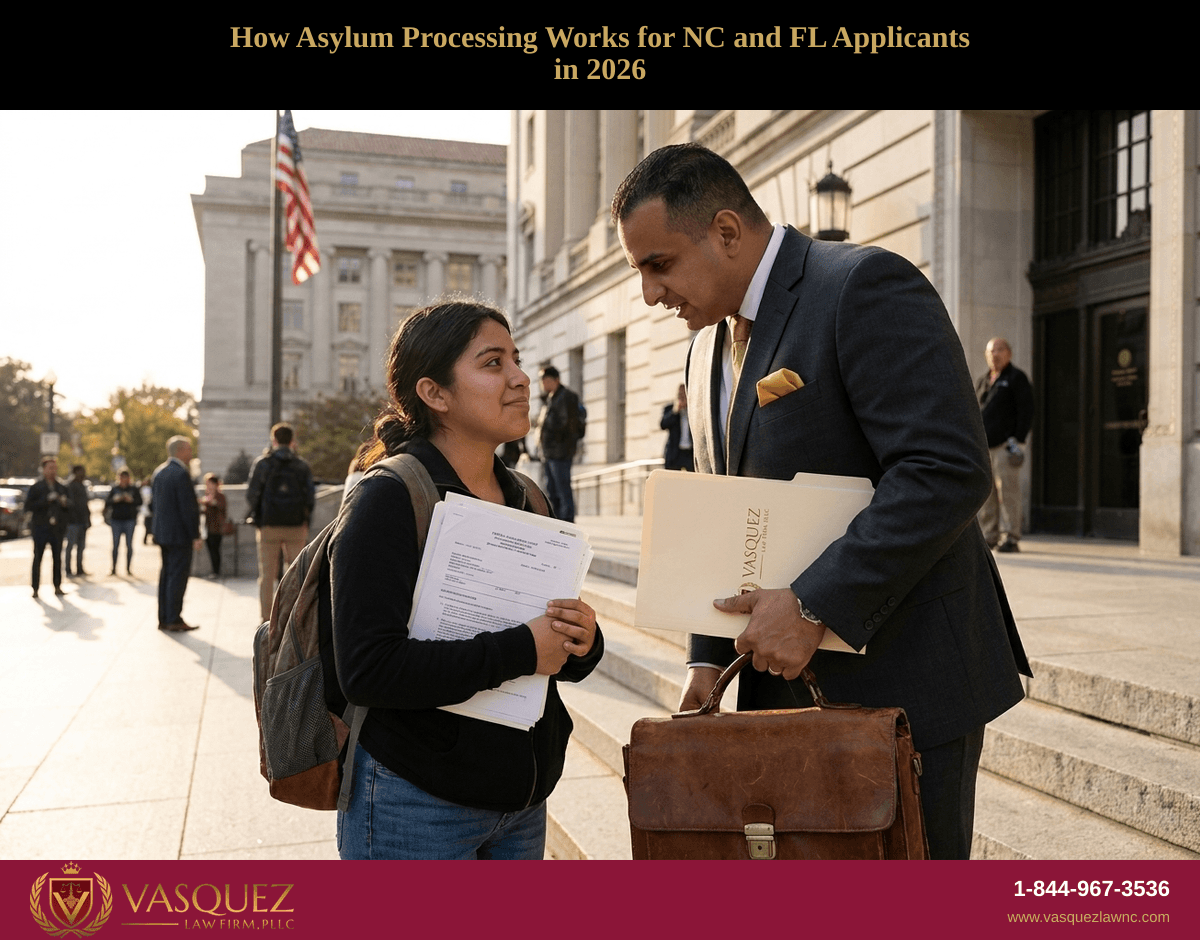
1. Arrival and Application
If you arrive in the U.S. and want asylum, you must file Form I-589 within one year of arrival unless exceptions apply. This form starts affirmative asylum processing with USCIS.
2. USCIS Interview
USCIS schedules an interview where an asylum officer evaluates your claim. The officer focuses on your credibility and the validity of the persecution grounds you claim. Evidence and testimony are critical at this step.
3. Decision or Referral to Court
If USCIS denies your claim and you don’t have lawful status, they may refer your case to immigration court, beginning a defensive asylum process. If approved, you gain asylum status and rights to work and live in the U.S.
4. Immigration Court Hearings
In court, a judge re-examines your claim under removal proceedings. This process can extend months or years due to court backlogs.
5. Final Decision
The judge issues a decision granting or denying asylum. Denials may be appealed. Approval allows you to apply for a green card after one year.
Documents and Evidence Checklist
- Completed Form I-589 (Application for Asylum and for Withholding of Removal)
- Personal declaration describing persecution and reasons for fear
- Government or country condition reports supporting your claim
- Medical or psychological reports if available
- Birth certificates, identity documents, passports
- Letters from witnesses or community members corroborating your story
- Police or legal reports if you faced harm or threats
- Evidence of membership in particular social groups or political organizations
Timeline and What to Expect
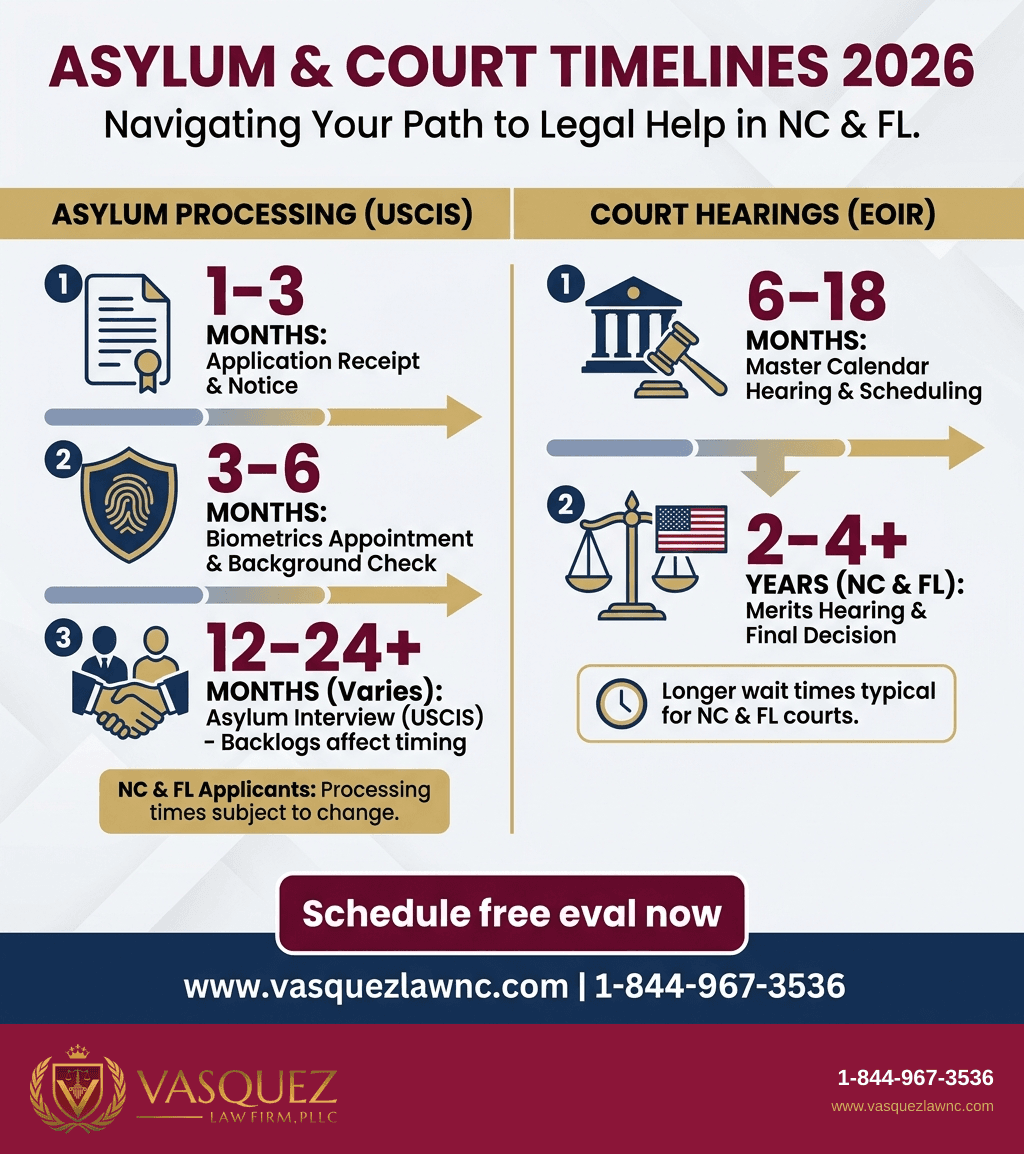
- Initial Filing: File Form I-589 within 1 year of arrival. Late filing requires exception approvals.
- USCIS Interview: Typically scheduled 12-24 months after filing, but times vary by field office. Check USCIS processing times for updates.
- Referral to Immigration Court: If denied or case referred, hearings may begin 6-18 months after referral but court backlogs can delay.
- Final Decision: After hearings, decisions may take weeks or months.
- Renewals: Employment authorization and status renewals happen on separate schedules, typically annually.
Costs and Fees for Asylum Applicants
- There is no fee to file an initial asylum application (Form I-589).
- Employment authorization applications (Form I-765) may have fees unless fee waiver requested.
- Costs arise from legal representation, obtaining supporting evidence, translations, and court fees if applicable.
- Legal help can reduce errors risking costly delays or denials.
- Consultations and assistance at Vasquez Law Firm in Raleigh and Orlando are offered with clear pricing up front.
Common Mistakes to Avoid in Asylum Cases
- Missing the one-year filing deadline without qualifying exceptions
- Failing to include detailed evidence and personal statements
- Not preparing for interviews or court hearings adequately
- Providing inconsistent or incomplete information
- Ignoring updated country conditions that affect your claim
- Attempting self-representation without understanding complex laws
- Failing to respond timely to USCIS or court requests
If you only remember one thing: timely and thorough preparation supported by skilled legal advice greatly improves your chance for approval.
Jurisdiction Notes for NC, FL, and Nationwide
North Carolina Notes
NC-based asylum seekers may file applications with USCIS offices like Charlotte and attend immigration court hearings in the Atlanta district. Local legal resources affect case management and timing. Vasquez Law Firm in Raleigh offers representation backed by local immigration court experience.
Orlando, FL Notes
In Orlando, Florida, applicants work mostly with USCIS Miami Field Office and immigration courts in Tampa or Miami. Processing speeds vary, and court backlogs remain an issue. Vasquez Law Firm’s Orlando office helps clients navigate these procedural differences.
Nationwide Concepts
Regardless of location, asylum processing is governed by federal laws such as INA § 208 and regulations in 8 C.F.R. Part 208. National policy changes, like the Asylum Processing Rule, continue impacting timelines and eligibility criteria. Stay updated with reliable sources like USCIS and EOIR announcements.
When to Call an Asylum Lawyer
- If you are approaching or past the one-year filing deadline
- When preparing for USCIS asylum interviews or court hearings
- If your asylum claim was denied by USCIS or immigration court
- If you face complex situations such as prior deportations or criminal charges
- When needing help gathering or translating evidence
- If you want to understand your rights during immigration enforcement encounters
- When federal court orders affect your pending asylum case
- If you plan to apply for other immigration benefits after asylum
About Vasquez Law Firm
At Vasquez Law Firm, we combine compassion with aggressive representation. Our motto "Yo Peleo®" (I Fight) reflects our commitment to standing up for your rights.
- Bilingual Support: Se Habla Español — Spanish-speaking attorneys and staff available
- Service Areas: North Carolina, Florida, and nationwide immigration services
- Experience: Over 30 years helping clients navigate complex legal matters
- Results: Thousands of successful cases across multiple practice areas
Attorney Trust and Experience
William J. Vásquez is admitted to the North Carolina State Bar (2011) and to the U.S. Courts of Appeals for the 4th, 5th, and 11th Circuits. Florida-jurisdiction matters at the firm are handled by Florida Bar attorney Harold Estrada-Rodriguez (FL Bar No. 1041171). The firm has provided dedicated legal representation since 2011, with personalized attention to each client's case.
Don't wait to get the help you deserve. Call us now for immediate assistance.
Se Habla Español
Frequently Asked Questions
What is the current processing time for asylum?
As of 2026, USCIS processing times for asylum applications range from 1 to 3 years, depending on your local field office and case complexity. Defensive asylum cases in immigration court often take longer due to a backlog. Check the USCIS processing times page regularly to monitor your specific case progress.
Who qualifies for asylum in the United States?
Individuals who face persecution or have a well-founded fear of persecution based on race, religion, nationality, political opinion, or membership in a particular social group may qualify for asylum. Your claim must meet conditions defined under INA § 208 to be approved.
What are the five grounds for asylum eligibility?
The five grounds are race, religion, nationality, political opinion, and membership in a particular social group. Evidence of persecution affecting you on one of these bases supports your claim according to INA § 101(a)(42).
How long can you stay in the U.S. on asylum status?
Granted asylum allows indefinite stay and work rights in the U.S. After one year, you may apply for permanent resident status (green card), and eventually citizenship, provided you meet eligibility requirements and renew your status properly.
What is the difference between affirmative and defensive asylum?
Affirmative asylum is filed proactively with USCIS and does not involve removal proceedings unless denied. Defensive asylum is used as a defense during deportation proceedings in immigration court. The processes and timelines differ significantly.
How do recent federal court orders affect asylum processing?
Federal court orders in 2026 have directed resumption and acceleration of stalled asylum applications. This affects applicants in North Carolina, Orlando, and nationwide by potentially shortening wait times and improving access to interviews and hearings.
What are common mistakes when filing asylum applications?
Missing deadlines, submitting incomplete evidence, failing to prepare for interviews, and withholding facts are common mistakes. These pitfalls can lead to denials or delays. Attorney guidance reduces such risks and strengthens your case.
Can I apply for asylum if I arrive in the U.S. without inspection?
Yes, you may apply for asylum after arrival without inspection; however, you typically enter defensive asylum procedures in removal proceedings. Contact an experienced immigration attorney in Raleigh or Orlando to review your case options.
Sources and References
- U.S. Citizenship and Immigration Services
- Executive Office for Immigration Review
- Legal Information Institute
Take the first step toward justice today. Our team is standing by to help.
Start Your Free Evaluation Now
Call us: 1-844-967-3536
Se Habla Español - Estamos aquí para ayudarle.


William Vasquez
Founder & CEO, Vasquez Law Firm, PLLC
William Vasquez is the founder and CEO of Vasquez Law Firm, PLLC, a results-driven firm specializing in immigration, criminal defense, personal injury, and workers' compensation. A U.S. Air Force veteran and recipient of the Joint Service Achievement Medal, William is dedicated to fiercely fighting for his clients' rights.
Related Legal Services
Need legal help? Learn more about NC immigration legal team, or contact us for a free evaluation.
You can also visit NC immigration legal help for more information.