How to Qualify for and Apply for an EB-1 Visa in 2026
Discover EB-1 visa requirements for extraordinary ability, outstanding professors, and multinational executives in 2026. Get expert help for your application. Contact Vasquez Law for a free consult.
Published on March 2, 2026
Talk to an immigration attorney
Free call. A clear plan for your case.
Free & confidential · Se habla espanol · 24/7
Have questions? Talk to an attorney - free evaluation.
Call 1-844-967-3536Worried how the latest immigration news affects you?
Schedule a confidential case review with an immigration attorney - know exactly where you stand.
How to Qualify for and Apply for an EB-1 Visa in 2026
The EB-1 visa, or Employment-Based First Preference visa, offers a path to permanent residency for individuals with extraordinary abilities, outstanding professors and researchers, and certain multinational executives or managers. Obtaining an EB-1 visa can be a complex process, requiring meticulous documentation and a clear understanding of the stringent U.S. Citizenship and Immigration Services (USCIS) criteria. This guide, updated for 2026, provides essential information for those seeking this prestigious immigration option. Whether you are an acclaimed scientist, a leading academic, or a top-tier business leader, understanding the nuances of the EB-1 visa is crucial for a successful application. Vasquez Law Firm assists eligible individuals across North Carolina, Florida, and nationwide with their EB-1 visa petitions.
Need help with your EB-1 visa case? Our experienced immigration attorneys are ready to fight for you. Se Habla Español.
Schedule Your Free Case Evaluation
Or call us now: 1-844-967-3536
Quick Answer
The EB-1 visa is an employment-based first-preference immigrant visa for individuals with exceptional talent or leadership. It's categorized into three types: Extraordinary Ability (EB-1A), Outstanding Professors and Researchers (EB-1B), and Multinational Executives or Managers (EB-1C). Eligibility requires proving sustained national or international acclaim, or specific employment qualifications, offering a direct path to a Green Card for highly skilled professionals without requiring labor certification in most cases.
- EB-1A: For individuals with extraordinary ability in sciences, arts, education, business, or athletics.
- EB-1B: For outstanding professors and researchers with international recognition.
- EB-1C: For multinational executives and managers transferring to a U.S. employer.
- No labor certification generally required, making it a faster path to a Green Card.
- Requires extensive documentation to prove eligibility criteria.
- Annual caps can lead to wait times, especially for certain nationalities.
Understanding the EB-1 Visa Categories
The EB-1 visa is highly sought after due to its direct path to lawful permanent residency. It is reserved for individuals who demonstrate exceptional capabilities or hold critical roles in multinational corporations. There are three distinct subcategories under the EB-1 visa, each with its own specific requirements and criteria. Understanding these differences is the first crucial step in determining your eligibility and preparing a successful petition.
Each category targets a unique group of professionals, reflecting the U.S. government's interest in attracting and retaining top talent and leadership. For instance, an EB-1A petition focuses on individual achievements, while an EB-1C petition centers on the employer's need to transfer a high-level employee. Navigating these requirements demands a thorough understanding of immigration law, which is where experienced legal counsel becomes invaluable. Our team at Vasquez Law Firm has extensive experience with these complex petitions.
EB-1A: Extraordinary Ability
This category is for individuals who have demonstrated extraordinary ability in the sciences, arts, education, business, or athletics. To qualify for an EB-1A visa, applicants must provide extensive evidence of sustained national or international acclaim in their field. This often means demonstrating that you are among the small percentage who have risen to the very top. Unlike other employment-based visas, the EB-1A does not require a job offer or a labor certification, allowing individuals to self-petition.
USCIS requires petitioners to meet at least three of ten specific criteria, or provide evidence of a one-time achievement such as a major internationally recognized award like a Nobel Prize or Olympic medal. These criteria include receiving lesser nationally or internationally recognized awards, membership in associations requiring outstanding achievement, published material about the applicant in major media, judging the work of others, original scientific or artistic contributions of major significance, authorship of scholarly articles, display of work at artistic exhibitions, performing a leading role for distinguished organizations, high salary or remuneration, or commercial successes in the performing arts. Presenting a compelling case for an EB-1A visa requires significant preparation and strategic presentation of evidence.
EB-1B: Outstanding Professors and Researchers
The EB-1B visa category is designed for outstanding professors and researchers who are internationally recognized for their achievements in a particular academic field. To be eligible, applicants must have at least three years of experience in teaching or research in their academic area. Furthermore, they must be seeking to enter the U.S. to pursue a tenured or tenure-track teaching or comparable research position at a university or other institution of higher education. A job offer from a U.S. employer is mandatory for this category.
Petitioners for an EB-1B visa must meet at least two of six specific criteria, along with the three years of experience. These criteria include receiving major prizes or awards for outstanding achievement, membership in associations requiring outstanding achievement, published material in professional publications written by others about the alien's work, judging the work of others in the same or allied academic field, original scientific or scholarly research contributions, or authorship of scholarly books or articles in academic journals. The employer typically files Form I-140, Immigrant Petition for Alien Worker, on behalf of the professor or researcher.
EB-1C: Multinational Executives or Managers
The EB-1C visa category facilitates the transfer of multinational executives and managers to the United States. This category is for individuals who have been employed abroad for at least one year in the three years preceding the petition, by a qualifying organization. Their employment must have been in a managerial or executive capacity, and they must be seeking to enter the U.S. to work in a similar capacity for the same employer, or for a subsidiary or affiliate of that employer. This EB-1 visa is crucial for global businesses expanding or maintaining operations in the U.S.
Key requirements for an EB-1C visa include demonstrating that both the foreign employer and the U.S. employer are qualifying organizations. The U.S. entity must have been doing business for at least one year. The applicant's role abroad and in the U.S. must involve specific managerial or executive duties, such as directing the organization, establishing goals and policies, or managing essential functions. Proving the qualifying relationship between the foreign and U.S. entities, along with the executive or managerial nature of the position, is paramount for a successful EB-1C petition.
Key EB-1 Visa Requirements and Documentation
Regardless of the specific EB-1 visa category you are pursuing, the common thread is the need for comprehensive and compelling evidence. USCIS scrutinizes every petition to ensure that applicants genuinely meet the high standards set for this preference category. Proper documentation is not just about quantity, but about quality and relevance. Each piece of evidence must directly support the criteria you are trying to satisfy.
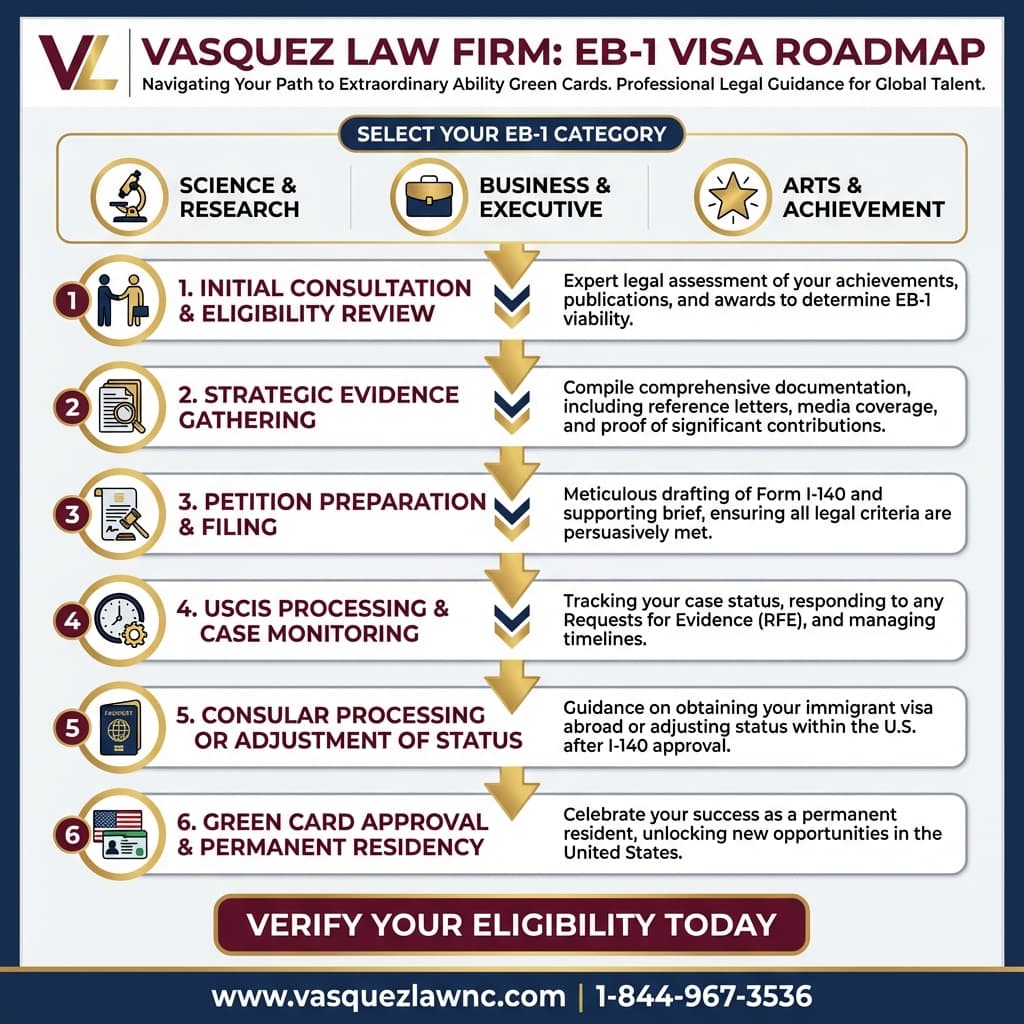
Gathering all necessary documents can be a lengthy process, often requiring collaboration with former employers, academic institutions, and professional organizations. It's important to start early and organize everything meticulously. Missing or insufficient documentation is a primary reason for Requests for Evidence (RFEs) or even denials. An experienced immigration attorney can guide you through this complex process, ensuring your petition is as strong as possible.
Evidence Checklist for EB-1 Visa Petitions
- Letters of Recommendation: From experts in your field attesting to your extraordinary ability or outstanding contributions.
- Awards and Recognition: Copies of certificates, plaques, and official announcements for major awards.
- Publications: Copies of scholarly articles, books, or media coverage about your work.
- Membership in Associations: Documentation proving membership in professional organizations that require outstanding achievement.
- Peer Review/Judging: Evidence of your participation as a judge or reviewer of others' work.
- High Salary: Pay stubs, tax returns, or employment contracts demonstrating a significantly high salary compared to others in your field.
- Original Contributions: Patents, copyrights, citations, or testimonials from experts confirming the significance of your work.
- Employment Records: Letters from employers, organizational charts, and job descriptions detailing executive or managerial roles and responsibilities.
- Company Documents: For EB-1C, articles of incorporation, financial statements, and business licenses for both U.S. and foreign entities.
EB-1 Visa Processing Time and Cost
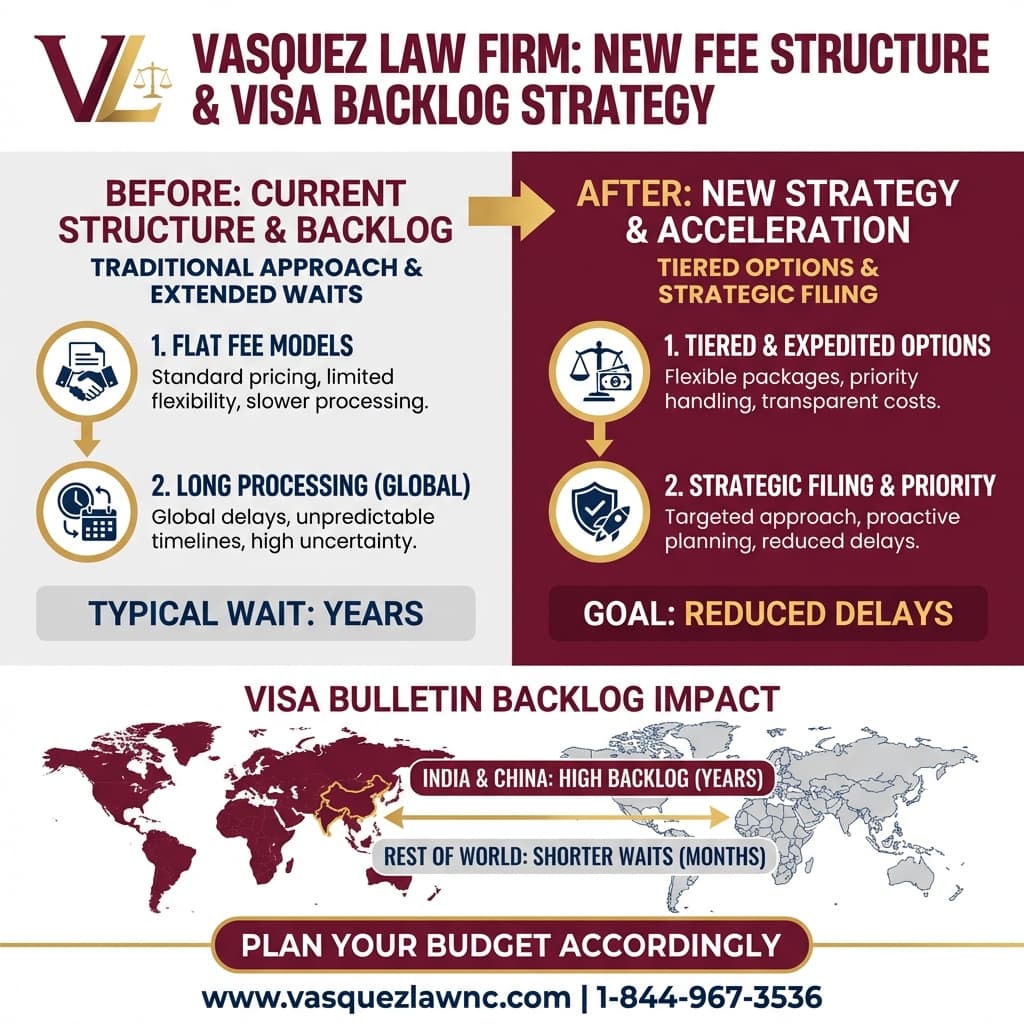
The processing time for an EB-1 visa can vary significantly based on several factors, including the specific service center handling your petition, the completeness of your application, and current USCIS workloads. While the EB-1 category generally offers a faster path compared to other employment-based visas due to its high preference, it's still subject to annual limits and potential backlogs, particularly for certain countries of origin. As of 2026, petitioners should anticipate a waiting period, but premium processing options exist for faster adjudication of the I-140 petition.
The cost associated with an EB-1 visa includes various government filing fees and potentially legal fees for attorney assistance. USCIS fees can change, so it's essential to check the most current fee schedule. For example, the I-140 petition has a filing fee, and if you opt for premium processing, there's an additional substantial fee. Beyond government fees, legal representation costs can vary based on the complexity of your case and the attorney's experience. Investing in skilled legal counsel can be crucial for ensuring a well-prepared and successful EB-1 visa petition.
Timeline: What to Expect
- Petition Preparation (1-6 months): Gathering extensive evidence and drafting the I-140 petition. This is often the longest phase.
- I-140 Processing (3-12 months): USCIS review of your Immigrant Petition for Alien Worker. Premium processing can reduce this to 15 calendar days for an additional fee.
- Visa Bulletin Check: Monitor the U.S. Department of State Visa Bulletin for your priority date to become current. This is critical for Green Card eligibility.
- Adjustment of Status (I-485) or Consular Processing (6-18 months): Once your priority date is current, you can file Form I-485 (if in the U.S.) or proceed with consular processing abroad.
- Interview and Approval: Final interview, followed by Green Card approval.
Costs and Fees: What Impacts the Price
- USCIS Filing Fees:
- Form I-140, Immigrant Petition for Alien Worker: ~$715 (subject to change in 2026)
- Premium Processing (optional for I-140): ~$2,805 (subject to change)
- Form I-485, Application to Adjust Status: ~$1,225 (includes biometric services, subject to change)
- Medical Examination Fees: Varies by physician, typically $200-$500.
- Translation Costs: If documents are not in English, certified translations are required.
- Attorney Fees: Highly variable based on case complexity and attorney experience. These can range from several thousands to tens of thousands of dollars.
- Travel Costs: For consular processing or interviews, travel expenses can add up.
Common Mistakes and How to Avoid Them
Applying for an EB-1 visa is a high-stakes endeavor, and even minor errors can lead to significant delays or outright denials. Many applicants underestimate the stringent evidentiary requirements or misinterpret the criteria set by USCIS. Avoiding these common pitfalls is essential for a smooth and successful application process. Thorough preparation and attention to detail are paramount.
One of the most frequent mistakes is submitting a petition with insufficient or poorly organized evidence. It's not enough to simply list accomplishments; each piece of evidence must clearly demonstrate how you meet the specific criteria for your chosen EB-1 category. Working with an experienced immigration attorney can help you strategize your evidence presentation and avoid common errors that could jeopardize your EB-1 visa application.
- Insufficient Evidence: Submitting too little evidence or evidence that doesn't directly address the criteria.
- Lack of Organization: Presenting documents in a disorganized manner, making it difficult for USCIS officers to review.
- Misinterpreting Criteria: Believing an accomplishment meets a criterion when it doesn't align with USCIS's strict interpretation.
- Poorly Written Recommendation Letters: Letters that are generic or don't specifically highlight the applicant's extraordinary abilities or contributions.
- Failure to Establish Employer-Employee Relationship (EB-1B/C): Not clearly demonstrating a qualifying job offer or the relationship between entities.
- Ignoring Annual Visa Bulletin: Not checking the Visa Bulletin, leading to filing an I-485 when the priority date isn't current.
- Not Responding to RFEs Adequately: Providing insufficient or late responses to Requests for Evidence from USCIS.
- Trying to Self-Petition Without Expertise: Underestimating the complexity of the process and attempting to navigate it without legal guidance.
If you only remember one thing: The strength of your EB-1 visa petition hinges entirely on the quality and direct relevance of your evidence. Every claim must be substantiated with clear, compelling documentation that leaves no doubt about your qualifications.
Don't face your legal challenges alone. Our team is here to help you every step of the way.
Call today: 1-844-967-3536 | Se Habla Español
Jurisdiction Notes: Nationwide Immigration Services
Immigration law in the United States is primarily federal, meaning the core statutes and regulations governing the EB-1 visa are consistent across all states, including North Carolina and Florida. However, the practical application and experience can vary based on local USCIS field offices, regional processing centers, and the specific circumstances of an applicant's residence or employment. Vasquez Law Firm is equipped to handle EB-1 visa petitions for clients located anywhere in the U.S. and abroad, providing comprehensive support regardless of your physical location.
North Carolina Notes
For individuals residing in North Carolina, including the greater Smithfield area, our firm provides localized support for your EB-1 visa application. While the federal criteria remain the same, our familiarity with local resources and legal community nuances can be beneficial. We guide clients through every step, from initial assessment to filing and responding to USCIS inquiries. Many highly skilled professionals in North Carolina pursue EB-1 visas, and our firm is dedicated to assisting them.
Florida Notes
Similarly, for clients in Florida, our immigration team offers dedicated legal services for EB-1 visa petitions. Florida's diverse economy and academic landscape attract many talented individuals who may qualify for an EB-1 visa. We understand the specific needs of Florida residents and can provide tailored guidance, ensuring that your application meets all federal requirements while addressing any state-specific considerations that may arise, such as obtaining certain state-level professional licenses if applicable.
Nationwide Concepts (General Only, Rules Vary)
The EB-1 visa program operates under federal law, specifically the Immigration and Nationality Act (INA) Section 203(b)(1). This ensures a uniform set of criteria and procedures nationwide. However, the volume of applications and specific challenges can vary by region. For instance, an EB-1 visa to Green Card pathway might experience different processing times depending on the applicant's country of chargeability and the demand at specific USCIS centers. Our firm provides comprehensive nationwide immigration services, leveraging our deep understanding of federal immigration processes to assist clients across the country.
When to Call a Lawyer Now
The complexity and high standards of the EB-1 visa process make legal representation not just beneficial, but often essential. Attempting to navigate this intricate system alone can lead to critical errors, delays, or even denial. Knowing when to seek professional legal help can significantly improve your chances of success and alleviate the stress associated with immigration procedures.
- Unsure of Eligibility: If you are unsure whether your accomplishments or position meet the EB-1 visa criteria.
- Complex Case: Your career trajectory or evidence is not straightforward, requiring strategic presentation.
- Previous Denial or RFE: If you've received a Request for Evidence (RFE) or a previous petition was denied.
- Time-Sensitive Application: You are facing deadlines or need to expedite the process as much as possible.
- Employer Sponsorship Issues: For EB-1B or EB-1C, if there are complexities with your employer's sponsorship or relationship with the U.S. entity.
- Need for Expert Evidence Gathering: Requiring assistance in identifying, collecting, and organizing the most compelling evidence.
- Desire for Peace of Mind: Wanting to ensure your application is as strong and error-free as possible.
- Navigating Visa Bulletin Backlogs: Understanding how priority dates and the Visa Bulletin impact your Green Card timeline.
About Vasquez Law Firm
At Vasquez Law Firm, we combine compassion with aggressive representation. Our motto "Yo Peleo" (I Fight) reflects our commitment to standing up for your rights. With a strong focus on immigration law, we understand the profound impact these cases have on individuals and families. We are dedicated to providing personalized attention and strategic legal solutions to help you achieve your immigration goals, including securing an EB-1 visa.
- Bilingual Support: Se Habla Español - our team is fully bilingual, ensuring clear communication and understanding.
- Service Areas: We proudly serve clients across North Carolina, Florida, and offer comprehensive nationwide immigration services.
- Experience: With over 15 years of dedicated experience, Attorney Vasquez has a proven track record in complex immigration matters.
- Results: We are committed to achieving favorable outcomes, guiding clients through every legal challenge with expertise and determination.
Attorney Trust and Experience
Attorney Vasquez holds a Juris Doctor degree and is admitted to practice in both the North Carolina State Bar and Florida Bar. With over 15 years of dedicated legal experience, he has built a reputation for providing personalized attention and achieving favorable outcomes for his clients. His deep understanding of immigration law, combined with a compassionate approach, makes Vasquez Law Firm a trusted advocate for those navigating the U.S. immigration system. He is committed to fighting for your future, just as his motto "Yo Peleo" promises.
Frequently Asked Questions
Who qualifies for an EB-1 visa?
The EB-1 visa is for individuals with extraordinary ability (EB-1A), outstanding professors and researchers (EB-1B), or multinational executives and managers (EB-1C). EB-1A applicants must show national/international acclaim; EB-1B requires international recognition, teaching/research experience, and a job offer; EB-1C demands at least one year of managerial/executive experience abroad with a qualifying multinational company. Each category has specific evidentiary requirements that must be met.
What is the difference between EB-1 and EB-2 visas?
The primary difference lies in the eligibility criteria and priority. EB-1 visas are for individuals with extraordinary ability, outstanding professors/researchers, or multinational executives, generally having a higher priority and often not requiring a labor certification. EB-2 visas are for professionals with advanced degrees or exceptional ability (not extraordinary), and typically require a job offer and a labor certification process, making them generally a longer path to a Green Card.
How much does an EB-1 visa cost?
The cost of an EB-1 visa involves several components. USCIS filing fees include approximately $715 for Form I-140, plus an optional $2,805 for premium processing (as of 2026). If adjusting status, Form I-485 costs around $1,225. Additional costs may include medical exams, translation services, and significant attorney fees, which vary based on case complexity and legal counsel chosen. It's an investment in your future.
How hard is it to get an EB-1 visa?
Obtaining an EB-1 visa is challenging due to its stringent eligibility requirements and high evidentiary standards. Applicants must demonstrate sustained national or international acclaim or meet specific criteria for outstanding professors/researchers or multinational executives. The process demands meticulous documentation and a compelling presentation of evidence to USCIS, often requiring legal expertise to navigate successfully. It is considered one of the most difficult employment-based visas to secure.
What are some examples of individuals who have received EB-1 visas?
Examples of individuals who have received EB-1 visas include Nobel laureates, Olympic medalists, renowned scientists, award-winning artists, acclaimed university professors, and high-level corporate executives transferring within a multinational company. These individuals typically have extensive publications, significant awards, international recognition, and unique contributions to their fields, clearly meeting the "extraordinary" or "outstanding" criteria set by USCIS.
Can I self-petition for an EB-1 visa?
Yes, you can self-petition for an EB-1A visa (Extraordinary Ability). This means you do not need a U.S. employer to file the petition on your behalf, nor do you need a job offer at the time of filing. However, for EB-1B (Outstanding Professors and Researchers) and EB-1C (Multinational Executives or Managers), a U.S. employer must file the petition on your behalf, requiring a job offer and employer sponsorship.
What is the EB-1 visa processing time in 2026?
As of 2026, the processing time for an EB-1 visa's I-140 petition can range from 3 to 12 months. This can be expedited to 15 calendar days with premium processing for an additional fee. The overall timeline to obtain a Green Card also depends on visa availability based on the Visa Bulletin, which can add several months or even years for certain nationalities, especially if there's a backlog.
Do I need a labor certification for an EB-1 visa?
Generally, no. A significant advantage of the EB-1 visa category is that it typically waives the labor certification requirement, which is often a lengthy process for other employment-based visas. This makes the EB-1 visa a more direct and often faster path to obtaining a Green Card for highly qualified individuals, outstanding academics, and multinational business leaders. This waiver is a key factor in its appeal.
Can an EB-1 visa lead to a Green Card?
Yes, the EB-1 visa is an immigrant visa category, meaning it is a direct pathway to obtaining a Green Card (lawful permanent residency) in the United States. Once your I-140 petition is approved and your priority date is current, you can either file Form I-485 to adjust your status if you are already in the U.S., or proceed with consular processing at a U.S. embassy or consulate abroad to receive your immigrant visa.
How does the Visa Bulletin impact EB-1 applications?
The Visa Bulletin, published monthly by the U.S. Department of State, determines visa availability. While EB-1 visas are generally "current" for most countries, meaning a Green Card can be processed relatively quickly after I-140 approval, backlogs can occur for certain high-demand countries like China and India. Applicants from these countries may face additional waiting periods until their priority date becomes current, impacting the overall EB-1 visa processing time.
Sources and References
- U.S. Citizenship and Immigration Services (USCIS) - EB-1 Visa Information
- U.S. Department of State - Employment-Based Immigrant Visas
- 8 U.S. Code § 1153 - Allocation of immigrant visas (INA Section 203)
- 8 C.F.R. § 204.5 - Petitions for employment-based immigrants
Need immigration help? Our immigration attorneys can review your case.
Ready to take the next step? Contact Vasquez Law Firm today for a free, confidential consultation. We're committed to fighting for your rights and achieving the best possible outcome for your case.
Start Your Free Case Evaluation Now
Call us: 1-844-967-3536
Se Habla Español - Estamos aquí para ayudarle.

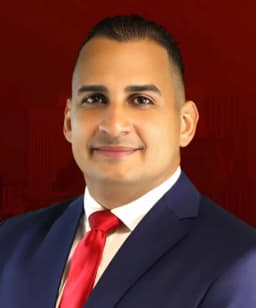
William Vasquez
Founder & CEO, Vasquez Law Firm, PLLC
William Vasquez is the founder and CEO of Vasquez Law Firm, PLLC, a results-driven firm specializing in immigration, criminal defense, personal injury, and workers' compensation. A U.S. Air Force veteran and recipient of the Joint Service Achievement Medal, William is dedicated to fiercely fighting for his clients' rights.
Related Legal Services
Need legal help? Learn more about immigration case consultation, or contact us for a free evaluation.
You can also visit NC immigration legal help for more information.