Your Housing Rights in a Mixed-Status Household in 2026
Understand your housing rights as mixed-status households in 2026. Get expert legal guidance on federal policies. Contact Vasquez Law for a free consultation.
Published on March 2, 2026
Talk to an immigration attorney
Free call. A clear plan for your case.
Free & confidential · Se habla espanol · 24/7
Have questions? Talk to an attorney - free evaluation.
Call 1-844-967-3536Worried how the latest immigration news affects you?
Schedule a confidential case review with an immigration attorney - know exactly where you stand.
Your Housing Rights in a Mixed-Status Household in 2026
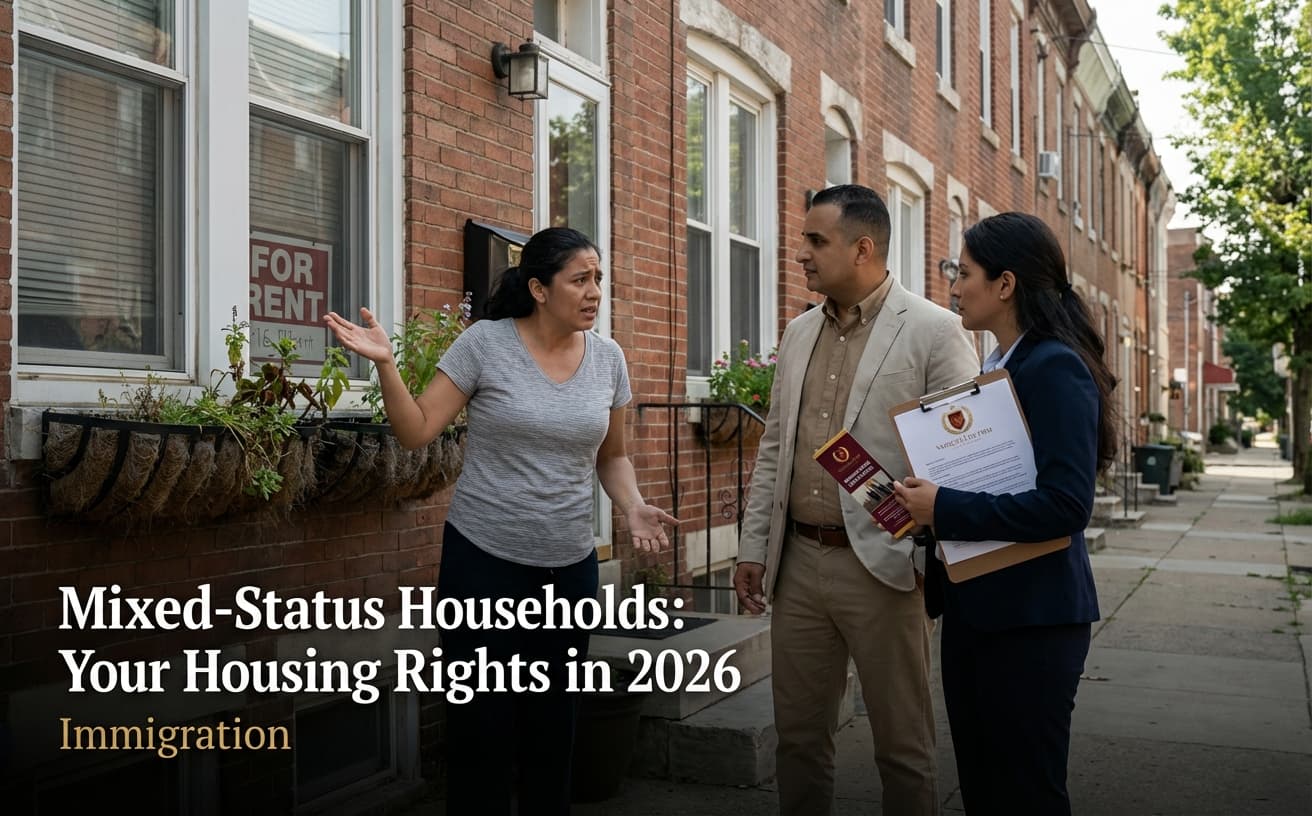
Navigating housing policies can be complex, especially for mixed-status households where family members have different immigration or citizenship statuses. As of 2026, federal and state regulations continue to evolve, impacting eligibility for housing assistance programs like Section 8. Understanding your rights and responsibilities is crucial to ensure housing stability for your family. This guide provides essential information for families in North Carolina, Florida, and nationwide, emphasizing the importance of legal counsel.
Need help with your case? Our experienced attorneys are ready to fight for you. Se Habla Español.
Schedule Your Free Case Evaluation
Or call us now: 1-844-967-3536
Quick Answer
Mixed-status households consist of families where some members are U.S. citizens or eligible immigrants and others are not. Eligibility for federal housing assistance, such as Section 8, primarily depends on the eligible members. Recent proposals and policy changes in 2026 aim to clarify and sometimes restrict aid, making it vital to understand:
- Who is considered an eligible family member.
- The impact of proposed HUD rules on rental assistance.
- How to protect your family’s housing stability.
Understanding Mixed-Status Households and Housing Eligibility
A mixed-status household is a family unit where at least one member is a U.S. citizen or an eligible non-citizen, and at least one other member is not. This often includes scenarios where parents are undocumented, but their children are U.S. citizens by birth. The primary challenge for these families lies in navigating federal housing programs, which often have strict eligibility requirements based on immigration status.
Federal housing programs, like those administered by the U.S. Department of Housing and Urban Development (HUD), are designed to assist low-income families. However, eligibility rules for these programs, particularly Section 8 Housing, are tied to the immigration status of household members. Understanding these nuances is key to accessing or retaining vital housing support in 2026. The Vasquez Law Firm is dedicated to helping families understand these complex regulations.
Who is Eligible for Housing Aid?
Generally, only U.S. citizens and certain categories of eligible non-citizens can qualify for federal housing assistance. These eligible non-citizens include lawful permanent residents (Green Card holders), refugees, asylees, and others with specific immigration statuses. Family members who do not meet these criteria, such as undocumented individuals, typically cannot receive direct benefits from these programs.
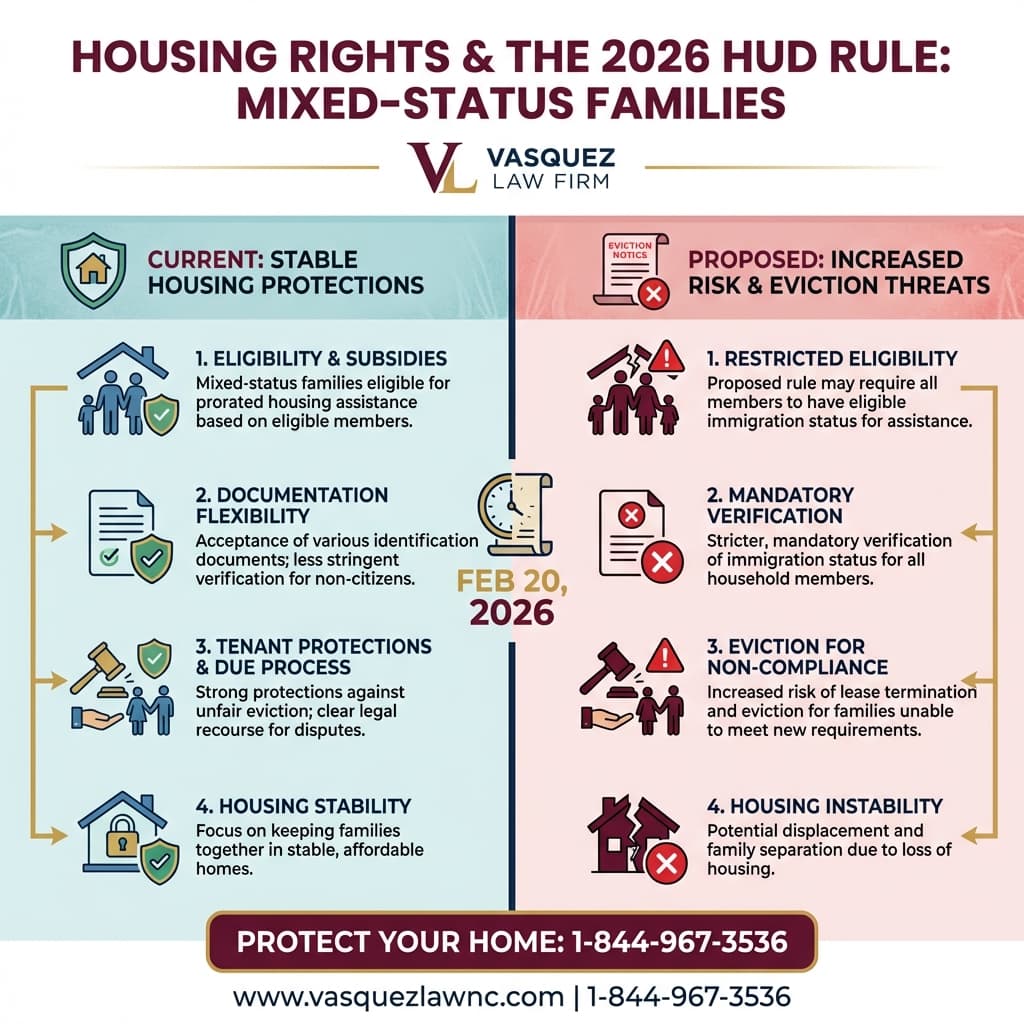
Despite this, mixed-status households can still receive pro-rated assistance. This means that the housing subsidy is calculated based on the number of eligible family members in the household, rather than the entire family unit. It's a critical distinction that allows many families to maintain some level of support while ensuring compliance with federal law, specifically the Housing and Community Development Act of 1980. For specific guidance on your family’s eligibility, consulting an attorney is highly recommended.
Impact of Federal Policies on Mixed-Status Families
Federal policies, particularly those from HUD, significantly shape the landscape for mixed-status households seeking housing assistance. In recent years, there have been ongoing discussions and proposed rules that could alter how these families qualify for or receive aid. These changes often aim to ensure that only eligible individuals benefit from taxpayer-funded programs, but they can create considerable anxiety and uncertainty for families.
One notable development in 2026 involves a proposed rule by HUD concerning mixed-status families and rental assistance. While the details are still being finalized, such proposals typically focus on how to calculate assistance and verify eligibility more stringently. It is crucial for families in Smithfield, NC, and across the nation to stay informed about these potential changes, as they could directly affect their ability to secure affordable housing. Our firm closely monitors these legislative and regulatory updates to provide timely advice.
HUD Proposed Rules and Their Implications
The U.S. Department of Housing and Urban Development (HUD) periodically proposes new rules that can have profound effects on mixed-status households. For instance, a recent proposal discussed in the news aimed to strip housing aid from mixed-status households, requiring all members of a household to be eligible non-citizens or U.S. citizens for full assistance. While this rule has faced significant opposition, its very introduction highlights the ongoing vulnerability of these families.
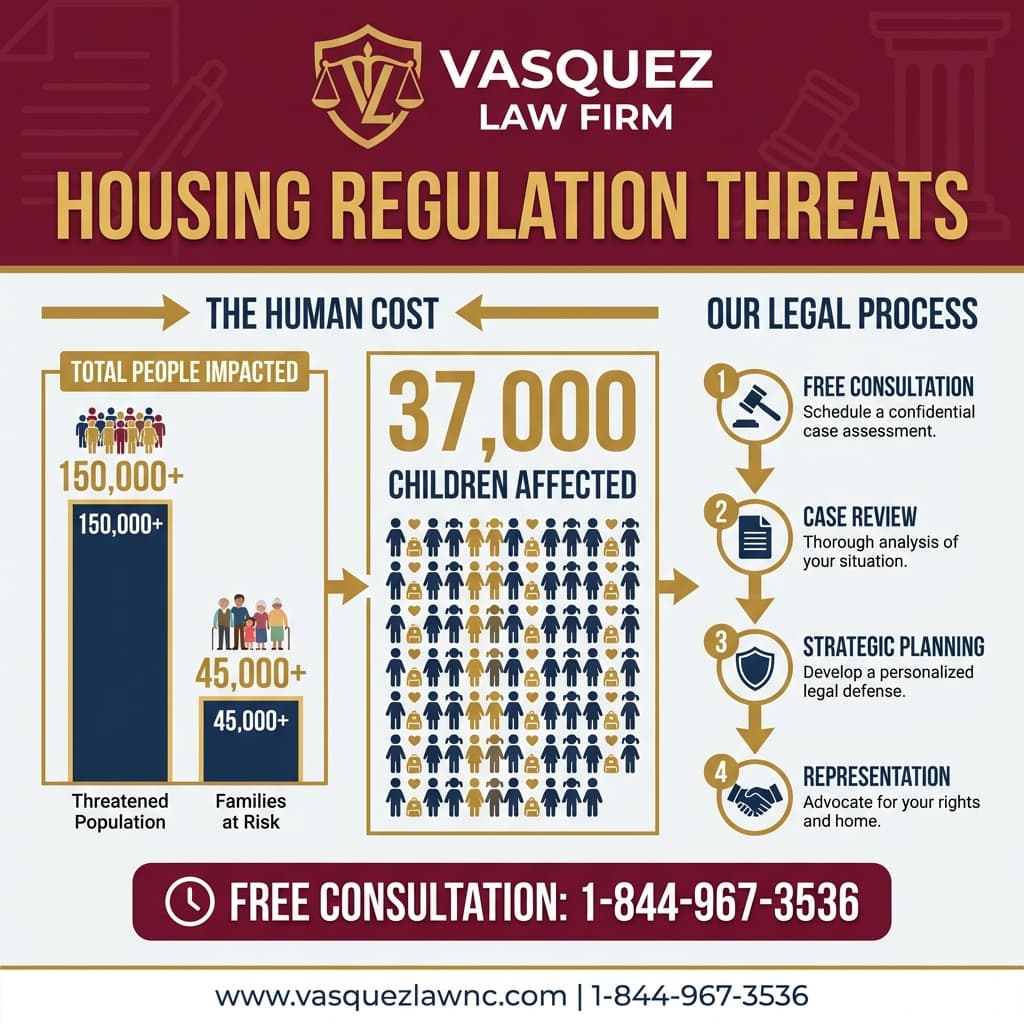
If such a rule were to be fully implemented, it could lead to increased housing instability, potential homelessness, and significant stress for hundreds of thousands of families nationwide. The legal community, including Vasquez Law Firm, actively monitors these legislative developments to understand their potential impact and advocate for affected families. Understanding the nuances of these proposed changes is vital for protecting your family's future.
Navigating Housing Applications and Documentation
Applying for housing assistance as a mixed-status household requires meticulous attention to detail and accurate documentation. The application process can be lengthy and complex, often requiring proof of income, household composition, and immigration status for each family member. Any discrepancies or missing information can lead to delays or even denial of assistance.
For eligible family members, documents such as Green Cards, U.S. passports, or birth certificates are essential. For non-eligible members, their information must still be provided to accurately assess the household's composition and income, even if they do not receive direct benefits. This process demands a clear understanding of what information is required and how to present it effectively to housing authorities in North Carolina and Florida.
Essential Documents for Housing Applications
When applying for federal housing assistance, mixed-status households must gather a range of documents. These typically include:
- Proof of Identity and Citizenship/Immigration Status: U.S. passports, birth certificates, lawful permanent resident cards (Form I-551), employment authorization documents (EAD), or other USCIS-issued documents.
- Income Verification: Pay stubs, tax returns, social security statements, and any other documentation proving household income.
- Household Composition: Birth certificates for children, marriage certificates, and other documents to prove familial relationships.
- Residency Proof: Utility bills, lease agreements, or other documents demonstrating current address in locations like Smithfield, NC.
Organizing these documents thoroughly before applying can streamline the process and reduce the likelihood of errors or requests for additional information. It is crucial to only provide truthful and accurate information to avoid complications or accusations of fraud. For specific guidance on what to submit, an immigration attorney can provide invaluable assistance.
Rights and Protections for Mixed-Status Families
Even with evolving policies, mixed-status households have certain rights and protections under federal law. It is illegal for housing providers to discriminate based on race, color, national origin, religion, sex, familial status, or disability. While immigration status is not a protected class in the same way, families should be aware of their rights regarding fair housing practices and due process.
For instance, if a housing authority denies assistance or terminates a lease, families typically have the right to appeal that decision. This often involves formal hearings where they can present their case and challenge the findings. Knowing these avenues for recourse is essential for protecting your family's housing stability. Vasquez Law Firm can help families understand their options and navigate the appeals process effectively, ensuring their voices are heard.
Avoiding Discrimination and Exercising Your Rights
Mixed-status households should be vigilant against potential discrimination. If you believe you have been unfairly treated by a housing authority or landlord due to your family's immigration status, it is important to document the incidents and seek legal advice. While immigration status itself isn't a protected class, discriminatory actions that overlap with national origin or familial status can be challenged under fair housing laws.
Exercising your rights might involve filing a complaint with HUD or pursuing legal action. An attorney specializing in immigration law and housing can assess your situation, help you gather evidence, and represent your interests. They can also ensure that proper procedures are followed when appealing denials of assistance, giving your family the best chance to secure the housing support you need in 2026. This is especially important in areas like Florida and North Carolina where diverse communities reside.
Don't face your legal challenges alone. Our team is here to help you every step of the way.
Call today: 1-844-967-3536 | Se Habla Español
State-Specific Considerations: NC, FL, and Nationwide
While federal laws largely govern immigration and housing assistance, states like North Carolina and Florida may have additional regulations or resources that impact mixed-status households. It's important to be aware of any state-specific programs or local initiatives that could offer supplementary support or different eligibility criteria. These can sometimes provide a safety net where federal programs fall short.
For instance, some states or local municipalities might have emergency rental assistance programs that are less restrictive on immigration status than federal housing aid. Staying informed about these local options, in addition to federal policies, can provide a more comprehensive approach to securing housing for your family. Vasquez Law Firm serves clients in both North Carolina and Florida, offering localized advice tailored to your needs.
North Carolina Notes
In North Carolina, mixed-status households may encounter specific local housing authority policies. While federal HUD rules apply, local Public Housing Authorities (PHAs) can have their own administrative procedures for verifying eligibility and calculating assistance. Families in Smithfield, NC, and other parts of the state should familiarize themselves with the specific requirements of their local PHA. NC law provides some protections against discrimination, but these generally do not extend to immigration status.
Florida Notes
Florida, with its large immigrant population, also faces unique challenges regarding mixed-status households. Similar to North Carolina, federal housing laws are paramount, but local housing agencies in Florida may have distinct processes. It is crucial for families in Florida to understand that while state-level assistance is limited regarding immigration status, advocacy groups and legal aid organizations often provide resources and support to help navigate the complex system. Consulting an attorney familiar with both federal and state housing regulations is vital.
Nationwide Concepts (General Only, Rules Vary)
Nationwide, the general principles for mixed-status households remain consistent: federal housing assistance primarily benefits eligible citizens and non-citizens, with pro-rated assistance for mixed families. However, advocacy efforts continue to push for more inclusive policies that recognize the humanitarian needs of all family members. Understanding the federal framework, as outlined in the Immigration and Nationality Act (INA), is the first step toward navigating these challenges, regardless of your specific location in the U.S.
When to Call a Lawyer Now
Navigating the complexities of housing for mixed-status households requires expert legal guidance. Don't wait until you face a crisis to seek help. Immediate action can often prevent more severe problems. Consider contacting an immigration attorney if:
- You receive a notice of denial or termination for housing assistance.
- You are unsure about your eligibility for federal housing programs.
- You suspect you are experiencing discrimination based on your family's status.
- You need help understanding new HUD proposed rules or policy changes in 2026.
- You need assistance completing complex housing applications and gathering documentation.
- You are facing eviction due to issues related to immigration status.
- You want to appeal a housing authority's decision.
- You simply want peace of mind knowing your family's housing situation is secure.
About Vasquez Law Firm
At Vasquez Law Firm, we combine compassion with aggressive representation. Our motto "Yo Peleo" (I Fight) reflects our commitment to standing up for your rights. We understand the unique challenges faced by mixed-status households and are dedicated to providing comprehensive legal support.
- Bilingual Support: Se Habla Español - our team is fully bilingual, ensuring clear communication.
- Service Areas: We provide immigration services across North Carolina, Florida, and nationwide.
- Experience: Attorney Vasquez has over 15 years of dedicated legal experience, navigating complex immigration and family law matters.
- Results: We have a proven track record of achieving favorable outcomes for our clients, protecting their families and futures.
Attorney Trust and Experience
Attorney Vasquez holds a Juris Doctor degree and is admitted to practice in both the North Carolina State Bar and Florida Bar. With over 15 years of dedicated legal experience, he has built a reputation for providing personalized attention and achieving favorable outcomes for his clients. He understands the profound impact that housing stability has on families and is committed to fighting tirelessly on their behalf, particularly for mixed-status households.
Don't face your legal challenges alone. Our team is here to help you every step of the way.
Call today: 1-844-967-3536 | Se Habla Español
Frequently Asked Questions
What are mixed-status households?
Mixed-status households are families where some members are U.S. citizens or eligible non-citizens, and others are not. This often includes scenarios where parents are undocumented, but their children are U.S. citizens. Understanding this distinction is crucial for navigating federal housing assistance programs and ensuring your family's housing stability in 2026.
Can mixed-status households receive federal housing assistance?
Yes, mixed-status households can receive federal housing assistance, but it is typically pro-rated. This means that the subsidy is calculated based only on the eligible family members (U.S. citizens or eligible non-citizens) within the household. Undocumented family members are generally not included in the calculation for assistance, but their presence does not necessarily disqualify the entire family.
What is Section 8 Housing and how does it apply to mixed-status families?
Section 8 Housing is a federal program that helps low-income families afford safe and decent housing. For mixed-status families, eligibility for Section 8 is determined by the immigration status of each household member. The assistance amount is adjusted to exclude individuals who are not U.S. citizens or eligible non-citizens, ensuring compliance with federal guidelines.
What documents are needed for housing applications for mixed-status households?
You will need proof of identity and immigration status for all household members, such as birth certificates, U.S. passports, or Green Cards. Additionally, income verification documents (pay stubs, tax returns) and proof of residency are required. It is essential to provide accurate and complete documentation to avoid delays or denials of housing assistance.
Are there any recent policy changes affecting mixed-status households in 2026?
As of 2026, there are ongoing discussions and proposed rules by HUD that could impact mixed-status households. While no definitive changes have been fully implemented that would strip all aid, it is crucial to stay informed about potential policy shifts. Consulting an immigration attorney can help you understand the latest developments and their implications for your family.
What if my housing application is denied due to immigration status?
If your housing application is denied, you typically have the right to appeal the decision. This often involves submitting a formal request for a hearing where you can present your case and provide additional documentation. Seeking legal counsel from an immigration attorney can significantly improve your chances of a successful appeal.
Can I be evicted if I am in a mixed-status household?
Eviction laws generally apply regardless of immigration status. However, if an eviction is related to a dispute over housing assistance eligibility due to your family's mixed status, you have rights. It is crucial to seek legal advice immediately to understand your protections and navigate the eviction process effectively.
Does Vasquez Law Firm assist mixed-status households in North Carolina and Florida?
Yes, Vasquez Law Firm provides comprehensive immigration legal services to mixed-status households in North Carolina, Florida, and nationwide. Our experienced attorneys can help you understand your housing rights, navigate complex application processes, and advocate for your family's stability. We are committed to fighting for your rights with compassion and aggressive representation.
What is the role of HUD in mixed-status housing?
The U.S. Department of Housing and Urban Development (HUD) sets the federal policies and regulations for housing assistance programs, including those affecting mixed-status households. HUD defines eligibility criteria, oversees Public Housing Authorities, and proposes rules that can significantly impact how families receive housing aid. Staying updated on HUD guidelines is essential for these families.
How can I protect my family's housing stability in a mixed-status situation?
To protect your family's housing stability, it is vital to stay informed about federal and state housing policies, meticulously gather and maintain all necessary documentation, and seek legal counsel when facing challenges. Proactive engagement with an immigration attorney can help you understand your rights, appeal adverse decisions, and navigate the complex system effectively.
Sources and References
- U.S. Citizenship and Immigration Services (USCIS)
- Executive Office for Immigration Review
- U.S. Department of Housing and Urban Development (HUD)
- 8 U.S. Code § 1430 - Nationality and citizenship through parents
- 24 C.F.R. § 982 - Section 8 Tenant-Based Assistance: Housing Choice Voucher Program
Need immigration help? Our immigration attorneys can review your case.
Ready to take the next step? Contact Vasquez Law Firm today for a free, confidential consultation. We're committed to fighting for your rights and achieving the best possible outcome for your case.
Start Your Free Case Evaluation Now
Call us: 1-844-967-3536
Se Habla Español - Estamos aquí para ayudarle.


William Vasquez
Founder & CEO, Vasquez Law Firm, PLLC
William Vasquez is the founder and CEO of Vasquez Law Firm, PLLC, a results-driven firm specializing in immigration, criminal defense, personal injury, and workers' compensation. A U.S. Air Force veteran and recipient of the Joint Service Achievement Medal, William is dedicated to fiercely fighting for his clients' rights.
Related Legal Services
Need legal help? Learn more about immigration case consultation, or contact us for a free evaluation.
You can also visit statewide immigration legal services for more information.