How Immigration Processing Works and What Happens in 2026
Learn how immigration processing works in 2026, including I-130 processing time and USCIS inquiries. Contact Vasquez Law for a free evaluation today.
Published on June 6, 2026
Talk to an immigration attorney
Free call. A clear plan for your case.
Free & confidential · Se habla espanol · 24/7
Have questions? Talk to an attorney - free evaluation.
Call 1-844-967-3536Worried how the latest immigration news affects you?
Schedule a confidential case review with an immigration attorney - know exactly where you stand.
How Immigration Processing Works and What Happens in 2026
Immigration processing can be a complex and time-consuming journey, especially for applicants in Raleigh, NC and Orlando, FL. As of 2026, understanding the steps involved, typical processing times, and common challenges can help immigrants navigate the system more efficiently. This guide explains how USCIS processes applications such as family petitions (I-130), what to expect for delays, and how legal support from Vasquez Law Firm can assist you. Whether you are sponsoring a spouse or applying for a green card, knowing the right steps and timelines is crucial to avoid costly mistakes and unnecessary delays.
Need help with your case? Our experienced attorneys are ready to fight for you. Se Habla Español.
Or call us now: 1-844-967-3536
Quick Answer
Immigration processing involves multiple federal steps handled by USCIS. In 2026, I-130 processing times for spouses typically range from 9 to 18 months depending on the service center. Delays are common, and legal help can guide you through requests and interviews.
- USCIS reviews applications step-by-step
- Typical I-130 processing takes 9-18 months in 2026
- Requests for evidence (RFEs) can delay decisions
- Interviews are often required for green card cases
- Legal assistance can improve case outcomes and timelines
Understanding Immigration Processing
Imagine filing a petition for your spouse to join you legally in the United States from Raleigh, NC, or Orlando, FL. You start by submitting Form I-130, Petition for Alien Relative, to U.S. Citizenship and Immigration Services (USCIS). This begins the immigration processing journey, governed by federal law, specifically the Immigration and Nationality Act (INA).
The USCIS processing system includes several stages, beginning with receipt, background checks, biometrics appointments, possible requests for additional evidence, interviews, and finally, the approval or denial of your petition. The complexity depends on your individual circumstances and the type of petition filed.
In 2026, USCIS is working through a backlog caused by past policy changes and pandemic-related delays. For example, the processing time for an I-130 petition for a spouse can vary significantly by service center but currently averages from 9 up to 18 months, as published on the USCIS Processing Times page.
Applicants should also remember that immigration processing includes multiple forms beyond the initial petition, such as the Form I-485 Adjustment of Status or consular processing for visas. Each step involves its own timeline and requirements.
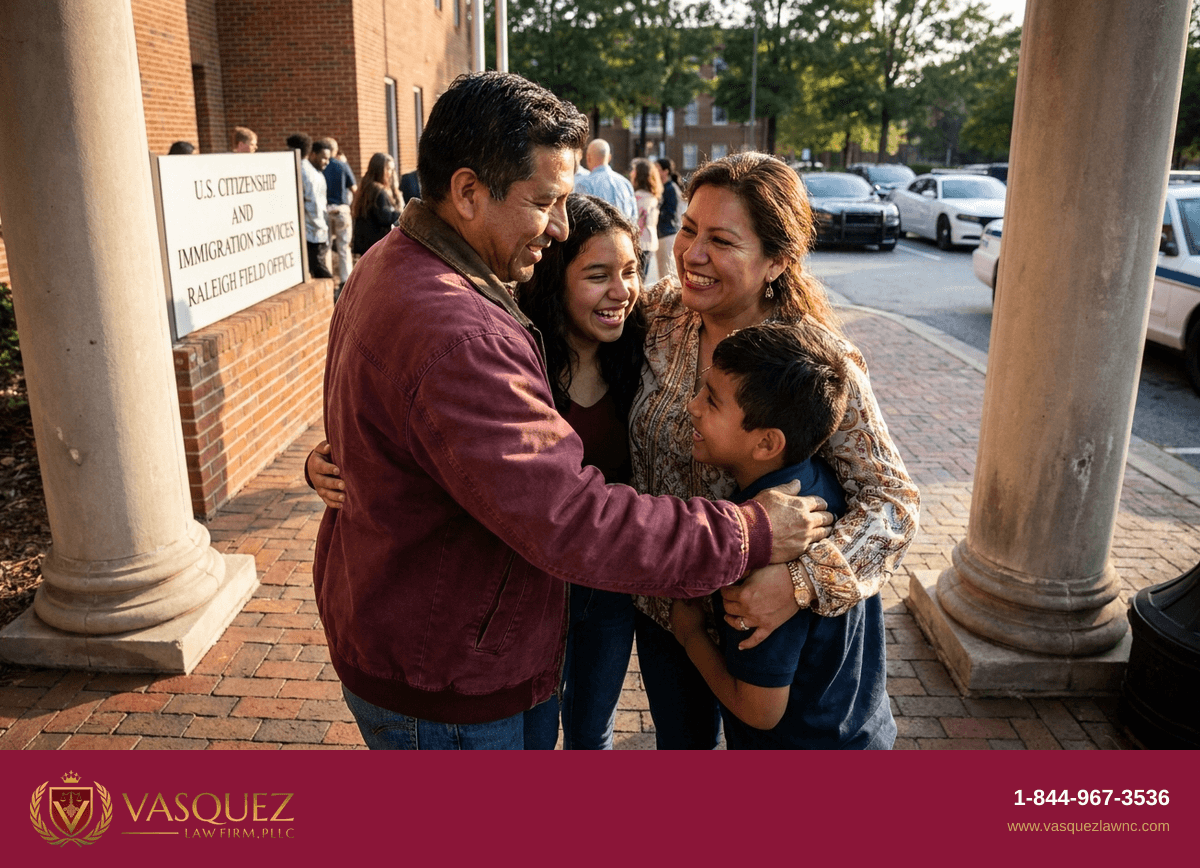
Families in North Carolina and Florida often ask whether the process is different locally. USCIS processing is federally regulated, so the steps are consistent nationwide. However, local USCIS field offices in Raleigh, NC, and Orlando, FL, handle interviews and biometrics appointments, so scheduling and wait times can vary.
Understanding the immigration process and timelines is critical to planning your path to legal residency or citizenship. Please consult our immigration services for expert guidance tailored for Raleigh and Orlando residents.
Key Steps in the Immigration Process
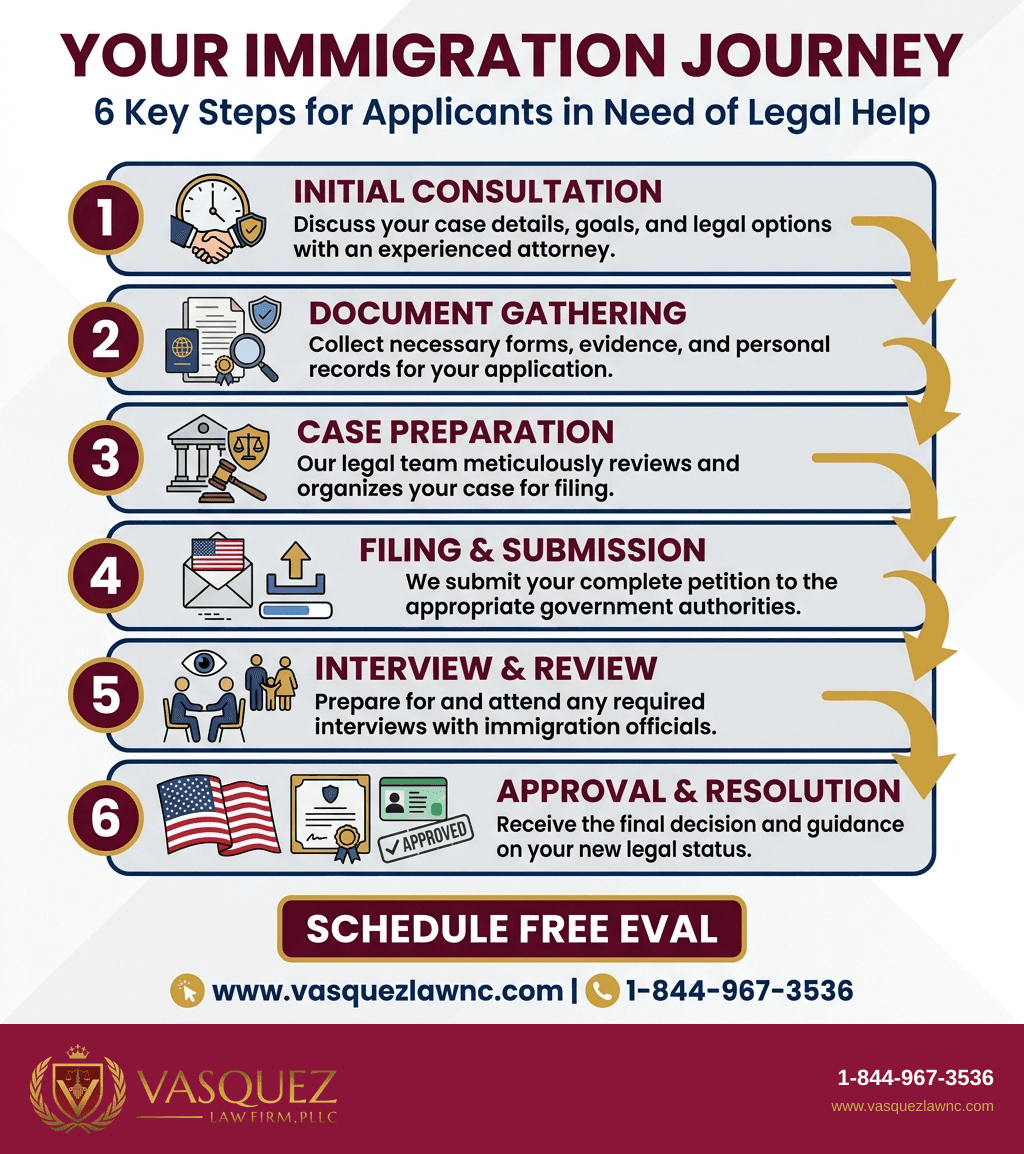
The immigration process generally follows 12 steps from start to finish. Here we focus on family-based processing, commonly encountered in Raleigh and Orlando:
- Filing the Petition: Submit Form I-130 to establish the relationship (e.g., spouse, parent).
- USCIS Receipt Notice: Confirmation that USCIS received your petition.
- Biometrics Appointment: USCIS schedules fingerprinting for background checks.
- Request for Evidence (RFE): USCIS may request more information to support your case.
- Interview Scheduling: A USCIS officer reviews your case in person.
- Interview at Field Office: Conducted in Raleigh or Orlando for adjustment cases.
- Approval or Denial: USCIS issues a decision on your petition.
- National Visa Center Processing: For applicants outside the U.S., NVC handles consular processing.
- Medical Examination and Forms: Required for green card eligibility.
- Visa Issuance or Adjustment of Status: Final step to receive permanent residency.
- Receive Green Card: Official document proving lawful permanent residence.
- Follow-up and Maintenance: Renewals, travel documents, or citizenship applications later.
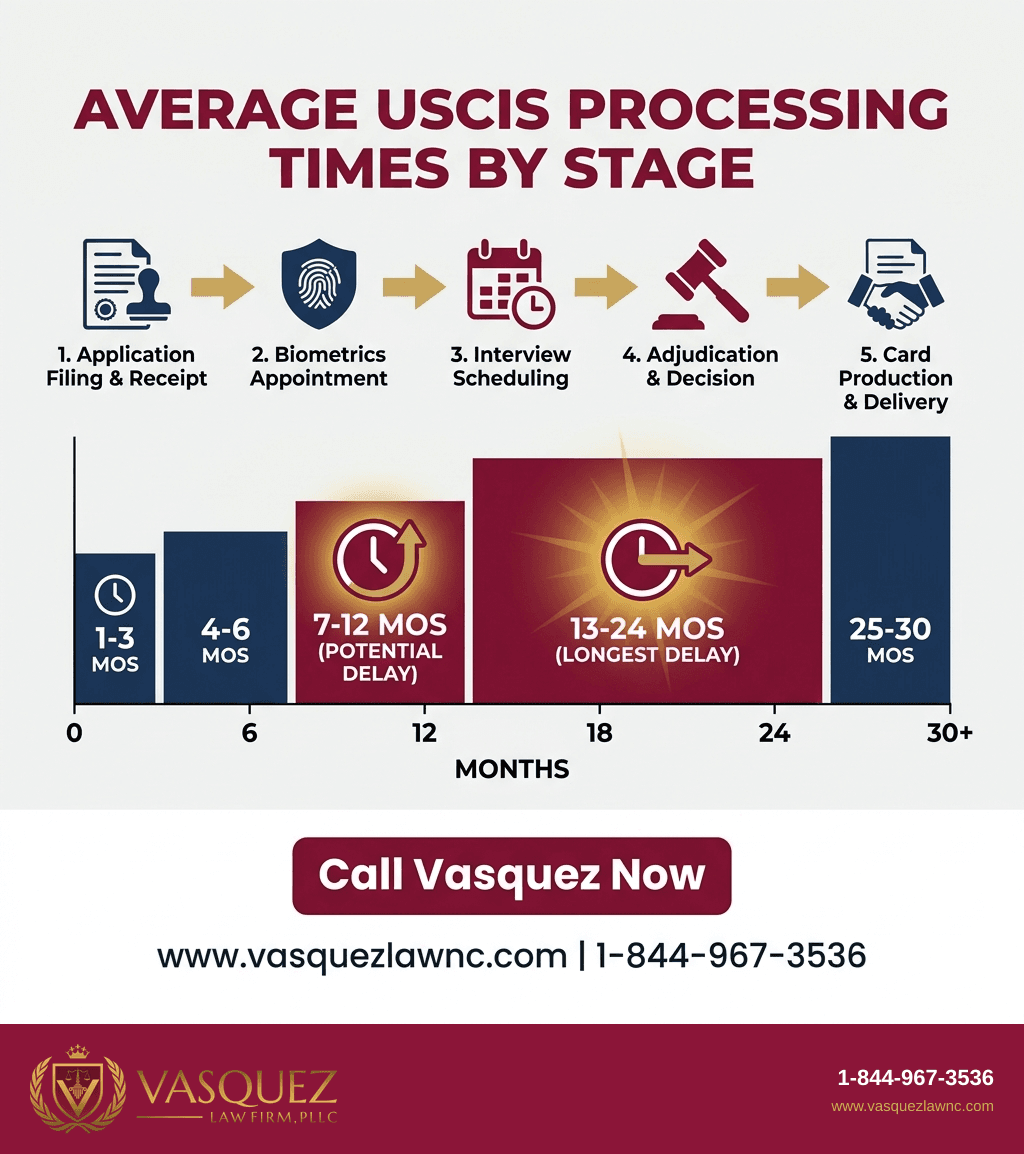
Each step may require waiting from weeks to months, with I-130 processing times for spouses ranging 9-18 months in 2026. According to USCIS online data, delays are sometimes triggered by requests for evidence or background check issues.
The attorneys at Vasquez Law Firm help clients prepare complete applications and respond effectively to RFEs, reducing delays. Our Raleigh and Orlando offices provide bilingual support so you understand every step clearly.
What Happens After Filing?
Once USCIS receives your petition, you will get a Notice of Action (Form I-797). It includes a receipt number to track your case online on the USCIS Case Status portal. Monitoring your case regularly can alert you early to any action needed.
Dealing with USCIS Inquiries
If USCIS contacts you for an interview or information, timely and clear responses are critical. Delays or missed deadlines can result in denials. Our immigration attorneys assist with preparing for interviews and correspondence.
Adjusting from Temporary to Permanent Status
For applicants already in the U.S., adjustment of status (Form I-485) follows I-130 approval. This step includes biometrics, an interview, and the final green card approval. The entire process can take 12-24 months, depending on case and service center.
Common Mistakes to Avoid
Many applicants face delays or rejections because of avoidable mistakes. Here are common errors with fixes to help you succeed:
- Incomplete Applications: Omitting required forms or tables delays processing. Check USCIS checklists carefully.
- Missing Deadlines: Responding late to RFEs or interview notices results in denial. Track all USCIS deadlines carefully.
- Incorrect Fees: Sending wrong payment or outdated fee amounts causes rejection. Always verify current USCIS fees before filing.
- Poor Documentation: Insufficient proof of relationships or eligibility weakens your petition. Provide clear and credible evidence.
- Failure to Attend Appointments: Missing biometrics or interviews causes case abandonment. Attend all USCIS-scheduled appointments punctually.
- Not Tracking Case Status: Unawareness of case status leads to missed opportunities to respond. Use USCIS online tools to monitor progress.
If you only remember one thing: Provide complete, accurate, and timely information to USCIS. Getting legal advice early can help avoid costly errors.
Timeline and What to Expect
Immigration processing times depend heavily on case type, USCIS service center workload, and applicant category. According to the USCIS Processing Times page (June 2026), typical I-130 processing times for spouses are:
- Texas Service Center: 10 to 16 months
- Potomac Service Center: 9 to 15 months
- Nebraska Service Center: 8 to 14 months
Additional steps like I-485 adjustment or consular processing add 6 to 12 months. Requests for evidence (RFEs) can add 3 to 6 months or more.
Applicants from Raleigh, NC, and Orlando, FL, should anticipate at least 12 months minimum from filing I-130 to receiving a green card, though some cases may take longer due to backlog.
Planning your immigration journey with realistic timelines helps avoid surprises. Our attorneys provide personalized estimates based on your specific USCIS field office and petition type.
Frequently Asked Questions
What is the immigration process?
The immigration process involves filing petitions like Form I-130, passing background checks, attending biometrics and interviews, and receiving approval or denial from USCIS. The process varies by petition type and location but generally includes steps that take from several months to years.
Is ICE deporting people with Green Cards?
Yes, lawful permanent residents (Green Card holders) can be deported if they violate certain criminal laws or immigration rules under 8 U.S.C. § 1227. Deportation proceedings are handled by the Executive Office for Immigration Review (EOIR).
What happens if you marry a U.S. citizen and then divorce?
Divorce after marrying a U.S. citizen can affect your eligibility for permanent residency. If your green card was conditional based on marriage, you must file a joint petition or waiver to remove conditions. Legal help is essential in these complex cases.
What is the I-130 processing time for a spouse in 2026?
In 2026, I-130 processing times for spouses typically range between 9 and 18 months, depending on the USCIS service center handling the case. Checking USCIS's official processing times regularly is recommended.
How long does USCIS inquiry processing take?
Responses to USCIS inquiries or requests for evidence can take several weeks to months. Delays in responding might slow your case. Attorneys can help prepare timely and thorough responses to expedite processing.
Can USCIS expedite my immigration processing?
USCIS may expedite processing in limited, urgent circumstances such as severe financial loss or humanitarian reasons. However, expedite requests are discretionary and rarely granted without strong evidence.
What is next after my case is still being processed by USCIS?
If your case is pending beyond normal processing times, you may contact USCIS or file a case inquiry. Consulting an immigration attorney can help evaluate next steps or legal remedies.
How can Vasquez Law Firm assist with immigration processing?
Vasquez Law Firm offers personalized guidance, assists with paperwork, helps respond to USCIS requests, prepares for interviews, and advocates for clients to help improve immigration processing outcomes. Contact us in Raleigh or Orlando for support.
NC, FL, and Nationwide Notes
North Carolina Notes
Raleigh hosts a local USCIS field office where biometrics and interviews occur for many immigration cases filed from North Carolina. The federal immigration framework applies uniformly, but local office workload can influence wait times.
Florida Notes
Orlando's USCIS field office handles cases from Florida and nearby areas. Similar to Raleigh, applicants often attend interviews and biometrics locally. Vasquez Law Firm’s Orlando team serves Florida clients with bilingual services.
Nationwide Concepts
Immigration processing is federally regulated by USCIS nationwide under the INA and 8 CFR. Processing times and procedures are largely consistent, subject to regional office capacity, policy changes, and federal law developments like those recently lifted by court orders impacting backlogs.
When to Call a Lawyer Now
- Your case has been pending beyond published USCIS processing times.
- You received a Request for Evidence (RFE) or Notice of Intent to Deny (NOID).
- You missed an interview or biometrics appointment.
- You face complex criminal or inadmissibility issues affecting your immigration status.
- You have questions about your rights if ICE detains or deportation proceedings begin.
- You need help filing forms correctly or preparing evidence for USCIS.
- You want to understand potential impacts of recent changes like lifted restrictions on legal immigration.
- You need guidance on adjustment of status vs consular processing paths.
About Vasquez Law Firm
At Vasquez Law Firm, we combine compassion with aggressive representation. Our motto "Yo Peleo®" (I Fight) reflects our commitment to standing up for your rights. We serve clients in Raleigh, NC and Orlando, FL, providing trusted immigration legal services tailored to your needs.
- Bilingual Support: Se Habla Español — Spanish-speaking attorneys and staff available
- Service Areas: North Carolina, Florida, and nationwide immigration services
- Experience: Over 30 years helping clients navigate complex legal matters
- Results: Thousands of successful cases across multiple practice areas
Attorney Trust and Experience
William J. Vásquez is admitted to the North Carolina State Bar (2011) and to the U.S. Courts of Appeals for the 4th, 5th, and 11th Circuits. Florida-jurisdiction matters at the firm are handled by Florida Bar attorney Harold Estrada-Rodriguez (FL Bar No. 1041171). The firm has provided dedicated legal representation since 2011, with personalized attention to each client's case.
Don't wait to get the help you deserve. Call us now for immediate assistance.
Se Habla Español
Sources and References
- U.S. Citizenship and Immigration Services
- Executive Office for Immigration Review
- Legal Information Institute
Take the first step toward justice today. Our team is standing by to help.
Start Your Free Evaluation Now
Call us: 1-844-967-3536
Se Habla Español - Estamos aquí para ayudarle.
William Vasquez
Founder & CEO, Vasquez Law Firm, PLLC
William Vasquez is the founder and CEO of Vasquez Law Firm, PLLC, a results-driven firm specializing in immigration, criminal defense, personal injury, and workers' compensation. A U.S. Air Force veteran and recipient of the Joint Service Achievement Medal, William is dedicated to fiercely fighting for his clients' rights.
Related Legal Services
Need legal help? Learn more about how our immigration attorneys can help, or contact us for a free evaluation.
You can also visit North Carolina immigration lawyers for more information.