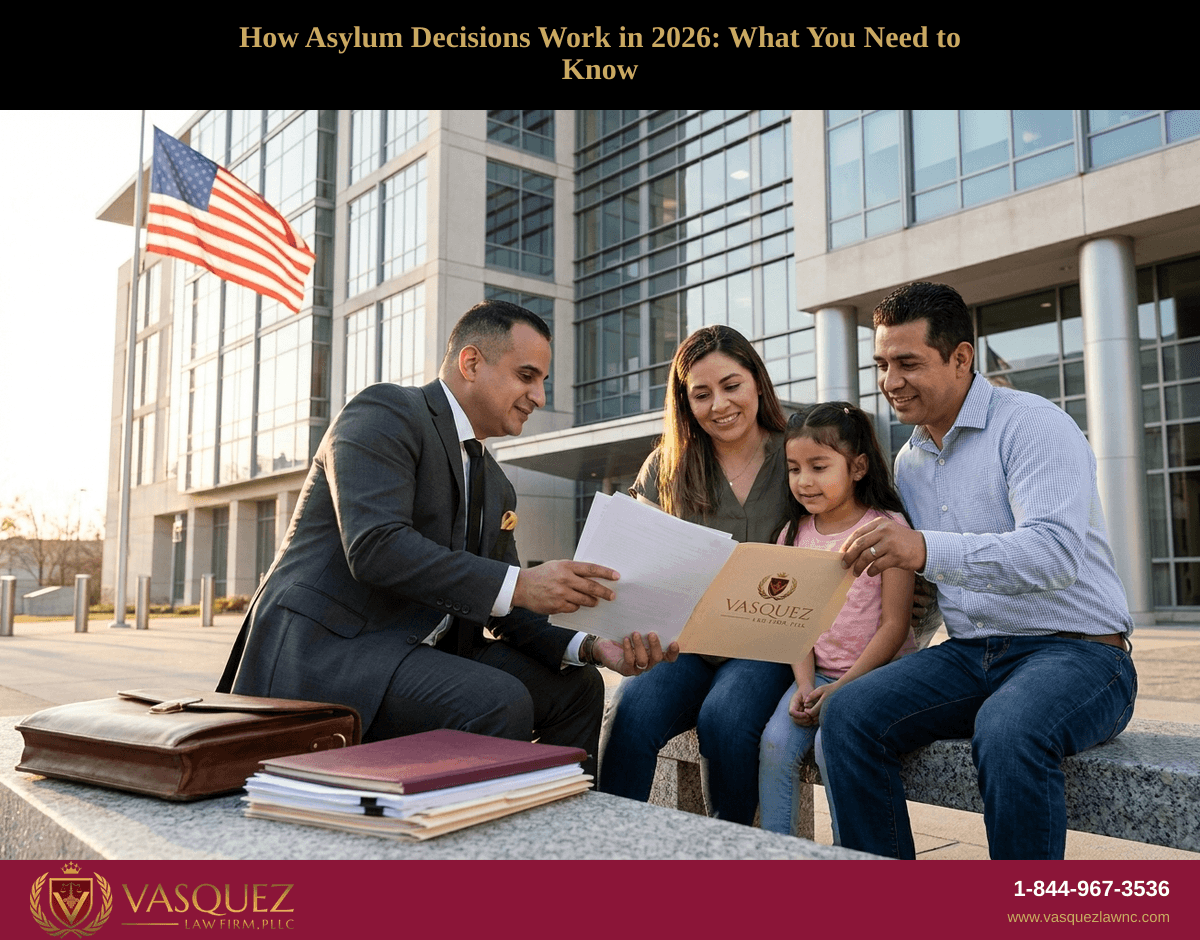
How Asylum Decisions Work in 2026: What You Need to Know
Wondering how asylum decisions work in 2026? Learn the process, timelines, and your rights. Contact Vasquez Law Firm for a free evaluation today.
Published on June 6, 2026
Talk to an immigration attorney
Free call. A clear plan for your case.
Free & confidential · Se habla espanol · 24/7
Have questions? Talk to an attorney - free evaluation.
Call 1-844-967-3536Worried how the latest immigration news affects you?
Schedule a confidential case review with an immigration attorney - know exactly where you stand.
How Asylum Decisions Work in 2026: What You Need to Know
In 2026, understanding how asylum decisions are made is critical for immigrants seeking protection in the U.S. Asylum decisions involve complex immigration court processes. This guide breaks down how decisions are reached, common issues asylum seekers face, and what to expect in Raleigh, NC, and Orlando, FL. With recent judicial changes affecting asylum cases from 39 countries, we offer clear, practical advice tailored for those navigating the U.S. asylum system today.
Need help with your case? Our experienced attorneys are ready to fight for you. Se Habla Español.
Or call us now: 1-844-967-3536
Quick Answer
Asylum decisions in 2026 are judicial or administrative rulings on whether an immigrant will be allowed protection from persecution. Recent rulings have removed some barriers for asylum seekers from 39 countries, improving approval rates. Applicants should prepare with legal support and submit complete evidence to increase their chances of success.
- Immigration judges evaluate asylum claims based on law and evidence
- USCIS processes affirmative asylum applications for eligible individuals
- Decisions vary by country of origin and case specifics
- Backlogs and legal changes influence processing times
- Consulting experienced immigration attorneys in Raleigh and Orlando improves outcomes
Understanding Asylum Decisions
A Raleigh resident from Honduras recently awaited a decision on his asylum case. He faced a long wait but felt hopeful due to recent court rulings favoring asylum seekers. As of 2026, asylum decisions are complex legal judgments made by immigration judges or U.S. Citizenship and Immigration Services (USCIS) officers.
These decisions assess whether an applicant has a well-founded fear of persecution due to race, religion, nationality, political opinion, or membership in a particular social group, as outlined in 8 U.S.C. § 1158. Approval grants protection and possible adjustment to permanent resident status.
Immigration court asylum decisions are part of removal proceedings. Defensive asylum cases are heard if the individual is in the United States without status or facing deportation. Meanwhile, affirmative asylum applications are filed proactively with USCIS by individuals physically present in the country.
The immigration judge rating system, while unofficial, often reflects the fairness and thoroughness judges display in reviewing asylum cases. Factors such as background, courtroom procedure, and country conditions significantly affect outcomes.
Nationwide, asylum decisions differ based on nationality due to differing conditions in home countries. For example, asylum seekers from countries experiencing active conflict might have higher approval chances than those from more stable nations.
Our immigration legal services in Raleigh and Orlando help clients prepare strong cases by gathering relevant evidence and preparing them for hearings.
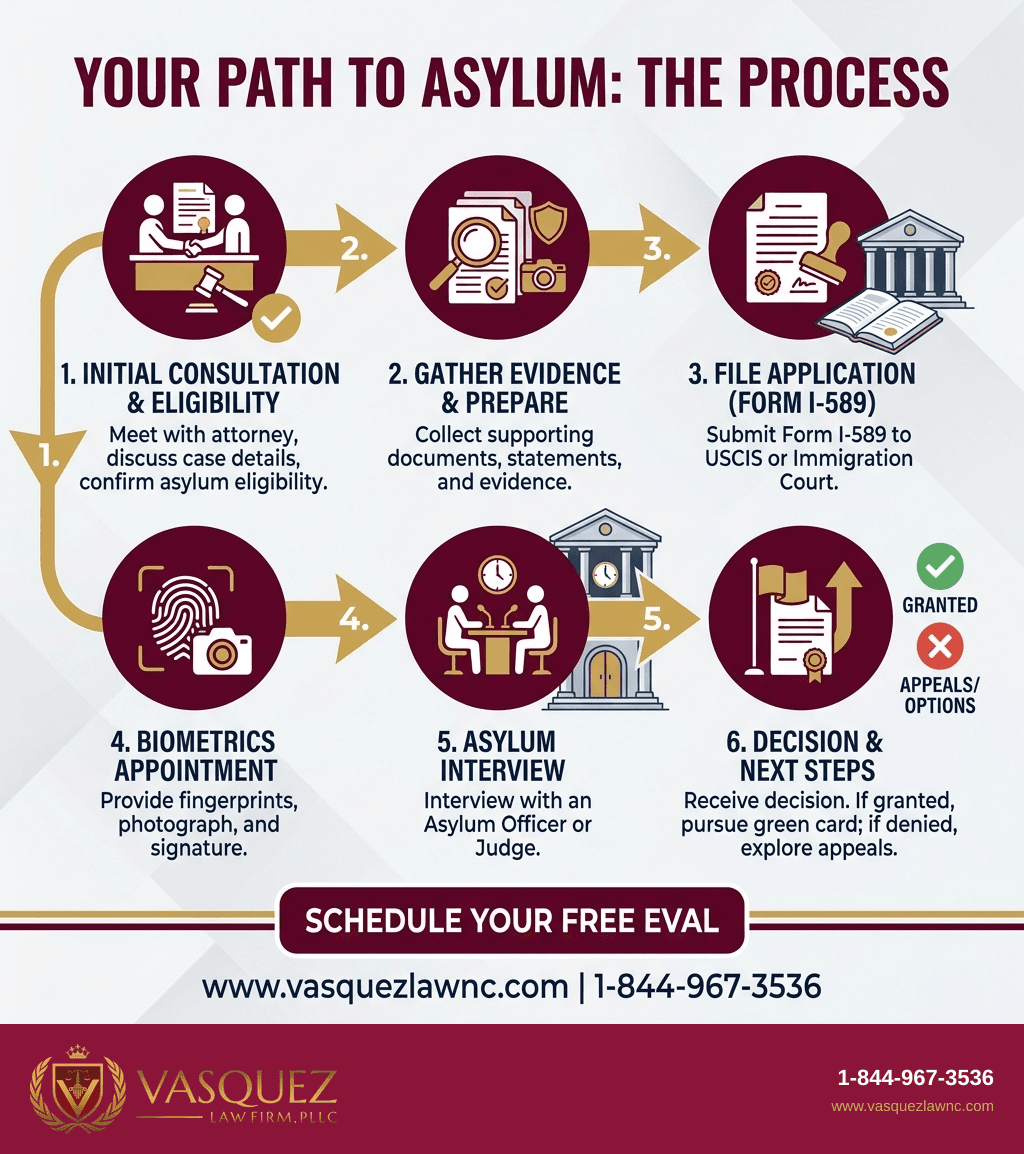
Step-by-Step: How to Apply and What Comes Next
Maria, a Floridian seeking defensive asylum, followed these steps to improve her chance of success:
- File the asylum application: For affirmative cases, this means submitting Form I-589 within one year of entry unless exceptions apply. In removal proceedings, asylum is a defense argument presented to an Immigration Judge.
- Gather evidence: This includes credible personal statements, country condition reports, and expert affidavits documented thoroughly.
- Attend the credible fear interview (if applicable): For those detained or seeking asylum defensively, this interview assesses basic eligibility.
- Prepare for the master calendar hearing: A preliminary hearings stage to schedule the full merits hearing, present motions, and clarify issues.
- Participate in the individual merits hearing: The judge listens to testimony and evidence before making a decision.
- Receive the asylum decision: The judge or USCIS officer rules to approve or deny the asylum application based on the evidence.
- Appeal if denied: Applicants may appeal to the Board of Immigration Appeals or federal courts; timing and grounds vary.
Each step is crucial. Missing deadlines or failing to present strong evidence can jeopardize the claim.
For assistance with any step, contacting our office provides access to knowledgeable support familiar with local immigration courts.
Documents and Evidence Checklist
- Completed asylum application (Form I-589)
- Personal declaration detailing persecution fears
- Country reports from reputable sources (State Department, UNHCR)
- Police reports or medical records verifying harm
- Witness affidavits and testimony
- Birth certificates, passports, or identity documents
- Proof of residence or entry to the U.S.
- Documentation of any previous claims or immigration filings
Inadequate evidence is one of the most common reasons asylum decisions are denied. Consulting our immigration attorneys in Raleigh and Orlando helps ensure your documents meet legal requirements.
Timeline: What to Expect After Applying
- 0-6 months: USCIS schedules interviews for affirmative asylum cases. Defensive applicants proceed through removal hearings on scheduled dates.
- 6-12 months: Many affirmative asylum cases receive initial decisions, though delays due to backlogs are common.
- 12-24 months: Immigration court cases usually move through master calendar and individual hearings.
- 24+ months: Continued delays possible for complex cases or appeals.
New processing times are published regularly on the USCIS Processing Times page, and applicants should check updates often.
Costs and Fees Explanation
- Filing Form I-589 is currently fee-exempt, but applicants pay for attorney representation.
- Legal fees vary by case complexity but generally range from $2,500 to $8,000.
- Additional costs include translation, document procurement, and expert witness fees.
- Some applicants qualify for fee waivers or pro bono representation.
Investing in skilled legal counsel increases the chances of a favorable asylum decision and avoids costly appeals.
Common Mistakes to Avoid in Asylum Cases
- Late submission of application—file within one year unless exceptions apply.
Fix: File promptly, seek a lawyer for exceptions. - Poorly prepared evidence or missing documentation.
Fix: Collect thorough, credible evidence and corroborate claims. - Failing to attend scheduled hearings.
Fix: Attend all hearings or request continuances properly. - Not updating address with USCIS or the immigration court.
Fix: Notify authorities immediately of any change. - Attempting self-representation without legal knowledge.
Fix: Consult experienced immigration attorneys. - Misunderstanding or providing inconsistent statements.
Fix: Be truthful, consistent, and well-prepared for testimony. - Ignoring changes in laws that impact asylum eligibility.
Fix: Stay informed with legal help to adapt your case.
If you only remember one thing: Timeliness and solid evidence significantly affect asylum decisions.
NC, FL, and Nationwide Notes on Asylum
North Carolina Notes
Raleigh hosts immigration courts where many asylum defensive cases are heard. Local USCIS offices process affirmative applications. Community resources and immigration legal aid are available to support asylum seekers.
Florida Notes
In Orlando, immigration courts also handle asylum claims. Florida’s diverse population includes many asylum applicants. Local attorneys specialize in navigating the challenges unique to this jurisdiction.
Nationwide Concepts (General Only, Rules Vary)
Federal immigration law under 8 U.S.C. § 1158 prescribes asylum eligibility nationwide. Each jurisdiction may have backlogs or procedural nuances. The Executive Office for Immigration Review (EOIR) centrally manages immigration courts.
When to Call a Lawyer Immediately
- Received a notice for a master calendar or merits hearing
- Facing removal or deportation proceedings
- Denied asylum but want to appeal
- Requested for evidence or interviews by USCIS or Immigration Court
- Experience language barriers or need translations
- Have complex country condition or persecution evidence to present
- Confused by filing deadlines or procedural requirements
- Need help understanding defense options including withholding of removal
About Vasquez Law Firm
At Vasquez Law Firm, we combine compassion with aggressive representation. Our motto "Yo Peleo®" (I Fight) reflects our commitment to standing up for your rights.
- Bilingual Support: Se Habla Español — Spanish-speaking attorneys and staff available
- Service Areas: North Carolina, Florida, and nationwide immigration services
- Experience: Over 30 years helping clients navigate complex legal matters
- Results: Thousands of successful cases across multiple practice areas
Attorney Trust and Experience
William J. Vásquez is admitted to the North Carolina State Bar (2011) and to the U.S. Courts of Appeals for the 4th, 5th, and 11th Circuits. Florida-jurisdiction matters at the firm are handled by Florida Bar attorney Harold Estrada-Rodriguez (FL Bar No. 1041171). The firm has provided dedicated legal representation since 2011, with personalized attention to each client's case.
Don't wait to get the help you deserve. Call us now for immediate assistance.
Se Habla Español
Frequently Asked Questions
What is an asylum decision?
An asylum decision is the official determination by an immigration judge or USCIS officer on the eligibility of an asylum applicant. The decision is based on whether the individual has a credible fear of persecution in their home country due to protected grounds. Thorough evidence and legal arguments influence the outcome.
Are asylum cases being approved right now?
As of 2026, asylum cases are being approved more frequently following a federal judge’s ruling that removed a policy blocking decisions for 39 countries. Approval depends on the strength of the claim and evidence. Legal representation improves chances of success.
What happens after 5 years of asylum in the USA?
After 5 years, individuals granted asylum may apply for lawful permanent resident status (a green card) under 8 U.S.C. § 1159(a), provided they maintain eligibility, remain in good moral character, and meet residency requirements.
What is defensive asylum?
Defensive asylum is protection sought during removal or deportation proceedings before an immigration judge, serving as a defense against removal rather than a proactive application through USCIS.
How long does it take to get an asylum decision?
Delays are common. USCIS may take 8 to 14 months for affirmative applications, while immigration court decisions often take 1 to 3 years due to backlogs. Processing times may vary based on location and case complexity.
What new rules affect asylum decisions in 2026?
New rules include the striking down of restrictions on asylum eligibility from certain countries, leading to more access for applicants and emphasizing fair hearing processes and evidence evaluation.
What is the role of the immigration judge in asylum decisions?
Immigration judges oversee removal proceedings, evaluate evidence, and decide asylum claims under INA § 208, ensuring applicants meet the legal standards for asylum protection.
Can asylum decisions vary by nationality?
Yes, decisions often consider country conditions. Applicants from countries with significant human rights concerns tend to have higher approval rates, but all claims are reviewed on individual merits.
Sources and References
- U.S. Citizenship and Immigration Services
- Executive Office for Immigration Review
- Legal Information Institute
Take the first step toward justice today. Our team is standing by to help.
Start Your Free Evaluation Now
Call us: 1-844-967-3536
Se Habla Español - Estamos aquí para ayudarle.

William Vasquez
Founder & CEO, Vasquez Law Firm, PLLC
William Vasquez is the founder and CEO of Vasquez Law Firm, PLLC, a results-driven firm specializing in immigration, criminal defense, personal injury, and workers' compensation. A U.S. Air Force veteran and recipient of the Joint Service Achievement Medal, William is dedicated to fiercely fighting for his clients' rights.
Related Legal Services
Need legal help? Learn more about immigration case consultation, or contact us for a free evaluation.
You can also visit immigration legal services throughout NC for more information.