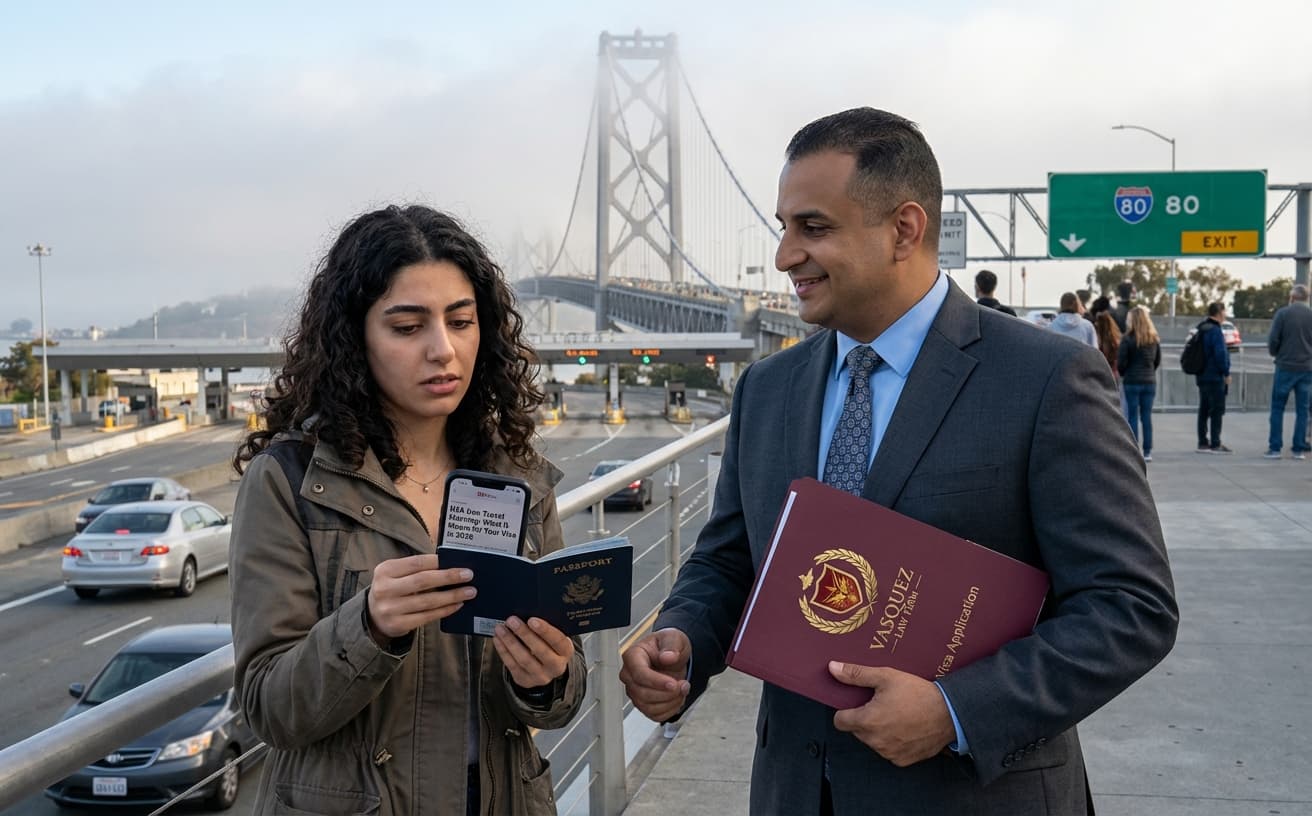
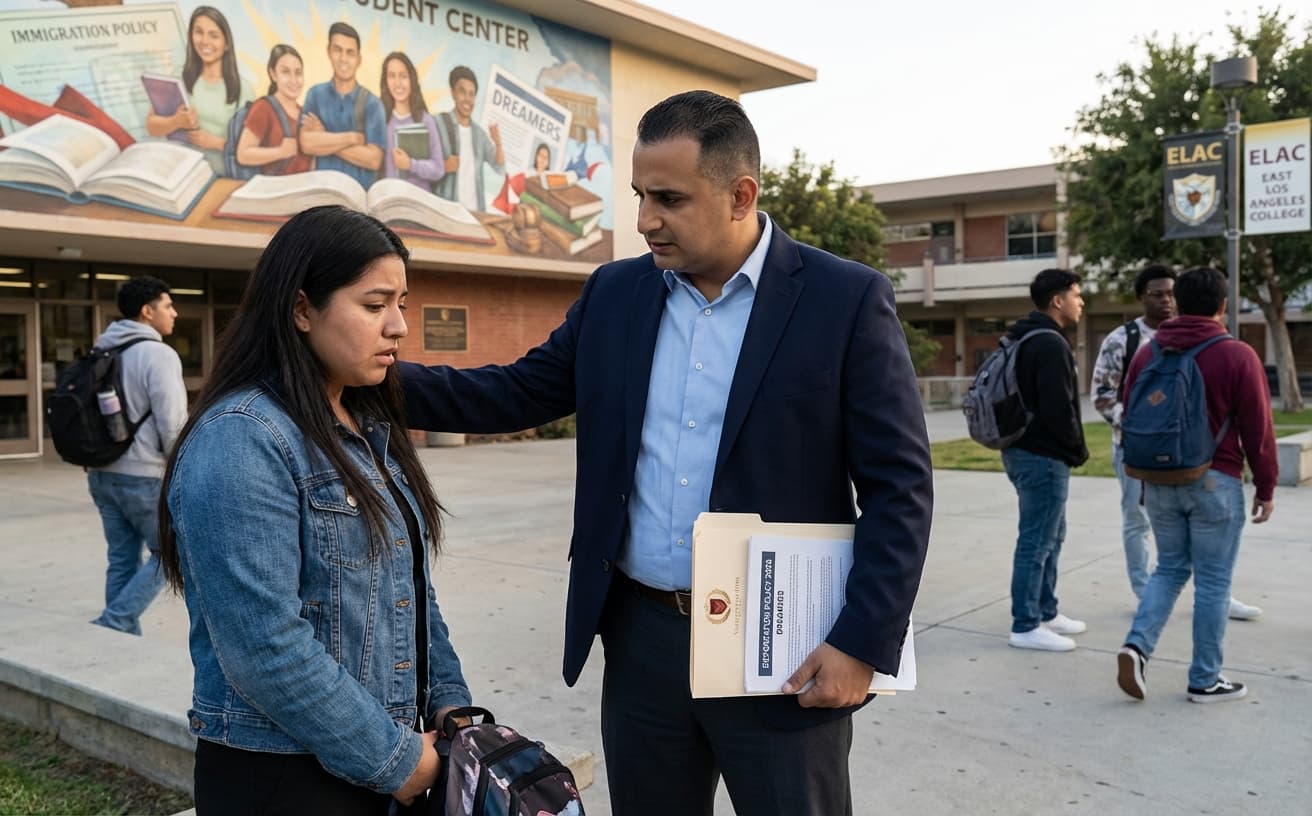
What Dreamers Need to Know About Deportation Policy in 2026
Understand current deportation policy and your rights in 2026. Protect yourself and your family. Contact Vasquez Law Firm for a free immigration consultation.
Published on March 3, 2026
Talk to an immigration attorney
Free call. A clear plan for your case.
Free & confidential · Se habla espanol · 24/7
Have questions? Talk to an attorney - free evaluation.
Call 1-844-967-3536Check your case status now
Look up your immigration case below, then talk to an attorney about what it means — free.
Questions about your result?
Talk to an attorney about your case — free, no obligation.
What Dreamers Need to Know About Deportation Policy in 2026
Understanding current deportation policy is crucial for Dreamers and their families in 2026. Changes in immigration enforcement can have profound impacts, making it vital to stay informed about your rights and available legal protections. Whether you are in North Carolina, Florida, or anywhere nationwide, knowing the complexities of removal proceedings is your first line of defense. This guide provides an in-depth look at the current landscape, aiming to equip you with the knowledge to navigate these challenging waters.
Need help with your case? Our experienced attorneys are ready to fight for you. Se Habla Español.
Schedule Your Free Case Evaluation
Or call us now: 1-844-967-3536
Quick Answer
Deportation policy in 2026 focuses on prioritizing individuals deemed a threat to national security or public safety, as well as those with recent illegal entries. However, policies can shift rapidly, impacting Dreamers and other non-citizens. Understanding the specific grounds for removal and potential defenses is essential to protect your status and future.
- Grounds for deportation include criminal convictions, immigration violations, and certain national security concerns.
- Dreamers may have DACA protections, but these do not grant full immunity from all deportation risks.
- Legal representation is critical to challenge a Notice to Appear (NTA) and explore relief options.
- Policies vary, but federal law governs the fundamental deportation process nationwide.
- Stay informed about executive orders and judicial rulings that impact immigration enforcement.
- Always consult an immigration attorney if you receive any notice from ICE or USCIS.
Understanding Current Deportation Policy in 2026
The landscape of deportation policy is constantly evolving, with significant implications for immigrant communities in North Carolina, Florida, and across the United States. As of 2026, enforcement priorities generally target individuals with serious criminal records, those who have recently crossed the border without authorization, and those deemed a national security risk. However, this does not mean other individuals are entirely safe from removal proceedings.
Recent court rulings, such as the one highlighted by AOL.com regarding the illegality of deporting migrants to countries they have no ties to, underscore the dynamic nature of these policies. These legal challenges can shape how enforcement agencies like Immigration and Customs Enforcement (ICE) operate, sometimes offering new avenues for defense or protection. For Dreamers, who often arrived in the U.S. as children, understanding these nuances is paramount, as their status can be particularly vulnerable to shifts in administrative directives and court decisions.
The primary legal framework for deportation, also known as removal, is found in the Immigration and Nationality Act (INA). This federal law outlines the various grounds upon which a non-citizen can be removed from the U.S., ranging from criminal offenses to violations of immigration law. While DACA (Deferred Action for Childhood Arrivals) provides a temporary shield for many Dreamers, it is not a pathway to citizenship and can be revoked or challenged, making comprehensive legal knowledge essential for long-term security. Vasquez Law Firm stays abreast of these changes to better serve our clients.
Key Grounds for Deportation and Removal Proceedings
Deportation, or removal from the U.S., can be triggered by a variety of actions or circumstances, making it crucial for non-citizens to understand the risks. The U.S. government can initiate removal proceedings based on criminal convictions, certain immigration violations, or issues related to national security. Even minor infractions can sometimes lead to severe immigration consequences, especially for those without permanent legal status.
Criminal grounds for deportation are broad and include offenses involving moral turpitude, aggravated felonies, controlled substance violations, and domestic violence. An aggravated felony, for instance, can lead to mandatory detention and makes it extremely difficult to obtain relief from removal. Immigration violations, such as overstaying a visa, engaging in marriage fraud, or re-entering the U.S. after a prior deportation, are also common reasons for removal proceedings.
For Dreamers, even a minor criminal charge can jeopardize DACA status and lead to a Notice to Appear (NTA) before an immigration judge. It's vital to remember that a conviction, not just an arrest, typically triggers these grounds, but even charges can prompt ICE scrutiny. Understanding these specific grounds is the first step in building a strong defense and exploring options for relief from deportation punishment. Our team at Vasquez Law Firm can help assess your situation.
The Deportation Process: What to Expect
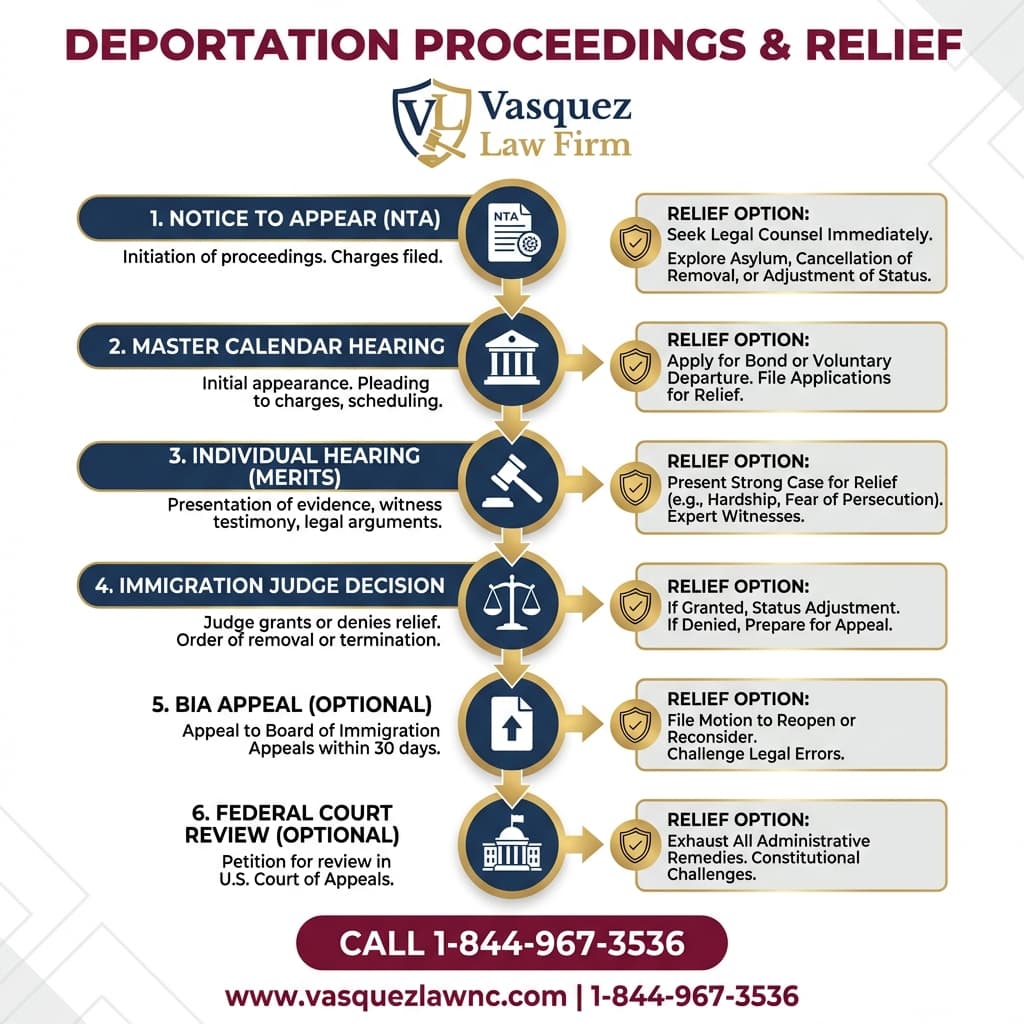
Navigating the deportation process can be daunting, but understanding its stages can help individuals prepare and respond effectively. The process typically begins when Immigration and Customs Enforcement (ICE) issues a Notice to Appear (NTA), which is a formal charging document alleging that an individual is deportable and ordering them to appear before an immigration judge. This notice outlines the specific grounds for removal and initiates formal removal proceedings.
Once an NTA is issued, the individual will have a master calendar hearing, which is a preliminary hearing where the judge confirms identity, explains the charges, and sets a schedule for future hearings. This is also the opportunity to admit or deny the allegations and designate countries of removal. Subsequent individual hearings involve presenting evidence, testimony, and arguments for any forms of relief from deportation, such as asylum, cancellation of removal, or adjustment of status. The judge then issues a decision.
If the immigration judge orders deportation, the individual has the right to appeal the decision to the Board of Immigration Appeals (BIA) and, in some cases, to a federal circuit court. If all appeals are exhausted or waived, the deportation order becomes final, and ICE can then carry out the removal. Throughout this complex process, having skilled legal representation is crucial to protect your rights and explore every possible defense or form of relief. Vasquez Law Firm provides comprehensive support for those facing these proceedings in Charlotte, NC, and throughout Florida.
Protections and Relief from Deportation for Dreamers
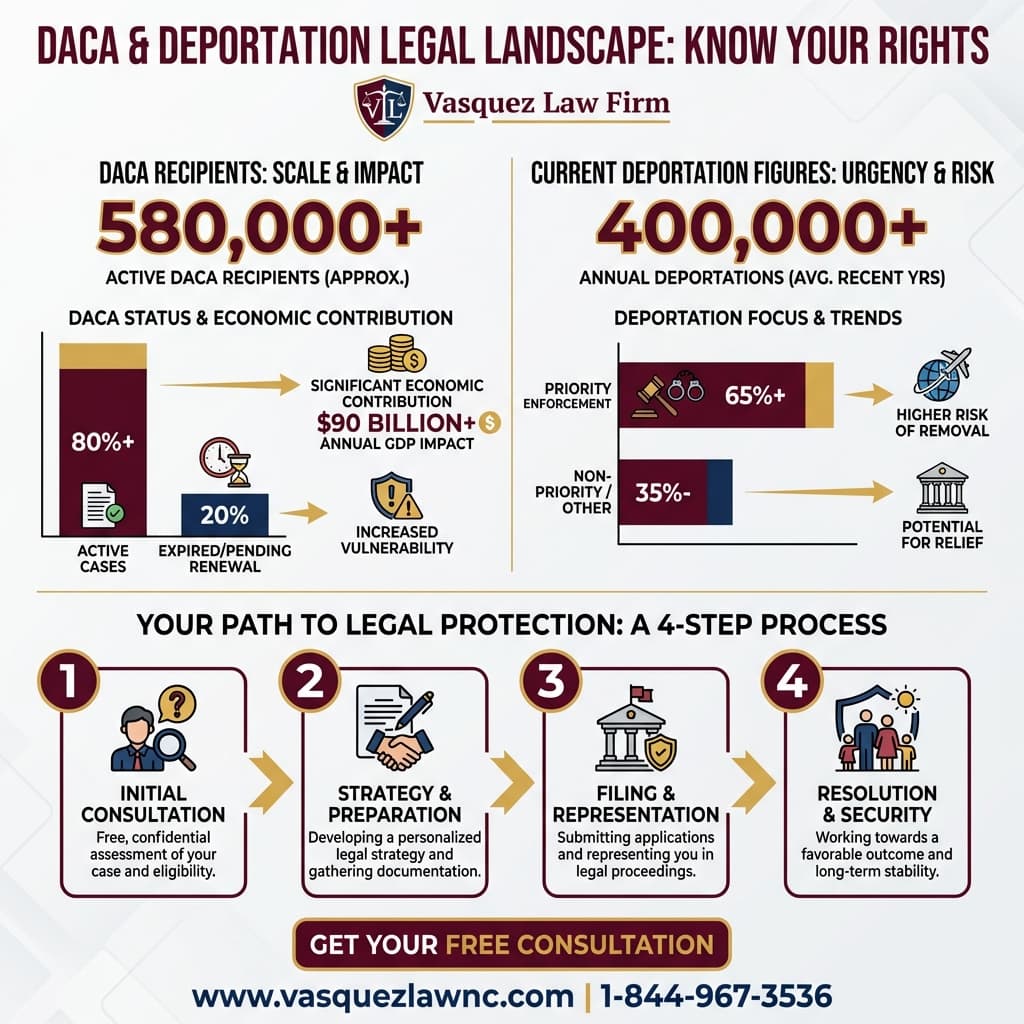
Dreamers, while facing unique vulnerabilities under current deportation policy, may have several avenues for protection and relief from removal. Deferred Action for Childhood Arrivals (DACA) is the most prominent protection, offering temporary relief from deportation and work authorization for eligible individuals. However, DACA is not a permanent solution and has faced legal challenges, underscoring the need for Dreamers to explore more secure long-term options.
Other forms of relief may include cancellation of removal, which allows certain non-citizens who have been in the U.S. for a specified period, have good moral character, and whose removal would cause extreme and unusual hardship to a qualifying U.S. citizen or lawful permanent resident relative to remain in the country. Asylum or withholding of removal may also be options for those who fear persecution in their home country. Additionally, U visas and T visas offer protection for victims of certain crimes and human trafficking, respectively.
It's important for Dreamers to understand that eligibility for these protections often depends on specific criteria, including continuous physical presence, lack of certain criminal convictions, and demonstrable hardship. Consulting with an experienced immigration attorney is essential to determine which forms of relief apply to your individual circumstances and to prepare a compelling case. Vasquez Law Firm is dedicated to helping Dreamers in North Carolina and Florida understand their options and fight for their future.
Don't face your legal challenges alone. Our team is here to help you every step of the way.
Call today: 1-844-967-3536 | Se Habla Español
Common Mistakes to Avoid in Deportation Cases
Navigating a deportation case is complex, and even minor missteps can have severe consequences. Avoiding common mistakes is crucial for anyone facing removal proceedings, especially under evolving deportation policy in 2026. These errors can weaken your case, eliminate potential defenses, or even lead to expedited removal.
- Not consulting an attorney immediately: Delaying legal advice can mean missing critical deadlines or unknowingly making statements that harm your case. An attorney can advise you from the moment you receive a Notice to Appear.
- Lying to immigration officials: Providing false information to ICE or USCIS can lead to charges of misrepresentation, which are serious grounds for inadmissibility and deportability. Always be truthful, but exercise your right to remain silent until you've spoken with counsel.
- Ignoring court notices: Failing to appear for scheduled immigration court hearings can result in a removal order issued in absentia, making it much harder to reopen your case and avoid deportation.
- Not understanding your rights: Many non-citizens are unaware of their Fifth Amendment rights, including the right to remain silent and the right to an attorney. Knowing these rights can prevent self-incrimination.
- Failing to gather crucial documents: A strong defense often relies on evidence of continuous presence, good moral character, family ties, or fear of persecution. Not having these documents ready can delay or weaken your case.
- Traveling outside the U.S. without proper authorization: Leaving the U.S. while in removal proceedings or with certain immigration statuses can trigger automatic inadmissibility upon return, or even a permanent bar.
- Not understanding the consequences of criminal charges: Even minor criminal offenses can have significant immigration consequences. Always consult an immigration attorney before pleading guilty to any crime.
- Failing to update contact information with USCIS/ICE: If your address changes, and you fail to update it, you might miss important notices, including hearing dates, leading to an order of removal in absentia.
If you only remember one thing: Never face immigration proceedings without legal counsel. The stakes are too high, and the laws are too intricate for self-representation.
NC, FL, and Nationwide Immigration Notes
Immigration law, including deportation policy, is primarily federal, meaning the core statutes and regulations apply nationwide. However, the practical application and local enforcement priorities can vary significantly between states like North Carolina and Florida, and even within different regions of the country. This regional variation is critical for individuals, particularly Dreamers, to understand in 2026.
Federal Framework and Enforcement Priorities
The Immigration and Nationality Act (INA) forms the bedrock of U.S. immigration law, administered by federal agencies such as U.S. Citizenship and Immigration Services (USCIS), Immigration and Customs Enforcement (ICE), and Customs and Border Protection (CBP). These agencies operate under directives from the Department of Homeland Security (DHS) and the Executive Office for Immigration Review (EOIR), which oversees immigration courts. While these federal laws and agencies govern the overall deportation process, local law enforcement cooperation and specific prosecutorial discretion can influence outcomes.
Current federal deportation policy priorities, as of 2026, generally focus on individuals who pose a national security threat, public safety risk, or border security concern. This includes those with serious criminal records, recent unlawful entrants, and individuals who have abused visa programs. However, these priorities can be interpreted broadly, and any non-citizen without permanent legal status could be subject to removal proceedings.
North Carolina Specifics
In North Carolina, immigration enforcement often involves cooperation between local law enforcement and federal agencies like ICE. Programs such as 287(g) agreements, though less prevalent than in past years, can still empower local officers to perform certain immigration enforcement functions. This means that individuals arrested for state-level offenses in North Carolina, even minor ones, could be placed in immigration detention and initiated into deportation proceedings. It is essential for residents in Charlotte and other NC cities to be aware of these local dynamics and to seek legal counsel immediately if they encounter law enforcement.
Florida Specifics
Florida has a complex relationship with federal immigration enforcement, often implementing its own state-level laws that can impact non-citizens. For instance, laws requiring local law enforcement cooperation with federal immigration authorities or prohibiting sanctuary policies can create a more challenging environment for undocumented immigrants. These state laws can lead to increased arrests and transfers to ICE custody, even for minor offenses. Residents across Florida must be particularly vigilant about state legislative changes and their potential effects on deportation policy and enforcement.
When to Call a Lawyer Now About Deportation Policy
The urgency of seeking legal counsel in immigration matters, especially those involving deportation policy, cannot be overstated. Waiting too long can severely limit your options and jeopardize your future in the United States. If any of the following situations apply to you, contact an experienced immigration attorney at Vasquez Law Firm immediately:
- You have received a Notice to Appear (NTA) from ICE or an immigration court.
- You have been arrested or detained by ICE or any law enforcement agency.
- You are a DACA recipient and have been arrested or charged with any crime, regardless of severity.
- You have an existing order of deportation or removal, even if it's from many years ago.
- You are considering traveling outside the U.S. but have concerns about your immigration status.
- You or a family member is facing potential deportation due to an expired visa or other immigration violation.
- You believe you qualify for asylum, a U visa, T visa, or other form of relief but haven't applied.
- You have received any official communication from USCIS or ICE that you do not understand.
- You are a non-citizen charged with a criminal offense, even a misdemeanor, in North Carolina or Florida.
- You are concerned about a family member's immigration status and their risk of deportation.
About Vasquez Law Firm
At Vasquez Law Firm, we combine compassion with aggressive representation. Our motto "Yo Peleo" (I Fight) reflects our commitment to standing up for your rights and vigorously defending your interests. We understand the profound impact that immigration and deportation issues have on individuals and families, and we are dedicated to providing personalized, effective legal solutions.
- Bilingual Support: Se Habla Español - our team is fully bilingual, ensuring clear communication and understanding throughout your legal journey.
- Service Areas: We proudly serve clients in North Carolina, Florida, and provide nationwide immigration services, offering comprehensive support wherever you are.
- Experience: With over 15 years helping clients navigate complex legal matters, Attorney Vasquez brings a wealth of knowledge and a proven track record to every case.
- Results: We have achieved thousands of successful outcomes across multiple practice areas, demonstrating our commitment to fighting for the best possible results for our clients.
Attorney Trust and Experience
Attorney Vasquez holds a Juris Doctor degree and is admitted to practice in both the North Carolina State Bar and Florida Bar. With over 15 years of dedicated legal experience, he has built a reputation for providing personalized attention and achieving favorable outcomes for his clients. His deep understanding of immigration law, coupled with a compassionate approach, makes Vasquez Law Firm a trusted advocate for those facing the complexities of deportation policy and other immigration challenges.
Don't face your legal challenges alone. Our team is here to help you every step of the way.
Call today: 1-844-967-3536 | Se Habla Español
Frequently Asked Questions
What is the current deportation policy in 2026?
As of 2026, U.S. deportation policy prioritizes individuals deemed national security threats, public safety risks, and recent unlawful entrants. While these are the primary targets, any non-citizen without permanent legal status can potentially face removal proceedings. Policies are subject to change based on executive directives and judicial rulings. Consulting an attorney provides the most current, case-specific information.
Can a U.S. citizen be deported?
No, a natural-born or naturalized U.S. citizen cannot be deported from the United States. Citizenship is the ultimate protection against removal. However, proving U.S. citizenship can sometimes require documentation, and false claims of citizenship can have serious immigration consequences for non-citizens. If you are a citizen, your status is secure.
What is the most common reason for deportation?
The most common reasons for deportation often involve criminal convictions, particularly aggravated felonies or drug offenses, and immigration violations like overstaying a visa or illegal re-entry after a previous deportation. These broad categories encompass a wide range of specific infractions that can trigger removal proceedings under federal law. Each case is unique, but these are frequent triggers.
Can ICE immediately deport you?
In most cases, ICE cannot immediately deport you without due process. You generally have the right to a hearing before an immigration judge. However, certain situations, like expedited removal for individuals apprehended at the border or ports of entry, or reinstatement of prior removal orders, can lead to quicker deportation. Always seek legal counsel to understand your rights if detained.
What happens when you get deported back to your country?
When deported, you are typically barred from re-entering the U.S. for a specified period, often 5, 10, or 20 years, or even permanently, depending on the reason for deportation. Re-entry without authorization can lead to severe penalties, including criminal charges. The process involves being physically removed from the U.S. by ICE and transported to your country of origin.
What is the difference between a removal order and a deportation order?
The terms "removal order" and "deportation order" are largely interchangeable in modern U.S. immigration law. The Immigration and Nationality Act (INA) was amended in 1996 to consolidate various forms of exclusion and deportation into a single "removal" process. While "deportation" is still commonly used, "removal" is the official legal term for expelling a non-citizen from the U.S.
What is the rule of deportation?
The "rule of deportation" refers to the legal framework outlined in the Immigration and Nationality Act (INA), specifically 8 U.S.C. § 1227, which details the classes of deportable aliens. These rules cover grounds such as criminal offenses, security-related offenses, violations of status, and other specific immigration infractions. These federal rules dictate who can be removed from the United States.
Where do they drop you off when you get deported?
When you get deported, U.S. immigration authorities (ICE) arrange for your transport to your country of citizenship or last habitual residence. You are typically dropped off at a major international airport or border crossing in that country. The specific location depends on the country's infrastructure and agreements with the U.S. government.
Who is eligible for deportation protection?
Eligibility for deportation protection varies widely based on individual circumstances. Options can include DACA for eligible Dreamers, asylum for those fearing persecution, cancellation of removal for long-term residents with qualifying relatives, and U/T visas for crime victims. Each form of relief has specific criteria regarding physical presence, criminal record, and hardship. An attorney can assess eligibility.
How can Vasquez Law Firm help with deportation cases?
Vasquez Law Firm provides comprehensive legal support for deportation cases. Our attorneys can assess your situation, identify potential defenses and forms of relief, prepare and file necessary documents, and represent you in immigration court. We fight to protect your rights, challenge allegations, and explore every avenue to prevent removal and secure your future in the United States. Se Habla Español.
Sources and References
- U.S. Citizenship and Immigration Services (USCIS)
- Executive Office for Immigration Review (EOIR)
- 8 U.S. Code § 1227 - Deportable aliens
Ready to take the next step? Contact Vasquez Law Firm today for a free, confidential consultation. We're committed to fighting for your rights and achieving the best possible outcome for your case.
Start Your Free Case Evaluation Now
Call us: 1-844-967-3536
Se Habla Español - Estamos aquí para ayudarle.

William Vasquez
Founder & CEO, Vasquez Law Firm, PLLC
William Vasquez is the founder and CEO of Vasquez Law Firm, PLLC, a results-driven firm specializing in immigration, criminal defense, personal injury, and workers' compensation. A U.S. Air Force veteran and recipient of the Joint Service Achievement Medal, William is dedicated to fiercely fighting for his clients' rights.
Related Legal Services
Need legal help? Learn more about our immigration legal services, or contact us for a free evaluation.
You can also visit our NC immigration team for more information.