What to Expect From Car Accident Verdicts in North Carolina in 2026
Understand car accident verdicts in NC for 2026. Learn what impacts your case and how to pursue fair compensation. Contact Vasquez Law for a free consultation.
Published on March 4, 2026
Injured? Get what your case is worth
Free review. No fee unless we win.
Free & confidential · Se habla espanol · 24/7
Have questions? Talk to an attorney - free evaluation.
Call 1-844-967-3536Get What Your Injury Is Worth
Schedule your consultation - no fee unless we win.
What to Expect From Car Accident Verdicts in North Carolina in 2026
Navigating the aftermath of a car accident in North Carolina can be overwhelming, especially when considering the potential for a trial and a car accident verdict. While many cases settle out of court, understanding how verdicts are reached and what factors influence them is crucial for any injury victim. As of 2026, North Carolina law provides a framework for seeking compensation, but the path to a favorable outcome often requires skilled legal guidance. This guide outlines the key aspects of car accident verdicts in North Carolina, helping you understand the process and protect your rights.
Need help with your car accident case in North Carolina? Our experienced attorneys are ready to fight for you. Se Habla Español.
Schedule Your Free Case Evaluation
Or call us now: 1-844-967-3536
Quick Answer
A car accident verdict in North Carolina is a formal decision made by a judge or jury regarding liability and damages in a personal injury lawsuit following a car crash. While most cases settle, a verdict occurs after a trial, determining who was at fault and the amount of compensation the injured party will receive. Factors influencing a verdict include evidence presented, witness testimony, and the specifics of North Carolina's contributory negligence laws.
- Verdicts are formal court decisions after a trial.
- They determine liability and compensation.
- Evidence, testimony, and state laws are key influences.
- North Carolina's contributory negligence rule significantly impacts outcomes.
- An attorney is crucial for navigating the trial process.
Understanding Car Accident Verdicts in North Carolina
A car accident verdict is the final decision rendered by a judge or jury at the conclusion of a personal injury trial. This verdict addresses two primary questions: who is legally responsible for the accident, and what amount of compensation should be awarded to the injured party. In North Carolina, the legal landscape for car accidents is shaped by specific statutes and common law principles, making it distinct from other states.
When a car accident case goes to trial, both sides present their arguments, evidence, and witness testimonies. The jury, or judge in a bench trial, then deliberates on the facts and applies the relevant laws to reach a verdict. This process can be lengthy and complex, often requiring extensive preparation and presentation of expert testimony to establish fault and quantify damages. Understanding the nuances of North Carolina's legal system is essential for anyone seeking justice after a collision.
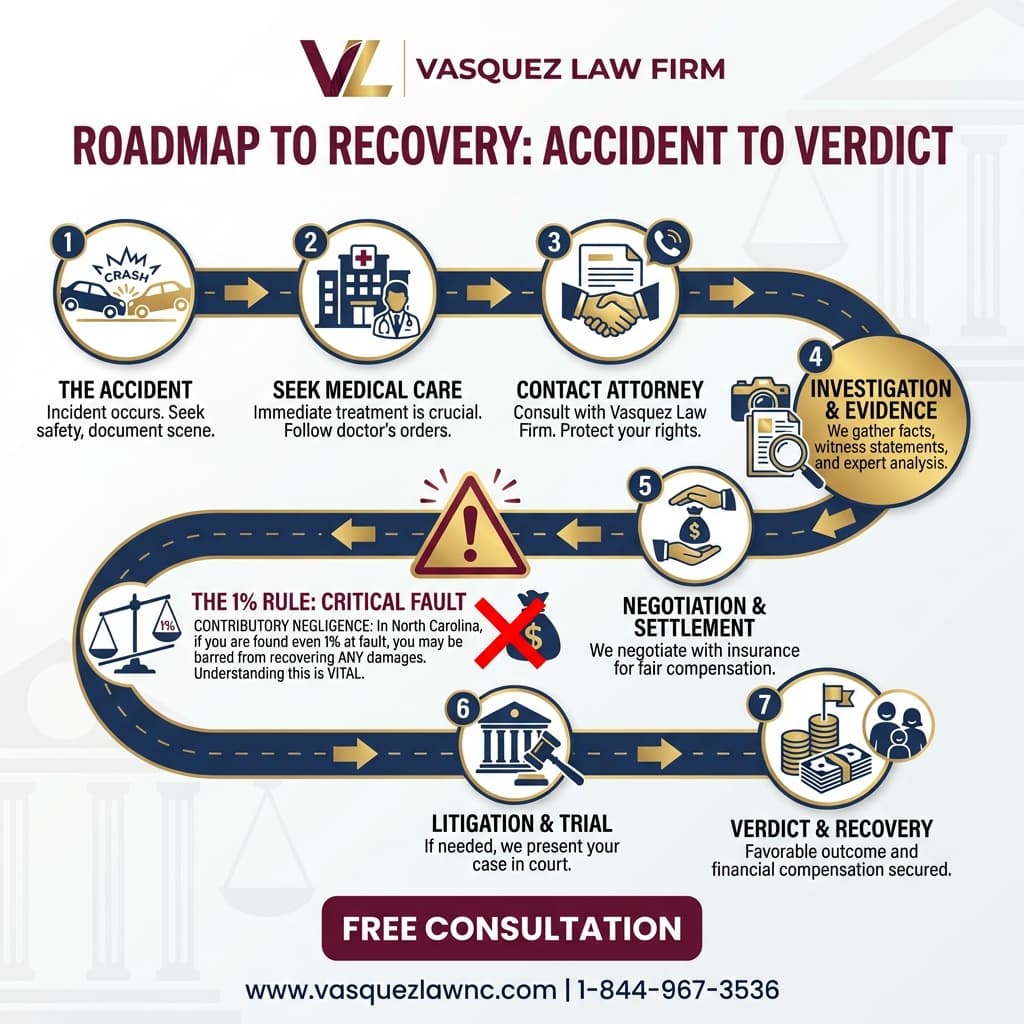
One of the most critical aspects of North Carolina personal injury law, particularly relevant to car accident verdicts, is the doctrine of contributory negligence. This rule states that if the injured party is found to be even 1% at fault for the accident, they may be barred from recovering any damages. This strict rule makes proving clear liability paramount and often leads to vigorous defense efforts to assign even a small percentage of blame to the plaintiff. For this reason, securing experienced legal representation is not just beneficial, but often necessary to successfully navigate a car accident verdict in North Carolina.
Key Steps to Take After a North Carolina Car Accident
The actions you take immediately following a car accident in North Carolina can significantly impact the strength of your personal injury claim and potential car accident verdict. Protecting your legal rights starts at the scene of the crash and continues through every stage of your recovery and legal process. Following these steps can help ensure you gather the necessary evidence and avoid common pitfalls.
At the Accident Scene
- Ensure Safety: Move to a safe location if possible, and check for injuries. Call 911 for emergencies.
- Contact Law Enforcement: Report the accident to local police or the North Carolina Highway Patrol. An official accident report is crucial evidence.
- Exchange Information: Get contact details, insurance information, and license plate numbers from all involved drivers.
- Document the Scene: Take photos and videos of vehicle damage, road conditions, traffic signs, skid marks, and any visible injuries.
- Seek Medical Attention: Even if you feel fine, get checked by a doctor. Some injuries have delayed symptoms, and medical records link your injuries to the accident.
After Leaving the Scene
- Report to Your Insurer: Notify your insurance company promptly, but be cautious about giving detailed statements before speaking with an attorney.
- Gather Evidence: Collect medical bills, repair estimates, wage loss documentation, and any other relevant records.
- Consult an Attorney: Speak with a North Carolina personal injury lawyer as soon as possible. They can advise you on your rights, handle communication with insurance companies, and prepare your case for settlement or trial.
- Follow Medical Advice: Adhere strictly to your doctor's treatment plan. Gaps in treatment can be used by the defense to argue your injuries are not severe or related to the accident.
Taking these proactive measures helps build a strong foundation for your claim, whether it leads to a settlement or a car accident verdict in court. The more organized and diligent you are in these initial stages, the better positioned you will be to receive fair compensation.
Factors Influencing a Car Accident Verdict and Compensation
Several critical elements weigh heavily on the outcome of a car accident verdict in North Carolina. These factors determine not only whether you will receive compensation but also the amount. Understanding these influences can help you and your legal team strategize effectively.
Evidence and Witness Testimony
- Accident Report: The official report from law enforcement often provides an initial assessment of fault and details about the crash.
- Photographs and Videos: Visual evidence from the scene can clearly depict vehicle damage, road conditions, and the extent of injuries.
- Witness Statements: Eyewitness accounts can corroborate your version of events and provide an impartial perspective.
- Expert Testimony: Accident reconstructionists, medical professionals, and economic experts can provide crucial insights into liability, injury causation, and financial losses.
Severity of Injuries and Damages
- Medical Expenses: All costs related to treatment, including emergency care, surgeries, rehabilitation, and future medical needs.
- Lost Wages: Income lost due to inability to work, both past and future.
- Pain and Suffering: Compensation for physical pain, emotional distress, and loss of enjoyment of life.
- Property Damage: Cost to repair or replace your vehicle and any other damaged property.
North Carolina's Contributory Negligence Law
As mentioned, North Carolina is one of the few states that still adheres to the strict rule of contributory negligence. If the defendant can prove that you were even slightly at fault for the accident, you could be completely barred from recovering damages. This rule makes the determination of fault a highly contested issue in any car accident verdict. Proving the other driver was 100% at fault is often the biggest hurdle to overcome in North Carolina personal injury cases, requiring meticulous evidence gathering and strong legal arguments. North Carolina General Statutes Chapter 1, Article 11, Section 1-137 outlines some aspects of negligence and damages.
Timeline: What to Expect During a Car Accident Lawsuit
The legal process for a car accident claim, especially one that may lead to a car accident verdict, can be lengthy. Understanding the typical timeline helps manage expectations and prepare for each stage. While every case is unique, here's a general overview of what to expect in North Carolina.
- Immediate Aftermath (Days to Weeks): This involves seeking medical attention, reporting the accident, and consulting with a personal injury attorney. During this phase, evidence is gathered, and initial investigations begin.
- Investigation and Demand (Weeks to Months): Your attorney will conduct a thorough investigation, collect all medical records and bills, and calculate your total damages. Once your medical treatment is complete or stabilized, a demand package is sent to the at-fault driver's insurance company.
- Negotiation (Months): The insurance company will review the demand and typically respond with a settlement offer. Negotiations may ensue. If a fair settlement cannot be reached, litigation becomes the next step.
- Filing a Lawsuit (Months to Years): If negotiations fail, your attorney will file a personal injury lawsuit in North Carolina court. This officially initiates the litigation process.
- Discovery (Several Months to a Year+): This is an extensive information-gathering phase. Both sides exchange documents, take depositions (sworn testimonies), and conduct interrogatories.
- Mediation/Arbitration (Months): Many courts require or encourage alternative dispute resolution methods like mediation before trial. A neutral third party helps facilitate a settlement.
- Trial (Days to Weeks): If no settlement is reached, the case proceeds to trial. This involves jury selection, opening statements, presentation of evidence and witnesses, closing arguments, and finally, jury deliberation and a car accident verdict.
- Post-Trial (Months): If a verdict is rendered, the losing party may appeal. The appeals process can add significant time and complexity.
This timeline highlights why patience and persistence are key. An experienced attorney can guide you through each phase, ensuring your case is meticulously prepared for a successful car accident verdict or settlement.
Don't face your legal challenges alone. Our team is here to help you every step of the way.
Call today: 1-844-967-3536 | Se Habla Español
Common Mistakes to Avoid in Car Accident Cases
Making mistakes after a car accident can severely jeopardize your ability to secure fair compensation or a favorable car accident verdict. Being aware of these common errors can help you protect your claim and strengthen your position.
- Admitting Fault: Never admit fault or apologize at the accident scene. Any statement suggesting you were to blame can be used against you later due to North Carolina's contributory negligence rule.
- Delaying Medical Treatment: Waiting to see a doctor can make it harder to prove your injuries were caused by the accident. Always seek immediate medical attention.
- Not Documenting Everything: Failing to take photos, gather witness information, or keep detailed records of medical treatment and expenses can weaken your evidence.
- Giving Recorded Statements to Insurers: Insurance companies, even your own, may try to get you to provide a recorded statement that could be used to minimize your claim. Consult your attorney before speaking with them.
- Accepting a Quick Settlement Offer: Initial offers are often low and may not cover the full extent of your damages, especially if your injuries require long-term care.
- Posting on Social Media: Insurance companies and defense attorneys often monitor social media. Posts about your activities or condition can be misinterpreted and used to dispute your injury claims.
- Not Hiring an Attorney: Navigating North Carolina's complex personal injury laws, especially the contributory negligence rule, without legal representation is a significant disadvantage. An attorney can protect your rights and maximize your chances for a successful car accident verdict.
If you only remember one thing: Do not admit fault, seek immediate medical attention, and contact an experienced North Carolina personal injury attorney as soon as possible after a car accident.
North Carolina Personal Injury Law: Key Considerations
While the overall concept of a car accident verdict is universal, the specifics of personal injury law vary significantly by state. In North Carolina, several unique aspects of the legal system directly influence how car accident cases are handled and ultimately decided.
Contributory Negligence
This is perhaps the most critical distinction in North Carolina personal injury law. As discussed, if you are found to have contributed to the accident in any way, even minimally, you may lose your right to recover damages. This strict rule places a high burden on plaintiffs to prove the defendant's sole fault. It is a major reason why many car accident cases in North Carolina proceed to trial, as defendants often attempt to prove some degree of contributory negligence on the part of the plaintiff.
Statute of Limitations
In North Carolina, the statute of limitations for most personal injury claims, including those arising from car accidents, is three years from the date of the accident (N.C. Gen. Stat. § 1-52). This means you generally have three years to file a lawsuit. If you fail to file within this timeframe, you will likely lose your right to pursue compensation, regardless of the merits of your case. There are very few exceptions to this rule, emphasizing the importance of timely legal action.
Damages Caps
North Carolina does impose caps on certain types of damages in personal injury cases, specifically for punitive damages. Punitive damages are awarded not to compensate the victim but to punish the at-fault party for egregious conduct and deter similar actions in the future. In North Carolina, punitive damages are generally capped at three times the amount of compensatory damages or $250,000, whichever is greater. However, there are no caps on compensatory damages, which include economic losses (medical bills, lost wages) and non-economic losses (pain and suffering).
Understanding these North Carolina-specific legal principles is vital for anyone pursuing a car accident verdict. An experienced attorney in Charlotte can provide tailored advice and representation, ensuring your case complies with all state requirements and maximizes your chances for a successful outcome.
When to Call a North Carolina Car Accident Lawyer Now
Knowing when to seek legal counsel is crucial for protecting your rights and maximizing your potential compensation after a car accident. While some minor fender-benders might be resolved through insurance claims, many situations warrant immediate legal intervention, especially if you anticipate a complex negotiation or a potential car accident verdict. If any of the following apply to your situation, it's time to contact an attorney:
- Significant Injuries: If you or a loved one sustained moderate to severe injuries requiring extensive medical treatment, hospitalization, or surgery.
- Disputed Fault: If the other driver, their insurance company, or even law enforcement suggests you were partially or entirely at fault for the accident, given North Carolina's strict contributory negligence rule.
- Insurance Company Tactics: If an insurance adjuster is pressuring you to accept a quick settlement, denying your claim, or acting uncooperatively.
- Uninsured or Underinsured Driver: If the at-fault driver has no insurance or insufficient coverage to cover your damages.
- Commercial Vehicle Accident: Accidents involving commercial trucks, buses, or company vehicles often involve complex regulations and higher stakes.
- Wrongful Death: If the accident resulted in the death of a family member.
- Long-Term Impact: If your injuries are causing long-term pain, disability, lost earning capacity, or a significant impact on your quality of life.
- Multiple Parties Involved: Accidents involving more than two vehicles or multiple injured parties can quickly become complicated.
Don't hesitate to reach out for a free case evaluation. The sooner you involve a skilled personal injury lawyer, the better equipped you will be to navigate the legal process and pursue the justice you deserve, whether through settlement or a car accident verdict in court.
About Vasquez Law Firm
At Vasquez Law Firm, we combine compassion with aggressive representation, embodying our motto "Yo Peleo" (I Fight) to stand up for your rights. With offices serving North Carolina and Florida, our dedicated team is committed to providing exceptional legal services across various practice areas.
- Bilingual Support: Se Habla Español - our team is fully bilingual, ensuring clear communication and understanding for all our clients.
- Service Areas: Personal injury in North Carolina; immigration nationwide, including Florida
- Experience: With over 15 years of dedicated legal experience, we have a proven track record of helping clients navigate complex legal matters and achieve favorable outcomes.
- Results: Our firm has successfully handled thousands of cases, securing significant compensation for personal injury victims and favorable resolutions in immigration and criminal defense matters.
Attorney Trust and Experience
Attorney Vasquez, JD, is a highly respected legal professional admitted to practice in both the North Carolina State Bar and Florida Bar. With over 15 years of dedicated legal experience, he has built a reputation for providing personalized attention, strategic advocacy, and achieving favorable outcomes for his clients. His commitment to justice and client well-being is at the core of Vasquez Law Firm's mission, ensuring every client receives the tenacious representation they deserve, whether pursuing a car accident verdict or negotiating a settlement.
Injured in an accident? Our personal injury attorneys can review your claim.
Ready to take the next step? Contact Vasquez Law Firm today for a free, confidential consultation. We're committed to fighting for your rights and achieving the best possible outcome for your case, including pursuing a just car accident verdict if necessary.
Start Your Free Case Evaluation Now
Call us: 1-844-967-3536
Se Habla Español - Estamos aquí para ayudarle.
Frequently Asked Questions
What is the average car accident verdict in North Carolina?
There is no true "average" car accident verdict in North Carolina because every case is unique. Verdicts can range from thousands to millions of dollars, depending on factors like the severity of injuries, medical expenses, lost wages, pain and suffering, and the clarity of liability. The strict contributory negligence rule also means many cases that would yield a verdict in other states may be dismissed in North Carolina if the plaintiff shares any fault.
How is pain and suffering calculated in an NC car accident verdict?
Pain and suffering damages in an NC car accident verdict are subjective and often determined by the jury based on factors like the severity and duration of your injuries, medical treatment received, impact on daily life, and emotional distress. There isn't a fixed formula; instead, attorneys present evidence and arguments to help the jury understand the full extent of your non-economic losses.
Can I still get a verdict if I was partially at fault in North Carolina?
No, North Carolina's strict contributory negligence law generally bars you from recovering any damages, including a car accident verdict, if you are found even 1% at fault for the accident. This makes proving the other driver's sole fault critically important in NC personal injury cases. There are very limited exceptions, such as last clear chance doctrine, but they are difficult to prove.
How long does it take to get a car accident verdict in North Carolina?
Obtaining a car accident verdict in North Carolina can take a significant amount of time, often extending from one to three years, or even longer, from the date of the accident. This timeline includes investigation, negotiation, filing a lawsuit, discovery, and the actual trial. Appeals can add even more time to the process, making patience essential for victims.
What types of damages can be included in a car accident verdict?
A car accident verdict in North Carolina can include both economic and non-economic damages. Economic damages cover quantifiable losses like medical expenses, lost wages, property damage, and future medical care. Non-economic damages compensate for subjective losses such as pain and suffering, emotional distress, disfigurement, and loss of enjoyment of life. Punitive damages may also be awarded in rare cases of egregious conduct.
What happens if the other driver doesn't have insurance?
If the at-fault driver doesn't have insurance, your ability to recover damages through a car accident verdict may depend on your own insurance policy. In North Carolina, you can pursue compensation through your Uninsured Motorist (UM) or Underinsured Motorist (UIM) coverage. It is highly advisable to consult with a personal injury attorney to understand your options and navigate this complex situation effectively.
Is a car accident verdict always better than a settlement?
Not necessarily. While a car accident verdict can sometimes result in higher compensation, it also carries greater risks, including the possibility of losing the case entirely or receiving a lower award. Settlements offer certainty and a quicker resolution. An experienced attorney can help you weigh the pros and cons of pursuing a verdict versus accepting a settlement based on the specifics of your North Carolina case.
Can I appeal a car accident verdict in North Carolina?
Yes, if you are dissatisfied with a car accident verdict in North Carolina, you generally have the right to appeal the decision to a higher court. However, an appeal is not a retrial; it focuses on errors of law or procedure made during the original trial, not on re-evaluating the facts. The appeals process is complex and requires specialized legal knowledge.
How do I find a good personal injury lawyer for a car accident verdict in Charlotte?
Finding a good personal injury lawyer for a car accident verdict in Charlotte involves researching attorneys with specific experience in North Carolina personal injury law, particularly those familiar with the local court system and the state's contributory negligence rule. Look for lawyers with a strong track record of successful outcomes, positive client reviews, and who offer free case evaluations to discuss your case details.
Sources and References


William Vasquez
Founder & CEO, Vasquez Law Firm, PLLC
William Vasquez is the founder and CEO of Vasquez Law Firm, PLLC, a results-driven firm specializing in immigration, criminal defense, personal injury, and workers' compensation. A U.S. Air Force veteran and recipient of the Joint Service Achievement Medal, William is dedicated to fiercely fighting for his clients' rights.
Related Legal Services
Need legal help? Learn more about our personal injury law practice, or contact us for a free evaluation.
You can also visit our NC injury attorneys for more information.