What Detainees Need to Know About Habeas Petitions in Wisconsin
Facing detention in Wisconsin? Learn how habeas petitions can challenge unlawful custody. Get essential insights and contact Vasquez Law Firm for help.
Published on March 3, 2026
Talk to an immigration attorney
Free call. A clear plan for your case.
Free & confidential · Se habla espanol · 24/7
Have questions? Talk to an attorney - free evaluation.
Call 1-844-967-3536Worried how the latest immigration news affects you?
Schedule a confidential case review with an immigration attorney - know exactly where you stand.
What Detainees Need to Know About Habeas Petitions in Wisconsin
Understanding habeas petitions in Wisconsin is critical for anyone facing unlawful detention, especially in immigration cases. A writ of habeas corpus challenges the legality of a person's imprisonment or detention. In 2026, navigating this complex legal process requires expert guidance to ensure your rights are protected. This guide covers the essentials of filing habeas petitions, who is eligible, and what to expect during the process.
Need help with your case? Our experienced attorneys are ready to fight for you. Se Habla Español.
Schedule Your Free Case Evaluation
Or call us now: 1-844-967-3536
Quick Answer
Habeas petitions in Wisconsin challenge the legality of detention, typically when someone believes they are being held unlawfully. This judicial remedy is often used in immigration cases to review detention decisions or when a person is held without proper legal process. Success depends on demonstrating a violation of constitutional rights or a fundamental error in the detention.
- Challenges unlawful detention by government authorities.
- Often used in immigration cases to review ICE detention.
- Requires demonstrating a constitutional violation or legal error.
- Filed in federal court, not a state-level immigration court.
- Can lead to release or a new hearing if successful.
Understanding Habeas Corpus in Immigration Cases
A writ of habeas corpus, often simply called a habeas petition, is a fundamental legal tool enshrined in the U.S. Constitution. It allows a person who is imprisoned or detained to bring a case before a court to determine if their detention is lawful. In the context of immigration, this means challenging detention by agencies like Immigration and Customs Enforcement (ICE).
For immigrants detained in Wisconsin, understanding this right is crucial. Habeas petitions are not an appeal of an immigration judge's decision on removability; instead, they challenge the authority of the government to hold someone. This could be due to prolonged detention without bond, an improper arrest, or the lack of due process.
The legal landscape for habeas corpus in immigration has evolved, especially with recent court rulings. As of 2026, courts are increasingly scrutinizing the duration and justification for immigration detention. This makes it more important than ever to have skilled legal representation to navigate these complex federal court proceedings. Vasquez Law Firm is dedicated to helping individuals understand their options.
What is a Writ of Habeas Corpus?
A writ of habeas corpus is a judicial mandate requiring that a prisoner be brought before the court to determine whether the government has the right to continue detaining them. If the court finds that the detention is unlawful, it can order the person's release. This legal principle ensures that no one is held indefinitely or without cause, protecting against arbitrary state action.
In immigration, this writ is typically filed in federal district court, not in the immigration court system. It serves as a vital safeguard against abuses of power, ensuring that even non-citizens are afforded fundamental due process rights. The ability to file a habeas petition provides a critical avenue for relief when other immigration remedies may be unavailable or exhausted.
Eligibility for Habeas Petitions Wisconsin
Not every detained individual is eligible to file a habeas petition. The petitioner must be "in custody" and typically must have exhausted other available administrative remedies, though there are exceptions. Eligibility often hinges on whether the detention violates a constitutional right or federal law. For immigrants, common grounds include prolonged detention without a bond hearing, detention despite a final order of removal being impossible to execute, or detention based on an invalid prior conviction.
For those detained in Wisconsin, the specific federal district court with jurisdiction will depend on the detention facility's location. For example, individuals detained in facilities in the Eastern District of Wisconsin would file their petition in that court. Understanding the correct jurisdiction is a critical first step in the process, as improper filing can lead to delays or dismissal. An experienced attorney can help determine eligibility and the correct court.
The U.S. Supreme Court and various circuit courts have issued rulings that shape who can file a writ of habeas corpus and under what circumstances. These precedents are crucial when assessing the viability of a petition. Vasquez Law Firm stays current on these developments to provide accurate advice to clients.
Common Grounds for Filing
Several scenarios often lead to the filing of habeas petitions for immigration detainees. These include cases where an individual is held for an unreasonable amount of time post-final order of removal, especially if their home country will not accept them. Another common ground is challenging the denial of a bond or an excessively high bond set by an immigration judge, particularly if the individual poses no flight risk or danger to the community.
Additionally, habeas petitions can challenge detention based on an incorrect legal interpretation by immigration authorities or a finding of inadmissibility or deportability that violates due process. For example, if an individual was deemed removable based on a conviction that has since been vacated or is not a deportable offense under current law, a habeas petition might be appropriate. Each case requires a thorough review of the specific facts and legal arguments.
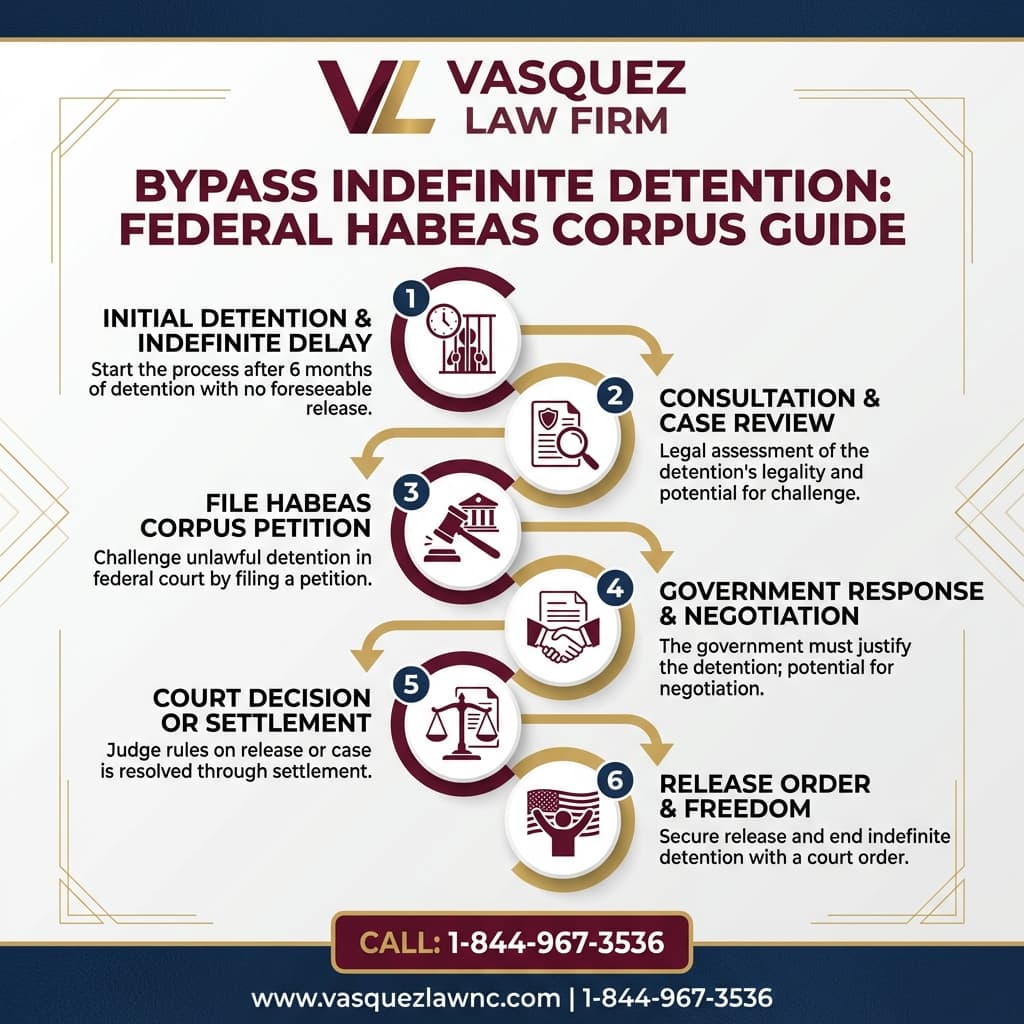
Step-by-Step: Filing a Habeas Petition
Filing a habeas petition is a complex legal process that requires meticulous attention to detail. It begins with drafting a formal petition, which must clearly state the grounds for relief and identify the custodian (usually the head of the detention facility). This document is then filed with the appropriate federal district court, along with any supporting declarations and exhibits.
Once filed, the court will typically issue an order to show cause, requiring the government to respond to the allegations within a specified timeframe. The government's response, often called a "return," will detail why they believe the detention is lawful. The petitioner then has an opportunity to file a reply, addressing the government's arguments. This exchange of legal arguments forms the core of the court's review.
The court may then hold a hearing, though this is not always required. During a hearing, both sides can present evidence and arguments. Finally, the court will issue a decision, either granting the writ and ordering the petitioner's release or denying it. Throughout this process, having experienced legal counsel is invaluable to ensure all procedural rules are followed and the strongest arguments are presented.
Required Documentation
To support a habeas petition, you will need to gather a variety of documents. These typically include the Notice to Appear (NTA), any bond orders, records of immigration court proceedings, and any orders of removal. Additionally, personal declarations from the petitioner and supporting affidavits from family members or community members can be crucial. Any evidence demonstrating the grounds for unlawful detention, such as proof of rehabilitation or lack of flight risk, should also be included.
It is also vital to include any relevant legal precedents or statutes that support your claim. An attorney will help identify which documents are most pertinent and how to present them effectively to the court. Organizing these documents meticulously can significantly strengthen your petition and streamline the legal process. Missing or incomplete documentation can severely hamper your case.
Timeline: What to Expect in a Habeas Case
The timeline for a habeas petition can vary significantly depending on the complexity of the case, the specific federal court, and the court's caseload. Generally, after filing, it can take several weeks for the court to issue an order to show cause. The government then typically has 30 to 60 days to file its response, and the petitioner's reply is usually due within 14 to 30 days after that.
If the court decides to hold a hearing, this could add several more weeks or months to the process. Overall, a habeas petition can take anywhere from a few months to over a year to reach a final decision. Expedited consideration may be granted in certain urgent situations, such as when a petitioner's health is at severe risk or if detention has been excessively prolonged. It is essential to have realistic expectations about the duration of these proceedings.
Factors Affecting Duration
Several factors can influence how long a habeas petition takes. These include the availability of judges, the complexity of the legal arguments, the volume of evidence, and whether a hearing is required. Delays can also occur if there are disputes over the facts of the case or if either party requests extensions. Furthermore, the district court's specific procedural rules can impact the timeline.
The government's response time is also a significant factor. While there are general guidelines, circumstances can lead to requests for extensions, further prolonging the process. An attorney can help manage these expectations and keep you informed about the progress of your case, providing regular updates as the court processes your petition.
Don't face your legal challenges alone. Our team is here to help you every step of the way.
Call today: 1-844-967-3536 | Se Habla Español
Common Mistakes and How to Avoid Them
Navigating the federal court system for habeas petitions requires precision. Even small errors can lead to significant delays or even dismissal of your case. Being aware of common pitfalls can help you avoid them and strengthen your petition. Seeking legal counsel from an attorney experienced in federal litigation is the best way to prevent these mistakes.
- Failing to Exhaust Administrative Remedies: Often, you must first pursue all available remedies within the immigration system before filing a habeas petition. Ensure you have done so unless a specific exception applies.
- Improper Jurisdiction: Filing your petition in the wrong federal district court can lead to immediate dismissal. Verify the correct court based on your detention location.
- Lack of Specificity: A habeas petition must clearly state the grounds for unlawful detention and provide supporting facts. Vague claims are often rejected.
- Missing Deadlines: Federal courts have strict deadlines for filings and responses. Missing these can result in your case being dismissed without review.
- Incorrectly Naming the Respondent: The petition must name the correct "custodian," usually the warden or head of the detention facility, not ICE itself.
- Insufficient Evidence: Without compelling evidence to support your claims of unlawful detention, your petition is unlikely to succeed. Gather all relevant documents and affidavits.
- Trying to Appeal Immigration Decisions: Remember, a habeas petition challenges the legality of detention, not the merits of an immigration judge's removal order. Do not confuse the two.
- Ignoring Legal Precedent: Federal court decisions and Supreme Court rulings can significantly impact your case. Failing to address relevant legal precedent can weaken your arguments.
If you only remember one thing: Always consult with an experienced immigration attorney before attempting to file a habeas petition. The complexities of federal law and procedure are too great to tackle alone.
NC, FL, and Nationwide Immigration Notes
While immigration law is federal, the procedural aspects of filing habeas petitions can vary slightly depending on the federal circuit and district where the petition is filed. For individuals detained in North Carolina or Florida, the principles of habeas corpus remain the same, but the specific federal courts and their local rules must be adhered to.
North Carolina Detention Facilities
In North Carolina, immigration detainees are often held in facilities such as the Stewart Detention Center or county jails under contract with ICE. Habeas petitions challenging detention in these facilities would typically be filed in the U.S. District Court for the Western District of North Carolina or the Eastern District of North Carolina, depending on the facility's location. Familiarity with the local rules of these specific courts is essential for a successful filing. Vasquez Law Firm serves clients throughout North Carolina, including Charlotte, assisting with these complex cases.
Florida Detention Facilities
Florida has several major immigration detention centers, including Krome Service Processing Center and Glades County Detention Center. Habeas petitions for individuals detained in Florida would be filed in the appropriate U.S. District Court, such as the Southern District of Florida or the Middle District of Florida. Each district has its own set of local rules and practices that must be meticulously followed. Our firm also assists clients across Florida in navigating these federal court challenges.
Nationwide Immigration Concepts (General Only, Rules Vary)
The core principles of habeas corpus are federal and apply nationwide. However, the interpretation and application of these principles can sometimes vary among different federal circuits. This means that a legal argument that might be successful in one circuit could face different scrutiny in another. It is vital for an attorney to be aware of the specific circuit court precedents that apply to your case, regardless of where in the U.S. you are detained. This emphasizes the importance of having an attorney with broad experience in federal immigration litigation.
When to Call a Lawyer Now
The decision to file a habeas petition is a serious one, and timing is often critical. If you or a loved one is facing any of the following situations, it is imperative to contact an immigration attorney immediately:
- You have been detained by ICE for an extended period without a bond hearing.
- Your bond has been denied, or an unreasonably high bond has been set, and you believe it is unjust.
- You have a final order of removal but cannot be removed to your home country, leading to prolonged detention.
- You believe your detention is based on a legal error or a violation of your constitutional rights.
- You have received a Notice to Appear (NTA) and are unsure of your rights or the next steps.
- You are facing deportation based on a criminal conviction that you believe is invalid or not a deportable offense.
- Immigration authorities have denied your request for release without adequate justification.
- You need help understanding the complex federal court procedures for challenging detention.
- You are concerned about the conditions of your detention or access to medical care.
- Any time you feel your due process rights are being violated while in immigration custody.
About Vasquez Law Firm
At Vasquez Law Firm, we combine compassion with aggressive representation. Our motto "Yo Peleo" (I Fight) reflects our commitment to standing up for your rights. We understand the profound impact that immigration detention can have on individuals and families, and we are dedicated to providing robust legal defense.
- Bilingual Support: Se Habla Español - our team is fully bilingual and ready to communicate effectively with you.
- Service Areas: We provide comprehensive immigration services across North Carolina, Florida, and nationwide.
- Experience: With over 15 years of dedicated legal experience, we have successfully navigated countless complex immigration cases.
- Results: Our firm has a strong track record of achieving favorable outcomes for clients in various legal matters.
Attorney Trust and Experience
Attorney Vasquez, JD, is a highly respected legal professional admitted to practice in both the North Carolina State Bar and Florida Bar. With over 15 years of dedicated legal experience, he has built a reputation for providing personalized attention and achieving favorable outcomes for his clients. His profound understanding of federal immigration law, including the intricacies of habeas petitions, makes him a formidable advocate for those facing detention. He leads a team committed to justice and diligent representation.
Don't face your legal challenges alone. Our team is here to help you every step of the way.
Call today: 1-844-967-3536 | Se Habla Español
Frequently Asked Questions
What is the primary purpose of a habeas petition for immigration detainees?
The primary purpose is to challenge the legality of an immigrant's detention. It's not about appealing a removal order but questioning whether the government has the legal authority to hold the individual. This is crucial when detention is prolonged, or due process rights are violated. It ensures that detention is not arbitrary and complies with constitutional standards.
Can a habeas petition halt a deportation order?
A habeas petition can sometimes indirectly halt a deportation order if it results in the detainee's release from custody. However, its direct purpose is to challenge the detention itself, not the underlying removal order. If the court finds the detention unlawful and orders release, it may provide an opportunity to pursue other forms of relief, potentially delaying or preventing deportation.
Where are habeas petitions filed for immigration cases in Wisconsin?
Habeas petitions for immigration detainees in Wisconsin are filed in the appropriate U.S. District Court, either the Eastern District of Wisconsin or the Western District of Wisconsin, depending on where the individual is detained. These are federal courts, distinct from immigration courts. Proper jurisdiction is crucial for the petition to be considered by the court.
What is the difference between a habeas petition and an appeal of an immigration decision?
A habeas petition challenges the legality of detention itself, focusing on whether an individual is being held unlawfully. An appeal of an immigration decision, however, challenges the merits of a ruling made by an immigration judge or the Board of Immigration Appeals regarding removability or other forms of relief. They are distinct legal remedies with different goals and procedures.
How long does it typically take for a federal court to rule on a habeas petition?
The timeline for a federal court to rule on a habeas petition can vary significantly, often ranging from several months to over a year. Factors influencing this include the court's caseload, the complexity of the legal arguments, and whether a hearing is required. Some urgent cases may receive expedited review, but lengthy processes are not uncommon.
Do I need an attorney to file a habeas petition?
While you can technically file a habeas petition pro se (on your own), it is highly advisable to have an experienced immigration attorney. Federal court procedures are extremely complex, and specific legal arguments are required. An attorney can ensure proper filing, strong legal arguments, and adherence to all deadlines, significantly increasing the chances of success.
What kind of evidence is needed to support a habeas petition?
Supporting evidence for a habeas petition can include your Notice to Appear (NTA), bond orders, records of immigration court proceedings, and any removal orders. Declarations from the petitioner and affidavits from witnesses can also be crucial. Any documentation that demonstrates the unlawfulness of the detention or violations of due process should be included to strengthen the case.
What if my habeas petition is denied?
If your habeas petition is denied, you may have options to appeal the decision to a higher federal court, typically the U.S. Court of Appeals for the circuit in which your district court is located. This process also involves strict deadlines and complex legal arguments. Consulting with your attorney immediately after a denial is essential to explore next steps and understand your appellate rights.
Can a habeas petition challenge conditions of detention?
Yes, in some circumstances, a habeas petition can challenge the conditions of detention if those conditions amount to a violation of constitutional rights, such as cruel and unusual punishment or denial of adequate medical care. While often used to challenge the legality of detention itself, the writ can also address severe constitutional violations within the detention environment. This is a nuanced area of law.
Are there any costs associated with filing a habeas petition?
Yes, there are typically filing fees associated with federal court petitions, though indigent petitioners may qualify for a fee waiver. Additionally, legal fees for an attorney can be substantial due to the complexity and time-intensive nature of federal litigation. It is important to discuss all potential costs with your legal counsel during the initial consultation to understand the financial implications.
Sources and References
- U.S. Citizenship and Immigration Services (USCIS)
- Executive Office for Immigration Review (EOIR)
- Legal Information Institute, Cornell Law School (Habeas Corpus)
Need immigration help? Our immigration attorneys can review your case.
Ready to take the next step? Contact Vasquez Law Firm today for a free, confidential consultation. We're committed to fighting for your rights and achieving the best possible outcome for your case.
Start Your Free Case Evaluation Now
Call us: 1-844-967-3536
Se Habla Español - Estamos aquí para ayudarle.


William Vasquez
Founder & CEO, Vasquez Law Firm, PLLC
William Vasquez is the founder and CEO of Vasquez Law Firm, PLLC, a results-driven firm specializing in immigration, criminal defense, personal injury, and workers' compensation. A U.S. Air Force veteran and recipient of the Joint Service Achievement Medal, William is dedicated to fiercely fighting for his clients' rights.
Related Legal Services
Need legal help? Learn more about how our immigration attorneys can help, or contact us for a free evaluation.
You can also visit North Carolina immigration lawyers for more information.