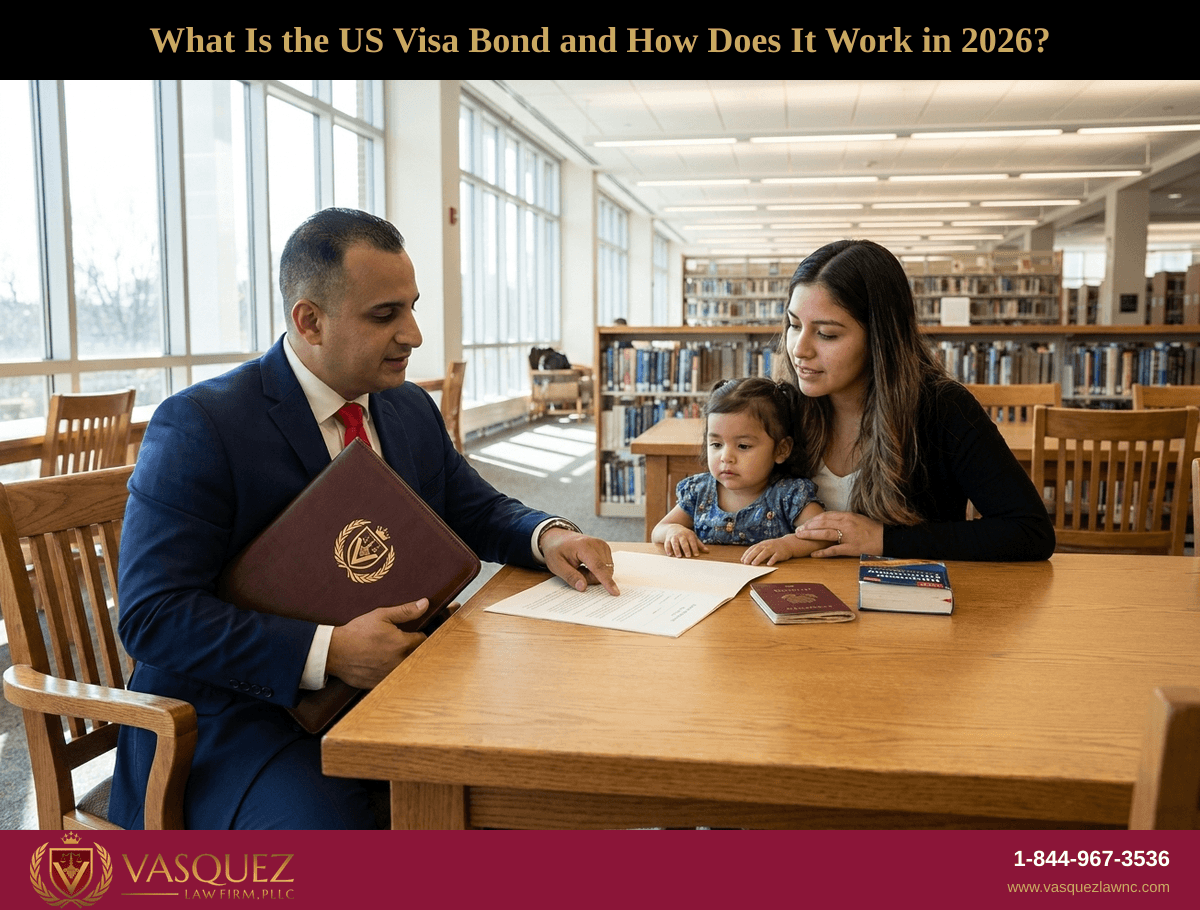
What Is the US Visa Bond and How Does It Work in 2026?
What is the US visa bond? Learn who must pay fees, which countries are subject, and how the bond works. Contact Vasquez Law Firm for help today.
Published on August 2, 2026
Talk to an immigration attorney
Free call. A clear plan for your case.
Free & confidential · Se habla espanol · 24/7
Have questions? Talk to an attorney - free evaluation.
Call 1-844-967-3536Worried how the latest immigration news affects you?
Schedule a confidential case review with an immigration attorney - know exactly where you stand.
USCIS Case Status
Check your USCIS case status
Enter your receipt number and get the official status. Free, no registration.
What Is the US Visa Bond and How Does It Work in 2026?
The US visa bond is a financial guarantee required from applicants from certain countries before receiving a visa to the United States. In 2026, this requirement applies mainly to travelers from countries with high rates of visa overstays or immigration violations. Understanding the US visa bond fee, the countries subject to the bond, and the refund process is essential for immigrants and visitors planning travel from North Carolina, Orlando, and nationwide. This guide breaks down what the visa bond means, how it affects applicants from India, Pakistan, and others, and offers key practical steps to navigate this rule effectively.
Need help with your case? Our experienced attorneys are ready to fight for you. Se Habla Español.
Or call us now: 1-844-967-3536
Quick Answer
The US visa bond is a financial guarantee that applicants from certain countries must pay before receiving a U.S. visa. It ensures compliance with visa rules and is refundable if conditions are met. Countries like India and Pakistan are often subject to this rule, which generally requires a bond amount of $15,000.
- Required for applicants from designated countries
- Bond amount typically around $15,000
- Fees paid before visa issuance
- Refunded if visa terms are fully followed
- Protects the U.S. from visa overstays
Understanding the US Visa Bond
Applying for a US visa from countries like India, Pakistan, or Nepal often involves posting a visa bond. The government imposes this bond as a financial guarantee that visa holders will obey the conditions of their visa, especially leaving the United States on time. This requirement stems from the US Department of State's goal to reduce visa overstays and illegal immigration. The US visa bond list changes periodically depending on data about countries with higher rates of overstays or visa violations.
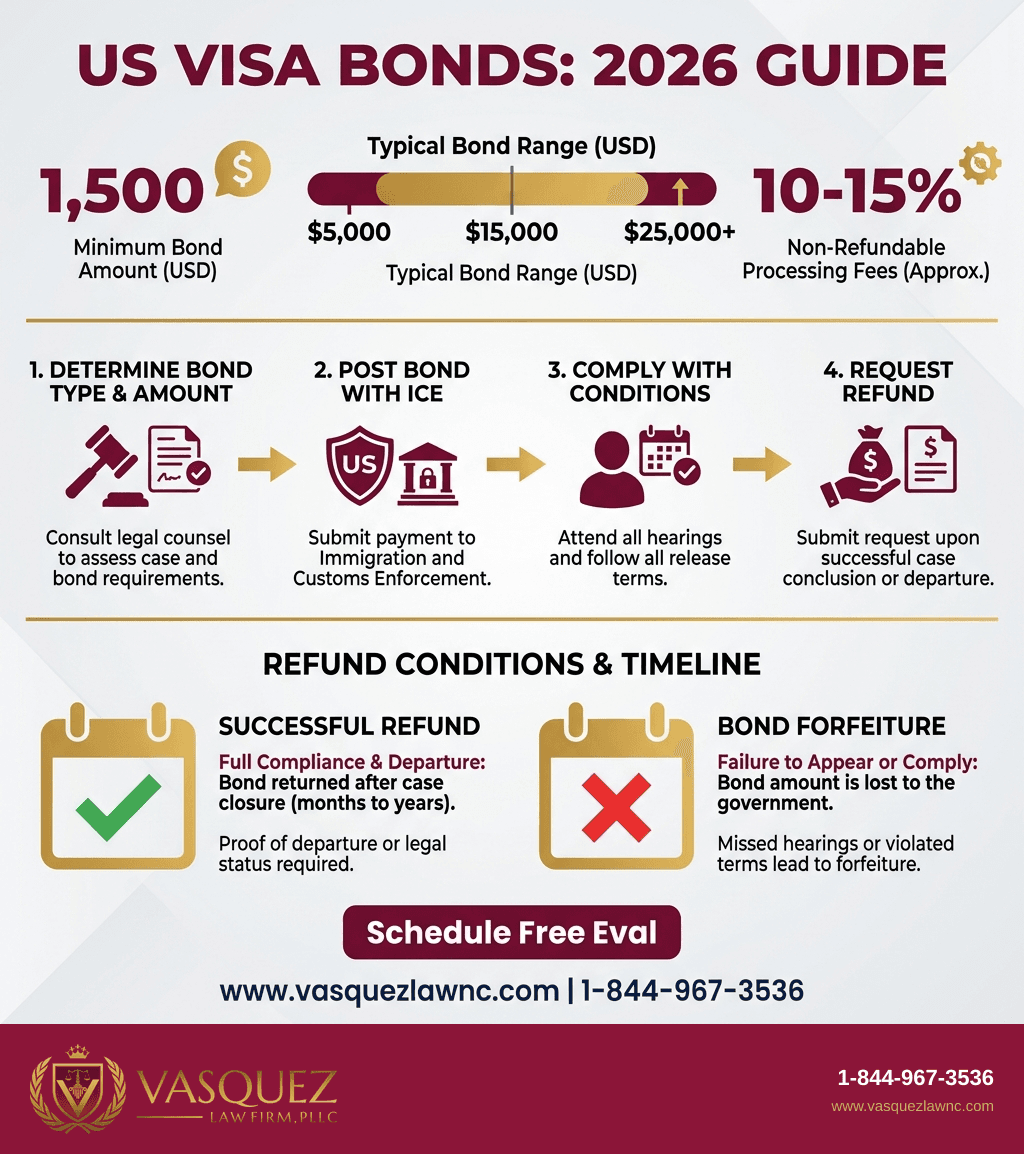
The bond amount is commonly set at $15,000, known as the US $15,000 visa bond rule. It acts as collateral that the applicant or sponsor must pay before visa approval. If the visa holder follows all terms and departs timely, the bond is typically refunded. If not, the government may keep the bond or pursue collection.
For immigrants in North Carolina and Orlando, FL, understanding the visa bond rule is critical when preparing immigration cases. The bond is different from other immigration bonds, such as detention bonds, and applies specifically to visa issuance risk assessments. The bond process is regulated by 8 U.S.C. § 1182(d)(5) and 8 C.F.R. § 103.6 as part of federal immigration law.
Vasquez Law Firm’s immigration attorneys provide guidance on bond requirements and compliance strategies to avoid forfeiture and maximize refund eligibility. For help with US visa bond concerns in Orlando and Raleigh, NC, contact our team for an early consultation.
Which Countries Are Subject to US Visa Bonds?
The U.S. visa bond list as of 2026 includes countries considered high risk for visa overstays. This list currently includes India, Pakistan, Nepal, and other countries notified by the U.S. State Department. This policy arises from past data showing higher visa violation rates among travelers from these countries. The list is periodically reviewed to reflect changing immigration trends and diplomatic considerations.
Visa Bond Fee and Amount
The standard US visa bond fee for eligible applicants is generally $15,000. Applicants or sponsors must pay this bond amount before the U.S. Embassy or consulate issues the visa. The payment serves as insurance for the government against non-compliance. This fee differs from visa application costs and is separate from other consular fees.
Is the US Visa Bond Refundable?
The visa bond is refundable if the holder complies fully with visa rules, mainly leaving the U.S. before the authorized stay expires. Refund requests must be submitted to consular authorities with proof of compliance such as departure confirmation. Refund timing depends on federal processing times and any outstanding immigration issues. If a visa holder overstays or commits violations, the bond may be forfeited permanently.
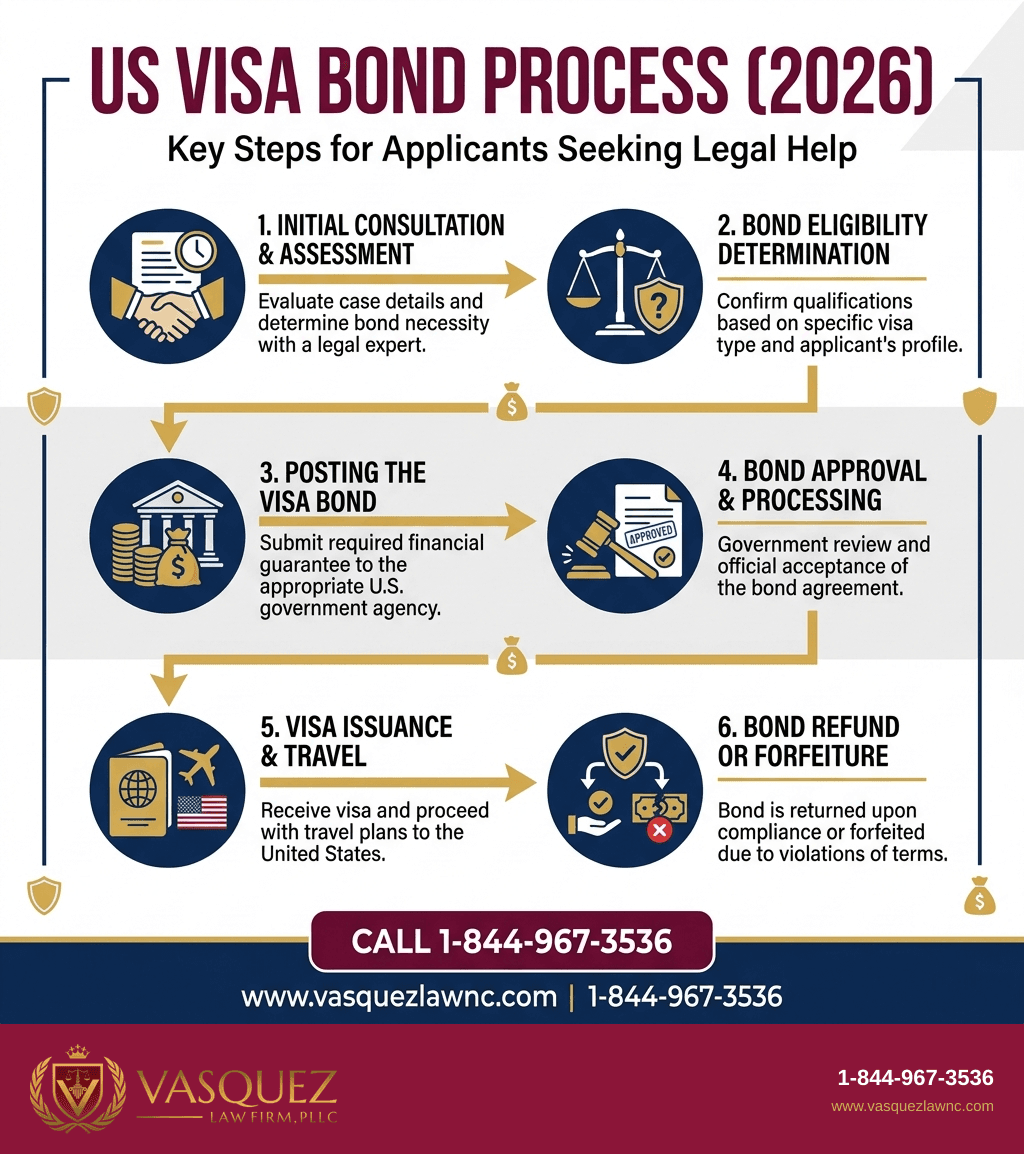
Key Steps to Secure Your US Visa Bond
- Verify if your country is on the current US visa bond list. This is available through official announcements or embassy communications.
- Prepare to pay the required bond fee before your visa interview. Ensure you have funds or a sponsor capable of posting the bond.
- Gather necessary documentation including receipts, payment proof, and any sponsor affidavits.
- Maintain strict compliance with all visa conditions after approval to ensure your bond is refundable.
- Request a bond refund promptly upon authorized departure by submitting necessary paperwork.
- Seek legal guidance early if you face bond forfeiture or complexity. Vasquez Law Firm in Raleigh and Orlando can help you understand options.
How to Pay Visa Bond Fees
Payments are often accepted online or at the Embassy’s designated payment centers. Follow embassy instructions carefully to avoid delays. Keep all documentation safely for your records. Incorrect or missing bond payments can result in visa denial or delays in processing.
Steps to Claim a Refund
After leaving the U.S. timely, you or your sponsor must file a refund claim. This usually involves submitting a formal request with proof of exit and no violations. Processing times can vary, so early action is recommended.
Common Mistakes to Avoid with Visa Bonds
- Failing to confirm if the country is subject to the visa bond rule — check before applying to avoid surprises at consular interviews.
- Delaying payment of the bond fee — late payments can cause visa denials or travel delays.
- Losing payment receipts or documents — keep careful records to prove bond payment and assist with refunds.
- Overstaying the authorized visa period — this risks bond forfeiture and future visa denials.
- Not requesting the bond refund after departure — claim as soon as compliance is confirmed to avoid administrative losses.
- Assuming bonds cover all types of immigration cases — understand this applies specifically to certain visa categories and countries only.
- Ignoring legal advice for bond appeals or disputes — early consultation can help reduce financial loss.
If you only remember one thing: always verify bond requirements early and keep complete documentation to protect your rights and funds.
Timeline and What to Expect for Visa Bond Processing
- Before visa interview: The bond fee must be paid in full before visa issuance.
- At visa interview: You must provide proof of bond payment if required.
- After visa issuance: Comply fully with visa conditions, especially returning before authorized stay expires.
- Within weeks of U.S. departure: File bond refund paperwork promptly.
- Processing time: Refunds may take several months, depending on government workload and case complexity.
USCIS processing times for refund actions may vary. For the latest on immigration bonds, see USCIS Processing Times.
Frequently Asked Questions About US Visa Bonds
What is the US visa bond?
The US visa bond is a financial guarantee required by U.S. immigration authorities from applicants from certain countries. It assures visa compliance, especially timely departure. The bond amount is usually $15,000 or more. This protects the government against visa overstays.
Is the US visa bond refundable?
The visa bond is refundable if all visa rules are followed and the applicant departs the U.S. on time. Refunds take time and require documentation. Bond forfeiture occurs with visa violations.
Which countries have to pay a bond for a US visa?
Countries on the visa bond list have higher overstay rates. As of 2026, India, Pakistan, and Nepal are commonly listed. This can change based on State Department data.
What is the $15,000 visa bond rule?
This rule requires a $15,000 bond payment from applicants of certain countries to ensure compliance with visa terms and reduce overstays.
How is the US visa bond fee paid?
Applicants or sponsors pay the bond fee online or at designated consular payment offices prior to visa issuance. Keeping proof of payment is crucial.
What happens if the visa bond is forfeited?
If the applicant violates visa conditions, the bond money is forfeited to the government. This can affect future visa eligibility and lead to increased scrutiny.
Can I appeal or reduce the US visa bond amount?
Appeals are rare but possible with strong evidence of ties or financial hardship. An experienced immigration lawyer can evaluate your case for options.
Where can I get help with US visa bonds in Orlando or NC?
Vasquez Law Firm offers expert assistance in Raleigh, NC and Orlando, FL. Contact us to discuss your visa bond case and receive guidance.
About Vasquez Law Firm
At Vasquez Law Firm, we combine compassion with aggressive representation. Our motto "Yo Peleo®" (I Fight) reflects our commitment to standing up for your rights. With offices in Raleigh, NC and Orlando, FL, we provide bilingual support to navigate complex immigration laws including visa bond challenges.
- Bilingual Support: Se Habla Español — Spanish-speaking attorneys and staff available
- Service Areas: North Carolina, plus Florida and nationwide for immigration
- Experience: Over 15 years helping clients navigate complex immigration matters
- Results: Thousands of successful cases across multiple practice areas
Attorney Trust and Experience
Attorney Vasquez, JD, is admitted to the North Carolina State Bar with 15 years of immigration legal experience. Our firm has successfully represented clients in visa bond and immigration matters for over a decade, ensuring personalized attention and clear communication in English and Spanish.
Don't wait to get the help you deserve. Call us now for immediate assistance.
Se Habla Español
Jurisdiction Notes
North Carolina and Florida Notes
Federal immigration laws govern visa bond requirements nationwide. However, our offices in Raleigh, NC and Orlando, FL provide localized support for applicants affected by the visa bond rule. While the bond program applies broadly, our team understands the practical steps for residents in these areas and offers case-specific advice.
When to Call a Lawyer Now
- If you receive a visa bond notice and are unsure if it applies to you
- If you face difficulties paying the required visa bond fee
- If you received a bond forfeiture notice due to visa overstay
- If you want help filing a bond refund request after compliance
- If you need to appeal your visa bond amount or bond denial
- If your visa is delayed because of bond processing issues
- If you want to understand how the bond affects your specific visa category
Sources and References
- U.S. Citizenship and Immigration Services
- Executive Office for Immigration Review
- Legal Information Institute
Take the first step toward justice today. Our team is standing by to help.
Start Your Free Evaluation Now
Call us: 1-844-967-3536
Se Habla Español - Estamos aquí para ayudarle.
If you need legal assistance, learn more about our immigration law practice, or call us at 1-844-967-3536 for a free evaluation.


William Vasquez
Founder & CEO, Vasquez Law Firm, PLLC
William Vasquez is the founder and CEO of Vasquez Law Firm, PLLC, a results-driven firm specializing in immigration, criminal defense, personal injury, and workers' compensation. A U.S. Air Force veteran and recipient of the Joint Service Achievement Medal, William is dedicated to fiercely fighting for his clients' rights.
Related Legal Services
Need legal help? Learn more about our immigration law practice, or contact us for a free evaluation.
You can also visit our NC immigration team for more information.