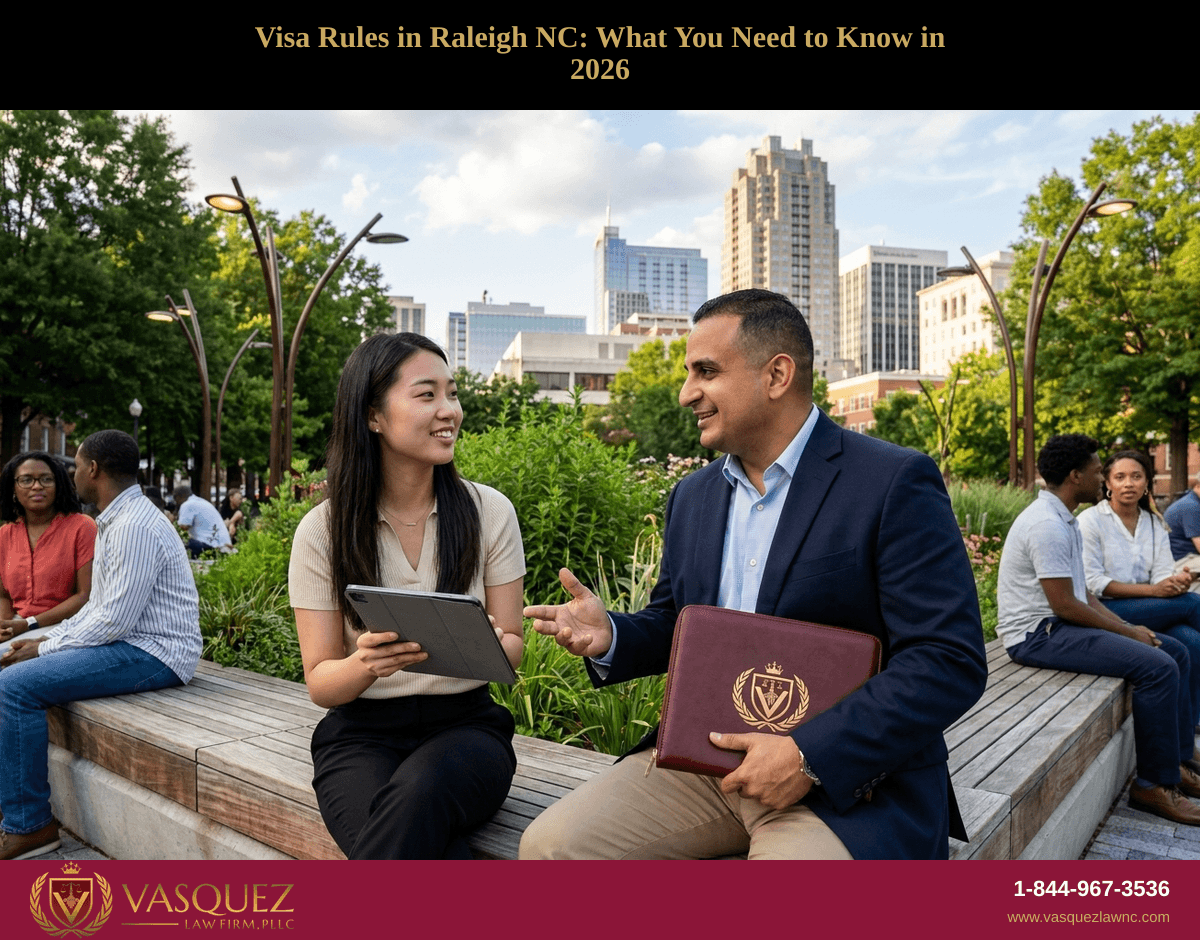
Visa Rules in Raleigh NC: What You Need to Know in 2026
Learn the latest visa rules in Raleigh NC for 2026. Understand policies, restrictions, and your options. Contact Vasquez Law for a free consultation.
Published on July 19, 2026
Talk to an immigration attorney
Free call. A clear plan for your case.
Free & confidential · Se habla espanol · 24/7
Have questions? Talk to an attorney - free evaluation.
Call 1-844-967-3536Worried how the latest immigration news affects you?
Schedule a confidential case review with an immigration attorney - know exactly where you stand.
Visa Rules in Raleigh NC: What You Need to Know in 2026
Visa rules are essential for anyone navigating immigration in Raleigh, NC, and Orlando, FL in 2026. These rules regulate who can enter, stay, or work in the U.S. Understanding visa rules helps applicants avoid delays and denials. Whether you seek family-based visas, student visas, or work permits, staying updated on the latest policies and restrictions is crucial. This guide covers the federal visa rules impacting North Carolina and Florida residents, explains common pitfalls, timelines, and costs, and offers actionable steps with legal resources. Vasquez Law Firm helps immigrants across NC and FL navigate these complex rules with bilingual legal support.
Need help with your case? Our experienced attorneys are ready to fight for you. Se Habla Español.
Or call us now: 1-844-967-3536
Quick Answer
Visa rules in Raleigh NC and Orlando FL set the framework for who may apply for various U.S. visas in 2026, including work, study, and family visas.
- Rules include eligibility, documentation, and processing steps.
- Applicants must follow federal regulations via USCIS guidelines.
- Local nuances in Raleigh and Orlando offices impact application timelines.
- Consulting with immigration attorneys improves compliance and case success.
- Stay updated on policy changes including any Trump-era rule adjustments.
Understanding Visa Rules and Policies
Imagine a student from India applying for an F-1 visa in Raleigh, NC, in 2026 while U.S. visa rules evolve annually. Visa rules govern how the U.S. government controls entry and stay for foreign nationals. These rules are established by federal law and enforced by agencies like U.S. Citizenship and Immigration Services (USCIS) and the Department of State.
Visa laws include the "Visa Core Rules" published by the Department of State, which define application processes, eligibility requirements, and restrictions on various visa categories. These core rules apply nationwide but experience minor practical variations depending on local USCIS offices, such as Raleigh or Orlando.
The "visa restriction policy" includes special limitations such as country-specific bans or additional screening measures. For example, certain countries face longer wait times or more rigorous background checks in 2026. Understanding these rules helps applicants in Raleigh and Orlando reduce risks associated with delays or denials.
Visa applications follow categories broadly divided into immigrant (permanent) and non-immigrant (temporary) visas. Each category comes with detailed rules documented in USCIS manuals and the Code of Federal Regulations, like 8 C.F.R. § 214.1 governing nonimmigrant visa classes.
For more detailed information, visit the U.S. Citizenship and Immigration Services website or review the Legal Information Institute for statutes. These resources provide official guidelines and recent policy updates.
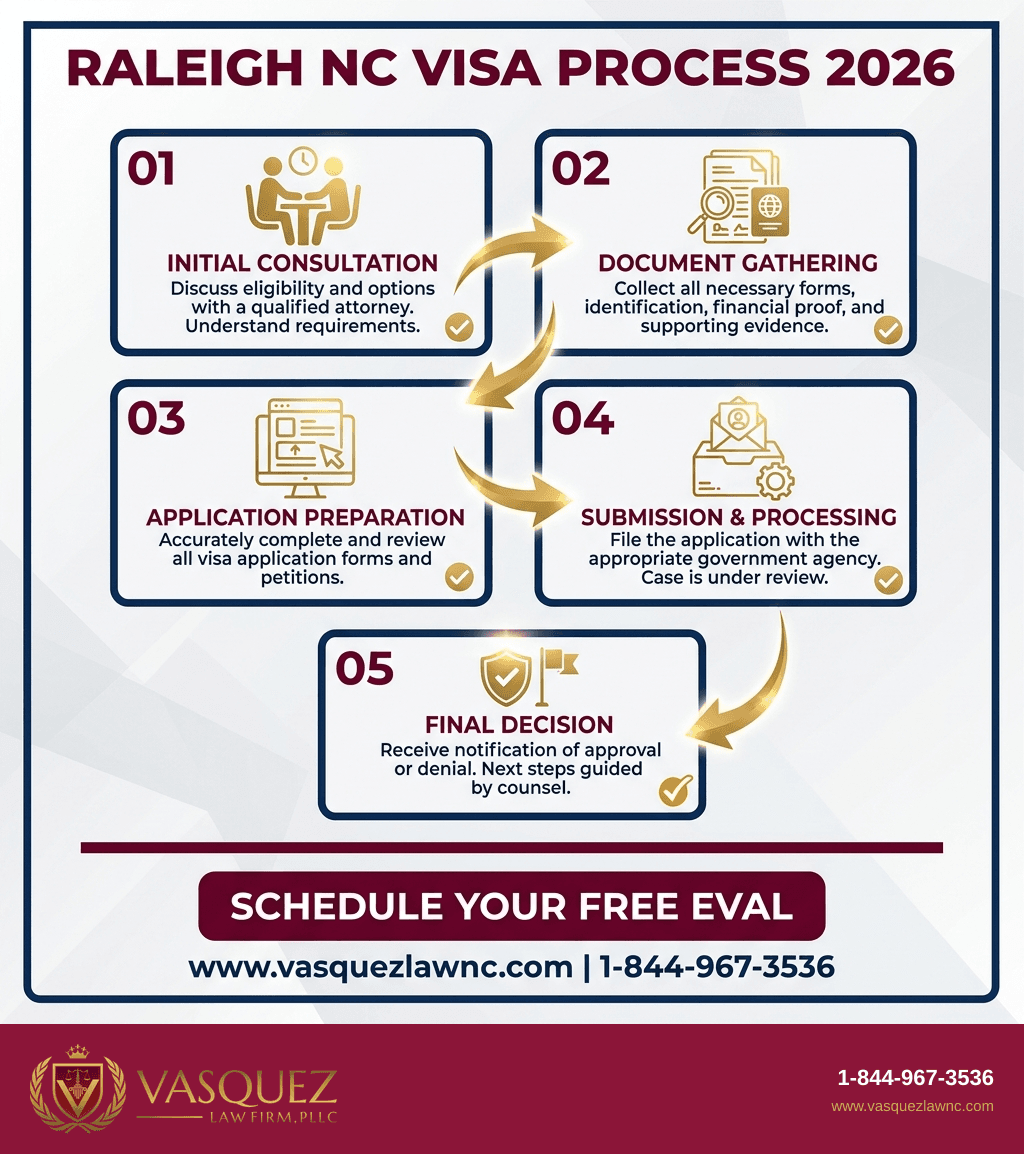
Step-by-Step Guide for Visa Applicants
Step 1: Determine Your Visa Type
Different visas serve specific purposes: student visas (F and M), work visas (H-1B, L-1), family-based visas (I-130), and more. Selecting the correct visa type is essential to meeting the appropriate rules for eligibility and submission.
Step 2: Complete the Application Forms
Applicants must fill out forms such as the DS-160 for non-immigrant visas or I-130 for family-based immigrant visas. These forms collect biographical data, purpose of visit, and eligibility information. Accurate completion according to the latest USCIS processing times guidance minimizes avoidable delays.
Step 3: Gather Required Supporting Documents
This includes passports, photographs, financial evidence, employment letters, or school acceptance letters depending on visa type. Local offices in Raleigh require stringent documentation adherence matching federal visa rules and policies.
Step 4: Schedule and Attend Visa Interview
Most applicants attend a visa interview at a U.S. consulate or local USCIS office. Be prepared to answer questions and present documentation verifying eligibility under current visa rules.
Step 5: Wait for Decision and Follow Instructions
Decisions can take weeks to months. Applicants should monitor their case status online and respond promptly to any requests for further information.
Common Mistakes to Avoid with Visa Applications
- Incomplete or inaccurate forms: Always double-check all application fields.
- Missing supporting documents: Submit all evidence requested to prove your eligibility.
- Ignoring local filing rules: Raleigh NC and Orlando FL offices may have specific submission protocols.
- Failing to update USCIS with address changes: Changes must be reported promptly to avoid processing issues.
- Misunderstanding visa expiration and renewal rules: Know deadlines to maintain lawful status.
- Overlooking new visa restriction policies: Stay informed about current bans or additional vetting requirements.
If you only remember one thing: Careful preparation with legal advice significantly increases your visa application's chances of success.
Timeline and What to Expect
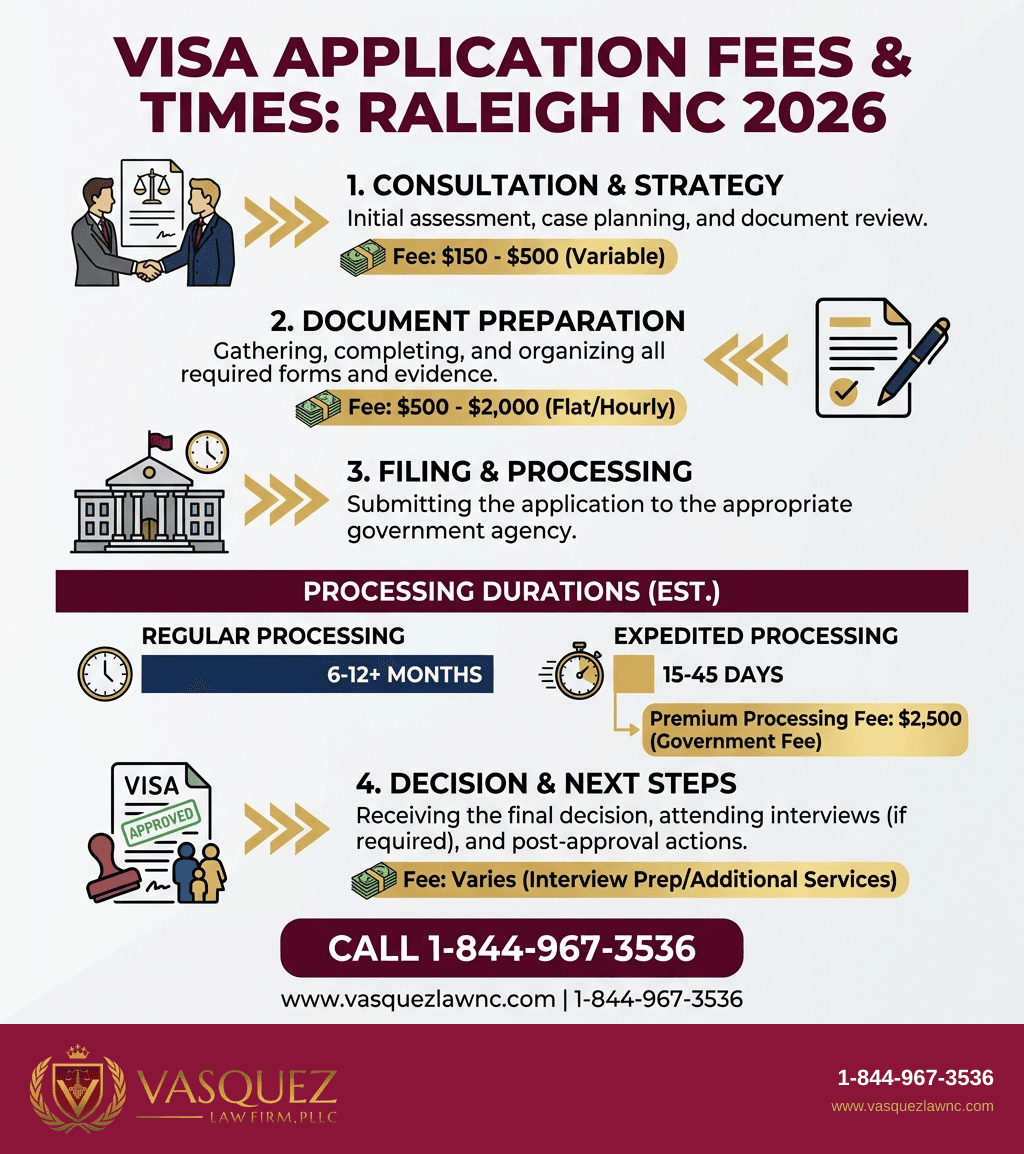
- Initial visa petition processing generally takes 3 to 14 months depending on type; family visas often average 8-14 months.
- Work visa petitions such as H-1B typically process in 3 to 6 months unless premium processing is requested.
- Interviews can be scheduled within weeks but sometimes delayed due to consulate staffing or policy changes post-2025.
- Applicants in Raleigh and Orlando should factor in mailing times, interview waitlists, and possible administrative processing.
For up-to-date processing times by form, check the official USCIS processing times page.
Costs and Fees Affecting Visa Processing
- Application fees vary: for example, Form I-130 processing costs $535, while H-1B petitions require a $460 base fee plus additional costs.
- Premium processing fees (optional for some visas) cost $2,500 to expedite decisions.
- Add costs may include medical exams, biometric fees, travel expenses, and attorney consult fees.
- Incorrect or missing payments can cause rejections or delays; ensure all fees are paid to USCIS and consulates as per instructions.
Jurisdiction Notes for Raleigh NC and Orlando FL
Federal Framework
Visa rules governed by federal law apply nationwide. This includes 8 U.S.C. §§ 1101–1537 and regulations in 8 C.F.R. Parts 100–299. Agencies like USCIS and EOIR administer immigration law enforcement, visa adjudication, and removal proceedings irrespective of state boundaries.
Raleigh NC Specifics
Raleigh hosts USCIS field offices that process adjustment of status (Form I-485) interviews and work authorizations for North Carolina residents. Local USCIS requirements may include biometrics appointments and in-person interviews. Applicants in Raleigh should be aware of regional caseloads potentially impacting wait times.
Orlando FL Specifics
The Orlando USCIS office handles visa services for Florida residents, with virtual support for business immigration cases such as H-1B through Zoom. Processing rules align with federal policies but with adjusted scheduling timelines due to local demand.
When to Call a Lawyer About Visa Issues
- If your visa application is denied and you need to understand appeal or reapplication options.
- When facing complex immigration status changes or adjustment of status eligibility questions.
- If you encounter difficulties responding to Requests for Evidence (RFEs) or Notices of Intent to Deny.
- When applying for visas subject to quotas or caps needing strategic timing.
- If you experience consular processing complications or administrative processing delays.
- When new policies or executive orders may affect your ability to apply or maintain status.
- If you are unsure about the intersection of visa rules and criminal or immigration violations.
About Vasquez Law Firm
At Vasquez Law Firm, we combine compassion with aggressive representation. Our motto "Yo Peleo®" (I Fight) reflects our commitment to standing up for your rights.
- Bilingual Support: Se Habla Español — Spanish-speaking attorneys and staff available
- Service Areas: North Carolina, plus Florida and nationwide for immigration
- Experience: Over 30 years helping clients navigate complex legal matters
- Results: Thousands of successful cases across multiple practice areas
Attorney Trust and Experience
William J. Vásquez is admitted to the North Carolina State Bar (2011) and to the U.S. Courts of Appeals for the 4th, 5th, and 11th Circuits. The firm has provided dedicated legal representation since 2011, with personalized attention to each client's case.
Don't wait to get the help you deserve. Call us now for immediate assistance.
Se Habla Español
Frequently Asked Questions
What are the new rules for US visas in 2026?
In 2026, US visa rules have been updated to include stricter background checks and documentation requirements. These changes aim to improve security and reduce fraud but can increase processing times. Raleigh, NC and Orlando, FL applicants must carefully review updated guidance on eligibility and required paperwork to avoid delays. Staying informed through USCIS official announcements ensures compliance and prevents unexpected denials.
How do visa restriction policies affect applicants in North Carolina?
Visa restriction policies can impact applicants in North Carolina by limiting eligibility based on country of origin, type of visa, or past immigration history. In Raleigh, these rules mean some petitions may face extra scrutiny or longer waits. Applicants should work with immigration attorneys familiar with regional processing nuances to maximize their approval chances under these restrictions.
What documents are required to apply for a US visa in Raleigh?
Common documents required include a valid passport, visa application forms such as DS-160 or I-129, proof of purpose for travel, financial support evidence, and biometric information. Depending on the visa type, additional documents like job offers or family relationships are necessary. It’s important for Raleigh applicants to verify exact document lists on USCIS or consular websites to ensure compliance with the latest visa rules.
How long does it take to process visa applications in 2026?
Processing times vary by visa type and individual circumstances. USCIS reports that popular forms like I-130 can take between 8 to 14 months in 2026. Employment-based visas like H-1B may take 3 to 6 months if premium processing is not used. Applicants in Raleigh and Orlando should check the USCIS Processing Times page regularly, as delays may occur due to staffing or policy changes.
What impact did Trump’s visa rules have on current applicants?
Trump's administration introduced several visa restrictions, including travel bans and increased scrutiny during vetting. While some policies have been rolled back, certain procedural requirements remain in place as of 2026. Applicants in Raleigh should understand which restrictions still affect their visa category and how to work around potential delays with up-to-date legal guidance.
Can visa applicants in North Carolina request expedited processing?
USCIS allows expedited processing only in limited situations such as emergencies or severe financial loss. Applicants in North Carolina must provide compelling evidence and meet specific criteria. Expedited requests do not guarantee faster approval but may shorten wait times if approved. Consulting an immigration lawyer in Raleigh can improve chances to qualify for expedited review.
What are common reasons for visa denials in Raleigh NC?
Common denial reasons include incomplete applications, lack of supporting evidence, failing to prove ties to home country, or inadmissibility due to criminal history or past immigration violations. Raleigh applicants can reduce risk by thorough preparation and legal review before submission. Vasquez Law Firm offers assistance to identify potential issues early to improve application success.
Where can I find official visa rules and regulations?
Official visa rules are available on the USCIS website and the U.S. Department of State site. These sources provide current policies, visa types, application procedures, and updates for all visa categories. For Raleigh and Orlando residents, consulting these websites along with legal counsel ensures accurate, up-to-date compliance.
Sources and References
- U.S. Citizenship and Immigration Services
- Executive Office for Immigration Review
- Legal Information Institute
Take the first step toward justice today. Our team is standing by to help.
Start Your Free Evaluation Now
Call us: 1-844-967-3536
Se Habla Español - Estamos aquí para ayudarle.
If you need legal assistance, learn more about our immigration legal services, or call us at 1-844-967-3536 for a free evaluation.

William Vasquez
Founder & CEO, Vasquez Law Firm, PLLC
William Vasquez is the founder and CEO of Vasquez Law Firm, PLLC, a results-driven firm specializing in immigration, criminal defense, personal injury, and workers' compensation. A U.S. Air Force veteran and recipient of the Joint Service Achievement Medal, William is dedicated to fiercely fighting for his clients' rights.
Related Legal Services
Need legal help? Learn more about our immigration legal services, or contact us for a free evaluation.
You can also visit our NC immigration team for more information.