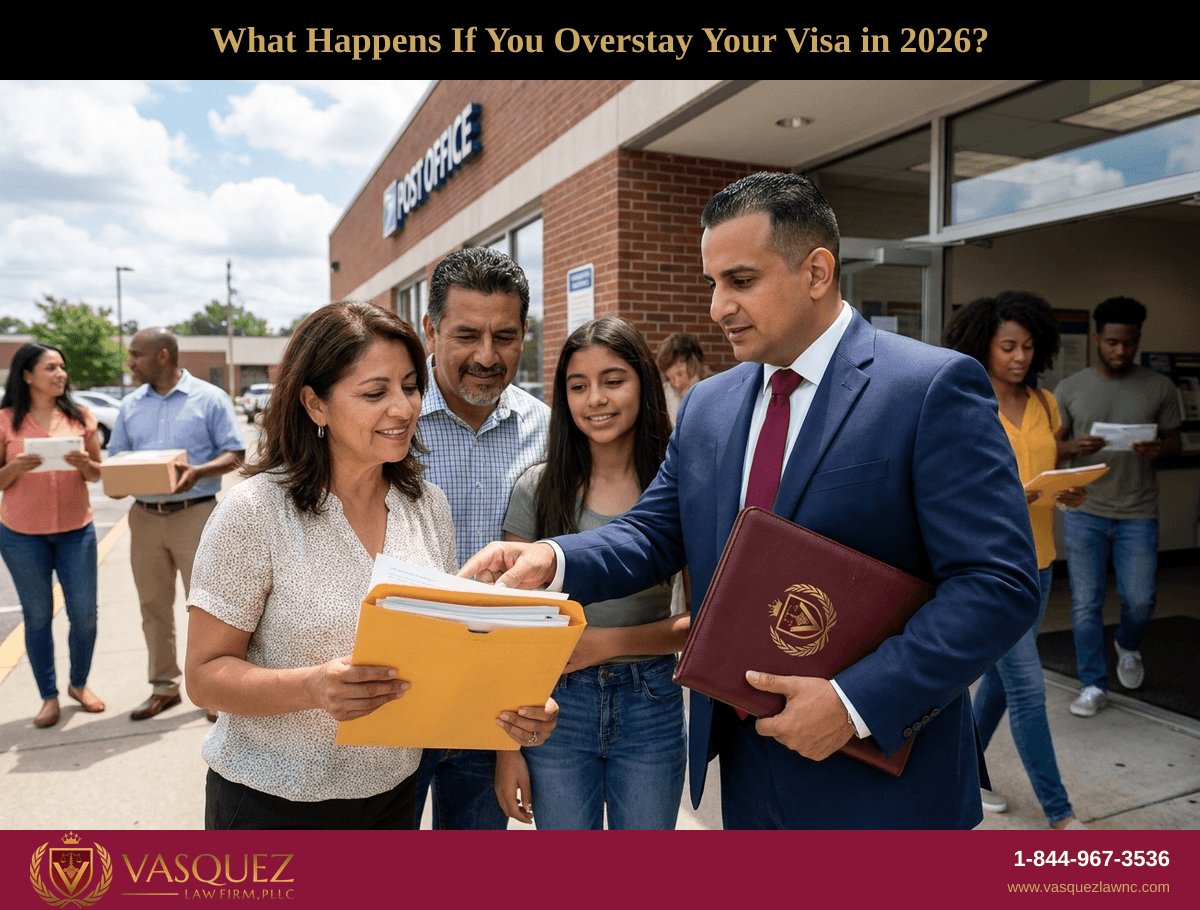
What Happens If You Overstay Your Visa in 2026?
What happens if you overstay your visa in the US? Learn penalties, relief options, and how to protect yourself in 2026. Contact Vasquez Law for help.
Published on July 29, 2026
Talk to an immigration attorney
Free call. A clear plan for your case.
Free & confidential · Se habla espanol · 24/7
Have questions? Talk to an attorney - free evaluation.
Call 1-844-967-3536Worried how the latest immigration news affects you?
Schedule a confidential case review with an immigration attorney - know exactly where you stand.
USCIS Case Status
Check your USCIS case status
Enter your receipt number and get the official status. Free, no registration.
What Happens If You Overstay Your Visa in 2026?
Visa overstays can trigger serious penalties, including bans on returning to the US for years. In 2026, understanding what happens if you overstay your visa is crucial. This guide breaks down the immigration laws, consequences, and options for relief. Whether you reside near Raleigh, NC, or Orlando, FL, knowing your rights and steps to take after a visa overstay can protect your future.
Need help with your case? Our experienced attorneys are ready to fight for you. Se Habla Español.
Or call us now: 1-844-967-3536
Quick Answer
Overstaying your visa in the U.S. can lead to bars of 3 or 10 years from reentry and possible removal proceedings. However, relief may be available through certain immigration benefits depending on your case. Immediate legal consultation is important to protect your options.
- Visa overstays trigger civil immigration penalties, not criminal charges
- Normally causes 3- or 10-year bars to return to the US
- Can result in removal (deportation) proceedings
- Overstay forgiveness exists but is limited and fact-dependent
- Consult a Raleigh or Orlando immigration attorney immediately
Understanding Visa Overstays
Imagine a person arriving on a tourist visa in the U.S. for six months but staying for two years without extension or adjustment. That person has overstayed their visa, triggering serious immigration consequences. Visa overstays occur when someone remains in the United States beyond the date authorized by their visa or Form I-94.
As of 2026, visa overstays are tracked closely by U.S. Customs and Border Protection (CBP). The Department of Homeland Security (DHS) regularly publishes overstay reports identifying the rate and number of individuals who remain unlawfully in the country. According to DHS, over 1 million individuals overstay their visas each year nationally, affecting many states including North Carolina and Florida.
Visa overstays can happen for many reasons: lost paperwork, changes in plans, or difficulties in obtaining an extension. While not a criminal act, overstaying triggers immigration penalties that can block future eligibility for visas or adjustment of status.
For residents or travelers near Raleigh, NC, and Orlando, FL, understanding local immigration enforcement trends is key. Recent expansions in immigration enforcement focus on identifying overstayers at airports and workplaces. If you have overstayed your visa, you risk detention and removal unless you timely secure legal help.
Learn more about our immigration legal services while considering your options.
What is Considered a Visa Overstay?
Overstay means remaining in the U.S. beyond the period allowed by your visa or the date stamped on your I-94 Arrival/Departure Record. This includes visitors, students, workers, and others with nonimmigrant visas.
The government uses the arrival/departure records and electronic data to identify overstays and initiate enforcement actions.
Difference Between Unauthorized Presence and Visa Overstay
Unauthorized presence begins when someone remains after their authorized stay ends or after violating terms of their visa. While related to overstay, unauthorized presence also covers those who entered unlawfully or violated visa terms beyond just the expiration date.
Visa Overstays Penalties Act and Statutory Framework
Congress has passed laws such as the Visa Overstays Penalties Act aiming to strengthen penalties and tracking mechanisms for overstays. Under INA § 222(g) and related provisions, overstays trigger ineligibility for future visas and removal grounds.
Consequences of Overstaying Your Visa
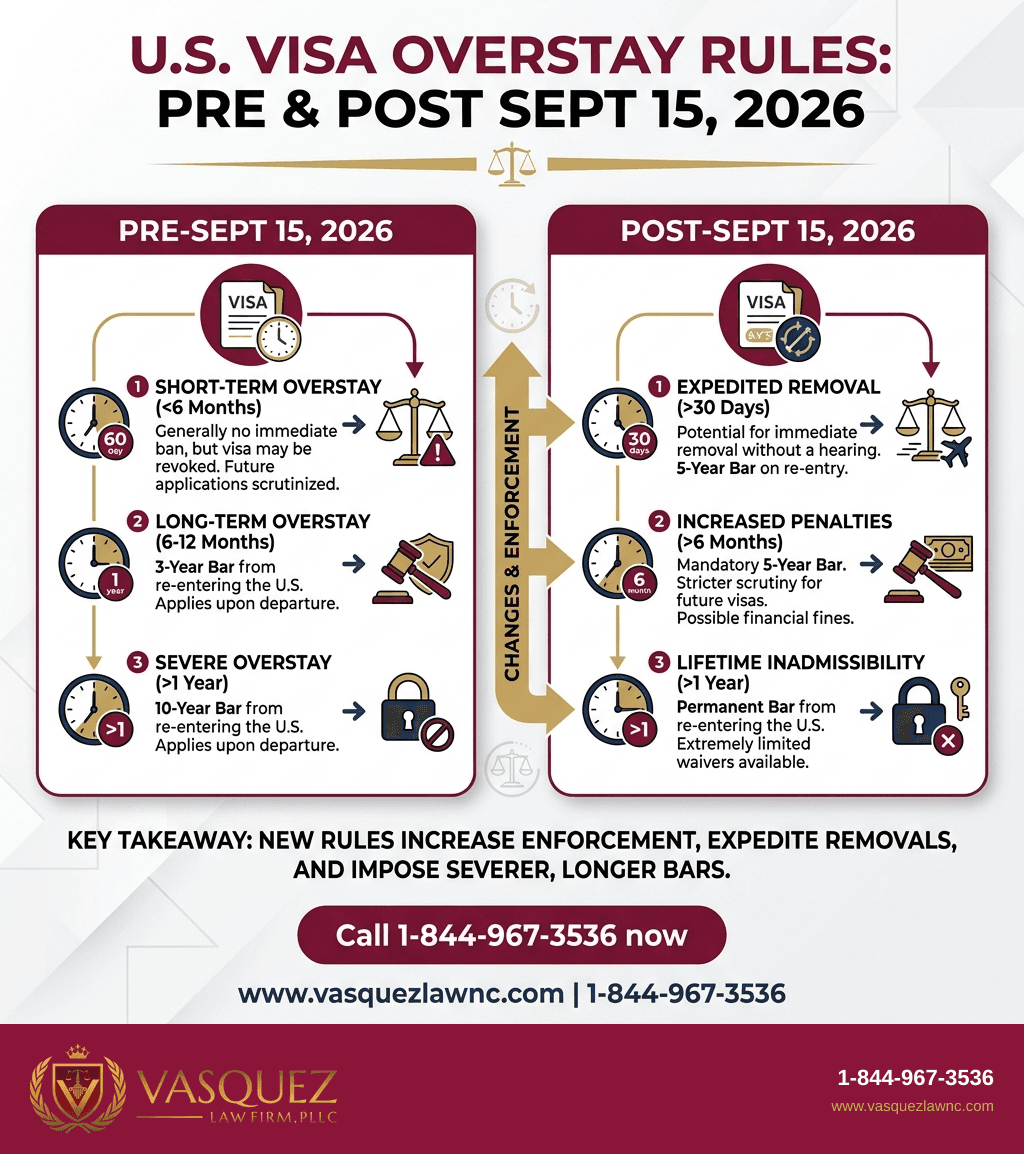
Consider a student who overstays by 200 days after their F-1 visa expires. They now face a 3-year bar from re-entering the U.S. and the risk of deportation. This scenario underscores the gravity of overstays.
Visa overstays typically trigger these key consequences under U.S. immigration law:
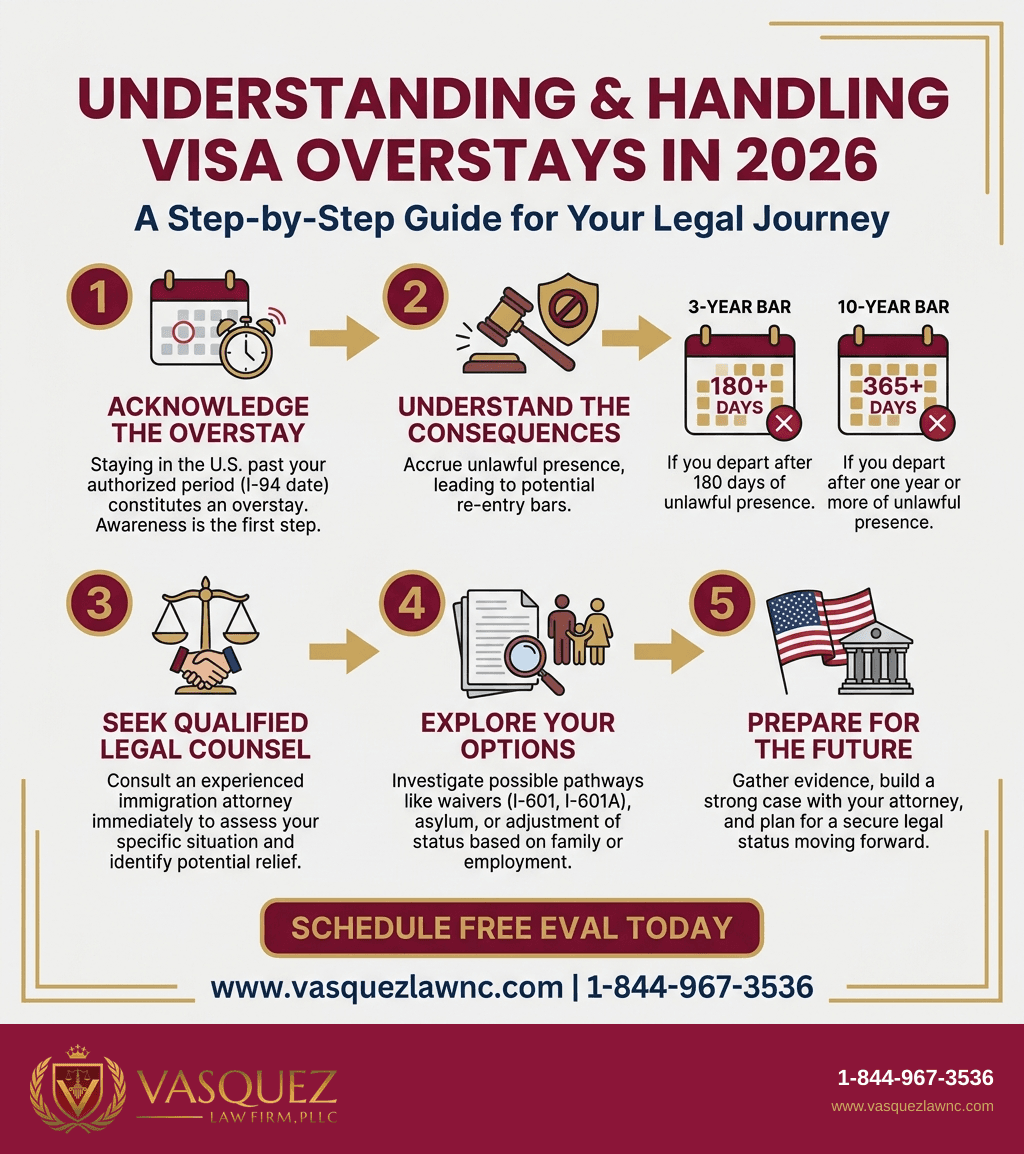
- Three-Year Bar: If someone accrues more than 180 days but less than one year of unlawful presence before departure, they are barred from returning for three years. See 8 U.S.C. § 1182(a)(9)(B)(i)(I).
- Ten-Year Bar: Overstays exceeding one year invoke a ten-year bar from returning. This applies after leaving the U.S. voluntarily or via removal. Refer to 8 U.S.C. § 1182(a)(9)(B)(i)(II).
- Inadmissibility and Detention: Overstayers may be deemed inadmissible upon attempts to return and are subject to detention or removal under INA § 240.
- Impact on Visa Applications: Future visa petitions and immigrant benefit requests may be denied based on previous overstays per INA § 222(g).
Overstaying affects your ability to remain legally and jeopardizes self-deportation detentions and proceedings.
Expanding Enforcement in 2026
Recently, immigration enforcement agencies have increased scrutiny on visa overstays, especially at airports and workplaces near Raleigh, NC, and Orlando, FL. Actions include more rigorous entry/exit tracking and workplace audits for unauthorized employees.
These enforcement changes make it even more important for overstayers to understand the risks and protect their rights.
Relief Options and Visa Overstay Forgiveness
Not all overstays end in permanent bars or deportation. Various forms of relief may apply depending on your circumstances, the length of your overstay, and family or employment ties.
Adjustment of Status Through Marriage or Employment
If you marry a U.S. citizen, you may qualify to adjust status to lawful permanent resident despite some overstays. Under INA § 245, immediate relatives have a pathway to adjust status even if they overstayed. However, overstays can complicate the process and pose risks if not handled by an attorney.
Employees with certain visa categories may seek extensions or changes to legal status if caught before removal actions begin.
Cancellation of Removal and Waivers
For those in removal proceedings, cancellation of removal or waivers of inadmissibility may be available if you meet criteria such as continuous presence, family hardship, and good moral character per 8 U.S.C. § 1229b.
Deferred Action and Temporary Protected Status
In special cases, deferred action or TPS may be granted, providing temporary relief from removal but not a legal status.
Visa Overstay Forgiveness Eligibility
Visa overstay forgiveness typically requires:
- Demonstrating qualifying family or employment ties
- Showing hardship to U.S. citizen relatives
- Applying promptly for adjustment or waivers
- Not having serious criminal history
It is critical to consult an experienced immigration attorney for relief options based on your unique facts.
Step-by-Step: What to Do After Overstaying Your Visa
- Assess Your Situation: Determine how long you have overstayed and check your I-94 record online.
- Gather Documentation: Collect all your immigration paperwork, visa grants, and any extensions or applications.
- Consult an Immigration Attorney: Contact an experienced attorney in Raleigh, NC or Orlando, FL to discuss your case.
- Explore Relief Options: Evaluate eligibility for adjustment of status, waivers, or cancellation of removal.
- Do Not Leave the U.S. Prematurely: Departing without legal guidance may trigger bars immediately and close relief avenues.
- Stay Compliant With Laws: Avoid unauthorized employment and travel that could worsen your immigration record.
- File Required Applications: Work with your attorney to submit petitions or motions timely with USCIS or EOIR.
- Attend All Hearings or Interviews: Failure to appear can cause removal orders and lose your chance to stay.
- Prepare For Possible Appeals: Understand your appellate rights if initial requests are denied.
Following these steps carefully improves your chances of resolving visa overstay issues.
Common Mistakes to Avoid With Visa Overstays
- Leaving the U.S. without Legal Advice: May trigger permanent bars. Always consult a lawyer first.
- Ignoring the Overstay Status: Lack of action can lead to deportation without notice.
- Unauthorized Work or Travel: Violates immigration law and worsens your situation.
- Failing to Keep Records: Documentation is crucial for relief petitions.
- Trusting Non-Legal Advice: Only licensed attorneys should guide immigration cases.
- Missing Deadlines for Applications or Hearings: Can waive your rights and options.
- Overlooking Local Enforcement Trends: Raleigh and Orlando have specific rules and increased checks.
- Not Understanding Visa Overstay Bars: Misunderstanding the bars can cause hasty and costly decisions.
If you only remember one thing: Overstaying your visa can have serious long-term consequences, but with legal help, you may qualify for relief.
Timeline and What to Expect
- Day 0-180: Overstaying less than 180 days may still allow extensions or change of status; immediate risks are lower.
- 180+ Days to 1 Year: Triggers a 3-year bar upon departure. Enforcement may begin with workplace audits or ICE interviews.
- Over 1 Year: Imposes a 10-year reentry bar. Removal proceedings common. Legal counsel essential.
- After Leaving the U.S.: Bars begin counting after departure; waivers or applications for cancellation may take 6-12 months or longer to process.
- During Proceedings: Removal hearings may take months to years depending on case backlog at EOIR.
- After Legal Relief: Some visas or permanent residence applications can take several months, per USCIS processing times (see USCIS processing times).
When to Contact an Immigration Lawyer
- If you have overstayed beyond your authorized entry date
- If you recently received a Notice to Appear (NTA) for removal proceedings
- If you plan to apply for adjustment of status through family or employment
- If you do not understand your current immigration status
- If you have criminal charges impacting immigration
- If you wish to file waivers or cancellation of removal petitions
- If ICE or CBP has contacted you about your visa status
- If you want to understand the impact of new immigration enforcement policies on your case
About Vasquez Law Firm
At Vasquez Law Firm, we combine compassion with aggressive representation. Our motto "Yo Peleo®" (I Fight) reflects our commitment to standing up for your rights.
- Bilingual Support: Se Habla Español — Spanish-speaking attorneys and staff available
- Service Areas: North Carolina, plus Florida and nationwide for immigration
- Experience: Over 30 years helping clients navigate complex legal matters
- Results: Thousands of successful cases across multiple practice areas
Attorney Trust and Experience
William J. Vásquez is admitted to the North Carolina State Bar (2011) and to the U.S. Courts of Appeals for the 4th, 5th, and 11th Circuits. The firm has provided dedicated legal representation since 2011, with personalized attention to each client's case.
Don't wait to get the help you deserve. Call us now for immediate assistance. Se Habla Español.
Frequently Asked Questions
What happens if a person overstays their visa?
If a person overstays their visa, they face civil immigration penalties including a 3- or 10-year ban from returning to the U.S. They may be subject to removal proceedings and denied future visas. Overstaying is not a criminal offense but creates serious immigration consequences under INA 222(g).
Can I marry a U.S. citizen if I overstay my visa?
Marriage to a U.S. citizen may enable you to adjust your immigration status, even after overstaying. However, eligibility depends on individual circumstances. Adjusting status requires filing under INA § 245 and may need waivers. Legal guidance is essential before applying.
Which country has the most visa overstays in the U.S.?
Data from Department of Homeland Security shows Mexico, India, and China among the top countries for visa overstays. The stats fluctuate yearly based on travel and immigration patterns.
Is overstaying a visa a crime or misdemeanor?
Overstaying is not a crime but a violation of civil immigration law. It triggers deportation risks and inadmissibility but does not lead to criminal charges unless accompanied by other offenses.
How does ICE find visa overstayers?
ICE tracks overstayers using DHS arrival-departure data, visa status checks, workplace audits, and information from the public. Enforcement has increased in 2026, especially at airports and locations near Raleigh, NC, and Orlando, FL.
What penalties apply under the Visa Overstays Penalties Act?
The Act imposes 3-year and 10-year bars on individuals who overstay visas by 180 days or more. It enhances tracking and penalties for repeated overstays, encouraging compliance and enforcement under INA 222(g).
Is visa overstay forgiveness possible?
Yes, through waivers, cancellation of removal, or adjustment of status under certain conditions, relief from overstay penalties may be granted, but these processes are complex and require legal evaluation.
Can visa overstayers return to the U.S. legally?
Returning legally depends on the presence of inadmissibility bars and whether waivers are available. After waiting periods of 3 or 10 years, some individuals can apply for new visas or adjustments with legal assistance.
Sources and References
- U.S. Citizenship and Immigration Services
- Executive Office for Immigration Review
- Legal Information Institute
Take the first step toward justice today. Our team is standing by to help.
Start Your Free Evaluation Now
Call us: 1-844-967-3536
Se Habla Español - Estamos aquí para ayudarle.


William Vasquez
Founder & CEO, Vasquez Law Firm, PLLC
William Vasquez is the founder and CEO of Vasquez Law Firm, PLLC, a results-driven firm specializing in immigration, criminal defense, personal injury, and workers' compensation. A U.S. Air Force veteran and recipient of the Joint Service Achievement Medal, William is dedicated to fiercely fighting for his clients' rights.
Related Legal Services
Need legal help? Learn more about our immigration legal services, or contact us for a free evaluation.
You can also visit North Carolina immigration law firm for more information.