Migrant Children Deportation: What Happens to Children in 2026
Concerned about migrant children deportation in 2026? Learn what happens to children, parents, and how to protect your family. Contact Vasquez Law today.
Published on August 1, 2026· Updated September 9, 2026
Talk to an immigration attorney
Free call. A clear plan for your case.
Free & confidential · Se habla espanol · 24/7
Have questions? Talk to an attorney - free evaluation.
Call 1-844-967-3536Check your case status now
Look up your immigration case below, then talk to an attorney about what it means — free.
Questions about your result?
Talk to an attorney about your case — free, no obligation.
Migrant Children Deportation: What Happens to Children in 2026
Migrant children deportation is still a very sensitive topic in 2026. It affects thousands of families in Orlando, FL, and other places. This article explains what happens to children when their parents are deported. It also covers the legal protections for children and the steps families can take to protect their rights. If you or someone you know faces immigration enforcement that affects children, it is important to understand these challenges and your options. Vasquez Law Firm offers help for families dealing with these difficult situations in North Carolina, Orlando, and across the country.
Need help with your case? Our experienced attorneys are ready to fight for you. Se Habla Español.
Or call us now: 1-844-967-3536
Quick Answer
Migrant children deportation involves complicated federal laws that protect children from being held or removed, especially those who are U.S. citizens or unaccompanied minors. (An unaccompanied minor is a child who arrives without a parent or guardian.)
- Children born in the U.S. cannot be deported.
- Unaccompanied migrant children go into protective care.
- Children may live with relatives if their parents are deported.
- ICE usually does not hold children without their parents.
- Legal relief may stop deportation in some cases.
Understanding Migrant Children Deportation
In 2026, thousands of migrant children face the risk of deportation because immigration enforcement is changing in the U.S. Many families have parents without legal status. This raises important questions about what happens to the children. For example, children who are U.S. citizens are protected by law and cannot be removed. But children without legal status may be at risk of deportation with their parents.
Federal law treats accompanied and unaccompanied migrant children differently. Unaccompanied minors who enter immigration custody in Orlando or other places are placed in special care under the Department of Health and Human Services. They are not held by ICE. This separation happens to thousands of children each year. Families need careful legal help to protect children's rights.
It is important for families to understand how migrant children deportation works. People living in North Carolina or Orlando, FL, should know that immigration laws apply across the country. But the way the process works and the help available may be different depending on where you live. Our immigration legal services can help families learn about their rights and options in these complex cases.
Legal Framework Protecting Children
The Flores Settlement Agreement is a legal agreement that sets national rules for how migrant children must be treated when in immigration custody. It stops long-term detention of minors without parents. It also requires that children be placed in the least restrictive setting possible, meaning the safest and most open environment. The Immigration and Nationality Act (INA) § 240A(b) lets some immigrants who have U.S. citizen children apply to cancel their removal. Cancellation of removal is a legal way to stop deportation.
The law recognizes citizenship rights, child welfare standards (rules to protect children's well-being), and due process protections (the right to fair legal procedures). This creates a complex legal situation. In Orlando and North Carolina, federal agencies must follow these rules while also enforcing immigration laws.
Current Challenges in 2026
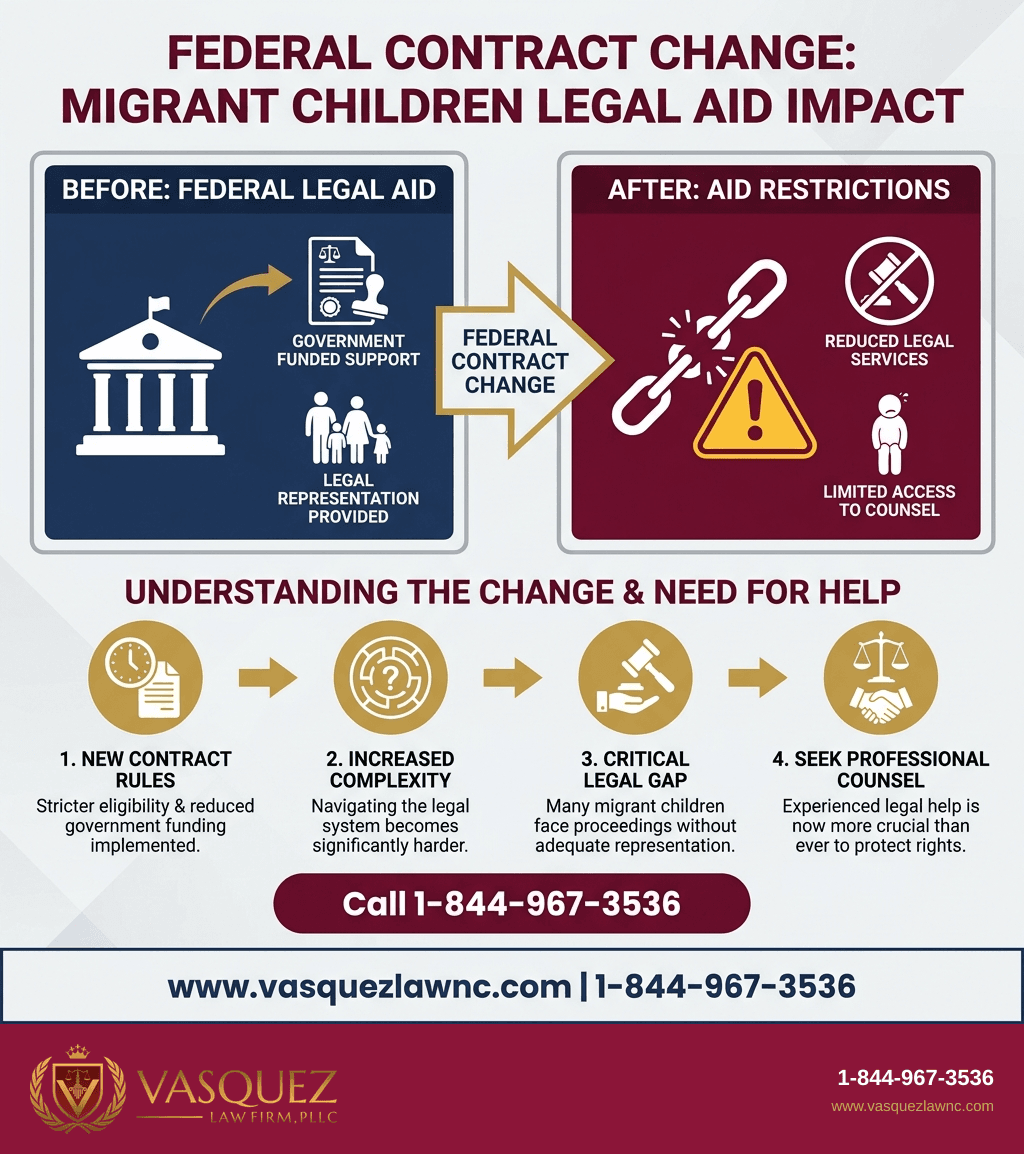
Even with legal protections, many children are still at risk. Some legal aid programs have ended, and policies have changed. This can increase the chance of deportation or family separation without enough legal help. Families need to act quickly and talk to experienced immigration lawyers to protect themselves from bad outcomes.
Step-by-Step: Legal Protections for Children
Families facing migrant children deportation need to clearly understand the steps to protect children's rights and get the best legal results.
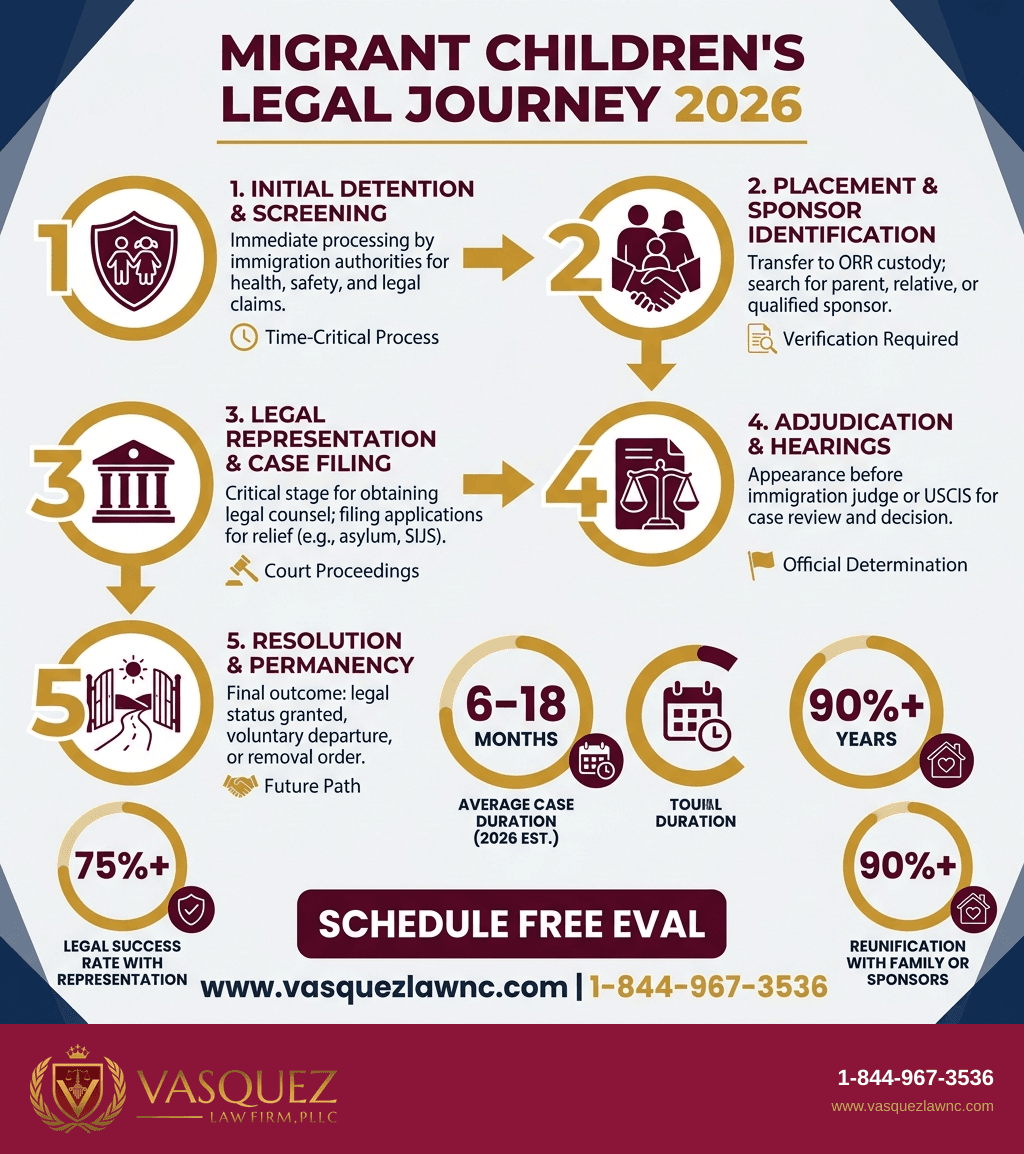
1. Initial Detention and Custody
When immigration officers detain parents, children might stay with their parents, live with relatives, or be taken into government protective care. Unaccompanied children go to the Department of Health and Human Services. This follows rules in 8 C.F.R. § 236.1, which give special custody protections for children.
2. Filing Immigration Petitions
Parents or guardians can file family-based petitions or ask for asylum or humanitarian relief depending on their situation. Children born in the U.S. have citizenship rights that protect them from deportation. For children without legal status, it is important to get legal advice to explore options like adjustment of status (changing to legal status, under 8 U.S.C. § 1255) or cancellation of removal (under INA § 240A(b)).
3. Obtaining Legal Representation
Having a lawyer greatly improves the chance of a good outcome. Lawyers who know deportation defense and family immigration law, like Attorney Jessica Vasquez, help families through the complex process. They represent families in immigration court and negotiate with immigration officials.
4. Establishing Guardianship
If parents are deported, other caregivers must legally become guardians of the children who stay in the U.S. Guardianship is a legal status that gives someone the right to care for a child. This step makes sure children have legal protection and can get services and education.
Common Mistakes Families Make
- Waiting too long to get legal help after detention or deportation notices. Fix: Contact an immigration lawyer right away to learn your rights and deadlines.
- Not arranging proper custody or guardianship for children left behind. Fix: Work with family or immigration lawyers to make legal care official.
- Thinking U.S. citizen children can be deported with their parents. Fix: Know that the 14th Amendment protects citizen children from removal.
- Not collecting important documents that prove family ties and legal status. Fix: Keep birth certificates, ID, and immigration papers organized.
- Trusting unlicensed legal helpers or scams. Fix: Always talk to licensed immigration lawyers or accredited representatives.
If you remember only one thing: Acting fast to get qualified legal advice can protect your family’s rights and stop unnecessary separations or removals.
Timeline: What Happens During Deportation
- Day 0–7: Detention and first processing by immigration officers. Children may be separated or stay with parents if possible.
- Week 2–4: Legal reviews, placing unaccompanied minors, and filing for relief if possible.
- Month 2–6: Immigration court hearings start; families get legal help if arranged.
- Month 6–12: Appeals, bond hearings, and possible release or deportation orders.
These times can change based on how complex the case is and agency delays. You can find more information on USCIS processing times here: USCIS Processing Times.
Costs and Fees: What Impacts the Price
- Type of legal help needed (short advice vs. full case representation)
- How complex the case is and what relief is requested
- Need for extra applications like work permits or family petitions
- Possible filing fees with USCIS or immigration courts
- Location of the lawyer (offices in Orlando and Raleigh available)
At Vasquez Law Firm, we explain fees clearly during the first meeting to help families plan.
Jurisdiction Notes
Orlando, FL Notes
In Orlando, Florida, local immigration enforcement works with federal agencies. Families facing deportation benefit from lawyers who know local practices and community resources.
North Carolina Notes
In North Carolina, immigration laws are federal, but local courts and agencies may have different procedures. Vasquez Law Firm's Raleigh office helps clients statewide with immigration defense and family legal issues.
When to Call a Lawyer Now
- If you get a Notice to Appear or other deportation papers
- If ICE or border patrol contacts your family
- If your child is detained or separated from parents
- If you face possible removal but have U.S. citizen children
- If you need help setting up guardianship for children left behind
- If you want immigration relief like asylum or cancellation of removal
About Vasquez Law Firm
At Vasquez Law Firm, we combine care with strong legal help. Our motto "Yo Peleo®" (I Fight) shows our promise to stand up for your rights.
- Bilingual Support: Se Habla Español — Spanish-speaking lawyers and staff available
- Service Areas: North Carolina, plus Florida and nationwide for immigration
- Experience: Over 30 years helping clients with complex legal issues
- Results: Thousands of successful cases in many practice areas
Attorney Trust and Experience
William J. Vásquez is licensed to practice law in North Carolina since 2011. He is also admitted to the U.S. Courts of Appeals for the 4th, 5th, and 11th Circuits. The firm has provided dedicated legal help since 2011, giving personal attention to each client’s case.
Don't wait to get the help you need. Call us now for quick assistance.
Se Habla Español
Frequently Asked Questions
Can ICE detain children without their parents?
ICE usually does not detain children without their parents except in rare cases under the Flores Settlement Agreement. Unaccompanied minors go to special facilities with child protection rules. Federal law says children must be treated differently than adults during immigration enforcement.
What happens to children if their parents are deported?
Children may stay in the U.S. with relatives or sponsors if their parents are deported. Courts and social services may help with custody and care plans. Children who are U.S. citizens cannot be deported, but family separation causes serious problems.
Do children get deported with their parents?
Children without legal status may be deported with their parents. But children born in the U.S. with citizenship are protected from deportation. Immigration officials look at each case carefully, especially to avoid deporting citizen children.
Will having U.S. citizen children prevent deportation of undocumented parents?
Having U.S. citizen children does not guarantee parents will avoid deportation. But it may help in immigration relief applications like cancellation of removal under INA § 240A(b). Each case depends on factors like how long the parent has lived in the U.S. and hardship.
What happens to unaccompanied migrant children in detention?
Unaccompanied migrant children go into the Department of Health and Human Services custody, not ICE detention. They get special protections like access to lawyers and placement with sponsors, according to the Flores Settlement and federal rules.
How many children have been deported in recent years?
The exact number changes each year, but thousands of migrant children face deportation or family separation annually. Data from DHS and immigration courts show it is hard to track, but enforcement actions affecting children remain a big concern in 2026.
Can a child born in the U.S. be deported?
No. A child born in the U.S. automatically becomes a citizen and cannot be deported under current law (14th Amendment). Immigration enforcement targets family members who are not citizens, but U.S. born children have legal protection from removal.
How can families help children of deported parents?
Families should prepare legal custody plans, look for immigration relief options, and work with experienced lawyers to handle deportation effects. Community support and clear legal papers can help protect children’s rights and well-being.
Sources and References
- U.S. Citizenship and Immigration Services
- Executive Office for Immigration Review
- Legal Information Institute
Take the first step toward justice today. Our team is ready to help. Se Habla Español.
Start Your Free Evaluation Now
Call us: 1-844-967-3536
Se Habla Español - Estamos aquí para ayudarle.

William Vasquez
Founder & CEO, Vasquez Law Firm, PLLC
William Vasquez is the founder and CEO of Vasquez Law Firm, PLLC, a results-driven firm specializing in immigration, criminal defense, personal injury, and workers' compensation. A U.S. Air Force veteran and recipient of the Joint Service Achievement Medal, William is dedicated to fiercely fighting for his clients' rights.
Related Legal Services
Need legal help? Learn more about our immigration law practice, or contact us for a free evaluation.
You can also visit our NC immigration team for more information.