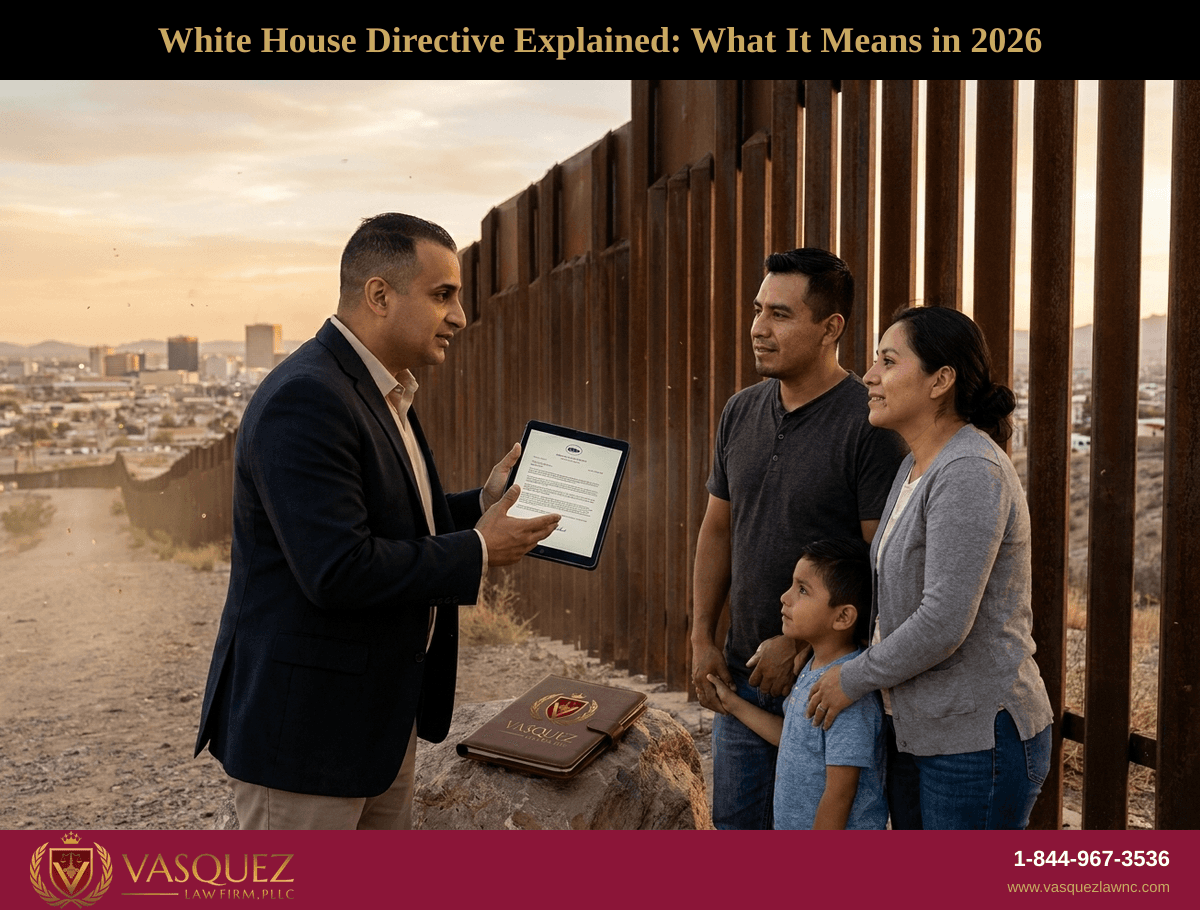
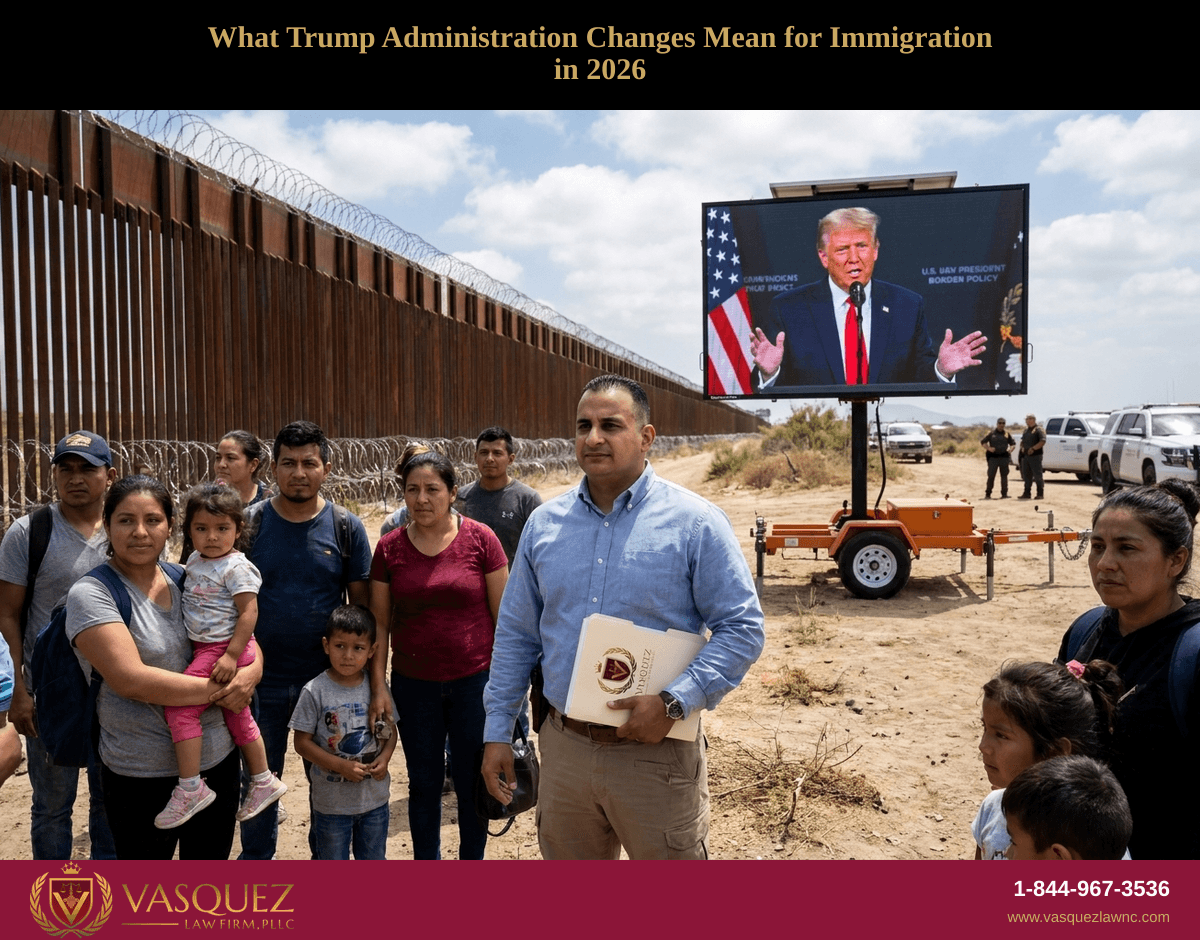
What Trump Administration Changes Mean for Immigration in 2026
Learn how Trump administration immigration policies affect your case in 2026. Understand changes and protect your rights. Contact Vasquez Law for help.
Published on May 29, 2026
Talk to an immigration attorney
Free call. A clear plan for your case.
Free & confidential · Se habla espanol · 24/7
Have questions? Talk to an attorney - free evaluation.
Call 1-844-967-3536Worried how the latest immigration news affects you?
Schedule a confidential case review with an immigration attorney - know exactly where you stand.
What Trump Administration Changes Mean for Immigration in 2026
The Trump administration implemented significant immigration policy changes that continue to impact immigrants across the United States in 2026. Many immigrants in Raleigh, NC, and Orlando, FL, are affected by these rules, especially with new green card processing requirements forcing applicants abroad for interviews. Understanding these policies can help Dreamers and immigrant families prepare and protect their legal rights. This article explains the key Trump administration immigration changes, their timeline, what to expect, and practical advice for navigating today's immigration system in North Carolina and Florida.
Need help with your case? Our experienced attorneys are ready to fight for you. Se Habla Español.
Or call us now: 1-844-967-3536
Quick Answer
The Trump administration's immigration policies, including new rules requiring many green card applicants to attend interviews abroad, continue influencing immigrant cases in 2026. These rules affect Dreamers and other immigrants in Raleigh, NC, and Orlando, FL.
- Green card applicants must often interview outside the U.S.
- Policies impact family-based and employment-based immigration
- Processing times vary; USCIS updates at https://egov.uscis.gov/processing-times/
- Legal representation is critical due to policy complexities
Overview of Trump Administration Immigration Policies
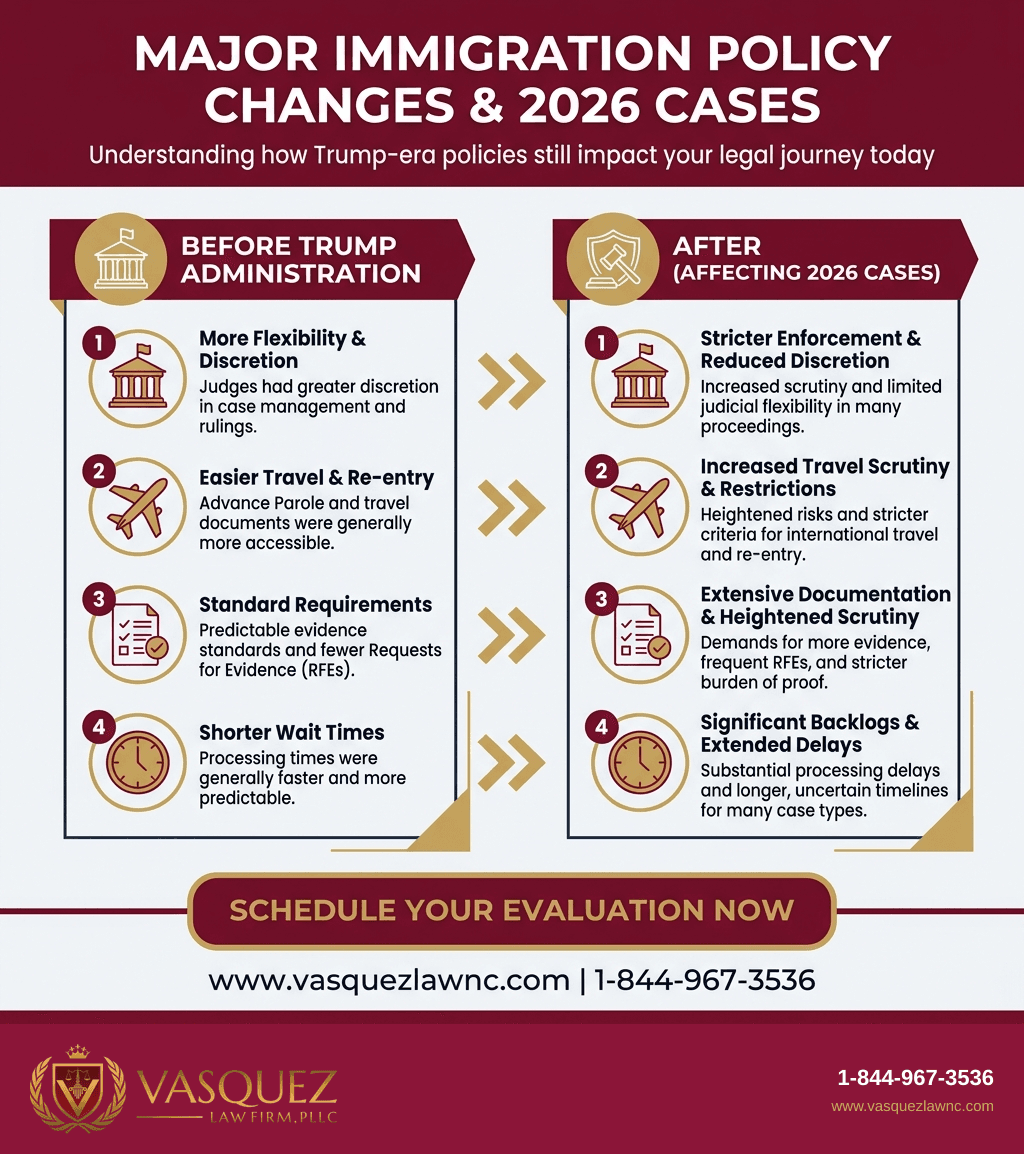
The Trump administration, spanning from 2017 to early 2021, implemented broad immigration policy changes that still shape immigration law enforcement and procedures in 2026. Though no longer in office, many of these policies remain in effect or have influenced current regulations. Key areas affected include visa issuance, asylum procedures, green card eligibility, and consular processing requirements.
One ongoing impact relates to increases in interviews and in-person consular visits abroad for green card applicants. The goal was to tighten security and reduce fraud, but it has resulted in longer waits and additional travel for immigrants. These changes affect many immigrants in Raleigh, NC, and Orlando, FL, who must now navigate tougher rules.
For those working with immigration, knowing the full scope of the Trump administration's immigration timeline helps anticipate processing challenges in 2026. This background guides both families and employers trying to comply with complex federal standards.
Practically, these policies have led to scenarios where applicants must pause their lives, sometimes for months, awaiting consular interviews abroad, which can disrupt employment, education, and family life. For example, a family in Orlando may have to coordinate childcare and work leave to accommodate travel and interview schedules, while a Raleigh applicant might face challenges securing visas for urgent family visits during processing delays.
Additionally, the administration's emphasis on stricter vetting has increased scrutiny of applicants' backgrounds, requiring more thorough documentation and sometimes triggering additional security checks. This has made legal counsel essential to help clients prepare complete applications and anticipate potential issues.
Understanding these policies' practical effects can empower immigrants to better plan their applications and avoid pitfalls that cause delays or denials. Legal professionals continue to update clients on evolving case law and procedural updates stemming from the Trump era.
Learn more about our immigration services and how we help clients understand changes like these.
Key Changes in Trump Administration Immigration in 2026
The Trump administration's immigration legacy led to significant changes that registrants still face in 2026. Some key policies include:
- Green Card Abroad Requirement: As of 2024, most green card applicants must appear for interviews at U.S. consulates abroad, rather than adjusting their status inside the U.S. This can lead to travel burdens and uncertainty.
- Public Charge Rule Expansion: Though partially reversed, remnants of the Trump public charge rule affect immigrants' eligibility assessments.
- Increased Vetting and Delays: Security vetting tightened, creating longer wait times for visa processing and employment authorization.
- Changes in Asylum Enforcement: Restrictions on asylum claims and protections persist, affecting immigrant rights.
These policies particularly impact immigrant communities in Raleigh and Orlando, where families must plan carefully to comply with updated requirements. The changing staff of immigration offices and consulates, including Trump administration staff 2026 updates, also shape case outcomes.
Attorney Vasquez provides guidance on managing these issues effectively in both North Carolina and Florida jurisdictions.
For example, the green card abroad requirement means that an immigrant living in Raleigh who previously could adjust status locally now must travel internationally for an interview, which can be costly and complicated by global travel restrictions. Similarly, a family in Orlando might need to coordinate their schedules to ensure the primary applicant can travel while caring for dependents.
The public charge rule expansion, though rolled back in some respects, still influences the financial documentation required during application processes, especially for applicants relying on public benefits or with limited income. This can affect eligibility and interview outcomes.
Moreover, increased vetting has led to longer processing times, sometimes requiring applicants to provide additional evidence or undergo secondary screenings. This creates uncertainty and stress for applicants and their families, particularly those in urgent situations such as employment changes or family reunifications.
Asylum seekers continue to face hurdles due to policy changes, including stricter definitions for eligibility and expedited removals in certain cases. This impacts immigrants in states like North Carolina and Florida, where asylum applications are common, requiring specialized legal assistance to navigate these challenges.
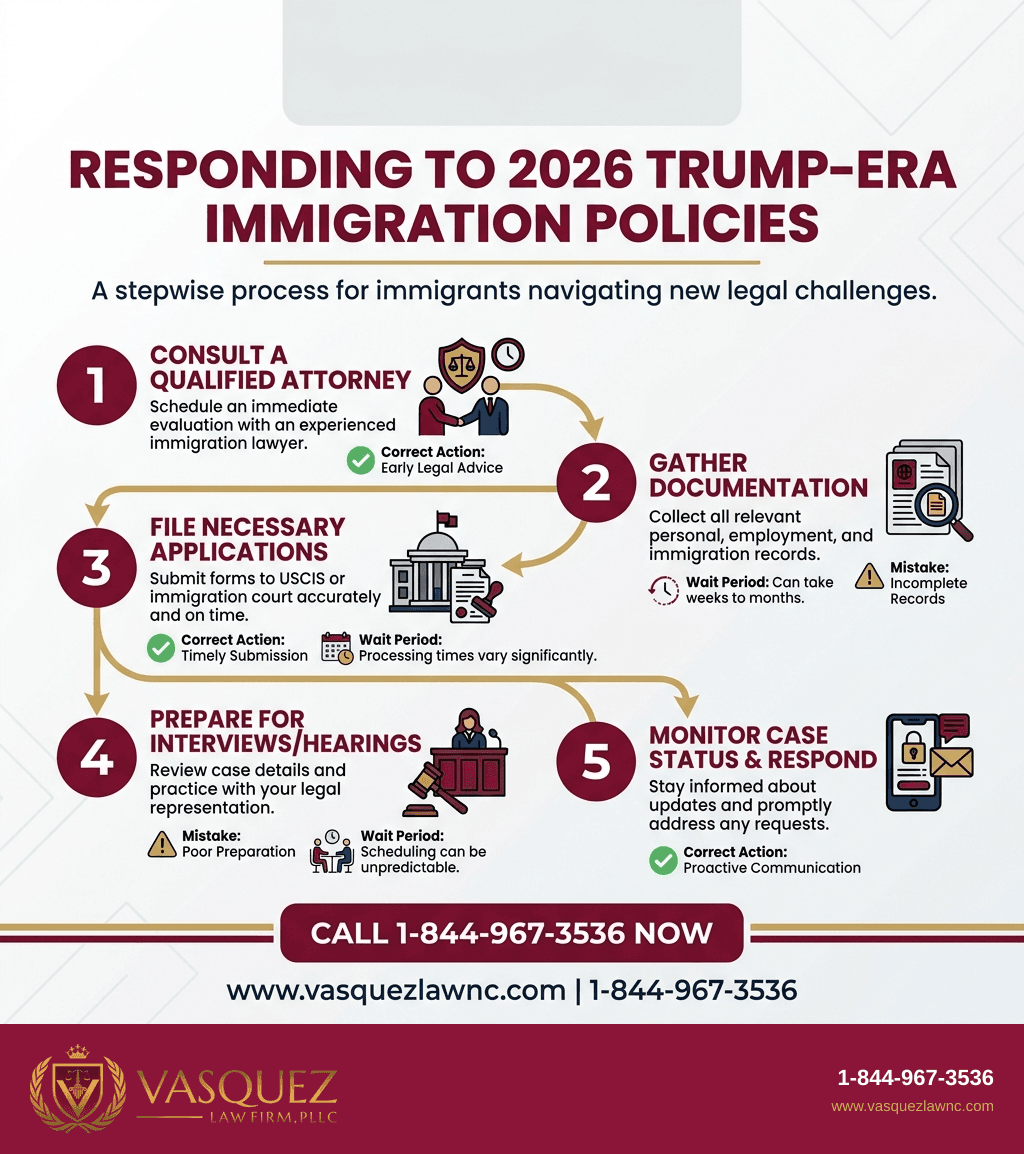
Step-by-Step Guide to Responding to Immigration Changes
- Consult a Qualified Immigration Attorney: Begin by scheduling a consultation with an experienced immigration lawyer familiar with Trump-era policies and current 2026 updates.
- Gather Required Documents: Prepare all essential identity and status documents, including passports, I-797 receipts, and prior immigration paperwork.
- Understand Consular Processing: Learn that green card applicants may need to attend interviews at U.S. consulates in their home countries, not inside the U.S.
- Plan for Travel and Timing: Organize required travel for consular interviews, which can take months to schedule based on consulate capacity and security screening.
- Monitor USCIS Processing Times: Regularly check https://egov.uscis.gov/processing-times/ for updates on your petition type's timeline.
- Prepare for Interviews and Follow-ups: Work with your attorney to practice possible interview questions and gather supporting evidence to prove eligibility.
- Appeal or Refile if Necessary: If denied due to strict policy interpretations, explore appeal options quickly with legal help.
In addition to these steps, applicants should consider practical issues such as arranging for childcare, work leave, or financial preparations for travel and accommodation during consular interviews. For example, applicants might need to budget for round-trip airfare and potential lodging near consulates, which can be a financial strain without proper planning.
Applicants should also keep detailed records of all communications with USCIS and consulate officials, as well as copies of submitted documents, to avoid confusion during follow-ups or appeals. This diligence helps prevent delays caused by missing or inaccurate paperwork.
Finally, staying informed about changes in travel restrictions or consular operations—especially during global crises such as pandemics—is crucial. Applicants should maintain flexible plans and communicate regularly with their legal representatives to adapt quickly to any developments.
Common Mistakes Immigrants Make With Trump-era Rules
- Failing to Attend Consular Interviews: Missing scheduled interviews abroad can lead to denial and long delays. Always confirm your appointment and arrive prepared.
- Ignoring Travel Restrictions: Not planning for travel documentation or COVID-related restrictions can cause missed interview windows.
- Incomplete or Inaccurate Documentation: Submitting applications without all relevant documents or mismatched information may result in denial or RFEs (Request for Evidence).
- Missing Deadlines for Responses: Delays in responding to USCIS notices or consular requests can jeopardize your case.
- Not Seeking Legal Advice Early: Trying to manage complex immigration changes alone often causes mistakes with serious consequences.
- Failing to Understand Public Charge Implications: Misunderstanding how financial support requirements apply can affect eligibility during interviews.
If you only remember one thing: Always consult an experienced immigration attorney before taking steps that may affect your legal status.
For instance, failing to attend a consular interview can often be due to unforeseen circumstances like illness or travel restrictions, but without notifying the consulate promptly, applicants risk automatic denials and lengthy reapplication processes. Ensuring clear communication and timely rescheduling can prevent such outcomes.
Similarly, many applicants underestimate the complexity of documenting financial support under the public charge rule, leading to denials despite eligibility. Early legal counseling can help applicants gather the right evidence and avoid misinterpretations that jeopardize their cases.
Other frequent errors include submitting outdated or incomplete forms, which can trigger Requests for Evidence and prolong processing times. Applicants should double-check all paperwork and seek expert advice to ensure accuracy and completeness.
Timeline and What to Expect with Current Immigration Processes
- Petition Filing (I-130, I-140): Current USCIS processing takes approximately 8 to 14 months depending on the visa category — see USCIS processing times.
- Consular Interview Scheduling: Once USCIS approves, the National Visa Center assigns an interview abroad, often 2 to 6 months later depending on the consulate's workload.
- Interview and Decision: Applicants attend the U.S. consulate interview for a final visa decision. If approved, the immigrant receives instructions about entering the U.S. with a permanent resident stamp.
- Arrival and Green Card Issuance: After admission, the physical green card is mailed within 45 days.
This process can total 12 to 20 months or longer. Delays may increase with changing policies and staffing. Tracking the Trump administration immigration timeline helps anticipate these steps.
For example, a family-based green card applicant in Orlando might file a petition and expect initial USCIS processing within a year, but then face additional months waiting for an interview appointment at the U.S. Embassy in their home country. During this time, applicants must maintain valid status and prepare for the interview.
Applicants should also be aware that consular appointments can be rescheduled due to staffing shortages or emergency closures, requiring flexibility and prompt communication with legal counsel. After the interview, if a visa is approved, the immigrant has a limited window to enter the U.S. before the visa expires.
Understanding these timelines helps applicants plan their personal and professional lives accordingly, such as arranging employment start dates or family reunification plans. Regularly checking official USCIS processing times and consular announcements is advised to stay informed of any delays or changes.
When to Call an Immigration Lawyer
- You receive a USCIS Request for Evidence (RFE) or Notice of Intent to Deny (NOID).
- Your green card application requires an interview abroad under new rules.
- You or a family member face removal proceedings or detention.
- You want to apply for Deferred Action for Childhood Arrivals (DACA) or renew it.
- There are changes in your employment or family status impacting eligibility.
- You've experienced immigration-related crime or need help with refugee claims.
- You need help understanding public charge or financial support requirements.
- Concerns arise about policy changes implemented by Trump administration staff 2026.
Contacting an immigration lawyer early can prevent costly mistakes and help you navigate complex procedures. For instance, if you receive an RFE, prompt legal assistance ensures you gather the correct evidence and respond on time, avoiding case denial.
Similarly, facing an interview abroad under the new rules can be daunting; a lawyer can prepare you for questions and required documentation, increasing your chances of approval. Early legal support is also critical when facing removal proceedings, as experienced counsel can explore defenses and relief options.
For Dreamers seeking DACA renewal or application, specialized legal knowledge is vital to meet updated criteria and avoid pitfalls. Changes in personal circumstances like marriage, job loss, or criminal charges can affect immigration status, so consulting a lawyer ensures you understand your rights and options.
Finally, understanding the public charge rule and other nuanced policy shifts requires expert guidance to avoid eligibility problems or misunderstandings that could delay or derail your case.
About Vasquez Law Firm
At Vasquez Law Firm, we combine compassion with aggressive representation. Our motto "Yo Peleo®" (I Fight) reflects our commitment to standing up for your rights.
- Bilingual Support: Se Habla Español — Spanish-speaking attorneys and staff available
- Service Areas: North Carolina, Florida, and nationwide immigration services
- Experience: Over 30 years helping clients navigate complex legal matters
- Results: Thousands of successful cases across multiple practice areas
Attorney Trust and Experience
William J. Vásquez is admitted to the North Carolina State Bar (2011) and to the U.S. Courts of Appeals for the 4th, 5th, and 11th Circuits. Florida-jurisdiction matters at the firm are handled by Florida Bar attorney Harold Estrada-Rodriguez (FL Bar No. 1041171). The firm has provided dedicated legal representation since 2011, with personalized attention to each client's case.
Clients benefit from attorneys who understand regional nuances in immigration enforcement across North Carolina and Florida, ensuring tailored strategies that address local consular practices and USCIS office trends. The firm’s bilingual staff further facilitates client communication and comfort throughout the legal process.
Vasquez Law Firm has also developed expertise in handling complex cases involving Trump-era policy ramifications, including consular processing challenges and public charge assessments. Their seasoned attorneys work closely with clients to anticipate potential issues and craft proactive solutions that maximize the chances of success.
Don't wait to get the help you deserve. Call us now for immediate assistance.
Se Habla Español
Frequently Asked Questions
What were the main Trump administration immigration years of impact?
The Trump administration served from January 2017 through January 2021, enacting many immigration policy changes. These policies continue to affect cases into 2026 through regulations, enforcement, and new administrative guidelines. Key initiatives included stricter vetting, expanded public charge rules, changes to asylum procedures, and requiring green card interviews abroad. These changes created lasting effects on processing times, application requirements, and legal strategies across the U.S.
How does the Trump administration affect immigration status in North Carolina and Florida?
While immigration law is federal, states like North Carolina and Florida see impacts through processing delays, stricter interview requirements, and enforcement policies rooted in Trump administration rules. Immigrants in these states often must attend consular interviews abroad, navigate longer waits, and face stricter eligibility assessments. Local USCIS offices and consulates reflect these federal changes, affecting timelines and case outcomes for residents in Raleigh, Orlando, and surrounding areas.
What is the new green card interview abroad requirement?
The new green card interview abroad requirement means most applicants cannot adjust status within the U.S. but must travel to a U.S. consulate in their home country for an in-person interview. This policy, implemented starting in 2024, aims to enhance security and fraud prevention but adds travel, cost, and logistical hurdles for many applicants. It requires careful planning to schedule appointments, prepare documentation, and manage travel amidst potential restrictions or delays.

William Vasquez
Founder & CEO, Vasquez Law Firm, PLLC
William Vasquez is the founder and CEO of Vasquez Law Firm, PLLC, a results-driven firm specializing in immigration, criminal defense, personal injury, and workers' compensation. A U.S. Air Force veteran and recipient of the Joint Service Achievement Medal, William is dedicated to fiercely fighting for his clients' rights.
Related Legal Services
Need legal help? Learn more about immigration lawyers in North Carolina, or contact us for a free evaluation.
You can also visit immigration attorneys across North Carolina for more information.