Sanctuary Immigration Law Explained: What Orlando Immigrants Need in 2026
What is sanctuary immigration law in 2026? Learn how sanctuary policies affect immigrants in Orlando. Contact Vasquez Law for a free evaluation today.
Published on May 29, 2026
Talk to an immigration attorney
Free call. A clear plan for your case.
Free & confidential · Se habla espanol · 24/7

Have questions? Talk to an attorney - free evaluation.
Call 1-844-967-3536Worried how the latest immigration news affects you?
Schedule a confidential case review with an immigration attorney - know exactly where you stand.
Sanctuary Immigration Law Explained: What Orlando Immigrants Need in 2026
Sanctuary immigration law remains a critical topic for immigrants in Orlando and across the nation in 2026. This article explains what sanctuary laws are, their protections, and how they influence federal immigration enforcement. Immigrants and families seeking safety under sanctuary policies will find a clear guide with legal insights, timelines, and actionable steps. Vasquez Law Firm, serving Orlando, FL and Raleigh, NC, provides bilingual support to help you navigate these complex policies and protect your rights.
Need help with your case? Our experienced attorneys are ready to fight for you. Se Habla Español.
Or call us now: 1-844-967-3536
Quick Answer
Sanctuary immigration law limits local enforcement cooperation with ICE, protecting immigrants from detentions based solely on immigration status. In Orlando, sanctuary policies help immigrant communities avoid federal immigration raids while preserving access to services and support.
- Restricts local police from honoring ICE detainers without warrants
- Prevents information sharing with federal immigration unless legally required
- Helps maintain community trust with law enforcement
- Does not grant extra welfare benefits to immigrants
- Applies mainly in cities or states with sanctuary policies
Understanding Sanctuary Immigration Law
Imagine living in Orlando and fearing that routine interactions with local police could lead to deportation. Sanctuary immigration law exists to reduce these risks by limiting how much local authorities cooperate with federal immigration enforcement agencies like ICE. These laws vary widely but typically stop local police from detaining or turning over immigrants based only on immigration status or ICE requests without warrants.
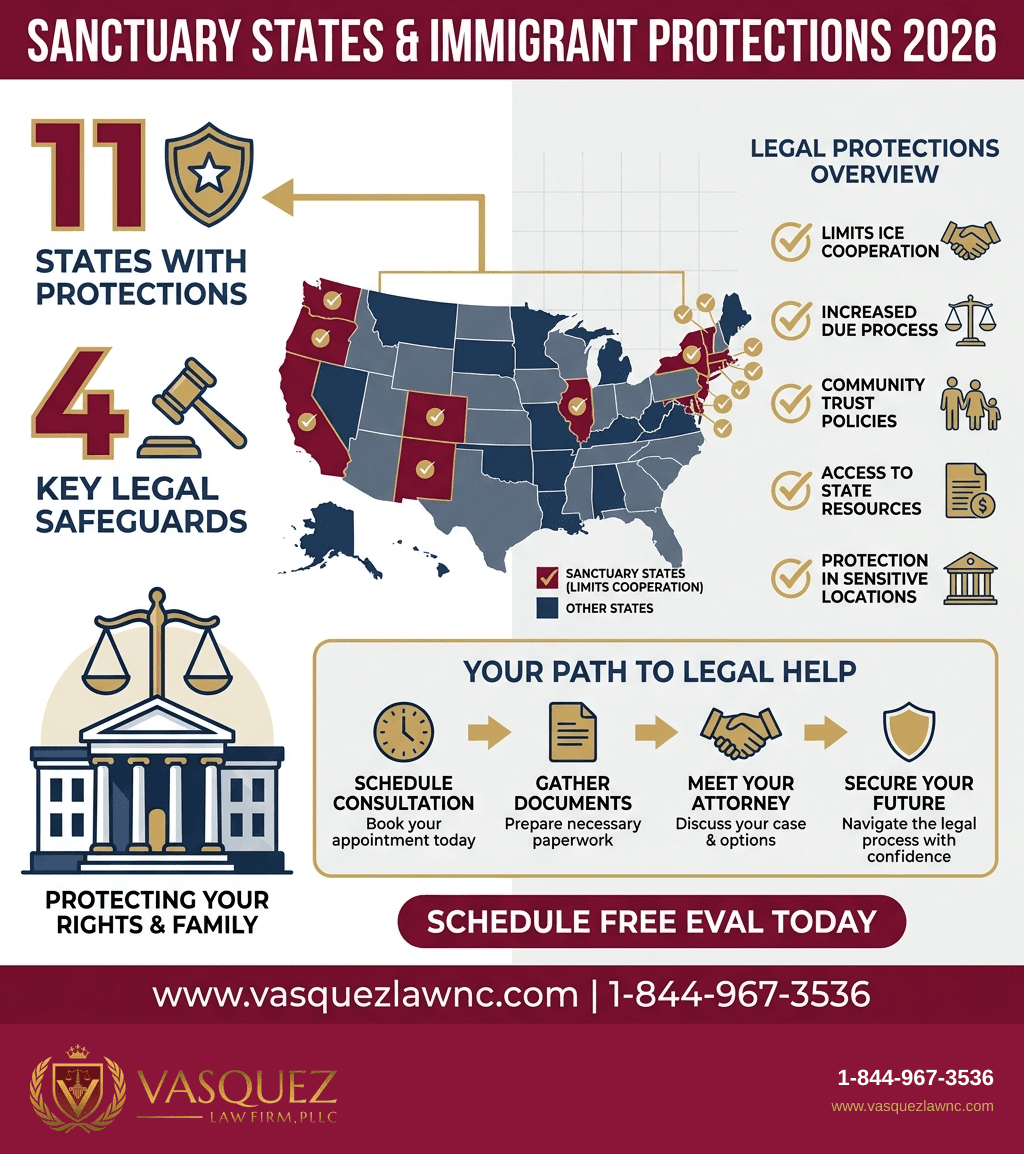
The concept started gaining traction in the 1980s but remains a heated topic nationwide. Currently, 11 states have some form of sanctuary laws, and hundreds of cities participate, intending to protect immigrant communities. Orlando itself has policies limiting local police involvement in immigration enforcement to foster trust and safety.
For example, a local resident reported a crime to Orlando police without fear that their immigration status would be questioned or that ICE would be alerted without legal grounds.
Our immigration legal services include helping immigrants understand how sanctuary policies impact their rights and protections.
Sanctuary Laws vs. Federal Immigration Enforcement
Sanctuary policies do not stop ICE from pursuing immigration cases. Federal officers retain full authority to arrest and detain people for immigration violations under federal law. However, sanctuary laws restrict local government resources and personnel from actively assisting ICE without proper legal documents, such as warrants signed by judges.
This division creates a buffer for immigrant communities and encourages cooperation with local law enforcement without fear. The U.S. Supreme Court clarified in 2019 that sanctuary policies are constitutional because the federal government cannot compel local jurisdictions to enforce immigration laws.
Sanctuary Cities List and States
In 2026, the list of sanctuary states includes California, Colorado, Oregon, Illinois, and others totaling 11. Sanctuary cities like Chicago, San Francisco, and New York lead the way with extensive policies protecting immigrants. While Florida and North Carolina are not sanctuary states, cities like Orlando have certain policies reflecting sanctuary principles.
Key Steps to Take if You Are an Immigrant in Orlando
If you are an immigrant living in Orlando, understanding what sanctuary immigration law means for you can help protect your rights and safety. Here are the steps you should consider:
- Know Your Rights: You have the right to remain silent and ask for a lawyer before answering questions about your immigration status.
- Carry Identification: Though you are not required to carry immigration documents, having valid ID can be helpful in emergencies.
- Avoid False Information: Never lie to law enforcement officials. Providing false information can cause serious legal problems.
- Ask for Warrants: If ICE or police detain you, ask to see a warrant signed by a judge authorizing the detention or search.
- Contact an Experienced Attorney: Reach out immediately for help understanding your protections and options.
At Vasquez Law Firm, our Attorney Vasquez and team specialize in helping immigrants in Orlando use sanctuary policies to protect their rights. We advise you on the best legal course based on your unique circumstances.
Documents or Evidence Checklist
- Valid ID or passport
- Immigration paperwork (if any)
- Proof of residence such as utility bills or lease agreements
- Any correspondence from immigration authorities
- Contact information for legal counsel and family members
Common Mistakes Immigrants Make with Sanctuary City Laws
- Assuming Sanctuary Laws Provide Complete Immunity: Sanctuary policies limit but do not eliminate immigration enforcement risks. Always consult an attorney.
- Ignoring ICE Notices or Legal Papers: Not responding to notices can lead to deportation orders.
- Providing False Identification: This can cause criminal charges complicating your immigration case.
- Talking to Immigration Officers Without Counsel: Anything you say can be used against you. Request a lawyer before answering questions.
- Not Knowing Local Policies: Sanctuary laws vary locally — not all cities in Florida or North Carolina have them. Know your area.
- Failing to Keep Emergency Contacts Updated: Always have contact information for your lawyer and trusted persons ready.
- Ignoring Deportation Proceedings: If you receive a court date, attend all hearings to avoid orders in absentia.
If you only remember one thing: Sanctuary immigration law offers protections, but staying informed and legally prepared is essential.
Timeline: What to Expect with Sanctuary Law Protections
- Immediately: Sanctuary policies protect you from warrantless detention by local police.
- Within Weeks: You may qualify to consult with immigration attorneys to explore relief options, especially in Orlando.
- 1-3 Months: You might file for immigration benefits or prepare a defense if detained, such as asylum or cancellation of removal.
- 6 Months to 1 Year: Immigration court cases may proceed depending on your status and challenges.
- Ongoing: Sanctuary laws remain a backdrop but vary with federal policy changes – monitor updates regularly.
Costs and Fees: What Impacts the Price of Legal Help
- Type of case: asylum, adjustment of status, or defense affects complexity and fees.
- Documentation: Complexity of gathering evidence and preparing applications or court filings.
- Length of legal proceedings: Longer cases typically cost more due to work hours.
- Lawyer’s experience: Highly skilled immigration attorneys often charge more but provide better outcomes.
- Location: Legal fees vary between Orlando and Raleigh offices but remain competitive.
NC, FL, and Nationwide Notes
North Carolina Notes
North Carolina currently does not have statewide sanctuary laws. However, local policies can vary, and cooperation with ICE enforcement may differ by county. Our Raleigh, NC office can help you understand local nuances and protect your rights under federal and state laws.
Florida Notes
Florida, including Orlando, does not officially designate any sanctuary cities. However, certain local policies limit law enforcement's role in immigration enforcement under federal scrutiny. Immigrants in Orlando should be aware of these policies and seek legal guidance tailored to Florida's context to effectively use sanctuary protections.
Nationwide Concepts (General Only, Rules Vary)
Sanctuary immigration law depends heavily on local and state legislation. While federal immigration law (such as INA sections and 8 CFR rules) governs removal and enforcement, sanctuary policies set limits on local cooperation with federal agencies. Always check current local laws and federal court decisions impacting your area.
For example, the 2019 U.S. Supreme Court decision in City of Philadelphia v. Sessions upheld that local governments cannot be forced to comply with federal immigration detainers without judicial orders, reinforcing sanctuary policy legality nationwide.
When to Call a Lawyer Now
- If you receive any ICE notice or summons to court
- If local police ask about your immigration status
- If you or a family member is detained by immigration officers
- If you fear deportation or removal proceedings
- If you are applying for asylum, DACA, or other immigration relief
- If you experience discrimination or immigration-related harassment
- If you need help understanding sanctuary policies in Orlando
- If you want to apply for citizenship or lawful permanent residency
About Vasquez Law Firm
At Vasquez Law Firm, we combine compassion with aggressive representation. Our motto "Yo Peleo®" (I Fight) reflects our commitment to standing up for your rights.
- Bilingual Support: Se Habla Español — Spanish-speaking attorneys and staff available
- Service Areas: North Carolina, Florida, and nationwide immigration services
- Experience: Over 30 years helping clients navigate complex legal matters
- Results: Thousands of successful cases across multiple practice areas
Attorney Trust and Experience
William J. Vásquez is admitted to the North Carolina State Bar (2011) and to the U.S. Courts of Appeals for the 4th, 5th, and 11th Circuits. Florida-jurisdiction matters at the firm are handled by Florida Bar attorney Harold Estrada-Rodriguez (FL Bar No. 1041171). The firm has provided dedicated legal representation since 2011, with personalized attention to each client's case.
Don't wait to get the help you deserve. Call us now for immediate assistance. Se Habla Español.
Frequently Asked Questions
What are sanctuary immigration laws?
Sanctuary immigration laws are policies that stop local authorities from assisting federal immigration enforcement without proper warrants. They protect immigrants from deportation risks during routine police interactions and help maintain community trust. Sanctuary laws vary by location and evolve, so understanding local rules in Orlando is essential.
How many sanctuary states and cities exist?
There are 11 sanctuary states and hundreds of cities nationwide. Orlando has limited sanctuary policies but is not an official sanctuary city. The number of jurisdictions changes as laws pass or expire, reflecting changing political and legal climates.
Do sanctuary cities violate federal law?
No. The U.S. Supreme Court confirmed that sanctuary policies are constitutional. These laws prevent local agencies from enforcing federal immigration law but do not block federal authorities from performing their duties.
What protections come with sanctuary immigration laws?
These laws safeguard immigrants from warrantless detention, restrict information sharing with ICE, and foster safe community relations with law enforcement, reducing fear of deportation during non-immigration related police interactions.
Do immigrants in sanctuary cities get more welfare than citizens?
No, immigrants’ welfare benefits depend on immigration status under federal law. Sanctuary policies do not grant extra welfare benefits, though some states or cities offer limited support regardless of status.
Must I show ICE my ID in a sanctuary city?
ICE can ask for ID anywhere, but local law enforcement in sanctuary cities usually does not inquire about immigration status. Knowing your rights and consulting an attorney is important if approached by immigration officers.
How does a city become a sanctuary city?
By passing laws or policies that limit cooperation with federal immigration enforcement, such as refusing to honor ICE detainers without warrants or prohibiting sharing immigration status voluntarily.
What should I do if I face immigration enforcement in Orlando?
Remain calm, ask if you are free to leave, request to see a warrant if detained, and contact an experienced immigration lawyer like those at Vasquez Law Firm immediately.
Sources and References
- U.S. Citizenship and Immigration Services
- Executive Office for Immigration Review
- Legal Information Institute
Take the first step toward justice today. Our team is standing by to help.
Start Your Free Evaluation Now
Call us: 1-844-967-3536
Se Habla Español - Estamos aquí para ayudarle.


William Vasquez
Founder & CEO, Vasquez Law Firm, PLLC
William Vasquez is the founder and CEO of Vasquez Law Firm, PLLC, a results-driven firm specializing in immigration, criminal defense, personal injury, and workers' compensation. A U.S. Air Force veteran and recipient of the Joint Service Achievement Medal, William is dedicated to fiercely fighting for his clients' rights.
Related Legal Services
Need legal help? Learn more about how our immigration attorneys can help, or contact us for a free evaluation.
You can also visit North Carolina immigration law firm for more information.