Trump Administration Green Card Directive Changes in 2026
Understand the Trump administration green card directive and new rules in 2026. Learn what foreigners must apply for and protect your status. Get help today.
Published on May 26, 2026
Talk to an immigration attorney
Free call. A clear plan for your case.
Free & confidential · Se habla espanol · 24/7
Have questions? Talk to an attorney - free evaluation.
Call 1-844-967-3536Free Tool
Check Your USCIS Case Status Now
Enter your receipt number - get the official USCIS status in English or Spanish. No registration.
Trump Administration Green Card Directive Changes in 2026
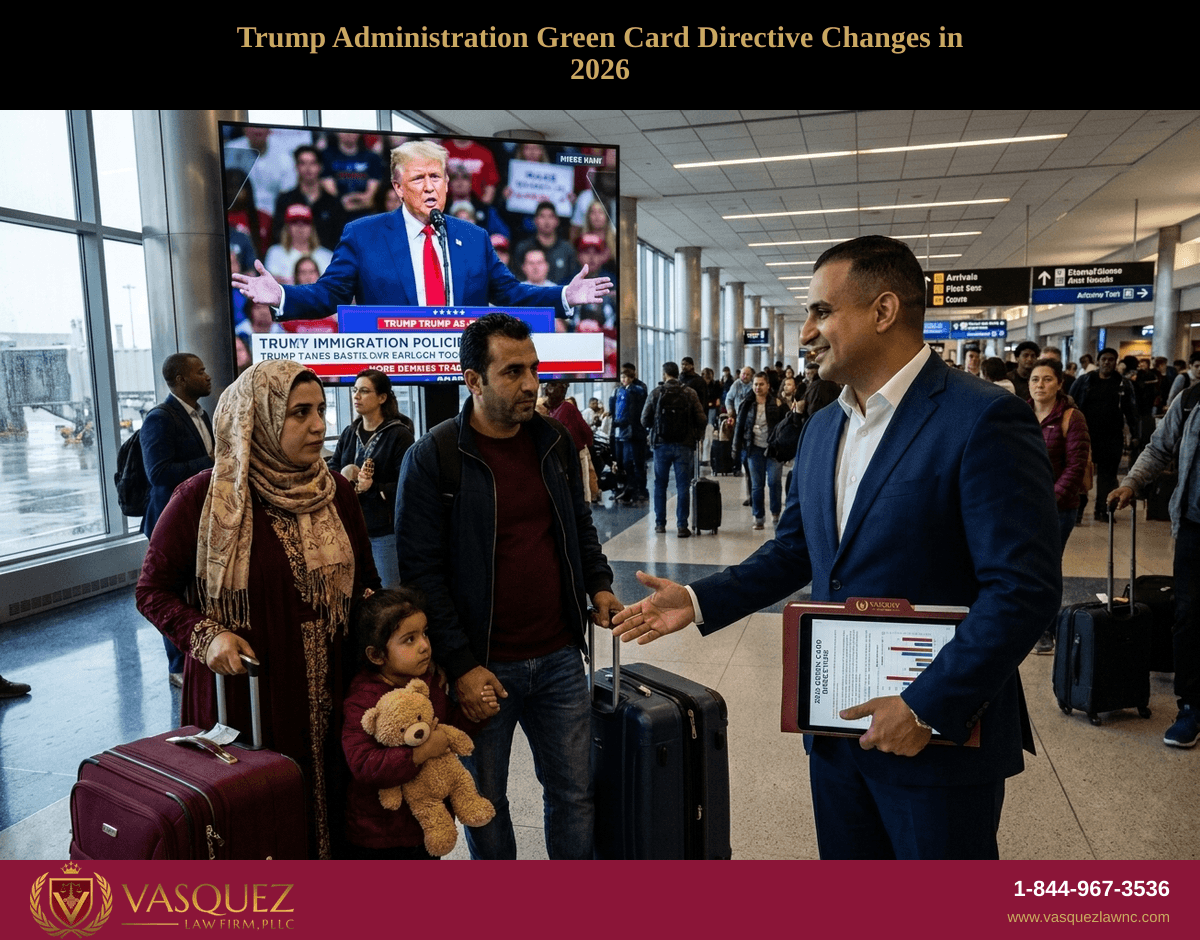
The Trump administration green card directive introduces new requirements for foreigners who want a green card in 2026. This policy changes who must apply for green cards abroad and impacts many immigrants in Raleigh, NC, and Orlando, FL. Understanding these updated rules can help you prepare and protect your immigration status. At Vasquez Law Firm, our immigration attorneys provide bilingual support for clients navigating these complex changes. This article explains what the directive means and how to respond.
Need help with your case? Our experienced attorneys are ready to fight for you. Se Habla Español.
Or call us now: 1-844-967-3536
Quick Answer
The Trump administration green card directive of 2026 requires many foreigners seeking permanent residency to apply for green cards abroad. This new rule affects H-1B visa holders and other immigrants, changing previous adjustment of status procedures. Applicants must understand who must apply outside the U.S., necessary documents, and timelines.
- Many applicants must submit applications through U.S. consulates abroad.
- This applies to foreigners in the U.S. with pending green card petitions.
- Processing timelines can extend 12 to 24 months or more.
- Errors or delays can jeopardize application approvals.
- Legal guidance can help navigate the new green card rules effectively.
Understanding the Trump Administration Green Card Directive
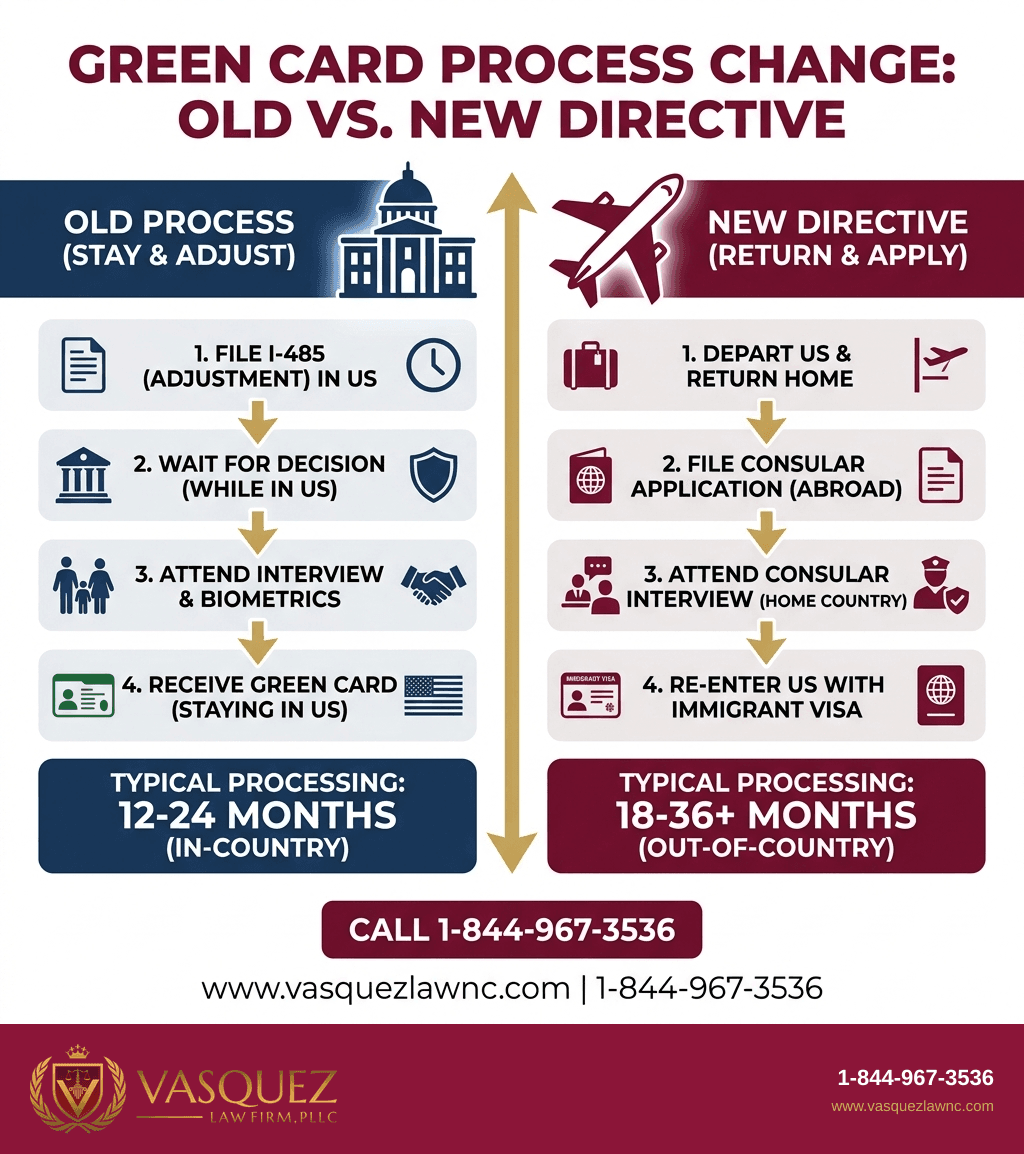
In 2026, the Trump administration green card directive requires a significant procedural shift. Foreigners who want a green card will no longer be able to adjust their status while in the U.S. in many cases. Instead, they must apply for their green card abroad at U.S. embassies or consulates. This policy aims to enforce stricter controls and ensure applicants undergo consular processing outside the U.S.
Previously, many applicants filed Form I-485 to adjust status within the United States under 8 U.S.C. § 1255. Now, under this directive, applicants must complete consular processing steps dictated by the State Department and USCIS.
This new rule especially impacts foreigners in H-1B status who want employment-based green cards. Previously eligible for adjustment of status inside the U.S., they now face mandatory consular interviews abroad. This shift increases the complexity of the green card process, adding travel and scheduling challenges.
Understanding these changes is crucial for immigrants residing in Raleigh, NC, and Orlando, FL, where our firm serves clients affected by these policies. Vasquez Law Firm's experienced immigration legal team can guide you through the new green card rules and help avoid costly mistakes.
Why This Policy Was Implemented
The directive aligns with executive orders issued between 2017 and 2021 emphasizing stricter immigration controls. It is intended to reduce unauthorized stay and ensure applicants undergo thorough background and medical checks abroad. The Executive Office for Immigration Review supports these measures to reduce paperwork backlog and streamline removal proceedings when applications are denied.
However, critics argue this policy delays reunification and complicates lawful immigration. Still, these are the rules immigrants must follow in 2026, so early preparation and legal help are advisable.
Step-by-Step Actions for Affected Foreigners
- Confirm if you fall under the new directive: Foreigners in the U.S. on visas like H-1B who want green cards must verify if their case requires consular processing.
- Gather all necessary documentation: This includes your current visa papers, approved petitions, passports, birth certificates, and proof of eligibility.
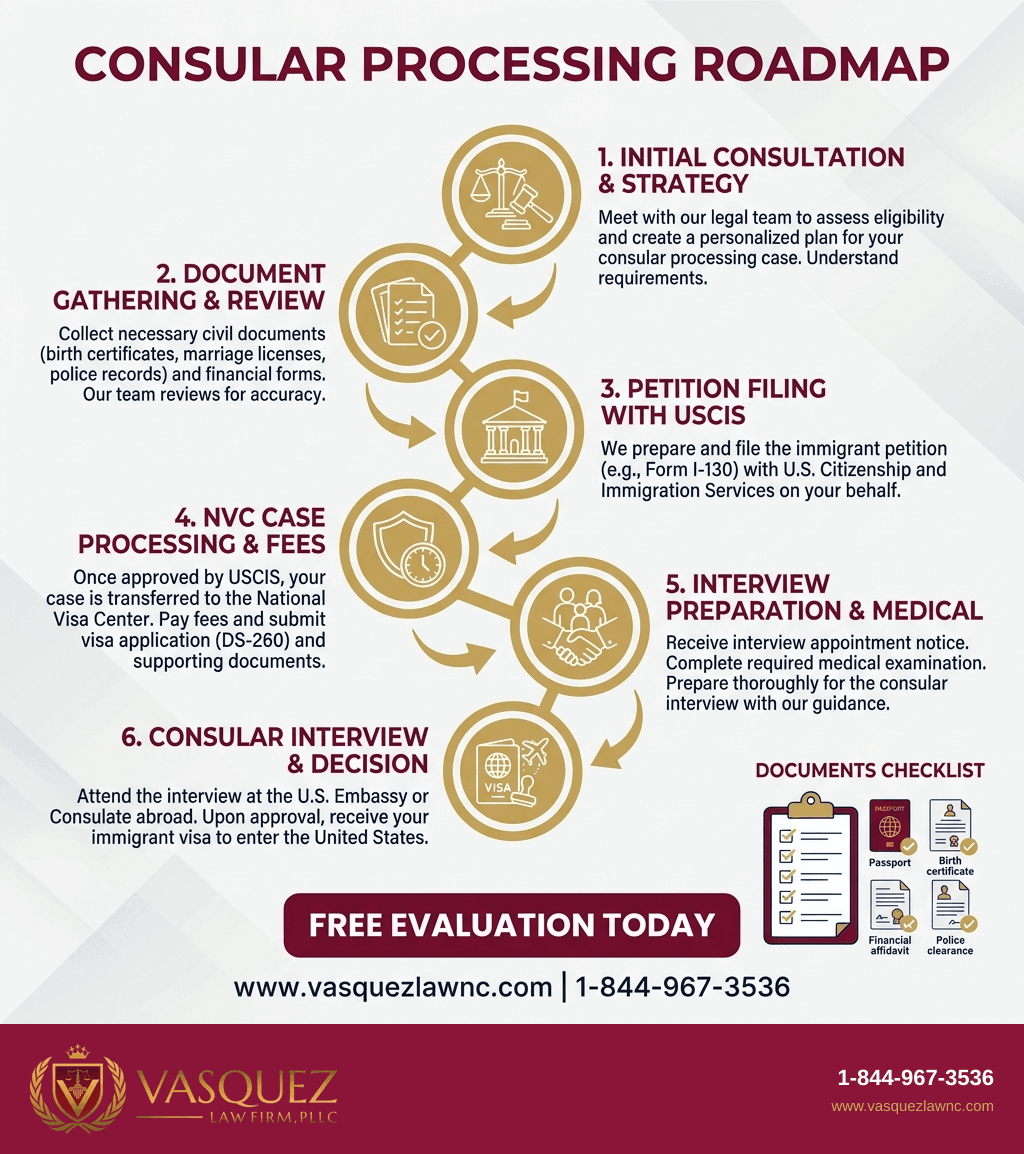
- File immigrant visa petition with USCIS: Usually done by your employer or family member sponsoring you.
- Complete the National Visa Center (NVC) processing: Pay fees, submit required forms, and document supporting evidence as instructed.
- Schedule and attend consular interview abroad: This is a mandatory interview where a consular officer assesses your eligibility.
- Prepare for travel: Obtain medical exams and ensure your trip is planned according to consulate guidelines.
- Await visa issuance: After approval, the immigrant visa will allow entry into the U.S. as a lawful permanent resident.
Learn how immigration attorneys help with each step at Vasquez Law Firm.
Consular Locations and Scheduling
Applicants usually must attend interviews at the nearest consulate or embassy outside the U.S. Consular wait times vary by location. Check current processing times on the USCIS processing times page.
Documents Checklist for Green Card Applications
- Valid passport(s) with at least six months validity beyond intended entry date.
- Approved immigrant petition (Form I-130, I-140, or others).
- Birth certificate or equivalent.
- Police clearance certificates from all countries where you lived six months or more since age 16.
- Medical examination report completed by an authorized physician.
- Evidence of financial support (Form I-864 affidavit of support).
- Proof of employment and current visa status.
Having these documents organized in advance can speed consular processing. Missing documents often lead to delays or denials.
Timeline: What to Expect During Processing
- Petition approval: USCIS processing times vary by form; typically 6 to 12 months.
- National Visa Center processing: 2 to 4 months to schedule interview.
- Consular interview wait times: 1 to 6 months depending on consulate location.
- Visa issuance and travel: Usually within a few weeks after approval.
- Typical total duration: 12 to 24 months or longer, depending on category and backlogs.
Applicants in Raleigh and Orlando should plan for these timelines and communicate regularly with counsel to avoid surprises.
Common Mistakes in Applying Under New Rules
- Failing to apply at the correct consulate: Each applicant must attend their assigned consulate, usually the one in their home country or country of residence.
- Incomplete or incorrect documentation: Missing police certificates, signatures, or forms can cause delays.
- Ignoring travel advisories or visa appointment instructions: Not following consular guidelines risks denial.
- Delaying medical exams: These expire and must be timely submitted.
- Misunderstanding financial support requirements: Sponsors must meet income thresholds to avoid application refusal.
- Not consulting an immigration lawyer: The new directive adds complexity that legal advice can clarify.
- Missing deadlines and interview dates: Rescheduling can take months.
- Assuming prior processes remain valid: The Trump administration green card directive changed previous adjustment of status norms.
If you only remember one thing: Prepare early, follow instructions strictly, and get professional help.
Impact on NC and FL Immigrant Communities
North Carolina Notes
Immigrants in Raleigh and surrounding communities face challenges complying with consular processing due to travel and scheduling demands. Local USCIS offices continue to process related petitions, but consular interviews require applicants to travel abroad. Vasquez Law Firm helps North Carolina residents understand these requirements and coordinate consular appointments.
Florida Notes
Orlando and other Florida metro area immigrants must navigate these new rules carefully. Florida has high numbers of H-1B visa holders affected by the Trump green card policy. The firm's bilingual team supports local immigrants in preparing documents and interviews for consular processing abroad.
Nationwide Concepts
The policy is federal and applies nationwide. Local USCIS offices handle petition approvals, but immigrant visa issuance occurs internationally. Processing times and consular locations vary. Nationwide delays due to backlogs and COVID-related restrictions remain significant in 2026.
When to Contact an Immigration Lawyer
- If you are unsure whether the new directive applies to your case.
- If you need assistance with document preparation and review.
- When scheduling consular interviews to ensure proper procedure.
- If you have received a notice of administrative processing delay.
- When facing denials or requests for evidence related to your green card application.
- If travel restrictions, such as COVID or security concerns, impact your processing. >
- Before leaving the U.S. for consular processing to avoid inadmissibility issues.
- When you require help filing waivers or other special applications.
- If you want legal representation during appeals or motions to reopen denied cases.
About Vasquez Law Firm
At Vasquez Law Firm, we combine compassion with aggressive representation. Our motto "Yo Peleo®" (I Fight) reflects our commitment to standing up for your rights.
- Bilingual Support: Se Habla Español — Spanish-speaking attorneys and staff available
- Service Areas: North Carolina, Florida, and nationwide immigration services
- Experience: Over 30 years helping clients navigate complex legal matters
- Results: Thousands of successful cases across multiple practice areas
Attorney Trust and Experience
William J. Vásquez is admitted to the North Carolina State Bar (2011) and to the U.S. Courts of Appeals for the 4th, 5th, and 11th Circuits. Florida-jurisdiction matters at the firm are handled by Florida Bar attorney Harold Estrada-Rodriguez (FL Bar No. 1041171). The firm has provided dedicated legal representation since 2011, with personalized attention to each client's case.
Don't wait to get the help you deserve. Call us now for immediate assistance. Se Habla Español.
Frequently Asked Questions
What is the Trump administration green card directive?
The Trump administration green card directive is a policy that requires many foreigners seeking permanent residency to apply for their green cards outside the U.S. at consulates or embassies. This represents a shift from previous adjustment of status procedures, adding travel and processing steps in 2026.
Who must apply for green cards abroad under this new rule?
Foreign nationals who are not lawful permanent residents and want to obtain a green card must now typically apply abroad under the new directive. This affects many family-based and employment-based applicants, especially H-1B visa holders residing in the U.S.
How does this directive affect H-1B visa holders seeking a green card?
Many H-1B visa holders, previously able to adjust status inside the U.S., must now leave the country for consular processing abroad. This introduces additional travel, scheduling, and planning requirements under the 2026 policy changes.
What is the timeline for green card processing under these new rules?
Green card processing via consular applications can take 12 to 24 months or more, varying by visa category and consulate. USCIS processing times fluctuate, so applicants should prepare for extended wait periods as reflected in the USCIS processing times page.
What documents do I need to prepare for applying abroad?
Documents include passports, birth certificates, police clearances, medical exams, proof of financial support, and employment verification. Properly preparing these documents helps avoid application delays or denials.
Can I apply for DACA while affected by these new green card rules?
DACA remains a separate process from green card applications. Applicants should regularly check USCIS DACA guidelines and consider that renewal processing usually ranges from 14 to 22 months on Form I-821D.
What mistakes should I avoid when applying under the new directive?
Avoid missing deadlines, incomplete or incorrect documents, applying at the wrong consulate, and neglecting travel restrictions. Legal guidance is critical to avoid costly mistakes and ensure compliance with the directive.
How can an immigration lawyer help with these new green card rules?
An immigration lawyer assists by reviewing cases, explaining requirements, helping collect documents, scheduling interviews, and representing applicants throughout the consular processing. Vasquez Law Firm offers bilingual support for clients in Raleigh and Orlando.
Sources and References
- U.S. Citizenship and Immigration Services
- Executive Office for Immigration Review
- Legal Information Institute
Take the first step toward justice today. Our team is standing by to help. Se Habla Español.
Start Your Free Evaluation Now
Call us: 1-844-967-3536
Se Habla Español - Estamos aquí para ayudarle.

William Vasquez
Founder & CEO, Vasquez Law Firm, PLLC
William Vasquez is the founder and CEO of Vasquez Law Firm, PLLC, a results-driven firm specializing in immigration, criminal defense, personal injury, and workers' compensation. A U.S. Air Force veteran and recipient of the Joint Service Achievement Medal, William is dedicated to fiercely fighting for his clients' rights.
Related Legal Services
Need legal help? Learn more about speak with an immigration lawyer, or contact us for a free evaluation.
You can also visit our North Carolina immigration practice for more information.