White House Directive Explained: What It Means in 2026
Learn how the White House directive affects immigration cases in 2026. Discover key steps and protect your rights. Contact Vasquez Law for a free consultation.
Published on May 29, 2026
Talk to an immigration attorney
Free call. A clear plan for your case.
Free & confidential · Se habla espanol · 24/7
Have questions? Talk to an attorney - free evaluation.
Call 1-844-967-3536Worried how the latest immigration news affects you?
Schedule a confidential case review with an immigration attorney - know exactly where you stand.
White House Directive Explained: What It Means in 2026
The White House directive announced in 2026 has significant implications for immigration in North Carolina and Orlando, FL. This article breaks down what the directive entails, how it affects immigration cases, and what immigrants, especially Dreamers, should consider. With evolving policies, understanding this directive is crucial for those navigating U.S. immigration. Vasquez Law Firm offers guidance for affected families across our service areas.
Need help with your case? Our experienced attorneys are ready to fight for you. Se Habla Español.
Or call us now: 1-844-967-3536
Quick Answer
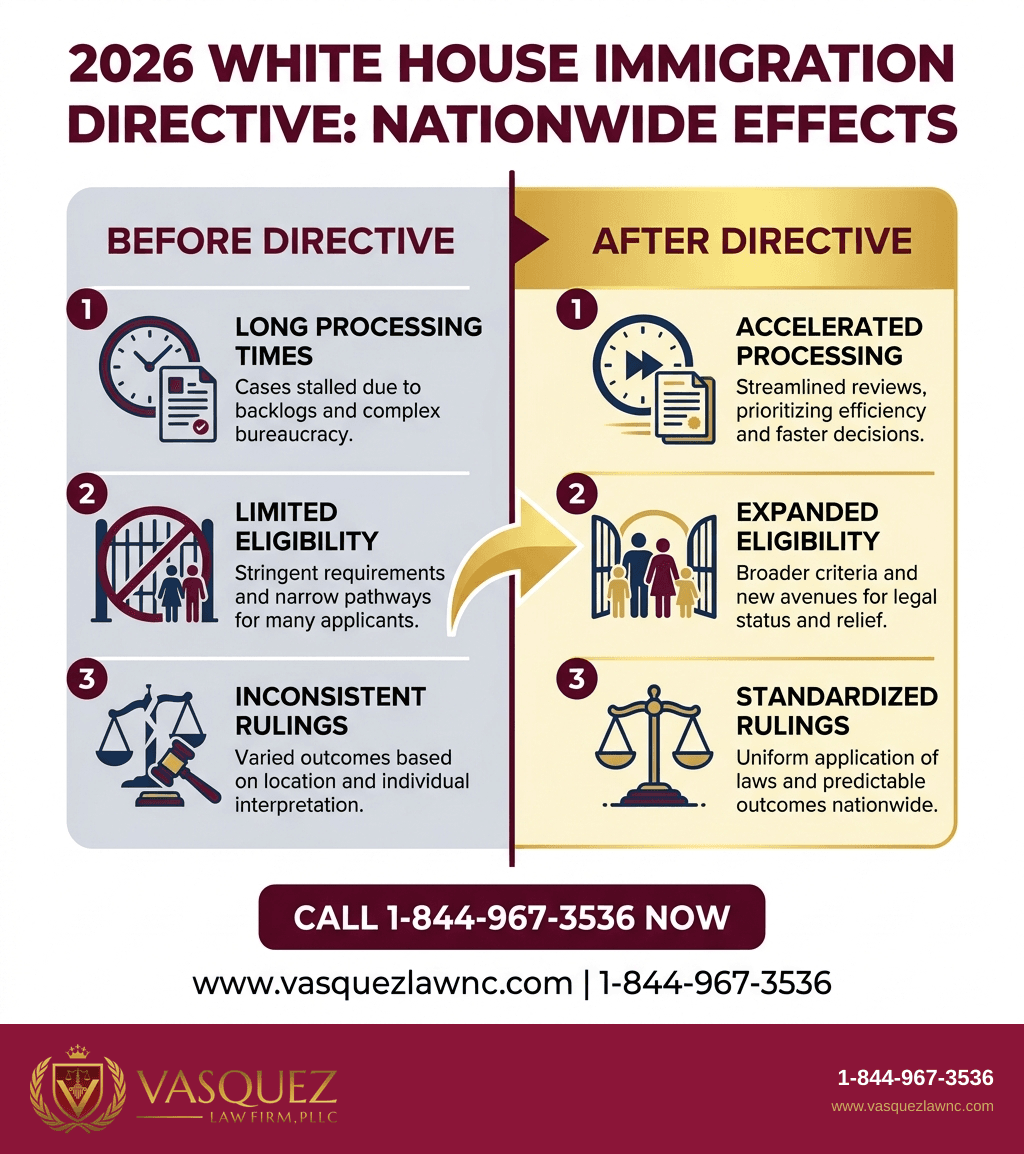
The White House directive issued in 2026 introduces changes affecting immigration policy nationwide, including how certain applications and protections for Dreamers are handled. It impacts processing steps, deadlines, and eligibility for key relief programs. Immigrants in North Carolina and Orlando should seek experienced legal guidance to navigate these updates effectively.
- Presidential directives reshape immigration enforcement
- Policies affect Dreamers and visa applicants
- Processing times may change following directive
- Legal help can protect immigrant rights
- Stay updated on USCIS and EOIR announcements
Understanding the White House Directive
On May 2026, a new White House directive was issued addressing immigration enforcement and policies nationwide. Such directives represent formal instructions from the president that federal agencies, including U.S. Citizenship and Immigration Services (USCIS) and Immigration and Customs Enforcement (ICE), must follow. These directives can redefine who is prioritized for deportation, expand or limit relief programs, and adjust application requirements.
For example, under this directive, certain protections for Dreamers—young people granted temporary relief under the Deferred Action for Childhood Arrivals (DACA) program—may be clarified or modified. This impacts thousands of immigrants residing in North Carolina and Orlando, FL. Understanding the directive helps immigrants and their families anticipate potential changes in eligibility, protections, and procedures.
Directives also often include new guidelines on how agencies implement executive orders, which are official commands from the president. The list of presidential directives continues to evolve, with some dating back decades but gaining renewed importance with recent administrations, including Trump executive orders in 2026 and earlier.
How Presidential Directives Differ
- Executive orders set broad policy goals.
- Memoranda give detailed instructions to agencies.
- Proclamations announce formal positions or actions.
Each has legal weight and affects immigration enforcement differently.
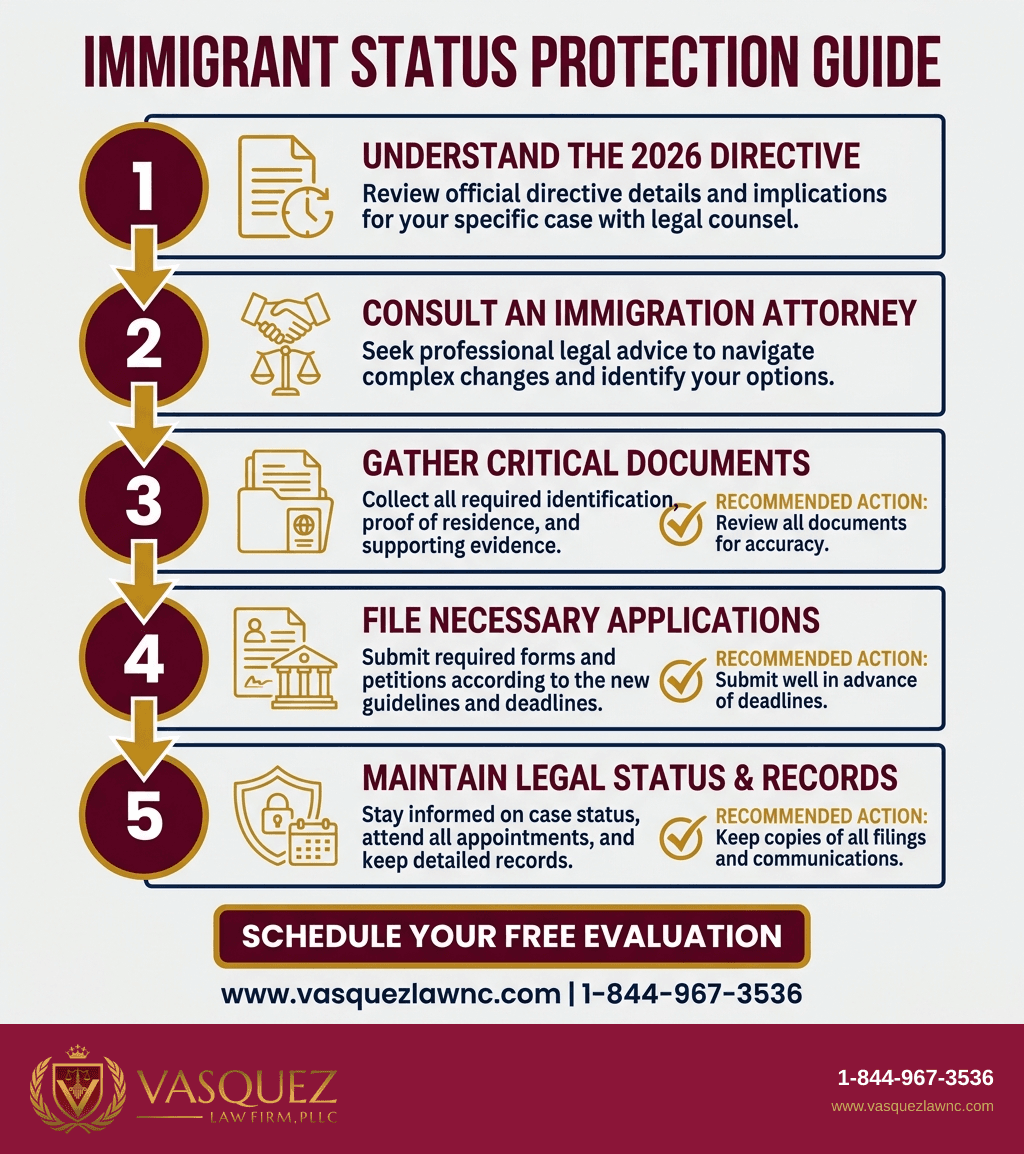
Key Steps to Take After the Directive
For immigrants in North Carolina and Orlando affected by the 2026 White House directive, immediate actions can help secure legal status and protect rights.
1. Stay Informed
Monitor official announcements such as the U.S. Citizenship and Immigration Services (USCIS) website for updates on policy changes and processing times.
2. Review Your Immigration Status
Understand how the directive impacts your current status. For Dreamers, changes might affect when and how to renew work permits or avoid removal proceedings.
3. Gather Essential Documents
Collect any documentation related to your immigration case, like birth records, immigration papers, and proof of residence. These are critical if you need to file applications or appeals.
4. Consult an Experienced Immigration Attorney
Legal guidance from qualified immigration attorneys—such as those at Vasquez Law Firm in Raleigh, NC and Orlando, FL—can help interpret the directive and plan your next steps.
5. Prepare Application or Renewal Filings Promptly
Apply or renew your benefits according to updated USCIS deadlines. For instance, DACA renewals currently take 14 to 22 months according to USCIS processing times (Form I-821D).
Common Mistakes to Avoid With Immigration Changes
- Missing deadlines: Immigration applications and petitions have strict timelines. Missing these can result in denial or deportation risk.
- Ignoring policy updates: Policies can change rapidly. Staying unaware risks noncompliance or lost benefits.
- Relying on unverified sources: Always consult official government sites or a licensed attorney to avoid misinformation.
- Failing to gather proper evidence: Incomplete or incorrect documentation can jeopardize your case.
- Assuming directives do not apply locally: Federal directives affect all states. North Carolina and Orlando residents should take them seriously.
- Not seeking legal help early: Waiting too long makes resolving issues more difficult and increases risk.
If you only remember one thing: timely legal assistance is critical for adapting to immigration changes driven by White House directives.
Timeline: What Immigration Applicants Can Expect
- Day 1: White House announces the directive publicly, often followed by a press release or briefing around 2 p.m. local time.
- Week 1-2: USCIS and related agencies publish guidance detailing changes to forms, processing, or eligibility.
- Month 1-3: Immigrant communities, legal clinics, and law firms begin outreach and education efforts.
- Month 3-6: Updated application processes go into effect; some applicants see changes in processing times.
- 6+ months: Ongoing monitoring of policy enforcement and possible legal challenges or amendments to the directive.
This timeline helps set realistic expectations for affected immigrants in North Carolina and Orlando.
Costs and Fees: What Impacts the Price
Legal fees for immigration help vary depending on the complexity of the case and the services needed. Some factors affecting costs include:
- Type of application or petition (e.g., DACA renewal, adjustment of status)
- Number of family members involved
- Urgency based on directive-imposed deadlines
- Extent of documentation gathering and case preparation
- Any required appeals or motions
At Vasquez Law Firm, we provide transparent pricing and free case evaluations to discuss potential fees and avoid surprises.
NC, FL, and Nationwide Notes
North Carolina Notes
North Carolina immigrants benefit from federal immigration policies and enforcement as outlined by White House directives. Local USCIS offices and the Raleigh court system process immigration actions according to federal guidelines.
Orlando, Florida Notes
Orlando residents experience similar federal agency operations. Additional local outreach to the Hispanic community often accompanies directives affecting immigration to ensure broad awareness.
Nationwide Concepts
White House directives and executive orders apply uniformly across all states, impacting agencies nationwide. However, practical implementation can vary, making local legal counsel a vital resource.
When to Call a Lawyer Now
- If you received conflicting information about renewal eligibility under the directive
- If USCIS processing times suddenly extend without explanation
- If you face potential removal or deportation proceedings
- If you must file urgent applications or respond to notices
- If you want to understand how changes affect your work permit or visa
- If a White House announcement today triggers new immigration requirements
About Vasquez Law Firm
At Vasquez Law Firm, we combine compassion with aggressive representation. Our motto "Yo Peleo®" (I Fight) reflects our commitment to standing up for your rights.
- Bilingual Support: Se Habla Español — Spanish-speaking attorneys and staff available
- Service Areas: North Carolina, Florida, and nationwide immigration services
- Experience: Over 30 years helping clients navigate complex legal matters
- Results: Thousands of successful cases across multiple practice areas
Attorney Trust and Experience
William J. Vásquez is admitted to the North Carolina State Bar (2011) and to the U.S. Courts of Appeals for the 4th, 5th, and 11th Circuits. Florida-jurisdiction matters at the firm are handled by Florida Bar attorney Harold Estrada-Rodriguez (FL Bar No. 1041171). The firm has provided dedicated legal representation since 2011, with personalized attention to each client's case.
Don't wait to get the help you deserve. Call us now for immediate assistance. Se Habla Español.
Frequently Asked Questions
What is a White House directive?
A White House directive is an official instruction from the president that guides federal agencies on policy and action. In immigration, it affects enforcement and processing nationwide, including important changes for residents of North Carolina and Orlando, FL.
How does the 2026 White House directive affect Dreamers?
This directive updates protections and processes for Dreamers, potentially changing renewal procedures and deferred action eligibility. Dreamers in NC and Orlando should consult legal experts to ensure compliance and protect their status.
What should I do if affected by this immigration directive?
Contact a qualified immigration attorney promptly to review your case, help gather documents, and submit applications or appeals before deadlines. Early action is key to maintaining protections under the directive.
Who can invoke the 25th Amendment to remove a president?
The vice president and a majority of executive department heads can invoke the 25th Amendment if a president is unable to perform duties. This is a legal mechanism unrelated to immigration but pertinent to the broader scope of White House activity.
Which president did not use a Bible to swear in?
President Theodore Roosevelt did not use a Bible during his oath of office. This has no bearing on immigration laws or directives but is a common trivia topic following White House announcements.
Does Trump have a degree and how does it relate to his directives?
Donald Trump holds a degree from the Wharton School. His educational background does not affect the legal force of his executive orders or directives, which remain binding federal policies.
What is included in the list of Presidential Directives?
It includes executive orders, memoranda, and proclamations directing agency actions. These shape immigration policy, enforcement priorities, and relief programs affecting many immigrant families across the U.S.
How long does USCIS take to process immigration cases after a directive?
Processing times vary, for example, DACA renewals take 14 to 22 months currently. Directives can impact these times through increased scrutiny or policy shifts, so staying updated on USCIS website is important.
Sources and References
- U.S. Citizenship and Immigration Services
- Executive Office for Immigration Review
- Legal Information Institute
Take the first step toward justice today. Our team is standing by to help. Se Habla Español.
Start Your Free Evaluation Now
Call us: 1-844-967-3536
Se Habla Español - Estamos aquí para ayudarle.
If you need legal assistance, learn more about speak with an immigration lawyer, or call us at 1-844-967-3536 for a free evaluation.


William Vasquez
Founder & CEO, Vasquez Law Firm, PLLC
William Vasquez is the founder and CEO of Vasquez Law Firm, PLLC, a results-driven firm specializing in immigration, criminal defense, personal injury, and workers' compensation. A U.S. Air Force veteran and recipient of the Joint Service Achievement Medal, William is dedicated to fiercely fighting for his clients' rights.
Related Legal Services
Need legal help? Learn more about speak with an immigration lawyer, or contact us for a free evaluation.
You can also visit our NC immigration team for more information.


