SCOTUS Citizenship Ruling: What It Means for You in 2026
Learn what the SCOTUS citizenship ruling means for immigrants in 2026. Understand your rights and get expert help. Contact Vasquez Law for a free consult.
Published on July 3, 2026
Have questions? Talk to an attorney - free evaluation.
Call 1-844-967-3536Free Tool
Check Your USCIS Case Status Now
Enter your receipt number - get the official USCIS status in English or Spanish. No registration.
SCOTUS Citizenship Ruling: What It Means for You in 2026
The SCOTUS citizenship ruling in 2026 has big effects for immigrants in Raleigh, NC, and Orlando, FL. This decision explains birthright citizenship laws. It changes things for people trying to get legal status in the United States. Knowing about the ruling helps you protect your rights and handle immigration steps well with expert help.
Need help with your case? Our experienced attorneys are ready to fight for you. Se Habla Español.
Or call us now: 1-844-967-3536
Quick Answer
The Supreme Court’s 2026 birthright citizenship ruling explains who is a U.S. citizen at birth under the 14th Amendment. The 7-2 decision changes immigration rights, including for people in Raleigh, NC and Orlando, FL. It confirms or limits automatic citizenship. This affects families and immigrant children born in the U.S.
- 7-2 ruling defines birthright citizenship scope
- Uses constitutional 14th Amendment rules
- Affects immigrant families across the country including NC and FL
- Explains legal status for children born in U.S.
- Changes future immigration law and policy
Understanding the SCOTUS Citizenship Ruling
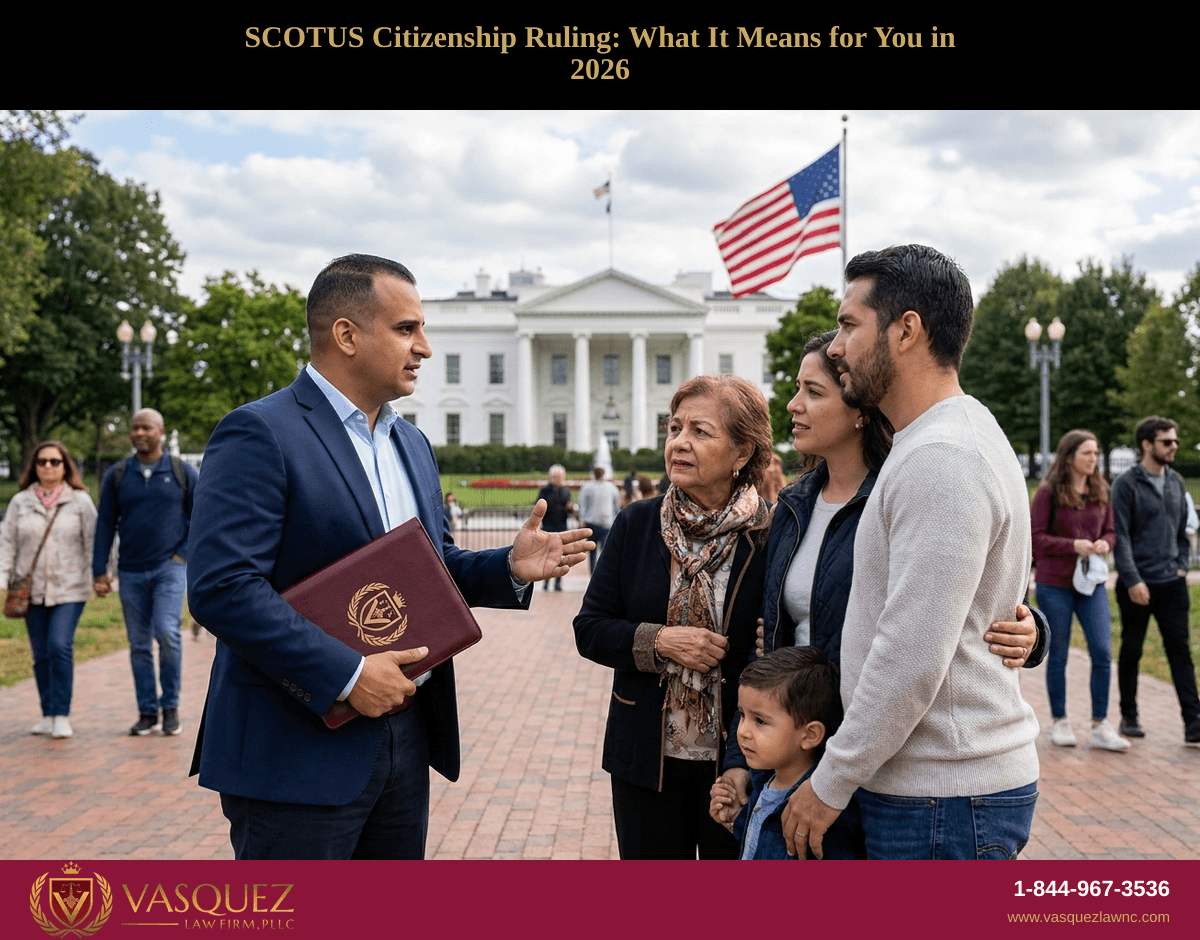
On June 30, 2026, the Supreme Court made an important 7-2 decision about birthright citizenship. It explained the Citizenship Clause of the 14th Amendment. This part of the Constitution says that anyone "born or naturalized in the United States, and subject to the jurisdiction thereof, is a citizen of the United States." The ruling explains what "subject to the jurisdiction thereof" means legally.
This decision ends long debates caused by presidents trying to limit automatic citizenship for children born to undocumented immigrants or temporary visitors. The Court majority looked at history, laws, and constitutional protections. They confirmed that usually, children born in the U.S. have citizenship rights. But they also said there are some exceptions.
This ruling directly affects immigrants and their families in Raleigh, North Carolina, and Orlando, Florida. Many people there seek legal protections under U.S. immigration law. For example, a child born in the U.S. to parents who are not citizens used to be assumed to have automatic citizenship. Now, if exceptions apply, there may be more checks.
The ruling has wide effects on policies. It changes immigration enforcement, citizenship applications, and deportation cases. It also affects future government rules and laws made by Congress. You can read the full decision on the Legal Information Institute website at Cornell Law School.
Historical Background of Birthright Citizenship
Birthright citizenship means getting U.S. citizenship by being born in the country. This idea comes from the 14th Amendment, added in 1868. It was made to give citizenship rights to formerly enslaved people and their children. Before this, U.S. citizenship laws were not clear or consistent. The 14th Amendment made a rule so states could not deny citizenship based on race, status, or where parents came from.
Since then, birthright citizenship has been a key part of U.S. immigration law. But there have been political fights about whether children of unauthorized immigrants or diplomats qualify. The Supreme Court’s 2026 ruling is the newest and most important explanation of these issues.
Legal Analysis and Citations
The Court looked closely at the Constitution and past cases. The Citizenship Clause says "all persons born or naturalized in the United States, and subject to the jurisdiction thereof." The ruling said "jurisdiction" does not include some groups like foreign diplomats. But it does include almost all other people born in the U.S.
Important legal references are U.S. Const. Amend. XIV, § 1, and 8 U.S.C. § 1401. These laws explain nationality at birth. The Court also mentioned earlier cases like United States v. Wong Kim Ark (1898). That case said children of immigrants legally in the U.S. have birthright citizenship.
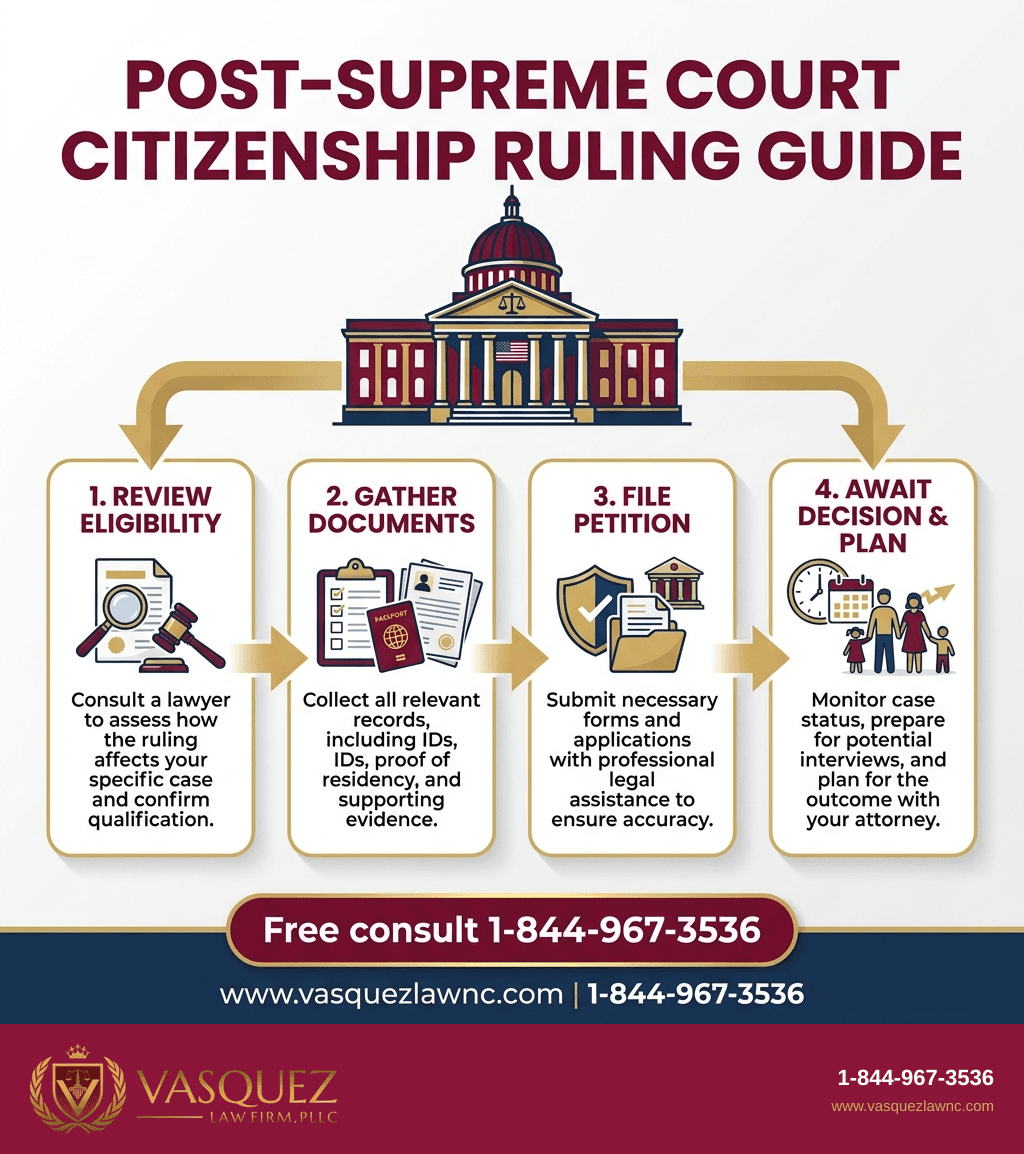
Step-by-step: What To Do After the Ruling
- Review Your Immigration Status: Check your current status. See if your or your children’s citizenship might be affected. This includes looking at permanent residency, visa status, or Deferred Action for Childhood Arrivals (DACA).
- Keep Up with Policy Changes: Follow updates from USCIS and legal news. Learn how this ruling changes rules in Raleigh, NC and Orlando, FL.
- Gather Required Documents: Collect birth certificates, immigration papers, ID, and any letters from immigration offices.
- Consult an Immigration Attorney: Talk with lawyers who know immigration law. They can review your case and advise next steps.
- Consider Benefits and Risks: Understand what the ruling means for your applications, renewals, or appeals about citizenship and legal protections.
- Prepare Applications or Appeals: File the needed legal forms with help to follow new rules.
- Stay Alert to Deadlines: USCIS processing times change. Check current times at the official USCIS Processing Times page.
Documents and Evidence Checklist
- Official birth certificates showing place of birth
- Parents’ immigration status papers (visas, green cards, deportation orders)
- Previous citizenship or naturalization certificates
- Records of travel or living in the U.S.
- Letters from USCIS or immigration courts
- Identification documents (passports, state IDs)
- Proof that parents are not diplomats
- Proof of continuous residence for those applying for naturalization
Timeline: What to Expect in Immigration Processes
- Weeks 1-2: Meet with an immigration attorney and review your documents.
- Weeks 3-6: Collect and send in documents for citizenship or status changes.
- Weeks 6-12: USCIS processes applications. For example, form I-485 (Adjustment of Status) takes 8 to 14 months (source: USCIS Processing Times).
- Weeks 12-20: Attend biometrics appointment and possibly an interview.
- Months 6+: Get a decision or be asked for more information or hearings.
Common Mistakes to Avoid
- Not consulting an attorney early: Waiting too long can hurt your rights and options.
- Failing to provide complete documents: Missing or wrong papers slow down your case.
- Ignoring law or policy changes: Courts and USCIS update rules that affect your case.
- Not understanding birthright citizenship basics: Know how the ruling applies to your family.
- Missing deadlines: Late filings can cause denial.
- Trusting unofficial legal advice: Always get help from licensed immigration lawyers.
- Thinking citizenship always stops deportation: Citizenship protects you, but other legal problems may happen.
If you remember only one thing: talk to a qualified immigration attorney to see how the SCOTUS citizenship ruling affects your situation.
Jurisdiction Notes for NC, FL, and Nationwide
North Carolina Notes
Raleigh has a growing immigrant community. Local immigration courts and USCIS offices follow SCOTUS rulings under federal law. Vasquez Law Firm in Raleigh helps clients across the country but also offers in-person help for North Carolina immigrants.
Florida Notes
In Orlando, the large Hispanic community often has questions about citizenship after the ruling. Local consulates and USCIS offices follow federal court decisions. Vasquez Law Firm’s Orlando office offers bilingual help so clients understand their rights under the new SCOTUS ruling.
Nationwide Concepts (General Only, Rules Vary)
Citizenship is a federal issue, so this SCOTUS decision applies in all states. But how it works can differ by immigration courts and USCIS offices. Lawyers across the country advise staying updated on local rules and getting legal help for your case.
When to Call a Lawyer Now
- If you or your child’s citizenship is unclear after the ruling
- When USCIS asks for proof about birthright citizenship
- If you have immigration court hearings or removal cases
- Before sending any applications about citizenship
- After getting notices about immigration or naturalization rule changes
- If you need help understanding how the SCOTUS ruling affects DACA, TPS, or visas
- If you think your immigration status affects your family’s legal rights
- If you want to apply for naturalization or permanent residence with expert help
About Vasquez Law Firm
At Vasquez Law Firm, we mix care with strong representation. Our motto "Yo Peleo®" (I Fight) shows our promise to defend your rights.
- Bilingual Support: Se Habla Español — Spanish-speaking lawyers and staff available
- Service Areas: North Carolina, Florida, and nationwide immigration help
- Experience: Over 30 years helping clients with complex legal issues
- Results: Thousands of successful cases in many practice areas
Attorney Trust and Experience
William J. Vásquez joined the North Carolina State Bar in 2011. He is also admitted to the U.S. Courts of Appeals for the 4th, 5th, and 11th Circuits. Florida cases at the firm are handled by Florida Bar lawyer Harold Estrada-Rodriguez (FL Bar No. 1041171). The firm has given focused legal help since 2011, paying close attention to each client’s case.
Don't wait to get the help you need. Call us now for quick assistance.
Se Habla Español
Frequently Asked Questions
What does the Supreme Court ruling on citizenship mean?
The Supreme Court ruling explains the legal meaning of birthright citizenship under the 14th Amendment. It changes who is a U.S. citizen at birth and may limit or confirm automatic citizenship. This affects immigrants and their families, especially in Raleigh, NC, and Orlando, FL.
Will SCOTUS rule on birthright citizenship today?
As of 2026, the Supreme Court has made its decision on birthright citizenship, with a 7-2 ruling. This is an important legal event affecting immigration laws across the country.
How is the Trump administration changing the citizenship test?
During the Trump presidency, changes were suggested to focus more on English skills and civics knowledge for naturalization. Some changes happened, but SCOTUS rulings now guide how eligibility is decided in Raleigh and Orlando.
Can a U.S. citizen lose their citizenship and be deported?
Usually, citizenship is permanent once given. But fraud or certain serious crimes can cause loss of citizenship or deportation. The birthright citizenship ruling does not directly affect this risk but sets the base for citizenship status.
What is birthright citizenship?
Birthright citizenship means getting U.S. citizenship by being born in the U.S., no matter the parents’ status. This comes from the 14th Amendment’s Citizenship Clause.
How does the SCOTUS birthright ruling impact immigrants in NC and FL?
Immigrants in Raleigh and Orlando get clearer rules on who is a citizen at birth. This affects many families’ legal rights and immigration status reviews.
Where can I find the official Supreme Court ruling text?
You can read the full text at the Legal Information Institute at Cornell Law School and other public sites. This lets you see the exact legal details.
What steps should I take after the SCOTUS citizenship ruling?
Check your status, get your documents ready, and talk to an experienced immigration lawyer in Raleigh or Orlando to learn how the ruling affects your case.
Sources and References
- U.S. Citizenship and Immigration Services
- Executive Office for Immigration Review
- Legal Information Institute
Take the first step toward justice today. Our team is ready to help. Se Habla Español.
Start Your Free Evaluation Now
Call us: 1-844-967-3536
Se Habla Español - Estamos aquí para ayudarle.
If you need legal assistance, learn more about get immigration legal help today, or call us at 1-844-967-3536 for a free evaluation.
William Vasquez
Founder & CEO, Vasquez Law Firm, PLLC
William Vasquez is the founder and CEO of Vasquez Law Firm, PLLC, a results-driven firm specializing in immigration, criminal defense, personal injury, and workers' compensation. A U.S. Air Force veteran and recipient of the Joint Service Achievement Medal, William is dedicated to fiercely fighting for his clients' rights.
Related Legal Services
Need legal help? Learn more about get immigration legal help today, or contact us for a free evaluation.
You can also visit immigration lawyers serving all of North Carolina for more information.