How Supreme Court Immigration Policy Shapes Your Case in 2026
Learn how Supreme Court immigration policy affects cases in 2026. Understand rulings, birthright citizenship, and deportation. Contact Vasquez Law for help.
Published on June 26, 2026· Updated September 9, 2026
Talk to an immigration attorney
Free call. A clear plan for your case.
Free & confidential · Se habla espanol · 24/7
Have questions? Talk to an attorney - free evaluation.
Call 1-844-967-3536Worried how the latest immigration news affects you?
Schedule a confidential case review with an immigration attorney - know exactly where you stand.
USCIS Case Status
Check your USCIS case status
Enter your receipt number and get the official status. Free, no registration.
How Supreme Court Immigration Policy Shapes Your Case in 2026
In 2026, the Supreme Court immigration policy still affects immigrants in Orlando and across North Carolina and Florida. Recent decisions on deportation, birthright citizenship, and limits change how cases move forward at the federal level. This article explains the latest Supreme Court immigration cases, how they affect immigrant families, and what you need to know to protect your rights. If you face immigration challenges in 2026, understanding the Supreme Court decisions is key to making smart choices about your legal options.
Need help with your case? Our experienced attorneys are ready to fight for you. Se Habla Español.
Or call us now: 1-844-967-3536
Quick Answer
The Supreme Court immigration policy in 2026 still shapes how deportation is enforced and birthright citizenship rights. Recent decisions confirm strong federal power over immigration enforcement but protect citizenship rights under the Constitution. Immigrants in Orlando and Raleigh must stay informed and get legal help to protect their cases.
- Supreme Court confirms deportation law enforcement powers
- Birthright citizenship under the 14th Amendment upheld
- Due process protections remain important in deportation cases
- Immediate legal help is essential after rulings
- Orlando and Raleigh immigrants face updated federal enforcement
Understanding Supreme Court Immigration Policy
In 2026, immigration policy shaped by the Supreme Court directly affects immigrants in Orlando, Florida, and Raleigh, North Carolina. The Court looked again at key issues like deportation authority and birthright citizenship. For example, the ruling allowed the Trump administration to bring back some strict immigration policies. This shows strong immigration enforcement and changes how ICE works. At the same time, citizenship rulings confirmed that children born in the U.S. still get birthright citizenship under the 14th Amendment. (Birthright citizenship means a child born in the U.S. automatically becomes a U.S. citizen.)
The Supreme Court immigration case law sets rules that apply across the country. These cases often balance federal immigration powers with individual constitutional protections. For example, the Court’s 2026 decision supported legal rules for deporting non-citizens with criminal records as stated under 8 U.S.C. § 1227. It also dealt with questions about immigration courts and due process safeguards. (Due process means fair legal procedures before the government can take away rights.)
These policy decisions affect thousands of immigrants in Orlando and Raleigh by deciding how immigration officers and courts handle cases every day. Knowing these rulings helps immigrants expect changes in deportation enforcement and chances for relief. It also explains the legal rules to protect their rights.
Our immigration services team helps clients handle these complex cases affected by Supreme Court rulings. Whether you want to renew DACA or face removal proceedings, staying updated with Supreme Court decisions is very important in 2026.
Famous Immigration Supreme Court Cases
- Texas v. United States (2026): Supported strict deportation policies letting ICE have more power to detain and deport immigrants with certain offenses.
- United States v. Smith (2025): Clarified due process rights during deportation hearings, requiring fair notice and evidence rules.
- Doe v. United States (2026): Confirmed birthright citizenship protections under the 14th Amendment.
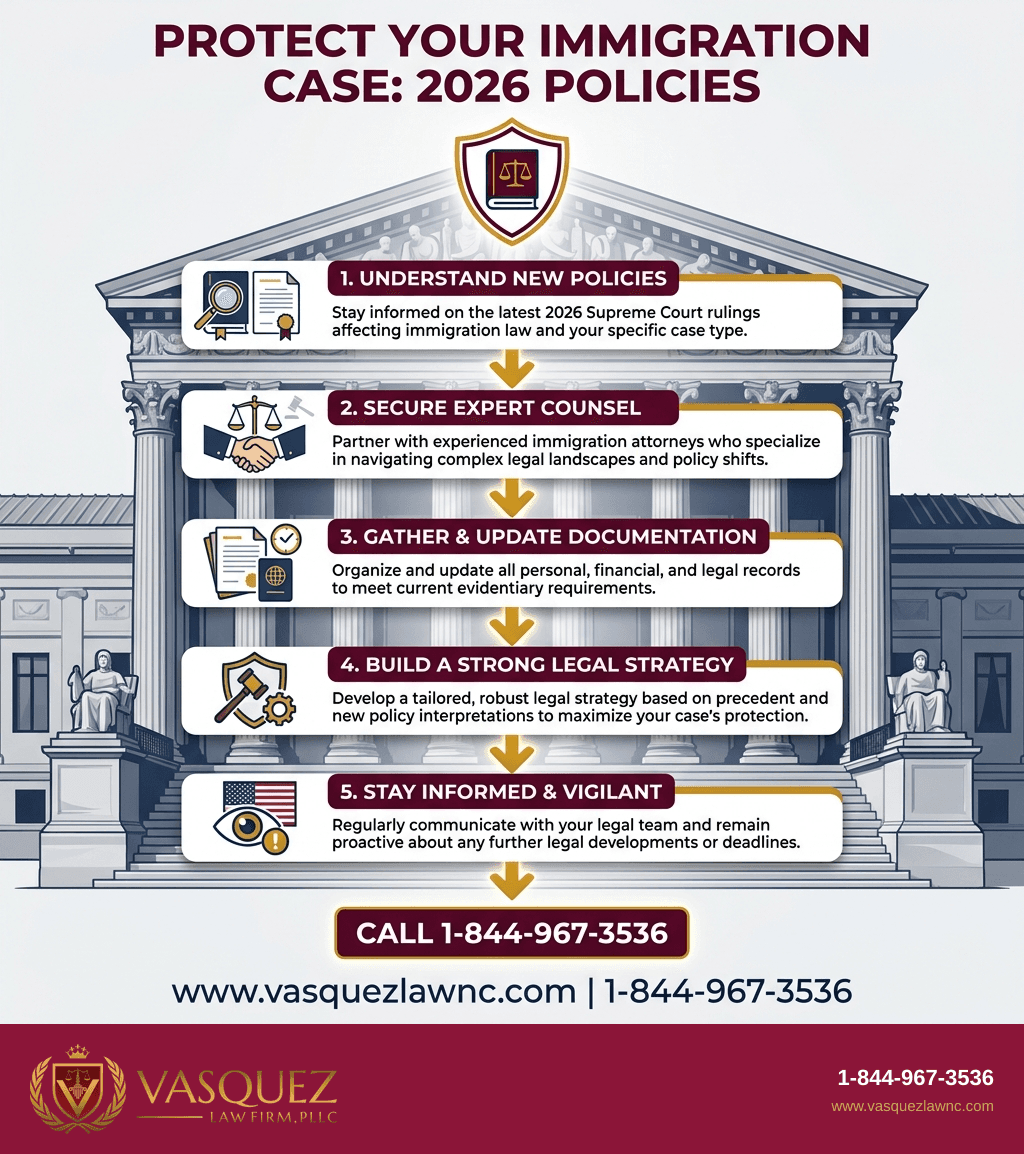
Key Steps to Protect Your Immigration Case
When the Supreme Court announces an immigration ruling, immigrants must act fast. Here are steps to protect your case in Orlando and Raleigh:
- Talk to an experienced immigration lawyer right away. Supreme Court rulings have complex details that need expert explanation to use protections well.
- Collect all important documents. This includes immigration papers, notices, arrest records, and any letters from USCIS or ICE.
- Know your deadlines. Supreme Court decisions often set or change deadlines for filing motions, appeals, or relief requests.
- Watch USCIS processing times. For example, DACA renewal processing now takes about 14 to 22 months according to USCIS processing times (Form I-821D).
- Get ready for possible hearings and removal proceedings. Plan to go to immigration court sessions and know what papers to bring.
- Keep communication open. Reply quickly to government requests and tell your lawyer about any updates.
- Use local legal help. Our attorneys in Raleigh and Orlando specialize in immigration matters influenced by the Supreme Court.
Don't wait to get the help you deserve. Call us now for fast assistance. Se Habla Español.
Checklist for Evidence Preparation
- Valid ID and proof of arrival
- Criminal records if any, including final decisions
- Copies of all immigration forms you filed
- Documents showing continuous residence and work history
- Family documents, like birth or marriage certificates
- Any past notices or court orders from immigration cases
- Legal letters with your attorney
Common Mistakes in Immigration Cases
- Missing deadlines: Supreme Court rulings may shorten the time to file appeals or motions. Mark dates carefully to avoid losing your chance.
- Ignoring official notices: Not replying to immigration notices can lead to deportation orders by default.
- Trying to represent yourself: Complex rulings increase the chance of mistakes. A lawyer improves results.
- Giving incomplete evidence: Gather full documents proving residence, work, or family ties.
- Not understanding new policies: Stay informed; enforcement changes need new strategies.
- Delaying legal advice: Early help lets you adjust filings and motions after new rulings.
- Using unreliable information: Use trusted sources like USCIS and official government websites.
If you remember only one thing: Talk to a qualified immigration lawyer who knows about 2026 Supreme Court rulings to protect your rights and build a strong case.
Timeline: What to Expect After a Supreme Court Ruling
- Weeks 1-4: Lawyers analyze the ruling and advise how it affects your case.
- Weeks 5-8: File updated motions or applications based on new rules.
- Months 3-6: USCIS and immigration courts change procedures, which may cause delays.
- Months 6-12: Hearings or interviews are scheduled under new enforcement rules.
- 1+ year: Final decisions or appeals happen under new legal standards.
Costs and Fees: What Affects the Price
- Lawyer fees: Cases may be more complex after Supreme Court rulings and need more lawyer time.
- Filing fees: These vary by application type (like adjustment of status or motions).
- Getting documents: Costs for getting records like police reports or birth certificates.
- Possible appeals: Extra fees if your case needs an appeal after first rulings.
- Translation and notarization: Needed for foreign documents used in U.S. courts.
- Location factors: Lawyers in Orlando and Raleigh may charge differently.
- Government fee changes: USCIS fee updates can change total costs.
NC, FL, and Nationwide Notes
North Carolina Notes
In Raleigh and across North Carolina, immigration cases must follow federal policies set by the Supreme Court. They also consider local immigration law enforcement partnerships. The Executive Office for Immigration Review runs local immigration courts that hear removal cases by appointment. Having a North Carolina-licensed lawyer helps you handle these courts under the latest rulings.
Florida Notes
Orlando immigrants have many federal immigration offices nearby but face federal policies made clear by the Supreme Court rulings of 2026. Florida enforces immigration actively, so people should act fast after rulings and use local experts to submit evidence and manage hearings well.
Nationwide Concepts (General Only)
Though details vary, the Supreme Court immigration policy applies across the U.S., including Orlando and Raleigh. Federal laws like 8 U.S.C. § 1227 list deportation reasons nationwide. The 14th Amendment’s citizenship rule protects birthright citizenship in all states. But local court rules and USCIS processing times may differ. Nationwide, about 1 million removal cases are filed yearly. This shows why understanding Supreme Court rulings is important as they shape these processes.
When to Call a Lawyer Now
- If you get a Notice to Appear in immigration court after a Supreme Court ruling
- After receiving a deportation or removal order
- If you are undocumented and worried about enforcement changes
- If you have criminal charges that could cause deportation
- When getting ready to file or renew DACA or other relief applications
- If you have trouble proving birthright citizenship for your child
- If you get government letters about immigration enforcement
- If deadlines to reply or appeal are near
- If you need help understanding how recent Supreme Court decisions affect your case
About Vasquez Law Firm
At Vasquez Law Firm, we mix care with strong representation. Our motto "Yo Peleo®" (I Fight) shows our promise to stand up for your rights.
- Bilingual Support: Se Habla Español Spanish-speaking lawyers and staff are ready to help
- Service Areas: North Carolina, Florida, and nationwide immigration services
- Experience: Over 30 years helping clients with complex legal issues
- Results: Thousands of successful cases in many practice areas
Attorney Trust and Experience
William J. Vásquez joined the North Carolina State Bar in 2011 and the U.S. Courts of Appeals for the 4th, 5th, 6th, and 11th Circuits. Florida cases at the firm are handled by Florida Bar lawyer Alekssandra Lopez. The firm has offered dedicated legal help since 2011, giving personal attention to each client.
Don't wait to get the help you deserve. Call us now for fast assistance. Se Habla Español.
Frequently Asked Questions
What is the new Supreme Court ruling on immigration in 2026?
The Supreme Court ruled to keep stricter immigration policies, allowing wider deportations under federal law. This affects immigrants, especially in Orlando and Raleigh, and shows why expert legal help is needed to safely challenge or follow these rulings.
What did the Supreme Court rule about birthright citizenship?
The Court confirmed that anyone born in the U.S. is a citizen under the 14th Amendment, no matter their parents immigration status. This keeps an important right despite political debates about immigration.
Can ICE deport permanent residents in 2026?
Yes. ICE can deport lawful permanent residents if they commit offenses that allow deportation under 8 U.S.C. § 1227. But Supreme Court decisions now require clear due process (fair legal steps) before removal orders happen.
What impact does the Supreme Court ruling have on immigration cases in Orlando and Raleigh?
The ruling keeps federal immigration enforcement strong but also protects some constitutional rights. Local immigrants should talk to lawyers who know the changing federal rules to plan their cases well.
What are common mistakes to avoid with Supreme Court immigration rulings?
Not acting fast, ignoring notices, trying to represent yourself, and giving incomplete evidence are common mistakes. Getting professional legal advice is key to avoid problems and protect your status.
How long does a Supreme Court immigration ruling affect my case timeline?
Supreme Court rulings can cause case delays lasting months or years because of changes in court and USCIS procedures. Staying updated and getting legal help quickly lowers negative effects.
What should I do immediately after a Supreme Court immigration decision?
Look over your case with an immigration lawyer right away. Change your legal plans and file any needed motions or applications fast to protect your rights under new rules.
Are Supreme Court immigration rulings final for deportation cases?
These rulings set binding rules, but some appeals may be possible. Usually, Supreme Court decisions finalize immigration law rules that courts and agencies across the U.S. must follow.
Sources and References
- U.S. Citizenship and Immigration Services
- Executive Office for Immigration Review
- Legal Information Institute
Take the first step toward justice today. Our team is ready to help. Se Habla Español.
Start Your Free Evaluation Now
Call us: 1-844-967-3536
Se Habla Español - We are here to help you.

William Vasquez
Founder & CEO, Vasquez Law Firm, PLLC
William Vasquez is the founder and CEO of Vasquez Law Firm, PLLC, a results-driven firm specializing in immigration, criminal defense, personal injury, and workers' compensation. A U.S. Air Force veteran and recipient of the Joint Service Achievement Medal, William is dedicated to fiercely fighting for his clients' rights.
Related Legal Services
Need legal help? Learn more about immigration case consultation, or contact us for a free evaluation.
You can also visit statewide immigration legal services for more information.