Skip to main contentSkip to navigationSkip to footer
Immigration5 min read

Deportation: How It Happens and Steps to Protect You in 2026

Facing deportation in 2026? Learn what it means, your rights, and steps to protect yourself in North Carolina and Orlando FL. Call for a free consult.

William Vasquez

Published on July 3, 2026

0 views

Have questions? Talk to an attorney - free evaluation.

Call 1-844-967-3536

Check your case status now

Look up your immigration case below, then talk to an attorney about what it means — free.

Questions about your result?

Talk to an attorney about your case — free, no obligation.

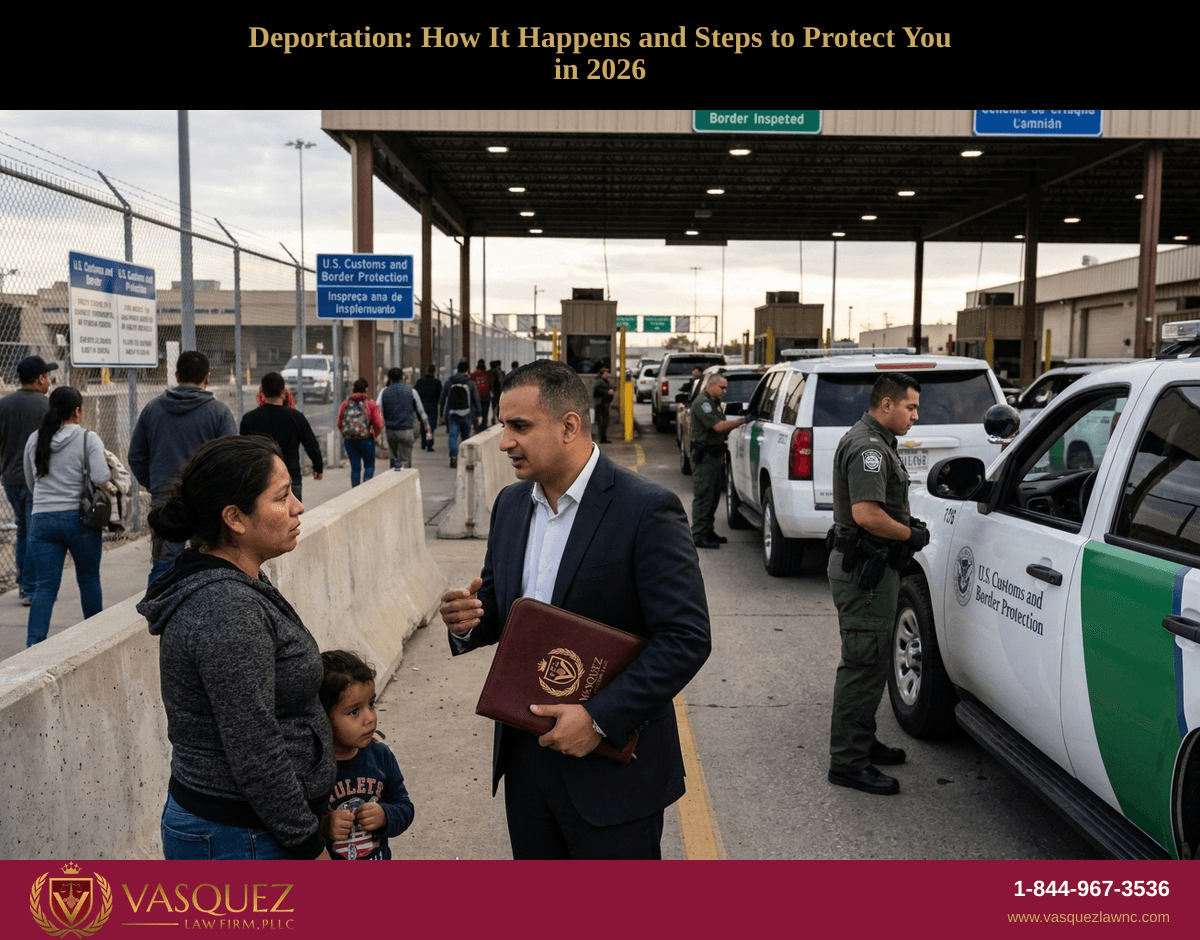
Deportation: How It Happens and Steps to Protect You in 2026

Deportation affects thousands of immigrants in North Carolina and Orlando, FL every year. Understanding the deportation process in 2026, how federal laws apply, and what steps to take can protect your rights. This article explains what causes deportation, the legal steps involved, and clear actions to help you avoid removal. Whether you live in Raleigh, NC or Orlando, FL, knowing your options is very important. Our immigration attorneys at Vasquez Law Firm provide caring support and strong representation during these hard times.

Need help with your case? Our experienced attorneys are ready to fight for you. Se Habla Español.

ICE encounter or deportation risk?

Time-sensitive cases need quick action. We answer 24/7 for emergency immigration matters. Free 15-min call.

Free & confidential. No obligation.or call now 1-844-967-3536
Disclaimer: This article is for informational purposes only and does not give legal advice. Laws change by location and personal situations. For advice about your case, please talk with a qualified attorney.

Quick Answer

Deportation starts when the federal government finds a noncitizen (a person who is not a U.S. citizen) who breaks immigration laws. The process includes detention, hearings before an immigration judge, and possible orders to leave the U.S. There are defenses and ways to stop deportation, but you must act quickly, especially in North Carolina and Orlando, FL.

  • Deportation often happens after criminal convictions or immigration law violations.
  • Removal proceedings take place in immigration courts run by the Executive Office for Immigration Review (EOIR).
  • Detention is common but you may be able to get bond (money paid for release).
  • Legal help can include asylum, cancellation of removal, and other options.
  • Getting a lawyer right away improves your chances to stay in the U.S.

Understanding Deportation

In 2026, deportation is still a big risk for many immigrants living in Raleigh, NC and Orlando, FL. Deportation often starts because of illegal entry or criminal convictions. Federal authorities file formal removal charges to begin the process. The main law is the Immigration and Nationality Act (INA) § 237. This law lists reasons for deportation, like overstaying visas, certain crimes, or immigration fraud.

The removal process starts when you get a Notice to Appear (NTA). This paper officially begins court proceedings. You must then go to hearings before the Executive Office for Immigration Review (EOIR). These immigration courts decide cases about deportation and ways to stop it.

Detention can happen under rules like 8 C.F.R. § 236.1. Authorities may detain you if they think you might run away or be a danger to the public. Knowing the reasons for deportation and the legal steps is key to building a strong defense.

Our immigration legal services cover these topics in detail for people in North Carolina and Orlando, FL.

Grounds for Deportation

  • Entering or re-entering the U.S. without permission
  • Staying longer than allowed by your visa or breaking visa rules
  • Criminal convictions for serious crimes or crimes involving bad moral behavior
  • Fraud or lying during immigration applications
  • Concerns about security or public safety

Role of Immigration Courts

The immigration court looks at evidence, listens to arguments for stopping deportation, and makes a decision about removal. Courts in North Carolina and Orlando follow federal law. Judges review each case carefully. But without a good lawyer, results are often bad.

Detention and Bond

Many immigrants who are detained can ask for a bond hearing. The bond amount and whether you can get bond depend on your situation and past removal history. Good lawyers can ask for lower bond or release without bond (called release on recognizance).

Step-by-Step: What to Do

  1. Respond to the NTA right away: Ignoring the Notice to Appear can lead to removal orders without your presence.
  2. Talk to a knowledgeable immigration lawyer: Early legal advice is very important to understand your options and prepare your evidence.
  3. Prepare and file applications for relief: These can include asylum, cancellation of removal, or changing your status under INA §§ 208, 240A, 245.
  4. Go to all hearings: Missing court dates causes automatic removal.
  5. Ask for a bond hearing if detained: Work with your lawyer to explain why you should be released.
  6. Think about appeals: If you get a deportation order, you can usually appeal to the Board of Immigration Appeals (BIA) on time.

Common Scenarios

For example, a Dreamer with DACA status in Orlando may face deportation if their status ends and they have no other way to stay. Someone in Raleigh with a minor criminal conviction could be removed because of that crime. Each case needs a legal plan made by an experienced team.

Documents and Evidence Checklist

  • Copy of your Notice to Appear or any letters from the government
  • Passports or ID showing your nationality and when you entered the U.S.
  • Documents about your immigration status like DACA approval
  • Criminal records or court papers
  • Proof you have lived in the U.S. continuously or have family ties here
  • Medical and school records that show hardship
  • Previous immigration applications and receipts

Collecting and organizing your evidence early can make your defense and applications stronger.

Timeline: What to Expect

  • Day 1: You get the NTA which starts deportation proceedings.
  • Weeks 4-8: Your first hearing (master calendar hearing) is scheduled.
  • Months 2-12: Main hearings about whether you can be deported and if you can get relief happen.
  • Months 6-24: Appeals and final decisions from the immigration court and BIA take place.

Actual times vary based on detention, case difficulty, and court backlog. USCIS processing times for related immigration benefits usually take 14 to 22 months, according to USCIS data.

Key Statistics and Data for Deportation: How It Happens and Steps to Protect You in 2026

Costs and Fees to Consider

  • Lawyer fees depend on case difficulty but usually range from $3,000 to $10,000 for deportation defense.
  • Filing fees for immigration forms can be from $50 to $1,000 depending on the form (like applying to adjust status under 8 U.S.C. § 1255).
  • You may need to pay bond if detained; amounts vary a lot.
  • Other costs can include expert witnesses, translation, and travel to court.

Vasquez Law Firm offers clear fee plans and helps clients understand all costs before starting.

Common Mistakes and How to Avoid Them

  • Ignoring the NTA or missing court dates: This leads to removal without your presence. Fix: Always go to every hearing on time.
  • Not hiring a qualified immigration lawyer: You may miss chances to stop deportation. Fix: Get skilled legal help early.
  • Not collecting proper evidence: Weakens your defense. Fix: Gather documents early.
  • Not asking for bond hearings quickly: Can cause longer detention. Fix: File bond requests right away.
  • Thinking DACA or other temporary protections guarantee safety: These protections are not permanent. Fix: Prepare backup plans if your status ends.
  • Trying to represent yourself: Immigration law is very complex. Fix: Hire a professional lawyer.
  • Waiting too long to get legal advice: You can miss deadlines for relief. Fix: Contact a lawyer as soon as possible.

If you remember only one thing: Go to all court hearings and get legal advice quickly.

North Carolina and Orlando Deportation Notes

NC Notes

People in North Carolina facing deportation have immigration courts that serve the state. Local community groups offer extra help, but removal cases follow federal law under INA and EOIR rules. Vasquez Law Firm’s Raleigh office gives local guidance to help you through these federal steps.

Orlando Notes

Orlando immigration courts handle many deportation cases following federal laws. Local factors affect where you are detained and if bond is available. Vasquez Law Firm’s Orlando team knows these details well and offers bilingual help for clients.

Nationwide Concepts

Deportation is controlled by federal laws including INA § 237 and rules in 8 C.F.R. Parts 1003 and 236. No matter where you live, the process and options to stop deportation are mostly the same but can change a little by region. Every case depends on the facts and claims involved.

When to Call a Lawyer Now

  • You get a Notice to Appear (NTA) for removal proceedings.
  • You are detained by ICE or CBP.
  • You face criminal charges that could affect your immigration status.
  • Your visa is about to expire or your status has lapsed.
  • You want to apply for relief like asylum or cancellation of removal.
  • You missed a court hearing or got a removal order.
  • You can apply for or need to renew DACA protections.
  • You need a lawyer for bond hearings.
  • You want to appeal an immigration judge’s decision.
  • You worry about family separation because of deportation.

About Vasquez Law Firm

At Vasquez Law Firm, we combine care with strong representation. Our motto "Yo Peleo®" (I Fight) shows our promise to stand up for your rights.

  • Bilingual Support: Se Habla Español — Spanish-speaking lawyers and staff available
  • Service Areas: North Carolina, Florida, and immigration services across the U.S.
  • Experience: Over 30 years helping clients with complex legal issues
  • Results: Thousands of successful cases in many practice areas

Attorney Trust and Experience

William J. Vásquez is licensed to practice law in North Carolina and Florida. He has handled many deportation defense cases in federal immigration courts in NC and Orlando, FL. Our team gives personal representation and careful legal planning.

Don't wait to get the help you need. Call us now for quick assistance.

Call Now: 1-844-967-3536

Se Habla Español

Frequently Asked Questions

What triggers deportation in the U.S.?

Deportation is triggered by violations such as illegal entry, visa overstays, or certain criminal convictions. The government initiates removal proceedings through a Notice to Appear. Understanding your grounds can help in preparing a defense under INA § 237.

How does the deportation process work in immigration court?

After a Notice to Appear, an immigration judge hears your case. You can apply for relief or present defenses. EOIR oversees the court system, and proceedings vary by location but follow federal rules.

Can a deportation order be appealed?

Yes. Appeals to the Board of Immigration Appeals must generally be filed within 30 days. Some cases allow federal court review. Timeliness and legal guidance are critical.

What defenses are available against deportation?

Defenses include asylum, cancellation of removal, adjustment of status, or procedural claims. The INA and regulations outline eligibility requirements.

What's Your Immigration Situation?

Answer 3 questions - we'll tell you your options

Question 1 / 3

What best describes your situation?

Process Timeline for Deportation: How It Happens and Steps to Protect You in 2026

How long does deportation take in 2026?

Removal proceedings last from several months to years depending on complexity, detention, and appeals. USCIS and EOIR provide estimated wait times.

Can DACA protect me from deportation?

DACA offers temporary relief from deportation and work authorization but does not grant permanent status. Renewals take 14-22 months as per USCIS.

What happens if I am detained during a deportation case?

Detention can last throughout proceedings but bond can be requested. Immediate legal help is essential to navigate bond hearings and protect your rights.

How do I find a trusted deportation defense lawyer in NC or Orlando?

Choose lawyers licensed in NC and Florida with immigration experience. Vasquez Law Firm offers bilingual support and free consultations to assess your case.

Sources and References

Take the first step toward justice today. Our team is standing by to help. Se Habla Español.

This article provides general legal information and is not intended as legal advice. Every case is unique, and outcomes depend on specific facts and circumstances. Contact an attorney for advice about your particular situation.

Start Your Free Evaluation Now

Call us: 1-844-967-3536

Se Habla Español - Estamos aquí para ayudarle.

William Vasquez - Vasquez Law Firm

William Vasquez

Founder & CEO, Vasquez Law Firm, PLLC

William Vasquez is the founder and CEO of Vasquez Law Firm, PLLC, a results-driven firm specializing in immigration, criminal defense, family law, personal injury, and workers' compensation. A U.S. Air Force veteran and recipient of the Joint Service Achievement Medal, William is dedicated to fiercely fighting for his clients' rights.

Related Legal Services

Need legal help? Learn more about learn about our immigration practice, or contact us for a free evaluation.

You can also visit statewide immigration attorneys for more information.