What Does SCOTUS Mean for Immigration Cases in 2026?
What does SCOTUS ruling mean for immigration cases in 2026? Learn about major decisions, schedules, and how they affect NC and FL applicants. Free consult.
Published on June 29, 2026
Talk to an immigration attorney
Free call. A clear plan for your case.
Free & confidential · Se habla espanol · 24/7
Have questions? Talk to an attorney - free evaluation.
Call 1-844-967-3536Worried how the latest immigration news affects you?
Schedule a confidential case review with an immigration attorney - know exactly where you stand.
USCIS Case Status
Check your USCIS case status
Enter your receipt number and get the official status. Free, no registration.
What Does SCOTUS Mean for Immigration Cases in 2026?
The Supreme Court of the United States, called SCOTUS for short, often makes decisions that change immigration laws and rules across the country. In 2026, immigrants and people seeking asylum in North Carolina and Orlando, FL, have important questions about how SCOTUS decisions affect their cases and rights. The immigration lawyers at Vasquez Law Firm, located in Raleigh, NC and Orlando, FL, help clients understand what SCOTUS means, follow the SCOTUS case list, and get ready for changes in immigration law enforcement.
Need help with your case? Our experienced lawyers are ready to fight for you. Se Habla Español.
Or call us now: 1-844-967-3536
Quick Answer
SCOTUS, the Supreme Court of the United States, makes final decisions that affect immigration law across the country. Their rulings affect people seeking asylum, deportation processes, and immigration benefits. Watching SCOTUS decisions and schedules is important to understand your rights and plan your case in 2026.
- SCOTUS decisions shape federal immigration rules
- The SCOTUS docket shows upcoming cases
- Recent rulings affect asylum and customs enforcement
- Knowing what SCOTUS means helps immigrants protect their rights
- Legal help is important to handle SCOTUS impacts
What SCOTUS Means for Immigration
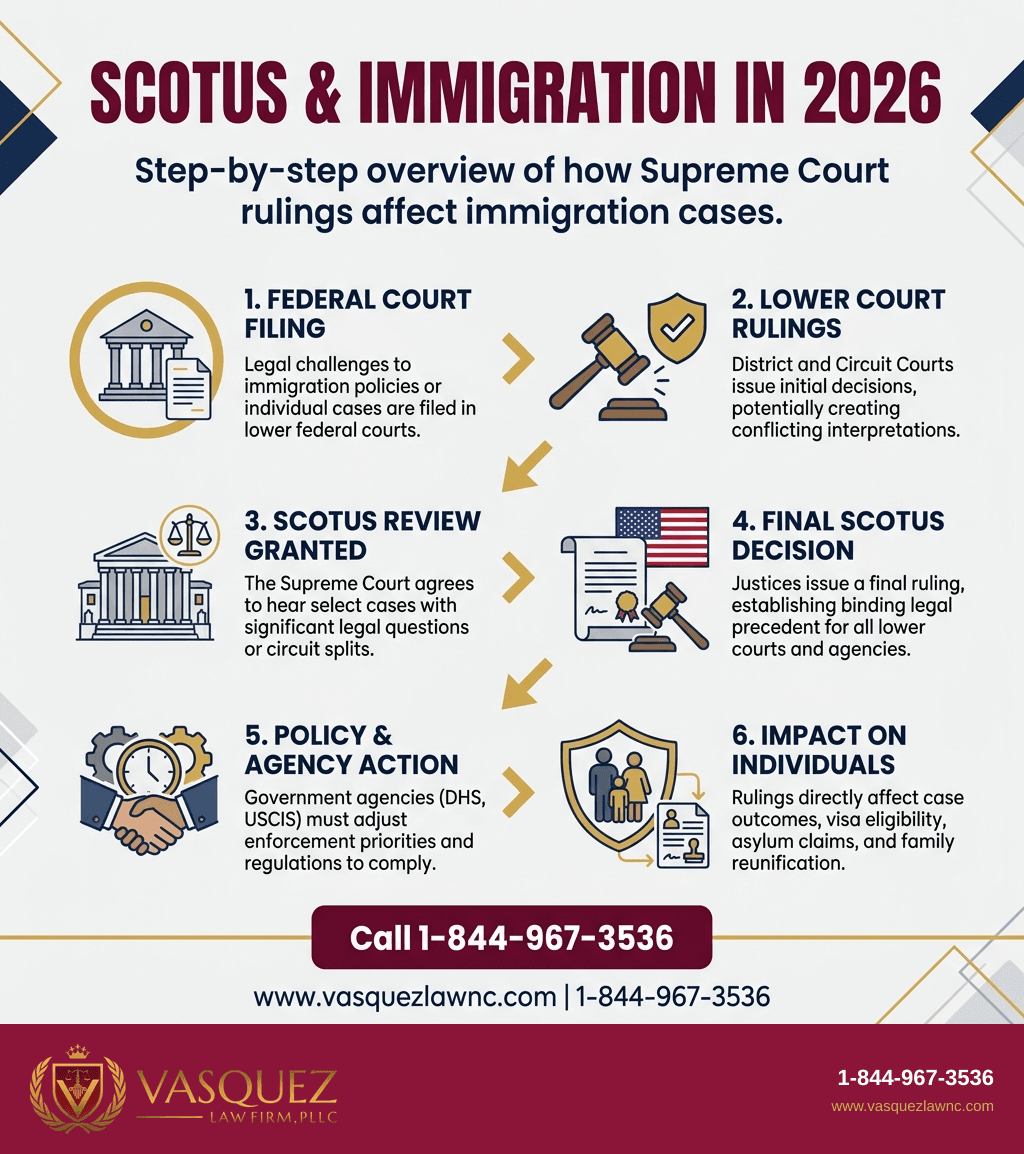
Imagine an immigrant in Raleigh, NC, waiting for a decision on asylum. The Supreme Court makes a ruling that explains when customs agents can turn away asylum seekers at the border. This change affects that immigrant's chances and legal choices. SCOTUS is the highest court in the U.S., and its decisions must be followed by lower courts and federal agencies like U.S. Citizenship and Immigration Services (USCIS).
The term "SCOTUS meaning" is more than just the abbreviation. It means the power to explain the Constitution and federal laws, solving disputes that affect many immigration cases across the country. For immigrants in North Carolina and Orlando, FL, SCOTUS rulings set rules on asylum law, deportation, refugee status, and visas.
In 2026, understanding SCOTUS rulings is very important for any immigration legal plan. Attorney Vasquez and the team at Vasquez Law Firm watch these changes carefully and advise clients on how they affect their status or applications.
Learn more about our immigration services to see how SCOTUS decisions affect case preparation and results.
SCOTUS and Immigration Law Framework
Federal immigration laws mostly come from the Immigration and Nationality Act (INA), which is in Title 8 of the U.S. Code. SCOTUS may explain parts like deportation reasons (8 U.S.C. § 1227), cancellation of removal (INA § 240A), and asylum eligibility.
For example, under 8 U.S.C. § 1227, some criminal convictions can cause deportation. SCOTUS decisions about these laws decide how wide or narrow these reasons apply.
How to Understand the SCOTUS Docket and Schedule
The SCOTUS docket is a list of all cases accepted for hearing during a term. In 2026, the court follows its usual schedule. Cases start in October and continue until late June or early July. Each case has petitions for review, oral arguments, and final opinions.
Immigration cases often appear on the docket because of disagreements about asylum law, detention, or removal steps. For immigrants in Raleigh and Orlando, knowing when the court will hear cases helps prepare for legal changes.
SCOTUS decisions usually come out on dates announced ahead of time. For example, in recent years, the court gave immigration decisions between April and June. The official SCOTUS schedule is public and updated each term.
Our immigration legal team at Vasquez Law Firm helps clients watch the SCOTUS docket to get ready for results that may affect their cases or immigration benefits.
Understanding the SCOTUS'S Impact through Cases
- Stay updated on pending SCOTUS immigration cases on the docket
- Watch for oral arguments and published opinions
- See how rulings explain federal immigration laws
- Change legal plans as needed
Recent Major SCOTUS Rulings Impacting Immigrants
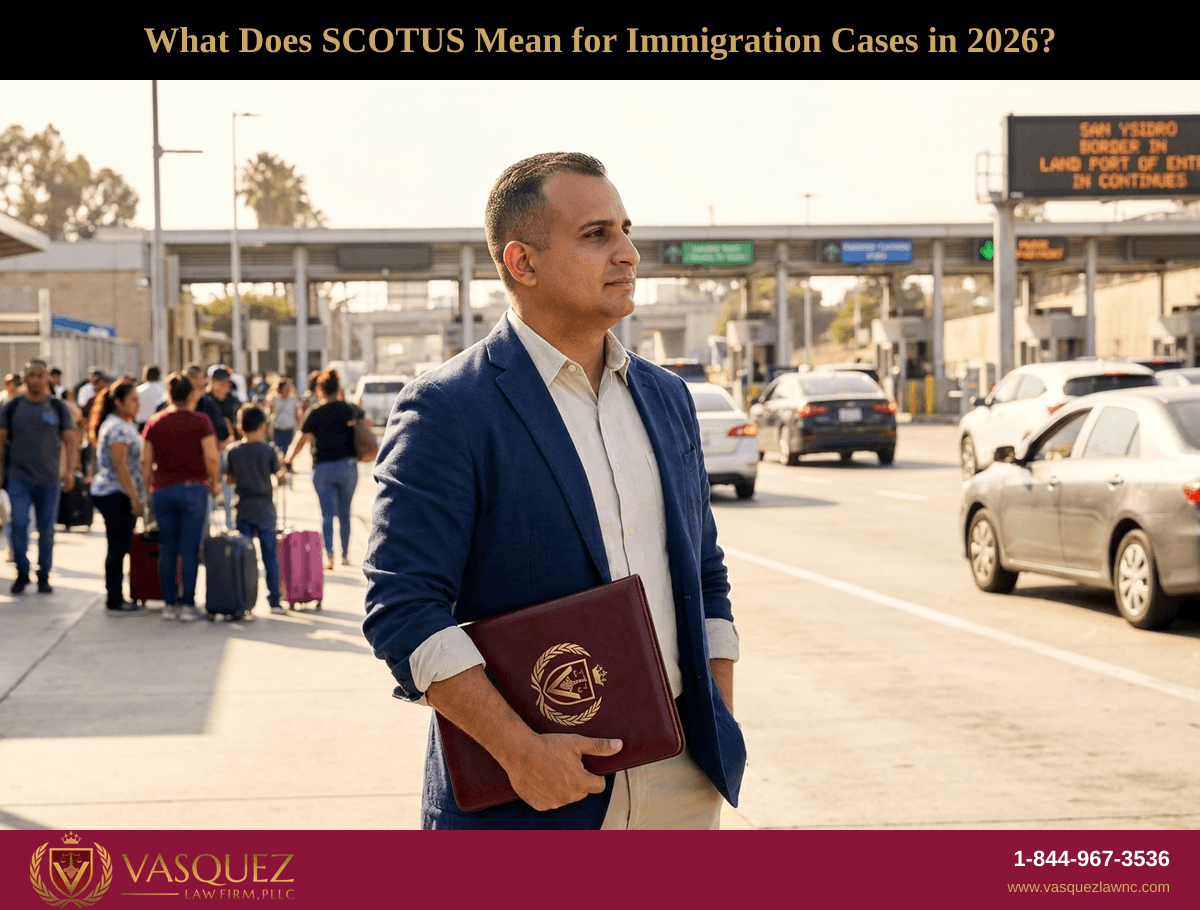
One important 2026 SCOTUS ruling said customs agents have the power to turn away some asylum seekers at ports of entry if the right procedures are not followed. This decision affects how people seeking asylum at the southern U.S. border must proceed. It also affects applicants in North Carolina and Florida.
This ruling explains the limits of executive power in immigration enforcement. It has been widely reported in SCOTUS news and legal blogs like SCOTUSblog. Cases like this shape the environment that immigration lawyers work in every day.
Other recent rulings cover topics like the validity of some visa cancellations, eligibility for adjustment of status (8 U.S.C. § 1255), and limits on how long immigrants can be detained without bond hearings (8 C.F.R. § 236.1).
Attorney Vasquez often studies these decisions to inform clients about how changes affect asylum claims, deportation defenses, and visa requests.
Examples of Recent Opinions
- SCOTUS ruling on turning away asylum seekers at ports of entry
- Decisions limiting long detention of immigrants without bond hearings
- Rulings affecting work visa eligibility and renewals
Visit Legal Information Institute to read the text and explanations of these rulings.
Navigating Your Immigration Case After a SCOTUS Decision
After a SCOTUS ruling, immigration applicants and petitioners have important questions: How does this decision change my case? What new steps should I take? When should I talk to a lawyer?
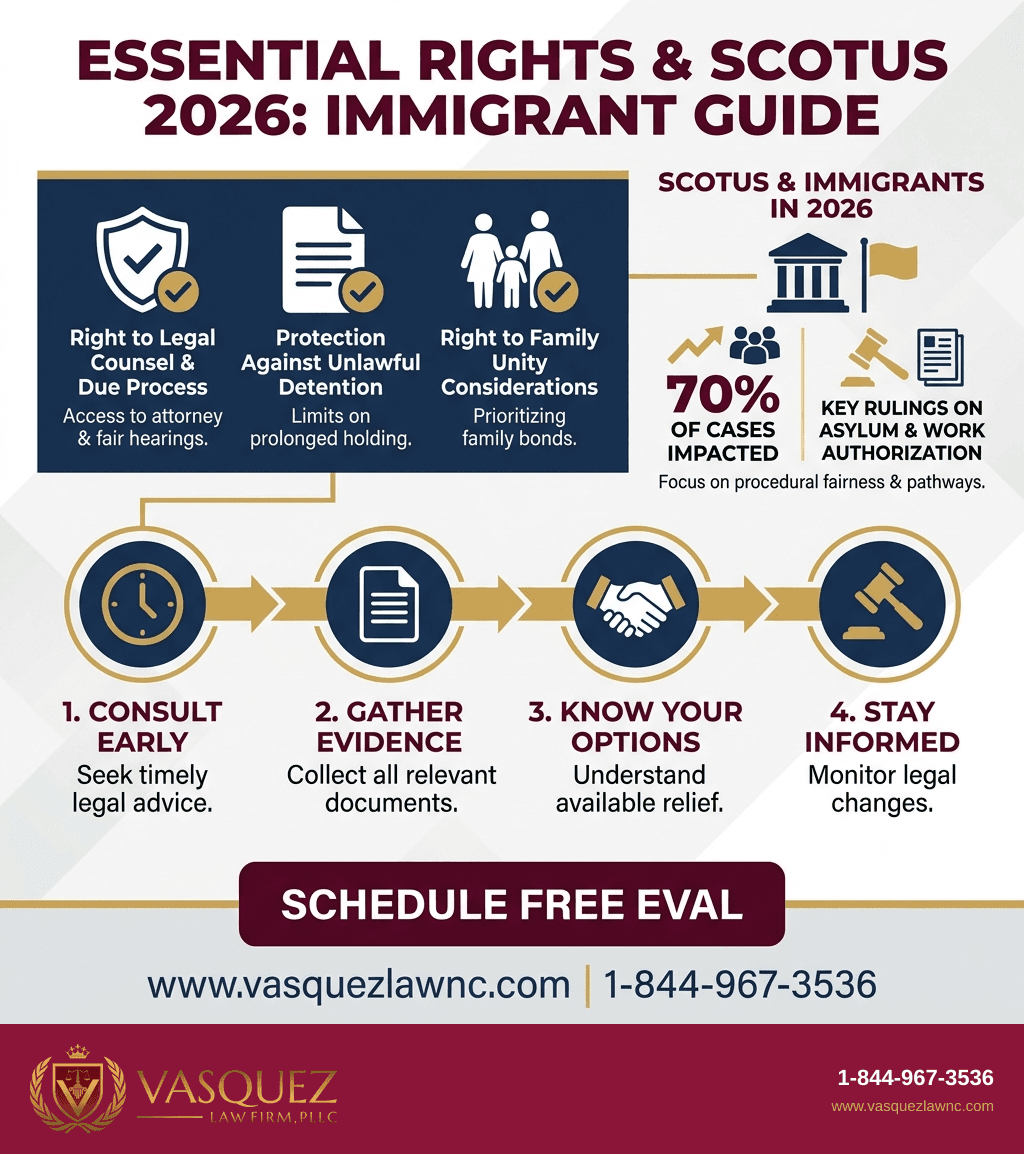
Here is an easy step-by-step guide to handle SCOTUS impacts:
- Understand the decision: Get a clear, trustworthy summary of the SCOTUS ruling that matters to you.
- Review your case status: Check if the ruling changes your current petitions or court cases.
- Talk with an immigration lawyer: Discuss what the ruling means with experts who know federal and local rules.
- Gather needed documents: Update your evidence or legal forms as the new rules say.
- Take timely actions: File appeals, motions, or new applications if needed before deadlines.
- Stay informed: Follow updates from trusted law firm sources and official sites.
The Vasquez Law Firm immigration team in Raleigh, NC, and Orlando, FL, offers detailed advice based on recent SCOTUS rulings. You can count on us to help lower risks and increase your chances in your case.
Document Checklist for Updated Immigration Procedures
- Current immigration application forms and receipts
- Copies of past immigration court decisions or notices
- Proof supporting asylum or visa eligibility
- Letters about case status from USCIS or EOIR
- Updated ID and travel documents
Frequently Asked Questions About SCOTUS and Immigration
What does SCOTUS stand for?
SCOTUS stands for the Supreme Court of the United States, which is the highest federal court in the country. It has the ultimate authority to interpret the Constitution and federal laws, including those governing immigration. SCOTUS decisions set binding precedent affecting immigration law nationwide.
How does SCOTUS impact immigration cases in North Carolina and Florida?
SCOTUS rulings create legal precedents that apply to all U.S. states, including North Carolina and Florida. For immigrants in Raleigh and Orlando, SCOTUS decisions influence asylum eligibility, deportation protections, and visa approval standards enforced locally.
Where can I find the SCOTUS docket and schedule?
The official SCOTUS docket and schedule are published on the Supreme Court's website and updated each term. These documents list cases accepted for review, hearing dates, and decision release dates, helping applicants track pending immigration rulings.
What was a recent major SCOTUS immigration decision today or this term?
In 2026, a key ruling affirmed the authority of customs agents to turn back some asylum seekers who do not meet procedural requirements at the border. This affects asylum applications from all states, including NC and FL.
Who are the nine justices of the Supreme Court?
The nine justices include the Chief Justice of the United States and eight associate justices. These nine individuals hear all cases, including immigration-related ones, and their majority vote determines the final ruling.
What steps should I take after a SCOTUS ruling affects my immigration case?
First, understand how the ruling applies to your situation. Next, consult with an immigration lawyer quickly to discuss implications, update your paperwork, and take any recommended legal actions such as appeals or new filings.
How can Vasquez Law Firm help with SCOTUS-related immigration issues?
Vasquez Law Firm stays current with SCOTUS rulings and how they affect immigration laws in North Carolina and Florida. We offer personalized consultations and legal representation to guide and protect immigrant clients facing changes in the law.
Where can I learn more about USCIS processing times related to SCOTUS rulings?
You can visit the official USCIS processing times page to find detailed information on current wait times for forms affected by Supreme Court decisions, providing realistic expectations for your case timeline.
Sources and References
- U.S. Citizenship and Immigration Services
- Executive Office for Immigration Review
- Legal Information Institute
Don't wait to get the help you deserve. Call us now for immediate assistance.
Se Habla Español
About Vasquez Law Firm
At Vasquez Law Firm, we combine care with strong representation. Our motto "Yo Peleo®" (I Fight) shows our promise to stand up for your rights.
- Bilingual Support: Se Habla Español - Spanish-speaking lawyers and staff available
- Service Areas: North Carolina, Florida, and immigration services across the country
- Experience: Over 30 years helping clients with complex legal issues
- Results: Thousands of successful cases in many practice areas
Attorney Trust and Experience
William J. Vasquez is licensed to practice law in North Carolina since 2011 and in the U.S. Courts of Appeals for the 4th, 5th, 6th, and 11th Circuits. For Florida cases, attorney Alekssandra Lopez is admitted to the Florida Bar. Since 2011, the firm offers dedicated, personal legal help in immigration law to clients in Raleigh and Orlando.
Take the first step toward justice today. Our team is ready to help.
Start Your Free Evaluation Now
Call us: 1-844-967-3536
Se Habla Español - Estamos aquí para ayudarle.


William Vasquez
Founder & CEO, Vasquez Law Firm, PLLC
William Vasquez is the founder and CEO of Vasquez Law Firm, PLLC, a results-driven firm specializing in immigration, criminal defense, personal injury, and workers' compensation. A U.S. Air Force veteran and recipient of the Joint Service Achievement Medal, William is dedicated to fiercely fighting for his clients' rights.
Related Legal Services
Need legal help? Learn more about NC immigration legal team, or contact us for a free evaluation.
You can also visit immigration legal services throughout NC for more information.