What Happens to Undocumented Migrants in Raleigh in 2026
Wondering what happens to undocumented migrants in Raleigh? Learn key legal facts, rights, and options in 2026. Contact Vasquez Law for a free evaluation.
Published on July 3, 2026
Talk to an immigration attorney
Free call. A clear plan for your case.
Free & confidential · Se habla espanol · 24/7
Have questions? Talk to an attorney - free evaluation.
Call 1-844-967-3536Worried how the latest immigration news affects you?
Schedule a confidential case review with an immigration attorney - know exactly where you stand.
USCIS Case Status
Check your USCIS case status
Enter your receipt number and get the official status. Free, no registration.
What Happens to Undocumented Migrants in Raleigh in 2026
Undocumented migrants face many uncertainties in Raleigh, NC and Orlando, FL in 2026. This article explains who undocumented migrants are, the legal definitions, rights, and options available in the current immigration environment. Learn the key differences between undocumented immigrants and illegal immigrants, what protections exist, and when to call an immigration attorney. Vasquez Law Firm offers bilingual legal help to fight for your rights and options.
Need help with your case? Our experienced attorneys are ready to fight for you. Se Habla Español.
Or call us now: 1-844-967-3536
Quick Answer
Undocumented migrants live in the U.S. without authorized immigration status. They face challenges but may qualify for protections like DACA or asylum. Legal help in Raleigh and Orlando is vital to understand options and avoid removal.
- Undocumented means no legal paperwork, not criminality.
- DACA offers relief for some undocumented youth.
- Undocumented migrants can face removal but may have defenses.
- Unauthorized work is generally illegal without authorization.
- Legal assistance improves chances to stay legally.
Understanding Undocumented Migrants
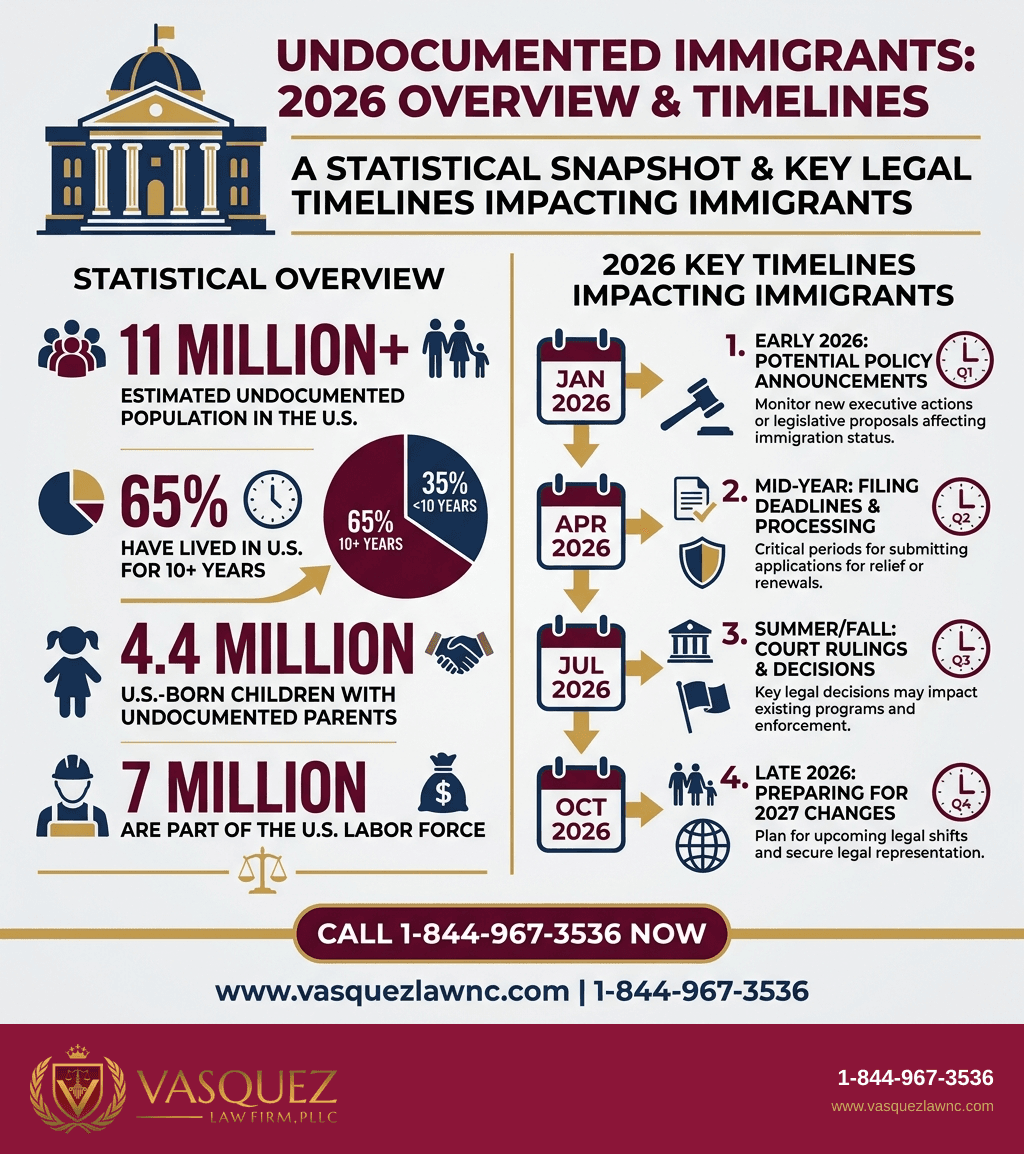
In 2026, an estimated 10.5 million undocumented immigrants live in the United States, including tens of thousands in Raleigh, NC, and Orlando, FL. Undocumented migrants are individuals who reside in the country without lawful immigration status. They may have entered the U.S. without inspection or overstayed a visa. The term ‘undocumented’ focuses on their paperwork status, distinguishing them from the term ‘illegal immigrant,’ which implies criminality.
Legal Definition and Distinctions
The U.S. Code does not define “undocumented immigrant” as a legal category, but it recognizes individuals without lawful status. For example, INA § 212(a)(6)(A)(i) excludes individuals who have entered without inspection. Unlike criminal offenses, unauthorized presence is a civil matter that can lead to removal proceedings but is not automatically a crime under immigration law. This distinction is important for how cases are handled in immigration courts overseen by the Executive Office for Immigration Review.
Undocumented vs. Illegal Immigrants
The difference between the terms matters legally and socially. ‘Undocumented’ immigrants lack valid legal paperwork but might be eligible for relief. ‘Illegal immigrant’ is often used in media but does not describe immigration status accurately. In Raleigh and Orlando, this terminology shapes public perception and access to legal remedies.
Undocumented Immigrant Population in 2026
According to data gathered up to 2026, the undocumented immigrant population is concentrated in major metropolitan areas. Raleigh and Orlando have growing communities affected by immigration enforcement and reform policies. Understanding population trends assists in advocating for rights and crafting legal strategies.
Learn more about our immigration services and how we protect your status.
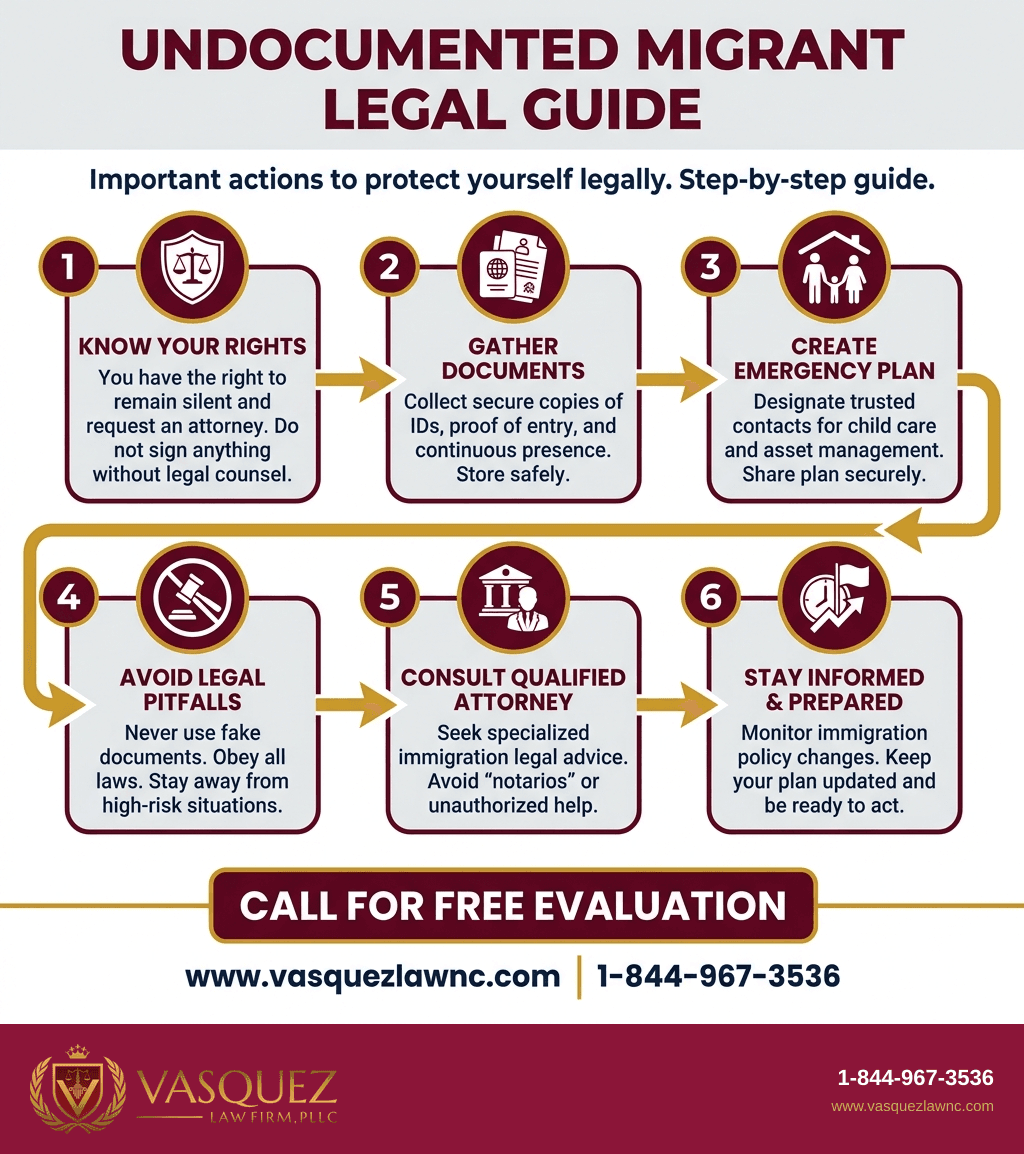
Key Steps Undocumented Migrants Should Take
Undocumented migrants in Raleigh and Orlando should take proactive measures to protect themselves and seek legal avenues for relief. Knowing your rights and the immigration process can reduce risks and improve outcomes.
Step 1: Understand Your Legal Status
Identify how you came to the U.S. and your current immigration status. Whether you crossed illegally or overstayed a visa impacts the legal path available. Assess eligibility for relief such as DACA, asylum, or family-based petitions.
Step 2: Avoid Unauthorized Employment
Working without authorization may lead to immigration consequences. Seek professional advice on obtaining an Employment Authorization Document (EAD) if eligible. Programs like DACA provide work permits for qualified youth.
Step 3: Keep Records of Your Presence and Activities
Maintain documentation like pay stubs, tax records, and community involvement. This evidence can support applications for status adjustment or defense against removal.
Step 4: Consult an Experienced Immigration Attorney
Attorneys licensed in North Carolina and Florida, such as Attorney Vasquez at Vasquez Law Firm, can review your case confidentially. Early legal guidance prevents costly mistakes and missed deadlines.
To schedule a consultation, contact our office today.
Common Mistakes to Avoid as an Undocumented Migrant
- Ignoring immigration notices or court dates – Always respond promptly to government communications.
- Relying on misinformation from unverified sources – Trust only licensed attorneys for legal advice.
- Working without authorization – This can cause future immigration applications to be denied.
- Failing to keep personal documents current – Lost records can delay proceedings or benefits.
- Not applying for relief when eligible – Missing deadlines can close legal doors forever.
- Speaking to immigration officials without counsel – You have the right to remain silent and request a lawyer.
- Waiting too long to seek legal help – Early intervention improves chances to adjust status.
If you only remember one thing: Always consult a qualified immigration attorney about your situation before taking any action.
Timeline: What to Expect in Immigration Proceedings
Undocumented migrants facing immigration challenges should understand typical processing times in 2026. These vary by case type but have common stages.
- Initial filing: For applications like asylum or adjustment of status, USCIS processing times range from 8 to 18 months. DACA renewal (Form I-821D) currently takes about 14 to 22 months according to USCIS processing times.
- Biometrics appointment: Generally scheduled within 1 to 3 months after filing.
- Interviews or hearings: Immigration court cases may last 1 to 3 years depending on backlog and complexity.
- Final decisions: USCIS and EOIR decisions depend on case merits, but appeals can extend timelines.
Patience and legal support throughout these stages are critical. Vasquez Law Firm helps clients prepare and respond effectively during all phases.
Frequently Asked Questions About Undocumented Migrants
What is the definition of an undocumented migrant?
An undocumented migrant is someone living in the U.S. without legal authorization or valid immigration status. This includes individuals who entered without inspection or overstayed their visas. The term ‘undocumented’ differs from ‘illegal immigrant’ as it focuses on lack of documentation rather than criminality. Understanding this definition helps clarify legal rights and protections under U.S. immigration laws.
What is the difference between undocumented migrants and illegal immigrants?
Undocumented migrants and illegal immigrants are often used interchangeably, but there is a legal and social distinction. ‘Undocumented’ emphasizes lack of legal paperwork or lawful status, avoiding the criminal implication of ‘illegal.’ This distinction affects how laws are applied and the social discourse around migration, particularly in Raleigh and Orlando in 2026.
Can undocumented immigrants legally work in the United States?
Generally, undocumented immigrants cannot legally work in the U.S. Employment requires authorization such as an Employment Authorization Document (EAD). However, some visa categories and protections like DACA allow work permits. It is important to know your eligibility and apply through proper legal channels to work legally, especially in North Carolina and Florida.
What percent of immigrants in the U.S. are undocumented?
As of recent studies, approximately 10-12% of immigrants in the U.S. lack legal status, equating to about 10.5 to 12 million people nationwide. In Raleigh and Orlando, this population is growing, reflecting national trends. Understanding population size helps inform public policy and individual legal strategies.
Are asylum seekers considered undocumented migrants?
Asylum seekers often enter the U.S. without visas and lack current legal status while their claims are pending, categorizing them as undocumented. However, asylum applications provide a lawful basis to stay and work during processing. This status differs from being undocumented with no pending legal protection.
Why are there so many undocumented immigrants in America?
Many factors contribute to large numbers of undocumented immigrants, including economic opportunities, family reunification, and escape from violence or persecution abroad. Limited legal immigration pathways and strict quotas also push some to enter without authorization. Laws in 2026 still reflect these pressures causing ongoing migration challenges.
What legal protections exist for undocumented migrants in North Carolina and Florida?
While undocumented migrants lack federal immigration status, local laws and policies may limit cooperation with federal immigration enforcement. Workers have certain rights under labor laws like the Fair Labor Standards Act. Additionally, programs like DACA offer deferred action and work permits. Vasquez Law Firm advises clients on protections available in Raleigh and Orlando.
Is it illegal to be an undocumented immigrant?
Being undocumented is a civil violation, not a criminal offense under federal immigration law. The term 'illegal immigrant' is not a legal category. However, unauthorized presence can lead to removal proceedings. The law creates pathways to adjust status and avoid removal if eligibility criteria are met.
About Vasquez Law Firm
At Vasquez Law Firm, we combine compassion with aggressive representation. Our motto "Yo Peleo®" (I Fight) reflects our commitment to standing up for your rights.
- Bilingual Support: Se Habla Español — Spanish-speaking attorneys and staff available
- Service Areas: North Carolina, Florida, and nationwide immigration services
- Experience: Over 30 years helping clients navigate complex legal matters
- Results: Thousands of successful cases across multiple practice areas
Attorney Trust and Experience
William J. Vásquez is admitted to the North Carolina State Bar (2011) and to the U.S. Courts of Appeals for the 4th, 5th, 6th, and 11th Circuits. Florida-jurisdiction matters at the firm are handled by Florida Bar attorney Alekssandra Lopez. The firm has provided dedicated legal representation since 2011, with personalized attention to each client's case.
Don't wait to get the help you deserve. Call us now for immediate assistance.
Or schedule a free case evaluation. Se Habla Español.
Sources and References
- U.S. Citizenship and Immigration Services (USCIS)
- Executive Office for Immigration Review (EOIR)
- Legal Information Institute
Take the first step toward justice today. Our team is standing by to help.
Start Your Free Evaluation Now
Call us: 1-844-967-3536
Se Habla Español - Estamos aquí para ayudarle.

William Vasquez
Founder & CEO, Vasquez Law Firm, PLLC
William Vasquez is the founder and CEO of Vasquez Law Firm, PLLC, a results-driven firm specializing in immigration, criminal defense, personal injury, and workers' compensation. A U.S. Air Force veteran and recipient of the Joint Service Achievement Medal, William is dedicated to fiercely fighting for his clients' rights.
Related Legal Services
Need legal help? Learn more about learn about our immigration practice, or contact us for a free evaluation.
You can also visit immigration legal services throughout NC for more information.