DHS New Rule: What It Means for Immigration in 2026
Learn how the DHS new rule affects immigration cases in 2026. Understand the changes and get help from Vasquez Law Firm. Contact us for a free evaluation.
Published on July 29, 2026
Talk to an immigration attorney
Free call. A clear plan for your case.
Free & confidential · Se habla espanol · 24/7
Have questions? Talk to an attorney - free evaluation.
Call 1-844-967-3536Worried how the latest immigration news affects you?
Schedule a confidential case review with an immigration attorney - know exactly where you stand.
USCIS Case Status
Check your USCIS case status
Enter your receipt number and get the official status. Free, no registration.
DHS New Rule: What It Means for Immigration in 2026
The DHS new rule announced in 2026 changes important immigration procedures, especially for F1 student visas and asylum seekers. This step affects how long immigrants can stay under the Duration of Status, also called the D/S rule. In Raleigh, NC and Orlando, FL, understanding this update is very important. Vasquez Law Firm explains the rule’s impact, the timeline, and key actions you must take to protect your case.
Need help with your case? Our experienced attorneys are ready to fight for you. Se Habla Español.
Or call us now: 1-844-967-3536
Quick Answer
The DHS new rule in 2026 changes how the Duration of Status (D/S) works, especially for F1 visas and asylum processing. It replaces indefinite student stays with fixed time periods that need renewals. This affects immigrants in Raleigh, NC and Orlando, FL. Staying updated and working with legal experts is very important to protect your immigration status.
- Updates Duration of Status policy
- Fixed admission periods for student visas
- Reduces asylum backlogs with new procedures
- Requires strict following of new deadlines
- Affects eligibility for adjustment of status
Understanding the DHS New Rule in 2026
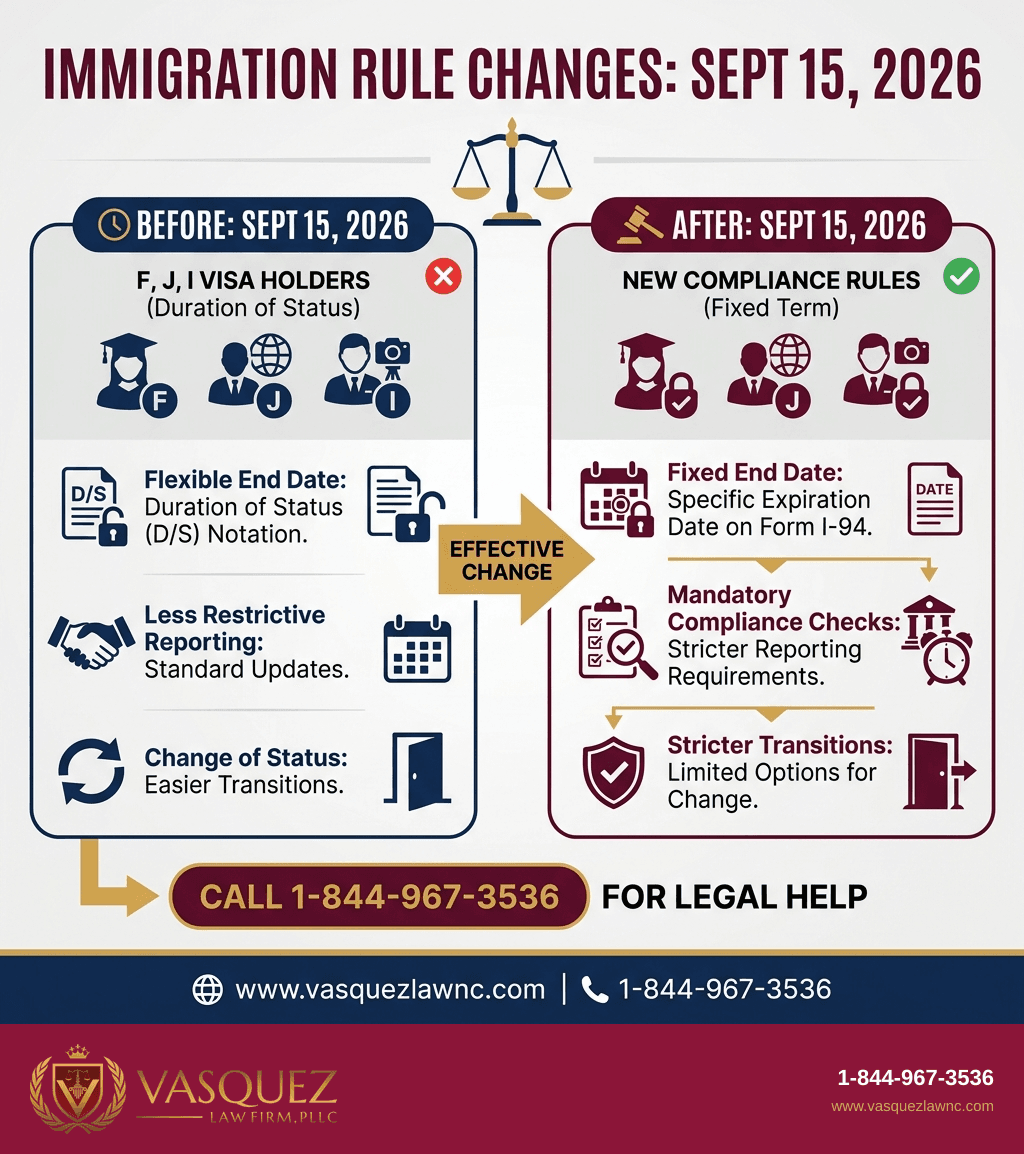
In 2026, the Department of Homeland Security (DHS) announced a new immigration rule that changes the Duration of Status (D/S) policy. Duration of Status means the time a nonimmigrant is allowed to stay legally in the U.S. based on their purpose of stay. This rule affects how long certain nonimmigrants, especially F1 student visa holders and asylum seekers, can stay legally in the United States. The old D/S policy let a person stay legally for the whole length of their academic program plus an optional grace period. The new rule replaces that flexible system with fixed admission periods. It requires people to apply for extensions or new admissions to keep their legal status.
This rule change affects immigrants in Raleigh, NC and Orlando, FL, who often rely on Duration of Status to keep their visa compliance. Knowing the details of the DHS proposed rule is very important to avoid accidental overstays or status violations. These problems could lead to serious immigration consequences.
This policy change is part of bigger DHS efforts to make the immigration system more efficient and reduce backlogs, especially for asylum seekers. For schools and international students, this change means planning for timely visa renewals and status adjustments. For asylum seekers, DHS is starting procedures to speed up case reviews and reduce long waiting times.
Our immigration legal services in Raleigh, NC and Orlando, FL help you understand these complex updates. We work to protect your rights and make sure you follow the new rules.
What is Duration of Status (D/S)?
Duration of Status, called D/S, is a term in immigration that means the time a nonimmigrant can legally stay in the U.S. based on why they are here. Under the old rule, for example, an F1 student’s D/S lasted for the length of their academic program plus any allowed Optional Practical Training and a grace period to leave.[USCIS]
How the 2026 DHS Proposed Rule Changes D/S
The DHS's new rule changes from duration-based to fixed-term admissions for many visa types, especially academic and work-related visas. This means visa holders get a specific end date for their admission instead of staying for the full length of their program. They must leave or ask for an extension before that end date. This stricter system aims to better enforce legal presence but requires visa holders to be more careful.[USCIS Policy Manual]
Key Steps to Take After the DHS Rule Change
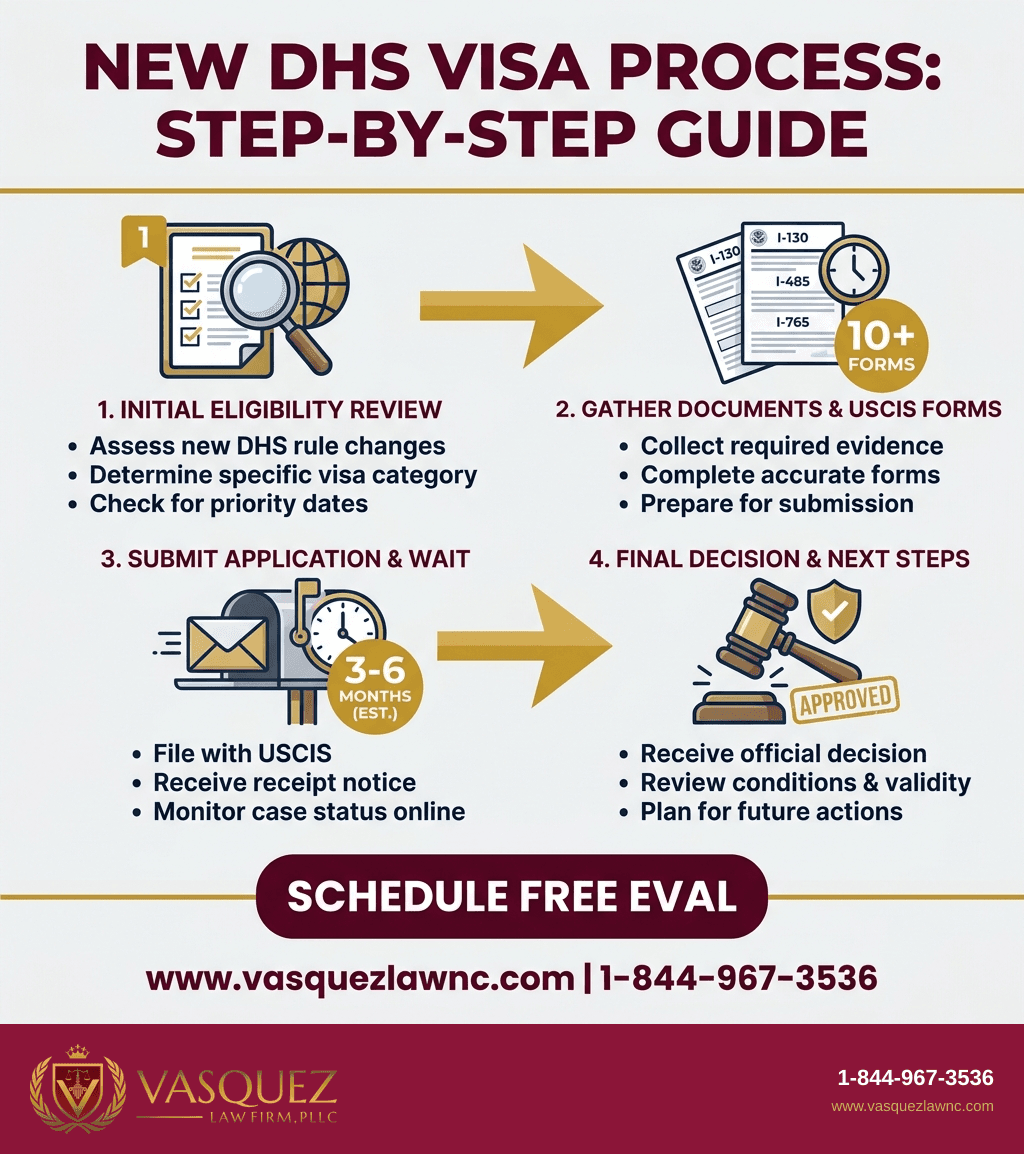
After the DHS new rule starts, international students, asylum seekers, and other affected immigrants need to change how they keep legal status. Here are important steps to handle the change well:
- Understand Fixed Admission Dates: Check your I-94 and visa papers carefully to know your exact admission end date. Do not assume your stay equals your academic program length.
- Keep Records Updated: Keep current proof of enrollment, work, or asylum applications to support timely extension requests.
- File Extension Requests Early: Send extension or status change applications well before your fixed admission end date to avoid gaps in legal presence.
- Consult Experienced Immigration Counsel: Contact immigration lawyers in Raleigh, NC or Orlando, FL for advice and help with renewals or status changes.
- Watch USCIS Processing Times: Check updates on USCIS processing times at USCIS Processing Times to plan your filings.
Following these steps helps prevent status violations that could hurt future immigration benefits or cause removal from the U.S.
Filing for Adjustment of Status With New DHS Rules
The law 8 U.S.C. § 1255 controls adjustment of status applications. Adjustment of status means applying to become a lawful permanent resident (green card holder). Fixed admission periods may affect when you can apply. Talk with a lawyer who knows the new DHS rules to make sure you follow them before applying for a green card.
Common Mistakes to Avoid with the D S Rule Change
- Missing Filing Deadlines: Waiting until after your fixed admission ends can cause unlawful presence.
- Relying On Old Duration Assumptions: Thinking you can stay for the full academic program may cause status problems.
- Ignoring USCIS Updates: Immigration rules and processing times change — keep informed.
- Not Keeping Documentation Ready: Missing enrollment or work proof can delay or deny extensions.
- Failing to Consult Qualified Counsel: Lawyers in Raleigh and Orlando can explain complex matters and improve your chances.
- Overlooking Asylum Case Changes: New DHS rules try to reduce asylum backlog but add new steps applicants must follow.
- Trying to Represent Yourself: Complex rule changes increase risks without legal help.
If you only remember one thing: Always act before your admission period ends and talk to a knowledgeable immigration attorney at Vasquez Law Firm.
Timeline and What to Expect from the New Immigration Rules
The DHS new rule changes timelines for students, asylum seekers, and other immigrants differently. Below is a typical timeline for a student visa holder in Raleigh or Orlando:
- Admission Period Start: Starts when you enter the U.S. with a fixed end date on Form I-94.
- Before Expiry: Start your extension or status change application at least 60 days before your admission ends.
- Processing: USCIS processing times for extensions usually take 6 to 12 months but vary by location. Check USCIS official site.
- Decision: Approval gives you a new fixed period; denial means you must leave or face removal.
For asylum seekers, the new DHS procedures try to speed up hearings and reduce backlogs. Currently, there are over 400,000 pending asylum cases nationwide. But applicants must meet stricter document and procedure deadlines.
Costs and Fees: What Impacts the Price
USCIS filing fees for extensions or status changes stay the same but vary by form. You may have more costs for legal help, getting documents, translations, and travel for appointments. Working with experienced lawyers in Raleigh or Orlando helps avoid costly mistakes and delays.
- USCIS Filing Fees: Range from $410 to over $1,200 depending on the form.
- Attorney Fees: Depend on case complexity; Vasquez Law Firm offers clear consultations.
- Document Preparation: Includes medical exams, authentication, and translations.
Jurisdiction Notes
Federal Framework
The DHS new rule is a federal regulation that affects immigration across the U.S. USCIS and Immigration and Customs Enforcement (ICE) enforce it. Immigration courts under the Executive Office for Immigration Review (EOIR) review cases. The federal law 8 U.S.C. § 1255 and regulation 8 C.F.R. § 214.2(f) provide the legal basis for Duration of Status adjustments.
North Carolina Notes
In Raleigh, NC, immigrants must follow the DHS new rule as enforced by local USCIS offices and immigration courts. Vasquez Law Firm in Raleigh offers in-person meetings to help clients understand these rule changes for their cases.
Florida Notes
In Orlando, FL, these federal rules apply the same way. Local DHS and immigration courts follow the updated guidelines. Vasquez Law Firm’s Orlando office helps clients with challenges related to these DHS immigration updates.
When to Call a Lawyer Now
- If you get a notice with a fixed admission end date under the new rule
- If you need to file an extension or status change application
- If your asylum case is delayed or you got new procedural requirements
- If you are unsure about following the new student visa rules
- If you face a denial or bad decision related to Duration of Status changes
- If you want to update your immigration plan considering the new DHS rules
- If filing on time and deadlines confuse you or risk unlawful presence
- If you need help understanding how Trump-era policies affect current changes
About Vasquez Law Firm
At Vasquez Law Firm, we mix care with strong representation. Our motto "Yo Peleo®" (I Fight) shows our promise to stand up for your rights.
- Bilingual Support: Se Habla Español — Spanish-speaking lawyers and staff available
- Service Areas: North Carolina, plus Florida and nationwide for immigration
- Experience: Over 30 years helping clients with complex legal matters
- Results: Thousands of successful cases in many practice areas
Attorney Trust and Experience
William J. Vásquez is licensed by the North Carolina State Bar (2011) and the U.S. Courts of Appeals for the 4th, 5th, and 11th Circuits. The firm has given dedicated legal help since 2011, with personal attention to each client’s case.
Don't wait to get the help you deserve. Call us now for immediate assistance.
Se Habla Español
Frequently Asked Questions
What does the DHS new rule change about the Duration of Status?
The DHS new rule changes the Duration of Status (D/S) policy mainly for F1 student visa holders and some asylum seekers. Instead of open-ended status, it sets fixed admission periods. These require renewals or extensions. This changes how long immigrants can stay legally in the U.S.
How does the DHS F1 new rule affect student visas?
The DHS F1 new rule sets fixed time limits on the student’s stay instead of the full academic program length. Students must apply for extensions or new admissions when their fixed time ends. This affects continuous legal stay.
What should asylum seekers in NC and FL know about this DHS rule?
The new DHS rule aims to reduce asylum backlogs by changing procedures. For asylum seekers in Raleigh, NC and Orlando, FL, this means faster processing but also new deadlines and document requirements.
Are Trump’s immigration policies still influencing these new rules?
While some parts reflect Trump-era efforts, the DHS 2026 rule updates are a separate policy. Current rules are changing and should be judged on their own.
What documents are necessary to comply with the DHS proposed rule?
You must keep current proof of school or work, valid visa papers, and timely USCIS notices. Delays or missing documents can cause status problems.
How long does USCIS take to process applications under the new DHS rules?
Processing times vary. For example, DACA renewal (Form I-821D) now takes 14 to 22 months. Applicants should watch official USCIS processing times for updates.
Can the DHS new rule affect my eligibility for adjustment of status?
Yes, because fixed admission periods affect when and how you can apply for permanent residency. Talk to an immigration lawyer to handle these changes well.
What mistakes should I avoid when dealing with DHS new immigration rules?
Common mistakes include missing deadlines, assuming old rules still apply, poor record keeping, and not consulting a lawyer. These errors can cause denials or illegal presence.
Sources and References
- U.S. Citizenship and Immigration Services
- Executive Office for Immigration Review
- Legal Information Institute
Take the first step toward justice today. Our team is ready to help.
Start Your Free Evaluation Now
Call us: 1-844-967-3536
Se Habla Español - Estamos aquí para ayudarle.


William Vasquez
Founder & CEO, Vasquez Law Firm, PLLC
William Vasquez is the founder and CEO of Vasquez Law Firm, PLLC, a results-driven firm specializing in immigration, criminal defense, personal injury, and workers' compensation. A U.S. Air Force veteran and recipient of the Joint Service Achievement Medal, William is dedicated to fiercely fighting for his clients' rights.
Related Legal Services
Need legal help? Learn more about learn about our immigration practice, or contact us for a free evaluation.
You can also visit statewide immigration legal services for more information.