What Happens During ICE Deportation in 2026
Wondering what ICE deportation entails in 2026? Learn how ICE officers operate, deportation numbers, and your rights. Contact Vasquez Law for a free consultation.
Published on July 29, 2026
Talk to an immigration attorney
Free call. A clear plan for your case.
Free & confidential · Se habla espanol · 24/7
Have questions? Talk to an attorney - free evaluation.
Call 1-844-967-3536Check your case status now
Look up your immigration case below, then talk to an attorney about what it means — free.
Questions about your result?
Talk to an attorney about your case — free, no obligation.
What Happens During ICE Deportation in 2026
ICE deportation affects thousands of people each year. It enforces immigration laws across the country. In 2026, it is important to understand how ICE deportation works. You should know who enforcement agents are and what steps are involved. Whether you live in Orlando, FL, or Raleigh, NC, knowing your rights and legal options under ICE deportation can protect you and your family. This article gives a detailed overview of ICE deportation in 2026. It explains key terms, the step-by-step process, common mistakes, costs, and the timeline you can expect. Stay informed about federal law and local details so you can respond well if you face deportation.
Need help with your case? Our experienced attorneys are ready to fight for you. Se Habla Español.
Or call us now: 1-844-967-3536
Quick Answer
ICE deportation in 2026 means federal officers detain and remove non-citizens who break immigration laws. People face hearings before an immigration judge. They have rights to fight deportation. Knowing the process helps protect yourself or loved ones during enforcement actions.
- ICE officers enforce removal of unauthorized immigrants
- Deportation involves legal proceedings in immigration court
- People have the right to legal representation
- Deportation numbers change each year based on federal priorities
- Families should get legal help quickly to explore relief
Understanding ICE Deportation Officers
ICE deportation officers are special agents under U.S. Immigration and Customs Enforcement. Their main job is to find people who must be deported. Usually, these are people without legal status or those breaking immigration law. They investigate, arrest, and hold these people for removal proceedings.
Officers have power under federal law to enter places, serve deportation orders, and arrange transport to detention centers. They play a key role in enforcing immigration laws nationwide, including local offices in Orlando, FL and Raleigh, NC.
Knowing who ICE deportation officers are helps you understand what happens during enforcement actions. For example, during a raid or detention, ICE officers will show their ID, explain why they are detaining you, and sometimes give information about your rights and possible relief.
ICE Officer Identification and Duties
- Agents carry federal ID cards and badges showing ICE authority
- They serve removal orders signed by immigration judges
- Officers work with local police when needed
- They document detainees and handle paperwork
- They take detainees to ICE detention centers or federal facilities
Communication With ICE Officers
It is important to stay calm and respectful when talking with ICE deportation officers. People have the right to stay silent and get a lawyer before answering questions. Avoid giving wrong or forced statements that could hurt your case.
If you live in Orlando or Raleigh and ICE officers contact you, it is very important to contact an experienced immigration lawyer. Our immigration attorneys in Raleigh and Orlando know deportation enforcement and can guide you on what to do next.
Common ICE Deportation Officer Actions
- Carrying out arrest warrants for removable people
- Doing scheduled deportation removals by transport
- Serving Notices to Appear (NTA) that start immigration court cases
- Giving information packets on rights and relief options
- Checking that people follow final deportation orders
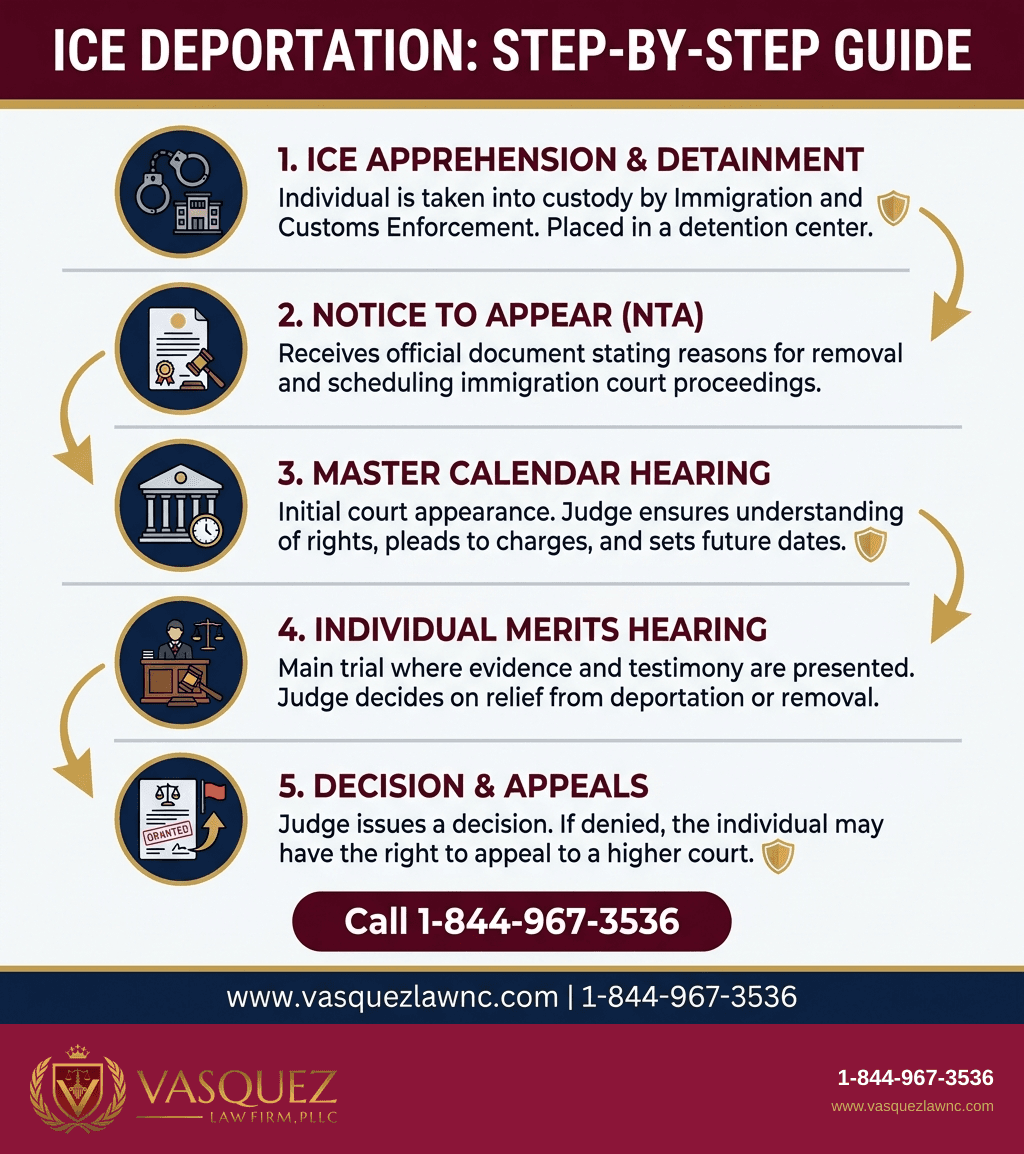
Step-by-step: ICE Deportation Process
ICE deportation is a legal process with many steps. It is controlled by federal immigration law (8 U.S.C. §§ 1229a). Below is a simple outline to help you understand what happens when someone faces deportation in 2026.
Step 1: Identification and Detention
ICE officers find people who may be removed through tips, worksite checks, or traffic stops. If there is a reason, the person may be held while removal proceedings happen. Detention can happen at local places near Orlando, FL or Raleigh, NC, or other federal holding centers.
Step 2: Notice to Appear (NTA)
The detained person gets an NTA. This is a formal document that starts immigration court proceedings. The NTA lists reasons for deportation and the hearing date. It is very important to respond to the NTA on time to avoid deportation without a hearing.
Step 3: Immigration Court Hearings
The person goes before an immigration judge at the Executive Office for Immigration Review (EOIR). Hearings decide if the person can be removed and if they can get relief (for example, asylum or cancellation of removal). The judge may allow or deny relief. This leads to either deportation or legal status changes.
Step 4: Deportation Order Execution
If relief is denied, ICE carries out the final deportation order. People are scheduled for removal and physically taken out of the country. ICE checks that people follow the order and completes removal quickly.
Step 5: Post-Deportation Consequences
After removal, coming back to the U.S. without permission is a felony with serious penalties. Other effects include bans on future immigration benefits for certain times under INA § 212(a)(9).
Common Mistakes During Deportation
Facing ICE deportation can be very stressful. People often make mistakes that hurt their cases or delay relief. Knowing these mistakes helps avoid serious problems.
- Failing to Respond to Court Notices: Ignoring NTAs can lead to deportation without a hearing. Always go to all hearings or ask to reschedule legally.
- Not Seeking Legal Help Early: Waiting reduces chances to prepare a strong defense or file forms for relief. Contact immigration lawyers quickly.
- Making False Statements: Giving wrong or false information to ICE can cause worse removability or criminal charges.
- Not Knowing Rights: Many do not know they can stay silent or have a lawyer present. Using these rights protects people during detention and hearings.
- Missing Deadlines for Relief Applications: Filing late usually causes denial. Keep track of deadlines for asylum, cancellation, or other relief.
- Allowing Detention to Continue Without Challenge: Bond hearings may allow release. Not asking for bond keeps detention longer than needed.
- Not Reporting Changes in Address or Contact: This can cause case delays or missed deportation notices, risking removal without warning.
- Disregarding Local Legal Resources: Not using legal clinics or non-profits in Orlando or Raleigh misses chances for help.
If you only remember one thing: Contact a qualified immigration attorney as soon as deportation proceedings start. This helps you understand options and protect your rights.
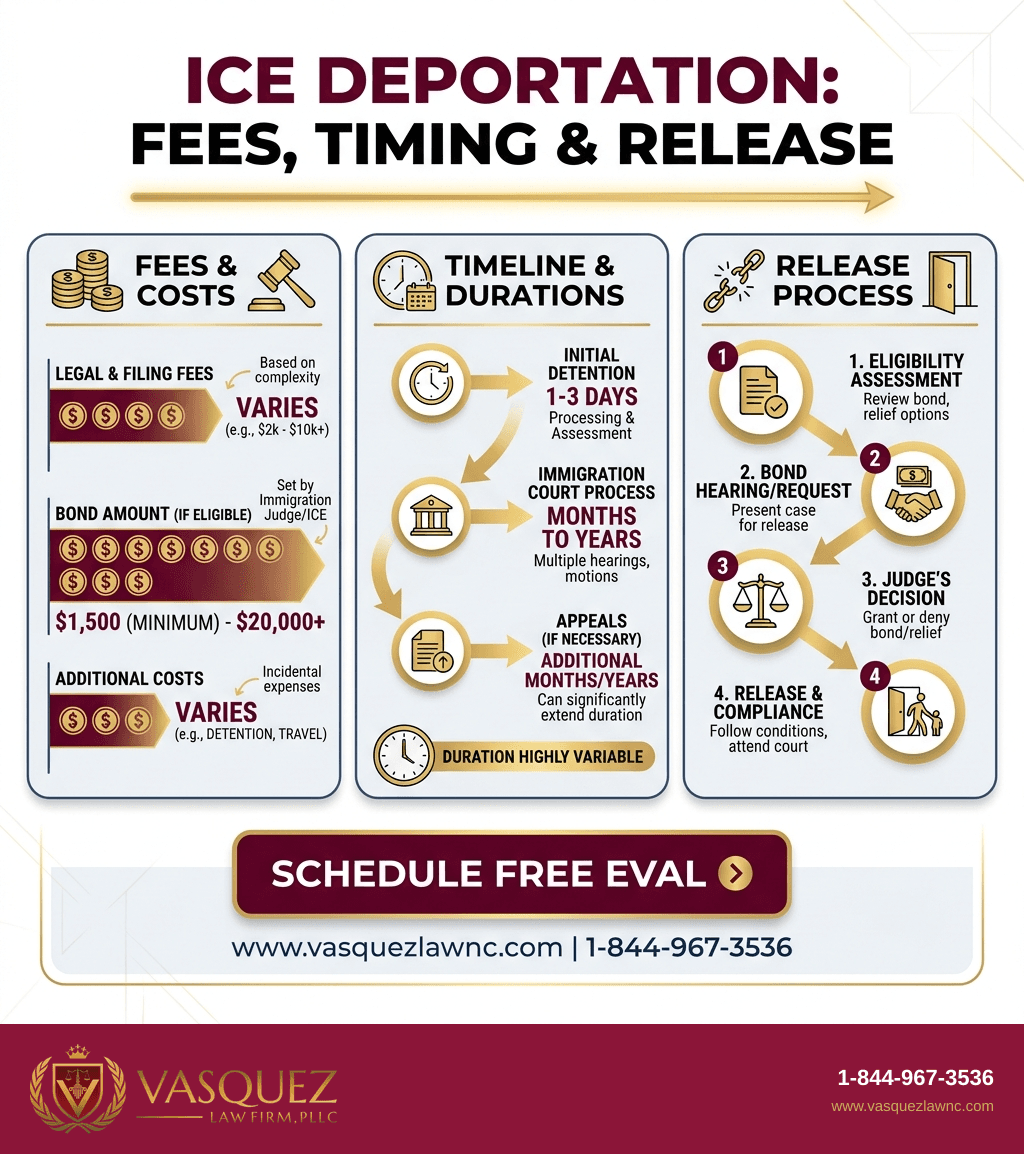
Timeline: What to Expect in Deportation Cases
The ICE deportation timeline depends on the case details, local office workload, and court availability near Orlando or Raleigh. Below is a general timeline guide:
- Initial Detention: Within days after ICE officers identify a person.
- Notice to Appear Served: Usually within 7-14 days after detention.
- Master Calendar Hearing: Scheduled 1-2 months after NTA. This is the first court appearance for procedural issues.
- Individual Hearing: Can take 3-12 months depending on relief asked for and court backlog.
- Decision on Relief: Given soon after hearings, sometimes weeks to months after the final hearing.
- Removal Execution: Scheduled quickly after the final order, often within days to weeks.
Delays happen often because of heavy caseloads. Staying in touch with your lawyer helps you not miss important dates.
Costs and Fees: What Impacts the Price
Costs for handling ICE deportation cases vary. They depend on case difficulty and eligibility for relief. ICE does not charge a fixed $5000 fee for everyone. However, bond amounts and court fees may apply.
- Attorney Fees: Range from $2,500 to $10,000 or more depending on the legal work needed.
- Bond Payments: ICE sets bonds case-by-case, sometimes about $5000, to allow release from detention.
- Filing Fees: Some relief applications require USCIS fees. For example, Form I-589 (asylum) has no fee, but Form I-485 costs $1,140.
- Additional Costs: Translation, medical exams, and expert witnesses may add expenses.
Vasquez Law Firm offers clear fee details and free case evaluations to estimate costs based on your case.
Jurisdiction Notes for ICE Deportation
Federal Framework
ICE deportation follows federal immigration laws under Title 8 of the United States Code. Federal agencies like ICE and the Executive Office for Immigration Review (EOIR) manage it. Deportation orders must follow legal rules under 8 U.S.C. § 1229a and related regulations (8 C.F.R. Part 1240).
North Carolina and Florida Practice
Immigration law is federal, but practical parts like detention centers and local courts affect people in Raleigh, NC, and Orlando, FL. People in these areas have access to regional ICE offices and immigration courts. Vasquez Law Firm can represent clients in both places.
Nationwide Considerations
Deportation hearings and removals happen nationwide. Federal policies can change enforcement priorities and processes. Local lawyers help you handle these changes well.
When to Call a Lawyer Now
- After getting an ICE Notice to Appear (NTA)
- If ICE has detained a family member or you
- When ICE officers come to your home or work
- If you have a past criminal conviction and fear deportation
- When you have limited English and need an interpreter
- Before sending any immigration forms or answers to ICE
- If you missed a court date or deportation hearing
- Right after signing any ICE papers or waivers
- If you want to know if relief or cancellation of removal is possible
About Vasquez Law Firm
At Vasquez Law Firm, we mix care with strong representation. Our motto "Yo Peleo®" (I Fight) shows our promise to defend your rights. We know ICE deportation can have serious effects on people and families. We work hard to protect each client's future.
- Bilingual Support: Se Habla Español - Spanish-speaking lawyers and staff are ready to guide you personally.
- Service Areas: North Carolina, plus Florida and nationwide for immigration cases.
- Experience: Over 30 years helping clients with complex immigration enforcement issues.
- Results: Thousands of successful cases protecting people from wrongful deportations.
Attorney Trust and Experience
William J. Vásquez, JD, is admitted to the North Carolina State Bar and Florida Bar. He has 15 years of experience handling immigration and deportation defense cases. Our team keeps up with changing immigration laws to give the best defense. Meet Attorney Vasquez and the team ready to help your case.
Don't wait to get the help you need. Call us now for fast assistance.
Se Habla Español
Frequently Asked Questions
What does ICE mean in deportation?
ICE is the federal agency that enforces immigration laws including deportation. ICE officers detain unauthorized immigrants and arrange removals from the U.S.
How many people were deported by ICE in 2026?
About 25,000 people nationwide have been deported by ICE in 2026. This reflects current enforcement priorities and resources.
Will ICE deport me if I'm a U.S. citizen?
No, U.S. citizens cannot be deported. ICE may mistakenly detain citizens, but proof of citizenship stops removal.
What is the $5000 fee related to ICE?
This fee sometimes means immigration bond amounts set to release detained people. It is not a fixed or required government charge.
How can I find my ICE deportation number?
Your ICE deportation number is a unique Alien Number on official papers. It identifies your immigration case in removal proceedings.
What information is on an ICE deportation list?
Lists include names, origins, and hearing details of people scheduled for deportation. Some data is public, but personal details stay private.
What rights do I have if facing ICE deportation in Orlando or Raleigh?
You have rights to a lawyer, to fight removal, and to be treated humanely. Get legal help quickly in your local area.
How does ICE deportation affect families in North Carolina and Florida?
Deportation separates families and causes hardship. Legal advice can help families with mixed status protect themselves during court cases.
Sources and References
- U.S. Citizenship and Immigration Services
- Executive Office for Immigration Review
- Legal Information Institute
Take the first step toward justice today. Our team is ready to help.
Start Your Free Evaluation Now
Call us: 1-844-967-3536
Se Habla Español - Estamos aquí para ayudarle.


William Vasquez
Founder & CEO, Vasquez Law Firm, PLLC
William Vasquez is the founder and CEO of Vasquez Law Firm, PLLC, a results-driven firm specializing in immigration, criminal defense, personal injury, and workers' compensation. A U.S. Air Force veteran and recipient of the Joint Service Achievement Medal, William is dedicated to fiercely fighting for his clients' rights.
Related Legal Services
Need legal help? Learn more about immigration lawyers in North Carolina, or contact us for a free evaluation.
You can also visit NC immigration legal help for more information.