What Is Negligence and How Does It Work in 2026?
Wondering what negligence means in law? Learn how it affects injury claims in NC and FL. Contact Vasquez Law Firm for a free evaluation now.
Published on June 18, 2026· Updated June 26, 2026
Injured? Get what your case is worth
Free review.
Free & confidential · Se habla espanol · 24/7
Have questions? Talk to an attorney - free evaluation.
Call 1-844-967-3536Get What Your Injury Is Worth
Schedule your consultation.
What Is Negligence and How Does It Work in 2026?
Negligence is a critical legal concept that determines fault in many personal injury cases in Charlotte and beyond. Understanding negligence involves knowing its key elements, types, and consequences under North Carolina and Florida law. In 2026, being informed about negligence can protect your rights and help you seek compensation after an injury. This article breaks down negligence in simple terms with practical examples, timelines, and legal guidance for victims.
Need help with your case? Our experienced attorneys are ready to fight for you. Se Habla Español.
Or call us now: 1-844-967-3536
Quick Answer
Negligence in law means failing to take reasonable care, which causes harm to others. It involves duty, breach, causation, and damages. Victims injured due to negligence in North Carolina or Florida may pursue compensation through personal injury claims.
- Consists of four key legal elements
- Determines fault in injury cases
- Varies by type and degree of carelessness
- Allows recovery for economic and non-economic damages
- Important in personal injury lawsuits
Understanding Negligence and Its Elements
Take the case of a driver running a red light and causing a crash injuring another motorist in Charlotte. The driver had a legal duty to obey traffic rules. By running the red light, they breached this duty. This breach directly caused the accident and harm. The injured party suffered damages like medical bills and lost wages.
This example demonstrates the four required elements of negligence: duty, breach, causation, and damages. Duty means one must act with reasonable care to avoid foreseeable harm. Breach is the failure to meet that duty. Causation connects the breach directly to the injury. Damages represent the actual losses suffered.
Negligence is a type of tort — a civil wrong recognized in North Carolina and Florida law — that results in liability. The duty of care varies depending on the situation. For example, doctors have a higher duty toward patients than ordinary drivers on the road.
Understanding the "negligence definition" and its application is essential if you pursue a personal injury claim. A breach does not mean intentional harm but failure to exercise reasonable care.
- Duty of Care: An obligation to act reasonably
- Breach of Duty: Failing to act as expected
- Causation: Injury caused by breach
- Damages: Real losses due to injury
In Charlotte and across the Carolinas, negligence cases depend heavily on these core elements to decide fault and liability.
Negligence Synonym and Related Terms
Other phrases conveying similar meanings include "carelessness," "lack of due diligence," or "failure to exercise reasonable care." When consulting lawyers or reviewing legal documents, remember "negligence of duty" refers to this failure to meet an expected legal standard.
Negligence Pronunciation Tips
For clarity when discussing your case or during consultations, pronouncing negligence correctly helps. It is pronounced "NEG-li-jence" with emphasis on the first syllable.
Different Types of Negligence
In 2026, understanding the types of negligence helps you grasp potential outcomes:
- Simple Negligence: Ordinary carelessness causing harm.
- Gross Negligence: Extreme disregard for others’ safety.
- Comparative Negligence: Shared fault reducing damages.
- Contributory Negligence: In some states, plaintiff’s fault bars recovery.
North Carolina follows a contributory negligence rule, meaning if you are even 1% at fault, you may be barred from recovering damages. Florida uses a comparative negligence standard, reducing recovery by your share of fault.
Step-by-Step Actions After a Negligence Injury
Imagine you are injured in a slip and fall accident at a Charlotte store. Here is what to do next to protect your rights:
- Seek Medical Attention: Get treatment immediately, even if injuries seem minor.
- Report the Incident: Notify the responsible party and request an incident report.
- Gather Evidence: Take photos, collect witness contacts, and keep records of medical bills.
- Avoid Admitting Fault: Be careful with statements, as admissions can affect your claim.
- Consult a Personal Injury Lawyer: A Charlotte-based attorney can guide you through filing a claim or lawsuit.
- Document Everything: Keep all documents related to the injury, such as medical records and correspondence.
- Follow Legal Deadlines: North Carolina generally requires filing a personal injury lawsuit within 3 years (N.C. Gen. Stat. § 1-15).
Starting early is crucial. Contacting our personal injury lawyers in Charlotte can make a significant difference in successfully navigating your negligence claim.
Common Mistakes in Negligence Claims
- Failing to Preserve Evidence: Losing photos or documents weakens your claim. Always save any proof of the incident.
- Delaying Medical Treatment: This can undermine causation linking injury to negligence.
- Missing Statute of Limitations: Filing late could bar your claim altogether.
- Admitting Fault or Apologizing: Statements may be used against you to lessen the other party's responsibility.
- Not Consulting a Lawyer Early: Legal advice early helps avoid mistakes and builds a strong case.
- Ignoring Insurance Company Communications: Respond promptly and consult a lawyer before accepting offers.
- Underestimating Damages: Don’t settle too quickly — consider future medical costs and lost wages.
If you only remember one thing: Protect evidence, seek medical care, and speak to an experienced attorney promptly.
Don't wait to get the help you deserve. Call us now for immediate assistance. Se Habla Español.
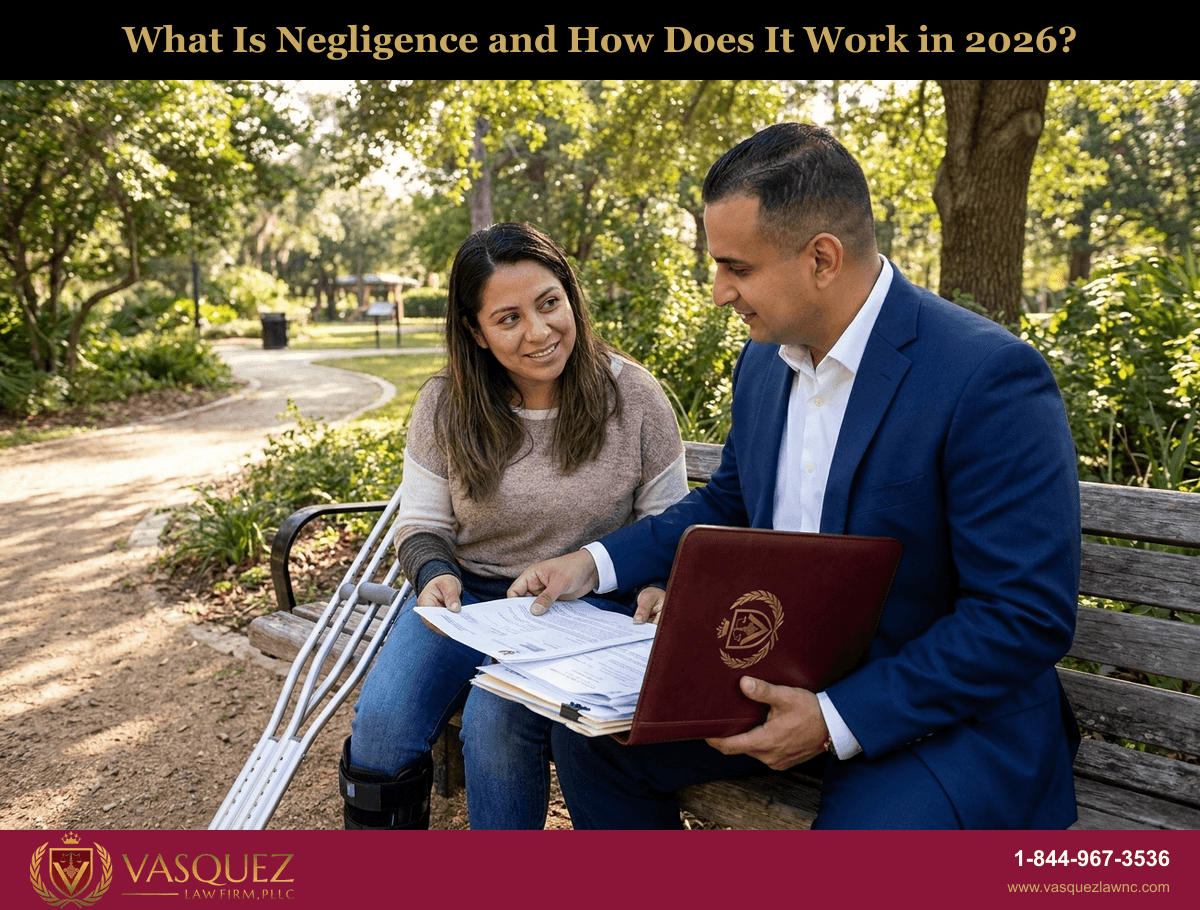
Timeline: What to Expect in a Negligence Case
A typical negligence case timeline after an injury in Charlotte can span months or years depending on factors:
- Investigation Phase (Weeks 1-8): Gather evidence, document injury, and consult attorneys.
- Demand and Negotiation (2-6 Months): Your lawyer sends demand letters; parties negotiate settlement.
- Filing Lawsuit (If Needed): If no settlement, lawsuit is filed before statute expiration.
- Discovery Phase (Months to 1 Year): Both sides exchange evidence and depose witnesses.
- Settlement Talks or Mediation: Most cases resolve pretrial here.
- Trial (If Necessary): A judge or jury decides outcome after hearing evidence.
- Post-Trial Motions and Appeals: Can add additional months depending on complexity.
Acting promptly helps you meet deadlines and gather stronger evidence early on. Consult a Charlotte personal injury attorney for likely timeframes based on your case facts.
Costs and Factors That Affect Your Case
The cost of pursuing a negligence case in 2026 can include attorney fees, expert witness fees, and court costs. Many personal injury lawyers in Charlotte work on a contingency basis, meaning no upfront cost and fees paid only from recovery.
Factors affecting costs and case value include:
- Severity of injuries and extent of damages
- Availability of clear evidence showing negligence
- Insurance coverage limits of responsible parties
- Complexity of the legal issues involved
- Whether the case settles or goes to trial
Understanding these helps manage your expectations. Our team can explain the fee structure and guide you through affordable options.
North Carolina and Nationwide Notes
North Carolina Notes
North Carolina applies contributory negligence, where any fault of the injured party can block recovery. The statute of limitations for negligence claims is 3 years from the injury date (N.C. Gen. Stat. § 1-15).
North Carolina courts use case law to interpret negligence rules strictly, making early legal counsel vital.
Nationwide Concepts (General Only, Rules Vary)
Negligence principles are recognized throughout the U.S., but states differ on fault rules and damages. Always check local statutes and consult an attorney from your specific jurisdiction.
When to Call a Lawyer for Negligence Cases
- If you suffered serious injuries or permanent disability
- If the negligent party denies responsibility or blames you
- If you are facing denied insurance claims
- If there are complex liability issues, such as multiple parties
- If the statute of limitations deadline is approaching
- If you feel overwhelmed handling insurance communication alone
- If you need help valuing your claim fairly
About Vasquez Law Firm
At Vasquez Law Firm, we combine compassion with aggressive representation. Our motto "Yo Peleo®" (I Fight) reflects our commitment to standing up for your rights.
- Bilingual Support: Se Habla Español — Spanish-speaking attorneys and staff available
- Service Areas: Personal injury in North Carolina; immigration nationwide, including Florida
- Experience: Over 30 years helping clients navigate complex legal matters
- Results: Thousands of successful cases across multiple practice areas
Attorney Trust and Experience
William J. Vásquez is admitted to the North Carolina State Bar with 15 years of experience handling personal injury and negligence cases. Our Raleigh, NC and Orlando, FL offices provide personalized attention to each client’s unique circumstances.
Don't wait to get the help you deserve. Call us now for immediate assistance. Se Habla Español.
Frequently Asked Questions
What are the elements of negligence?
To prove negligence, you must show duty, breach, causation, and damages. For instance, a driver must obey laws, and failure causing an injury establishes these elements.
What are the consequences of negligence?
Consequences include paying compensatory and sometimes punitive damages, increased insurance costs, and legal liability that may affect your reputation.
What are the different types of negligence?
They include simple, gross, comparative, and contributory negligence, each impacting fault assessment and recoverable damages differently.
What is the role of damages in negligence claims?
Damages compensate for medical costs, lost income, pain, and suffering. Proving damages strongly influences claim value.
What is the standard of care for negligence?
It’s the behavior expected of a reasonable person in similar circumstances. Breaching this standard can lead to liability.
How does comparative negligence affect a claim?
It allocates fault between parties, reducing damage awards by your percentage of fault, important in Florida law.
Can negligence claims include punitive damages?
Yes, if conduct was willful or reckless, punitive damages may apply to punish and deter negligence.
How long does a negligence case take in North Carolina?
Cases vary but often last months to years. Early legal help can make the process smoother and faster.
Sources and References
- North Carolina Courts
- North Carolina Department of Transportation
- National Highway Traffic Safety Administration
Take the first step toward justice today. Our team is standing by to help. Se Habla Español.
Start Your Free Evaluation Now
Call us: 1-844-967-3536
Se Habla Español - Estamos aquí para ayudarle.
If you need legal assistance, learn more about personal injury case consultation, or call us at 1-844-967-3536 for a free evaluation.


William Vasquez
Founder & CEO, Vasquez Law Firm, PLLC
William Vasquez is the founder and CEO of Vasquez Law Firm, PLLC, a results-driven firm specializing in immigration, criminal defense, personal injury, and workers' compensation. A U.S. Air Force veteran and recipient of the Joint Service Achievement Medal, William is dedicated to fiercely fighting for his clients' rights.
Related Legal Services
Need legal help? Learn more about personal injury case consultation, or contact us for a free evaluation.
You can also visit personal injury lawyers across North Carolina for more information.