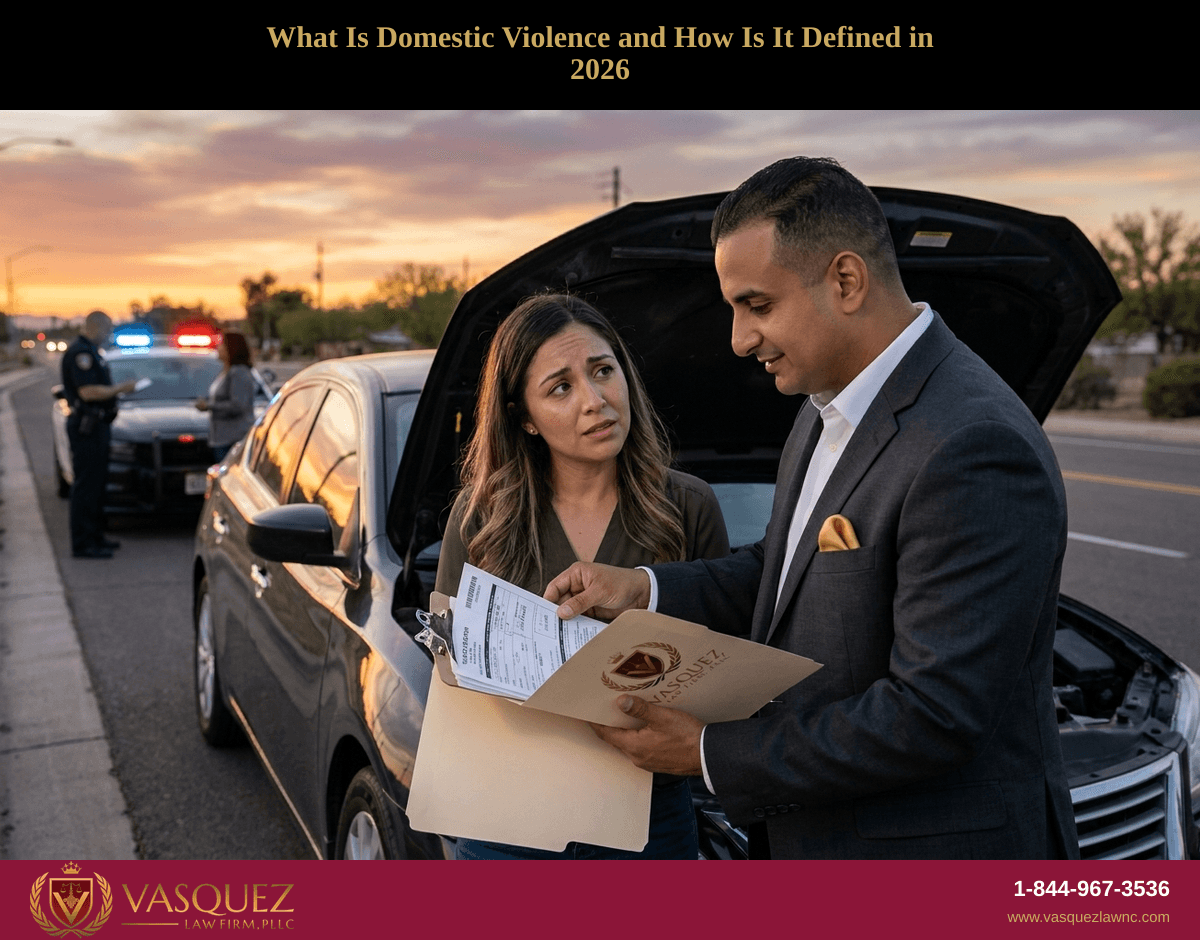
What Is Domestic Violence and How Is It Defined in 2026
What is domestic violence? Learn about types, legal definitions, and how to resolve cases in 2026. Contact Vasquez Law for support and a free evaluation.
Published on June 15, 2026
Protect your record and your freedom
Free, confidential review. 24/7.
Free & confidential · Se habla espanol · 24/7
Have questions? Talk to an attorney - free evaluation.
Call 1-844-967-3536Protect Your Record and Your Freedom
A confidential case review - available 24/7 for emergencies.
What Is Domestic Violence and How Is It Defined in 2026
Domestic violence, a serious crime affecting many families in Smithfield and beyond, involves various types of abuse defined by law. In 2026, understanding what constitutes domestic violence is key to protecting your rights and getting help. This guide explains the legal definitions, signs of abuse, how domestic violence cases are handled in North Carolina, and when to seek help from experienced criminal defense attorneys. Whether you face charges or are a victim, knowing your options is critical.
Need help with your case? Our experienced attorneys are ready to fight for you. Se Habla Español.
Or call us now: 1-844-967-3536
Quick Answer
Domestic violence is legally defined as abusive behaviors—physical, emotional, sexual, or financial—used to control someone in a domestic relationship. It is punishable under North Carolina criminal law with serious penalties. Victims deserve support, and anyone accused should consult experienced criminal defense attorneys promptly.
- Abuse includes physical, emotional, sexual, and financial harm
- NC law protects victims and criminalizes offenders
- Protective orders can limit contact and prevent harm
- Early legal help is essential for accused individuals
- National Domestic Violence Hotline provides free confidential support
Understanding Domestic Violence
Imagine a Smithfield couple where one partner controls the other's actions through threats or physical harm. This real scenario is a form of domestic violence, which the law defines as intentional abuse within intimate or household relationships. North Carolina General Statute § 50B describes domestic violence as attempts to cause bodily injury or acts creating fear of imminent harm.
Types of Domestic Abuse
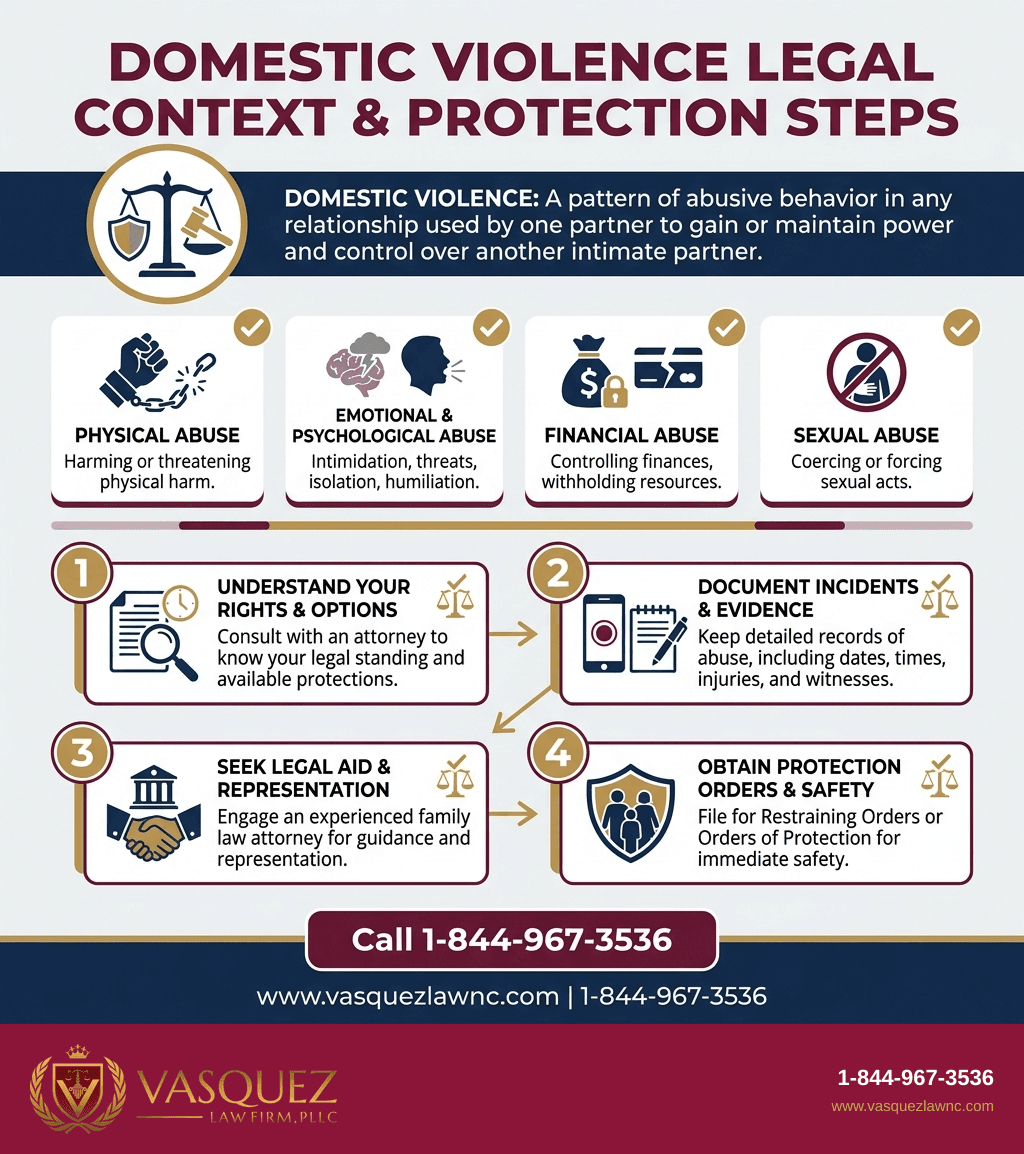
Domestic violence can involve several abuse types:
- Physical abuse: hitting, slapping, choking, or other bodily harm
- Emotional abuse: insults, intimidation, constant criticism, or threats
- Sexual abuse: forcing sexual acts without consent
- Financial abuse: controlling money, withholding resources, or preventing employment
Recognizing these forms is crucial, as many victims face more than one kind at the same time. Abusers can use multiple methods to exert control, and victims often suffer lasting trauma.
Legal Definitions and Protections
North Carolina courts treat domestic violence seriously. The law allows victims to seek protective orders that restrict an abuser's actions and proximity. Criminal charges may range from misdemeanors to felonies, depending on the circumstance and injury severity. The statutes make clear the importance of protecting individuals from ongoing or potential abuse.
Similarly, federal law under 18 U.S.C. § 2261 addresses domestic violence crossing state lines. This can invoke federal jurisdiction when the abuse involves interstate travel or communication.
Who Does Domestic Violence Affect?
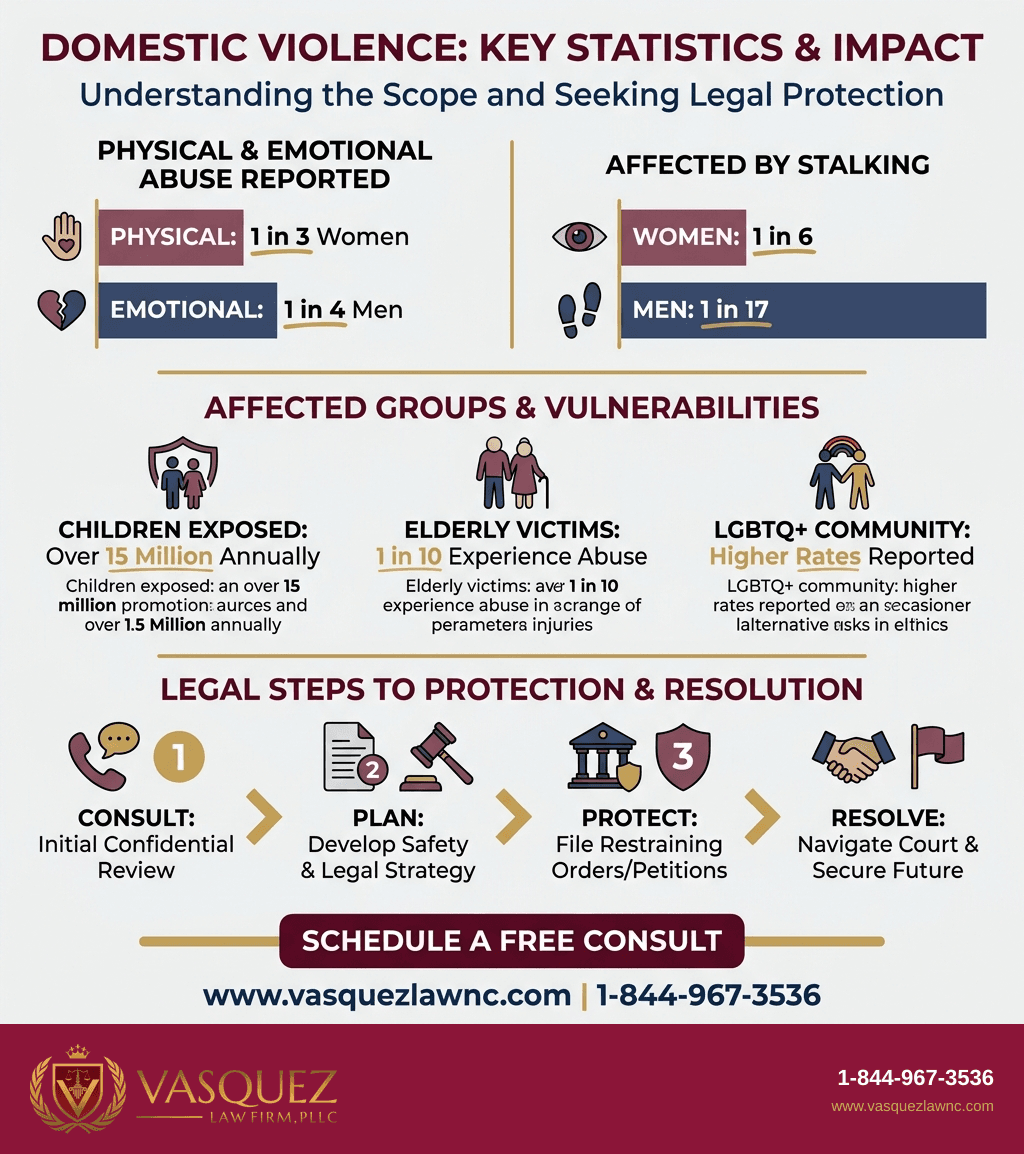
Domestic violence impacts people regardless of age, gender, or background. It occurs in heterosexual and same-sex relationships, families, and cohabitants. In Smithfield and North Carolina broadly, thousands seek help each year, underscoring the widespread need for awareness and legal resources.
At Vasquez Law Firm, our criminal defense attorneys have extensive experience handling domestic violence cases in the Smithfield area. We understand the complexity and sensitivity required in these matters.
Key Steps to Take If Accused
When someone faces domestic violence charges in Smithfield, it can be overwhelming. Knowing what to do first can make a significant difference. Consider the following steps carefully to protect your rights:
1. Contact a Criminal Defense Attorney Immediately
Consulting a qualified attorney from our criminal defense services early ensures your side is protected from the onset. They can advise you on handling contact with the alleged victim and guide your next actions.
2. Comply with Protective Orders
If a court issues a protective order, violating it can lead to additional charges. Avoid direct or indirect contact with the accuser and follow all court conditions strictly.
3. Gather Evidence and Witnesses
Collecting any evidence that supports your innocence is critical. This could include messages, videos, photos, or witness testimony. Attorney Vasquez can help identify what will matter in your case.
4. Attend All Court Hearings
Failing to appear can result in warrants or more severe consequences. Stay informed of schedules and court requirements.
5. Avoid Public Statements
Refrain from discussing your case on social media or with anyone outside your legal team. Anything you say can be used against you.
Don't wait to get the help you deserve. Call us now for immediate assistance.
Se Habla Español
Common Mistakes to Avoid
- Ignoring legal advice: Acting without your lawyer’s guidance can harm your defense. Fix: Always consult first.
- Missed court dates: Failure to appear leads to arrest warrants. Fix: Mark your calendars carefully.
- Violating protective orders: Can result in new charges. Fix: Follow orders exactly.
- Posting on social media: Admissions or provocative posts can be evidence. Fix: Avoid all social media until case resolution.
- Failing to collect evidence: Weak cases benefit from strong proof. Fix: Work with your attorney promptly.
- Contacting the alleged victim: Could cause further legal issues. Fix: Restrict contact to legal channels.
- Not understanding charges: Leads to confusion about consequences. Fix: Ask your attorney for clarity at every step.
If you only remember one thing: Engage experienced legal counsel early and follow their advice precisely.
Timeline and What to Expect
Typical domestic violence cases in NC progress through several stages:
- Arrest and Booking: After an incident, police may arrest and book the accused.
- First Court Appearance: Happens soon, setting bail or release conditions.
- Protective Order Hearing: Victims may request immediate protection orders.
- Pretrial Proceedings: Discovery, motions, and plea negotiations occur here.
- Trial or Resolution: Case proceeds to trial or settlement agreement.
- Sentencing or Dismissal: If convicted, sentencing follows based on local laws.
Each case varies. Factors like evidence, prior history, and severity of injuries affect timing.
When to Call a Lawyer
- Immediately upon arrest or charge notification
- If served with a protective order
- Before speaking with police or prosecutors
- When you face evidence collection or witness interviews
- To understand potential immigration consequences
- If employment or custody issues arise related to charges
- When planning defense strategies or plea offers
About Vasquez Law Firm
At Vasquez Law Firm, we combine compassion with aggressive representation. Our motto "Yo Peleo®" (I Fight) reflects our commitment to standing up for your rights.
- Bilingual Support: Se Habla Español — Spanish-speaking attorneys and staff available
- Service Areas: North Carolina, including Smithfield, focusing on criminal defense and domestic violence cases
- Experience: Over 30 years helping clients navigate complex legal matters
- Results: Thousands of successful cases across multiple practice areas
Attorney Trust and Experience
William J. Vásquez is admitted to the North Carolina State Bar (2011) and to several U.S. Courts of Appeals. Our team provides personalized guidance to clients facing domestic violence charges in Smithfield and surrounding areas.
Take the first step toward justice today. Our team is standing by to help.
Start Your Free Evaluation Now
Call us: 1-844-967-3536
Se Habla Español - Estamos aquí para ayudarle.
Frequently Asked Questions
What is defined as domestic violence?
Domestic violence is abusive behavior used to control a partner or family member, including physical harm, threats, and emotional manipulation. North Carolina law recognizes these types and provides protections and penalties to help victims and prosecute offenders.
What are the 4 types of domestic abuse?
The four primary types are physical, emotional, sexual, and financial abuse. Physical includes hitting or choking. Emotional involves intimidation or insults. Sexual abuse is nonconsensual acts, and financial abuse limits access to resources or money.
How can domestic violence be resolved legally?
Legal resolution may include protective orders, criminal charges, counseling, and sometimes mediation. Victims can seek protection from court; defendants work with counsel to respond to charges and protect rights.
What are common mistakes when facing domestic violence charges?
Common errors include ignoring legal counsel, missing court dates, violating protective orders, discussing the case publicly, and not gathering evidence. These can negatively affect your defense and case outcome.
What evidence is needed in a domestic violence case?
Evidence includes police reports, photos of injuries, medical documents, witness statements, and communications like texts or emails. Solid evidence supports both prosecution and defense strategies.
Can domestic violence charges affect immigration status?
Yes. Convictions in domestic violence cases can affect immigration relief and may lead to deportation. It's vital to consult an immigration and criminal defense attorney for guidance.
What is the National Domestic Violence Hotline?
The National Domestic Violence Hotline offers confidential, free 24/7 support, safety planning, and referrals for victims of abuse nationwide. It is an essential resource for help and information.
What should I do if I am falsely accused of domestic violence?
If falsely accused, contact a criminal defense attorney quickly. Avoid contacting the accuser and gather evidence that supports your defense. Prompt legal help is crucial to protect your rights.
Sources and References


William Vasquez
Founder & CEO, Vasquez Law Firm, PLLC
William Vasquez is the founder and CEO of Vasquez Law Firm, PLLC, a results-driven firm specializing in immigration, criminal defense, personal injury, and workers' compensation. A U.S. Air Force veteran and recipient of the Joint Service Achievement Medal, William is dedicated to fiercely fighting for his clients' rights.
Related Legal Services
Need legal help? Learn more about our criminal defense legal services, or contact us for a free evaluation.
You can also visit our NC defense attorneys for more information.