What Happens When You Enter Guilty Pleas in 2026
Unsure about guilty pleas? Learn how entering a guilty plea affects your case and sentencing. Contact Vasquez Law Firm for expert criminal defense help.
Published on June 14, 2026
Protect your record and your freedom
Free, confidential review. 24/7.
Free & confidential · Se habla espanol · 24/7

Have questions? Talk to an attorney - free evaluation.
Call 1-844-967-3536Protect Your Record and Your Freedom
A confidential case review - available 24/7 for emergencies.
What Happens When You Enter Guilty Pleas in 2026
Guilty pleas are a crucial part of the criminal justice process in Smithfield, NC. Understanding what guilty pleas mean, their types, the sentencing timeline, and possible consequences can help you make informed decisions. This guide explains the difference between guilty pleas and other plea options, details common mistakes, and offers steps to protect your rights. If you're facing criminal charges in North Carolina, knowing how guilty pleas work in 2026 can impact your case significantly.
Need help with your case? Our experienced attorneys are ready to fight for you. Se Habla Español.
Or call us now: 1-844-967-3536
Quick Answer
A guilty plea means you admit to the crime you are charged with and waive your right to a trial. It usually leads to sentencing but may be part of a plea deal to reduce charges or penalties.
- Types of pleas include guilty, not guilty, no contest, and Alford plea.
- Pleading guilty typically speeds up the case process.
- Sentencing usually happens weeks after the plea.
- Legal advice is critical before entering any plea.
- North Carolina courts follow specific plea and sentencing rules.
Understanding Guilty Pleas
Imagine facing criminal charges in Smithfield and being told you can plead guilty to the offense. A guilty plea means you admit to the charged crime. By doing so, you give up the constitutional rights to a jury trial, to confront witnesses, and to remain silent. This is a serious decision that has immediate legal consequences.
In 2026, entering a guilty plea in North Carolina courts is a formal process. The judge ensures you understand what admitting guilt means and confirm you are doing so voluntarily and with knowledge. Sometimes, defendants plead guilty as part of negotiated settlements called plea bargains to reduce the severity of the sentence or charges.
Understanding how guilty pleas work in criminal defense cases is essential to protect your rights. Our criminal defense services in Smithfield help clients evaluate the best plea strategy.
Types of Pleas in Criminal Cases
If you receive criminal charges, you can enter one of several types of pleas, each with a different legal effect. The four primary types of pleas are:
Guilty Plea
This is a clear admission that you committed the offense. The court treats this as a conviction and moves to sentencing. Guilty pleas are most common because they often lead to plea negotiations.
Not Guilty Plea
Pleading not guilty means you deny the charges and intend to contest the case at trial. This plea triggers the court to set a trial date.
No Contest (Nolo Contendere) Plea
This plea means you do not admit guilt but accept the punishment. It prevents automatic admission of guilt in related civil lawsuits. Not all North Carolina courts accept no contest pleas.
Alford Plea
The Alford plea allows you to maintain innocence while acknowledging the prosecution has enough evidence to likely convict. It functions like a guilty plea for sentencing purposes.
Knowing the differences between plea types helps you choose the right approach for your case. Attorney Vasquez can explain which will best protect your interests.
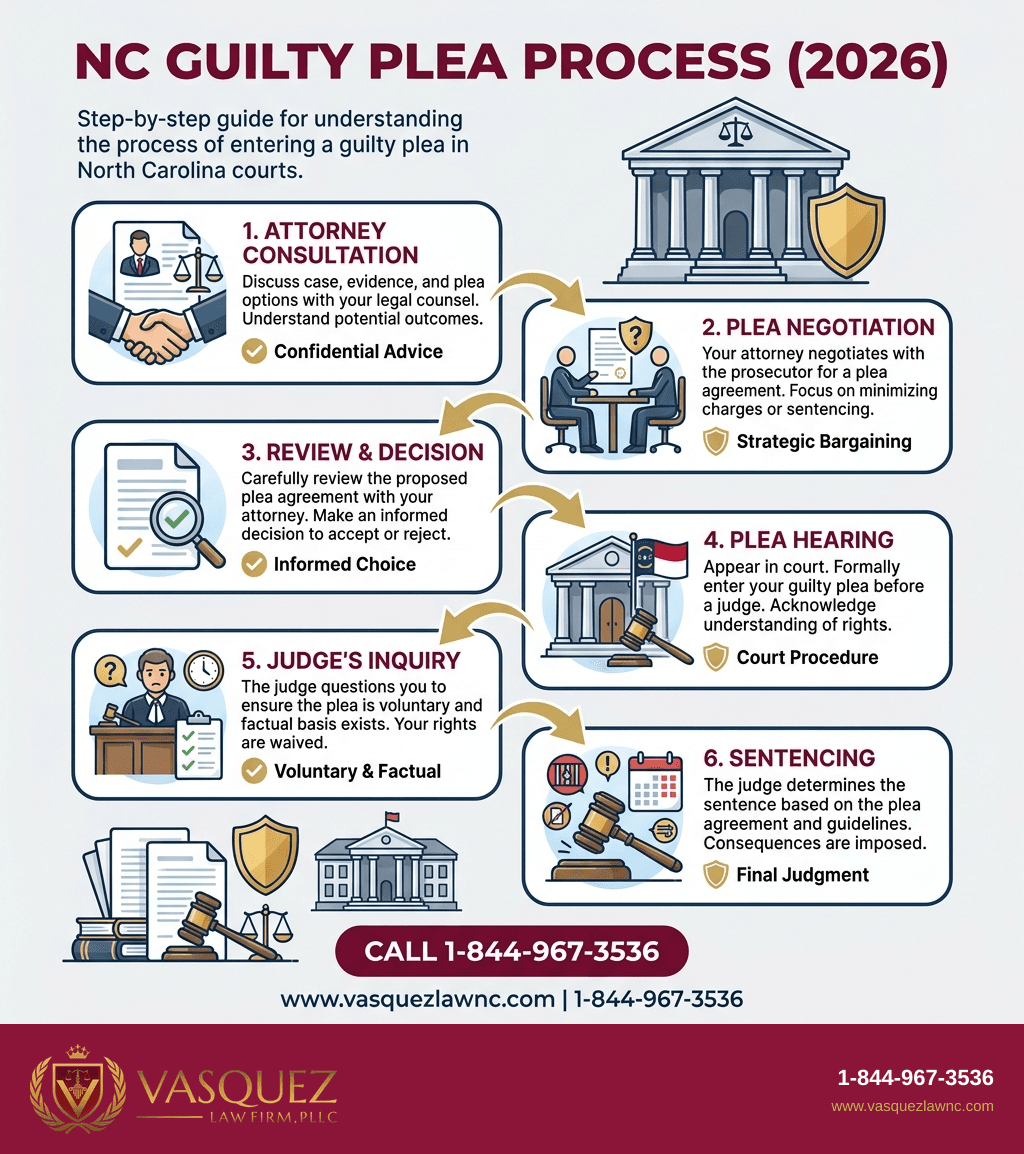
Step-by-Step: Entering a Guilty Plea
- Consult an attorney: Before pleading guilty, get expert advice to understand potential consequences and options.
- Review the charges and plea agreement: If offered a plea deal, carefully review it with your lawyer.
- Appear in court: You will be required to appear before the judge to enter your plea in person.
- Judge’s advisement: The judge will ask if you understand the charges, your rights, and the consequences of pleading guilty.
- Enter the plea: If you agree, you verbally state your plea of guilty in court.
- Scheduling sentencing: The judge schedules a sentencing hearing, which may occur immediately or several weeks later.
Following these steps with the guidance of our criminal defense legal team in Smithfield increases the chance that your plea is entered correctly and with full understanding.
Sentencing After a Guilty Plea
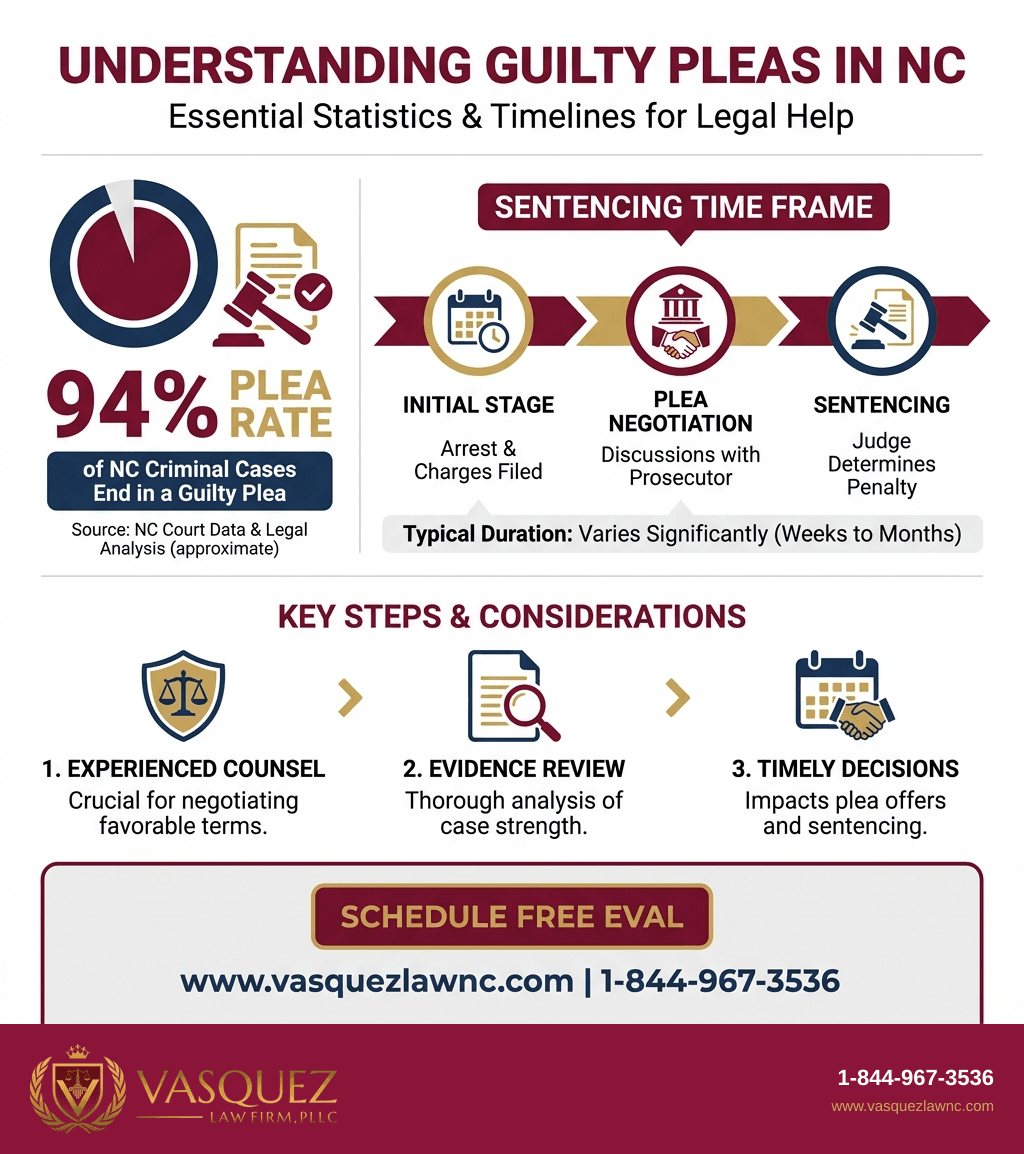
Sentencing typically follows a guilty plea within a few weeks, often 4 to 12 weeks later in North Carolina courts. During this time, a pre-sentencing report may be prepared to help the judge understand your background and the details of the offense.
The judge considers several factors when deciding the sentence, including the nature of the crime, prior criminal record, victim impact statements, and any agreements from the plea bargain.
Sentences may involve jail time, probation, fines, community service, or other penalties. For example, N.C. Gen. Stat. § 15A-1340.17 outlines sentencing rules in North Carolina that judges apply after pleas of guilty.
Understanding that sentencing after a guilty plea is not always immediate can help manage expectations and allow time for preparing mitigation evidence.
Common Mistakes When Pleading Guilty
- Not consulting an attorney: Forgoing legal advice can lead to unwanted results or misunderstandings.
- Rushing to plead: Accepting a plea offer without evaluation often leads to harsher sentences.
- Failing to understand rights: Not knowing that a guilty plea waives trial rights is risky.
- Ignoring long-term consequences: Pleas affect future employment, immigration status, and more.
- Accepting no contest pleas without advice: May impact civil liability differently depending on jurisdiction.
- Not knowing sentencing timelines: Leads to unnecessary anxiety or missed opportunities to present evidence.
- Believing pleas can be withdrawn easily: Usually, pleas are final once accepted by the court.
If you only remember one thing: Always consult a criminal defense lawyer in Smithfield before pleading guilty to protect your rights and options.
When to Call a Criminal Defense Lawyer
- After receiving a criminal charge summons or arrest.
- If offered a plea deal and uncertain about consequences.
- If facing complex charges that may carry severe penalties.
- When unsure about the differences between plea options.
- If you want to challenge the evidence or explore trial possibilities.
- If you require guidance on the sentencing process.
- When immigration status could be affected by a plea.
- To negotiate favorable plea terms or alternatives to incarceration.
About Vasquez Law Firm
At Vasquez Law Firm in Raleigh, NC, we combine compassion with aggressive representation. Our motto "Yo Peleo®" (I Fight) reflects our commitment to standing up for your rights.
- Bilingual Support: Se Habla Español — Spanish-speaking attorneys and staff available.
- Service Areas: North Carolina criminal defense services, including Smithfield.
- Experience: Over 15 years helping clients navigate complex criminal cases.
- Results: Thousands of successful defenses and favorable plea negotiations.
Attorney Trust and Experience
William J. Vasquez, JD, is admitted to the North Carolina State Bar and has been defending clients in Smithfield and surrounding areas since 2011. His knowledge of local courts and criminal law is a vital asset in plea negotiations and trial preparations.
Don't wait to get the help you deserve. Call us now for immediate assistance. Se Habla Español.
Frequently Asked Questions
What are guilty pleas?
A guilty plea is when a defendant admits to the crime charged and waives the right to a trial. It leads to sentencing and is often part of a plea agreement with the prosecution. The court must ensure the plea is voluntary and informed before accepting it.
What are the four types of pleas?
The four main pleas are guilty, not guilty, no contest (nolo contendere), and Alford plea. Each has different legal consequences and implications for trial and sentencing decisions.
What is the difference between plea and pleas?
"Plea" refers to a defendant's statement responding to charges in one case. "Pleas" is plural, referring to multiple such statements or types of responses over one or many cases.
How long is sentencing after a guilty plea?
In North Carolina, sentencing usually occurs between 4 and 12 weeks after a guilty plea. The court may order a pre-sentencing investigation report during this time.
Can I change my guilty plea later?
Generally, once the court accepts a guilty plea, it becomes final. To withdraw it later requires showing a compelling reason, which is difficult to prove.
What is a no contest plea?
A no contest or nolo contendere plea means you don't admit guilt but accept punishment. It can protect you from civil liability in related lawsuits but still results in a conviction.
Should I accept a plea deal?
Plea deals can reduce penalties or charges but may have long-term effects. Consult a lawyer to weigh the benefits and risks based on your case facts and goals.
How do guilty pleas affect immigration status?
Some guilty pleas can lead to deportation or other immigration consequences. Noncitizens should always seek legal advice before entering any plea.
Sources and References
Take the first step toward justice today. Our team is standing by to help. Se Habla Español.
Start Your Free Evaluation Now
Call us: 1-844-967-3536
Se Habla Español - Estamos aquí para ayudarle.


William Vasquez
Founder & CEO, Vasquez Law Firm, PLLC
William Vasquez is the founder and CEO of Vasquez Law Firm, PLLC, a results-driven firm specializing in immigration, criminal defense, personal injury, and workers' compensation. A U.S. Air Force veteran and recipient of the Joint Service Achievement Medal, William is dedicated to fiercely fighting for his clients' rights.
Related Legal Services
Need legal help? Learn more about get criminal defense help today, or contact us for a free evaluation.
You can also visit North Carolina criminal defense lawyers for more information.

![What Families Should Do When Loved One is Arrested by ICE [2026]](/_next/image?url=https%3A%2F%2Fvuuyorlsmhunqektprqy.supabase.co%2Fstorage%2Fv1%2Fobject%2Fpublic%2Fblogs%2Fcriminal-defense-header-1781038758390.png&w=1920&q=75)