U.S. Border Entry Requirements You Must Know in 2026
Learn the U.S. border entry requirements in 2026, including new rules for Canadians. Get expert advice and start your immigration process today. Call Vasquez Law.
Published on July 4, 2026
Have questions? Talk to an attorney - free evaluation.
Call 1-844-967-3536Worried how the latest immigration news affects you?
Get a free, confidential case review with an immigration attorney - know exactly where you stand.
U.S. Border Entry Requirements You Must Know in 2026
Understanding U.S. border entry requirements is critical as rules continue to change in 2026. Whether you are entering from Canada by land or air, meeting all legal criteria is essential. This guide offers detailed steps, documents needed, common mistakes to avoid, and costs involved. Residents of Raleigh, NC, and Orlando, FL will find specific tips on how these regulations impact their cases. At Vasquez Law Firm, we provide bilingual immigration support to help clients throughout North Carolina, Florida, and nationwide navigate the complex U.S. entry rules.
Need help with your case? Our experienced attorneys are ready to fight for you. Se Habla Español.
Or call us now: 1-844-967-3536
Quick Answer
U.S. border entry requirements in 2026 include valid passports, updated health screenings, and compliance with new rules particularly for travelers entering from Canada. Proper documentation like NEXUS cards and vaccination proof are crucial. Preparation and understanding of these requirements can prevent denial of entry or delays at the border.
- Valid passport or approved travel document required
- Health and vaccination screenings remain mandatory
- New procedures for land entry from Canada effective in 2026
- U.S. citizens must prove citizenship at all ports of entry
- Legal assistance can help contest denied entries
Understanding U.S. Border Entry Requirements
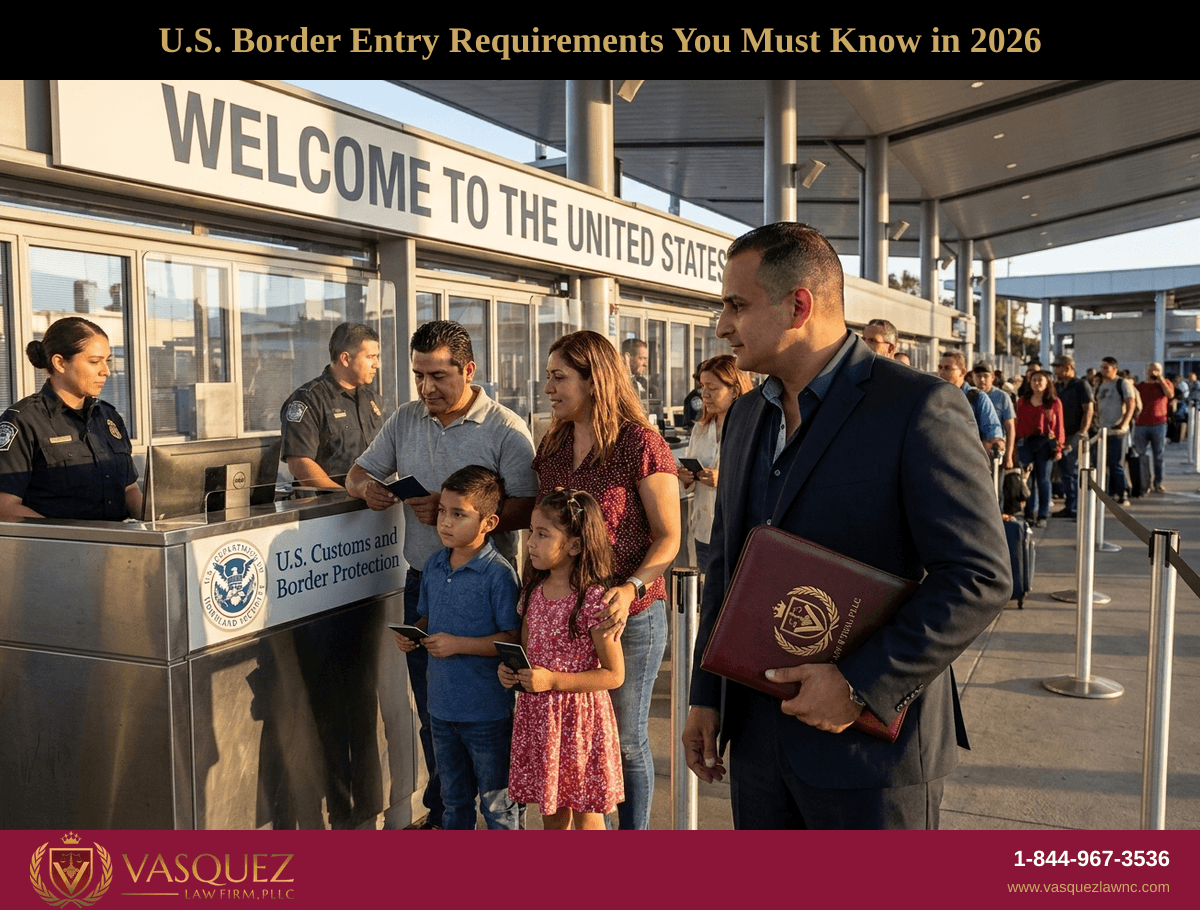
In 2026, entering the United States is governed by federal immigration laws and protocols administered by agencies such as U.S. Customs and Border Protection (CBP) and U.S. Citizenship and Immigration Services (USCIS). These rules apply to all points of entry including land borders, airports, and seaports. Effectively, individuals must establish lawful admission criteria before being allowed entry.
For people crossing into the U.S. from Canada, whether by car, train, or air, there are specific requirements depending on mode of travel. For example, crossing by land demands a valid passport or NEXUS card under the Western Hemisphere Travel Initiative. Air travelers may require Electronic System for Travel Authorization (ESTA) approval if they are from visa waiver countries.
U.S. citizens returning home must provide adequate proof of citizenship, such as a U.S. passport or a birth certificate with government-issued ID. However, the government retains the authority to conduct secondary screening to confirm identity or investigate potential legal restrictions like warrants. Noncitizens must demonstrate eligibility under statutes like 8 U.S.C. § 1182, which lists grounds for inadmissibility including health, criminal, or security concerns.
Stay updated with official sources such as the U.S. Citizenship and Immigration Services website, which regularly posts processing times and policy changes, helping travelers prepare for their entry process properly.
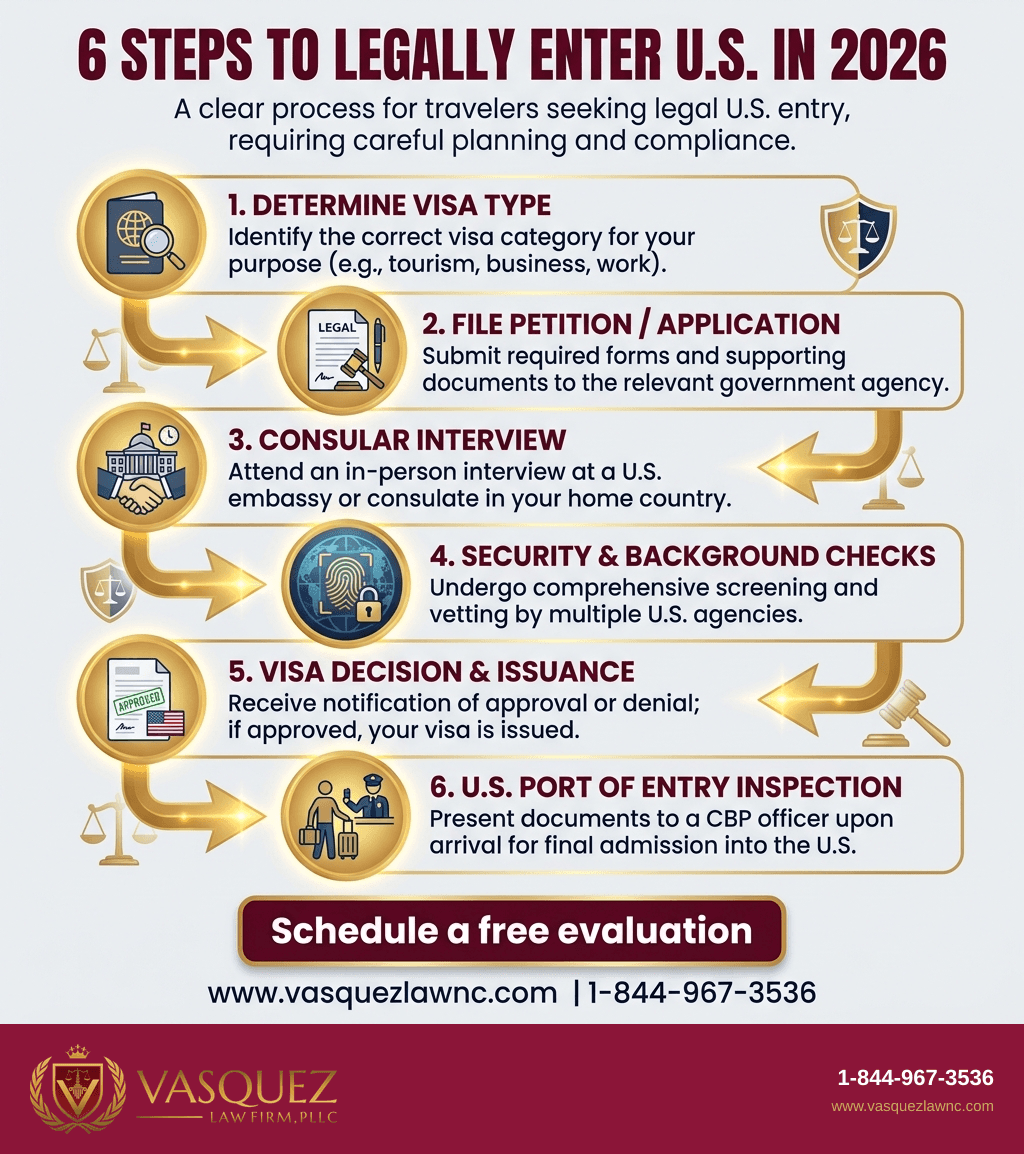
Step-by-Step Process to Enter the U.S.
- Prepare Required Documents: Gather all necessary travel identification such as a valid passport or travel card (NEXUS, SENTRI), visas if applicable, and vaccination certificates.
- Arrival at Port of Entry: Present yourself at a designated U.S. port of entry, whether land border crossing or airport customs checkpoint.
- Customs Declaration: Complete customs declaration forms accurately, declaring any goods or merchandise you carry.
- Inspection and Interview: Undergo document checks and answer questions from CBP officers regarding travel purpose, length of stay, and admissibility.
- Biometric Collection: You may be required to submit fingerprints or a photograph for identification and record-keeping.
- Decision on Entry: CBP officers will decide your admissibility based on documents, answers, and any red flags. Acceptable travelers are admitted; others may face secondary inspections or denial.
Understanding and following this process smooths your border crossing experience and reduces risk of denial or lengthy detainment.
Documents Checklist for Border Entry
- Valid passport issued by your home country or U.S. Passport for citizens
- Visa or ESTA authorization if required (visa waiver countries)
- NEXUS card or SENTRI for expedited land border entry
- Proof of COVID-19 vaccination or valid exemptions per CDC requirements
- Completed customs declaration form (CBP Form 6059B)
- Additional documents for specific categories, such as work permits or student visas
Visitors should also carry any supporting evidence like hotel reservations or return tickets to verify the temporary nature of travel and meet CBP questioning satisfactorily.
Timeline and What to Expect at the Border
- Pre-travel Preparation: Obtain and verify documents several weeks before travel. For visas, processing times vary; refer to USCIS published processing times for form-specific timelines.
- At the Point of Entry: Processing duration depends on traveler volume—small border crossings take about 10-30 minutes; larger airports may require longer processing due to security checks.
- Secondary Inspection (if needed): May add 1-3 hours or more. This is a deeper review of documents and personal background.
- Follow-up Requests: Occasionally, travelers are contacted for additional evidence submission after entry or inspection delays.
Plan for possible delays and keep contact information for an immigration attorney handy in case issues arise.
Common Mistakes and How to Avoid Them
- Missing or expired passports — Renew passports well before the travel date.
- Incomplete or inaccurate customs declarations — Always declare goods truthfully to avoid fines or entry denial.
- Failing to carry proof of vaccination — Follow CDC and DHS vaccination mandates for 2026.
- Not bringing required visas or travel authorizations — Check visa requirements depending on nationality and travel purpose.
- Inconsistent answers during inspection — Be honest and consistent when responding to officer questions.
- Ignoring requests for secondary inspection — Cooperate fully to speed up resolution.
- Overlooking specific vehicle requirements when crossing by car from Canada — obtain proper insurance and inspection documents ahead of time.
- Assuming U.S. citizens don’t need documents — Carry proof of citizenship regardless of familiarity.
- Not consulting an immigration attorney if facing entry issues — Early legal advice can resolve complicating factors.
If you only remember one thing: Prepare your paperwork carefully and know current official requirements before attempting entry. Proper preparation is the best defense against delays or refusals.
Jurisdiction Notes for NC, FL, and Nationwide
North Carolina Notes
Residents in Raleigh and throughout North Carolina should be mindful that federal immigration rules govern border entry universally. However, local USCIS offices like Raleigh handle applications for visas, green cards, or work authorizations after lawful entry. Consulting with a Raleigh-based immigration attorney ensures state-specific procedural guidance and consistent updates on federal policy changes.
Florida Notes
Orlando, FL residents benefit from access to both local USCIS and CBP offices, facilitating smoother application processes for entry or adjustment of status. Florida’s proximity to international airports means travelers often arrive by air, making knowledge of airline-specific entry documentation and screening protocols essential.
Nationwide Concepts
All U.S. border entries are regulated by federal law such as the INA and regulations like 8 C.F.R. § 235.1 that set inspection procedures. Additional restrictions, such as inadmissibility grounds under 8 U.S.C. § 1182, apply nationwide. While processing protocols may differ slightly at each port of entry, the legal standards remain consistent.
When to Call a Lawyer About U.S. Border Issues
- You are detained or denied entry at the border
- You face questions about your citizenship or immigration status
- You have complex health or criminal background issues
- You are uncertain about document eligibility or visa status
- You need help with asylum or refugee claims
- You have received a Notice to Appear or removal order
- You want to appeal or reopen a denied immigration case
- You need assistance with NEXUS or Trusted Traveler program applications
About Vasquez Law Firm
At Vasquez Law Firm, we combine compassion with aggressive representation. Our motto "Yo Peleo®" (I Fight) reflects our commitment to standing up for your rights.
- Bilingual Support: Se Habla Español — Spanish-speaking attorneys and staff available
- Service Areas: North Carolina, Florida, and nationwide immigration services
- Experience: Over 30 years helping clients navigate complex legal matters
- Results: Thousands of successful cases across multiple practice areas
Attorney Trust and Experience
William J. Vásquez is admitted to the North Carolina State Bar (2011) and to the U.S. Courts of Appeals for the 4th, 5th, and 11th Circuits. Florida-jurisdiction matters at the firm are handled by Florida Bar attorney Harold Estrada-Rodriguez (FL Bar No. 1041171). The firm has provided dedicated legal representation since 2011, with personalized attention to each client's case.
Don't wait to get the help you deserve. Call us now for immediate assistance.
Se Habla Español
Frequently Asked Questions
What are the new U.S. border entry requirements in 2026?
In 2026, new requirements include updated travel documents, health screenings, and vaccination proof. Canadians entering by land must have valid passports or NEXUS cards. The rules aim to increase security and safeguard public health. Staying current with USCIS and CBP updates is necessary for compliance.
Will Canadians have to pay a $250 fee to enter the U.S. border in 2026?
No mandatory $250 fee applies universally to Canadians entering the U.S. Some expedited entry programs may have optional fees. Verify program specifics before travel to avoid surprises at the border.
What documents do I need to enter the U.S. border from Canada?
Travelers must carry valid passports or travel cards like NEXUS. Visa waiver travelers need ESTA approval. COVID-19 vaccination records might be required due to health regulations. Accurate customs declarations are also mandatory.
Can a U.S. citizen be denied entry back into the USA?
While uncommon, U.S. citizens can be denied entry if they lack proof of citizenship or have legal restrictions. Secondary inspections help verify admissibility. Carrying proper identification is critical.
What happens if I am denied entry at the U.S. border?
Denial can lead to removal proceedings or return to origin country. Legal representation is vital to contest denials, especially with lawful status or asylum claims. Seek advice promptly.
Are there specific rules for entering the U.S. from Canada by car in 2026?
Yes. Required documents include passports or NEXUS cards, vehicle insurance meeting U.S. standards, and completed customs declarations. Rules have tightened to improve security and compliance at land crossings.
How do I prepare for U.S. border crossing inspections?
Gather all documents, declare all items, respond honestly to questions, and maintain a respectful attitude. Knowing your rights and responsibilities ensures smoother processing.
Does the U.S. border check vaccination status in 2026?
Yes, vaccination requirements are part of the entry process, especially for COVID-19. Present valid vaccination records or exemptions. Rules evolve, so check government sources regularly.
Sources and References
- U.S. Citizenship and Immigration Services
- Executive Office for Immigration Review
- Legal Information Institute
Take the first step toward justice today. Our team is standing by to help.
Start Your Free Evaluation Now
Call us: 1-844-967-3536
Se Habla Español - Estamos aquí para ayudarle.
If you need legal assistance, learn more about experienced immigration attorneys in Charlotte, or call us at 1-844-967-3536 for a free evaluation.

William Vasquez
Founder & CEO, Vasquez Law Firm, PLLC
William Vasquez is the founder and CEO of Vasquez Law Firm, PLLC, a results-driven firm specializing in immigration, criminal defense, personal injury, and workers' compensation. A U.S. Air Force veteran and recipient of the Joint Service Achievement Medal, William is dedicated to fiercely fighting for his clients' rights.
Related Legal Services
Need legal help? Learn more about experienced immigration attorneys in Charlotte, or contact us for a free evaluation.
You can also visit statewide immigration attorneys for more information.