Arizona Immigration Charges: What You Should Know in 2026
Facing Arizona immigration charges? Learn your rights, key steps, and important timelines in 2026. Contact Vasquez Law for a free evaluation today.
Published on June 26, 2026· Updated September 9, 2026
Talk to an immigration attorney
Free call. A clear plan for your case.
Free & confidential · Se habla espanol · 24/7

Have questions? Talk to an attorney - free evaluation.
Call 1-844-967-3536Worried how the latest immigration news affects you?
Schedule a confidential case review with an immigration attorney - know exactly where you stand.
USCIS Case Status
Check your USCIS case status
Enter your receipt number and get the official status. Free, no registration.
Arizona Immigration Charges: What You Should Know in 2026
Arizona immigration charges can have serious consequences, even for people outside Arizona. In 2026, it is important to understand how these charges happen, what rights you have, and how they affect residents in Orlando, FL, and Raleigh, NC. This guide explains stops by police or ICE, common wrong ideas about deportations, and the legal process. Whether you are a US citizen or noncitizen, knowing your legal protections and when to act is key to protect yourself and your family.
Need help with your case? Our experienced attorneys are ready to fight for you. Se Habla Español.
Or call us now: 1-844-967-3536
Quick Answer
Arizona immigration charges often come from federal enforcement by ICE, the agency that enforces immigration laws. These charges can include unlawful presence (being in the country without permission), reentry after deportation (coming back after being removed), or document fraud (using fake papers). Even people living in Orlando or Raleigh should understand these charges because federal immigration law applies everywhere in the US. Knowing your rights during stops, possible penalties, and when to get legal help is important to protect yourself.
- Immigration stops can happen anywhere, even during police encounters
- Arizona laws have been partly struck down but enforcement still happens
- ICE usually targets unlawful presence and immigration violations
- Everyone, including US citizens, has rights during immigration questions
- Legal help is very important to handle charges and risk of deportation
Understanding Arizona Immigration Charges
In 2026, Arizona immigration charges often happen when federal agents or police officers find people they think broke immigration laws. For example, the District of Arizona recently charged 330 people for immigration-related crimes. This shows enforcement continues even though some state laws face legal challenges.
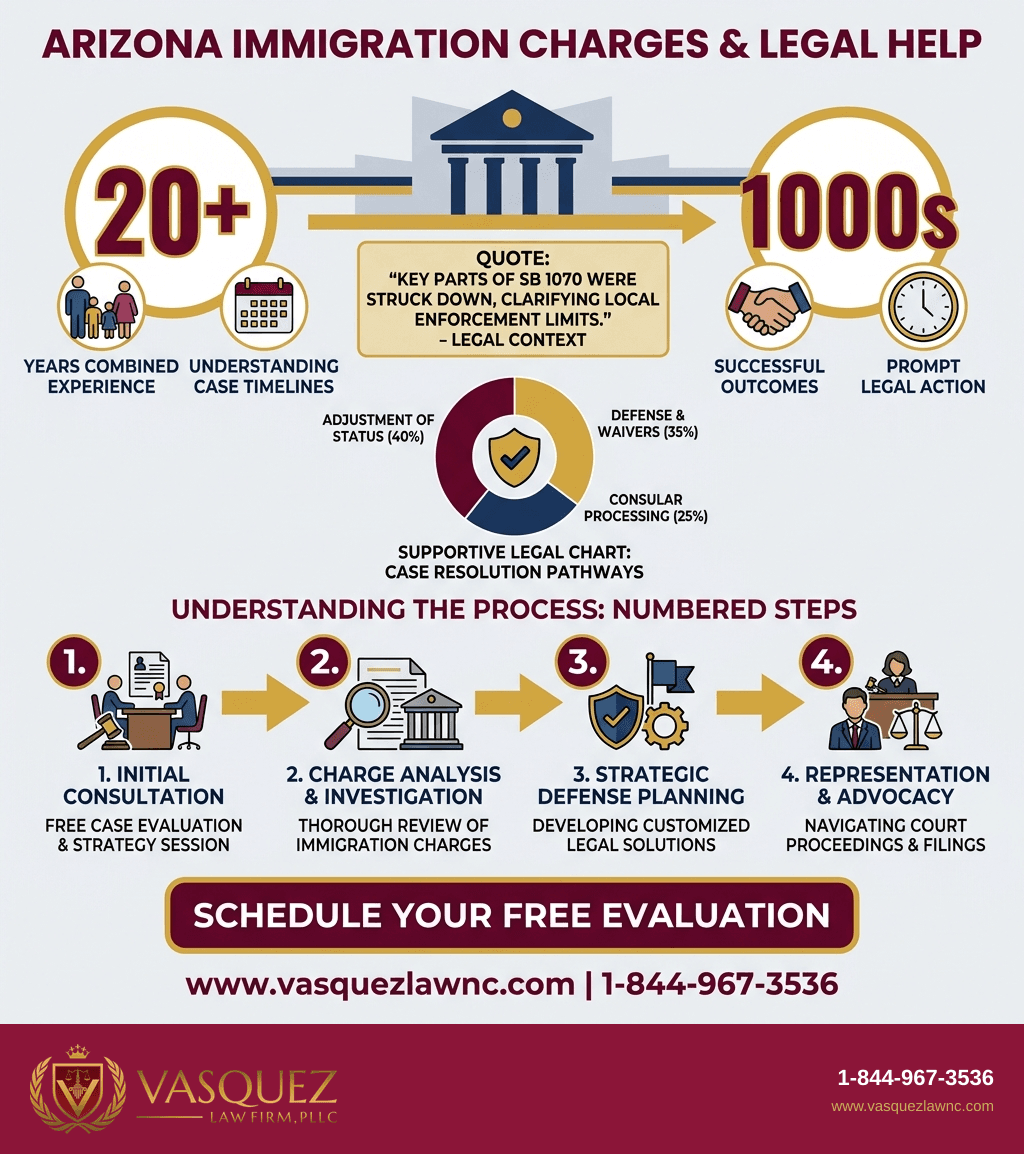
Arizona's immigration laws include rules that make certain immigration-related actions crimes. These include unlawful entry (coming into the country without permission), reentry after deportation (returning after being removed), and harboring undocumented immigrants (helping people stay in the country illegally). But important parts of Arizona's 2010 immigration law (SB 1070) were struck down by the Supreme Court in Arizona v. United States, 567 U.S. 387 (2012). This limited state enforcement powers but confirmed that federal law is the main authority on immigration.
How Federal and State Laws Interact
Federal immigration law is the main set of rules that apply across the whole country, including in Arizona, North Carolina, and Florida. Under federal laws like 8 U.S.C. § 1326, it is a crime to unlawfully reenter the country after deportation. This crime has serious penalties. State laws can add more enforcement tools but cannot replace federal law.
Who Can Be Charged?
People charged with immigration crimes in Arizona can include unauthorized immigrants, those who reentered after removal, or people involved in document fraud or smuggling. It is important to know that US citizens and lawful residents have rights that protect them from wrongful immigration detention or charges. Knowing these rights is very important.
Learn more about our immigration services and how we help clients facing difficult legal problems.
Step-by-Step: What to Do if You Are Stopped
- Stay calm and polite. Do not fight or run from officers or ICE agents. Being polite does not mean you give up your rights.
- Ask if you are free to leave. If the officers say yes, you can leave. If they detain you, ask why.
- Give identification only if required. A US citizen should show proof of citizenship (passport, birth certificate) when asked.
- Do not give extra information. You have the right to stay silent except to give your name and proof of citizenship.
- Ask for a lawyer. If you are questioned or detained, ask for legal help right away. Do not answer questions about your immigration status without a lawyer.
- Contact our office quickly. Our Attorney Vasquez and legal team have experience with immigration cases.
Special Consideration for US Citizens
If you are a US citizen stopped by ICE or police, showing proof of citizenship quickly can stop delays or wrongful detention. Sadly, some citizens have been stopped by mistake because of profiling or paperwork errors. Know your rights and do not agree to searches without a warrant.
Dealing with Immigration Warrants or Notices
If you get a Notice to Appear (NTA) for a removal proceeding (a legal process to remove someone from the country), respond quickly. Ignoring notices can lead to deportation orders without a chance to defend yourself. Our Orlando immigration lawyers can help you prepare a defense or apply for relief.
Don't wait to get the help you deserve. Call us now for immediate assistance.
Se Habla Español
Common Mistakes to Avoid During Immigration Stops
- Talking too much at stops or detention. Avoid giving unnecessary information that can be used against you. Always ask for a lawyer first.
- Not carrying or showing valid ID. While not required everywhere, having documents that show lawful status helps avoid problems.
- Ignoring court notices or deadlines. Missing immigration court dates can lead to deportation orders without your side being heard.
- Confusing state and federal authority. State police may ask about immigration, but immigration enforcement is controlled by the federal government. Knowing these limits is important.
- Thinking legal presence means no risk. Even people legally in the country can face deportation if they break certain criminal laws.
- Not preparing for hearings or appeals. Careful preparation is very important for better results.
- Waiting too long to get legal help. Early expert advice can stop problems from getting worse.
If you only remember one thing: Never face immigration charges without a lawyer to protect your rights.
Timeline: What to Expect in Immigration Cases
- Initial stop and detention may lead to short custody or immediate release depending on the situation.
- Detained people get a Notice to Appear (NTA) to start removal proceedings.
- Immigration court hearings usually start within several months, but times vary by location. Check USCIS and EOIR processing times for updates.
- Applying for relief or status change can take months to years, depending on case difficulty and USCIS workload (see USCIS processing times).
- Appeals or motions to reopen make the process longer and need special help.
Frequently Asked Questions
What should I do if ICE stops me in Arizona but I am a US citizen?
If ICE stops you in Arizona and you are a US citizen, calmly provide identification proving your citizenship. Avoid volunteering extra information. You have the right to ask if you are free to leave. Contact an immigration attorney immediately to protect your rights, especially if detained or questioned about your immigration status.
Has the Arizona immigration law been struck down?
Certain Arizona state immigration laws have been challenged and struck down by courts for conflicting with federal law. However, parts of Arizona's immigration statutes remain enforceable. The Supreme Court in Arizona v. United States (2012) limited state enforcement powers but left some provisions intact. Always consult an attorney for how current law applies.
Is ICE deporting people who are legally present in Arizona?
ICE generally focuses on individuals who are in the country unlawfully or violate immigration laws. Those legally present usually have protections but can sometimes face deportation if convicted of certain crimes or if documentation issues arise. It is important to keep legal status documentation updated and consult an attorney if you face enforcement.
Can a police officer ask my immigration status in Arizona?
Under federal law and Arizona statutes, police officers may inquire about immigration status during lawful stops if immigration enforcement is involved. However, this can raise constitutional concerns. You have the right to remain silent and request an attorney before answering questions about your immigration status. Understand your rights before engaging.
What are common Arizona immigration charges individuals face?
Common Arizona immigration charges include unlawful presence, reentry after removal, document fraud, and smuggling offenses. These charges are often federal crimes with serious penalties. Additionally, violations of state immigration laws related to harboring or employing undocumented workers may also occur. Defending these charges requires knowledgeable legal counsel.
How can someone in Orlando or Raleigh protect themselves from Arizona immigration charges?
Even if you live in Orlando or Raleigh, understanding Arizona immigration enforcement helps. Avoid traveling to Arizona if you fear charges. Keep all immigration documents current and respond quickly to any notices. Consult an immigration lawyer experienced in federal cases. Legal help can reduce risks from charges filed elsewhere.
What forms and processes govern immigration charges and defense?
Federal immigration charges involve USCIS forms and Immigration Court procedures, including forms like I-213 (Record of Deportable/Inadmissible Alien), and removal proceedings under INA § 240. Adjustments of status use forms like I-485. Understanding these processes is very important. Check USCIS processing times and EOIR court procedures for case timelines.
When should I call an immigration lawyer about Arizona charges?
Call a lawyer right away if you are stopped by ICE or law enforcement, get a Notice to Appear in immigration court, or face criminal charges related to immigration. Early legal advice can stop deportation, explain your options, and protect your rights. You can contact Vasquez Law Firm for a free case evaluation in Orlando or Raleigh.
About Vasquez Law Firm
At Vasquez Law Firm, we combine care with strong representation. Our motto "Yo Peleo®" (I Fight) shows our promise to stand up for your rights.
- Bilingual Support: Se Habla Español MD Spanish-speaking attorneys and staff available
- Service Areas: North Carolina, Florida, and immigration services nationwide
- Experience: Over 30 years helping clients with complex legal matters
- Results: Thousands of successful cases in many practice areas
Attorney Trust and Experience
William J. Vásquez is admitted to the North Carolina State Bar (2011) and to the U.S. Courts of Appeals for the 4th, 5th, 6th, and 11th Circuits. Florida-jurisdiction matters at the firm are handled by Florida Bar attorney Alekssandra Lopez. The firm has provided dedicated legal representation since 2011, giving personal attention to each client's case.
Take the first step toward justice today. Our team is ready to help. Se Habla Español.
Start Your Free Evaluation Now
Call us: 1-844-967-3536
Sources and References


William Vasquez
Founder & CEO, Vasquez Law Firm, PLLC
William Vasquez is the founder and CEO of Vasquez Law Firm, PLLC, a results-driven firm specializing in immigration, criminal defense, personal injury, and workers' compensation. A U.S. Air Force veteran and recipient of the Joint Service Achievement Medal, William is dedicated to fiercely fighting for his clients' rights.
Related Legal Services
Need legal help? Learn more about immigration lawyers in North Carolina, or contact us for a free evaluation.
You can also visit immigration legal services throughout NC for more information.