How ICE Enforcement Works in Orlando in 2026
Learn how ICE enforcement works in 2026. Understand ICE powers, reports, and what to do if contacted. Contact Vasquez Law for a free evaluation.
Published on June 16, 2026
Talk to an immigration attorney
Free call. A clear plan for your case.
Free & confidential · Se habla espanol · 24/7
Have questions? Talk to an attorney - free evaluation.
Call 1-844-967-3536Worried how the latest immigration news affects you?
Schedule a confidential case review with an immigration attorney - know exactly where you stand.
USCIS Case Status
Check your USCIS case status
Enter your receipt number and get the official status. Free, no registration.
How ICE Enforcement Works in Orlando in 2026
ICE enforcement affects many immigrants across Orlando and North Carolina in 2026. This guide explains what ICE enforcement means, what powers ICE agents have, how enforcement operations unfold, and practical steps to protect your rights. Whether you are concerned about detainment, reporting, or recent ICE updates, knowing your rights and the legal framework is critical. Vasquez Law Firm provides bilingual immigration services to help residents navigate these complex issues with confidence and urgency.
Need help with your case? Our experienced attorneys are ready to fight for you. Se Habla Español.
Or call us now: 1-844-967-3536
Quick Answer
ICE enforcement involves federal immigration officers identifying, detaining, and potentially removing individuals who violate immigration laws. They have specific legal powers but cannot detain U.S. citizens arbitrarily. Knowing your rights and preparing documents can protect you during ICE actions.
- ICE enforcement targets undocumented immigrants and those with removal orders
- ICE agents have authority under 8 U.S.C. §§ 1226 and 1357
- Citizens are protected from unlawful detention
- Prepare emergency plans and know your rights
- Contact an immigration attorney immediately after any ICE encounter
What Is ICE Enforcement?
Imagine waking up to the sound of law enforcement at your door. ICE enforcement means immigration officers acting under the Department of Homeland Security to identify, arrest, and sometimes detain individuals in the U.S. who may have violated immigration laws. These violations can include being undocumented, overstaying visas, or having prior removal orders.
ICE immigration officers conduct enforcement through targeted operations such as workplace raids, home arrests, and vehicle stops. They gather intelligence from community reports, investigations, and partnerships with other agencies. The goal is to uphold federal immigration laws.
Understanding the scope of ICE enforcement helps immigrants in Orlando and across North Carolina recognize when they may be affected and what to expect during any interaction with ICE officers.
For example, a workplace raid might involve ICE agents visiting a factory or construction site where undocumented workers are suspected to be employed. In such cases, ICE may detain workers on site after verifying their immigration status. Alternatively, ICE may conduct early morning home raids targeting individuals with prior removal orders or criminal convictions. These operations are often coordinated and involve multiple officers to minimize the risk of escape or destruction of evidence.
In some scenarios, ICE agents may stop vehicles on the road to verify the immigration status of occupants if they have reasonable suspicion. This can be particularly common near border states or in areas with high immigrant populations. Knowing that ICE enforcement can take place in various settings is important for community members to understand their rights and prepare accordingly.
Community organizations often advise immigrants to avoid engaging with ICE agents unless necessary, emphasizing the importance of not signing documents without legal counsel and remaining silent except for providing identity information. These practical approaches can significantly affect the outcome of ICE enforcement encounters.
ICE Enforcement Powers and Authority
ICE has broad but defined legal powers. Under 8 U.S.C. § 1357, ICE officers can arrest without a warrant any individual in the U.S. believed to have violated immigration laws. They can enter residences with proper warrants. These powers also include searching, detaining, and questioning suspects.
However, ICE agents must respect constitutional protections, including the Fourth Amendment’s safeguard against unreasonable searches and seizures. Unauthorized entry or detention of U.S. citizens is illegal and violates constitutional rights.
In Orlando, NC, and nationwide, ICE enforcement relies on these statutory powers to conduct its work. Still, oversight mechanisms and legal remedies exist to challenge misconduct.
Additional Legal Constraints and Oversight
While ICE officers have significant authority, their actions are subject to oversight by courts and internal review boards. For instance, if ICE agents enter a home without a valid warrant or if the warrant is improperly executed, any evidence obtained may be suppressed in court. This legal check is crucial in protecting individuals’ rights against unlawful searches.
Moreover, ICE is required to follow specific protocols when detaining individuals, including providing access to legal counsel and medical care if necessary. Failure to adhere to these protocols can lead to legal challenges and, in some cases, release from detention.
For example, if ICE mistakenly detains a U.S. citizen, the individual or their representatives can file complaints against the agency and seek immediate release through legal channels. These mechanisms help ensure ICE enforcement powers are exercised within the bounds of the law and respect for civil liberties.
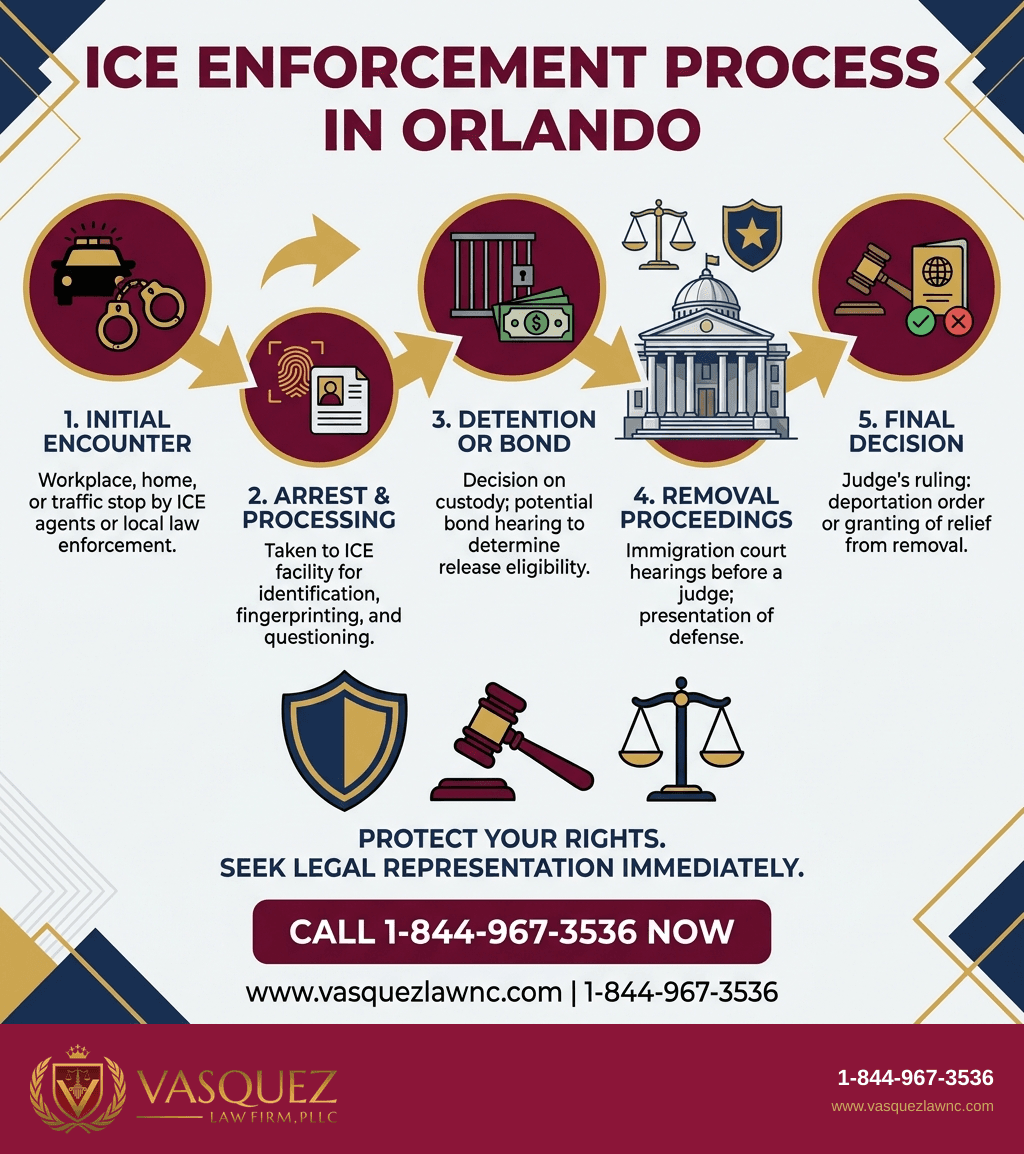
Step-by-Step Guide to ICE Enforcement Actions
- Identification: ICE gathers information through investigations or community reports.
- Surveillance and Targeting: Officers may observe the individual’s routine to confirm status.
- Apprehension: ICE executes arrest, often with or without a warrant, depending on the situation.
- Detention: If detained, the individual is taken to a detention center while removal proceedings begin.
- Legal Proceedings: Individuals have a right to a hearing before an immigration judge in removal cases.
- Removal or Relief: Depending on the outcome, the individual may be removed or granted legal status relief.
Throughout these steps, obtaining immediate legal counsel can make a critical difference in outcomes.
During the identification phase, ICE may collaborate with employers, community members, or other law enforcement agencies to obtain leads. For example, an employer suspected of hiring undocumented workers might be investigated, leading to ICE identifying employees for enforcement actions.
Surveillance can include monitoring social media, phone records, or physical observation. For instance, if ICE suspects someone is avoiding detection, agents might follow their daily movements to establish patterns before arrest.
Apprehension scenarios vary widely. Sometimes ICE will conduct early morning arrests at the individual's residence to minimize resistance or flight risk. In other cases, arrests occur during traffic stops or at workplaces. Each situation requires awareness of rights and preparation for possible outcomes.
Detention centers vary by location and conditions. Detainees may face limited visitation and communication restrictions, making legal representation vital. Understanding the timeline and rights during detention is crucial for families and attorneys to coordinate defense or relief efforts.
Legal proceedings often include bond hearings, merits hearings, and appeals. Navigating these complex processes requires experienced legal counsel to identify relief options such as asylum, cancellation of removal, or adjustment of status.
Finally, removal or relief depends on the case specifics. Some individuals may qualify for forms of relief that allow them to remain legally in the U.S., while others face deportation. The role of competent legal advocacy cannot be overstated in these outcomes.
Common Mistakes During ICE Enforcement
- Opening the door without a warrant: Always request to see a warrant; do not consent to entry.
- Self-incrimination: Avoid answering questions without an attorney present.
- Failing to prepare documents: Keep immigration papers accessible but secure.
- Not contacting a lawyer: Prompt legal help is essential for defense.
- Panicking or resisting: Remain calm; aggressive behavior can worsen the situation.
- Ignoring ICE notices: Ignoring court dates or communications can lead to removal orders.
- Relying on misinformation: Trust only licensed immigration attorneys or official sources.
If you only remember one thing: Know your rights, stay calm, and seek legal help immediately.
Many individuals inadvertently waive their rights by speaking to ICE officers without legal counsel. For example, answering questions about arrival dates or immigration status can be used against them in removal proceedings. Remaining silent except for providing basic identification is often the safest approach.
Another common mistake is allowing ICE into a home without verifying the validity of a warrant. ICE must provide a proper judicial warrant for entry unless exigent circumstances exist. Simply opening the door or inviting agents inside can waive constitutional protections.
Failing to keep important documents organized and ready for quick access can delay legal representation and complicate detention cases. It is advisable to have copies of passports, visas, work permits, and any immigration correspondence in a secure but accessible place.
Ignoring ICE notices, such as a Notice to Appear in immigration court, can result in deportation orders issued in absentia. Attending all court dates and responding promptly to notices is critical to preserving legal rights.
Lastly, misinformation circulating on social media or from unlicensed advisors can lead to harmful decisions. Immigrants should rely on trusted sources such as licensed attorneys or official government communications to navigate ICE enforcement issues safely.
ICE Enforcement in Orlando and North Carolina
North Carolina Notes
In North Carolina, ICE enforcement collaborates with local law enforcement through programs such as 287(g). However, some cities have policies limiting cooperation with ICE. Being aware of local policies helps residents understand enforcement risks.
For example, certain counties in North Carolina have "sanctuary" policies that restrict local law enforcement from honoring ICE detainers or sharing information without judicial warrants. These policies can affect how and when ICE agents operate in those areas.
Community awareness programs in North Carolina also play a role in educating immigrants about their rights and local enforcement patterns. These programs often provide legal clinics and resources to prepare residents for potential ICE encounters.
Additionally, North Carolina has seen increased ICE activity in agricultural sectors, where many undocumented workers are employed. Enforcement in these rural areas often focuses on workplaces rather than residential raids, impacting entire work crews at times.
Orlando, Florida Notes
Orlando hosts frequent ICE operations targeting undocumented populations involved in workplace violations or criminal offenses. Recent enforcement updates show increased activity reflecting federal priorities. Local community groups provide resources for those affected.
Florida's approach to ICE enforcement tends to be more cooperative with federal agencies compared to some other states, leading to a higher presence of ICE in local jails and detention centers. This means individuals arrested on local charges often face immigration consequences through ICE detainers.
Orlando's diverse immigrant population faces unique challenges due to language barriers and the complex nature of enforcement operations. Local nonprofits and legal aid organizations have stepped up outreach efforts to provide bilingual legal assistance and workshops on rights during ICE encounters.
Workplace raids in Orlando often involve industries such as hospitality, construction, and landscaping. ICE targets these sectors based on suspected unauthorized employment, sometimes resulting in mass arrests and swift deportation proceedings.
Nationwide Concepts
ICE enforcement operates under uniform federal regulations but discretion varies by region and administration. Nationwide, ICE reports increased arrests and detentions in 2026 aligning with policy directives.
Different federal administrations influence enforcement priorities, with some focusing on criminal convictions and public safety threats, while others emphasize broad sweeps targeting undocumented populations. Understanding this shifting landscape helps immigrants and advocates anticipate enforcement trends.
Nationally, ICE has expanded its use of technology, including biometrics and data analytics, to improve targeting accuracy. This has resulted in more precise arrests but also raised concerns about privacy and the potential for errors.
Furthermore, ICE has implemented community outreach programs in some areas to build trust and encourage voluntary compliance with immigration laws. These efforts aim to balance enforcement with humanitarian considerations, although they vary widely depending on local leadership and resources.
When to Contact a Lawyer Immediately
- You are served with a Notice to Appear or removal order
- ICE arrives at your home or workplace without prior notice
- You or a family member is detained by ICE
- Immigration status is in question after an arrest
- You receive a request for immigration documentation from authorities
- Any threat or rumor of ICE raids in your community
- Warnings from employers or community members about ICE activity
- After filing immigration applications and receiving requests for interviews or notices
Contacting a lawyer promptly can make a significant difference in your case. For example, if you receive a Notice to Appear (NTA), an experienced attorney can help you understand the charges, prepare your defense, and attend hearings on your behalf. Delaying legal counsel can result in missed deadlines and adverse outcomes.
If ICE arrives at your home unexpectedly, a lawyer can advise you on your rights, help prevent unlawful searches, and represent you if detained. Early intervention often leads to better chances of release or relief from removal.
In situations where family members are detained, a lawyer can assist in navigating complex detention systems, filing bond motions, and coordinating family communication. This support is critical in maintaining family unity during stressful enforcement actions.
Moreover, when your immigration status is questioned following an arrest or encounter with law enforcement, legal advice is essential to avoid self-incrimination and to assess eligibility for relief options.
Finally, after submitting immigration applications, receiving requests for interviews or additional documents should prompt immediate consultation with a lawyer to ensure compliance and avoid inadvertent mistakes that could jeopardize your case.
About Vasquez Law Firm
At Vasquez Law Firm, we combine compassion with aggressive representation. Our motto "Yo Peleo®" reflects our commitment to standing up for your rights. We understand the urgency when facing ICE enforcement and provide bilingual support in Orlando, FL, and Raleigh, NC.
- Bilingual Support: Se Habla Español — Spanish-speaking attorneys and staff available
- Service Areas: North Carolina, Florida, and nationwide immigration services
- Experience: Over 30 years helping clients navigate complex legal matters
- Results: Thousands of successful cases across multiple practice areas
Our firm takes pride in offering personalized attention to each client’s unique situation, recognizing that ICE enforcement cases often involve urgent and sensitive circumstances. We provide 24/7 availability for emergency consultations to ensure clients receive timely advice when facing detention or arrest.
Additionally, Vasquez Law Firm maintains strong relationships with local immigrant advocacy groups and community organizations to stay informed about enforcement trends and resources. This collaborative approach enhances our ability to protect our clients effectively.
We also focus on educating our clients about their rights, helping them develop emergency preparedness plans that include legal contacts, document organization, and communication strategies with family members. This proactive approach can reduce fear and confusion during ICE enforcement operations.
Attorney Trust and Experience
William J. Vásquez is admitted to the North Carolina State Bar (2011) and to the U.S. Courts of Appeals for the 4th, 5th, and 11th Circuits. Florida-jurisdiction matters at the firm are handled by Florida Bar attorney Harold Estrada-Rodriguez (FL Bar No. 1041171). The firm has provided dedicated legal representation since 2011, with personalized attention to each client's case.
Both attorneys bring extensive litigation experience in immigration law, including handling removal defense, asylum cases, family-based petitions, and employment authorization. Their proven track record includes successful appeals before federal courts and obtaining relief for clients in complex situations.
The firm’s bilingual capabilities ensure effective communication with Spanish-speaking clients, reducing misunderstandings and improving case outcomes. Their commitment to cultural sensitivity and client-centered service fosters trust and confidence during challenging legal proceedings.
Don't wait to get the help you deserve. Call us now for immediate assistance.
Or schedule a free case evaluation online. Se Habla Español.
Frequently Asked Questions About ICE Enforcement
What is ICE enforcement?
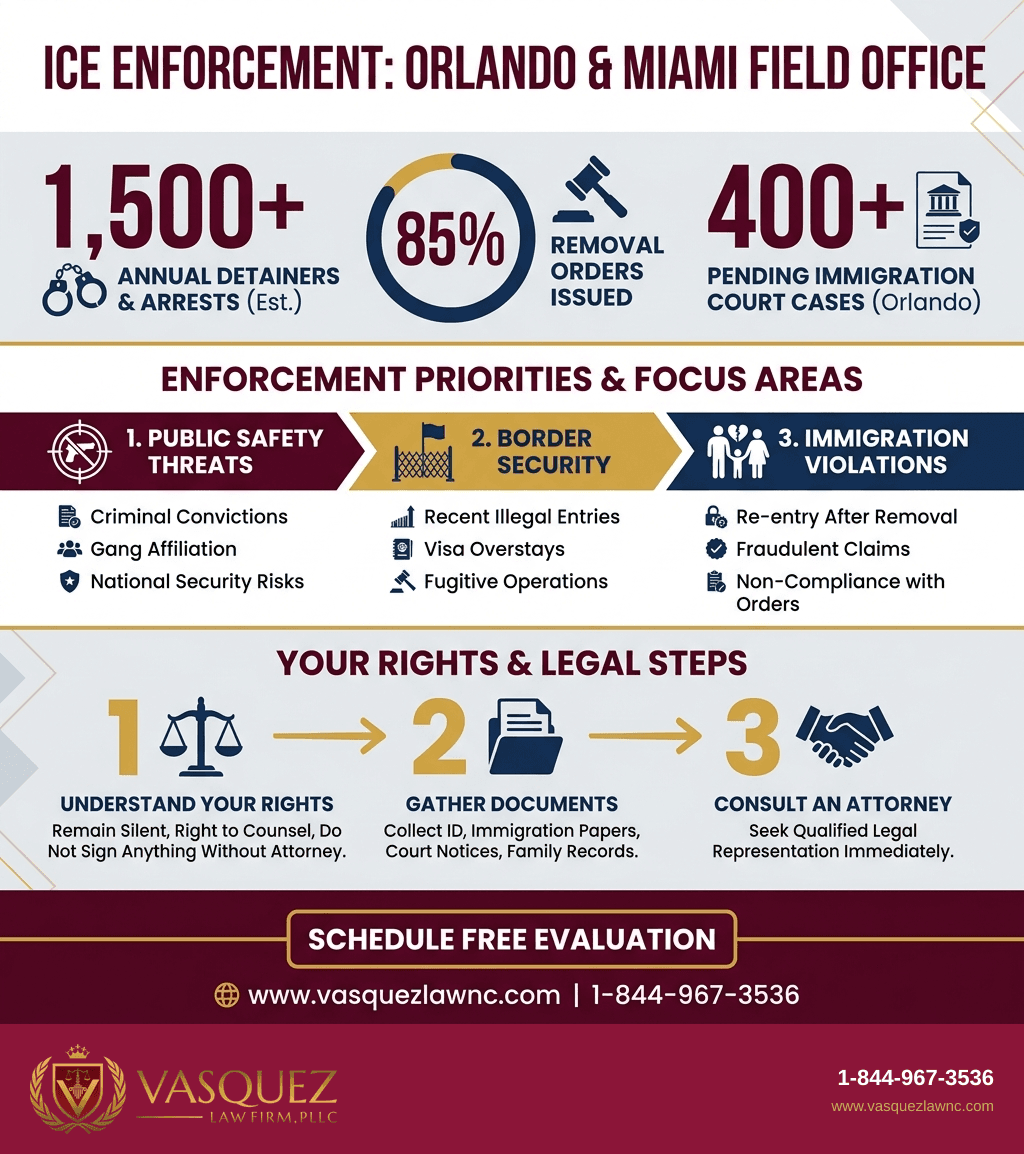
ICE enforcement involves identifying and detaining those who violate immigration laws. Agents conduct raids, workplace checks, and detain individuals pending removal proceedings. These actions aim to remove individuals unlawfully present or those who pose security or public safety risks. Enforcement can be sudden and may occur at homes, workplaces, or public spaces, making understanding your rights crucial.
What powers does ICE have?
ICE can arrest individuals for immigration violations, enter premises with warrants, and open investigations. Their power is limited by constitutional protections, such as requiring warrants for home entries and prohibiting unreasonable searches. ICE officers may also issue notices to appear in court and detain suspects during removal proceedings, but they must follow legal protocols to respect individual rights.
Can ICE legally detain a U.S. citizen?
No. ICE cannot detain U.S. citizens based solely on citizenship status. Mistaken detentions should be challenged with legal help immediately. If you or someone you know has been wrongly detained, contacting an attorney is vital to secure release and to hold ICE accountable for any rights violations. ICE must verify citizenship before detention or removal actions against individuals.
What happens when you report someone to ICE?
ICE investigates credible reports and may take enforcement action if immigration violations are found. False reports can lead to legal consequences for the reporter, including charges of harassment or obstruction of justice. Reporting should be based on accurate information, as misuse of reporting systems can harm innocent individuals and undermine community trust.
How can I prepare for a possible ICE enforcement operation?
Know your legal rights, keep documents ready, have emergency contacts, and consult an immigration lawyer for a family plan. Preparing a "go bag" with important papers and having a clear communication plan with family members can help manage the stress of enforcement actions. Regular legal consultations ensure your information is up-to-date and that you understand potential relief options.
What should I do if ICE comes to my home?
Do not open the door without a warrant. Ask to see it. Stay calm, do not consent to searches, and contact an attorney immediately. If agents do not have a warrant, you have the right to refuse entry. Avoid physical confrontation, remain polite, and inform the agents that you wish to consult with a lawyer before answering any questions.
Are ICE agents considered law enforcement?
Yes, ICE agents are federal officers with authority to enforce immigration laws, operating under the Department of Homeland Security. They have similar powers to police officers within their immigration enforcement scope, including arrest authority and executing search warrants related to immigration violations.
What is the latest ICE enforcement update in 2026?
Recent operations, including in the Smoky Mountains, show intensified enforcement in Orlando and North Carolina, focusing on arrests and removal of undocumented immigrants. These operations reflect federal priorities on immigration control and public safety, with increased resources allocated to identifying individuals with criminal records or prior removal orders.
Sources and References
- U.S. Citizenship and Immigration Services
- Executive Office for Immigration Review
- Legal Information Institute
Take the first step toward justice today. Our team is standing by to help. Se Habla Español.
Start Your Free Evaluation Now
Call us: 1-844-967-3536
Se Habla Español - We're here to help.
If you need legal assistance, learn more about speak with an immigration lawyer, or call us at 1-844-967-3536 for a free evaluation.


William Vasquez
Founder & CEO, Vasquez Law Firm, PLLC
William Vasquez is the founder and CEO of Vasquez Law Firm, PLLC, a results-driven firm specializing in immigration, criminal defense, personal injury, and workers' compensation. A U.S. Air Force veteran and recipient of the Joint Service Achievement Medal, William is dedicated to fiercely fighting for his clients' rights.
Related Legal Services
Need legal help? Learn more about speak with an immigration lawyer, or contact us for a free evaluation.
You can also visit North Carolina immigration law firm for more information.