How US Congress Immigration Funding Works in 2026
Learn how US Congress immigration funding affects ICE and CBP in 2026. Understand the bill, funding status, and steps. Contact Vasquez Law for help.
Published on June 16, 2026
Talk to an immigration attorney
Free call. A clear plan for your case.
Free & confidential · Se habla espanol · 24/7
Have questions? Talk to an attorney - free evaluation.
Call 1-844-967-3536Worried how the latest immigration news affects you?
Schedule a confidential case review with an immigration attorney - know exactly where you stand.
USCIS Case Status
Check your USCIS case status
Enter your receipt number and get the official status. Free, no registration.
How US Congress Immigration Funding Works in 2026
US Congress immigration funding for 2026 has significant impacts on ICE and CBP operations that affect immigrant families in North Carolina and Orlando, Florida. This article explains the recent funding bills, what they mean for enforcement agencies, and how the changes could affect individuals seeking immigration relief. Learn what steps to take and when to contact an immigration attorney during these developments.
Need help with your case? Our experienced attorneys are ready to fight for you. Se Habla Español.
Or call us now: 1-844-967-3536
Quick Answer
In 2026, US Congress approved immigration funding bills that allocate resources to ICE and CBP, ensuring their continued operations. This funding impacts enforcement, detention, and border management. For immigrant families in North Carolina and Orlando, understanding these changes is vital to protect rights and legal status.
- Congress funds ICE and CBP through annual appropriations
- 2026 bill passed supporting enforcement and border security
- Funding affects detention centers and immigration court operations
- Changes may impact immigration relief and enforcement locally
- Legal guidance can help navigate policy shifts confidently
Overview of US Congress Immigration Funding
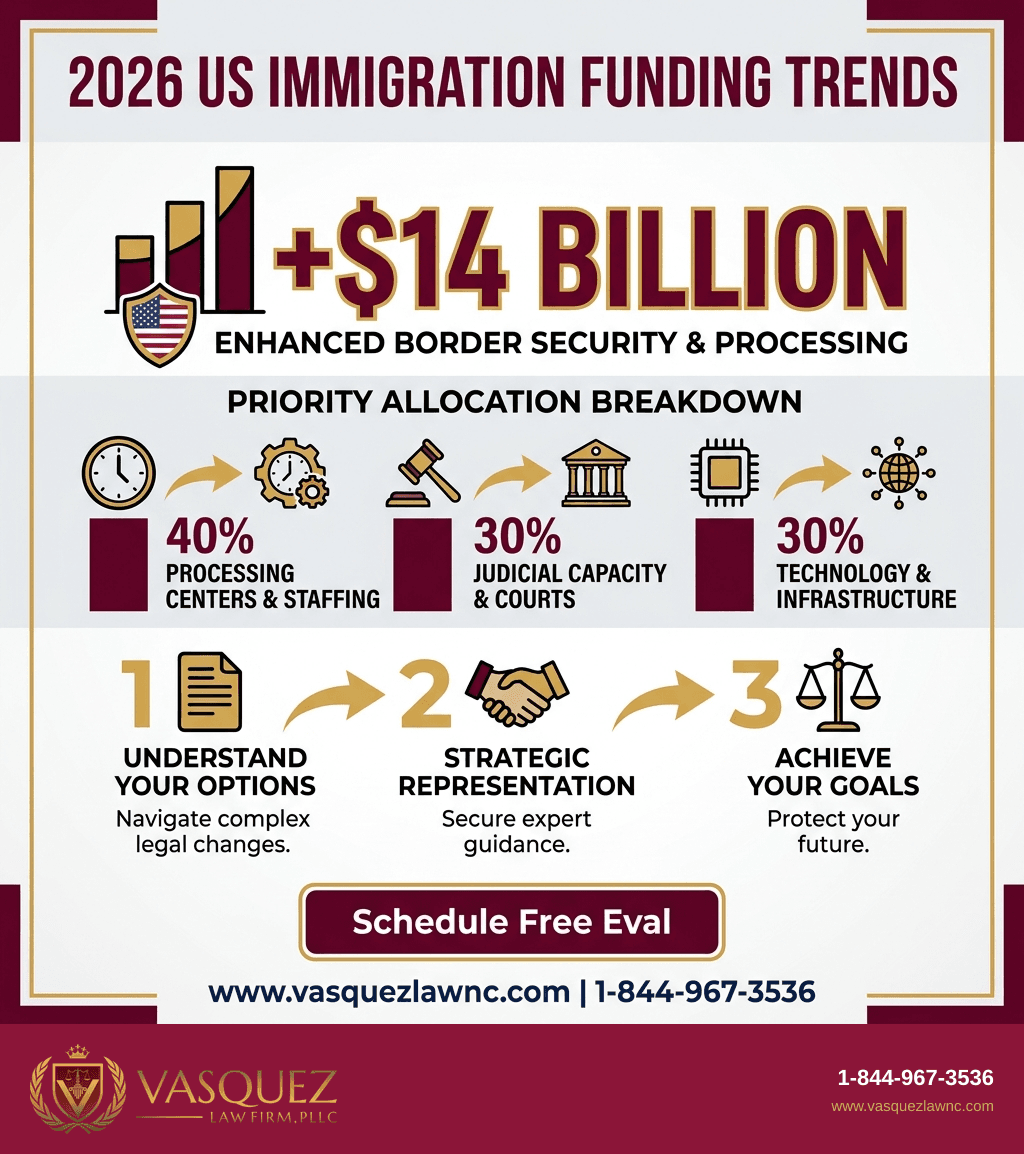
In 2026, US Congress passed the Department of Homeland Security (DHS) funding bill, which includes appropriations for immigration enforcement agencies such as US Immigration and Customs Enforcement (ICE) and Customs and Border Protection (CBP). This funding is part of the federal government's annual budget process and dictates how much money these agencies have to conduct their operations.
The final bill allocates approximately $70 billion to ICE and CBP combined, including funds for border security infrastructure, personnel salaries, detention centers, and surveillance technology. This level of funding ensures continued detention and removal operations, frontline border protection, and immigration investigations.
Funding for immigration agencies is included within the broader DHS budget, which is subject to reconciliation and oversight by Congress. Sometimes budget bills must be revised if disagreements arise over specific allocations such as ICE funding reconciliation, which can affect enforcement priorities.
Because immigration laws are federal, these funding decisions impact how immigration policies are enforced nationwide, including in states like North Carolina and Florida where Vasquez Law Firm’s offices serve immigrant communities. Knowing the status of these funds helps individuals understand possible changes to enforcement or benefits processing.
Learn more about our immigration services to see how these changes might affect your case.
How ICE and CBP Funding Affects Immigrant Communities
ICE and CBP funding directly affects enforcement activities, detention capacity, and deportation efforts. When Congress fully funds these agencies, it allows for the hiring of more agents, expanded operational hours, and more detentions. This can increase the likelihood of arrests, deportations, and enforcement actions locally in places such as Orlando, FL and across North Carolina.
CBP funding updates for 2026 maintain investments in border patrol staffing and technology like surveillance cameras and drones. This affects the volume and speed of border crossings processed, potentially influencing asylum claims and humanitarian protections.
While CBP operates primarily at the border, ICE enforcement policies can impact immigrant communities inland, including Raleigh, NC and Orlando, FL. Increased funding often corresponds with heightened workplace raids, sanctuary city tensions, and interior removals.
Recognizing these impacts, many immigrant families and Dreamers face uncertainty. Understanding ICE funding bill details can help clarify enforcement risks and inform decisions regarding immigration relief options such as Deferred Action for Childhood Arrivals (DACA) or family-based petitions.
For personalized advice, reach out to Attorney Vasquez who has extensive experience guiding immigrant clients through enforcement challenges.
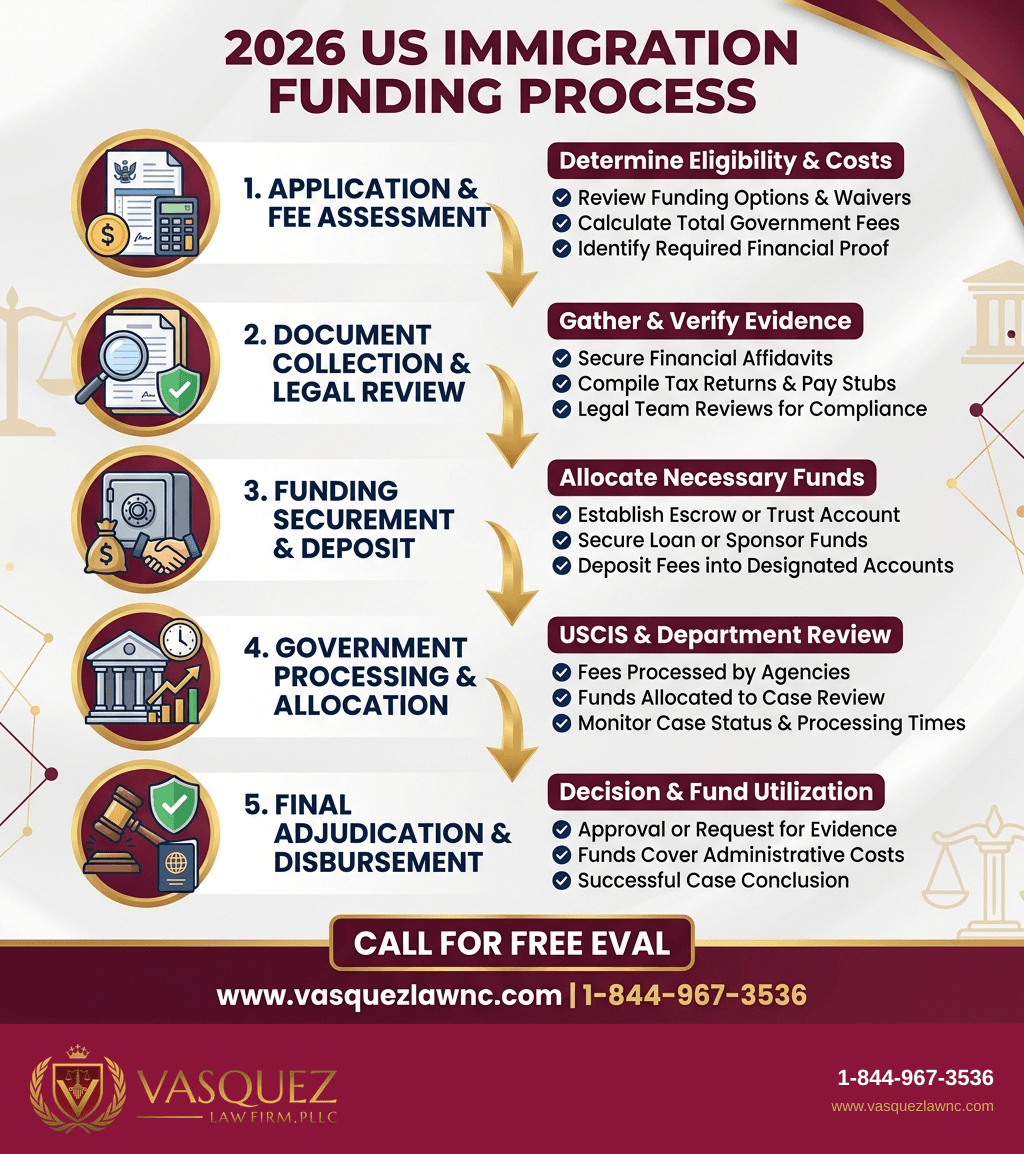
Step-by-Step: What to Do if the Funding Affects You
- Stay informed about the latest US Congress immigration funding news through trusted sources like USCIS or official government releases.
- Understand the implications for your immigration status, especially if you are in removal proceedings or rely on DACA or work visas.
- Gather critical documents such as immigration paperwork, proof of residency, and work authorization to be prepared in case of enforcement action.
- Consult an experienced immigration attorney in Raleigh, NC or Orlando, FL to review your case and options.
- Consider applying for relief or renewal of protections like DACA promptly, as funding shifts might impact processing times.
- Prepare for possible enforcement encounters by knowing your rights and having legal representation contacts readily available.
Contact our office to schedule a consultation and get personalized guidance.
Common Mistakes to Avoid with Immigration Funding Updates
- Ignoring funding news: Many immigrants assume funding battles won’t affect them. Reality is enforcement prioritization can shift rapidly.
- Delaying renewal applications: Processing delays happen; renew early to avoid gaps in protections like DACA.
- Failing to seek legal help: Without guidance, you may miss options or deadlines in enforcement or relief cases.
- Believing enforcement will stop: Even with funding debates, agencies often maintain operations to their fullest extent.
- Not documenting your presence: Proof of work, residence, and family ties can support your defense.
- Sharing misinformation: Verify updates with credible sources to avoid confusion or panic.
If you only remember one thing: Stay informed and consult an immigration attorney to understand how funding decisions influence your situation.
Timeline and What to Expect in 2026
- January 2026: Initial budget drafts and agency funding requests submitted to Congress.
- March-April 2026: Congressional committees review and negotiate funding levels for ICE and CBP.
- May 2026: House and Senate votes pass the final DHS funding bill including immigration enforcement agencies.
- June 2026: Presidential signature finalizes appropriations; agencies begin allocating funds.
- Rest of 2026: Agencies implement programs, enforcement, and processing within available budget.
This timeline can affect immigration case processing times. USCIS reports that DACA renewal (Form I-821D) currently averages 8 to 11 months as of June 2026 (USCIS processing times). Delays may worsen depending on funding shifts for adjudication resources.
NC, FL, and Nationwide Notes
North Carolina Notes
In North Carolina, immigrant communities may experience increased ICE enforcement following higher funding allocations in 2026. Raleigh-based residents should maintain current documentation and consult attorneys for compliance with immigration status and local enforcement trends.
Florida Notes
Orlando, FL, similarly faces enforcement activities supported by ICE funding. Local agencies coordinate with federal officers, so immigrant families should be prepared for potential interviews or raids, especially if undocumented or with pending relief applications.
Nationwide Concepts
Federal funding affects immigration agencies’ operational reach across all states. While enforcement intensity varies regionally, funding levels correlate with the number of agents, detention spaces, and immigration court capacity. Nationwide programs like DACA rely on USCIS budgets but may indirectly face effects due to overall DHS priorities.
When to Call a Lawyer Now
- If you receive a Notice to Appear (NTA) in immigration court
- When your DACA or visa renewal is delayed beyond USCIS guidelines
- Following any enforcement encounter or ICE questioning
- If you plan to apply for immigration relief in 2026
- When new immigration funding bills change enforcement priorities in your area
- To prepare documentation ahead of potential ICE raids or workplace audits
About Vasquez Law Firm
At Vasquez Law Firm, we combine compassion with aggressive representation. Our motto "Yo Peleo®" (I Fight) reflects our commitment to standing up for your rights.
- Bilingual Support: Se Habla Español — Spanish-speaking attorneys and staff available
- Service Areas: North Carolina, Florida, and nationwide immigration services
- Experience: Over 30 years helping clients navigate complex legal matters
- Results: Thousands of successful cases across multiple practice areas
Attorney Trust and Experience
William J. Vásquez is admitted to the North Carolina State Bar (2011) and to the U.S. Courts of Appeals for the 4th, 5th, and 11th Circuits. Florida-jurisdiction matters at the firm are handled by Florida Bar attorney Harold Estrada-Rodriguez (FL Bar No. 1041171). The firm has provided dedicated legal representation since 2011, with personalized attention to each client's case.
Don't wait to get the help you deserve. Call us now for immediate assistance.
Se Habla Español
Frequently Asked Questions
Did Congress pass an immigration funding bill in 2026?
Yes, Congress passed a bill early in 2026 that funds ICE and CBP for the fiscal year. This ensures immigration enforcement agencies continue their operations, including detentions and border management, through allocated appropriations.
What does ICE funding reconciliation mean?
ICE funding reconciliation is a congressional process adjusting ICE’s budget to better meet enforcement priorities and agency needs. It can increase or decrease available funds impacting detention and removal operations.
Is ICE funded for all of 2026?
Yes, ICE received full funding for 2026 under the appropriations bill signed into law. This supports agency functions nationwide, including areas in North Carolina and Orlando, Florida.
What impact does CBP funding have on border security?
CBP funding affects staffing levels, technology, and infrastructure, which directly influences border security effectiveness and processing capacity for asylum seekers and travelers.
Which members of Congress supported ICE funding in 2026?
Both Democratic and Republican members voted to approve ICE funding in 2026. Support often aligns with enforcement priorities, though some lawmakers voiced concerns about detention conditions.
How does immigration funding affect Dreamers?
Immigration funding affects Dreamers indirectly through enforcement and processing changes. While DACA is administered by USCIS, shifts in ICE and CBP funding can signal enforcement trends impacting immigrant communities.
What are common mistakes immigrants make regarding funding changes?
Common mistakes include ignoring news about funding, delaying renewal applications, and not seeking legal advice, all of which can impact protection and relief opportunities.
When should I contact an immigration attorney about funding changes?
Contact an attorney if you face enforcement encounters, delayed processing, or want to understand how funding changes affect your case. Early advice helps protect your rights effectively.
Sources and References
- U.S. Citizenship and Immigration Services
- Executive Office for Immigration Review
- Legal Information Institute
Take the first step toward justice today. Our team is standing by to help. Se Habla Español.
Start Your Free Evaluation Now
Call us: 1-844-967-3536

William Vasquez
Founder & CEO, Vasquez Law Firm, PLLC
William Vasquez is the founder and CEO of Vasquez Law Firm, PLLC, a results-driven firm specializing in immigration, criminal defense, personal injury, and workers' compensation. A U.S. Air Force veteran and recipient of the Joint Service Achievement Medal, William is dedicated to fiercely fighting for his clients' rights.
Related Legal Services
Need legal help? Learn more about our immigration law practice, or contact us for a free evaluation.
You can also visit North Carolina immigration lawyers for more information.

![Federal Court Temporarily Allows USCIS $100,000 H-1B Fee [2026]](/_next/image?url=https%3A%2F%2Fvuuyorlsmhunqektprqy.supabase.co%2Fstorage%2Fv1%2Fobject%2Fpublic%2Fblogs%2Fimmigration-header-1782499578755.png&w=1920&q=75)