What DACA Means for Dreamers in Orlando in 2026
Learn what DACA means for Dreamers in Orlando. Understand DACA status, renewal timelines, and your rights. Contact Vasquez Law for a free consultation.
Published on June 15, 2026
Talk to an immigration attorney
Free call. A clear plan for your case.
Free & confidential · Se habla espanol · 24/7
Have questions? Talk to an attorney - free evaluation.
Call 1-844-967-3536Free Tool
Check Your USCIS Case Status Now
Enter your receipt number - get the official USCIS status in English or Spanish. No registration.
What DACA Means for Dreamers in Orlando in 2026
DACA (Deferred Action for Childhood Arrivals) offers temporary protection from deportation and work authorization to eligible young immigrants. In 2026, DACA remains critical for thousands of Dreamers in Orlando, offering a path to stability amidst evolving policies. Knowing how to maintain your DACA status, renew on time, and understand your rights can make a significant difference. This guide explains what DACA means, who qualifies, how to apply or renew, and the current legal landscape affecting Dreamers in Orlando, FL, and surrounding areas. If you need guidance on DACA applications, Vasquez Law Firm’s immigration attorneys in Raleigh, NC, and Orlando, FL, are available to help you navigate the process.
Need help with your case? Our experienced attorneys are ready to fight for you. Se Habla Español.
Or call us now: 1-844-967-3536
Quick Answer
DACA protects eligible young immigrants from deportation and allows legal work authorization for two years, renewable. It does not provide citizenship but offers stability while the program remains active.
- DACA requires filing Form I-821D with USCIS
- Renewal every two years is needed to maintain protection
- Eligible applicants must meet age, arrival, education, and criminal background criteria
- Processing currently takes about 9-12 months
- Legal help can improve application success
Understanding DACA: Meaning and Eligibility
In 2026, DACA—Deferred Action for Childhood Arrivals—is a program that gives temporary asylum from deportation to undocumented immigrants who arrived in the U.S. as children. It also grants a work permit, allowing recipients to legally work and support their families. This protection lasts for two years and must be renewed.
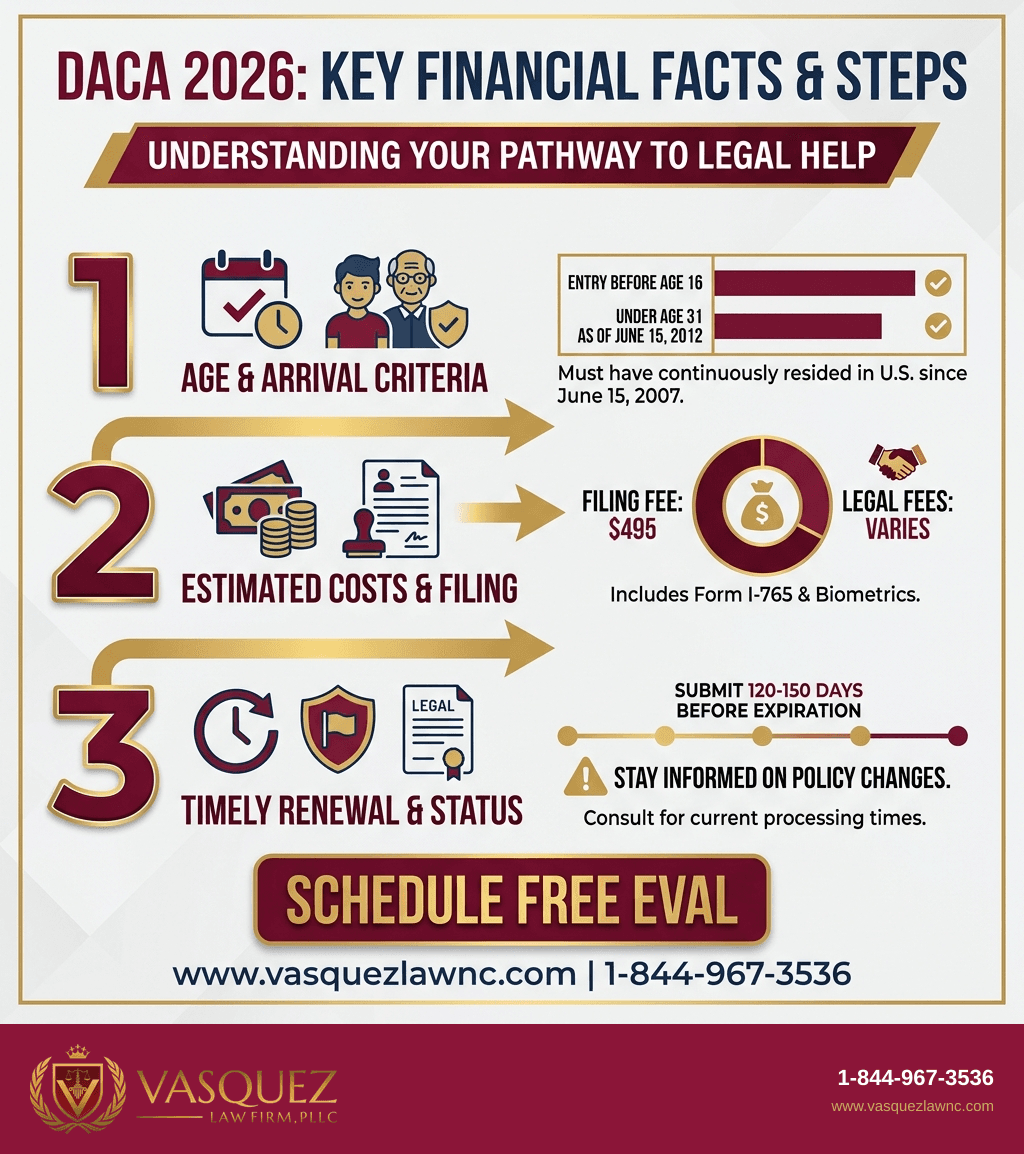
To qualify, applicants must have arrived in the United States before turning 16 years old and lived here continuously since June 15, 2007. Additionally, they must have been under 31 years old on June 15, 2012, and meet educational requirements such as being enrolled in school or having a high school diploma. Criminal background checks exclude individuals with serious convictions.
While DACA does not grant lawful permanent resident status or citizenship, it is a vital form of relief. Many DACA recipients, known as Dreamers, rely on the program to attend school, work legally, and avoid deportation. These protections have significant impacts for individuals in Orlando and beyond.
Our immigration legal team is familiar with helping clients understand and meet these eligibility criteria. Attorney Vasquez and our staff provide consultations in Raleigh, NC, and Orlando, FL, ensuring you get guidance tailored to your situation.
What Does 'Deferred Action' Mean?
Deferred action is a discretionary relief allowing the government to delay deportation proceedings for certain individuals. It also allows these individuals to apply for work authorization. This relief is provided under the discretion of the Secretary of Homeland Security and is not a permanent immigration status under 8 U.S.C. § 1101(a)(15)(H)(ii)(b).
Who Are DACA Dreamers?
The term “Dreamers” refers broadly to young immigrants who arrived in the U.S. as children and meet DACA criteria. They are a diverse group contributing to their communities in education, work, and civic life, especially in states like Florida where immigrant populations are significant.
Why is DACA Important in Orlando?
Orlando is home to many Dreamers who benefit from DACA’s protection to work in sectors like healthcare, hospitality, and education. Amid shifting immigration policies, understanding DACA status can help maintain legal work authorization and protect against deportation threats.
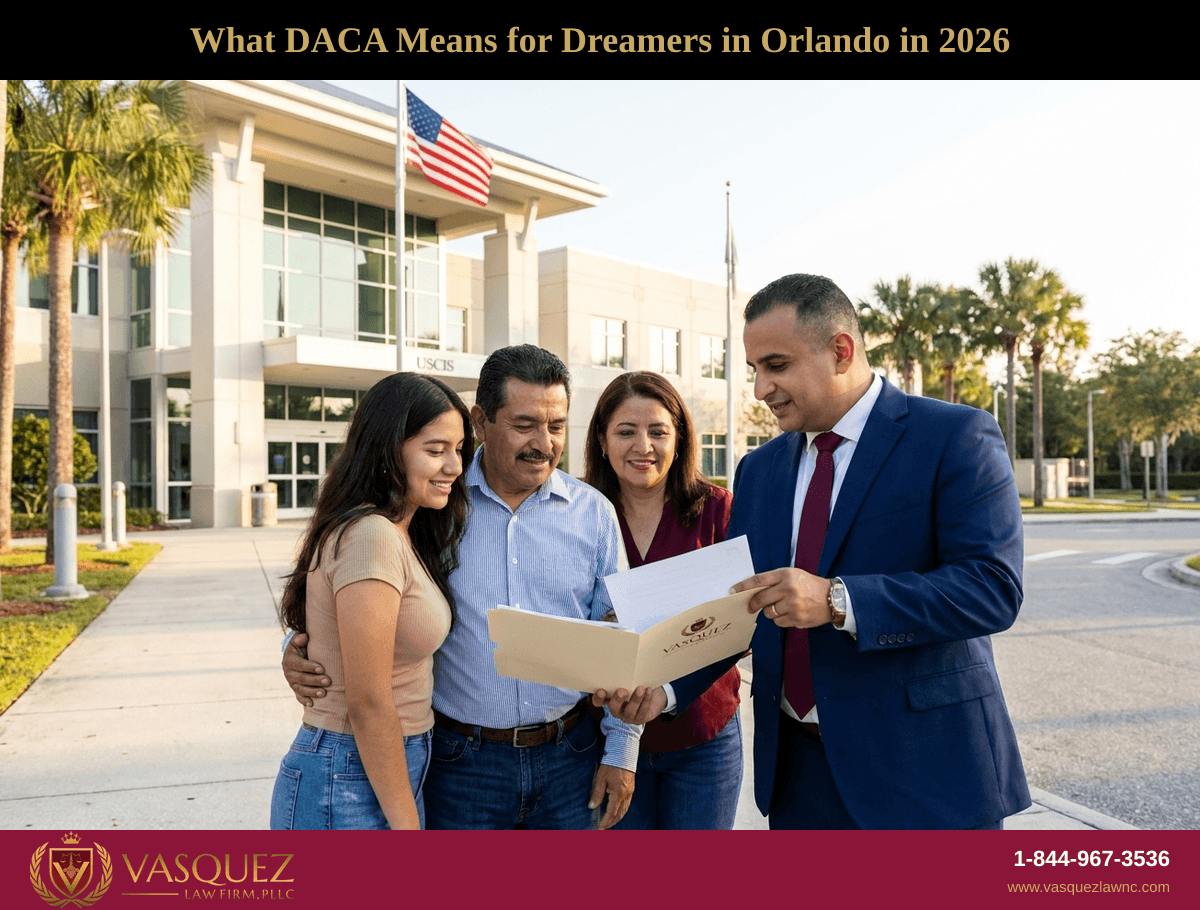
Step-by-Step Guide to DACA Application and Renewal
- Determine Eligibility: Review arrival date, age, education, and criminal history criteria carefully.
- Gather Documentation: Collect proof of identity, continuous residence, education or military service, and absence of criminal record.
- Complete Form I-821D: The official USCIS application form for DACA, along with Form I-765 for work authorization and Form I-765WS for economic necessity.
- Submit Application Package: File forms with USCIS, including filing fees (currently $495) and supporting evidence.
- Attend Biometrics Appointment: USCIS will schedule fingerprinting to conduct background checks.
- Receive Decision: USCIS processes requests; approval grants deferred action and Employment Authorization Document (EAD).
- Maintain Status: Renew every two years before expiration by submitting renewal applications within 120 days prior to expiry.
Renewing on time is crucial. Late renewals risk losing protection and work permission. Processing times per USCIS currently average 9 to 12 months for Form I-821D renewal applications (USCIS Processing Times).
Filing Tips from Our Orlando Immigration Attorneys
- Keep detailed records of address and employment to satisfy continuous residence.
- Complete forms carefully to avoid delays or denial due to errors.
- Renew early and keep copies of all submissions.
- Consult experienced lawyers to identify potential complications.
Documents Checklist for Your DACA Case
Applicants must provide evidence demonstrating eligibility for DACA and meet requirements for deferred action. Below is a typical checklist of documentation:
- Proof of identity (passport, birth certificate from country of origin)
- Proof of arrival before 16th birthday (school records, medical records, customs documents)
- Proof of continuous residence in the U.S. since June 15, 2007 (rental agreements, utility bills, employment records)
- Educational documents (high school diploma, GED, enrollment confirmation)
- Criminal background checks or police clearance letters
- Supporting letters from community members or employers
Each case is unique, and additional evidence may be required. Our immigration attorneys in Orlando assist clients to gather and organize the strongest possible submission.
DACA Timeline and What to Expect in 2026
- Application Preparation: 1–2 months to collect documents and complete forms.
- USCIS Processing: 9–12 months on average for initial or renewal applications (refer to USCIS processing times).
- Biometrics Appointment: Typically scheduled within 1–2 months of filing.
- Decision Notification: USCIS mails approval or Request for Evidence (RFE) responses.
- Employment Authorization: EAD cards usually arrive 2–3 weeks after approval.
- Renewal Cycles: Renewal applications must be filed every 2 years, ideally within 120 days of DACA expiration.
Delays can occur due to changed policies or backlogs. Plan early and consult legal counsel to avoid gaps in protection.
Costs and Fees for DACA Applications
- USCIS Filing Fee: $495 for Form I-821D and related forms.
- Legal Fees: Varies; hiring an attorney to assist with preparation may cost from $1,000 to $3,000 depending on case complexity.
- Additional Expenses: Document translation, obtaining records, travel expenses to attorney meetings or biometrics appointments.
Fee waivers may be available under limited income circumstances but are not guaranteed. Applying or renewing without proper legal guidance can risk denial, potentially costing more in the long run.
Contact Vasquez Law Firm in Raleigh, NC, or Orlando, FL, for a detailed fee breakdown and potential payment options.
Common Mistakes to Avoid When Applying for DACA
- Missed Deadlines: Waiting too long to renew may cause lapse in protection. Start renewal 120 days before expiration.
- Insufficient Evidence: Failing to prove continuous residence or arrival date can result in rejection.
- Errors on Application Forms: Incomplete or inaccurate answers cause delays or denial.
- Ignoring Requests for Evidence: Not responding to USCIS requests can lead to automatic dismissal.
- Criminal History Omissions: Hiding or failing to disclose prior arrests harms credibility and eligibility.
- Lack of Legal Guidance: Trying to self-represent without legal advice risks costly mistakes.
If you only remember one thing: stay organized, file timely, and get legal help whenever possible.
Local Notes for Orlando, Florida and Nationwide
Orlando, Florida Notes
Orlando’s diverse immigrant community includes many DACA recipients who rely on state and federal protections. Florida issues driver’s licenses to eligible DACA recipients, making work and daily life easier. Local health and social services often work with DACA holders too. Our attorneys understand local resources and policies that can help you maintain your status safely.
Nationwide Framework
The DACA program is governed by federal agencies like USCIS and the Department of Homeland Security. Nationwide, the program’s future depends on court rulings and administration policies. Dreamers in North Carolina and Florida face similar eligibility standards and must adhere to the same filing processes. However, some state benefits may vary by location.
For more on immigration services and protections, visit our immigration services.
When to Call a Lawyer About Your DACA Case
- If you are approaching your DACA expiration date
- If you have criminal history or arrests in your background
- If you receive a Request for Evidence from USCIS
- If you want to apply for advance parole for travel
- If your renewal is delayed beyond 9 months
- If you face removal or immigration court proceedings
- If you have questions about transitioning from DACA to permanent residency
About Vasquez Law Firm
At Vasquez Law Firm, we combine compassion with aggressive representation. Our motto "Yo Peleo®" (I Fight) reflects our commitment to standing up for your rights.
- Bilingual Support: Se Habla Español — Spanish-speaking attorneys and staff available
- Service Areas: North Carolina, Florida, and nationwide immigration services
- Experience: Over 30 years helping clients navigate complex legal matters
- Results: Thousands of successful cases across multiple practice areas
Attorney Trust and Experience
William J. Vásquez is admitted to the North Carolina State Bar (2011) and to the U.S. Courts of Appeals for the 4th, 5th, and 11th Circuits. Florida-jurisdiction matters at the firm are handled by Florida Bar attorney Harold Estrada-Rodriguez (FL Bar No. 1041171). The firm has provided dedicated legal representation since 2011, with personalized attention to each client's case.
Don't wait to get the help you deserve. Call us now for immediate assistance.
Se Habla Español
Frequently Asked Questions
What does DACA mean?
DACA is Deferred Action for Childhood Arrivals, a program offering temporary protection from deportation and work permits for eligible immigrants who arrived as children. It allows them to live and work legally in the U.S. for renewable periods of two years under federal discretion.
Is DACA currently legal in 2026?
Yes, in 2026 DACA remains active following court rulings that allow USCIS to process applications and renewals. Although legal challenges continue, recipients can still apply and renew their status with guidance from immigration lawyers familiar with the latest policies.
Who is eligible for DACA?
To be eligible, one must have arrived before age 16, lived continuously in the U.S. since June 15, 2007, been under 31 years old by June 15, 2012, be in school or high school graduate, and have no serious criminal convictions, per USCIS requirements.
Can a DACA recipient become a U.S. citizen?
DACA itself does not lead directly to citizenship. Recipients may pursue permanent residence through other legal means such as family petitions, but each case depends on individual circumstances qualified by immigration laws.
How long does DACA renewal take in 2026?
USCIS currently processes DACA renewals in approximately 9-12 months. Applicants should file renewals at least 120 days before expiration to avoid gaps in protection and employment authorization.
What rights does DACA provide?
DACA grants temporary protection from deportation and permission to work legally in the U.S. It allows access to driver’s licenses in some states and makes recipients eligible for certain benefits but does not confer lawful permanent residency or citizenship.
Can a DACA recipient travel outside the U.S.?
Traveling abroad requires advance parole, a special USCIS permission granted only under specific conditions. Unauthorized travel can result in loss of DACA status. Consult a qualified immigration attorney before planning travel.
What happens if DACA expires?
If DACA status expires without renewal, the individual loses protection from deportation and work authorization. Being out of valid DACA status can lead to removal proceedings if detained. Timely renewal is essential to maintain benefits.
Sources and References
- U.S. Citizenship and Immigration Services
- Executive Office for Immigration Review
- Legal Information Institute
Take the first step toward justice today. Our team is standing by to help.
Start Your Free Evaluation Now
Call us: 1-844-967-3536
Se Habla Español - Estamos aquí para ayudarle.


William Vasquez
Founder & CEO, Vasquez Law Firm, PLLC
William Vasquez is the founder and CEO of Vasquez Law Firm, PLLC, a results-driven firm specializing in immigration, criminal defense, personal injury, and workers' compensation. A U.S. Air Force veteran and recipient of the Joint Service Achievement Medal, William is dedicated to fiercely fighting for his clients' rights.
Related Legal Services
Need legal help? Learn more about our immigration law practice, or contact us for a free evaluation.
You can also visit our NC immigration team for more information.