How USCIS Works and What to Expect in 2026: July 2026 Update
Learn how USCIS processes immigration applications in 2026. Understand case timelines, common steps, and how to get help. Contact Vasquez Law today.
Published on July 29, 2026
Talk to an immigration attorney
Free call. A clear plan for your case.
Free & confidential · Se habla espanol · 24/7
Have questions? Talk to an attorney - free evaluation.
Call 1-844-967-3536Free Tool
Check Your USCIS Case Status Now
Enter your receipt number - get the official USCIS status in English or Spanish. No registration.
How USCIS Works and What to Expect in 2026
USCIS, or U.S. Citizenship and Immigration Services, is the federal agency responsible for handling immigration applications and benefits. In 2026, understanding how USCIS processes cases, manages online services, and determines application outcomes is critical for immigrants in Raleigh, NC, Orlando, FL, and nationwide. This guide covers USCIS processing times, how to track your USCIS case online, the difference between USCIS and ICE, and key steps to protect your immigration status in 2026.
Need help with your case? Our experienced attorneys are ready to fight for you. Se Habla Español.
Or call us now: 1-844-967-3536
Quick Answer
USCIS is the federal agency that processes immigration applications such as green cards and citizenship. In 2026, expect processing times of 7 to 30 months depending on your application type and service center. You can check your USCIS case status online to stay updated. The agency offers online tools and a phone number to assist applicants through each step.
- USCIS processes applications for immigration benefits nationwide.
- Typical case processing times range from months to years depending on form.
- Use USCIS online tools to check case status and receive notices.
- Applicants should avoid common mistakes like missing documents or wrong fees.
- Contact our immigration attorneys in Raleigh and Orlando for free case reviews.
Understanding USCIS and Its Role
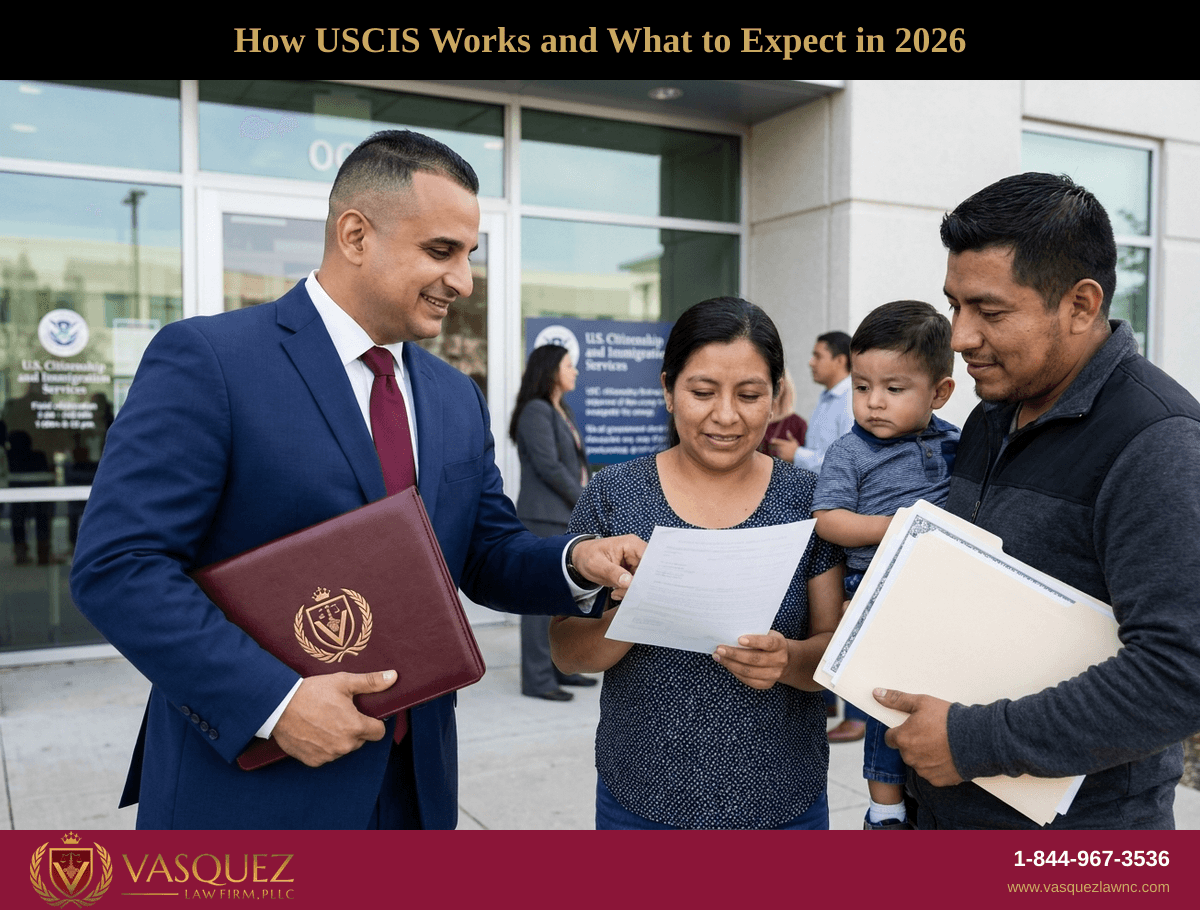
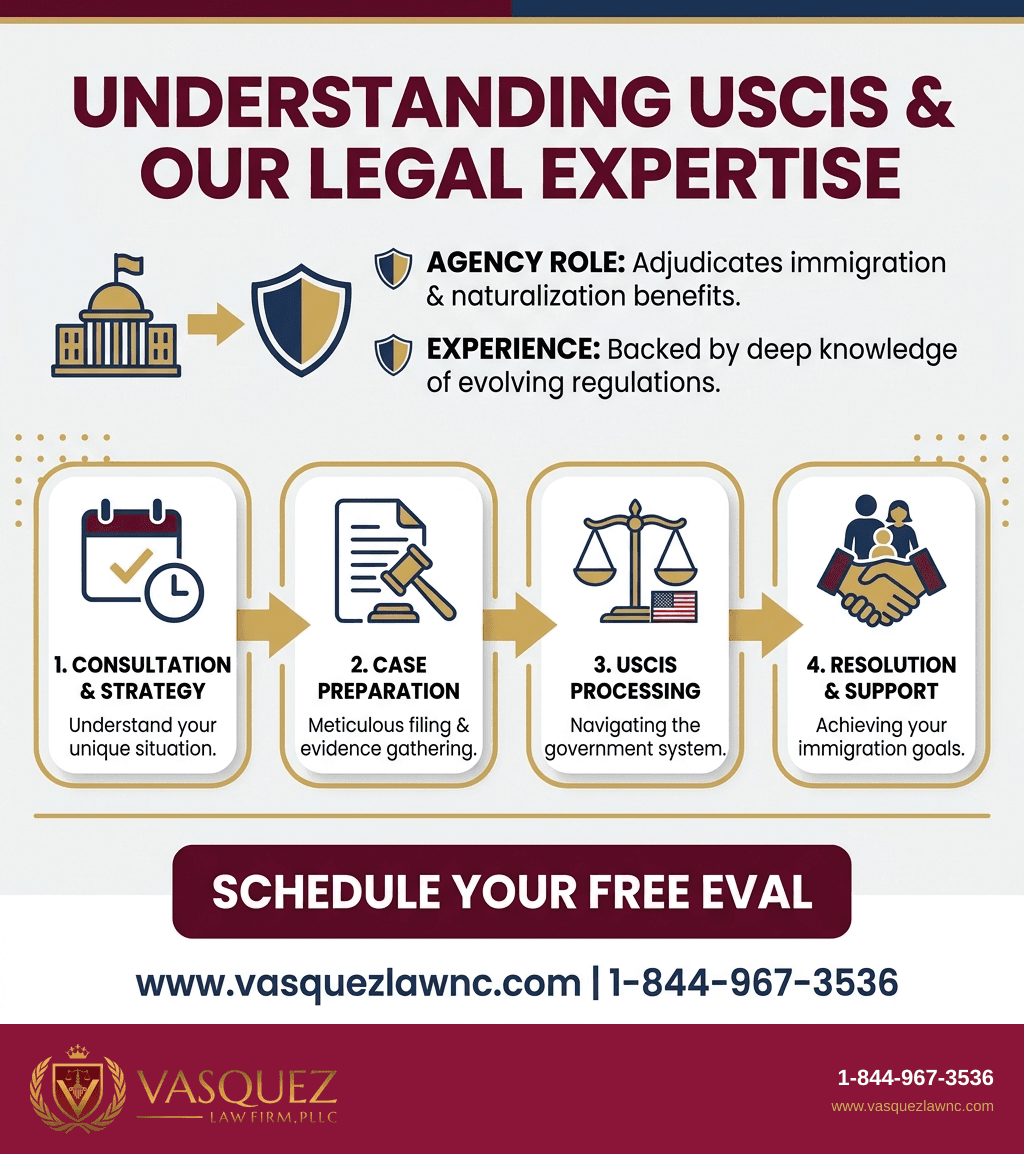
Imagine you submitted your I-130 petition for a family member in 2026 and are wondering what happens next. USCIS, or U.S. Citizenship and Immigration Services, is the government agency responsible for reviewing your application, verifying your eligibility, and deciding whether to approve or deny your petition. USCIS administers a wide range of immigration benefits including family-sponsored green cards, work permits, naturalization applications, and asylum requests.
USCIS operates under the Department of Homeland Security (DHS) and has no enforcement or detention authority - that role belongs to Immigration and Customs Enforcement (ICE). Instead, USCIS focuses on adjudication and processing. When you file an application, USCIS creates a record (known as a USCIS case) and issues a receipt notice confirming they received your petition. The agency schedules biometric appointments and interviews as needed. You can follow your case progress through the USCIS online portal or by phone.
For residents and applicants in Raleigh, NC and Orlando, FL, understanding USCIS procedures is key. Each service center may have different processing timelines. According to USCIS processing times, family-based petitions such as the I-130 can take between 7 and 30 months in 2026. Employment-based and humanitarian cases have different timelines and requirements.
USCIS also has a customer service hotline and online tools to help applicants get information about their case status, schedule appointments, and submit responses to Requests for Evidence (RFE). For detailed legal assistance, contacting an immigration attorney remains essential, especially if your case is complex or faces delays.
Learn more about our immigration legal services to navigate USCIS procedures efficiently.
Key Steps to Navigate Your USCIS Case
Consider Maria, who applied for her green card through the I-485 adjustment of status process. She filed the application online using the USCIS online portal, but she wasn't sure what steps would follow. Understanding these steps can reduce anxiety and help applicants meet USCIS requirements efficiently.
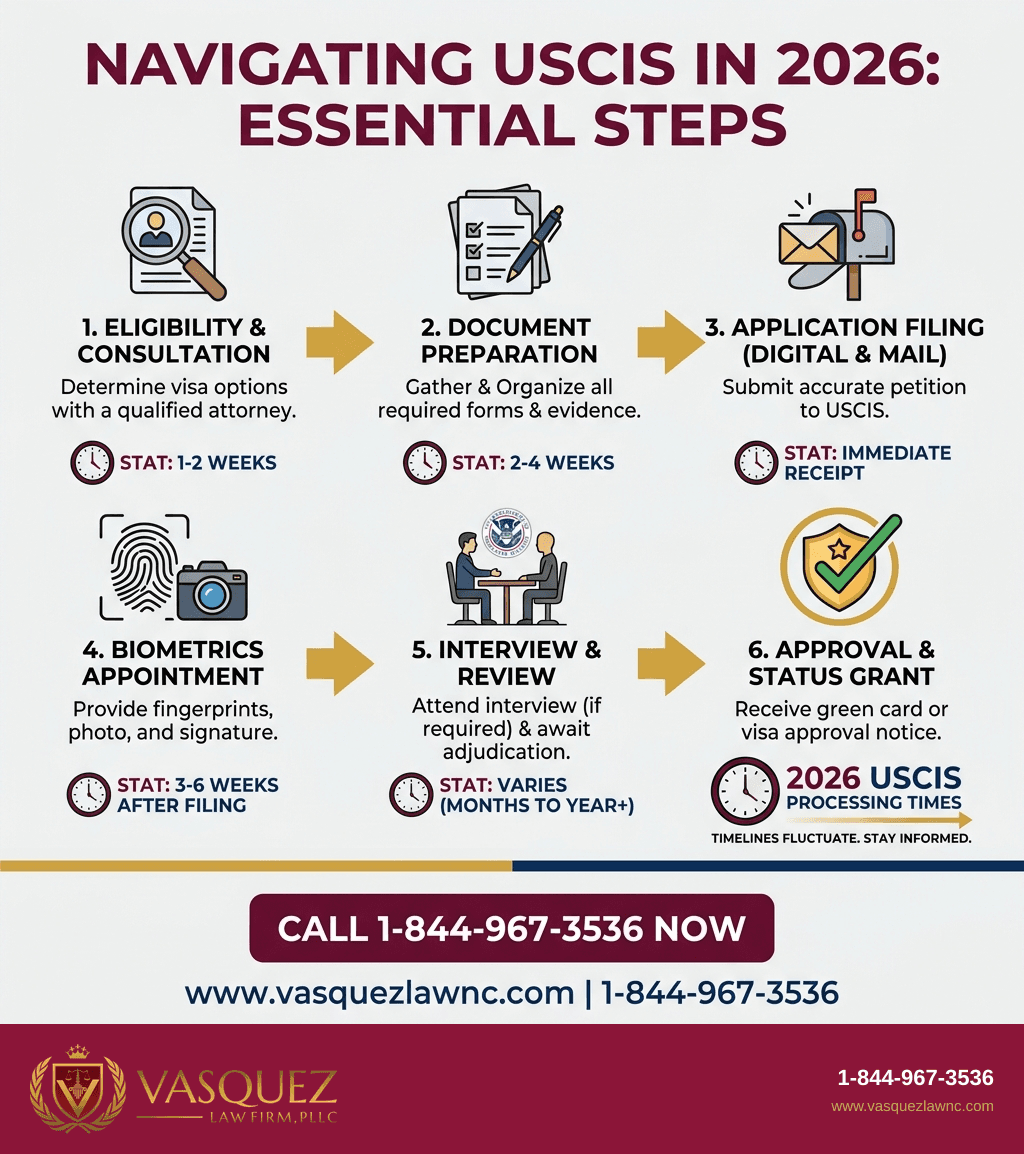
Step 1: Filing the Application
Whether filing forms such as I-130 (Petition for Alien Relative), I-485 (Adjustment of Status), or N-400 (Naturalization), the process begins with USCIS accepting your application either online or by mail. You will receive a receipt notice with a unique case number to track your application.
Step 2: Biometrics Appointment
USCIS schedules a biometrics appointment to collect your fingerprints, photograph, and signature. This step usually occurs within weeks of filing. Proper attendance is critical since USCIS will not proceed without these records.
Step 3: USCIS Interview
For many cases, USCIS schedules an in-person interview at your local USCIS office in Raleigh, NC or Orlando, FL. Interviews allow the officer to review your application, ask questions, and verify your documents. Preparation and honesty are key during interviews.
Step 4: Request for Evidence (RFE) or Notice of Intent to Deny (NOID)
If USCIS requires additional documentation, they send an RFE. Responding fully and promptly is essential to keep your case active. Failure to respond risks denial. Occasionally, applicants receive a NOID if USCIS plans to deny your case but offers a chance to explain.
Step 5: Decision Notification
Once USCIS completes the review, you will receive a written decision. This could be an approval, a denial, or a referral to immigration court for removal proceedings. Approved applicants get a green card or other benefit documents.
If you face difficulties or delays at any point, our experienced Attorney Vasquez can help guide your case through USCIS processes.
Common Mistakes to Avoid with USCIS Applications
Juan applied for DACA renewal in Orlando, FL but mistakenly submitted incomplete evidence, causing months of delay. Common errors in USCIS applications can lead to processing delays or denials, so avoiding them is vital for a smooth case.
- Missing or Incorrect Signatures: Always sign all forms where required. USCIS will reject unsigned forms.
- Incomplete Supporting Documents: Submit all required evidence to prove eligibility, such as birth certificates or financial affidavits.
- Wrong Filing Fees: Check the latest USCIS fee schedule at uscis.gov before sending payments.
- Failing to Update Address: If you move, notify USCIS within 10 days using Form AR-11 or online to avoid missing notices.
- Ignoring Requests for Evidence (RFE): Carefully read and respond fully by the deadline to maintain your case.
- Not Using USCIS Online Account: Create a USCIS online account to track and receive electronic notices, which reduces missed communications.
If you only remember one thing: Follow USCIS instructions exactly and keep copies of all submitted materials to avoid costly mistakes.
Timeline and What to Expect for USCIS Cases
Juan’s family filed an I-130 in early 2026 from Raleigh, NC. They expected a quick outcome but learned USCIS timelines can vary widely. Being prepared for timing helps manage expectations and plan next steps.
- Receipt Notice: Usually sent within 2 weeks of USCIS receiving your application.
- Biometrics Appointment: Scheduled 4 to 8 weeks after filing.
- Initial Processing: Background checks and eligibility review take 3 to 6 months.
- Interview Scheduling: May occur 6 to 12 months after filing for most family-based applications.
- Final Decision: Typically within 7 to 30 months depending on form type and service center.
Processing times fluctuate due to factors such as service center workloads, changes in immigration law, and policy updates. Checking the current USCIS processing times page at USCIS Processing Times provides the most accurate data.
Jurisdiction Notes
USCIS is a federal agency, so its application and processing standards are uniform nationwide. However, practical experience shows some regional variations:
North Carolina Notes
In Raleigh, the USCIS Charlotte Field Office handles interviews and biometric appointments for most applicants. Wait times can vary based on volume but generally align with national averages.
Florida Notes
In Orlando, USCIS maintains a significant field office serving a large immigrant population. The volume can lead to somewhat longer wait times for biometrics and interviews, though online appointments help manage the flow.
Nationwide Notes
Regardless of your location, applicants benefit by creating an online USCIS account to get electronic updates and faster notifications. Nationwide USCIS policy changes or backlog reductions will affect all applicants similarly.
When to Call a Lawyer Now
- You receive a Request for Evidence (RFE) with complex questions.
- Your USCIS application has been pending beyond published processing times.
- You get a Notice of Intent to Deny (NOID) or an outright denial.
- You are scheduled for an interview but need help preparing.
- You experience a change in circumstances affecting eligibility.
- You need help filing an appeal or motion after denial.
- You want help checking your USCIS Estatus or case details securely.
- You recently changed your address but did not inform USCIS.
- You encounter difficulty navigating USCIS online accounts or submissions.
- You are applying for immigration benefits under complex or humanitarian grounds.
About Vasquez Law Firm
At Vasquez Law Firm, we combine compassion with aggressive representation. Our motto "Yo Peleo®" (I Fight) reflects our commitment to standing up for your rights. We help immigrant families and individuals navigate USCIS processes in Raleigh, NC and Orlando, FL as of 2026.
- Bilingual Support: Se Habla Español — Spanish-speaking attorneys and staff available.
- Service Areas: North Carolina, Orlando, Florida, plus nationwide coverage for immigration cases.
- Experience: Over 30 years helping clients with USCIS applications, appeals, and immigration matters.
- Results: Thousands of successful immigration cases handled with personalized attention.
Attorney Trust and Experience
William J. Vásquez, JD, is admitted to the North Carolina State Bar and Florida Bar with 15 years’ experience handling USCIS cases and immigration law. He has guided countless clients through complex federal procedures and brings both legal skill and compassion to your case.
Don't wait to get the help you deserve. Call us now for immediate assistance. Se Habla Español.
Frequently Asked Questions
What is the USCIS and what does it do?
USCIS manages immigration and naturalization applications. It processes petitions for green cards, work permits, citizenship, and asylum. USCIS is distinct from ICE, which enforces immigration laws. USCIS decisions impact your legal status and ability to work and stay in the U.S.
How long does it take for USCIS to approve an application?
Processing time depends on the form and service center. For example, I-130 petitions typically process between 7 and 30 months in 2026. Checking the USCIS processing times website helps you estimate your wait.
How can I check my USCIS case status online?
You can track your case using the USCIS Case Status tool at https://egov.uscis.gov/casestatus/. Enter your receipt number to see updates anytime. This helps avoid missed appointments or deadlines.
What is the difference between USCIS and ICE?
USCIS processes immigration benefit applications. ICE enforces immigration laws and handles detention and deportation. Both have crucial but different roles in the U.S. immigration system.
What documents do I need to submit with a USCIS application?
Documents depend on the application but generally include identity proofs, evidence of relationship, and financial affidavits. Always consult official USCIS instructions to submit correct documentation and avoid delays.
Can I request expedited processing from USCIS?
USCIS may expedite rare cases involving emergencies or severe hardship. Requests must be supported by evidence and are granted only at USCIS discretion.
How do I contact USCIS by phone for help?
Call USCIS at 1-800-375-5283 for case info, scheduling, and general questions. Online tools often provide quicker access to up-to-date information.
What happens if USCIS denies my application?
You will receive a written denial explaining the reasons. You may be able to appeal, file a motion, or reapply depending on your case. Consulting an attorney is advised to explore your options.
Sources and References
- U.S. Citizenship and Immigration Services
- Executive Office for Immigration Review
- Legal Information Institute
Take the first step toward justice today. Our team is standing by to help. Se Habla Español.
Start Your Free Evaluation Now
Call us: 1-844-967-3536
Se Habla Español - Estamos aquí para ayudarle.


William Vasquez
Founder & CEO, Vasquez Law Firm, PLLC
William Vasquez is the founder and CEO of Vasquez Law Firm, PLLC, a results-driven firm specializing in immigration, criminal defense, personal injury, and workers' compensation. A U.S. Air Force veteran and recipient of the Joint Service Achievement Medal, William is dedicated to fiercely fighting for his clients' rights.
Related Legal Services
Need legal help? Learn more about immigration lawyers in North Carolina, or contact us for a free evaluation.
You can also visit immigration legal services throughout NC for more information.