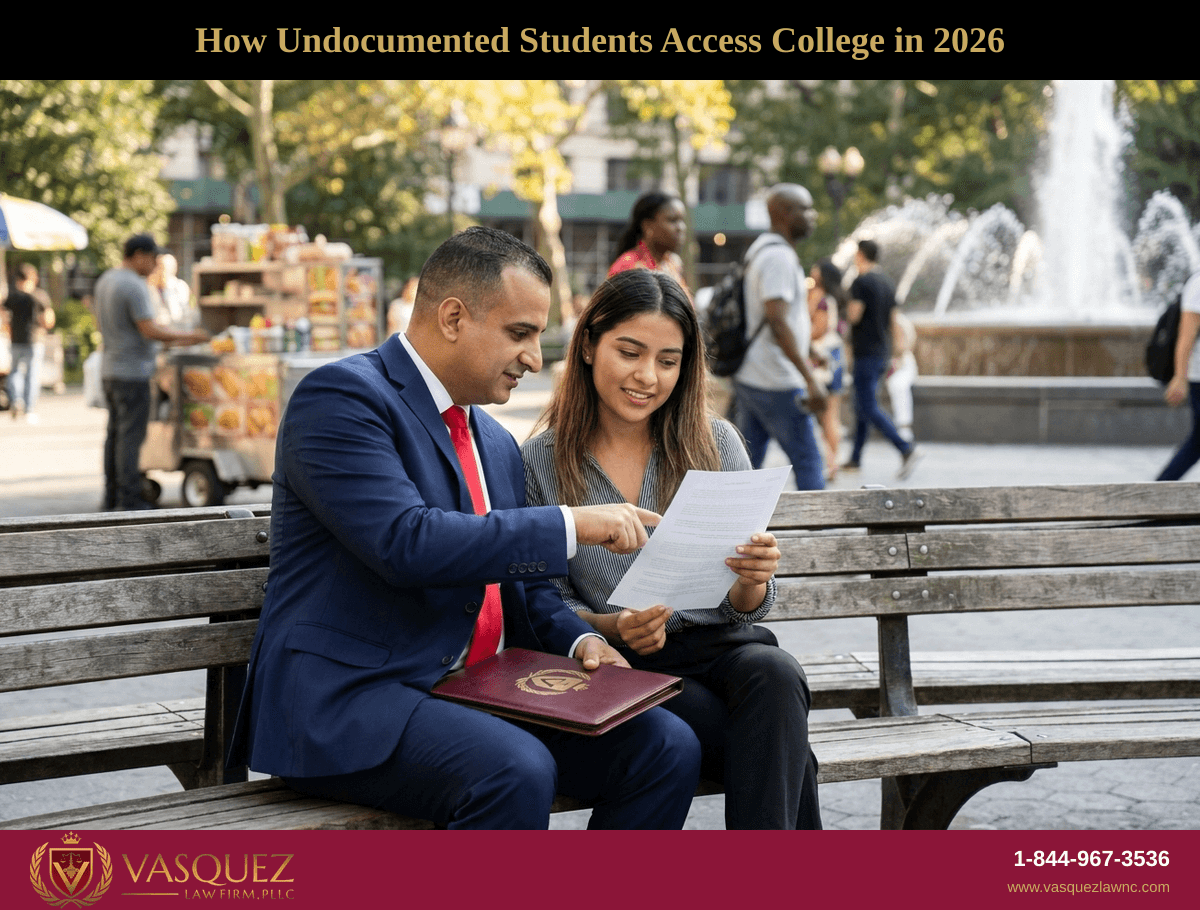
How Undocumented Students Access College in 2026
Wondering how undocumented students access college in 2026? Learn key facts and legal options. Contact Vasquez Law for a free evaluation.
Published on July 28, 2026
Have questions? Talk to an attorney - free evaluation.
Call 1-844-967-3536Worried how the latest immigration news affects you?
Get a free, confidential case review with an immigration attorney - know exactly where you stand.
How Undocumented Students Access College in 2026
Undocumented students face special challenges when trying to go to college, especially in states like North Carolina and Florida. This 2026 guide explains who undocumented students are, their rights in K-12 and college, scholarship options, and ways to get legal status. Whether you are a student or a parent, learn about federal and state rules that affect undocumented students. Vasquez Law Firm in Raleigh, NC and Orlando, FL can help you with immigration legal services.
Need help with your case? Our experienced attorneys are ready to fight for you. Se Habla Español.
Or call us now: 1-844-967-3536
Quick Answer
Undocumented students are young people living in the U.S. without legal immigration status. Legal immigration status means having a valid visa, green card, or citizenship. These students have a right to public K-12 education but face problems getting into college and scholarships. In 2026, options include DACA, some state tuition benefits, and private scholarships. Legal advice can help you understand your personal ways to get legal status and education benefits.
- Undocumented students have rights to K-12 education
- DACA gives temporary work and school protections
- College access depends on the state and school
- Scholarship chances exist but vary a lot
- Legal help is very important for immigration questions
Understanding Undocumented Students
In 2026, about 1.1 million undocumented students live in the U.S. Many came as children and call themselves Dreamers. The term 'undocumented students' means people who do not have legal immigration status. This means they do not have a valid visa, green card, or citizenship. This status affects their rights, benefits, and college choices.
According to the 1982 Supreme Court decision in Plyler v. Doe, students cannot be stopped from attending public K-12 schools because of their immigration status. This protects students in Raleigh, NC, Orlando, FL, and across the country. But this law does not give access to federal financial aid or state benefits for college.
Undocumented Students K 12 Rights
All children in the U.S. from kindergarten to 12th grade have the right to go to public schools no matter their immigration status. Schools cannot ask for proof of legal status to enroll. This rule makes sure undocumented children can get basic education.
Undocumented Students Meaning
Being undocumented means living in the U.S. without legal permission. Unlike the word 'illegal,' 'undocumented' does not make the person sound like a criminal. It includes people who entered the country without inspection and those who stayed after their visas expired. This difference is important to understand immigration talks and legal choices.
Undocumented Students in College
Going to college is more complicated. Some states allow undocumented residents to pay in-state tuition if they meet certain rules. Other states do not. Federal financial aid usually is not available to undocumented students, making college costly. Some students can get scholarships or private help.
Our immigration attorneys in Raleigh and Orlando can assist undocumented students and parents to understand their education rights and immigration benefits in 2026.
Key Steps for Undocumented Students
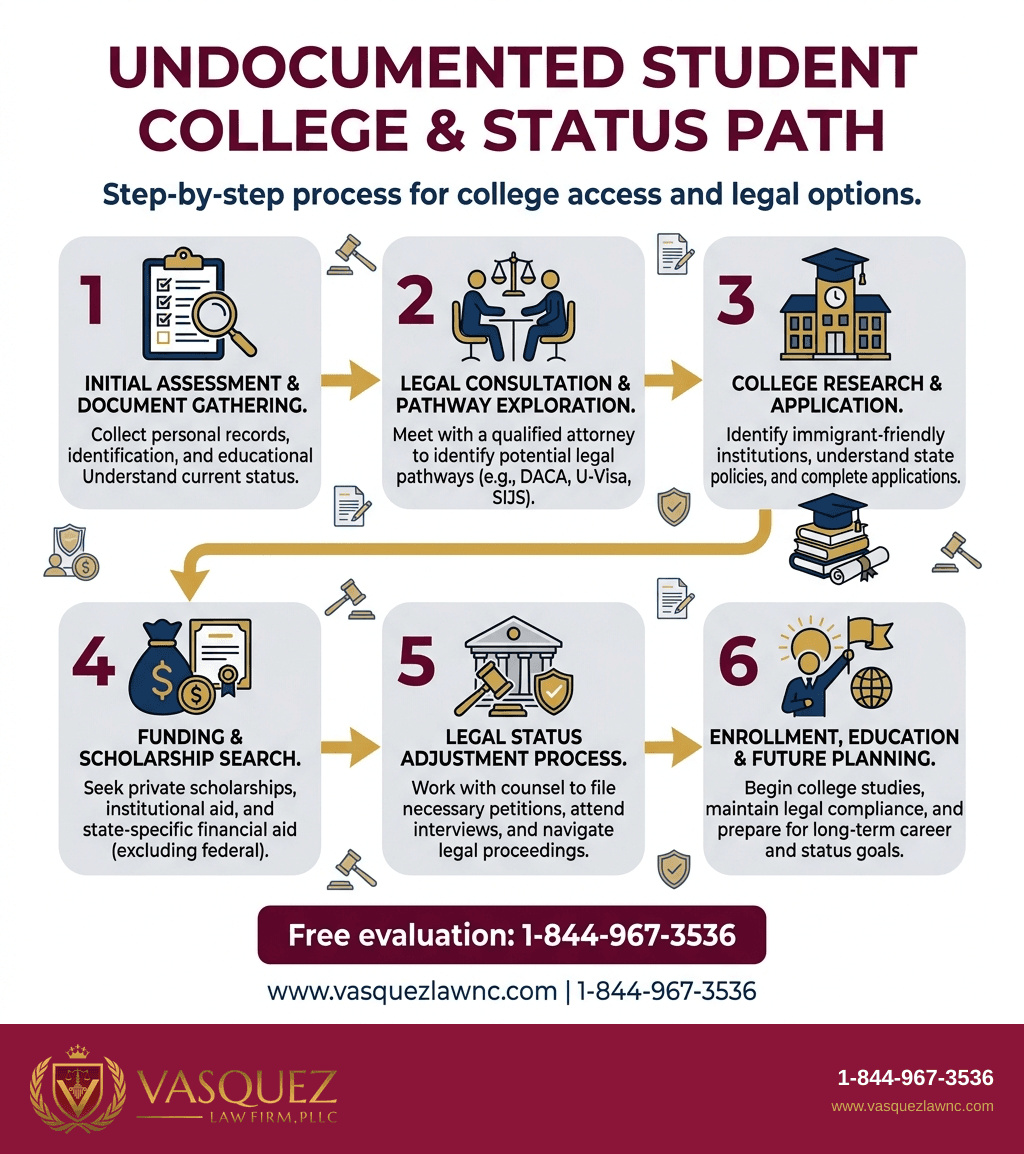
Undocumented students who want to get into college or legal status must follow several important steps carefully. Knowing deadlines, eligibility, and required papers is very important.
Step 1: Know Your Immigration Status
Find out if you qualify for programs like Deferred Action for Childhood Arrivals (DACA). DACA protects eligible people from deportation and lets them get work permits. But it must be renewed regularly. In 2026, DACA renewals can take about 14 to 22 months, according to USCIS processing times (USCIS, 2026).
Step 2: Explore State Residency and Tuition Laws
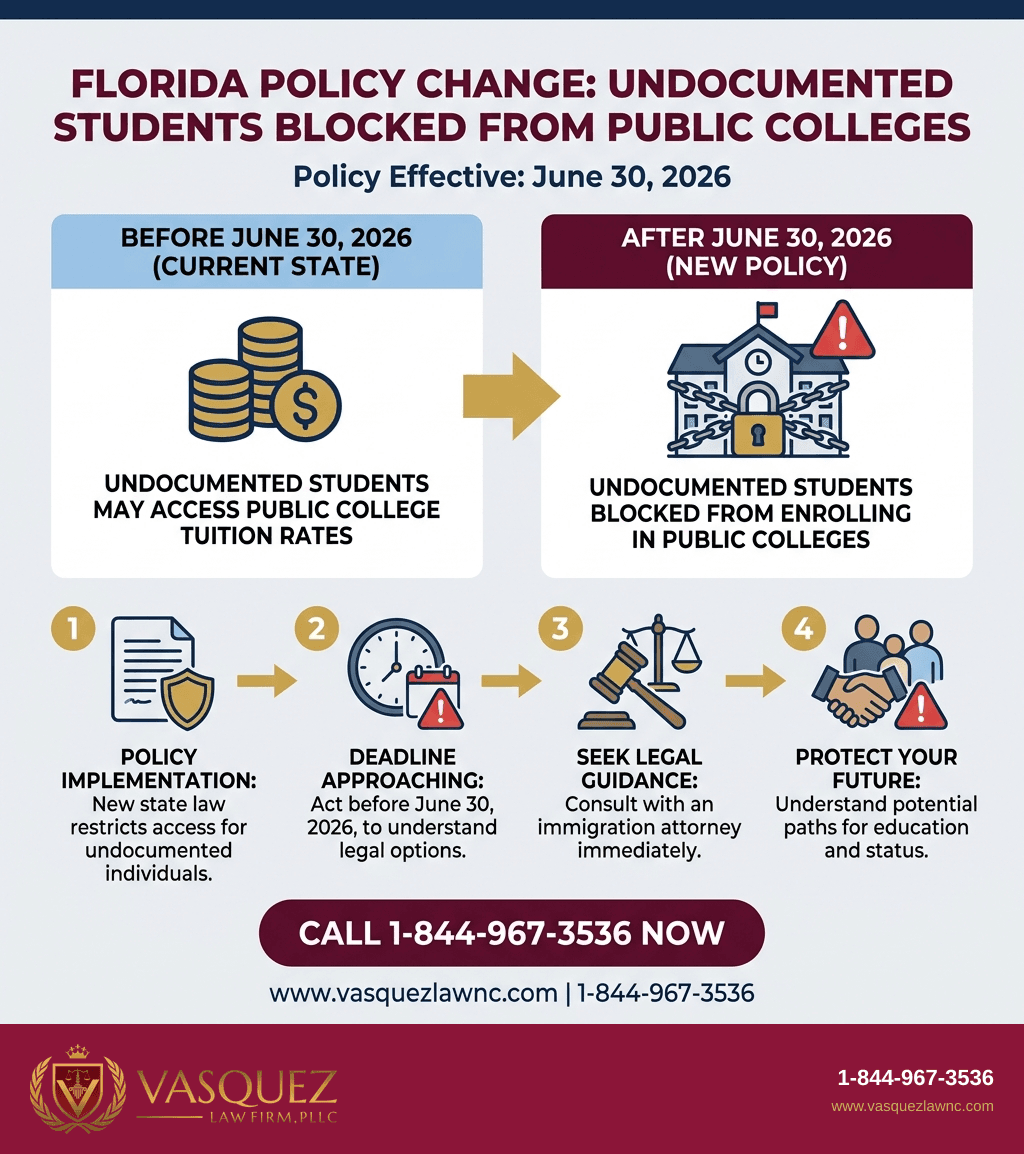
Florida lets some undocumented students pay in-state tuition if they meet residency rules. North Carolina does not have a statewide law for in-state tuition for undocumented students. This means each school may have different policies. Contact your school's admissions or financial aid office to learn more.
Step 3: Research Scholarships and Financial Aid
Undocumented students cannot get federal aid but may find scholarships from private groups, nonprofits, or some colleges. Look into resources like the Hispanic Scholarship Fund or state programs that help undocumented students.
Step 4: Consult Immigration Attorneys
Lawyers who know immigration laws can check options like family petitions, asylum, or work visas. Following these steps carefully protects your rights and improves your chances to get legal status.
Help schedules vary. Vasquez Law Firm offers personal consultations in Raleigh and Orlando. Contact our office early to plan your next steps.
Common Mistakes to Avoid
- Missing DACA renewal deadlines: Losing DACA can increase deportation risk. Renew 120 to 150 days before it expires.
- Assuming all states offer in-state tuition: Check your state’s laws. Assuming you qualify can cause money problems.
- Applying without legal advice: Immigration and financial aid rules are complex. Expert help is very important.
- Sharing immigration status publicly: Keep your privacy to avoid risks.
- Ignoring scholarship deadlines: Many scholarships close early. Prepare your papers early.
- Thinking undocumented means no options: Many paths exist. Research and legal help can open doors.
- Believing K-12 rights guarantee college access: College laws are different. Check local rules.
If you remember only one thing: Undocumented students face legal and money challenges. But good legal help and planning improve college access in 2026.
Timeline and What to Expect
- Immediately: Check your documents and their expiration dates (for example, DACA).
- 1-3 months: Collect papers like school records, ID, and immigration documents.
- 3-6 months: Apply for DACA renewal or first-time application if you qualify.
- 6-12 months: Wait for USCIS decision. At the same time, look for scholarships and ask schools about residency rules.
- 12-24 months: If possible, apply to change your status through family or work while staying enrolled in school.
Following this timeline helps students stay organized and follow rules in 2026.
Jurisdiction notes
North Carolina notes
North Carolina public schools cannot refuse enrollment based on immigration status for K-12. But the state has no law about in-state tuition for undocumented students. Schools decide their own policies. Vasquez Law Firm in Raleigh gives current legal advice about local rules.
Florida notes
Florida has some rules that let undocumented students pay in-state tuition if they meet certain residency requirements under parts of Florida Statutes. Schools in Orlando follow these laws, but the rules are strict. Talking to a lawyer in Orlando can help you understand if you qualify.
Nationwide notes
Federal law gives all children the right to free K-12 education without excluding undocumented students, according to Plyler v. Doe, 457 U.S. 202 (1982). But federal money and immigration benefits are limited. Federal immigration policies affect chances to adjust status, like DACA and Temporary Protected Status (TPS).
When to call a lawyer now
- If you face deportation or removal proceedings soon
- If your DACA renewal deadline is near or you want to apply for the first time
- If your immigration benefit application was denied
- If you need help with family immigration petitions
- If you are unsure about college admission or residency status
- If you worry about your legal rights at school or work
- If you want to apply for immigration relief like TPS or asylum
- If you face discrimination at work or school because of immigration status
About Vasquez Law Firm
At Vasquez Law Firm, we mix care with strong representation. Our motto "Yo Peleo®" (I Fight) shows our promise to stand up for your rights.
- Bilingual Support: Se Habla Español — Spanish-speaking lawyers and staff available
- Service Areas: North Carolina, Florida, and nationwide for immigration
- Experience: Over 30 years helping clients with complex legal issues
- Results: Thousands of successful cases in many practice areas
Attorney Trust and Experience
William J. Vásquez is licensed to practice law in North Carolina since 2011. He is also admitted to the U.S. Courts of Appeals for the 4th, 5th, and 11th Circuits. The firm has provided focused legal help since 2011, giving personal attention to each client.
Don't wait to get the help you deserve. Call us now for immediate assistance.
Se Habla Español
Frequently Asked Questions
What does it mean to be an undocumented student?
An undocumented student is someone living in the U.S. without legal immigration status. They cannot get some federal benefits but have the right to public K-12 education. Knowing this term helps understand legal protections and education choices.
What is the difference between illegal and undocumented?
Undocumented means lacking legal immigration status without the negative meaning of 'illegal.' It focuses on the person and avoids calling them a criminal. This is important for respectful legal talks and policies.
How many college students are undocumented?
Estimates say 200,000 to 400,000 undocumented students go to college in the U.S., but numbers vary. Access depends mostly on state and college rules about tuition and scholarships.
Why can't some undocumented students go to college?
Barriers include no federal aid, state rules that do not allow in-state tuition, and few scholarships. Legal and policy limits may stop enrollment or cause high tuition costs.
What scholarships are available for undocumented students?
Federal aid is not available, but many private scholarships focus on helping undocumented students. Some states and colleges also offer special funds. Research and legal help can find options.
How can an undocumented student become legal?
Legal ways include family sponsorship petitions, asylum, TPS, and DACA, if you qualify. A qualified immigration lawyer in Raleigh or Orlando can review your case and suggest next steps.
Can undocumented students qualify for in-state tuition?
Some states like Florida allow in-state tuition for undocumented residents who qualify. North Carolina has no statewide law but schools may have different rules. Check with your school.
What rights do undocumented students have in K-12 education?
Since the 1982 Supreme Court case Plyler v. Doe, public schools must give free K-12 education to all children no matter their immigration status. This protects undocumented students across the country.
Sources and References
- U.S. Citizenship and Immigration Services
- Executive Office for Immigration Review
- Legal Information Institute
Take the first step toward justice today. Our team at Vasquez Law Firm is ready to help. Se Habla Español.
Start Your Free Evaluation Now
Call us: 1-844-967-3536

William Vasquez
Founder & CEO, Vasquez Law Firm, PLLC
William Vasquez is the founder and CEO of Vasquez Law Firm, PLLC, a results-driven firm specializing in immigration, criminal defense, personal injury, and workers' compensation. A U.S. Air Force veteran and recipient of the Joint Service Achievement Medal, William is dedicated to fiercely fighting for his clients' rights.
Related Legal Services
Need legal help? Learn more about get immigration legal help today, or contact us for a free evaluation.
You can also visit North Carolina immigration law firm for more information.