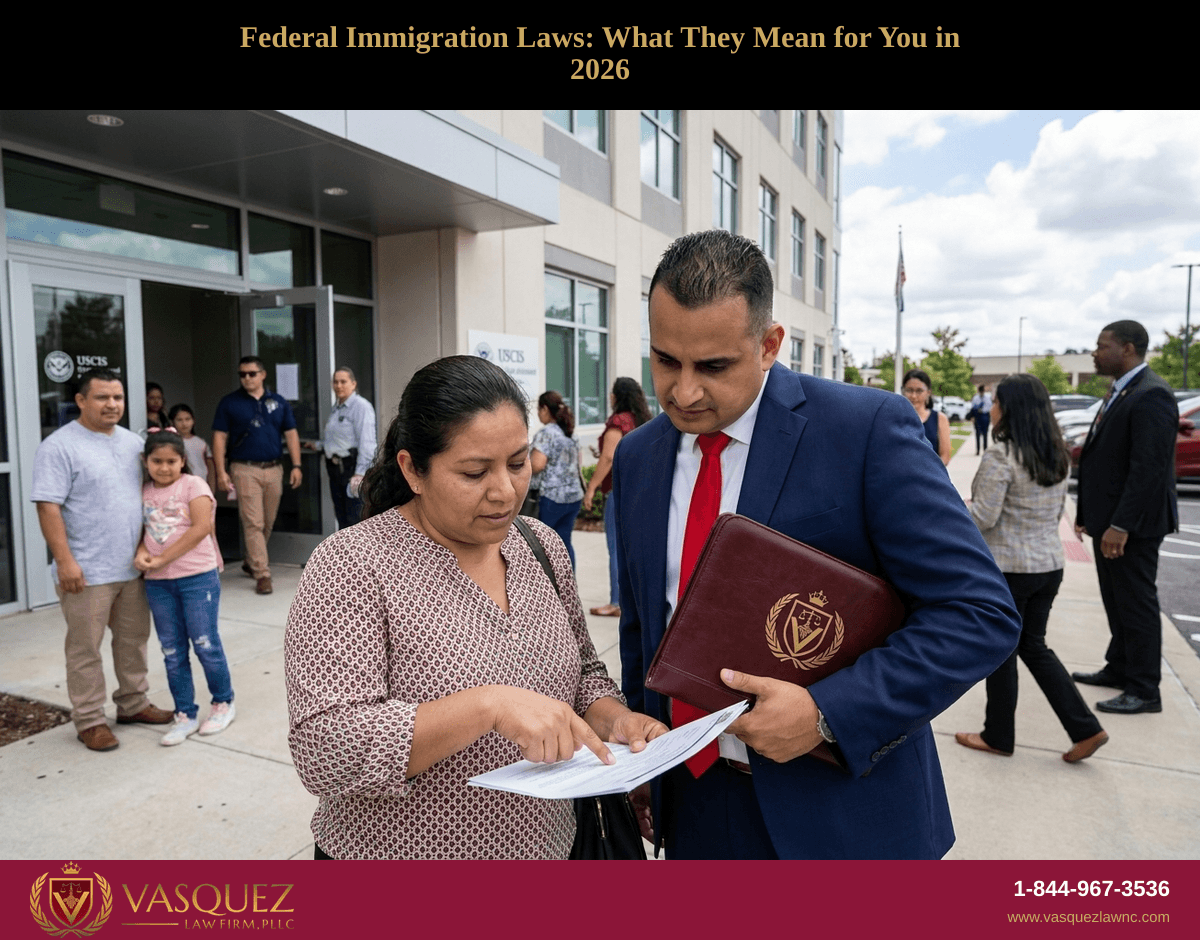
Federal Immigration Laws: What They Mean for You in 2026
Wondering about federal immigration laws in 2026? Learn the basics, recent changes, and your rights. Contact Vasquez Law for a free evaluation.
Published on July 29, 2026
Talk to an immigration attorney
Free call. A clear plan for your case.
Free & confidential · Se habla espanol · 24/7
Have questions? Talk to an attorney - free evaluation.
Call 1-844-967-3536Worried how the latest immigration news affects you?
Schedule a confidential case review with an immigration attorney - know exactly where you stand.
USCIS Case Status
Check your USCIS case status
Enter your receipt number and get the official status. Free, no registration.
Federal Immigration Laws: What They Mean for You in 2026
Federal immigration laws set the rules about who can enter, stay, or be removed from the United States. For people living in Raleigh, NC and Orlando, FL, it is important to understand these laws in 2026 because policies are changing. This guide explains what federal immigration laws are, how they work with recent state laws, and the protections and risks involved. Whether you want to get work permission, green cards, or protection from deportation, knowing the federal rules helps you make smart decisions. Vasquez Law Firm offers caring, bilingual immigration services in Raleigh, NC and Orlando, FL to help you with complex immigration problems.
Need help with your case? Our experienced attorneys are ready to fight for you. Se Habla Español.
Or call us now: 1-844-967-3536
Quick Answer
Federal immigration laws set the rules for who may enter, work, stay, or be removed from the U.S. New changes in 2026 affect how these laws are enforced and what protections exist in Raleigh, NC and Orlando, FL. Federal laws are stronger than state laws, but states can pass related rules about local enforcement. Knowing your rights and responsibilities can help you avoid legal problems.
- Federal law controls who can immigrate and how enforcement happens
- State laws may affect local help with enforcement but cannot change federal rules
- Recent federal updates change removal and asylum processes
- Legal advice can explain your status and options under current laws
- Vasquez Law Firm offers bilingual help in Raleigh, NC and Orlando, FL
Understanding Federal Immigration Laws and Their Scope
In 2026, federal immigration laws are the main rules about who can enter, live in, or be removed from the United States. These laws are made by Congress and enforced by federal agencies like U.S. Citizenship and Immigration Services (USCIS), Immigration and Customs Enforcement (ICE), and the Executive Office for Immigration Review (EOIR).
The Immigration and Nationality Act (INA), found in 8 U.S.C. §§ 1101 and following sections, is the main law for immigration. It explains who can get visas, green cards, asylum, and citizenship. It also lists reasons why someone can be denied entry or deported. For example, INA § 212 lists reasons to deny entry, and INA § 237 lists reasons for removal.
Federal immigration law is "preemptive," which means it replaces any state laws that conflict with it. States cannot make laws that change who can get visas or who can be removed from the country. But states can make laws about how they work with federal agencies or about state benefits. This has caused debates and court cases.
For people living in Raleigh, NC and Orlando, FL, federal immigration laws control most legal immigration matters. But local state laws can affect how immigration is enforced and what state benefits immigrants can get. Knowing the federal law and its 2026 updates can help immigrants and their families protect their rights and understand their duties.
Federal Agencies Involved in Immigration
- USCIS: Handles applications for visas, green cards, asylum, and citizenship.
- ICE: Enforces immigration laws, including arrests and deportations.
- EOIR: Runs removal hearings and immigration court trials.
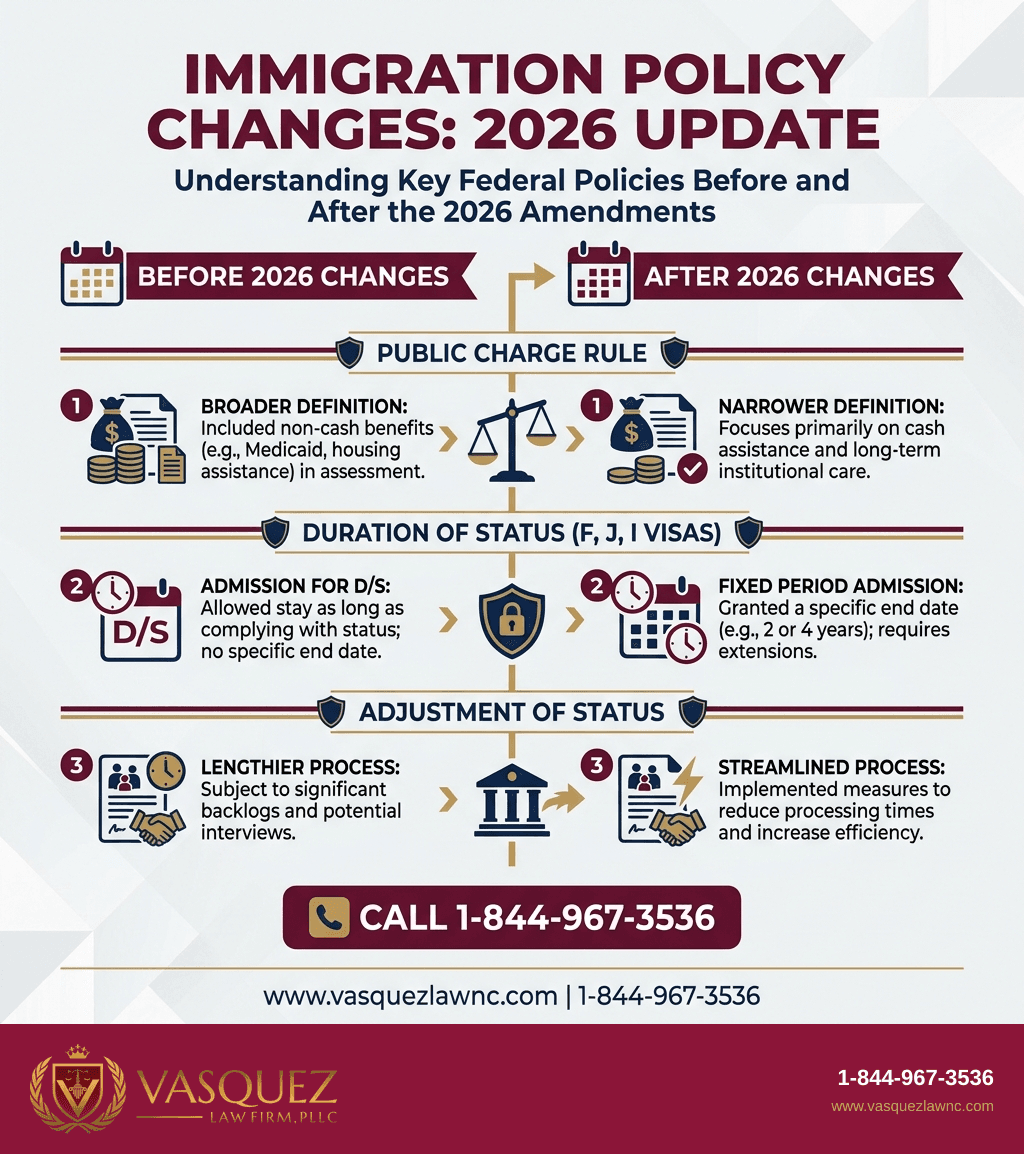
Recent Federal Changes in 2026
Some important changes in federal immigration laws starting in 2026 include new rules for work permission for some noncitizens, stricter priorities for removal, and changes in asylum procedures. These affect how people in NC and FL can apply for or keep their immigration status. For example, USCIS processing times for forms like I-485 (application to adjust status) now take about 8 to 14 months, according to USCIS processing times. Staying updated helps applicants avoid delays or denials.
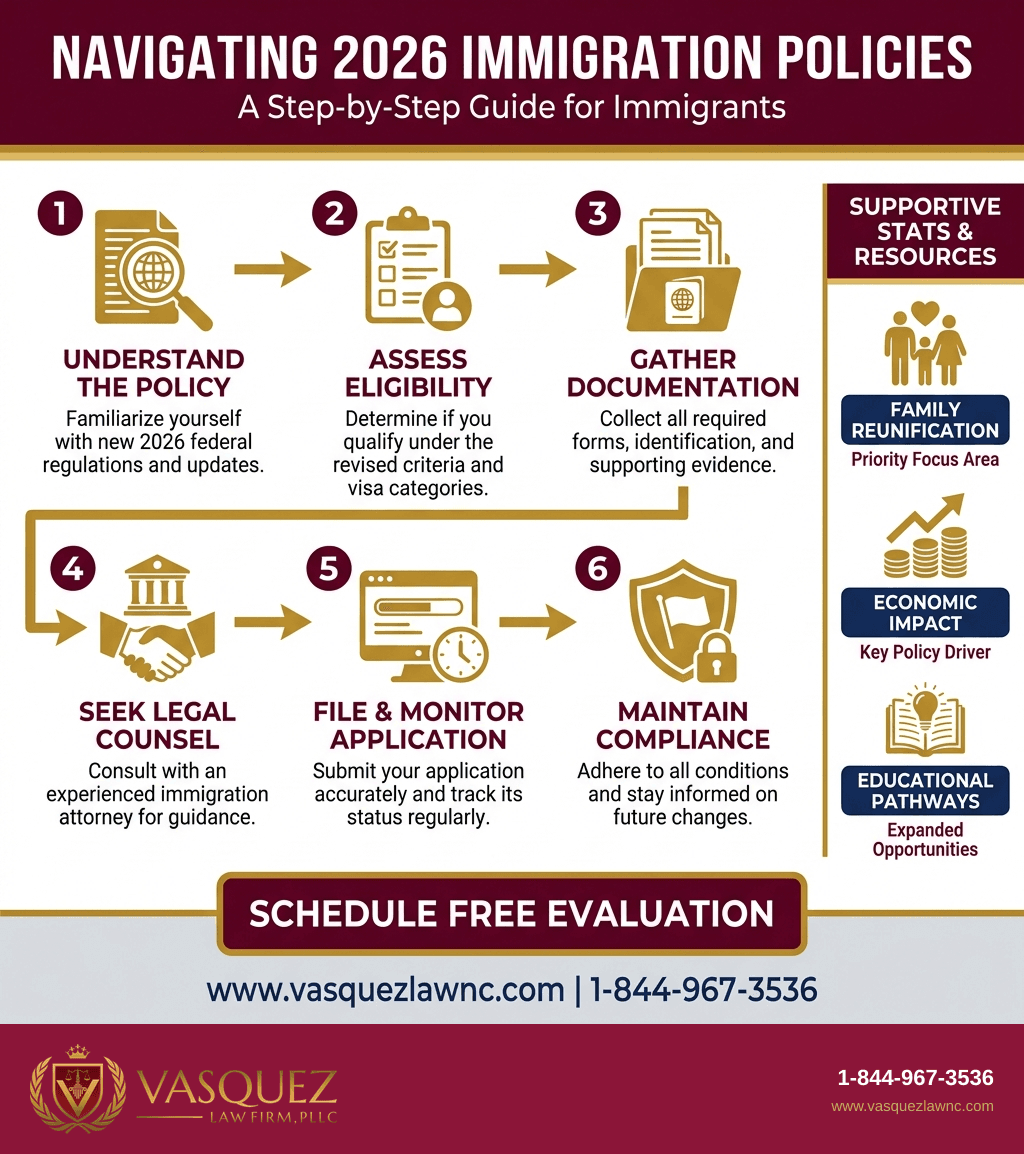
Step-by-step: How to Follow Federal Immigration Laws
- Find out your immigration status: Know if you have a visa, green card, or no legal status. This affects which federal laws apply to you.
- Keep your documents up to date: Renew visas, work permits, or green cards before they expire to stay legal.
- Follow USCIS application steps: Submit the right forms with correct information and proof, as federal rules require.
- Reply quickly to federal notices: Go to interviews, court hearings, or send more documents if USCIS or EOIR asks.
- Know your rights if ICE acts against you: If ICE detains you, you have rights to a lawyer and to challenge removal.
- Get legal help: Contact experienced immigration lawyers for complex cases or if facing enforcement actions.
Local Considerations for Raleigh, NC and Orlando, FL
Federal law controls immigration decisions, but people in Raleigh and Orlando should watch for new state immigration laws about local help with ICE and access to state services. For example, some counties in North Carolina limit local holds requested by ICE, which affects federal removal efforts. In 2026, Florida’s Orlando area changed state laws about public benefits for immigrants.
Documents and Evidence Checklist for Federal Immigration Processes
- Government photo ID (passport, national ID card)
- Current visa or immigration status papers (I-94, green card, work permit)
- Birth and marriage certificates for family petitions
- Work permission documents
- Proof of residence or legal presence (leases, utility bills)
- Police clearances or court records, if needed
- Letters from USCIS or EOIR
Tips for Preparing Evidence
- Keep original papers and several copies
- Arrange documents by date
- Translate non-English papers with certified translations
- Update papers to show current facts
Timeline: What to Expect with Federal Immigration Applications in 2026
- USCIS initial processing: 6-14 months depending on the form (like I-130, I-485)
- Biometrics appointments: Usually set 1-3 months after filing
- Interviews or hearings: Usually 6-12 months after filing, or sooner for removal cases
- Final decision: Between 8-18 months, depending on case complexity
- Appeals or motions: Can add months or years to the timeline
Common Causes of Delays
- Incomplete or wrong applications
- Backlogs from many applications
- Requests for more evidence
- Changes in federal rules or forms
Costs and Fees: Factors Affecting Your Case Price
- USCIS fees range from $575 (I-130) to $1,225 (I-485)
- Lawyer fees vary by case difficulty and location
- Extra costs for medical exams, translations, and biometrics
- Possible fees for faster processing or appeals
Vasquez Law Firm gives clear fee estimates during consultation to avoid surprises.
Common Mistakes in Federal Immigration Cases and How to Avoid Them
- Missing deadlines: File petitions and replies on time to avoid denials.
- Wrong information: Give truthful, consistent facts on all forms.
- Not keeping status: Do not stay past visa limits or work without permission.
- Ignoring removal notices: Reply quickly to court or USCIS letters.
- Not getting legal help: Talk to lawyers for complex or urgent issues.
- Using old forms: Always use the latest forms from the USCIS website.
- Not preparing for interviews: Bring all needed papers and a lawyer if possible.
If you remember one thing: Keep your immigration status current and get legal help early.
Jurisdiction Notes on Federal Immigration Law in NC and FL
Federal immigration laws apply everywhere in the U.S., including Raleigh, NC and Orlando, FL. Federal agencies enforce these laws, but local areas differ in how much they work with ICE. For example, some NC counties limit ICE holds, while Orlando usually works closely with federal enforcement. Knowing these local differences helps you understand how federal immigration laws affect you in real life.
North Carolina Notes
North Carolina enforces federal immigration laws but has different local agreements about working with ICE. People in Raleigh should keep up with state laws about driver licenses and state benefits for immigrants.
Florida Notes
Orlando, FL enforces federal immigration laws strongly. In 2026, Florida passed laws limiting sanctuary policies and increasing immigration enforcement. These laws may affect immigrants’ access to state services.
Nationwide Notes
Federal immigration laws, including the INA, set the basic rules across all states. Federal agencies can detain, remove, or give relief no matter state laws, but state and local help can vary.
When to Call a Lawyer Now
- If you or a family member gets a Notice to Appear for removal hearings
- If ICE or other authorities arrest or detain you
- If you have questions about renewing visas or changing status
- If you think your application was wrongly denied
- If you need help with asylum or protection from deportation
- If you want to apply for Deferred Action for Childhood Arrivals (DACA)
- If you are not sure about your immigration status
- If you face criminal charges that affect your immigration case
About Vasquez Law Firm
At Vasquez Law Firm, we combine care with strong representation. Our motto "Yo Peleo®" (I Fight) shows our promise to stand up for your rights.
- Bilingual Support: Se Habla Español—Spanish-speaking lawyers and staff available
- Service Areas: North Carolina, Florida, and nationwide for immigration
- Experience: Over 30 years helping clients with complex legal issues
- Results: Thousands of successful cases in many practice areas
Attorney Trust and Experience
William J. Vásquez is licensed by the North Carolina State Bar and the Florida Bar. He has over 15 years of experience in immigration law. Since 2011, the firm’s leaders have helped many clients with immigration issues, focusing on personal attention and detail.
Don't wait to get the help you deserve. Call us now for immediate assistance.
Se Habla Español
Frequently Asked Questions
What is the federal law regarding immigration?
Federal immigration law is primarily governed by the Immigration and Nationality Act (INA), which sets the rules for who can enter, remain in, or be removed from the U.S. It is enforced by agencies like USCIS, ICE, and EOIR. Federal law preempts conflicting state laws and outlines visa eligibility, deportation grounds, asylum, and naturalization processes.
Can states ignore federal immigration law?
No, under the Supremacy Clause of the U.S. Constitution, federal immigration laws preempt state laws. States cannot change who qualifies for visas or deportation. However, states may pass laws regarding local law enforcement's cooperation with federal immigration agencies, with significant variation among states.
Is ICE deporting people who are here legally?
ICE prioritizes removal of individuals without lawful status or those with serious criminal convictions. Individuals lawfully present (with valid visas or green cards) generally are not targeted unless their status changes. Enforcement priorities can shift with federal policies.
What is the new immigration law in the USA?
In 2026, recent federal changes include updated asylum processing, stricter removal criteria, and revised work authorization rules. These rules aim to streamline procedures and clarify eligibility. Specific changes can be found on the USCIS and EOIR websites.
How do federal immigration laws affect North Carolina residents?
Federal laws control immigration eligibility and removal nationwide, including in North Carolina. However, NC state policies on local law enforcement cooperation influence immigration enforcement practices. Residents should stay informed of both federal and recent state immigration laws.
What documents are essential for federal immigration applications?
Key documents include passports, visa or green card forms, birth certificates, marriage licenses, work permits, and any USCIS correspondence. Certified translations and up-to-date evidence are critical to avoid application delays or denials.
How long do federal immigration processes take in 2026?
Processing times vary by case but generally range from 6 to 18 months for petitions like adjustment of status (I-485). USCIS publishes current times for each form, and delays can occur due to backlogs or requests for additional evidence.
When should I contact an immigration attorney?
Consult an attorney immediately if facing removal proceedings, ICE detention, application denials, or complex status changes. Legal advice helps protect your rights and navigate federal procedures effectively.
Sources and References
- U.S. Citizenship and Immigration Services
- Executive Office for Immigration Review
- Legal Information Institute
Take the first step toward justice today. Our team is standing by to help.
Start Your Free Evaluation Now
Call us: 1-844-967-3536
Se Habla Español - Estamos aquí para ayudarle.
If you need legal assistance, learn more about get immigration legal help today, or call us at 1-844-967-3536 for a free evaluation.


William Vasquez
Founder & CEO, Vasquez Law Firm, PLLC
William Vasquez is the founder and CEO of Vasquez Law Firm, PLLC, a results-driven firm specializing in immigration, criminal defense, personal injury, and workers' compensation. A U.S. Air Force veteran and recipient of the Joint Service Achievement Medal, William is dedicated to fiercely fighting for his clients' rights.
Related Legal Services
Need legal help? Learn more about get immigration legal help today, or contact us for a free evaluation.
You can also visit North Carolina immigration law firm for more information.