How USCIS Rules Affect Your Immigration Case in 2026
Learn how USCIS rules impact your immigration case in 2026. Discover key updates and protect your status. Contact Vasquez Law for a free consultation.
Published on July 25, 2026
Talk to an immigration attorney
Free call. A clear plan for your case.
Free & confidential · Se habla espanol · 24/7
Have questions? Talk to an attorney - free evaluation.
Call 1-844-967-3536Free Tool
Check Your USCIS Case Status Now
Enter your receipt number - get the official USCIS status in English or Spanish. No registration.
How USCIS Rules Affect Your Immigration Case in 2026
USCIS rules control how immigration applications and petitions move forward across the country, including in Raleigh, NC and Orlando, FL. In 2026, new policy updates and changes in procedures are affecting USCIS case results. Knowing these rules helps immigrants avoid delays, denials, or risks of deportation. This guide explains important USCIS regulations, timelines, common mistakes, and steps to protect your immigration status in North Carolina, Florida, and other places.
Need help with your case? Our experienced attorneys are ready to fight for you. Se Habla Español.
Or call us now: 1-844-967-3536
Quick Answer
USCIS rules affect all immigration cases by setting who can apply, what paperwork is needed, and how long processing takes. New updates in 2026 make reviews stricter. This can cause longer wait times or denials if rules are not followed. Immigrants in Raleigh, NC and Orlando, FL should watch USCIS news often and talk to a lawyer to follow the rules.
- 2026 USCIS rules focus on checking documents carefully and stopping fraud
- Processing times have gotten longer for many forms like I-485
- Not following rules can cause denial or deportation
- Keep track of official USCIS messages through your USCIS account
- Talk to a qualified immigration lawyer to protect your rights
Understanding USCIS Rules
Imagine you apply for a green card and then get a request for more evidence because USCIS changed its policy right after you applied. USCIS rules are the official laws and steps the U.S. government uses to approve or deny immigration applications across the country. These rules explain who can apply, what papers you need, interviews, and reasons for denial or deportation. In 2026, USCIS has made rules stricter about documents and checking information.
USCIS rules are written in the USCIS Policy Manual. This is a public resource updated regularly. It has instructions for forms like I-130 (family petitions), I-485 (adjustment of status), and others used in Raleigh, NC, and Orlando, FL offices. Keeping up with the USCIS Policy Manual is very important for applicants.
Key USCIS Rules to Know
- Document authenticity and completeness: Copies, translations, and supporting papers must meet USCIS standards.
- Timing rules: Some applications, like adjustment of status, have rules on travel and deadlines (for example, the 90-day rule).
- Disclosure requirements: Applicants must honestly report their background and immigration history.
- Eligibility grounds: Rules say who can apply or be denied based on criminal records, immigration problems, or reasons to be refused entry.
Not following any USCIS rule can cause delays, denial of benefits, or even removal from the U.S. Following these rules carefully improves your chance of approval.
Key Steps to Follow in Your USCIS Case
Think about Maria, who applied for a family-based green card in Orlando, FL but forgot to include the correct USCIS photo. Her case stopped until she sent the right photo again. Knowing the steps and USCIS rules helps you avoid these problems.
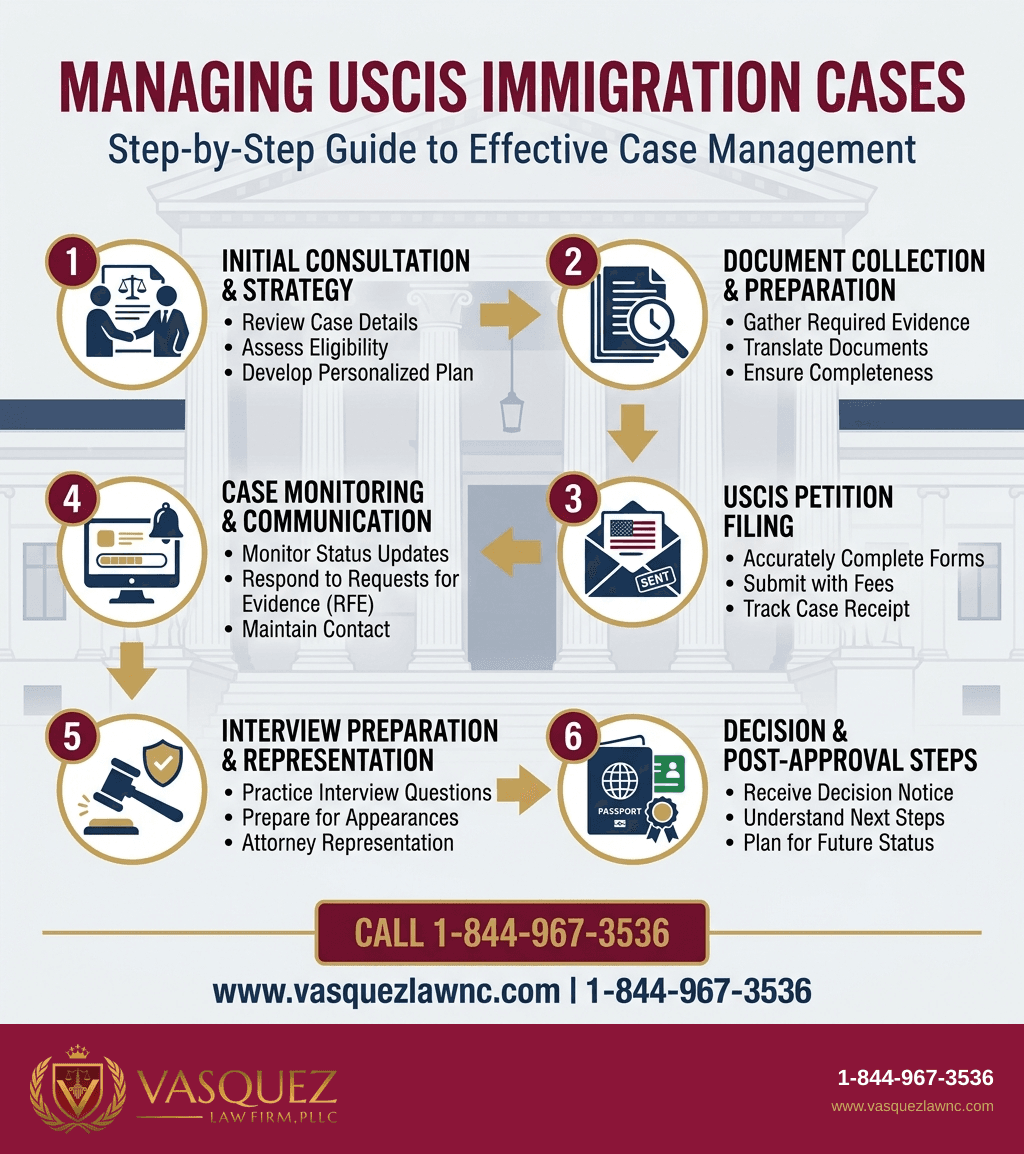
Here is a clear process to follow for your USCIS case:
- Keep an active USCIS account: Make and check your case status online to get notices on time.
- Send complete and correct forms: Use the newest USCIS forms and follow instructions carefully, including signatures and fees.
- Prepare supporting papers: Include certified translations, proof of family ties, and financial support letters as needed.
- Go to biometrics and interviews: USCIS appointments are required; rescheduling will delay your case.
- Answer Requests for Evidence (RFEs) quickly: Give clear, fast replies to avoid denial.
- Follow travel rules: Do not travel outside the U.S. without advance parole or valid permission while your status is pending.
- Tell USCIS if you move: Update your address quickly to get notices.
- Get legal help early: Complex rules and facts may need expert advice.
These steps are important for anyone applying through Raleigh, NC or Orlando, FL USCIS offices, but they also apply everywhere in the U.S.
Common Mistakes to Avoid with USCIS Applications
Juan found out his green card application was delayed for 6 months because he used an old form. In 2026, USCIS is strict about avoiding mistakes that can cause denials.
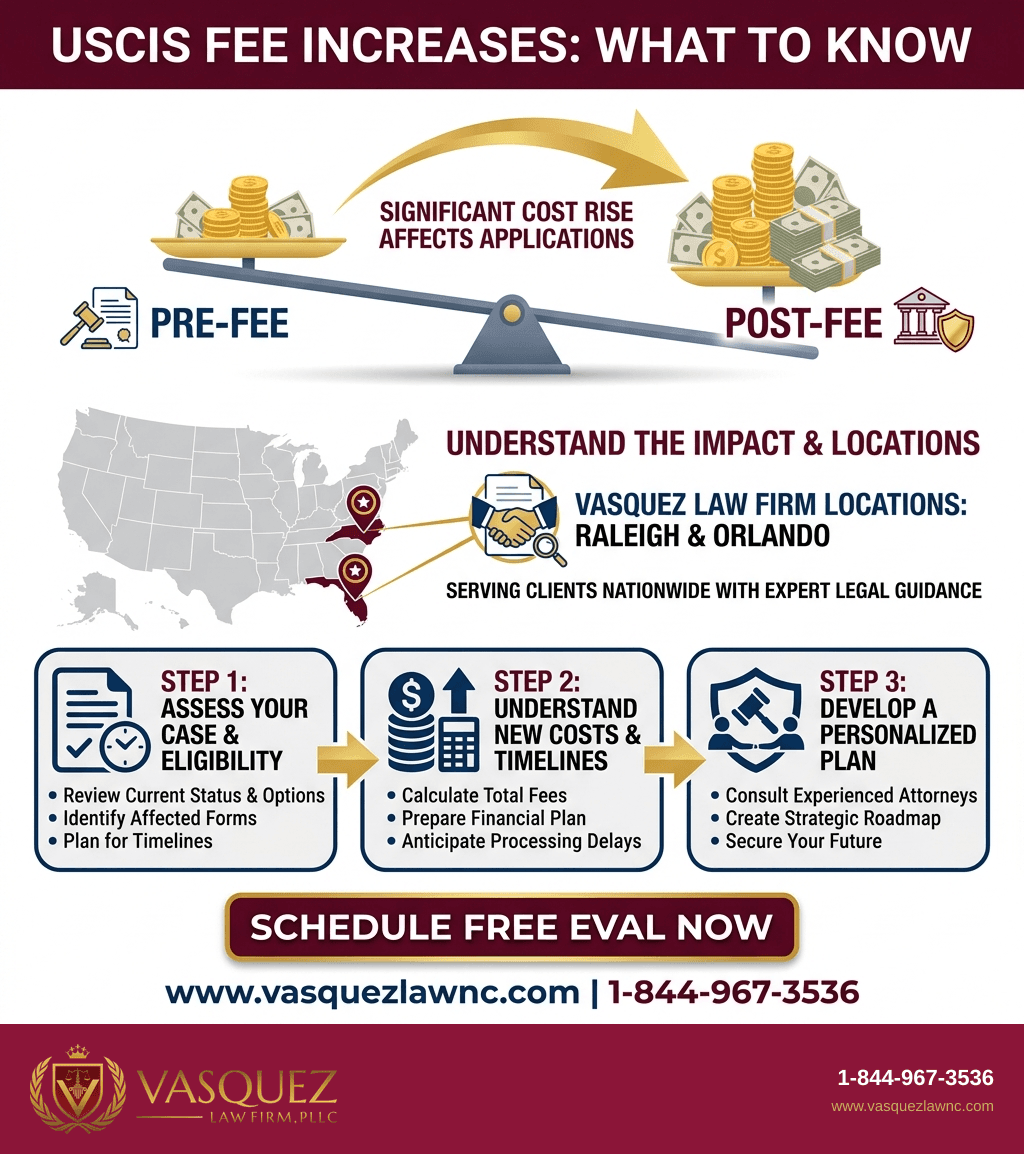
- Using old forms or wrong fees: Always get the latest USCIS forms from the official website and check fee lists.
- Not signing or certifying documents properly: USCIS rejects unsigned or wrongly notarized papers.
- Ignoring RFEs or missing appointments: Missing deadlines can cause automatic denials.
- Traveling without permission: Leaving the U.S. while your application is pending without advance parole may cancel your application.
- Sending incomplete or conflicting information: Confusing answers can make USCIS doubt your truthfulness.
- Not updating your address: USCIS may send important notices to your old address.
- Not keeping valid status: This can affect your eligibility to adjust status.
If you remember only one thing: always double-check USCIS rules before sending any application to avoid costly mistakes.
USCIS Processing Times and What to Expect
Processing times change a lot depending on the application type and USCIS service center. For example, adjustment of status applications (Form I-485) usually take 8 to 14 months in 2026; naturalization petitions (N-400) take about 10 to 12 months. You can check your case’s estimated timeline on the official USCIS processing times page.
Typical USCIS Case Timeline
- Days 1-30: USCIS sends a receipt notice to confirm they got your file.
- Weeks 4-6: You get a biometrics appointment date.
- Months 3-12: USCIS reviews your file and may ask for more evidence (RFE).
- Months 6-14: USCIS schedules an interview if needed.
- Final decision: USCIS approves or denies your case after the interview or review.
USCIS rules ask applicants to be patient but watchful. Processing times may be longer in Raleigh, NC and Orlando, FL because of heavy workloads or policy changes. Checking your USCIS account often helps you stay updated.
When to Call an Immigration Lawyer
Think about these urgent situations as signs to contact an immigration lawyer in Raleigh, NC or Orlando, FL right away:
- You get a Request for Evidence or a Notice of Intent to Deny
- Your application is denied or delayed past the usual times
- USCIS sets an interview and you worry about preparing
- You are not sure if you qualify under new USCIS rules
- You face possible deportation or removal hearings
- You need help getting advance parole or work permission
- You changed your address or marital status after applying
- You want to understand how USCIS policy updates affect your case
Getting expert legal advice can lower stress and raise your chances of a good result.
About Vasquez Law Firm
At Vasquez Law Firm, we mix care with strong representation. Our motto "Yo Peleo®" (I Fight) shows our promise to stand up for your rights. We know the details of USCIS rules and immigration law.
- Bilingual Support: Se Habla Español — Spanish-speaking lawyers and staff ready to help
- Service Areas: North Carolina, plus Florida and nationwide for immigration
- Experience: Over 15 years helping clients with complex immigration issues
- Results: Thousands of successful cases in immigration and related areas
Attorney Trust and Experience
Attorney Vasquez, JD, is licensed to practice law in North Carolina and Florida. With over 15 years focused on immigration law, she is a trusted helper for clients in Raleigh, NC, Orlando, FL, and across the country.
Don't wait to get the help you need. Call us now for fast assistance.
Se Habla Español
Frequently Asked Questions
What is the new USCIS rule in 2026?
In 2026, USCIS has made documentation rules stricter and improved fraud checks. Applicants must send complete, correct evidence to avoid denials. These changes aim to protect the immigration process but have made case processing slower in Raleigh and Orlando.
What is the 3-month rule for USCIS?
The 3-month rule limits travel or certain application steps within three months after filing to prevent losing your application or denial. For example, people applying to adjust status usually cannot travel without advance parole during this time.
Can ICE deport permanent residents?
Yes, ICE can start removal (deportation) proceedings against lawful permanent residents for crimes or violations under federal law 8 U.S.C. A7 1227. Legal defenses and relief may be possible, so talk to an immigration lawyer quickly if you are worried.
Does USCIS still use the 90-day rule?
Yes, the 90-day rule is still used when checking if marriages are genuine for green card petitions. USCIS looks closely at actions taken within 90 days after filing to find possible fraud.
How can I check my USCIS case status?
You can check your case status anytime by logging into your USCIS online account or using your receipt number on USCIS.gov. Checking often helps you meet deadlines and respond to requests on time.
What documents are required for USCIS applications?
Documents needed depend on the application type but usually include ID, proof of family or work relationships, financial support papers, and certified translations. Check the USCIS Policy Manual PDF for details about your case.
How long do USCIS cases usually take in 2026?
Processing times depend on the application and workload. For example, Form I-485 adjustment of status takes about 8 to 14 months. Check the official USCIS processing times page often for updates that affect your case.
What should I do if my USCIS application is denied?
Look carefully at why your application was denied. You may file a motion to reopen or appeal within strict deadlines. Sometimes you need to apply again with the right evidence. Getting help from an immigration lawyer quickly is very important.
Sources and References
- U.S. Citizenship and Immigration Services
- Executive Office for Immigration Review
- Legal Information Institute
Take the first step toward justice today. Our team is ready to help.
Start Your Free Evaluation Now
Call us: 1-844-967-3536
Se Habla Español - We are here to help you.
If you need legal assistance, learn more about immigration lawyers in North Carolina, or call us at 1-844-967-3536 for a free evaluation.


William Vasquez
Founder & CEO, Vasquez Law Firm, PLLC
William Vasquez is the founder and CEO of Vasquez Law Firm, PLLC, a results-driven firm specializing in immigration, criminal defense, personal injury, and workers' compensation. A U.S. Air Force veteran and recipient of the Joint Service Achievement Medal, William is dedicated to fiercely fighting for his clients' rights.
Related Legal Services
Need legal help? Learn more about immigration lawyers in North Carolina, or contact us for a free evaluation.
You can also visit immigration attorneys across North Carolina for more information.