How E-2 Investor Visa Works: What to Expect in 2026
Wondering how the E-2 Investor Visa works in 2026? Learn eligibility, investment basics, and steps to protect your status. Schedule your free evaluation today.
Published on September 13, 2026
Talk to an immigration attorney
Free call. A clear plan for your case.
Free & confidential · Se habla espanol · 24/7
Have questions? Talk to an attorney - free evaluation.
Call 1-844-967-3536Worried how the latest immigration news affects you?
Schedule a confidential case review with an immigration attorney - know exactly where you stand.
USCIS Case Status
Check your USCIS case status
Enter your receipt number and get the official status. Free, no registration.
How E-2 Investor Visa Works: What to Expect in 2026
The E-2 Investor Visa allows qualified nationals of treaty countries to invest in a U.S. business and live in the United States. In 2026, applicants from Raleigh, NC and Orlando, FL should understand the eligibility criteria, investment requirements, processing times, and potential paths to permanent residency. This guide explains key aspects of the E-2 visa application process, common mistakes, and important timelines to manage expectations properly. Vasquez Law Firm’s immigration attorneys offer virtual consultations to help you navigate your E-2 visa application.
Need help with your case? Attorney William J. Vasquez is ready to fight for you. Se Habla Español.
Or call us now: 1-844-967-3536
Quick Answer
The E-2 Investor Visa allows nationals of treaty countries to invest in and direct a U.S. business. It typically requires a substantial investment and can be renewed indefinitely as long as the business remains operational.
- The investment must be substantial and committed to a real business.
- Applicants must come from a treaty country and intend to develop the business.
- The visa duration varies, initially granted up to two years but renewable.
- E-2 is a nonimmigrant visa and does not directly lead to a green card.
- Spouses may apply for work authorization; children may attend school.
- Processing times usually range from 2 to 4 months.
Understanding the E-2 Investor Visa
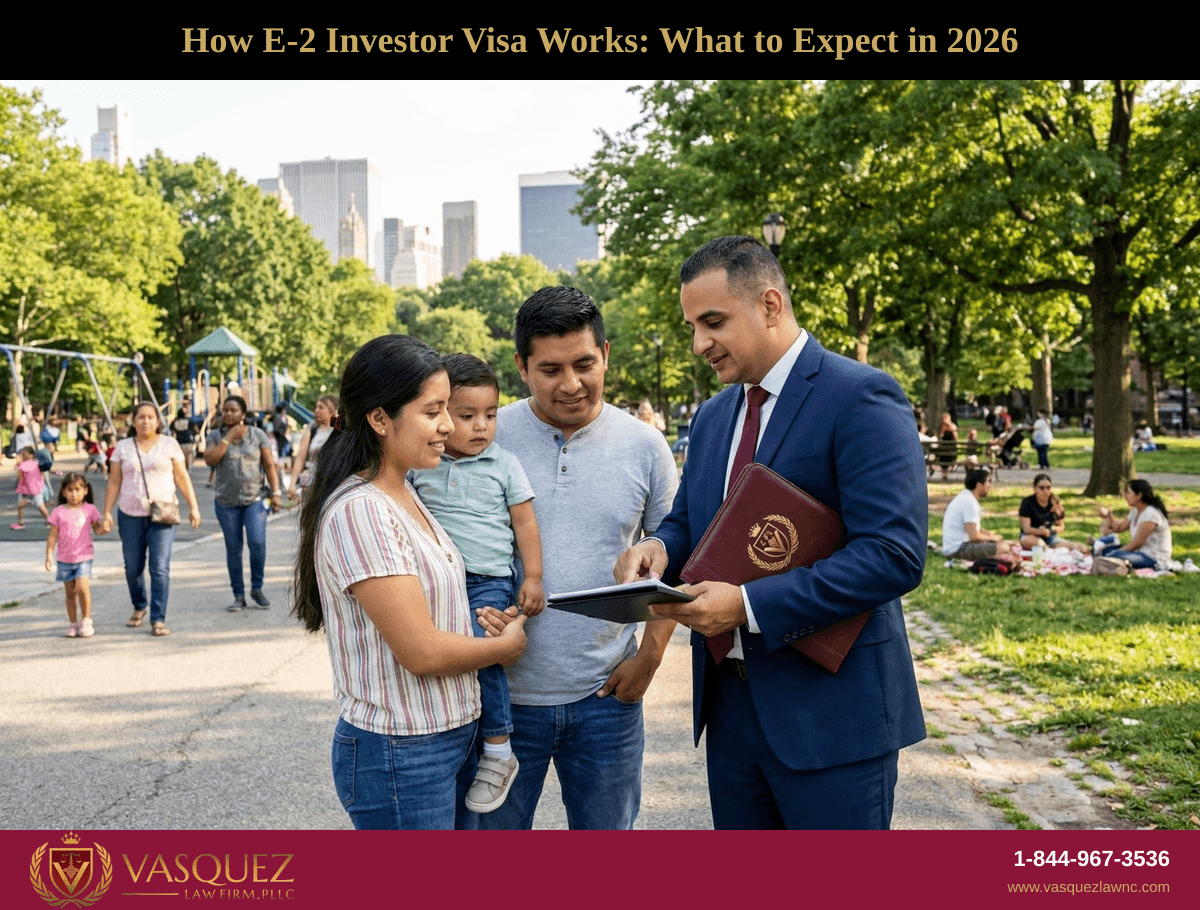
Imagine an entrepreneur from Canada wanting to open a restaurant in Raleigh, NC. They qualify for an E-2 visa because Canada is a treaty country with the United States. They invest $150,000 to secure the business and jobs in the community. This visa allows them to live and work in the U.S. as the business owner.
The E-2 Investor Visa is a nonimmigrant status created by INA § 101(a)(15)(E). It’s specifically designed for nationals of countries with a qualifying treaty with the U.S. to develop and direct an enterprise in the United States. The business must be a real, operating commercial enterprise that produces services or goods.
The investor must play a direct managerial or operational role. Passive investments like simply owning stock in a business generally do not qualify. While the initial visa is usually granted for up to two years, renewals can be granted indefinitely if the business continues meeting visa requirements.
Vasquez Law Firm offers virtual consultations, helping investors in Raleigh, NC and Orlando, FL understand and pursue this visa option correctly. For our detailed immigration services, visit our immigration services.
E-1 Visa vs. E-2 Visa
The E-1 visa is for treaty traders rather than investors. E-1 visa holders engage primarily in substantial trade between their home country and the U.S. While both visas serve treaty nationals, the investment focus distinguishes the E-2 visa from E-1's trading emphasis.
This distinction matters when considering eligibility and business plans. Our blog covers other business visas to help choose the correct option.
Eligibility Overview
- Must be a citizen of a qualifying treaty country.
- Planning to invest a substantial amount in a U.S. business.
- Intend to develop and direct the investment enterprise.
- The business must be real and operational.
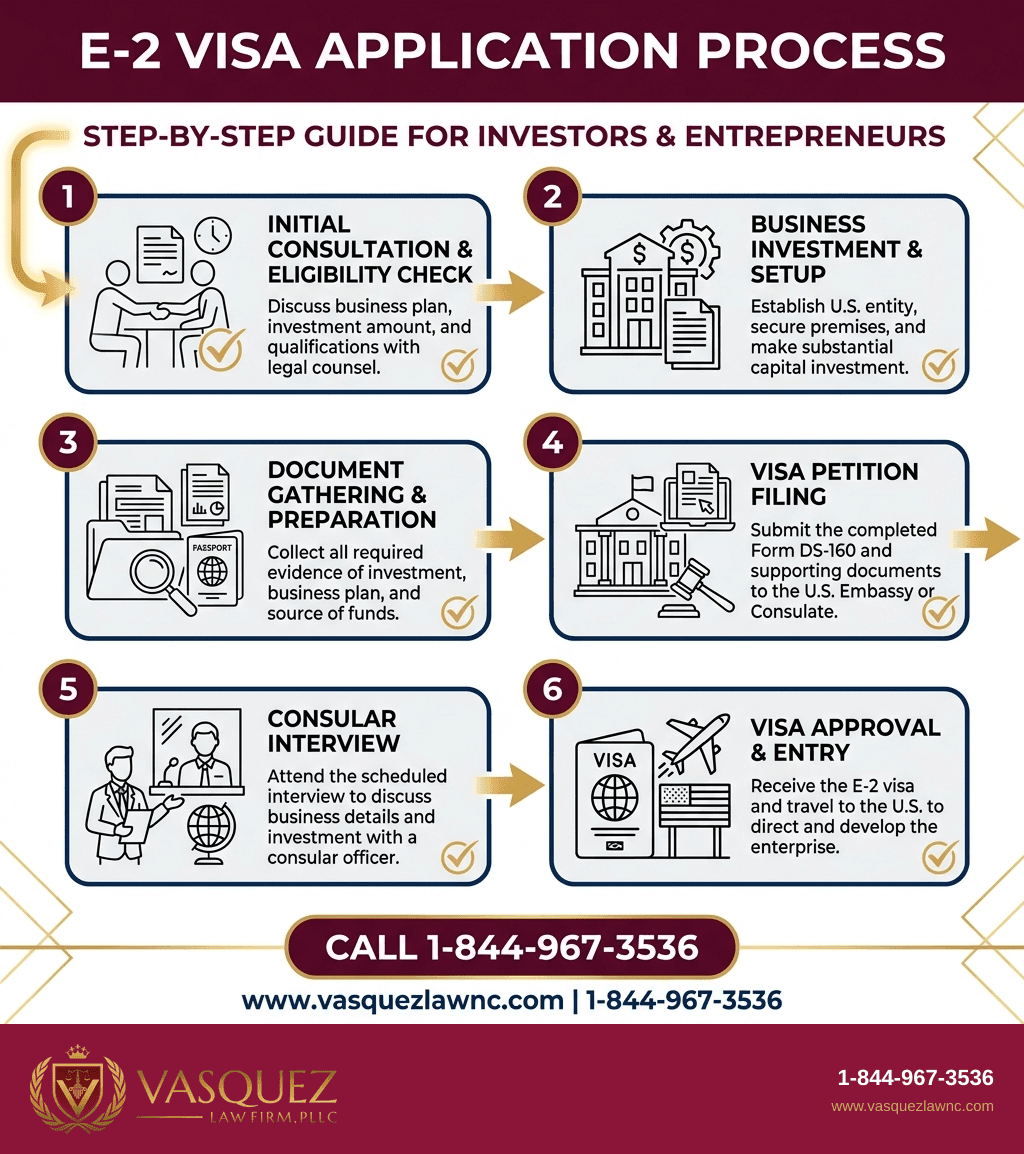
Step-by-Step E-2 Visa Application Process
Consider an entrepreneur in Orlando, FL, preparing to apply. First, they gather documents proving citizenship and financial capacity. Then, they prepare a detailed business plan showing projected growth and job creation.
Once their investment funds are committed, the applicant files Form DS-160 for the visa and schedules an interview at the nearest U.S. consulate. This process involves demonstrating the business's legitimacy and the investor’s direct involvement.
Our attorneys assist with every step, ensuring documentation accuracy. Early and thorough preparation reduces delays. For Raleigh and Orlando applicants, all consultations are virtual but tailored to local conditions.
Application Preparation
- Confirm treaty country status.
- Prepare a comprehensive business plan.
- Document funds invested and their source.
- Gather legal documents related to the business.
Filing and Consulate Interview
Complete Form DS-160 online and pay application fees. Schedule a consulate interview and prepare for questions about your business, investment, and plans in the U.S.
Visa Approval and Entry
Upon approval, receive the visa stamp and enter the U.S. Investors must engage in the business and comply with terms to maintain status.
Investment Amount and Eligibility Requirements
Federal law and regulations do not state a fixed minimum investment, but USCIS and consulates expect an amount sufficient to ensure the business’s success. A typical range for small businesses is $100,000 to $200,000, though smaller investments may be accepted if business viability is clear.
An investor putting $50,000 into a consulting firm with low start-up costs might qualify, whereas a retail store might require more capital. The investment must be at risk; funds held in escrow or returned do not qualify.
Evidence of eligibility includes:
- Proof of national citizenship of treaty country.
- Proof of investment funds committed and irrevocable.
- Business licenses and registrations.
- Employment creation and economic impact documentation.
Learn more about our immigration services to enhance your application in Raleigh or Orlando.
Common Mistakes to Avoid During Application
Applicants often misunderstand the definition of a substantial investment. Underestimating startup costs or failing to document funds properly can lead to denial. Another frequent error is showing passive investment without proof of actual business control or management.
Failures to provide a detailed business plan or to demonstrate the risk of investment funds also cause issues. Finally, some investors assume the E-2 visa automatically leads to permanent residency, which is not the case, risking their nonimmigrant status by making incorrect applications.
- Mistake: Insufficient investment amount — Fix: Budget carefully and consult expert help.
- Mistake: Lack of genuine business control — Fix: Demonstrate active management role.
- Mistake: Missing or vague business plan — Fix: Provide detailed, realistic plans.
- Mistake: Fund source not documented — Fix: Fully document origin and transfer of funds.
- Mistake: Expecting green card without legal path — Fix: Consult lawyer before pursuing permanent residence.
If you only remember one thing: The quality of evidence in your investment and business plan directly impacts your visa approval chances.
Processing Times and What to Expect
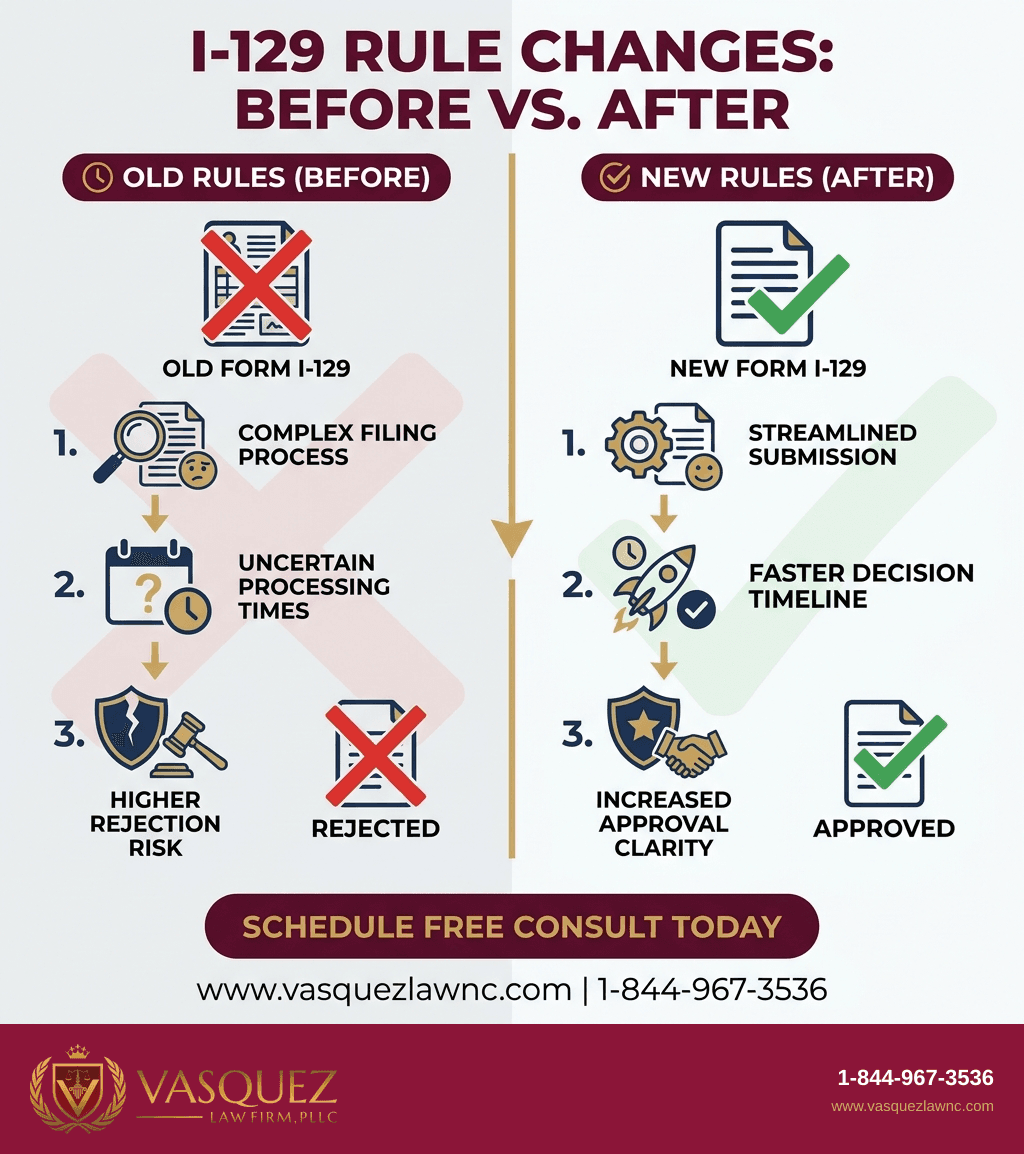
According to USCIS processing times as of 2026, E visa petitions (Form I-129) generally take between 60 to 120 days. Consular processing can add variable time depending on the U.S. embassy or consulate. Applicants should anticipate a total of 2 to 4 months for processing and interview scheduling.
Planning around these timelines is critical. Delays can occur due to requests for additional evidence or administrative processing. Applicants should apply well ahead of planned business and travel dates.
The typical process timeline:
- Weeks 1-4: Document preparation and business plan finalization.
- Weeks 5-12: USCIS or consular adjudication and interview scheduling.
- Weeks 13-16: Visa approval and travel arrangements.
This timeline reflects data from USCIS Processing Times. Vasquez Law Firm can help you meet these timelines efficiently.
Can the E-2 Visa Lead to a Green Card?
One frequent question is whether the E-2 investor visa can lead to permanent residency (a green card). The direct answer is no: the E-2 visa is a nonimmigrant visa and does not have a direct path to a green card under INA § 101(a)(15)(E).
However, holders of an E-2 visa may pursue other immigrant visa options such as family-based petitions, the EB-5 immigrant investor program, or employment-based green cards if eligible. Applicants should avoid actions that conflict with their nonimmigrant intent on the E-2 visa to prevent jeopardizing their current status.
Consulting experienced immigration counsel to explore and plan for green card eligibility is vital. Vasquez Law Firm is available for virtual consultations for Raleigh and Orlando residents exploring these complex options.
When to Contact an Immigration Lawyer
- If you are unsure about your treaty country qualification.
- Preparing an investment plan or gathering evidence for the E-2 visa application.
- If you have questions about investment amounts or business viability.
- When considering transitioning from E-2 visa to permanent residency.
- If you have received a Request for Evidence (RFE) or Notice of Intent to Deny (NOID). >
- If your visa is expiring and you need to renew or change status.
- If you face complex legal scenarios such as investor disputes or regulatory compliance issues.
Early legal advice can prevent costly delays and denials. For professional guidance in Raleigh, NC and Orlando, FL, visit our contact our office page.
About Vasquez Law Firm
At Vasquez Law Firm, we combine compassion with aggressive representation. Our motto "Yo Peleo®" (I Fight) reflects our commitment to standing up for your rights.
- Bilingual Support: Se Habla Español — fully bilingual support staff available
- Service Areas: North Carolina, plus Florida and nationwide for immigration
- Experience: 15+ years helping clients navigate complex legal matters
- Focus Areas: Immigration, personal injury, workers' compensation, criminal defense, and traffic violations
Attorney Trust and Experience
William J. Vásquez is admitted to the North Carolina State Bar (2011) and to the U.S. Courts of Appeals for the 4th, 5th, and 11th Circuits. The firm has provided dedicated legal representation since 2011, with personalized attention to each client's case.
Don't wait to get the help you deserve. Call us now for immediate assistance. Se Habla Español.
Frequently Asked Questions
Who is eligible for an E-2 investor visa?
To be eligible for an E-2 visa, applicants must be citizens of a treaty country with the U.S. The applicant must also plan to invest a substantial amount in a bona fide U.S. business. The investment must create jobs or contribute significantly to the economy. There is no fixed minimum investment, but it should be enough to ensure the business’s success and viability.
How much money do I need to invest for an E-2 visa?
The E-2 visa requires a substantial investment, which often ranges between $100,000 and $200,000, depending on the type of business. Smaller investments may be accepted if the business is low-cost but viable. The investment must be sufficient to operate and develop the business; simply purchasing a franchise without active involvement is typically insufficient.
Can an E-2 visa lead to permanent residency or a green card?
The E-2 visa itself is a nonimmigrant visa and does not directly grant permanent residency. However, it may be possible to apply for a green card through other avenues, such as family petitions or employment-based categories. Applicants should consult an immigration lawyer to explore options and avoid jeopardizing their E-2 status during the green card process.
What is the duration of the E-2 visa?
The E-2 visa duration varies by nationality but is generally granted for up to two years initially. It can be renewed indefinitely if the investor continues to meet requirements and the business remains operational. Renewal applications often require proof of ongoing investment and the business’s positive impact on the U.S. economy.
What are common downsides of the E-2 treaty investor visa?
Common downsides include the visa’s temporary nature, which requires periodic renewals. The investment risk is significant since the business must perform well. Additionally, the E-2 visa does not directly lead to permanent residency or a green card, which may be a disadvantage for those seeking long-term U.S. residence.
What documents are needed for the E-2 visa application?
Applicants need to submit proof of nationality, evidence of investment funds, a detailed business plan, evidence of the real and operating business, and evidence they will develop and direct the business. Supporting documents include bank statements, contracts, leases, and any licenses related to the business.
How long does the E-2 visa processing take?
Processing times vary by consulate but typically range from 2 to 4 months. Premium processing is not available for the E-2 visa. Applicants should also factor in additional time for preparing documents and scheduling interviews. USCIS processing times for E visa petitions can be checked online on the USCIS website.
Can family members accompany the E-2 visa holder?
Yes. Spouses and unmarried children under 21 can accompany the principal investor on E-2 visas. Spouses may apply for work authorization after arrival. Children can attend school but generally cannot work unless allowed under specific circumstances. Proper documentation for all family members is required during the application.
Sources and References
- U.S. Citizenship and Immigration Services
- Executive Office for Immigration Review
- Legal Information Institute
Take the first step toward justice today. Our team is standing by to help. Se Habla Español.
Start Your Free Evaluation Now
Call us: 1-844-967-3536
Se Habla Español - Estamos aquí para ayudarle.


William Vasquez
Founder & CEO, Vasquez Law Firm, PLLC
William Vasquez is the founder and CEO of Vasquez Law Firm, PLLC, a results-driven firm specializing in immigration, criminal defense, personal injury, and workers' compensation. A U.S. Air Force veteran and recipient of the Joint Service Achievement Medal, William is dedicated to fiercely fighting for his clients' rights.
Related Legal Services
Need legal help? Learn more about speak with an immigration lawyer, or contact us for a free evaluation.
You can also visit immigration lawyers serving all of North Carolina for more information.