Court Orders U.S. Return of Deported Migrant in 2026
A court orders the government to return a deported migrant from Africa. See what a removal order means, preserve records, and know your rights today.
Published on September 24, 2026
Talk to an immigration attorney
Free call. A clear plan for your case.
Free & confidential · Se habla espanol · 24/7
Have questions? Talk to an attorney - free evaluation.
Call 1-844-967-3536Worried how the latest immigration news affects you?
Schedule a confidential case review with an immigration attorney - know exactly where you stand.
USCIS Case Status
Check your USCIS case status
Enter your receipt number and get the official status. Free, no registration.
A court has ordered the U.S. government to return a migrant deported to Africa, according to a September 2026 report by EL PAÍS English. The report calls this the first order of its kind. However, the available report does not name the court, the migrant, the destination country, or the order date. It also does not give a timeline for government compliance. These missing facts matter. A return order may address a narrow process error. It may not create a general right to reenter the United States.
For families in Raleigh, NC, this is federal immigration news. It may matter wherever a person’s removal case is pending. Removal means the government sends a person out of the United States under immigration law. The report does not create an automatic path back for every person removed from the country. It does show that courts can require corrective action when the government’s removal process did not meet legal requirements.
This article gives general legal information. It is not legal advice for any individual case. People facing removal, or families trying to find someone after removal, should seek case-specific advice from Vasquez Law Firm’s immigration attorneys. Get advice before filing documents or contacting an agency about sensitive facts.
What happened in the court order to return a deported migrant?
The September 2026 news report says a court ordered the U.S. government to return a migrant who had been deported to Africa. The report calls the order the first of its kind. It does not disclose the judge’s name, court location, or case number. It also does not state the person’s nationality or the legal finding that led to the order.
That caution is important. A headline saying that a court ordered a deported migrant’s return may suggest that a judge reversed the entire removal case. That may not be true. A court could order a person’s return so the government can fix a notice problem. The court could also require a hearing, follow an earlier order, or restore the person’s position before an unlawful removal.
The available timeline is short. First, the migrant was deported from the United States to a country in Africa. Second, a court reviewed a legal challenge to that removal. Third, the court ordered the government to return the migrant. The report does not say whether the government sought review. It also does not say whether travel was arranged or whether the underlying immigration case remains open.
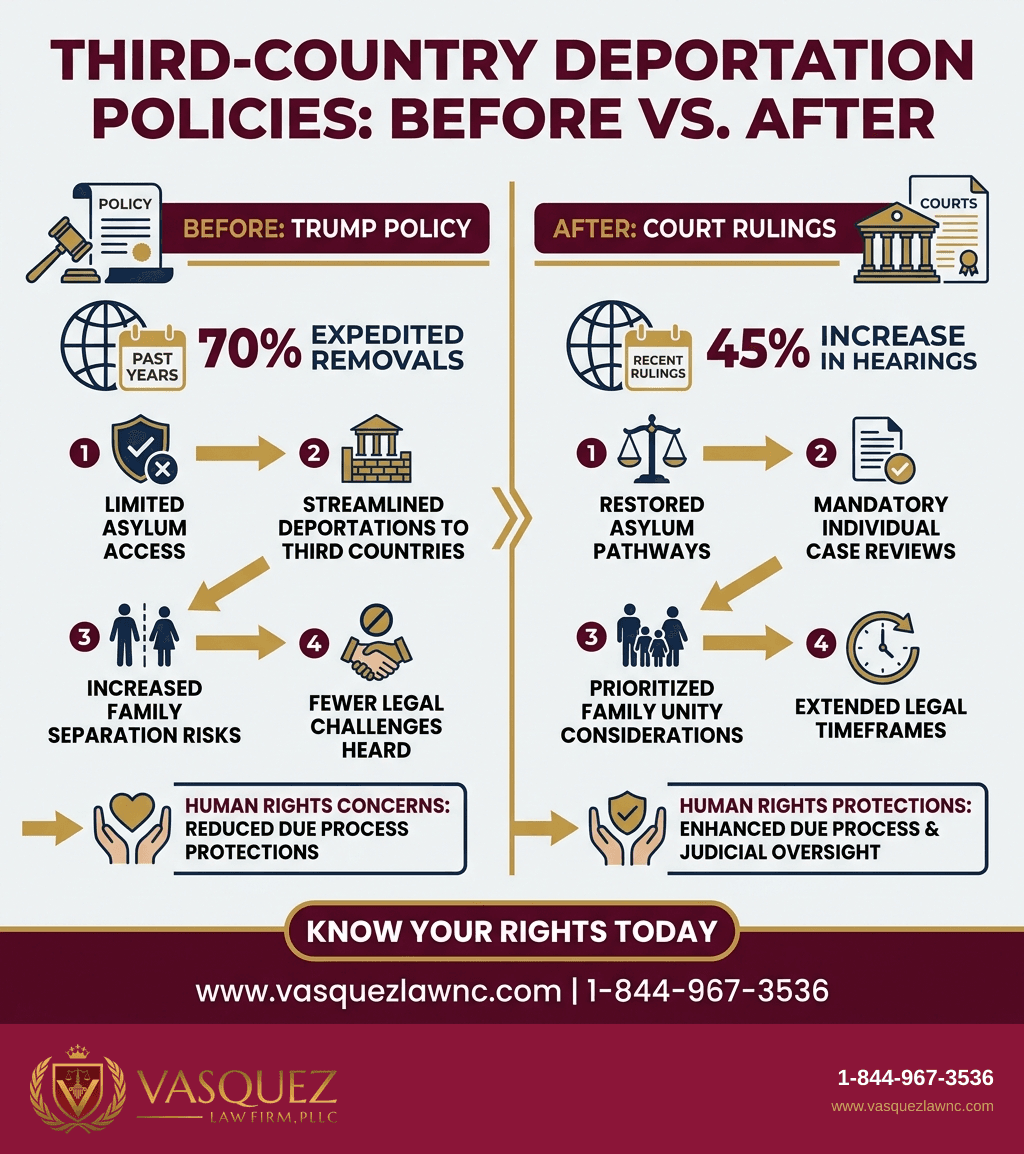
The court order should also be kept separate from policy statements. A federal judge’s directive applies to the parties and the dispute before that court. The order may persuade other courts in similar cases. But it does not, by itself, change the Immigration and Nationality Act, known as the INA. It also does not give other people a broad reentry benefit.
For readers following migrant deportation news, the lasting lesson is about procedure. Keep the removal order, charging papers, hearing notices, travel records, court filings, and agency letters. These records can show whether a person received notice. They can also show whether the person had a real chance to be heard or had a valid motion to reopen.
Who can this deported migrant return order affect?
The reported order directly affects the migrant named in the underlying case. It also affects the federal agencies responsible for carrying out the order. The available source does not name any larger group covered by the ruling. It does not say that all migrants deported to Africa, Venezuelan migrants, asylum seekers, or people with final removal orders may return to the United States.
The order may still matter to several groups. A person removed while a motion, appeal, or federal court challenge was pending should get the full record quickly. A family member whose hearing notice arrived late should keep proof of that delay. The same applies to a family with a translation problem or proof that officials did not consider important evidence. Each problem can have different legal effects.
A final removal order means that an immigration judge, or another authorized process, has decided that removal may proceed. It does not always end every legal option. A motion to reopen asks the immigration court or Board of Immigration Appeals to review a closed case again. It may rely on new facts, changed country conditions, lack of notice, or another legally accepted reason. A motion to reconsider argues that the decision applied the law incorrectly.
People who returned after removal without permission face separate risks. INA section 212(a)(9), codified at 8 U.S.C. § 1182(a)(9), can impose bars on admission after removal or unlawful presence. A bar is a legal rule that can prevent a person from being admitted to the United States. INA section 241, 8 U.S.C. § 1231, governs detention and removal after a final order. A court-directed return in one case does not erase these rules for everyone else.
In our experience, families often ask whether a deportation flight ended every legal option. The answer depends on the removal papers, the hearing history, and whether a court filing was still active.
For Raleigh families and clients served from Raleigh, NC and Orlando, FL, speed and documentation are practical concerns. Immigration enforcement is federal. The same statutory structure therefore applies nationwide. Local offices do not create a different immigration court rule. Prompt legal review can still help prevent records and deadlines from being missed.
Who is not automatically covered?
People are not automatically covered merely because they were deported, sought asylum, came from the same region, or believe their removal was unfair. The report provides no group-wide relief. Anyone claiming a connection to this ruling needs the actual written order. That person also needs to compare the order’s facts with their own case.
What law controls a court order to return a deported migrant?
Congress created the removal system mainly through the INA. Under 8 U.S.C. § 1229a, immigration judges conduct removal proceedings. They decide whether a noncitizen is removable and eligible for relief. Relief means a legal option that may allow the person to stay or receive another immigration benefit. The statute requires notice of the allegations and a chance to contest removal.
Federal regulations provide rules for reopening completed cases. Under 8 C.F.R. § 1003.23, an immigration judge may reopen or reconsider certain decisions. Under 8 C.F.R. § 1003.2, the Board of Immigration Appeals has related authority. These rules include deadlines and exceptions. The correct procedure depends on who issued the decision and where the case stands.
Federal courts also review some final removal orders under 8 U.S.C. § 1252. That review has limits. Jurisdiction rules decide whether a court has power to hear a claim. Filing periods, exhaustion requirements, and limits on review can also control the case. Exhaustion usually means using required agency procedures before asking a federal court to act. The reported return order may show judicial power to enforce a lawful process. The available report does not reveal the statute or legal doctrine used.
Removal differs from voluntary departure, parole, asylum approval, and adjustment of status. Each term has its own legal meaning. Voluntary departure allows a person to leave under set conditions without a removal order. Parole permits temporary entry or stay for a limited purpose. Asylum protects certain people who face persecution. Adjustment of status is the process of applying for lawful permanent residence from inside the United States. A removal order can affect future admission. A court order requiring return may fix one legal defect without deciding every immigration benefit question.
Readers can review agency standards through the USCIS Policy Manual. USCIS does not decide every removal case. Its guidance can explain many benefit processes that interact with removal history. For court filings, get certified copies. Do not rely only on an online summary or a family member’s memory.
Why does the written order matter?
The written order states the legal basis, the parties, and any deadline. It also says whether the government must arrange the return, issue travel documents, or take another step. Without the written order, no responsible adviser can say whether a similar claim exists in another case.
What should my family do after a deportation or removal order?
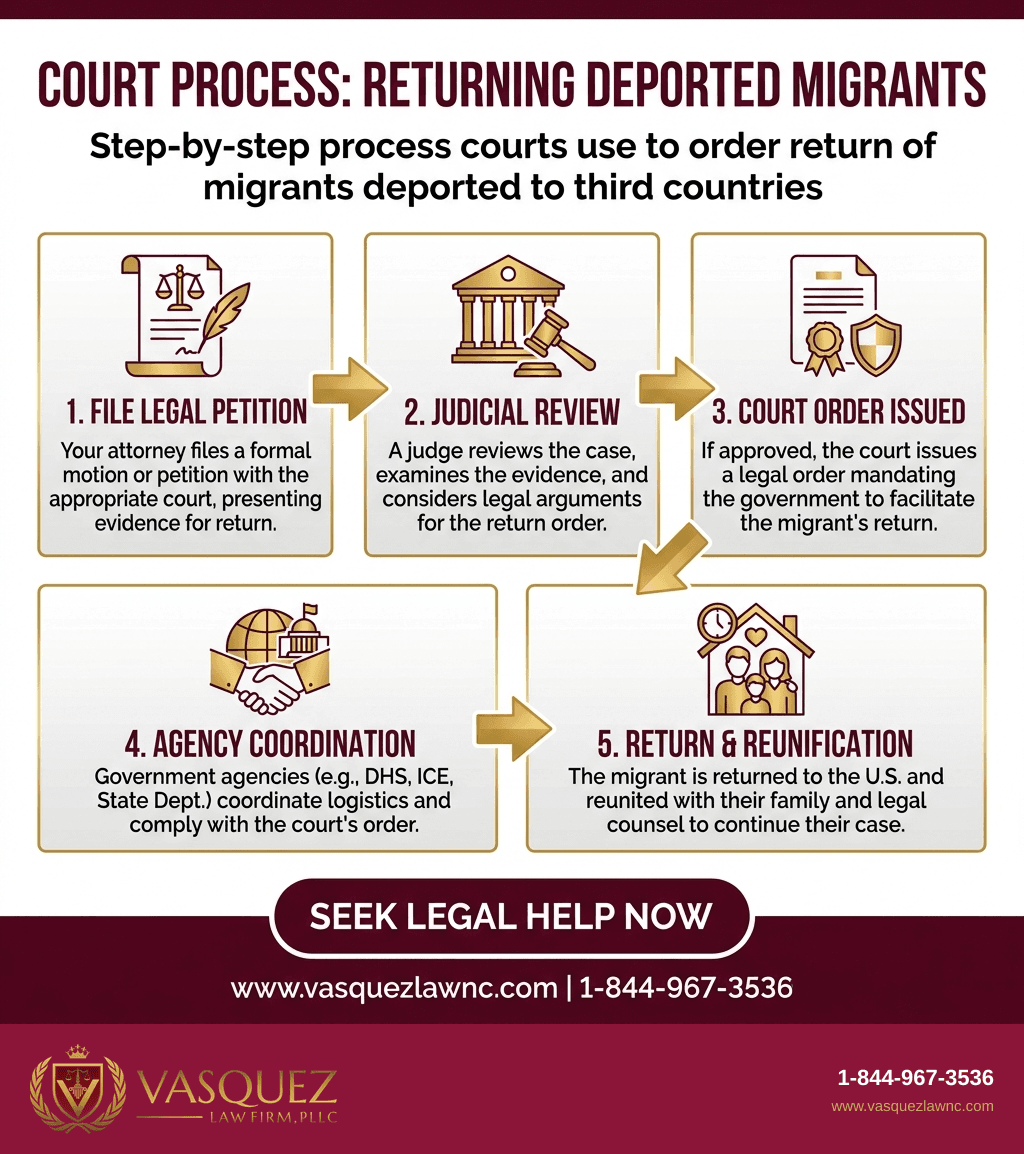
Start a document file. Ask for the Notice to Appear, the immigration judge’s decision, and any Board of Immigration Appeals decision. Also collect hearing notices, proof of service, immigration bond papers, travel documents, and records showing the date and destination of removal. Write down every known court date, address used by the government, and attorney contact.
Second, find out whether a case remains pending. A pending appeal, motion, or petition for review can change the legal analysis. Do not assume that removal caused every filing to disappear. At the same time, do not assume that a pending family petition stops removal. A pending Form I-130 generally does not itself cancel a final removal order. Our overview of family immigration petitions in 2026 explains the petition process. Removal strategy requires a separate review.
Third, protect evidence. Save messages that show when notices arrived. Keep proof of address changes, medical or safety evidence, passport copies, and records of any fear of return. Do not change documents or submit false information. Consistency matters in immigration court, USCIS filings, and federal litigation.
Fourth, check official case information with care. USCIS processing estimates are available through USCIS Processing Times. Immigration court and federal court schedules use separate systems. Agency processing estimates do not show whether a court ordered the government to return a deported migrant.
Finally, get an individualized assessment before trying to travel to the United States. Reentry after removal can have serious consequences. A lawyer should review the exact removal record, any prior unlawful presence, possible bars to admission, and whether a motion or waiver is available. A waiver is permission to overcome certain legal barriers. Our federal immigration legal team handles immigration matters nationwide, with offices in Raleigh, NC and Orlando, FL.
Documents to bring to a legal review
Bring every government notice, the A-number if available, passport and identity documents, proof of family relationships, prior applications, removal-flight information, and copies of court filings. Bring documents in their original language. Do not discard envelopes or electronic delivery confirmations.
Concerned that a removal occurred while a case or appeal was unresolved? Vasquez Law Firm can review the available record and explain potential next steps. Se Habla Espanol.
What does the reported court order still leave unknown?
The report leaves major questions unanswered. It does not identify the court, the case caption, the legal standard, the order’s text, the date of removal, or the date by which the government must act. It also does not state whether the government complied, appealed, or requested a stay.
Those facts affect whether the ruling has broader value. A narrowly written emergency order may offer little guidance outside its record. A published appellate ruling interpreting a federal statute could have a wider effect. The available report alone does not allow anyone to decide between those possibilities.
The report also does not say whether the migrant will receive a new hearing, remain in detention after return, seek asylum, or obtain any immigration status. Return to the United States under a court order is not the same as admission, parole, lawful permanent residence, or citizenship.
Families should rely on written court orders and official notices. They should not rely on social-media claims about a general right to return. Track agency updates through official USCIS materials. Keep copies of filings. Ask for the case number when communicating with counsel or agencies. For related federal developments, see our report on USCIS rulemaking and the Federal Register.
Frequently Asked Questions
Can an immigrant legally come back after being deported?
Sometimes, but not automatically. A person may need a court order, a reopened case, permission to reapply for admission, a waiver, parole, or another lawful basis. Prior removal and unlawful presence can create statutory bars under 8 U.S.C. § 1182(a)(9). The correct path depends on the exact removal history and immigration objective.
Does this order mean every deported asylum seeker can return?
No. The supplied report describes one migrant deported to Africa. It does not describe class-wide relief or a general rule for asylum seekers. A person who fears return should preserve evidence and obtain legal advice quickly, because the procedural history, country evidence, and timing of filings can be decisive.
What is a motion to reopen?
A motion to reopen asks an immigration court or the Board of Immigration Appeals to take another look at a concluded case. It usually relies on new facts, changed country conditions, lack of proper notice, or another recognized basis. Strict timing rules may apply, though exceptions can exist. It does not automatically stop removal.
Can ICE deport a U.S. citizen?
A U.S. citizen cannot lawfully be removed under immigration law. Citizenship evidence may include a U.S. passport, birth certificate, Certificate of Citizenship, or naturalization certificate. Anyone questioned about citizenship should avoid signing documents they do not understand and should seek prompt legal assistance if officials dispute their status.
What nationality is ICE deporting the most?
The supplied report does not provide nationality data, and this article does not estimate it. Removal patterns change with enforcement priorities, available travel documents, country cooperation, and case outcomes. A national statistic would not determine an individual case. The removal order, immigration history, and available relief remain central.
Should relatives contact the government after a deportation?
Relatives can preserve contact information and request records through appropriate channels, but they should understand that statements may affect an active case. Before sharing facts about entry, identity, travel, or prior filings, obtain advice tailored to the matter. Keep the A-number, court case number, and all departure records available.
A court order can create a narrow opening, but the written record determines what comes next. Contact Vasquez Law Firm for a confidential evaluation of your immigration documents and options. This information is general and is not a guarantee of any outcome.
Reviewed by Attorney Vasquez, Managing Attorney
Facing Deportation?
Time is critical. Our deportation defense attorneys are available 24/7 for emergency cases.
Reviewed by Attorney Vasquez, Managing Attorney
Keep Reading

William Vasquez
Founder & CEO, Vasquez Law Firm, PLLC
William Vasquez is the founder and CEO of Vasquez Law Firm, PLLC, a results-driven firm specializing in immigration, criminal defense, personal injury, and workers' compensation. A U.S. Air Force veteran and recipient of the Joint Service Achievement Medal, William is dedicated to fiercely fighting for his clients' rights.
Related Legal Services
Need legal help? Learn more about immigration lawyers in North Carolina, or contact us for a free evaluation.
You can also visit statewide immigration attorneys for more information.