How Family-Based Immigration Petitions Work in 2026
Family-based immigration petitions for U.S. citizens in 2026 require filing Form I-130 to establish family relationships. Immediate relatives have visa priority, while others face wait times. Learn the process, who qualifies, and how to apply for a Green Card or visa in Raleigh, NC and Orlando, FL.
Published on September 22, 2026
Talk to an immigration attorney
Free call. A clear plan for your case.
Free & confidential · Se habla espanol · 24/7
Have questions? Talk to an attorney - free evaluation.
Call 1-844-967-3536Worried how the latest immigration news affects you?
Schedule a confidential case review with an immigration attorney - know exactly where you stand.
USCIS Case Status
Check your USCIS case status
Enter your receipt number and get the official status. Free, no registration.
This article gives general legal information. It does not give legal advice for your specific situation. Reading it does not create an attorney-client relationship. For advice about your situation, contact Vasquez Law Firm.
What is the process for U.S. citizens to petition family members for immigration in 2026?
Ready to Apply for a Green Card?
Family-based, employment-based, or other paths — we guide you through every step.
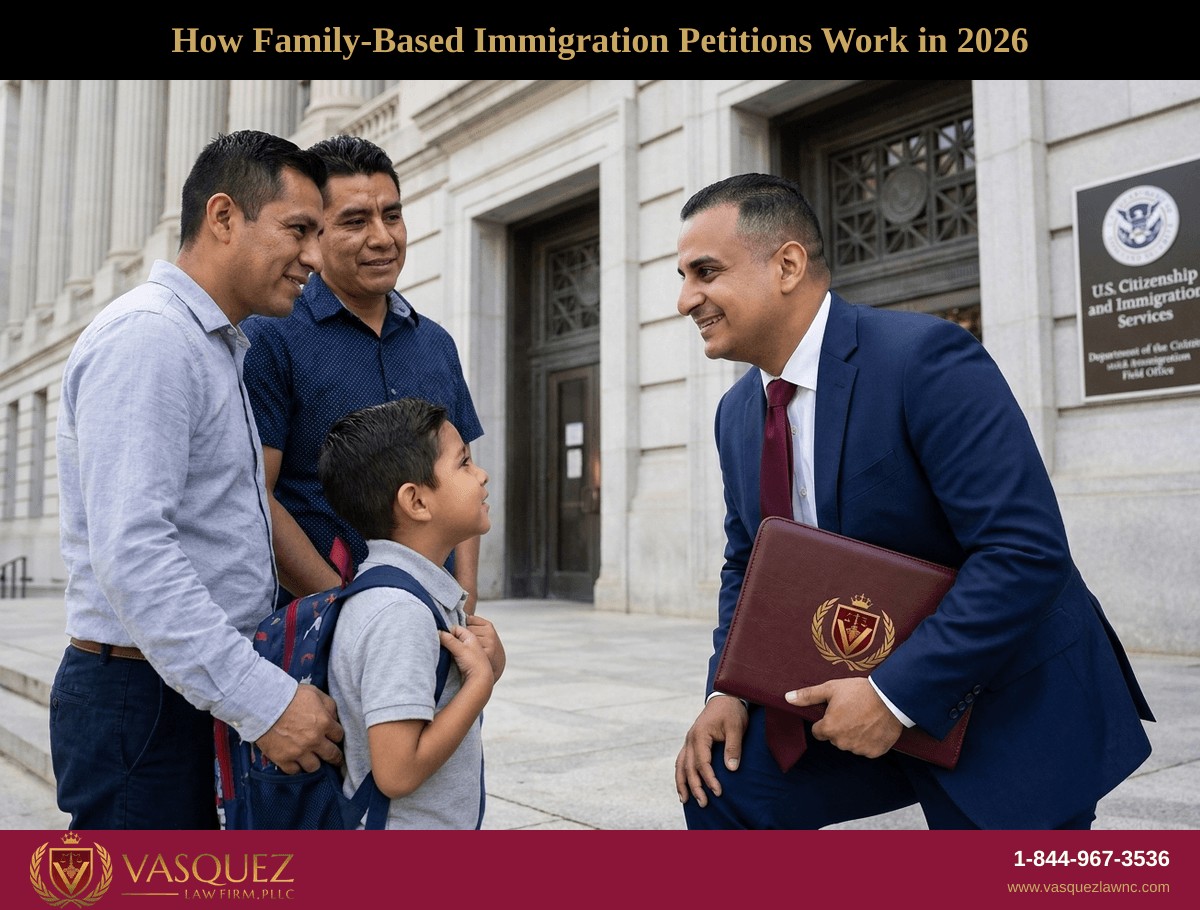
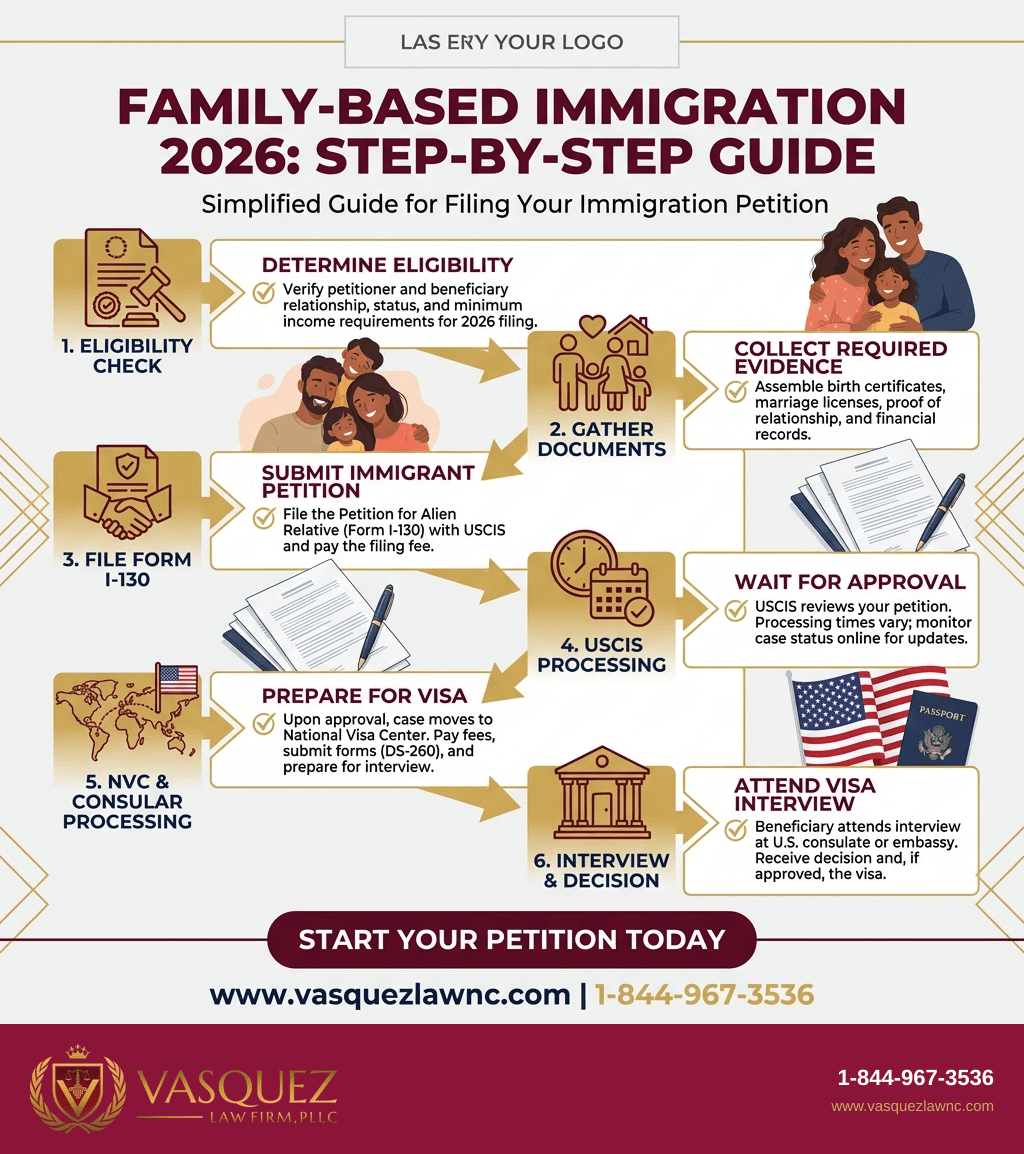
In 2026, U.S. citizens start the family-based immigration process by filing Form I-130, Petition for Alien Relative. This form helps prove the qualifying family relationship. Immediate relatives can apply for a Green Card without waiting for a visa to become available. Other family members are in preference categories. These categories have wait times. The process may use adjustment of status or consular processing. The correct choice depends on where the relative lives.
The first step is filing Form I-130. A U.S. citizen files this form to petition a family member. The form proves the family relationship. It also creates a priority date. A priority date is the date that sets the relative's place in line for a visa. Immediate relatives include spouses, unmarried children under 21, and parents. The petitioner must be 21 or older when petitioning for a parent. Immediate relatives do not face visa caps. They can often move forward more quickly.
Other relatives are not immediate relatives. Their visas have annual numerical limits. These limits restrict the number of visas available each year. These family members are placed in preference categories. They must wait for a visa number to become available. The priority date helps determine when they may apply for permanent residence.
If the relative is already in the United States, the relative may apply to adjust status. Adjustment of status means applying for permanent residence from inside the United States. The relative may use Form I-485 when a visa number is available. If the relative lives outside the U.S., the petition goes to the National Visa Center (NVC). The NVC coordinates consular processing. Consular processing means applying for an immigrant visa at a U.S. embassy or consulate abroad.
The USCIS website explains:
This form establishes the family relationship that exists between you and your relative. Sometimes the I-130 can be filed together with an application for permanent residence, officially known as Form I-485, Application to Register Permanent Residence or Adjust Status.
(Source: USCIS, https://www.uscis.gov/family/family-of-us-citizens)
These steps matter for both petitioners and beneficiaries. A petitioner is the U.S. citizen who files the petition. A beneficiary is the family member who may receive the immigration benefit. Understanding the process can help both people plan for 2026.
Who qualifies as a family member for U.S. citizens to petition in 2026?
U.S. citizens may petition for spouses, children, parents, and siblings. Eligibility and wait times differ for each category. Immediate relatives have visa priority. Other relatives are in preference categories. Those categories often have longer waits. Age, marital status, and the petitioner's age can affect eligibility.
The immediate relatives category includes spouses and unmarried children under 21. It also includes parents when the petitioner is 21 or older. Visas are always available for these relatives. They do not face annual caps. Therefore, they do not have to wait in line for a visa number.
Other family members are in preference categories. These categories have annual numerical limits. The categories include:
- First preference: Unmarried adult sons and daughters (21 or older) of U.S. citizens
- Second preference (2A): Spouses and unmarried children under 21 of lawful permanent residents
- Second preference (2B): Unmarried adult sons and daughters of permanent residents
- Third preference: Married sons and daughters of U.S. citizens
- Fourth preference: Siblings of adult U.S. citizens (petitioner must be 21 or older)
Wait times differ among these categories. Visa availability can change each year. For residents of Raleigh, NC and Orlando, FL, these rules affect many families. Our Florida office is located in Orlando. Thousands of families seek reunification in these areas.
The USCIS website clarifies:
Visas are always available for immediate relatives of U.S. citizens. This means your family member does not need to wait in line for a visa. Preference categories apply to family members who are not immediate relatives. The visas allotted for these categories are subject to annual numerical limits.
(Source: USCIS, https://www.uscis.gov/family/family-of-us-citizens)
Petitioners should understand the difference between these categories. This knowledge helps them set realistic expectations. It also helps them understand likely timelines and eligibility rules.
What does the law say about family-based immigration petitions and adjustment of status?
The Immigration and Nationality Act (INA) provides the main legal framework for family-based immigration petitions. Related regulations also apply. Filing Form I-130 starts the process. Approval does not by itself give permanent residence. It usually creates a place in line. Adjustment of status under INA § 245(a) lets some eligible relatives in the U.S. apply for permanent residence without leaving the country.
Under 8 U.S.C. § 1255 (INA § 245(a)), certain eligible immigrants may adjust status to lawful permanent resident. They may qualify if they entered the U.S. lawfully or meet other criteria. This rule is important for immediate relatives who are already in the U.S.
An approved Form I-130 petition alone does not give immigration status. It also does not give another immigration benefit. It establishes the qualifying relationship and priority date. The beneficiary must still apply for a visa or adjustment of status. The beneficiary may apply when the person becomes eligible.
The USCIS website states:
NOTE: A visa petition (Form I-130 or Form I-129F) is only used to demonstrate a qualifying relationship. An approved petition DOES NOT grant any benefit, it simply creates a place in line for visa processing.
(Source: USCIS, https://www.uscis.gov/family/family-of-us-citizens)
Visa classifications under 8 U.S.C. § 1101(a)(15) also define visa categories. These classifications include immigrant and nonimmigrant visas. They include family-based preferences.
These statutes show the limits of a family petition. They also show what the petition can do. Petitioners and beneficiaries should understand both points before filing.
What should I do to petition a family member in 2026? What common mistakes should I avoid?
To petition a family member in 2026, begin by filing Form I-130 with USCIS. Gather every document that proves the family relationship. If your relative is an immediate relative in the U.S., consider filing Form I-485 at the same time. This is called filing concurrently. It can allow the person to seek adjustment of status during the same general period. If the relative lives abroad, prepare for consular processing after a visa becomes available.
Uno. File Form I-130 accurately and completely. Include supporting documents. These may include birth certificates, marriage certificates, and proof of U.S. citizenship.
Dos. Monitor Visa Bulletin updates. The Visa Bulletin lists priority dates and visa availability. This step is especially important for relatives in preference categories.
Tres. If your relative is in the U.S. and eligible, file Form I-485 concurrently with Form I-130. This may help move the case forward without waiting for a separate filing.
Cuatro. Avoid common mistakes. Do not send incomplete forms. Do not miss deadlines. Provide proof of a bona fide relationship. A bona fide relationship is a real relationship, not one created only for immigration purposes. These errors can cause delays or denials.
At our Raleigh, NC and Orlando, FL offices, we often see petitioners underestimate the need for complete records. Some applicants submit too little evidence of the relationship. Others misunderstand the effect of the visa category. These problems can lengthen processing times. They can also cause frustration.
Here is a table summarizing key forms and steps:
| Step | Form | Purpose | When to File |
|---|---|---|---|
| Petition for Relative | I-130 | Establish family relationship | First step |
| Adjustment of Status | I-485 | Apply for Green Card within U.S. | After visa availability or concurrently for immediate relatives |
| Fiancé(e) Visa | I-129F | Petition for fiancé(e) outside U.S. | Before marriage |
| Affidavit of Support | I-864 | Show financial ability to support relative | With I-130 or I-485 |
Follow each step carefully. Consider consulting experienced immigration counsel. Careful preparation can improve the chance of a successful petition.
What happens after filing a family-based immigration petition in 2026?
After you file Form I-130, USCIS reviews it. USCIS checks whether the petition is complete. USCIS also checks whether the petitioner and beneficiary qualify. If USCIS approves the petition, it may send the petition to the National Visa Center. This happens when the relative is abroad and needs consular processing. If the relative is in the U.S. and eligible, the beneficiary may file Form I-485 to adjust status.
Immediate relatives do not have to wait for visa numbers. They can often file an adjustment application at the same time as the petition. This is concurrent filing. Preference category relatives must wait for visa availability. Their priority date helps determine when they can proceed.
The USCIS website explains:
If your relative is already in the United States, they may apply to adjust status to become a Green Card holder (lawful permanent resident) after a visa number becomes available using Form I-485. If your relative is outside the United States, your petition will be sent to the National Visa Center (NVC). The NVC will forward your petition to the appropriate U.S. consulate when a visa becomes available and your relative will be notified about how to proceed.
What's Your Immigration Situation?
Answer 3 questions - we'll tell you your options
Question 1 / 3
What best describes your situation?
Keep Reading
(Source: USCIS, https://www.uscis.gov/family/family-of-us-citizens)
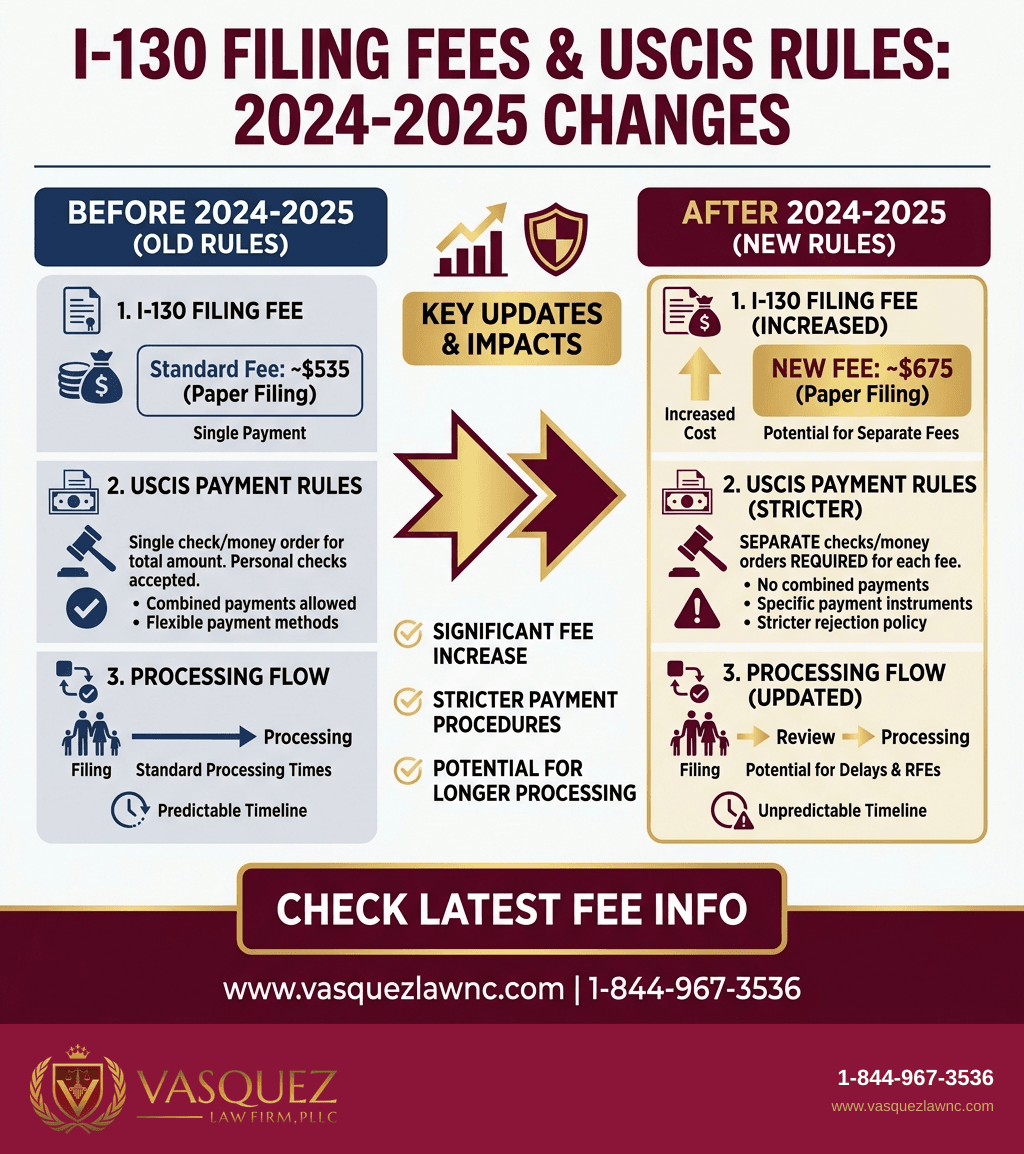
Petitioners and beneficiaries can check case status online. They can also review the Visa Bulletin for priority date updates. The process may take time. Careful review of every notice and form remains important.
Frequently Asked Questions about family-based immigration petitions in 2026
What family members can a U.S. citizen petition for?
A U.S. citizen may petition for their spouse, unmarried children under 21, parents (if the citizen is 21 or older), and siblings (if the citizen is 21 or older). Other children may also qualify under preference categories.
How long does it take to get a Green Card through a family petition?
Immediate relatives usually have no wait time for visas and can proceed quickly. Preference category relatives face wait times that vary by category and country of origin, sometimes several years.
Can a family member apply for a Green Card while in the U.S.?
Yes, eligible relatives in the U.S. can apply for adjustment of status using Form I-485 once a visa number is available or concurrently with Form I-130 if they are immediate relatives.
What is the difference between adjustment of status and consular processing?
Adjustment of status is applying for permanent residence from within the U.S. Consular processing is applying for an immigrant visa at a U.S. consulate abroad before entering the U.S.
Does an approved I-130 petition grant legal status?
No, an approved I-130 petition only establishes the family relationship and priority date. The beneficiary must still apply for a visa or adjustment of status to obtain legal status.
This article provides general legal information, not individualized legal advice. Reading does not create an attorney-client relationship. For advice specific to your situation, contact Vasquez Law Firm.
La pregunta correcta no es "How fast can I get a Green Card?" La pregunta correcta es "What category does my family member fall under, and what steps do I need to take to petition them properly?" This distinction is critical. It can help prevent frustration and wasted effort.
In Raleigh, NC and Orlando, FL, many petitioners rush to file. They may have incomplete documentation. They may also misunderstand visa categories. These problems cause delays and sometimes denials. Take time to prepare carefully.
Reina-Valera 1960 Scripture: "Porque yo sé los pensamientos que tengo acerca de vosotros, dice Jehová, pensamientos de paz, y no de mal, para daros el fin que esperáis." (Jeremías 29:11). The prophet Jeremiah wrote this verse in the 6th century BCE. It reassures us that delays and challenges do not remove hope for the future. For families navigating immigration, this verse encourages patience and trust in the process.
Esté alerta. Esté documentado. Esté listo.
Forward this article to the primo que quiere traer a su esposa, or the hermano que está esperando su visa. They need to know the facts.
Reviewed by William Vasquez, Founder & CEO, Vasquez Law Firm, PLLC.
If you need legal assistance, learn more about NC immigration legal team, or call us at 1-844-967-3536 for a free evaluation.
Related Topics

William Vasquez
Founder & CEO, Vasquez Law Firm, PLLC
William Vasquez is the founder and CEO of Vasquez Law Firm, PLLC, a results-driven firm specializing in immigration, criminal defense, personal injury, and workers' compensation. A U.S. Air Force veteran and recipient of the Joint Service Achievement Medal, William is dedicated to fiercely fighting for his clients' rights.
Related Legal Services
Need legal help? Learn more about NC immigration legal team, or contact us for a free evaluation.
You can also visit statewide immigration legal services for more information.