South Korean Workers in the U.S.: What You Must Know in 2026
Are South Korean workers deported in 2026? Learn your rights and steps to protect yourself. Contact Vasquez Law Firm for a free immigration evaluation.
Published on September 15, 2026
Talk to an immigration attorney
Free call. A clear plan for your case.
Free & confidential · Se habla espanol · 24/7
Have questions? Talk to an attorney - free evaluation.
Call 1-844-967-3536Worried how the latest immigration news affects you?
Schedule a confidential case review with an immigration attorney - know exactly where you stand.
USCIS Case Status
Check your USCIS case status
Enter your receipt number and get the official status. Free, no registration.
South Korean Workers in the U.S.: What You Must Know in 2026
More than 300 South Korean workers recently challenged federal immigration actions after a controversial raid in Georgia. In 2026, South Korean workers in Raleigh, NC and Orlando, FL face difficult immigration questions. This article explains what happens when South Korean workers are held by immigration officers or sent out of the country. It also explains what legal choices they have. If you or someone you care about is affected, understanding these updates can protect your rights and help you plan your next steps.
Need help with your case? Attorney William J. Vasquez is ready to fight for you. Se Habla Español.
Or call us now: 1-844-967-3536
Quick Answer
South Korean workers held by Immigration and Customs Enforcement (ICE) in 2026 face complicated immigration enforcement. This can lead to being sent out of the country or legal fights. Acting quickly, including contacting an immigration lawyer, is very important to protect your rights.
- Many South Korean workers have valid work visas but still get detained.
- The 2026 Georgia ICE raid affected over 300 workers; some were sent out of the country.
- Legal actions and lawsuits are ongoing to fight these detentions.
- South Korean workers in Raleigh, NC and Orlando, FL should learn their rights.
- Talking to immigration experts helps with these complex cases.
Background: South Korean Workers and the 2026 Immigration Issues
In 2026, a major ICE raid in Georgia held more than 300 South Korean workers. This showed the challenges many immigrant workers face across the country, including in Raleigh, NC and Orlando, FL. Even though some workers had valid H-2B and student visas that allow work, federal immigration officers acted strongly.
South Korean workers usually do seasonal or skilled jobs in many U.S. industries. But immigration officers often check if workers follow visa rules and employment laws. The Georgia raid led to fights over deportations and a lawsuit against immigration enforcement policies from the Trump administration.
Knowing the legal situation is very important for South Korean immigrant workers in the U.S., especially those in Vasquez Law Firm's areas of Raleigh and Orlando. Knowing your rights during detention, legal steps, and ways to get relief can change the results of your case.
For legal help, our immigration services offer virtual meetings, making it easy to get help in Raleigh and Orlando.
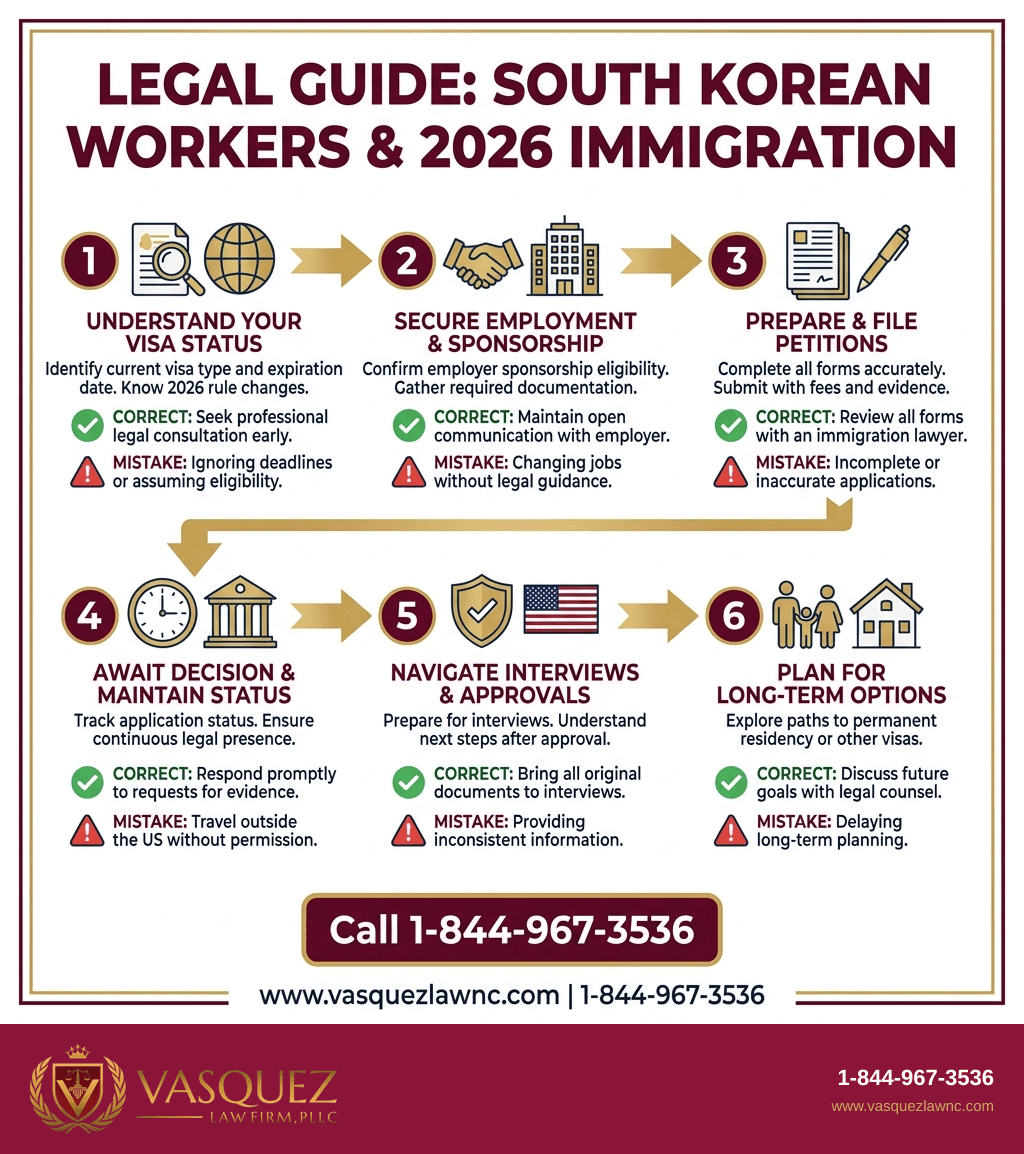
Step-by-Step: What South Korean Workers Should Do After Detention
- Stay Calm and Do Not Sign Documents Right Away. Make sure you understand what each paper means before you sign it. Get legal advice first.
- Contact an Immigration Lawyer Quickly. Time matters. Early legal help can improve chances to end detention or get relief.
- Collect All Important Papers. This includes passports, visas, work permits, letters from employers, and any immigration papers you have.
- Go to All Immigration Court Hearings. Missing a hearing can cause automatic orders to send you out of the country.
- Look Into Possible Immigration Relief Options. Depending on your status, you may apply to change your status, cancel removal, or get other protections under the Immigration and Nationality Act (INA).
Documents and Evidence South Korean Workers Need
- Valid Passport and Visa Papers
- Work Permission Cards (like Employment Authorization Document)
- Proof of Work (paychecks, letters from employers)
- Official Notices from ICE or Immigration Court
- Any Immigration Petitions Filed or Waiting (I-130, I-485)
Keeping these papers organized helps you build a strong case. If detained, give your lawyer copies as soon as you can.
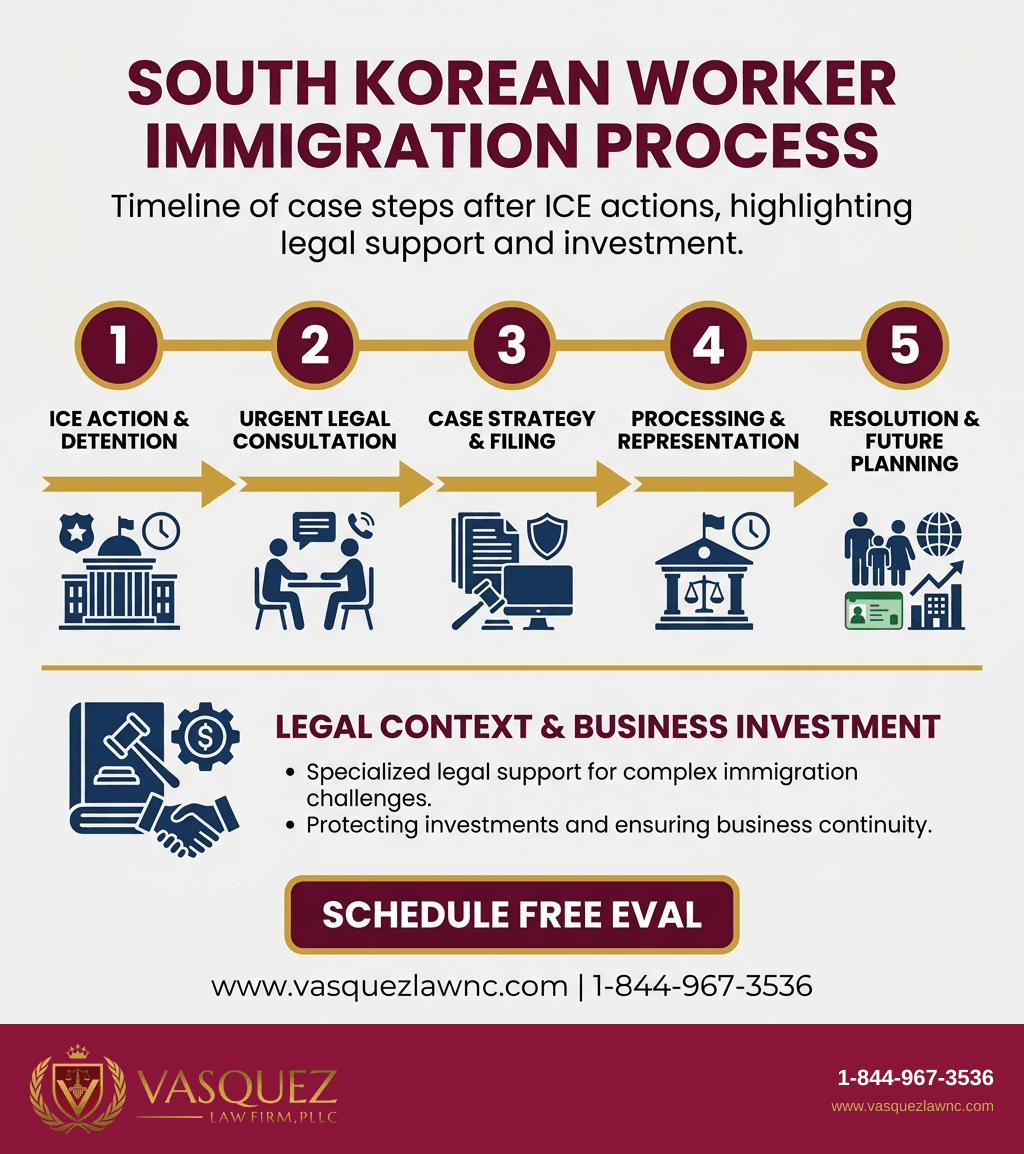
Timeline: What to Expect in Immigration Cases Involving South Korean Workers
- Right After Detention: ICE sends a Notice to Appear (NTA) to start removal proceedings (usually within days).
- First Immigration Court Hearing: Happens usually within weeks or months after detention. The judge explains the charges and possible relief.
- Time to Submit Evidence: Both sides send evidence and legal arguments over the next several months.
- Final Decision: Can take 6 months or more depending on how complex the case is and court delays.
U.S. Citizenship and Immigration Services (USCIS) processing times for work permission or status change applications vary but usually take 6 to 12 months or longer as of 2026 (USCIS Processing Times).
Common Mistakes South Korean Workers Make and How to Avoid Them
- Signing Papers Without Legal Advice: This can give up important rights or accept deportation.
- Missing Court Dates: Causes automatic orders to remove you from the U.S.
- Not Collecting or Showing Evidence: Makes it harder to fight deportation.
- Waiting Too Long to Get Legal Help: Can close off chances for relief.
- Thinking Deportation is Certain: Many workers have legal ways to stay under immigration law.
If you remember only one thing: Act fast and get qualified immigration advice.
Jurisdiction Notes for Raleigh, NC, and Orlando, FL
Immigration enforcement and court cases are federal. But how they are handled can differ by place.
North Carolina (Raleigh)
Raleigh has federal immigration courts run by the Executive Office for Immigration Review (EOIR). Local ICE offices do enforcement here. It is important to work with lawyers who know North Carolina procedures.
Florida (Orlando)
Orlando is a busy place for immigration cases with active ICE enforcement. Workers should quickly get help from experienced lawyers. Vasquez Law Firm offers virtual meetings for business immigrants and in-person help in Orlando.
Learn how our immigration services in Raleigh and Orlando can help South Korean workers facing enforcement actions.
When South Korean Workers Should Call an Immigration Lawyer Now
- When you get a notice from ICE or after detention
- If you missed any immigration court hearings
- If you face deportation or removal proceedings
- If you want to apply to change your status or get work permission
- If you need help collecting important immigration papers
- If your workplace is being checked for immigration compliance
- If you or your employer get a government subpoena
- When facing an immigration raid or arrest at work or home
About Vasquez Law Firm
At Vasquez Law Firm, we mix care with strong representation. Our motto "Yo Peleo®" (I Fight) shows our promise to stand up for your rights.
- Bilingual Support: Se Habla Español — fully bilingual staff ready to help
- Service Areas: North Carolina, Florida, and nationwide for immigration
- Experience: Over 15 years helping clients with complex legal issues
- Focus Areas: Immigration, personal injury, workers' compensation, criminal defense, and traffic violations
Attorney Trust and Experience
William J. Vásquez is licensed to practice law in North Carolina (since 2011) and in the U.S. Courts of Appeals for the 4th, 5th, and 11th Circuits. The firm has offered dedicated legal help since 2011, giving personal attention to each client.
Don't wait to get the help you deserve. Call us now for quick assistance. Se Habla Español.
Or ask for a free evaluation online.
Frequently Asked Questions
Were the South Korean workers detained legally authorized to work in the United States?
Some South Korean workers held valid work visas, like H-2B seasonal visas or student visas that allow work. But papers vary by case, which affects legal status. Knowing your visa rules and talking with an immigration lawyer helps explain your status and rights.
What happened to the South Korean workers detained in Georgia in the 2026 raid?
More than 300 South Korean workers were held by ICE in a Georgia raid. Some were sent out of the country quickly. Others filed lawsuits to challenge the detention's legality. This event got national attention about how immigrant workers are treated.
Can South Korean workers in Raleigh and Orlando face similar immigration enforcement?
Yes. ICE actions and immigration court cases happen all over the country. South Korean workers in Raleigh, NC and Orlando, FL should know their legal rights and be ready, including knowing what to do if detained.
Do South Korean workers typically work six days a week in the U.S.?
Work hours depend on the employer and visa type. Seasonal and labor visas like H-2B may require six-day workweeks. U.S. labor laws regulate overtime pay and working conditions in most cases. Workers should know their rights under these laws.
What is the 52-hour workweek rule in South Korea, and does it affect workers in the U.S.?
The 52-hour workweek limit is a labor law only in South Korea. South Korean immigrants working in the U.S. follow American labor laws, which are different. Legal advice can explain your rights about work hours in the U.S.
Are there ongoing lawsuits related to the South Korean workers detained by ICE?
Yes, affected workers are fighting their detention and removal through lawsuits. These cases may change future immigration enforcement rules and hold employers responsible for labor violations.
Were all the Hyundai workers from South Korea reported as illegal in the U.S.?
Not all Hyundai workers were undocumented. Many had legal visas. Each person's legal status must be checked by reviewing their papers.
How does the Trump-era immigration policy affect South Korean workers in 2026?
Policies from the Trump administration led to stricter immigration enforcement and raids. These still affect current immigration actions, including those involving South Korean workers. Knowing these policies and updates is important for affected workers.
Sources and References
- U.S. Citizenship and Immigration Services
- Executive Office for Immigration Review
- Legal Information Institute
Take the first step toward justice today. Our team is ready to help. Se Habla Español.
Start Your Free Evaluation Now
Call us: 1-844-967-3536
Se Habla Español - We are here to help you.


William Vasquez
Founder & CEO, Vasquez Law Firm, PLLC
William Vasquez is the founder and CEO of Vasquez Law Firm, PLLC, a results-driven firm specializing in immigration, criminal defense, personal injury, and workers' compensation. A U.S. Air Force veteran and recipient of the Joint Service Achievement Medal, William is dedicated to fiercely fighting for his clients' rights.
Related Legal Services
Need legal help? Learn more about our immigration law practice, or contact us for a free evaluation.
You can also visit North Carolina immigration lawyers for more information.