How Visa Bond Program Works for Travelers in 2026
Learn how the visa bond program affects travelers from 50 countries in 2026. Understand costs, countries, and steps. Contact Vasquez Law for free help.
Published on August 3, 2026
Talk to an immigration attorney
Free call. A clear plan for your case.
Free & confidential · Se habla espanol · 24/7
Have questions? Talk to an attorney - free evaluation.
Call 1-844-967-3536Worried how the latest immigration news affects you?
Schedule a confidential case review with an immigration attorney - know exactly where you stand.
USCIS Case Status
Check your USCIS case status
Enter your receipt number and get the official status. Free, no registration.
How Visa Bond Program Works for Travelers in 2026
The visa bond program in 2026 requires travelers from 50 countries to pay bonds as a guarantee to return after their visit to the U.S. This program targets countries with high visa overstay rates to reduce unauthorized stays. Understanding which countries are involved, bond amounts, and the application process is vital for travelers from Raleigh, NC, and Orlando, FL. Vasquez Law Firm provides expert immigration guidance to help you navigate these requirements and protect your rights during visa applications.
Need help with your case? Our experienced attorneys are ready to fight for you. Se Habla Español.
Or call us now: 1-844-967-3536
Quick Answer
The visa bond program requires travelers from 50 countries to pay bonds ranging up to $15,000 to ensure compliance with visa terms. Failure to pay or overstaying risks visa denial or bond forfeiture. This affects B1/B2 tourist visa applicants mainly. Our Raleigh and Orlando immigration attorneys can help you understand and meet these requirements.
- Applies to 50 countries with high overstay rates
- Typically requires a $15,000 bond payment
- Affects B1/B2 and tourist visa applicants
- Bond refundable upon timely return
- Nonpayment results in visa denial
- Purpose is to reduce unauthorized stays
Understanding the Visa Bond Program
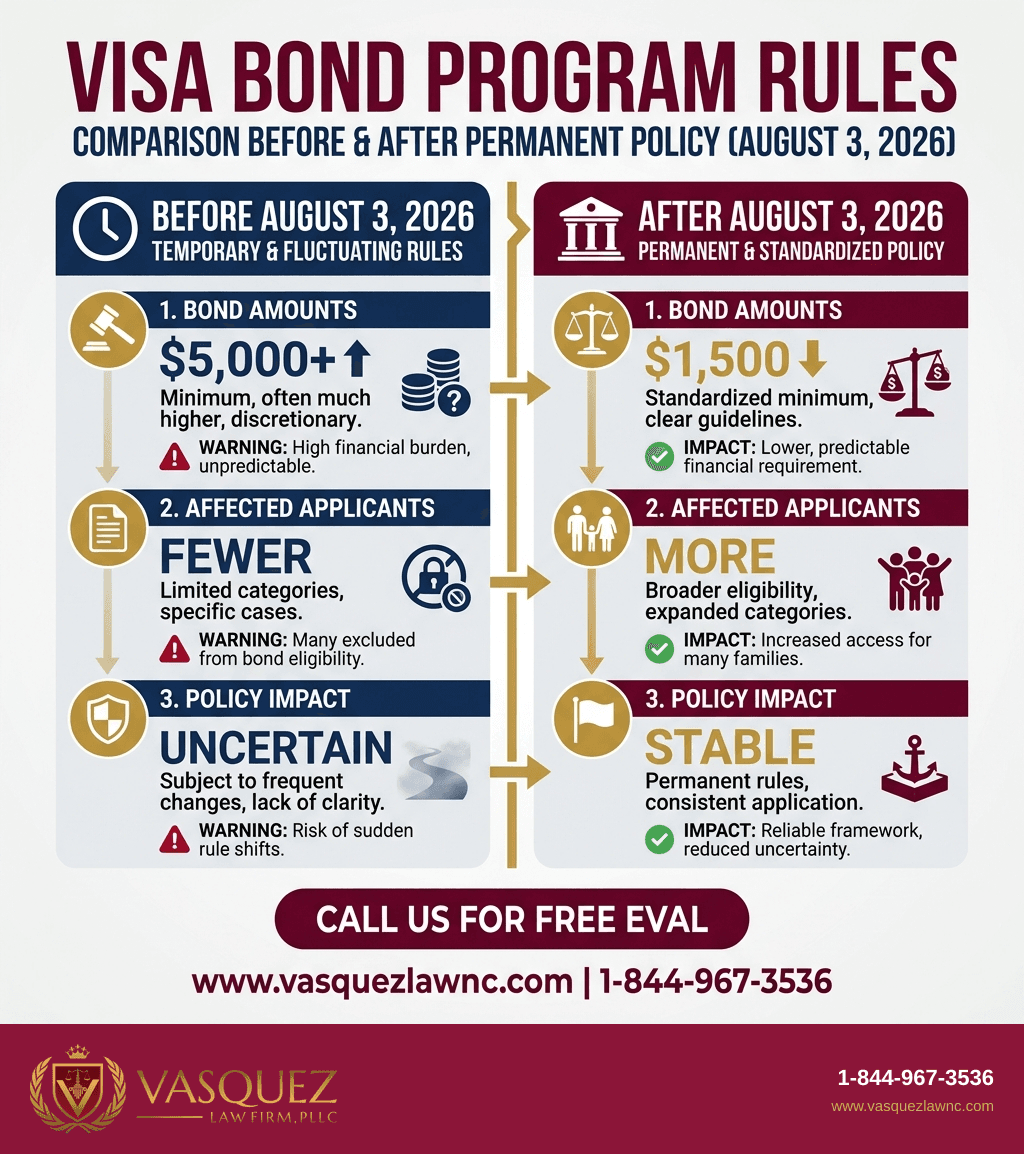
In 2026, the U.S. Department of Homeland Security permanently adopted the visa bond program following a pilot phase. This program mandates travelers from 50 specific countries identified with high visa overstay rates to pay bonds as a financial guarantee that they will depart the U.S. before their visa expires.
These countries include the Philippines, Nigeria, Vietnam, and others primarily from Asia, Africa, and South America. The standard bond amount is generally $15,000, but it may vary slightly depending on the consular post and visa category. This program mainly impacts tourists and B1/B2 visa applicants but can extend to other nonimmigrant categories based on consular discretion.
The core goal is to reduce the number of unauthorized overstays in the U.S., which in fiscal year 2025 reached an estimated 611,000 individuals from these countries alone, according to U.S. Citizenship and Immigration Services (USCIS). By requiring an upfront bond, consular officers aim to ensure applicants have a tangible incentive to comply with visa requirements.
The visa bond program operates alongside existing immigration regulations under INA § 236, which covers bond issuance for immigration detention cases. However, it is distinct as it applies pre-entry at the visa issuance stage.
Learn more about our immigration services and how Vasquez Law Firm can assist with visa bond program compliance from Raleigh, NC and Orlando, FL.
Visa Bond Pilot Program History
The pilot program began in 2023 as a way to test whether mandatory visa bonds decrease overstay rates effectively. Early results showed a 17% reduction in overstays from participating countries after the bond requirement was introduced. Based on this, DHS finalized the program in 2026 and expanded it to 50 countries. While some applicants felt the financial burden was high, the program’s legal rationale ties to immigration law enforcement and national security interests.
Countries Subject to Visa Bonds
The list includes Philippines, Vietnam, Nigeria, Ghana, Laos, Cambodia, and others designated due to consistently historic visa overstay rates above 20%. Each consulate publishes specific application instructions and bond payment procedures. It is essential travelers verify if their country is on the list before applying for U.S. entry visas.
Step-by-Step Process to Comply
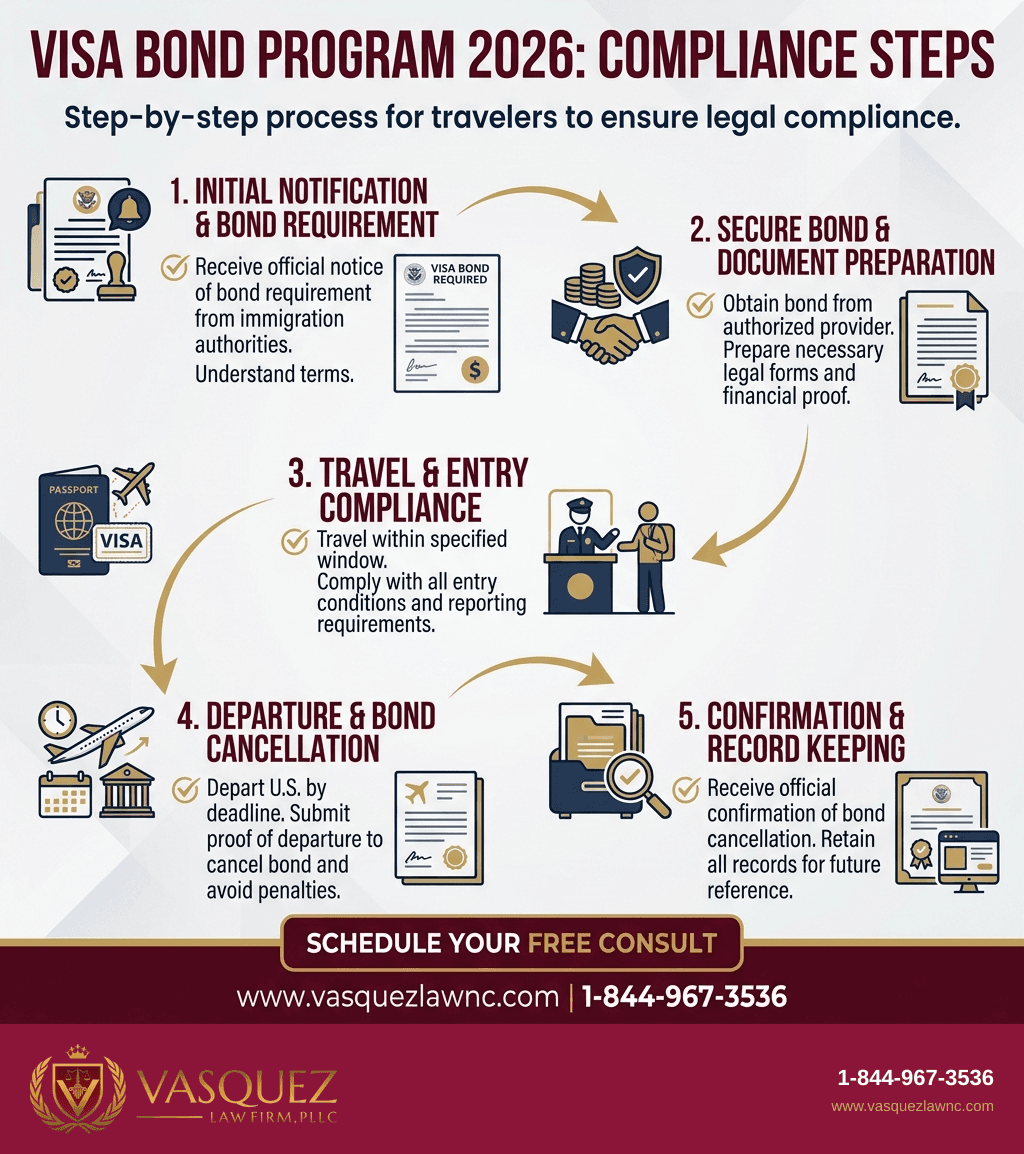
Meeting visa bond program requirements follows a precise procedure. Understanding these steps helps avoid visa denial or delays that often impact travel plans.
- Determine Eligibility: Confirm if your country is included in the visa bond program list through the consulate website or USCIS resources.
- Complete Visa Application: Start your B1/B2 or tourist visa application (DS-160 or relevant form) online.
- Bond Payment: Prior to scheduling your visa interview, you must pay the required bond amount ($15,000 in most cases) to the designated account. Instructions come from your U.S. consulate.
- Prepare Documents: Gather evidence of your residence, employment, ties to home country, and intent to return.
- Attend Visa Interview: Bring bond payment proof and supporting documents to your visa interview. The consular officer confirms bond receipt and evaluates your eligibility.
- Visa Decision: If approved, the visa will be issued contingent on bond payment. If denied, the bond is typically refunded.
- Travel and Return: Comply with your visa terms. Returning before expiry allows bond refund processing.
- Bond Refund: Once the traveler exits the U.S. on time, the bond is released back to the payer after administrative processing.
Impact on B1/B2 Visa Holders
The visa bond program primarily applies to B1/B2 holders who travel for business or tourism. The additional bond payment often raises the total visa expense but acts as a safeguard against visa overstays, a concern for U.S. immigration authorities given past trends.
Role of U.S. Consulates
All visa bond payments and confirmations are handled by U.S. consulates abroad. They provide detailed instructions on payment methods, bond proof, and appeal processes. Early communication with your consulate is crucial to avoid last-minute complications.
Documents and Evidence Checklist
- Valid passport with at least six months beyond your planned stay in the U.S.
- Completed visa application form (DS-160 for nonimmigrant visa)
- Receipt of bond payment (usually $15,000) from consulate or authorized agency
- Proof of ties to your home country: employer letters, property deeds, family records
- Travel itinerary and accommodation bookings
- Financial statements to demonstrate ability to cover travel costs aside from bond
- Letter of explanation or intent for travel
- Previous U.S. travel history, if any, including visa compliance
Gathering these documents thoroughly improves chances of visa approval and smooth processing of the visa bond requirement, especially in Raleigh and Orlando consular jurisdictions.
Timeline: What to Expect During Application
- Day 1-7: Research eligibility and gather documents.
- Day 8-10: Pay visa bond and schedule visa interview appointment.
- Day 11-20: Attend visa interview and await decision.
- Day 21-30: If approved, visa issued; begin travel preparations.
- During Stay: Maintain compliance with visa terms to ensure bond refund.
- Post-Travel: Bond refund processed within 60 days after timely exit.
USCIS processing times for related visa and bond applications typically range from 3 to 6 weeks but vary by consulate and applicant circumstances. Check USCIS Processing Times for updates.
Costs and Fees of the Visa Bond Program
- Visa Application Fee: Standard B1/B2 visa fee currently $160.
- Visa Bond Fee: Usually a $15,000 bond required upfront as a security deposit.
- Bond Payment Method: Usually via bank transfer or certified payment to designated consulate account; payment proof needed at visa interview.
- Legal Assistance: Fees vary if you hire an immigration lawyer to help prepare applications and documentation.
- Refunds: Bond refundable after timely return unless forfeited for overstaying.
Understanding these expenses is crucial for budgeting your visa application. The bond program creates additional upfront costs compared to usual visa fees, especially for travelers from Raleigh, NC and Orlando, FL planning trips.
Common Mistakes to Avoid with Visa Bonds
- Failing to Verify Country Status: Overlooking whether your country is on the visa bond program list can lead to surprise bond demand and delays. Always check with your consulate.
- Missing Bond Payment Deadlines: Not paying the bond before the visa interview can cause automatic visa denial.
- Inadequate Documentation: Presenting incomplete or weak proof of ties and bond payment receipt can negatively impact visa approval.
- Ignoring Refund Procedures: Travelers often neglect to follow formal refund claims leading to delayed bond return.
- Overstaying the Visa: The most costly mistake as it leads to bond forfeiture and future visa bans.
- Failing to Seek Legal Advice: Self-navigation without understanding visa bond program complexities can cause avoidable errors and denial.
If you only remember one thing: Always pay your visa bond on time and maintain strict compliance with visa conditions to avoid serious consequences including loss of bond and future travel bans.
Jurisdiction Notes for NC and FL Travelers
North Carolina Notes
Residents from Raleigh, NC applying for visas in 2026 impacted by the visa bond program should carefully review U.S. consulate guidance on bond payments. Although visa issuance is federally regulated, North Carolina applicants can seek assistance locally at Vasquez Law Firm’s Raleigh office to ensure compliance and proper documentation to reduce visa risk.
Orlando, FL Notes
Travelers from Orlando applying for visas affected by the bond program benefit from consulting our immigration attorneys familiar with local consulate procedures. Florida applicants must be alert to specific rules on bond payments and refunds set by their U.S. consulates in 2026 to avoid costly delays.
Nationwide Considerations
The visa bond program is federally mandated but applies unevenly based on country and consular post. USCIS and U.S. consulates nationwide enforce bond rules consistently, though application timelines can vary. Applicants across the U.S., including those in NC and FL, should track changes on the official DHS and USCIS websites.
When to Call a Lawyer About a Visa Bond
- You receive a visa bond demand notice and need help understanding payment requirements.
- Your visa interview was denied because of bond payment issues or documentation gaps.
- You are unsure if your country qualifies under the visa bond program and need confirmation.
- You face bond forfeiture due to alleged visa overstays and need legal representation.
- You want to appeal a bond denial or seek a waiver.
- You are concerned about the financial impact of the bond or need help with refund claims.
- You want to prepare thorough evidence for your visa interview to meet bond program criteria.
- You need bilingual legal support and advice on navigating the visa application and bond process.
About Vasquez Law Firm
At Vasquez Law Firm, we combine compassion with aggressive representation. Our motto "Yo Peleo®" (I Fight) reflects our commitment to standing up for your rights.
- Bilingual Support: Se Habla Español — Spanish-speaking attorneys and staff available.
- Service Areas: North Carolina, plus Florida and nationwide for immigration.
- Experience: Over 30 years helping clients navigate complex legal matters.
- Results: Thousands of successful cases across multiple practice areas.
Attorney Trust and Experience
William J. Vásquez is admitted to the North Carolina State Bar (2011) and to the U.S. Courts of Appeals for the 4th, 5th, 6th, and 11th Circuits. The firm has provided dedicated legal representation since 2011, with personalized attention to each client's case.
Don't wait to get the help you deserve. Call us now for immediate assistance.
Se Habla Español
Frequently Asked Questions
Which countries are required to pay a visa bond?
As of 2026, 50 countries have been designated under the visa bond program due to high overstay rates. These include the Philippines, Vietnam, and Nigeria among others. Travelers from these countries applying for B1/B2 visas or tourist visas must pay a bond, typically $15,000, as a guarantee they will return to their home country.
What does the visa bond program mean for tourist visa applicants?
The visa bond program requires applicants from certain countries to pay a bond that will be forfeited if they overstay their visa in the U.S. This adds an extra financial obligation but aims to improve compliance with immigration laws. It affects mostly B1/B2 tourist visa applicants from high-overstay countries.
Who qualifies for an immigration bond under the visa bond program?
Immigration bonds under the visa bond program apply mainly to non-immigrant visa applicants from targeted countries with significant visa overstay issues. Individuals must pay the bond before visa issuance as an assurance to return. Failure to comply can result in denial of the visa or detention.
What is the effective date of the permanent visa bond program?
The visa bond pilot program became permanent in early 2026 after a trial period. The Department of Homeland Security announced its continuation for 50 countries starting January 1, 2026. This means travelers from these countries must comply with the bond requirements for all eligible visa applications.
How much is the typical visa bond amount?
Most visa bonds under the program require about $15,000 to be paid as a guarantee. This amount covers potential costs if an applicant overstays and must be forcibly removed. The bond is refundable if the traveler complies with visa limits and returns on time.
Are there exceptions to the visa bond program?
Certain visa categories, including diplomatic and some student visas, may be exempt from the visa bond program. Additionally, travelers with strong ties documented through family or employment might secure waivers. However, waivers are rare and require legal assistance to pursue effectively.
What happens if a traveler fails to pay the visa bond?
If a traveler from a covered country refuses or fails to pay the visa bond, their visa application is likely to be denied. The bond payment is a condition for visa approval for targeted countries. Denial can impact future visa applications and lawful entry prospects.
How can Vasquez Law Firm assist with visa bond program issues?
Vasquez Law Firm offers guidance on the visa bond program requirements, helps prepare applications and supporting evidence, and represents clients facing bond-related challenges. With offices in Raleigh, NC and Orlando, FL, we provide bilingual support to ensure compliance and protect your rights.
Sources and References
- U.S. Citizenship and Immigration Services
- Executive Office for Immigration Review
- Legal Information Institute
Take the first step toward justice today. Our team is standing by to help.
Start Your Free Evaluation Now
Call us: 1-844-967-3536
Se Habla Español - Estamos aquí para ayudarle.
William Vasquez
Founder & CEO, Vasquez Law Firm, PLLC
William Vasquez is the founder and CEO of Vasquez Law Firm, PLLC, a results-driven firm specializing in immigration, criminal defense, personal injury, and workers' compensation. A U.S. Air Force veteran and recipient of the Joint Service Achievement Medal, William is dedicated to fiercely fighting for his clients' rights.
Related Legal Services
Need legal help? Learn more about how our immigration attorneys can help, or contact us for a free evaluation.
You can also visit North Carolina immigration law firm for more information.