What You Need to Know About the U.S.-Canada Border in 2026
Learn vital facts about the U.S.-Canada border in 2026. Discover crossing requirements, maps, and what NC and FL travelers must know. Contact Vasquez Law for help.
Published on July 6, 2026
Have questions? Talk to an attorney - free evaluation.
Call 1-844-967-3536Worried how the latest immigration news affects you?
Get a free, confidential case review with an immigration attorney - know exactly where you stand.
What You Need to Know About the U.S.-Canada Border in 2026
The U.S.-Canada border is the longest international boundary in the world. It stretches over 5,500 miles. In 2026, it is important to understand the rules for crossing the border, wait times, and updates. This is especially true for travelers from North Carolina and Orlando, Florida. This guide explains everything people from North Carolina and Florida need to know about crossing or dealing with the U.S.-Canada border. It includes the latest rules, processing times, and possible legal issues about immigration and border entry.
Need help with your case? Our experienced attorneys are ready to fight for you. Se Habla Español.
Or call us now: 1-844-967-3536
Quick Answer
The U.S.-Canada border is the world's longest undefended boundary. It is over 5,500 miles long. In 2026, crossing the border requires valid travel documents like passports. You must also follow border laws enforced by U.S. Customs and Border Protection (CBP). Travelers from North Carolina and Orlando should keep updated on any border changes or entry rules.
- Most crossings need passports or trusted traveler cards
- Customs and immigration inspections happen at the border
- Some crossings accept enhanced IDs for U.S. citizens
- Visa rules depend on your nationality
- Border wait times can change daily
Understanding the U.S.-Canada Border
The U.S.-Canada border, also called the International Boundary, is over 5,525 miles long. It separates the United States and Canada across land and water. It is the world's longest undefended border. Border states include Maine, Michigan, and Washington. These states share boundary lines with Canadian provinces like Quebec, Ontario, and British Columbia.
This long border supports a lot of trade and travel. Each crossing has its own rules. These rules come from federal immigration law under Title 8 of the U.S. Code. The U.S. Customs and Border Protection (CBP) and Canada Border Services Agency (CBSA) enforce these laws. They focus on security, immigration rules, and customs control.
People from North Carolina and Orlando often cross this border for work, tourism, or family visits. Knowing the border rules helps avoid problems when crossing in either direction.
Key U.S.-Canada Border States
- Maine
- New York
- Vermont
- Michigan
- North Dakota
- Washington
Popular Crossing Locations
- Buffalo-Niagara Falls, NY
- Detroit-Windsor, MI
- Sweetgrass, MT
- Peace Arch, WA
- Champlain, NY
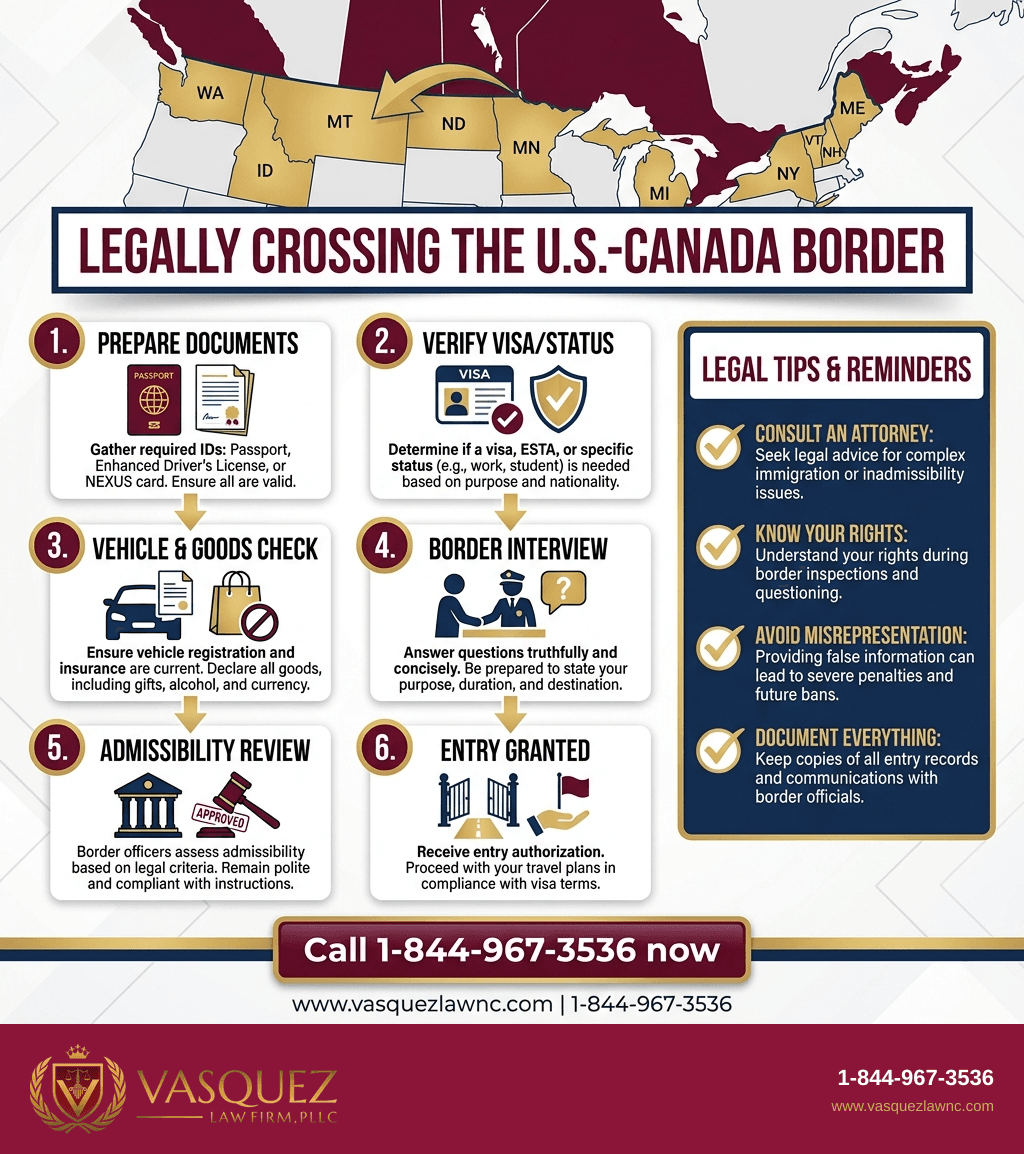
Key Steps to Cross the U.S.-Canada Border
Crossing the U.S.-Canada border in 2026 usually means you must prepare, have the right documents, and go through inspections. Travelers from North Carolina or Orlando must plan carefully. The legal process applies to everyone, no matter where they come from or why they travel.
The steps to cross are:
- Prepare Proper Documentation – All travelers need valid passports. Some also need visas. Trusted traveler program cards like NEXUS can make the process faster.
- Approach the Border Crossing Point – Use official checkpoints. These have security technology and CBP officers.
- Customs and Immigration Inspection – Answer questions honestly. Declare any goods you bring. Provide fingerprints or biometrics if asked.
- Wait for Approval – The time to get entry approval depends on traffic and inspection.
- Entry or Denial – If approved, you can enter. Denial can happen if you are not allowed under immigration law.
Example Scenario
A North Carolina resident driving to Canada for tourism must carry a valid U.S. passport and any needed Canadian visa. At the border, the traveler answers questions about the trip and shows the passport. Customs officers check the documents before allowing entry.
Documents and Requirements for Crossing
To legally cross the U.S.-Canada border, travelers need certain documents and must meet federal rules. These rules come from laws including 8 U.S.C. a7 1182 and regulations under 8 C.F.R. a7 235.1.
- Valid passport or passport card (for U.S. citizens)
- Enhanced Driver27s License (EDL) accepted from some states
- Visa or Electronic Travel Authorization (eTA) if needed
- Trusted traveler card (NEXUS, SENTRI) for faster lane access
- Proof of travel purpose documents (work, school, tourism)
- Customs declaration forms filled out correctly and shown
Work or study visas may need more documents like a job offer letter or school acceptance letter.
Importance of Complete Documentation
If your documents are incomplete or expired, you may face delays or be denied entry. Check expiration dates well before you travel. Make sure all information matches official records.
Timeline and What to Expect When Crossing
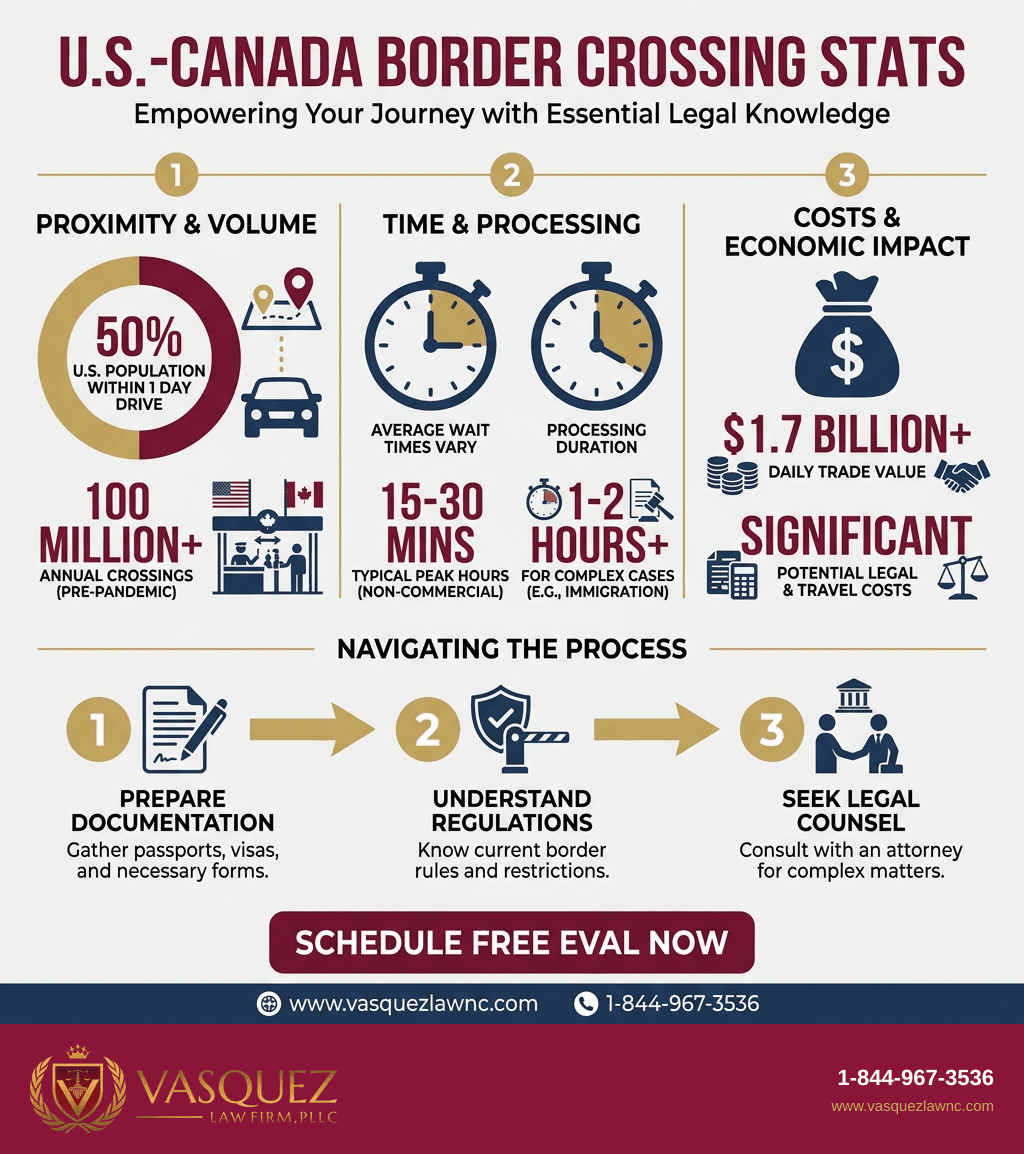
Border processing times at the U.S.-Canada border change by crossing point and time of day. Official data shows wait times can be from a few minutes to several hours. This is especially true during holidays or busy travel times.
- Weekdays: Usually shorter waits, about 5-30 minutes
- Weekends and Holidays: Longer waits possible, 30 minutes to over 2 hours
- Peak Tourist Seasons: May to September are often busiest
CBP provides updated wait times online for major crossings. Traveling during less busy hours can reduce delays.
Example Timeline for a Typical Crossing
- Arrive at border: 0 minutes
- Queue and wait: 15-45 minutes
- Primary inspection: 5-10 minutes
- Secondary inspection (if referred): 30-60 minutes
- Total average: 20-60+ minutes
Costs and Fees: What Impacts the Price
Most U.S.-Canada border crossings do not have direct fees for inspection. But there can be costs for:
- Applying for travel documents (passport fees, visa application fees)
- Joining trusted traveler programs (NEXUS costs about $50 for 5 years)
- Transportation costs including tolls on bridges and tunnels
- Legal fees if immigration or customs problems need a lawyer
For people from North Carolina and Orlando, FL, document fees may vary depending on local passport offices and how fast you need the documents.
Common Mistakes and How to Avoid Them
- Using expired documents: Check all IDs and visas before travel to avoid refusal.
- Undeclared goods: Always declare purchases and gifts to customs to avoid penalties.
- Inaccurate information: Give honest and complete answers during interviews.
- Missing supporting documents: Carry proof of work or study when needed.
- Ignoring COVID-19 rules: Follow the latest health rules for testing and vaccination.
- Not checking border hours: Some crossings close at night or have shorter hours.
- Waiting until last minute: Apply for travel documents early to avoid delays.
If you only remember one thing: Having the right documents and telling the truth are key to a smooth border crossing.
Jurisdiction Notes: NC, FL, and Nationwide
North Carolina Notes
People from North Carolina often cross the U.S.-Canada border for tourism and work. Immigration law is federal, but local lawyers in NC can help with visa or immigration questions and border issues. The Raleigh office of Vasquez Law Firm offers special help for NC residents who need support with entry or immigration problems at the border.
Orlando, Florida Notes
Travelers from Orlando must follow the same federal entry rules. They often use virtual consultations for immigration legal help. Vasquez Law27s Orlando office helps Floridians with immigration processes related to international travel, including entry at the U.S.-Canada border.
Nationwide Concepts (General Only)
Federal immigration laws under Title 8 U.S.C. and rules from 8 C.F.R. control border inspections and who can enter for all travelers nationwide. Customs and Border Protection enforces these laws the same way everywhere. Some border stations may have small differences in procedure, but the legal rules are the same across states.
When to Call an Immigration Lawyer Now
- If you have a history of immigration violations or criminal convictions
- If you might be denied entry at the border
- If you are denied entry or delayed at a border crossing
- If you are unsure about visa rules or eligibility
- If CBP asks for more documents or a secondary inspection
- If you plan to apply for status changes near U.S. borders
- If you have problems with family member travel compliance
- If you need help understanding travel restrictions related to COVID-19 or other health orders
About Vasquez Law Firm
At Vasquez Law Firm, we combine care with strong representation. Our motto "Yo Peleoae" (I Fight) shows our promise to stand up for your rights.
- Bilingual Support: Se Habla Espaf1ol 2d Spanish-speaking lawyers and staff available
- Service Areas: North Carolina, Florida, and nationwide immigration services
- Experience: Over 30 years helping clients with complex legal matters
- Results: Thousands of successful cases in many practice areas
Attorney Trust and Experience
William J. Ve1squez is licensed to practice law in North Carolina since 2011. He is also admitted to the U.S. Courts of Appeals for the 4th, 5th, and 11th Circuits. The firm27s Florida cases are handled by Florida Bar attorney Harold Estrada-Rodriguez (FL Bar No. 1041171). The firm has offered dedicated legal help since 2011, giving personal attention to each client27s case.
Don't wait to get the help you deserve. Call us now for immediate assistance.
Se Habla Espaf1ol
Frequently Asked Questions
What is the official name of the U.S.-Canada border?
The official name of the U.S.-Canada border is the International Boundary. It is the longest undefended border in the world. It stretches over 5,525 miles from the Atlantic Ocean to the Pacific Ocean. This includes land boundaries and some water boundaries between the two countries.
Can you cross the border from the U.S. to Canada by car?
Yes, you can cross by car at official border locations. You need valid travel documents like passports or trusted traveler cards. Travelers must follow customs and immigration inspections and declare all goods correctly.
Which U.S. city is closest to Canada?
Detroit, Michigan, is the closest U.S. city to Canada. It is right across the Detroit River from Windsor, Ontario. This closeness allows many busy border crossings by bridges and tunnels connecting the two countries.
Where do most Canadians live?
About 50% of Canadians live within 100 miles of the U.S.-Canada border. Most live in Ontario and Quebec provinces. This large population near the border affects travel and cross-border immigration a lot.
What are the main U.S.-Canada border crossing requirements?
Travelers must show valid ID like passports, enhanced driver27s licenses, or trusted traveler cards. Visas or electronic travel authorizations may be needed depending on nationality. You must also fill out customs declarations and answer questions truthfully during inspections.
Are there specific rules for crossing the U.S.-Canada border for immigration purposes?
Yes, immigration-related border crossings must follow federal laws including 8 U.S.C. a7 1182 about who can be denied entry. Showing valid visas or status and answering inspection questions are important for legal entry.
What is the role of Customs and Border Protection at the U.S.-Canada border?
CBP checks people and goods entering the U.S. They enforce immigration laws and customs rules. Officers can deny entry if someone is not allowed or has illegal goods. This helps keep the border safe.
Can residents from North Carolina or Orlando, FL, easily travel to Canada?
Travelers from these places can visit Canada but must meet all entry rules. This includes having valid documents and following current rules like health screening. Planning ahead lowers the chance of delays or denial.
Sources and References
- U.S. Citizenship and Immigration Services
- Executive Office for Immigration Review
- Legal Information Institute
Take the first step toward justice today. Our team is standing by to help.
Start Your Free Evaluation Now
Call us: 1-844-967-3536
Se Habla Espaf1ol - Estamos aqued para ayudarle.
If you need legal assistance, learn more about our immigration legal services, or call us at 1-844-967-3536 for a free evaluation.

William Vasquez
Founder & CEO, Vasquez Law Firm, PLLC
William Vasquez is the founder and CEO of Vasquez Law Firm, PLLC, a results-driven firm specializing in immigration, criminal defense, personal injury, and workers' compensation. A U.S. Air Force veteran and recipient of the Joint Service Achievement Medal, William is dedicated to fiercely fighting for his clients' rights.
Related Legal Services
Need legal help? Learn more about our immigration legal services, or contact us for a free evaluation.
You can also visit immigration lawyers serving all of North Carolina for more information.