How Haitian Immigration Works in North Carolina and Florida in 2026
Learn how Haitian immigration works in 2026. Discover key updates, processes, and legal help in Raleigh and Orlando. Contact Vasquez Law for a free evaluation.
Published on July 5, 2026
Have questions? Talk to an attorney - free evaluation.
Call 1-844-967-3536Worried how the latest immigration news affects you?
Get a free, confidential case review with an immigration attorney - know exactly where you stand.
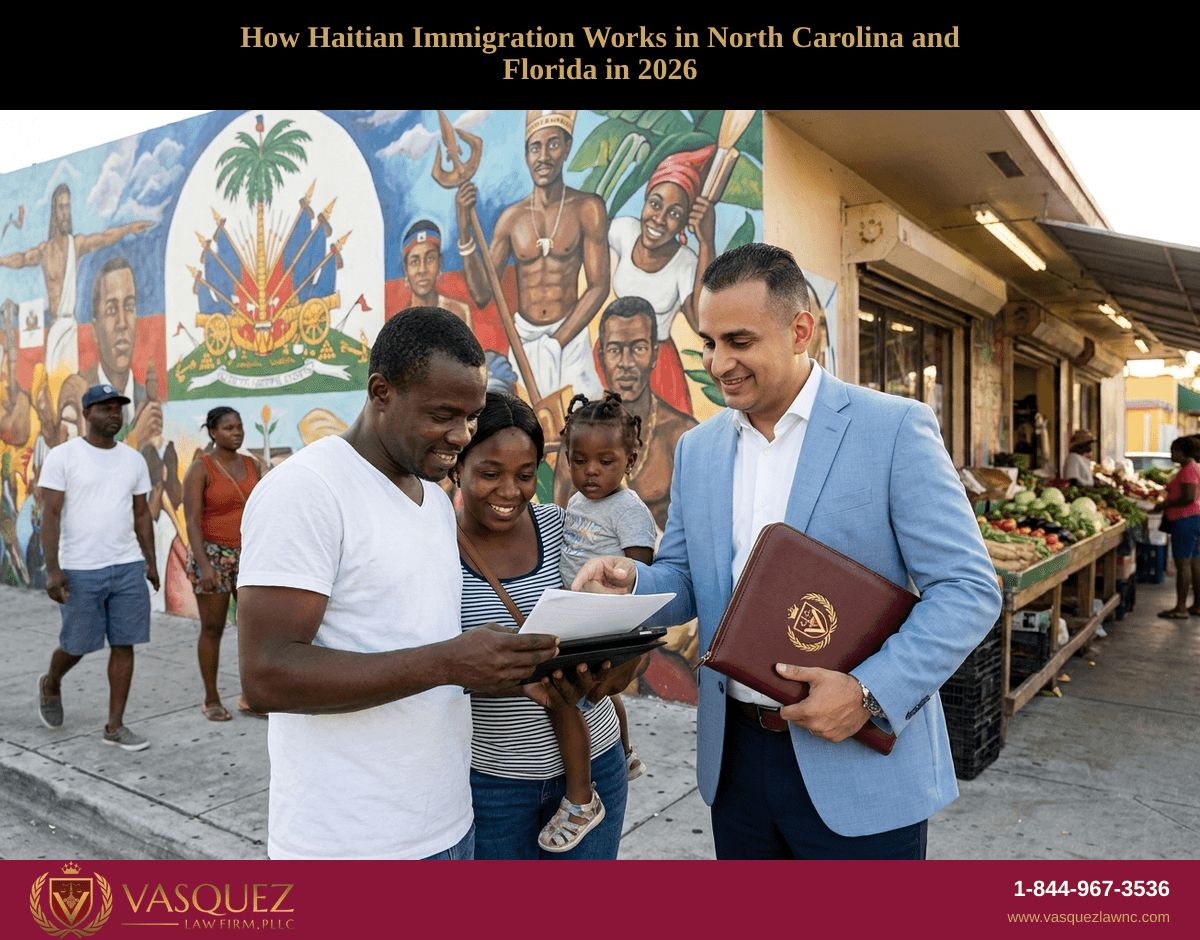
How Haitian Immigration Works in North Carolina and Florida in 2026
Haitian immigration continues to shape communities in North Carolina and Florida, especially in cities like Raleigh and Orlando. Understanding the current situation in 2026 is very important for Haitian immigrants who want to find legal options and deal with federal immigration rules. This guide explains Haitian immigration history, recent numbers, types of protections like Temporary Protected Status (TPS), recent Supreme Court decisions that affect Haitian immigrants, and practical steps to take in Raleigh and Orlando.
Need help with your case? Our experienced attorneys are ready to fight for you. Se Habla Español.
Or call us now: 1-844-967-3536
Quick Answer
Haitian immigration in 2026 means dealing with complex federal rules. These include Temporary Protected Status (TPS), asylum (which means asking for protection because you fear harm), and family sponsorship (when family members help you get legal status). Changes in federal policy and recent Supreme Court decisions have a big effect on Haitian immigrants in Raleigh, NC and Orlando, FL. Getting legal help is very important to know your rights and avoid mistakes.
- TPS status for Haiti is still being reviewed in 2026
- People asking for asylum must meet strict rules to qualify
- Legal ways to stay vary depending on each person’s situation
- Recent Supreme Court decisions make things harder for some Haitian immigrants
- Talking to an immigration lawyer in Raleigh or Orlando can help you get better results
Understanding Haitian Immigration and Its History
The story of Haitian immigration to the United States is closely linked to political problems and natural disasters in Haiti. The 2010 earthquake was a key event. It caused many Haitian people to come to the U.S. looking for safety and better chances. Data from the Migration Policy Institute shows that Haitian immigration numbers were highest in the early 2010s and have gone up and down since then.
North Carolina, especially Raleigh, and Florida, mainly Orlando and Miami, have been top places where Haitian immigrants settle. These cities have Haitian communities and offer access to community help and legal aid.
Haitian immigrants are mostly counted as Black or African American in U.S. immigration and census data. This affects social and legal issues, including rules against discrimination and community support.
In the past, Haitian immigrants have often used Temporary Protected Status (TPS) after disasters and ongoing problems in Haiti. TPS lets qualified people stay and work legally in the U.S. for a limited time. But TPS has faced legal challenges recently. The 2026 Supreme Court ruling affects who can get TPS and renew it.
For more details about immigration history and policy effects, visit the U.S. Citizenship and Immigration Services.
Step-by-Step Process for Haitian Immigrants
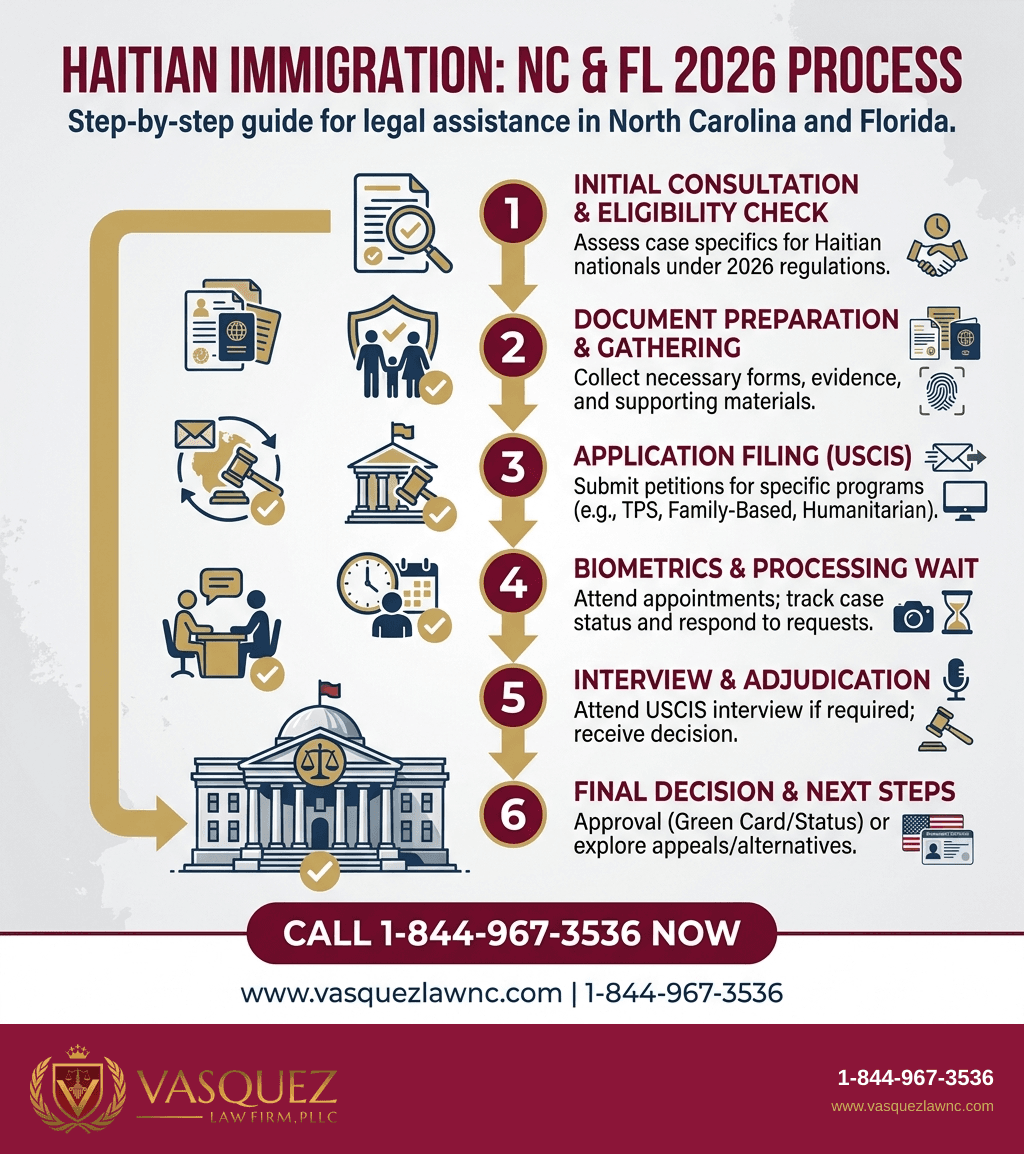
Haitian immigrants who want to make their status legal or apply for protections like TPS or asylum should follow a careful process. In 2026, the steps usually include:
- Check Eligibility: Learn which immigration help you may qualify for, such as TPS, asylum, family-based petitions, or changing your status under INA § 1255.
- Collect Documents: Get identity papers, proof you have stayed in the U.S. continuously, and evidence that supports your claim (like information about conditions in Haiti or fears of harm).
- Submit Forms: Send USCIS forms like I-821 for TPS or I-589 for asylum. Processing times vary and you can check them at USCIS Processing Times.
- Go to Biometrics and Interviews: Attend fingerprinting appointments and interviews with USCIS or Immigration Courts, if needed.
- Answer Requests for Evidence: USCIS often asks for more evidence (called Requests for Evidence or RFEs). Answering on time and fully is very important to avoid denial.
- Get Decision and Think About Appeal: If approved, you get work permission or permanent status. If denied, talk to a lawyer about appeals or other options.
In Raleigh and Orlando, local immigration lawyers like those at Vasquez Law Firm offer virtual and in-person meetings to help Haitian immigrants through this process.
Important Forms for Haitian Immigrants:
- Form I-821 for TPS applications
- Form I-589 for asylum requests
- Form I-130 for family sponsorship
- Form I-485 to change status (under 8 U.S.C. § 1255)
Documents and Evidence Checklist for Haitian Immigrant Cases
Getting the right documents is very important. Haitian immigrants should gather:
- Valid passport or Haitian national ID
- Birth certificates and proof of family relationships
- Proof of where you live, like leases, utility bills, or school records in NC or FL
- Medical or police reports showing harm or disaster effects
- Work records, tax returns, pay stubs
- Any previous immigration papers or notices
- Statements from community members or family supporting you
Keep original documents safe and give clear copies with translations if papers are not in English. This helps avoid delays and makes your case stronger.
Timeline of Haitian Immigration Processes in 2026
How long Haitian immigration cases take depends on the type of help you ask for. According to USCIS processing times in 2026:
- TPS applications (Form I-821) take about 14 to 20 months for the first decision.
- Asylum applications can take different times depending on the backlog in immigration courts run by the Executive Office for Immigration Review (EOIR).
- Changing status (Form I-485) for qualified applicants takes about 8 to 14 months in Raleigh and Orlando.
Applicants should get ready for possible waiting times and keep in touch with their immigration lawyer. Quick answers to USCIS or EOIR requests help keep cases moving.
Example Timeline for TPS:
- Month 1-2: Send application and go to biometrics appointment
- Month 3-10: Case review and possible Request for Evidence
- Month 11-20: Final decision and get approval or denial
Costs and Fees: What Affects the Price for Haitian Immigration Cases
Filing fees depend on the form and how complex the case is. For example:
- Form I-821 (TPS) filing fee is $50 plus biometric fees (about $85)
- Form I-589 (asylum) has no filing fee but may cost money for legal help and document translation
- Form I-485 (change of status) fee is about $1,225 including biometrics
Legal fees vary based on case difficulty, needed documents, and appeals. Haitian immigrants should find experienced immigration lawyers in Raleigh or Orlando who offer clear prices and free consultations to discuss options.
Common Mistakes to Avoid in Haitian Immigration Cases
- Missing deadlines: Sending forms or answers late causes denials. Fix this by tracking deadlines carefully.
- Incomplete applications: Leaving out needed documents causes delays; always send a full checklist.
- Not telling USCIS about address changes: This can cause missed notices. Tell USCIS within 10 days after moving.
- Ignoring legal updates: New court decisions change eligibility; talk to lawyers regularly.
- Relying only on TPS without other plans: TPS can end, so think about permanent options.
- Trying to file without legal help: Complex cases often need professional assistance.
- Using fake documents: This risks your case and can lead to deportation.
If you only remember one thing: Getting legal help and keeping good documents greatly improves Haitian immigration cases.
Practical Notes for Haitian Immigrants in NC and FL
North Carolina Notes
Raleigh has a growing Haitian community with access to special immigration legal services. North Carolina is under the 4th Circuit Court of Appeals, which affects immigration decisions for Haitian immigrants. Local nonprofit groups also offer social support. Vasquez Law Firm gives in-person meetings in Raleigh, combining federal immigration knowledge with local experience.
Florida Notes
Orlando and nearby areas have one of the largest Haitian populations in the U.S. The 11th Circuit Court of Appeals handles legal matters for Haitian immigrants here. Orlando also has strong Haitian community groups that help with cultural adjustment, language support, and legal referrals. Vasquez Law Firm’s Orlando office helps Haitian immigrants with bilingual lawyers and custom immigration services.
Nationwide Concepts (General Only, Rules Vary)
Federal immigration law controls Haitian immigration and TPS rules everywhere. The U.S. Citizenship and Immigration Services and Executive Office for Immigration Review manage case decisions. Haitian immigrants outside NC and FL should get legal help in their own areas because processing can be different. Always check local resources and legal options.
When to Call a Lawyer for Haitian Immigration Help
- Your TPS renewal is coming or was denied
- You get a Notice to Appear in immigration court
- You want asylum because you fear harm or disaster in Haiti
- You need help with family-based immigration petitions
- You face possible deportation or removal
- You get a Request for Evidence from USCIS and don’t know how to answer
- You want to apply to change status after TPS or asylum approval
- You need legal explanation of recent immigration court decisions affecting Haitian immigrants
About Vasquez Law Firm
At Vasquez Law Firm, we mix care with strong representation. Our motto "Yo Peleo®" (I Fight) shows our promise to defend your rights.
- Bilingual Support: Se Habla Español — Spanish-speaking lawyers and staff available
- Service Areas: North Carolina, Florida, and immigration services nationwide
- Experience: Over 30 years helping clients with complex legal issues
- Results: Thousands of successful cases in many practice areas
Attorney Trust and Experience
William J. Vásquez is licensed by the North Carolina State Bar (2011) and the U.S. Courts of Appeals for the 4th, 5th, and 11th Circuits. Florida cases at the firm are handled by Florida Bar lawyer Harold Estrada-Rodriguez (FL Bar No. 1041171). The firm has offered dedicated legal help since 2011, giving personal attention to each client.
Don't wait to get the help you deserve. Call us now for immediate assistance.
Se Habla Español
Frequently Asked Questions
Is Temporary Protected Status (TPS) for Haitians terminated?
TPS for Haitians has faced legal uncertainty after recent Supreme Court decisions. This causes possible effects on renewals and who can qualify. It is very important to talk to an immigration lawyer to check your situation and stay updated with USCIS news to avoid losing status by accident.
What is happening with Haitian immigrants in the United States in 2026?
Many Haitian immigrants face new challenges in 2026 because of changes in federal policy and DHS reviews of protections like TPS. More cases in immigration courts and enforcement actions mean Haitian immigrants should get legal advice quickly in Raleigh and Orlando to protect their status.
Which state has the most Haitian immigrants in the U.S.?
Florida has the largest Haitian immigrant population in the U.S., especially near Orlando and Miami. North Carolina, especially Raleigh, is growing fast in Haitian immigrant residents, supported by community groups and legal help.
Will TPS be renewed for Haiti in 2026?
The decision about renewing TPS for Haiti is still pending because of ongoing federal review and recent court rulings. Haitian TPS holders should watch USCIS updates closely and talk to immigration lawyers in Raleigh or Orlando for advice on their options.
What race are Haitian people classified as in U.S. immigration?
Haitian people are usually classified as Black or African American in U.S. immigration and census data. This affects how data is reported and protections against discrimination during immigration and when getting social services.
What is the Haitian Immigration Project?
The Haitian Immigration Project is a community program that offers legal help and social support to Haitian immigrants. It helps people understand immigration options and get protections, especially in North Carolina and Florida.
How have Haitian immigration statistics changed in recent years?
Haitian immigration numbers went up after big events like the 2010 earthquake and peaked in 2022. In 2026, numbers have steadied, but legal challenges and enforcement affect migration trends, especially in NC and FL.
What happens if a Haitian immigrant's TPS is terminated?
If TPS ends, Haitian immigrants lose legal protection and work permission. This can lead to removal unless other help is available. Getting legal advice quickly is very important to explore asylum or other ways to change status and avoid deportation.
Sources and References
- U.S. Citizenship and Immigration Services
- Executive Office for Immigration Review
- Legal Information Institute
Take the first step toward justice today. Our team is ready to help. Se Habla Español.
Start Your Free Evaluation Now
Call us: 1-844-967-3536
Se Habla Español - We are here to help you.
If you need legal assistance, learn more about experienced immigration attorneys in Charlotte, or call us at 1-844-967-3536 for a free evaluation.

William Vasquez
Founder & CEO, Vasquez Law Firm, PLLC
William Vasquez is the founder and CEO of Vasquez Law Firm, PLLC, a results-driven firm specializing in immigration, criminal defense, personal injury, and workers' compensation. A U.S. Air Force veteran and recipient of the Joint Service Achievement Medal, William is dedicated to fiercely fighting for his clients' rights.
Related Legal Services
Need legal help? Learn more about experienced immigration attorneys in Charlotte, or contact us for a free evaluation.
You can also visit statewide immigration legal services for more information.