Noncitizens: Understanding Your Rights and Protections in 2026
Discover noncitizens' rights and legal protections in 2026. Learn how asylum works and what to do if you face government persecution. Contact Vasquez Law.
Published on August 10, 2026
Talk to an immigration attorney
Free call. A clear plan for your case.
Free & confidential · Se habla espanol · 24/7
Have questions? Talk to an attorney - free evaluation.
Call 1-844-967-3536Worried how the latest immigration news affects you?
Schedule a confidential case review with an immigration attorney - know exactly where you stand.
USCIS Case Status
Check your USCIS case status
Enter your receipt number and get the official status. Free, no registration.
Noncitizens: Understanding Your Rights and Protections in 2026
Noncitizens in the United States face special challenges about their legal status and protections. In 2026, it is very important to understand the rights of noncitizens—whether they are asylum seekers, immigrants, or DACA recipients. This guide explains key protections, possible rights violations, and what to do if you or your family are noncitizens in Orlando or Raleigh. Learn about asylum processes, the risks of human rights violations that count as persecution, and how legal help can guide you through these complex issues.
Need help with your case? Our experienced attorneys are ready to fight for you. Se Habla Español.
Or call us now: 1-844-967-3536
Quick Answer
Noncitizens have important rights that protect them from government abuse and persecution. These rights include the ability to seek asylum if they fear harm based on protected reasons. But noncitizens must know that illegal voting can cause serious problems. Legal protection is available, and legal help can guide noncitizens through complicated immigration laws.
- Rights include fair legal process and protection from persecution
- Asylum offers a way to stay if facing human rights violations
- Noncitizen voting laws are strict and breaking them has penalties
- Legal representation can protect and improve your rights
- Location matters — Orlando and Raleigh offices support local needs
Understanding Noncitizens and Their Rights
Imagine Maria, a noncitizen living in Orlando, who fears going back to her home country because of political persecution. Political persecution means being harmed or treated badly because of political beliefs. Maria’s story shows many challenges noncitizens face in the United States. In 2026, over 44 million noncitizens live in the U.S. This group includes documented immigrants, asylum seekers, and unauthorized people. It is very important to know exactly what rights noncitizens have and how these rights protect them from abuse or deportation.
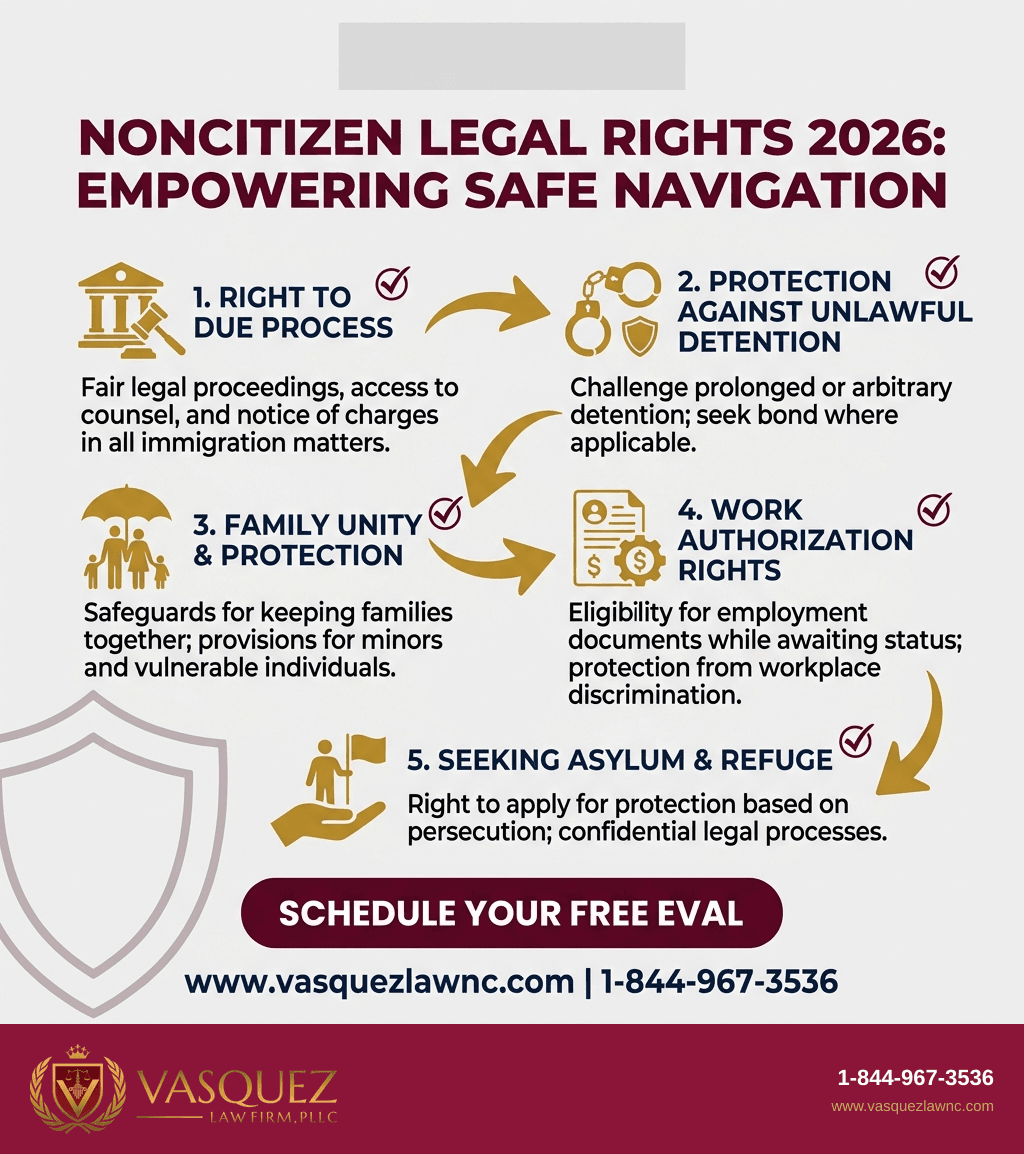
Noncitizens include lawful permanent residents (people with green cards), those with temporary visas, asylum applicants, and unauthorized immigrants. Federal law gives protections against mistreatment, but these protections differ depending on legal status. For example, all noncitizens usually have the right to due process. Due process means fair legal procedures before the government can take away your liberty or property. The Fifth Amendment protects against being held or deported without a hearing.
More specifically, noncitizens who face danger if sent back to a country where the government persecutes them because of race, religion, nationality, political opinion, or membership in a particular social group can apply for asylum. Asylum is protection given to people who fear persecution. This protection is an important shield from human rights violations that count as persecution. It is legally written in 8 U.S.C. § 1158.
Knowing these rights early helps you avoid problems and makes your immigration case stronger. If you are in Raleigh or Orlando, our immigration attorneys can explain your situation and options clearly. Learn more about our immigration services.
Key Legal Protections for Noncitizens
Think about Jorge, a noncitizen in Raleigh, who was wrongly held without access to a lawyer. His case shows important legal protections for noncitizens under U.S. law. These include the right to a lawyer, protection from illegal detention, and the chance to ask for relief like withholding of removal or asylum.
Federal immigration laws protect noncitizens from being sent back to countries where they face persecution. The Immigration and Nationality Act (INA) explains when asylum or withholding of removal can be given. According to INA § 208, asylum seekers must apply within one year of arriving unless there are special reasons.
Noncitizens also have protection against unfair or abusive treatment by government agencies. If the government or its agents commit persecution, this can be legally challenged. Proof of these rights violations is very important in immigration cases.
While noncitizens have these protections, they must know limits such as rules about voting. Using noncitizen status to vote in federal or state elections is illegal. It can cause serious immigration problems. Attorney Jessica Vasquez has helped clients in difficult cases about these issues and can help you understand your rights.
Step-by-Step: How to Seek Asylum and Protection
Look at Anna’s case. She is from Cuba and fears persecution because of her political opinions. She wants asylum in Orlando. The asylum process can be hard, but knowing the steps helps you do better.
- Prepare Form I-589: This is the Application for Asylum and for Withholding of Removal. You must fill it out honestly and file it within one year of arriving in the U.S., according to USCIS rules.
- File the application with USCIS: Send your asylum application to the local USCIS asylum office or to the Executive Office for Immigration Review if you are in removal proceedings.
- Attend biometric appointment: USCIS will schedule fingerprinting to check your background.
- Attend asylum interview: USCIS will interview you to decide if you qualify. You must tell the truth and be consistent.
- Receive decision: USCIS will approve or deny your application. If denied, your case may go to immigration court.
- Court hearing (if needed): If you are in removal proceedings, an immigration judge will hear your case and decide about asylum.
Legal help during these steps makes sure your paperwork is correct and your evidence is strong. Visit our contact page to schedule a meeting with an immigration law expert.
Checklist: Documents and Evidence
- Valid ID and travel documents
- A detailed personal statement about your persecution or fear
- Police reports or medical records that support your claims
- Country condition reports that confirm the risks
- Letters or sworn statements from witnesses
Common Mistakes Noncitizens Should Avoid
- Missing application deadlines: Waiting too long to file asylum applications often disqualifies you under INA rules.
- Incorrect or incomplete forms: Mistakes or missing information cause delays or denials. Legal help lowers this risk.
- Failing to keep records: Not keeping good proof of persecution or status history weakens your case.
- Not attending interviews or hearings: Missing USCIS or court appointments can cause automatic denial or removal orders.
- Unauthorized voting: Voting when you are not allowed can cause serious immigration penalties.
- Ignoring legal advice: Representing yourself or having wrong information risks losing your legal protections.
- Not reporting abuses: Rights violations that count as persecution should be documented and reported quickly.
If you remember only one thing: Get qualified attorneys early to avoid these costly mistakes and protect your rights.
What to Expect: Timeline and Process Insights
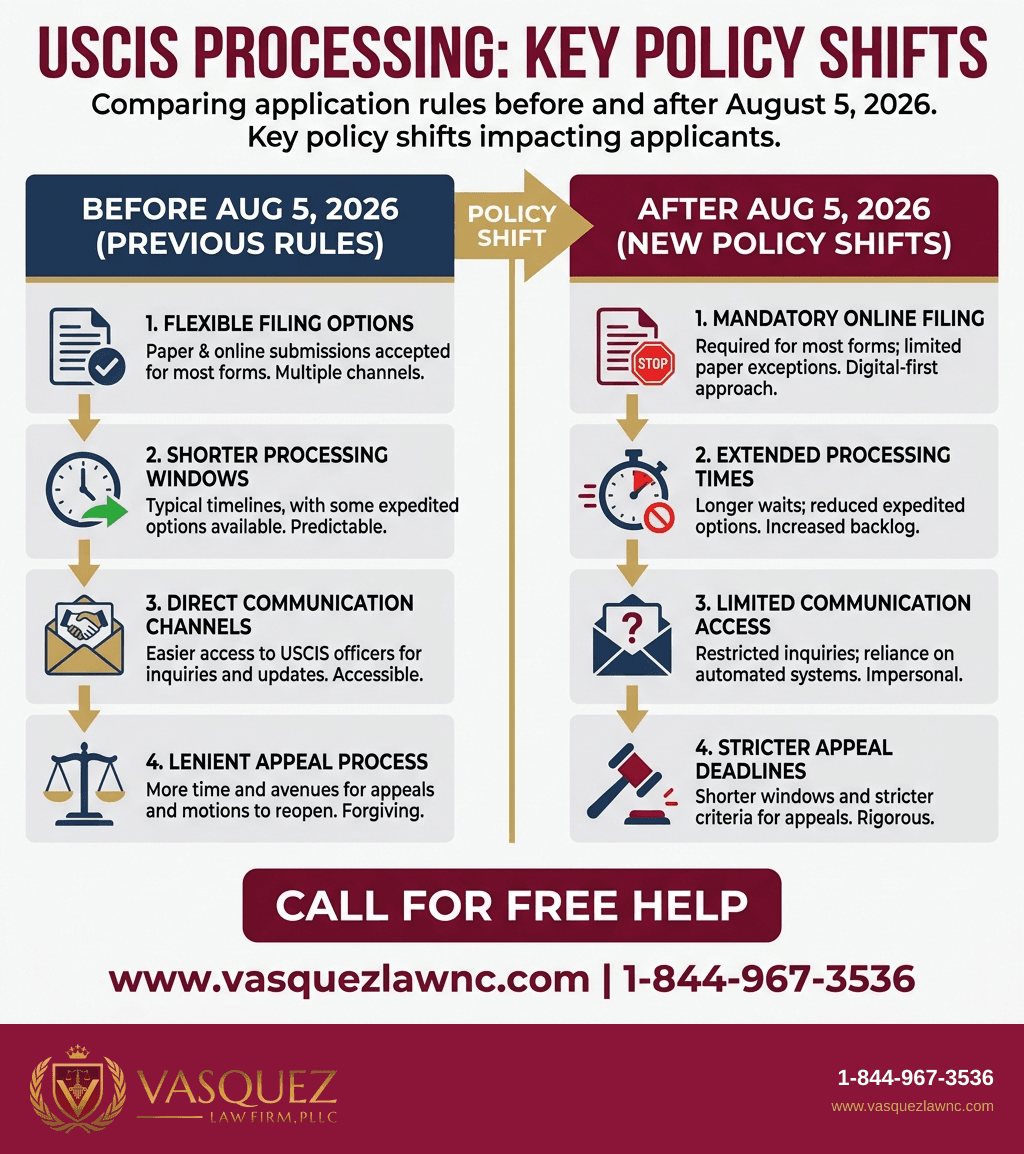
The average asylum process takes different amounts of time. According to the USCIS processing times page, Form I-589 asylum applications now take about 12 to 18 months for a first decision. Sometimes delays of two years or more happen because of backlogs and local office workloads.
- Week 1-4: Prepare and send your asylum application
- Week 4-8: Attend biometric appointment
- Month 6-18: Attend asylum interview
- Month 18-24: Wait for USCIS decision or transfer to immigration court
- Variable: Immigration court cases may add months or years
The timeline depends on how complex your case is and USCIS or EOIR resources. Noncitizens in Raleigh or Orlando should talk to an immigration lawyer to know current local timing and prepare well.
When to Contact an Immigration Lawyer
- If you face detention or get a Notice to Appear in immigration court
- If you need to file an asylum or adjustment of status application
- If you think your rights are being violated or you face government persecution
- If you get accused of illegal voting as a noncitizen
- If you experience delays or denials without clear reasons
- If you are confused about immigration status changes or documents
- If you are preparing for an immigration interview or hearing
About Vasquez Law Firm
At Vasquez Law Firm, we mix care with strong representation. Our motto "Yo Peleo®" (I Fight) shows our promise to stand up for your rights.
- Bilingual Support: Se Habla Español - Spanish-speaking attorneys and staff are available
- Service Areas: North Carolina, plus Florida and nationwide for immigration
- Experience: Over 30 years helping clients with complex legal issues
- Results: Thousands of successful cases in many practice areas
Attorney Trust and Experience
William J. Vásquez is licensed to practice law in North Carolina (since 2011) and Florida. He has 15 years of experience. Our firm has given focused legal help since 2011, mainly in immigration law in Raleigh, NC, and Orlando, FL. We give personal attention to each client’s case.
Don't wait to get the help you deserve. Call us now for immediate assistance. Se Habla Español.
Frequently Asked Questions
What rights do noncitizens have in the U.S.?
Noncitizens have rights including due process, protection against unlawful detention, and the ability to seek asylum if facing persecution. Rights vary by immigration status but protections against government persecution apply to all.
Can noncitizens vote in U.S. elections?
Federal and state laws generally prohibit noncitizen voting. A few local jurisdictions may allow it, but unauthorized voting risks removal and criminal penalties.
What is asylum and who qualifies for it?
Asylum provides refuge to those fearing persecution based on race, religion, nationality, political opinion, or social group membership. Qualification requires proving the government's role in persecution.
How can noncitizens protect themselves from rights violations?
Noncitizens should know and assert their rights, seek legal counsel early, avoid self-incrimination, and document any abuses or violations by authorities.
What happens if a noncitizen is accused of illegal voting?
Accusations can lead to removal proceedings and serious penalties. Immediate legal consultation is essential to address the charges and protect immigration status.
How long does the asylum process typically take?
USCIS processing times average 12 to 18 months, with possible delays depending on caseload. Immigration court proceedings may extend the time further.
Can noncitizens apply for legal permanent residence while seeking asylum?
Yes. After one year of asylum status, an asylee may apply for adjustment of status if meeting eligibility, including physical presence and admissibility requirements.
Why is legal representation important for noncitizens?
Legal help improves understanding of rights, thorough application preparation, and navigation of complex legal processes, enhancing chances of relief and protection from removal.
Sources and References
- U.S. Citizenship and Immigration Services
- Executive Office for Immigration Review
- Legal Information Institute
Take the first step toward justice today. Our team is standing by to help. Se Habla Español.
Start Your Free Evaluation Now
Call us: 1-844-967-3536
Se Habla Español - Estamos aquí para ayudarle.


William Vasquez
Founder & CEO, Vasquez Law Firm, PLLC
William Vasquez is the founder and CEO of Vasquez Law Firm, PLLC, a results-driven firm specializing in immigration, criminal defense, personal injury, and workers' compensation. A U.S. Air Force veteran and recipient of the Joint Service Achievement Medal, William is dedicated to fiercely fighting for his clients' rights.
Related Legal Services
Need legal help? Learn more about get immigration legal help today, or contact us for a free evaluation.
You can also visit immigration attorneys across North Carolina for more information.