What Haitian Protections Mean for Immigrants in 2026
Understand Haitian protections and Temporary Protected Status in 2026. Learn your rights and options. Contact Vasquez Law Firm for a free evaluation today.
Published on July 25, 2026
Talk to an immigration attorney
Free call. A clear plan for your case.
Free & confidential · Se habla espanol · 24/7
Have questions? Talk to an attorney - free evaluation.
Call 1-844-967-3536Worried how the latest immigration news affects you?
Schedule a confidential case review with an immigration attorney - know exactly where you stand.
USCIS Case Status
Check your USCIS case status
Enter your receipt number and get the official status. Free, no registration.
What Haitian Protections Mean for Immigrants in 2026
In 2026, Haitian protections under Temporary Protected Status (TPS) are very important for many immigrants in Raleigh and Orlando. TPS is a federal program that lets eligible Haitian nationals stay and work legally in the U.S. This is because conditions in Haiti, like natural disasters and political problems, are unsafe. Knowing about these protections can help you keep your status and plan your immigration future. Vasquez Law Firm offers legal help for Haitian immigrants in North Carolina and Florida who are dealing with TPS and other immigration options.
Need help with your case? Our experienced attorneys are ready to fight for you. Se Habla Español.
Or call us now: 1-844-967-3536
Quick Answer
Haitian protections in 2026 mainly mean Temporary Protected Status (TPS). TPS is a federal program that lets Haitian nationals live and work legally in the U.S. while Haiti is unsafe. TPS gives temporary protection from deportation (being sent back) and permission to work. To qualify, you must have lived in the U.S. continuously and meet security and criminal history rules. You must renew on time and get expert legal advice to keep these protections.
- TPS is given to Haiti because of natural disasters and political problems
- It lets people stay and work legally in the U.S. for a limited time
- You must apply through USCIS and provide the right documents
- Protections can end if conditions in Haiti get better or policies change
- Legal help can prevent common mistakes and keep your status safe
Understanding Haitian Protections and TPS
Temporary Protected Status (TPS) is a humanitarian program made under INA § 244. It lets people from countries like Haiti live and work legally in the U.S. for a short time. This happens when things like war, natural disasters, or other serious problems make it unsafe to return home. Haiti got TPS after the 2010 earthquake and has had extensions because problems continue.
The Secretary of Homeland Security, who has legal power, can name a country for TPS if it is not safe to return there temporarily. This status gives benefits like protection from removal (deportation) and permission to work.
For Haitian nationals in Raleigh, NC, and Orlando, FL, TPS gives important legal status and work rights. But TPS is not permanent. You must re-register during set times and keep living in the U.S. continuously. Since conditions in Haiti are still unstable in 2026, Haitian nationals often worry about TPS renewals.
You should watch for updates from the Secretary of Homeland Security and U.S. Citizenship and Immigration Services (USCIS). They announce how long TPS lasts and any changes. The official USCIS website shows the latest processing times and rules for TPS applications for Haitian nationals (USCIS Processing Times).
Background on Haitian TPS Designation
Haiti got TPS because of the terrible 2010 earthquake that caused a big disaster and humanitarian crisis. The Secretary of Homeland Security has reviewed and extended TPS many times because of ongoing problems like political unrest and natural disasters.
This designation lets Haitian nationals who lived in the U.S. at that time apply for TPS and get protection. It also means they must renew on time and prove they have stayed physically present and living in the U.S.
Who Qualifies for Haitian TPS?
People must have lived physically in the U.S. continuously since the date set by the Secretary of Homeland Security. They must meet rules that say they cannot be a national security threat or have certain criminal convictions.
Haitian nationals must apply to USCIS using Form I-821. They must also send documents that prove their identity, status, and continuous residence. If they do not meet these rules, their TPS can be denied or taken away.
How to Apply for TPS in Raleigh and Orlando
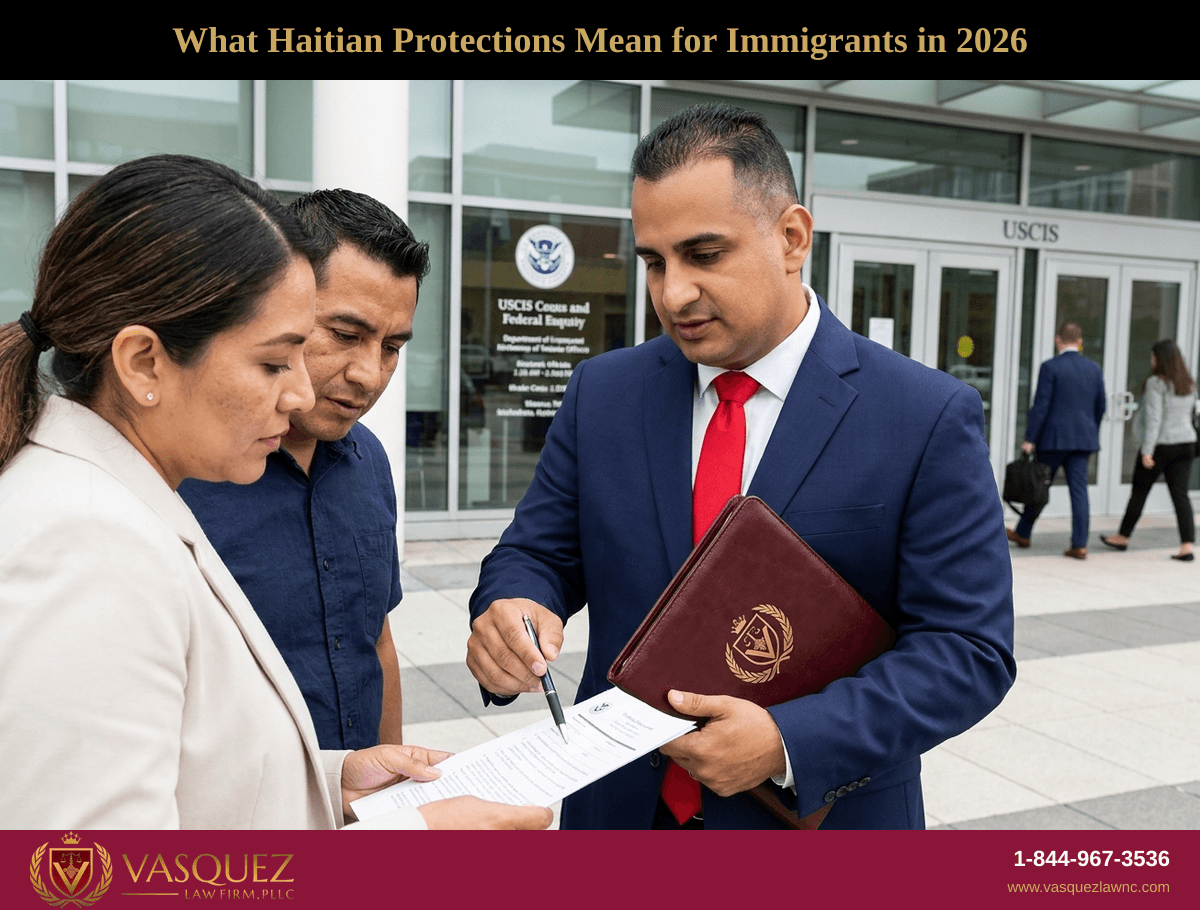
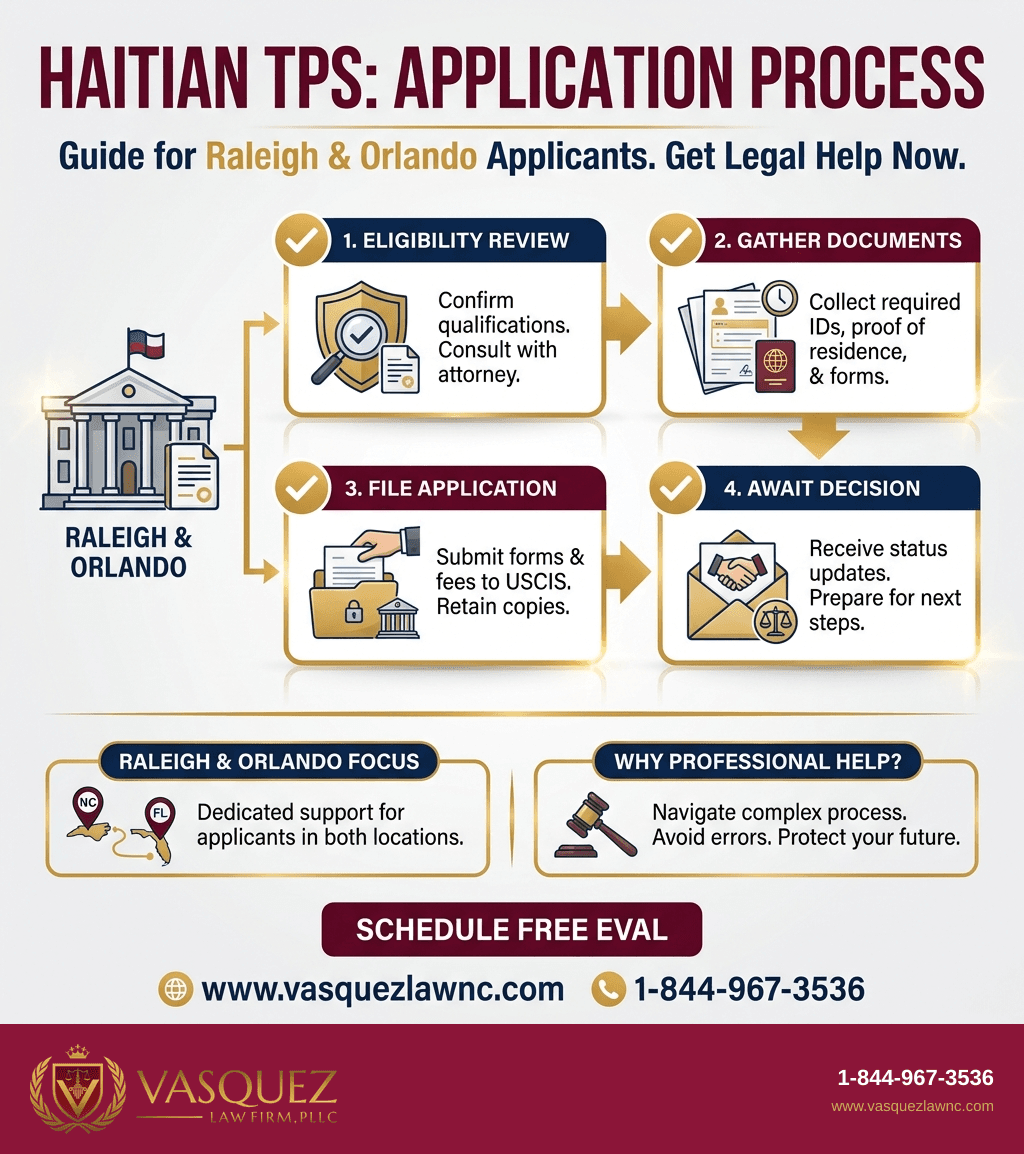
To apply for TPS, you must file Form I-821, Application for Temporary Protected Status, with U.S. Citizenship and Immigration Services (USCIS). You usually also file Form I-765 to ask for an Employment Authorization Document (EAD), which lets you work.
People in Raleigh, NC, and Orlando, FL, can use local USCIS offices or apply online or by mail. It is very important to gather all needed documents for a good application. These include proof of nationality, identity, and continuous physical presence. Common evidence includes passports, national ID cards, lease agreements, utility bills, and school or work records.
Because this process is complex and important, getting help from experienced immigration lawyers at Vasquez Law Firm can make sure your TPS application is correct and on time. Lawyers can help you avoid common mistakes and answer USCIS Requests for Evidence (RFEs) properly.
Step-by-Step Application Process
- Check the current TPS designation for Haiti on official USCIS announcements.
- Gather all needed ID and proof of residence documents.
- Fill out and send USCIS Form I-821 with Form I-765 for work permission.
- Pay the filing fees or ask for a fee waiver if you qualify.
- Answer any USCIS Requests for Evidence or Notices quickly.
- Get your TPS approval notice and Employment Authorization Document.
- Renew your TPS status before deadlines to keep your benefits.
Local Resources in Raleigh and Orlando
In Raleigh, NC, many agencies and legal clinics help Haitian immigrants with TPS. Orlando, FL has a large Haitian community and many community groups that offer legal help. Vasquez Law Firm has offices in Raleigh and Orlando with bilingual support to guide clients through TPS protections and renewals.
Knowing local filing rules and USCIS service center assignments can reduce delays. For example, USCIS processing times change based on where you live and if you file online or by mail. The current average time to process Form I-821 is about 6 to 12 months (USCIS Processing Times).
Common Challenges and Mistakes in TPS Applications
Many people have problems when applying for or renewing TPS, especially if they do not know the strict deadlines. Common mistakes can cause denials or gaps in legal status.
Missing TPS Registration or Renewal Deadlines
If you do not re-register on time, you can lose TPS protections. Deadlines are strict. Missing them can end your status and work permission. Watching USCIS announcements and having a lawyer can help you keep track.
Submitting Incomplete or Incorrect Documentation
If you send documents that do not prove your continuous residence or identity well, USCIS may ask for more evidence or deny your application. For example, if you claim residence but do not have utility bills, rent receipts, or pay stubs, your claim may be rejected.
Not Disclosing Criminal Convictions
If you do not tell the truth about your criminal history when required, it can cause serious problems. This includes losing TPS or being ineligible in the future. You must fully disclose and get legal advice to understand any risks.
Applying Without Legal Guidance
You can apply on your own, but cases involving Haitian protections are often complex. Lawyers help make sure you meet all USCIS rules and understand changing policies.
Tips to Avoid TPS Application Mistakes
- Keep a clear record of your time and activities in the U.S.
- Talk to an immigration lawyer early to check your documents and forms.
- Send your applications and renewals well before deadlines.
- Answer USCIS letters quickly.
- Keep your contact info updated with USCIS.
TPS Duration and What to Expect Next
TPS is temporary. It can be extended, ended, or changed based on conditions in the country. In 2026, Haiti still qualifies for TPS because of ongoing unsafe conditions like political problems and natural disasters. Extensions usually last from 6 to 18 months.
You should watch announcements from the Secretary of Homeland Security and the Department of Homeland Security (DHS). They decide TPS status. USCIS also updates rules about work permission renewals and re-registration times.
Knowing the TPS timeline and planning for changes is very important to avoid losing your status. If TPS ends for Haiti, people may need to look for other immigration options like asylum, family petitions, or other humanitarian help.
Typical TPS Timeline
- Designation Date: The Secretary of Homeland Security officially names the country for TPS.
- Initial Registration Period: Usually 60 to 120 days to send your application.
- TPS Approval: It usually takes 6 to 12 months to process Form I-821.
- Renewal Notifications: USCIS announces re-registration times 60 days before TPS ends.
- Subsequent Extensions: Extensions may last 6 to 18 months depending on country conditions.
Planning for TPS Expiration
Because TPS is temporary, Haitian nationals should look for other immigration options well before TPS expires. Legal options like family-based adjustment under INA § 245 (8 U.S.C. § 1255) or asylum might offer more permanent status. Talking to a lawyer in Raleigh or Orlando early can help make the transition smoother.
When to Contact a Haitian Protections Lawyer
Hiring experienced immigration lawyers is very important to handle TPS issues. Contact a lawyer at Vasquez Law Firm if you:
- Need help applying for or renewing TPS
- Got a Notice of Intent to Terminate TPS
- Have criminal or eligibility problems
- Want to explore permanent residency options
- Have trouble collecting proof of continuous residence
- Need help answering USCIS Requests for Evidence
In 2026, Vasquez Law Firm offers personal legal help for Haitian TPS applicants in Raleigh, NC and Orlando, FL. Getting help early can protect your work permission, stop deportation, and support your immigration goals.
Frequently Asked Questions
What is Temporary Protected Status for Haitians?
Temporary Protected Status (TPS) is a federal immigration program that lets people from certain countries in crisis stay and work legally in the U.S. Haitian protections under TPS started because of political problems and natural disasters. TPS does not give permanent residency. It gives temporary protection from deportation and lets you work during the set time.
Who qualifies for TPS as a Haitian national in 2026?
To qualify for TPS as a Haitian national in 2026, you must have lived in the U.S. continuously since the date set by the Secretary of Homeland Security. You must meet other rules. You cannot have certain criminal convictions or be a security threat. Meeting the continuous residence and physical presence rules is very important.
How do I apply for TPS if I live in Raleigh or Orlando?
To apply for TPS, you send Form I-821 to U.S. Citizenship and Immigration Services with documents and fees. If you live in Raleigh, NC or Orlando, FL, you can apply online or by mail. It is best to talk to an immigration lawyer to make sure your application is correct and complete. This is important because Haitian protections and TPS rules change.
What happens if Haitian protections under TPS expire?
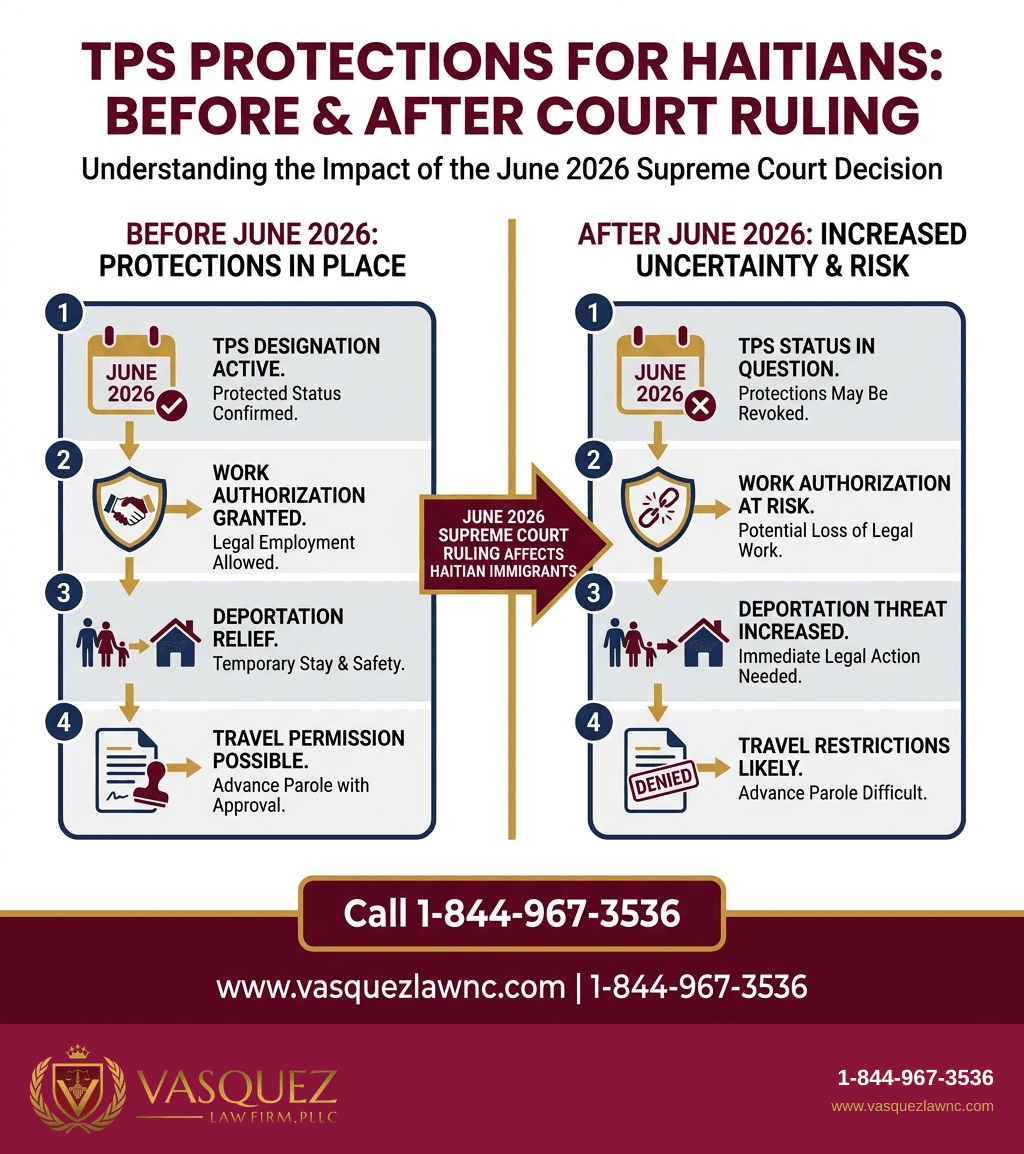
If TPS for Haiti expires, people may lose legal status, work permission, and protection from deportation. Many Haitian workers and families face uncertainty when this happens. It is very important to look for other immigration options before TPS ends. Lawyers in Raleigh and Orlando can help you find options like asylum or adjustment of status.
Can TPS holders apply for permanent residency in the U.S.?
TPS alone does not lead directly to permanent residency. But TPS holders can apply for adjustment of status if they qualify under other categories, like family petitions or work sponsorship. You need careful legal help to avoid losing TPS protections and to understand the rules under 8 U.S.C. § 1255.
What documents are needed for TPS applications from Haitian nationals?
You must provide proof of identity, nationality, and continuous residence in the U.S. This can include passports, birth certificates, rental agreements, work records, or school transcripts. Having correct documents is very important to show you qualify under the Secretary of Homeland Security’s TPS rules for Haiti as explained in 8 C.F.R. § 244.
How long does TPS protection last for Haitian nationals?
TPS for Haiti has usually been extended in 6, 12, or 18-month periods based on ongoing problems. The Secretary of Homeland Security reviews conditions to decide on renewals or ending TPS. Processing TPS applications usually takes 6 to 12 months, but this can change. Watching USCIS notices and deadlines is key to keeping legal status.
Can Haitian nationals with TPS work legally in the U.S.?
Yes. TPS holders get Employment Authorization Documents (EAD) that let them work legally. This is very important for many Haitian workers supporting families in Raleigh, Orlando, and across the country. To keep valid TPS and EAD, you must renew on time and follow USCIS rules under 8 CFR § 274a.
Sources and References
- U.S. Citizenship and Immigration Services
- Executive Office for Immigration Review
- Legal Information Institute
About Vasquez Law Firm
At Vasquez Law Firm, we combine care with strong representation. Our motto "Yo Peleo®" (I Fight) shows our promise to stand up for your rights.
- Bilingual Support: Se Habla Español — Spanish-speaking lawyers and staff available
- Service Areas: North Carolina, plus Florida and nationwide for immigration
- Experience: Over 30 years helping clients with complex legal issues
- Results: Thousands of successful cases in many practice areas
Attorney Trust and Experience
William J. Vásquez is licensed to practice law in North Carolina since 2011. He is also admitted to the U.S. Courts of Appeals for the 4th, 5th, and 11th Circuits. The firm has offered dedicated legal help since 2011, giving personal attention to each client.
Don't wait to get the help you deserve. Call us now for immediate assistance. Se Habla Español.
When to call a lawyer now
- If you got a notice that TPS will end or was denied
- Before applying or renewing TPS to check if you qualify
- If you have a criminal record that may affect TPS
- If you face deportation even with TPS status
- If you want to look into permanent residency or asylum
- If you need help collecting or sending documents
- Before answering USCIS Requests for Evidence
- If your TPS or EAD renewal is late or denied
Take the first step toward justice today. Our team is ready to help. Se Habla Español.
Start Your Free Evaluation Now
Call us: 1-844-967-3536
Se Habla Español - Estamos aquí para ayudarle.
If you need legal assistance, learn more about immigration case consultation, or call us at 1-844-967-3536 for a free evaluation.


William Vasquez
Founder & CEO, Vasquez Law Firm, PLLC
William Vasquez is the founder and CEO of Vasquez Law Firm, PLLC, a results-driven firm specializing in immigration, criminal defense, personal injury, and workers' compensation. A U.S. Air Force veteran and recipient of the Joint Service Achievement Medal, William is dedicated to fiercely fighting for his clients' rights.
Related Legal Services
Need legal help? Learn more about immigration case consultation, or contact us for a free evaluation.
You can also visit statewide immigration legal services for more information.