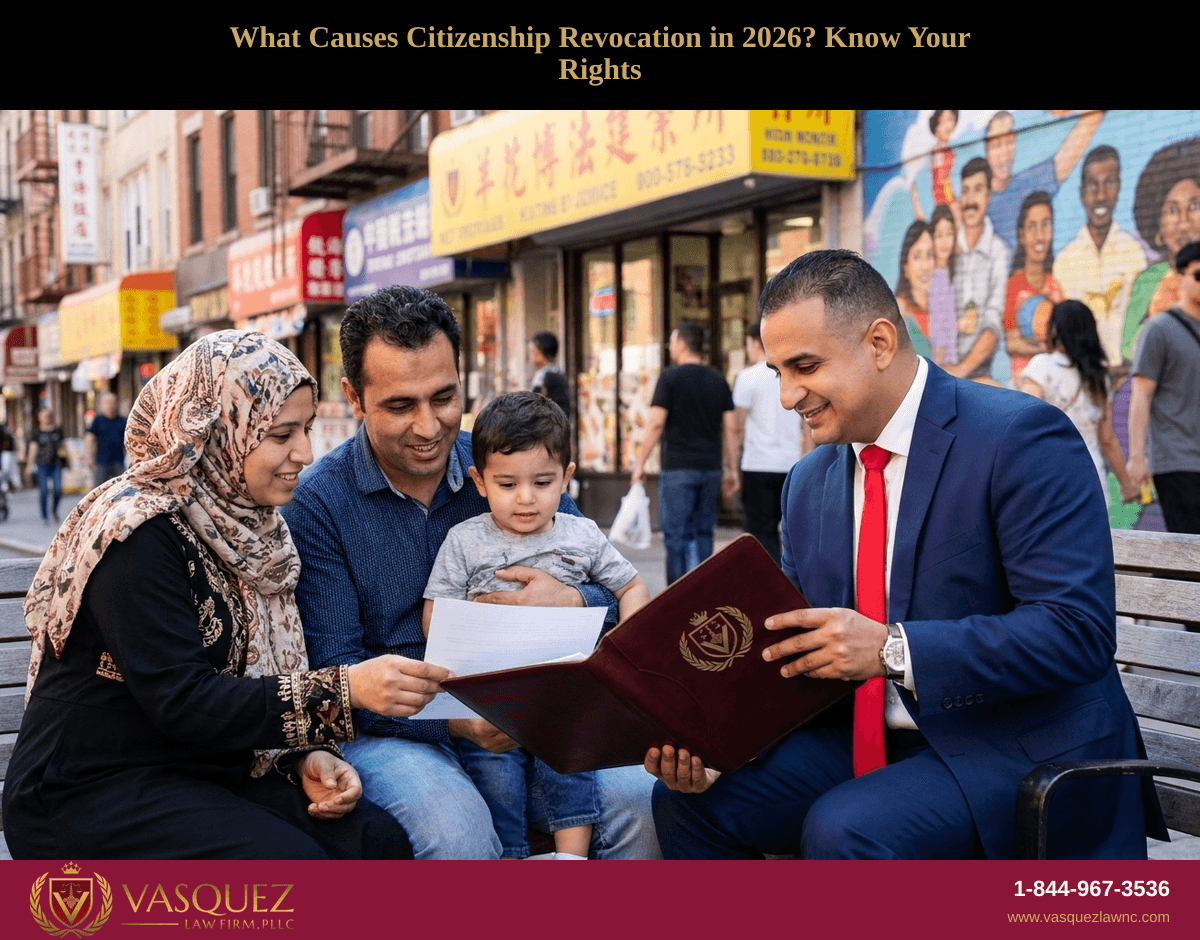
What Causes Citizenship Revocation in 2026? Know Your Rights
Wondering about citizenship revocation? Learn the causes, risks, and how to protect your status in 2026. Contact Vasquez Law for a free consultation.
Published on July 26, 2026
Talk to an immigration attorney
Free call. A clear plan for your case.
Free & confidential · Se habla espanol · 24/7
Have questions? Talk to an attorney - free evaluation.
Call 1-844-967-3536Free Tool
Check Your USCIS Case Status Now
Enter your receipt number - get the official USCIS status in English or Spanish. No registration.
What Causes Citizenship Revocation in 2026? Know Your Rights
Citizenship revocation is a serious legal action that can affect naturalized U.S. citizens across the country, including people in Orlando, FL, and Raleigh, NC. In 2026, it is important to understand the reasons and steps behind revocation to protect your rights. This guide explains what causes revocation, the role of ICE in deportation, important legal steps, and common mistakes to avoid. If you face possible loss of citizenship, Vasquez Law Firm offers expert immigration help with bilingual support.
Need help with your case? Our experienced attorneys are ready to fight for you. Se Habla Español.
Or call us now: 1-844-967-3536
Quick Answer
Citizenship revocation happens mainly when a naturalized citizen committed fraud (lying or cheating), hid important facts, or did crimes at the time they became a citizen. In 2026, the government reviews these cases and can deport you if they prove it.
- Applies mainly to naturalized citizens
- Common causes include fraud and serious crimes
- The government must follow fair legal steps in court
- Revocation can cause loss of citizenship and deportation
- You need legal help to fight the claims
Understanding Citizenship Revocation
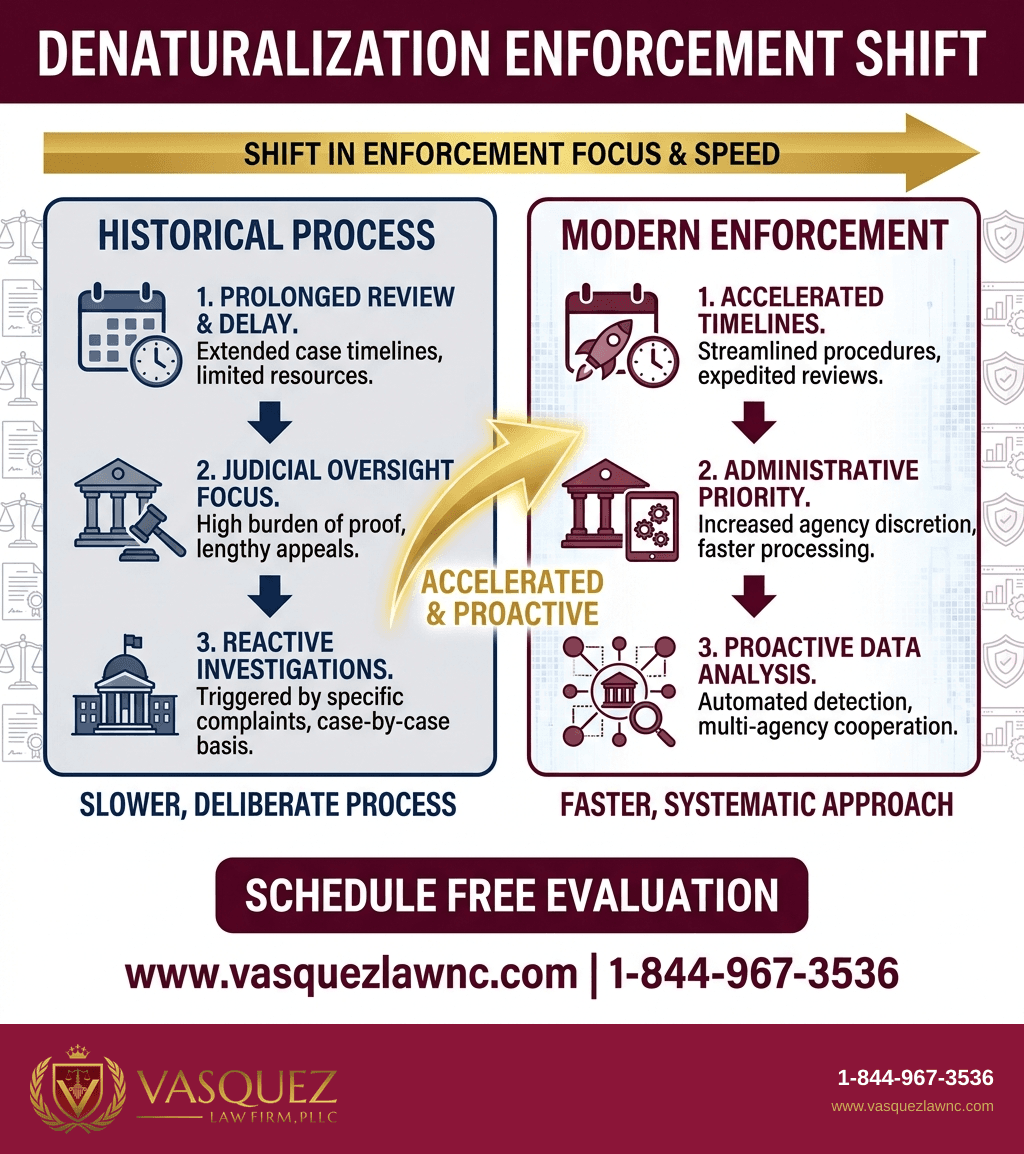
In 2026, citizenship revocation is still one of the most serious immigration actions for naturalized U.S. citizens. Naturalized citizens are people who became U.S. citizens after birth by applying and meeting requirements. Unlike citizens born in the U.S., naturalized citizens can lose their citizenship if the government proves they got it illegally. This process is also called denaturalization, which means taking away naturalized citizenship.
The U.S. government may try to revoke citizenship if there is proof of fraud (lying or cheating), willful concealment (hiding) of important facts, or criminal behavior that would have made the person ineligible to become a citizen. For example, if someone lied about a criminal record or membership in certain groups during their citizenship interview, the government can start revocation under INA §§ 340-348 (these are sections of immigration law).
Citizenship revocation does not happen automatically. The Department of Justice must file a lawsuit in federal court. The citizen has the right to defend themselves in court. The Executive Office for Immigration Review (EOIR) usually handles removal (deportation) hearings after revocation is final.
For people living in Orlando, FL, and Raleigh, NC, this federal process is the same. But knowing local resources and legal help is very important. Our immigration services can help you understand your options if you face revocation.
Common Causes of Revocation
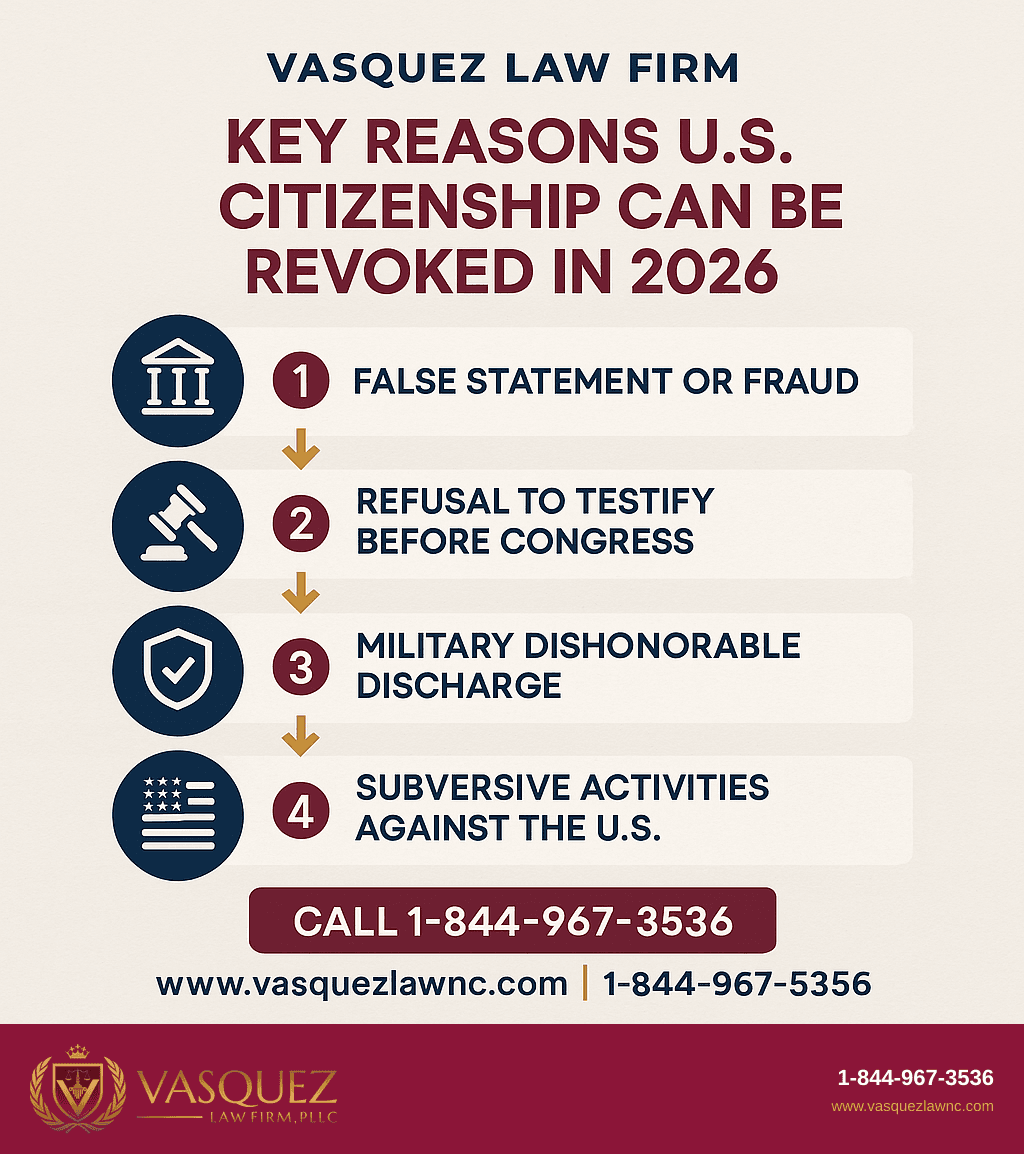
- Fraud or false statements during the citizenship application
- Hiding criminal history or illegal acts
- Joining terrorist or harmful organizations
- Membership in communist parties or groups hostile to the government (rare)
- Willfully failing to give important facts or truthful information
Who Can Be Affected?
Only naturalized U.S. citizens can lose citizenship this way. People born in the U.S. have birthright citizenship, which is protected unless there is extreme fraud. If you became a citizen by naturalization, you should know these risks and how to respond if questioned.
Vasquez Law Firm lawyers have helped many naturalized citizens in Raleigh, NC, and Orlando, FL, defend against revocation attempts.
Step-by-Step: What to Do if Facing Revocation
- Receive Notice: You will get a written notice from the Department of Justice or immigration officials saying they want to revoke your citizenship.
- Consult an Attorney: Contact an immigration lawyer right away. The process is complicated and mistakes can cost you.
- Gather Evidence: Collect documents that prove you qualify, like police records, birth certificates, and immigration history.
- Prepare Your Defense: Work with your lawyer to challenge the government’s evidence and show your honest intent and eligibility.
- Attend Hearings: Go to court hearings and removal (deportation) proceedings if your citizenship is revoked.
- Appeal if Necessary: If you lose your citizenship, you can appeal the decision with legal help.
Getting legal help early from Vasquez Law Firm can improve your chances of keeping your citizenship and avoiding deportation.
Why Immediate Action Matters
Delaying your response lets the government move quickly with revocation and removal. Our Attorney Jessica Vasquez can give you advice that fits your case.
Common Mistakes to Avoid in Citizenship Cases
- Ignoring Official Notices - Never ignore letters from immigration authorities. Respond quickly.
- Failure to Consult a Lawyer - Trying to handle revocation alone risks errors; get expert advice.
- Providing Incomplete Documentation - Always give full and correct evidence to support your case.
- Lying or Misleading Officials - More dishonesty can hurt your defense and cause bigger penalties.
- Missing Hearing Dates - Not showing up can lead to court decisions against you.
- Using Non-Expert Advice - Avoid unauthorized helpers or online self-help for complex cases.
- Not Understanding Your Rights - Naturalized citizens have rights to fair legal process and appeals—don’t give them up unknowingly.
If you remember only one thing: Act fast and get real legal help to defend your citizenship.
Timeline: What to Expect During Revocation Proceedings
- Initial Notice: Usually, you get a written notice within weeks or months after the government finds possible fraud or ineligibility.
- Investigation Period: The Department of Homeland Security and Department of Justice collect evidence; this can take 3 to 12 months depending on the case.
- Lawsuit Filed: DOJ files a denaturalization petition in federal court, often within one year of investigation.
- Court Proceedings: Hearings and trials may last several months, where both sides show evidence and witnesses.
- Revocation Decision: If the court agrees with the government, citizenship is revoked, usually leading to removal hearings.
- Removal Proceedings: EOIR schedules removal (deportation) hearings; this process may take months or years.
- Appeals: Both revocation and removal decisions can be appealed, which can make the process longer.
Knowing this timeline helps you plan your defense and work closely with your immigration lawyer in Orlando or Raleigh.
Costs and Fees: What Affects the Price
- Attorney Fees: Fees depend on case difficulty; denaturalization and removal cases need experienced lawyers.
- Filing Fees: Courts do not charge fees for denaturalization petitions, but other filings may cost money depending on the case.
- Expert Witnesses and Investigations: Extra costs if experts or private investigators are needed to build your defense.
- Travel and Documentation: Costs may include getting records and going to hearings in federal courts near you.
We suggest contacting Vasquez Law Firm for a clear talk about possible fees. Our Raleigh, NC, and Orlando, FL offices offer payment plans when possible.
Jurisdiction Notes
North Carolina Notes
In North Carolina, federal immigration civil and criminal courts handle citizenship revocation cases. Vasquez Law Firm’s Raleigh office works closely with clients to protect their rights in this area.
Orlando, Florida Notes
In Orlando, Florida, federal immigration courts and ICE enforcement agencies manage citizenship revocation and removal cases. Our Orlando office offers bilingual support and tailored strategies for local residents.
Nationwide Notes
Citizenship revocation is controlled by federal law (INA §§ 340-348). No matter what state you live in, the process and protections are the same but can vary by federal circuit and immigration court location.
When to Call a Lawyer Now
- If you get any notice about your citizenship status or naturalization review
- If ICE or federal agents contact you about your citizenship
- If you face criminal charges related to immigration or fraud
- If you lost or cannot find your naturalization papers
- If you fear deportation after naturalization
- If you need help answering government questions
- If you want to know your rights against revocation
- If you want to appeal a naturalization denial or revocation
- If you have a removal or deportation case after citizenship claims
About Vasquez Law Firm
At Vasquez Law Firm, we mix care with strong legal help. Our motto "Yo Peleo®" (I Fight) shows our promise to stand up for your rights.
- Bilingual Support: Se Habla Español — Spanish-speaking lawyers and staff available
- Service Areas: North Carolina, Florida, and nationwide for immigration
- Experience: Over 30 years helping clients with complex legal issues
- Results: Thousands of successful cases in many practice areas
Attorney Trust and Experience
William J. Vásquez joined the North Carolina State Bar in 2011. He is also admitted to the U.S. Courts of Appeals for the 4th, 5th, and 11th Circuits. The firm has given focused legal help since 2011, with personal attention to each client’s case.
Don't wait to get the help you deserve. Call us now for immediate assistance. Se Habla Español.
Frequently Asked Questions
What can cause citizenship to be revoked?
Citizenship can be revoked if fraud occurred during naturalization, or if the individual lied or concealed material information such as criminal history. Also, certain criminal convictions post-naturalization may prompt revocation under INA §§ 340-348.
Is ICE deporting naturalized citizens?
Yes, ICE can start deportation proceedings against naturalized citizens if their citizenship is revoked due to fraud or crimes. Citizenship revocation leads to loss of immigration protections, allowing ICE to initiate removal.
Will I get my citizenship revoked?
Not everyone faces revocation. It depends on evidence of fraud or criminal activity at naturalization. Legal counsel can assess your situation and help defend your status effectively.
Can a naturalized U.S. citizen still be deported?
Yes. Once citizenship is revoked, the former citizen can be deported. Removal proceedings are handled by EOIR immigration courts following revocation.
Can the president revoke citizenship?
No. The president lacks authority to revoke citizenship. Only a court can revoke citizenship through legal proceedings under immigration laws.
Can citizenship be revoked if born in the USA?
Citizenship by birthright is generally secure except in extreme cases involving fraud or misrepresentation related to that claim, which are very rare.
Can citizenship be revoked after divorce?
No. Divorce does not affect your citizenship. Revocation requires specific legal grounds unrelated to marital status.
What is denaturalization of citizenship?
Denaturalization is the legal process stripping naturalized citizenship due to fraud, misrepresentation, or illegal conduct proven in federal court under INA §§ 340-348.
Sources and References
- U.S. Citizenship and Immigration Services
- Executive Office for Immigration Review
- Legal Information Institute
Take the first step toward justice today. Our team is standing by to help. Se Habla Español.
Start Your Free Evaluation Now
Call us: 1-844-967-3536
Se Habla Español - Estamos aquí para ayudarle.


William Vasquez
Founder & CEO, Vasquez Law Firm, PLLC
William Vasquez is the founder and CEO of Vasquez Law Firm, PLLC, a results-driven firm specializing in immigration, criminal defense, personal injury, and workers' compensation. A U.S. Air Force veteran and recipient of the Joint Service Achievement Medal, William is dedicated to fiercely fighting for his clients' rights.
Related Legal Services
Need legal help? Learn more about learn about our immigration practice, or contact us for a free evaluation.
You can also visit NC immigration legal help for more information.