What Is Mandatory Detention and How It Works in 2026
What is mandatory detention? Learn how mandatory detention affects immigrants in 2026. Contact Vasquez Law Firm for a free consultation in Raleigh or Orlando.
Published on July 30, 2026
Talk to an immigration attorney
Free call. A clear plan for your case.
Free & confidential · Se habla espanol · 24/7
Have questions? Talk to an attorney - free evaluation.
Call 1-844-967-3536Worried how the latest immigration news affects you?
Schedule a confidential case review with an immigration attorney - know exactly where you stand.
USCIS Case Status
Check your USCIS case status
Enter your receipt number and get the official status. Free, no registration.
What Is Mandatory Detention and How It Works in 2026
Mandatory detention means some immigrants must stay in custody while their immigration cases move forward. This rule is set by the Immigration and Nationality Act (INA) and enforced by Immigration and Customs Enforcement (ICE). It affects many people living in Orlando and Raleigh. In 2026, it is important to understand why mandatory detention happens, how it works, and what rights you have.
Need help with your case? Our experienced attorneys are ready to fight for you. Se Habla Español.
Or call us now: 1-844-967-3536
Quick Answer
Mandatory detention means certain immigrants, especially those with specific criminal convictions, must stay in custody during removal (deportation) proceedings. They usually cannot get bond to be released. This rule applies across the country, including Orlando and Raleigh. The law aims to protect public safety but limits chances to get out while waiting.
- Applies under INA 236(c) to certain criminal cases
- Enforced by ICE detention centers
- Detainees have rights but usually cannot get bond
- Immigration court decides the final result
- Local ICE offices in Raleigh, NC and Orlando, FL follow these rules
Understanding Mandatory Detention
In 2026, mandatory detention means the law requires some immigrants to stay in custody during their immigration court cases. This rule is part of federal law, mainly the Immigration and Nationality Act (INA), especially Section 236(c). The purpose is to hold immigrants who might run away or are dangerous until the government decides if they must leave the U.S.
For example, an immigrant with an aggravated felony conviction must stay in an ICE detention center. They cannot ask for bond to get out. This is different from discretionary detention, where judges can allow bond depending on the situation.
Under INA 236(c), people with certain criminal convictions or who came back to the U.S. illegally after deportation must follow mandatory detention policies. ICE offices in Orlando, FL, and Raleigh, NC strictly enforce these rules. This means detainees lose their freedom until their case ends, which may result in removal from the U.S.
Knowing the grounds for mandatory detention is very important. The INA lists crimes like drug trafficking, crimes involving moral bad behavior (called moral turpitude), and threats to security as reasons for mandatory detention. People affected usually cannot get bond unless there is a very special reason.
Mandatory Detention Act and Legal Foundations
The Mandatory Detention Act is part of INA § 236(c). It started to make sure immigrants who are serious risks stay detained during removal. It limits chances to get bond and gives ICE and immigration judges strict rules to follow. Courts and policies have challenged this law, but it still works in 2026.
ICE’s Role in Mandatory Detention
ICE runs detention centers across the U.S., including near Raleigh and Orlando. ICE officers arrest people and keep them in custody under mandatory detention. ICE must follow rules like giving a Notice to Appear (NTA) soon after detention. The detainee’s legal case then goes to the Executive Office for Immigration Review (EOIR), which runs immigration courts.
Who Is Subject to Mandatory Detention?
Mandatory detention applies to:
- Immigrants convicted of serious crimes called aggravated felonies
- People who committed crimes like drug offenses or illegal gun possession
- People who reentered the U.S. illegally after being removed
- Immigrants with felony convictions or several criminal records
The full list is in INA 236(c) and expanded by rules and court decisions.
Key Steps to Take If Detained
Being placed in mandatory detention can be scary. Knowing what to do helps protect your rights and find legal options.
Step 1: Contact an Immigration Attorney Immediately
You need a lawyer. Immigration law is hard and deadlines are strict. Attorney Vasquez and the team at Vasquez Law Firm, serving Raleigh, NC and Orlando, FL, have 15 years of experience.
Step 2: Gather Important Documents and Information
Collect your ID, immigration papers (like I-94, I-213), criminal records, and proof that may help your case.
Step 3: Attend All Immigration Court Hearings
Do not miss court dates. If you miss them, the court may order removal without hearing your side. Being there lets you challenge the charges and ask for relief like asylum or cancellation of removal.
Step 4: Explore Possible Relief or Bond Eligibility
Usually, mandatory detention means no bond. But sometimes exceptions apply. Your lawyer can ask the court to consider bond or other relief.
Common Mistakes to Avoid
- Missing court dates: Always go to hearings; missing them can lead to deportation orders.
- Not seeking legal help quickly: Early help can find ways to stay.
- Ignoring ICE communication: Answer notices to avoid bad results.
- Not updating your address: Keep your contact info current to get all notices.
- Thinking bond is always possible: Know your limits to avoid false hope.
- Sharing sensitive info without advice: Prepare statements carefully with your lawyer.
- Using old information: Immigration rules change; stay updated.
If you remember one thing: Contact a good immigration lawyer fast to protect your rights while detained under mandatory detention laws.
Timeline and What to Expect
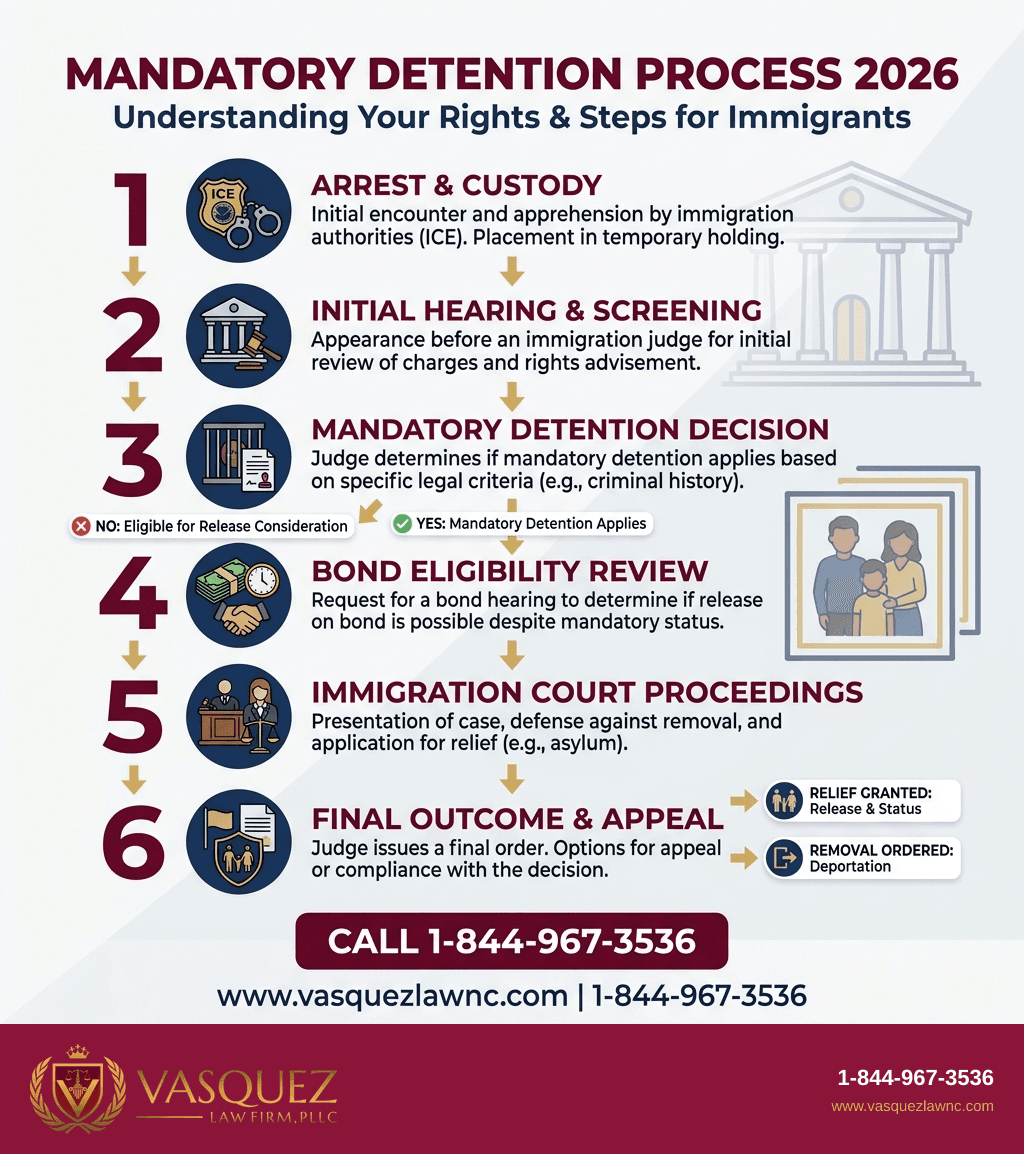
After ICE detains someone under mandatory detention, this timeline usually happens:
- Within days to weeks: Notice to Appear (NTA) is given, court case starts
- 1-3 months: First hearing called master calendar hearing—court reviews removal charges
- 3-6 months: Individual hearing to show evidence and arguments
- 6-12+ months: Possible appeals, motions to reopen, or continued cases
- After final decision: Removal, relief granted, or possible bond if new rules apply
Times vary by location. In 2026, courts in Orlando and Raleigh try to hold hearings quickly but delays happen. The USCIS processing times website shows similar timelines for related immigration cases.
Costs and Fees: What Affects the Price
Legal costs depend on how complex your case is, where you are detained, and what filings are needed. Detention cases often need urgent work, which can raise fees. Vasquez Law Firm offers clear pricing and will talk about fees during your free case evaluation.
- Lawyer consultation fees (usually free for first meeting)
- Filing fees for petitions or appeals (USCIS fees are set by the government)
- Extra costs for bond or immigration bonds if allowed
- Possible fees for interpreters or expert witnesses
- Travel costs if hearings are far away (less common near Raleigh and Orlando)
Jurisdiction Notes
Federal Framework
Mandatory detention is a federal rule under INA Section 236(c). It applies in all states, including North Carolina and Florida. Federal agencies ICE and EOIR and federal immigration courts handle these cases.
North Carolina and Florida
Local ICE offices in Raleigh, NC, and Orlando, FL enforce mandatory detention based on federal law. Each case may differ, and local detention centers hold detainees accordingly.
Nationwide Impact
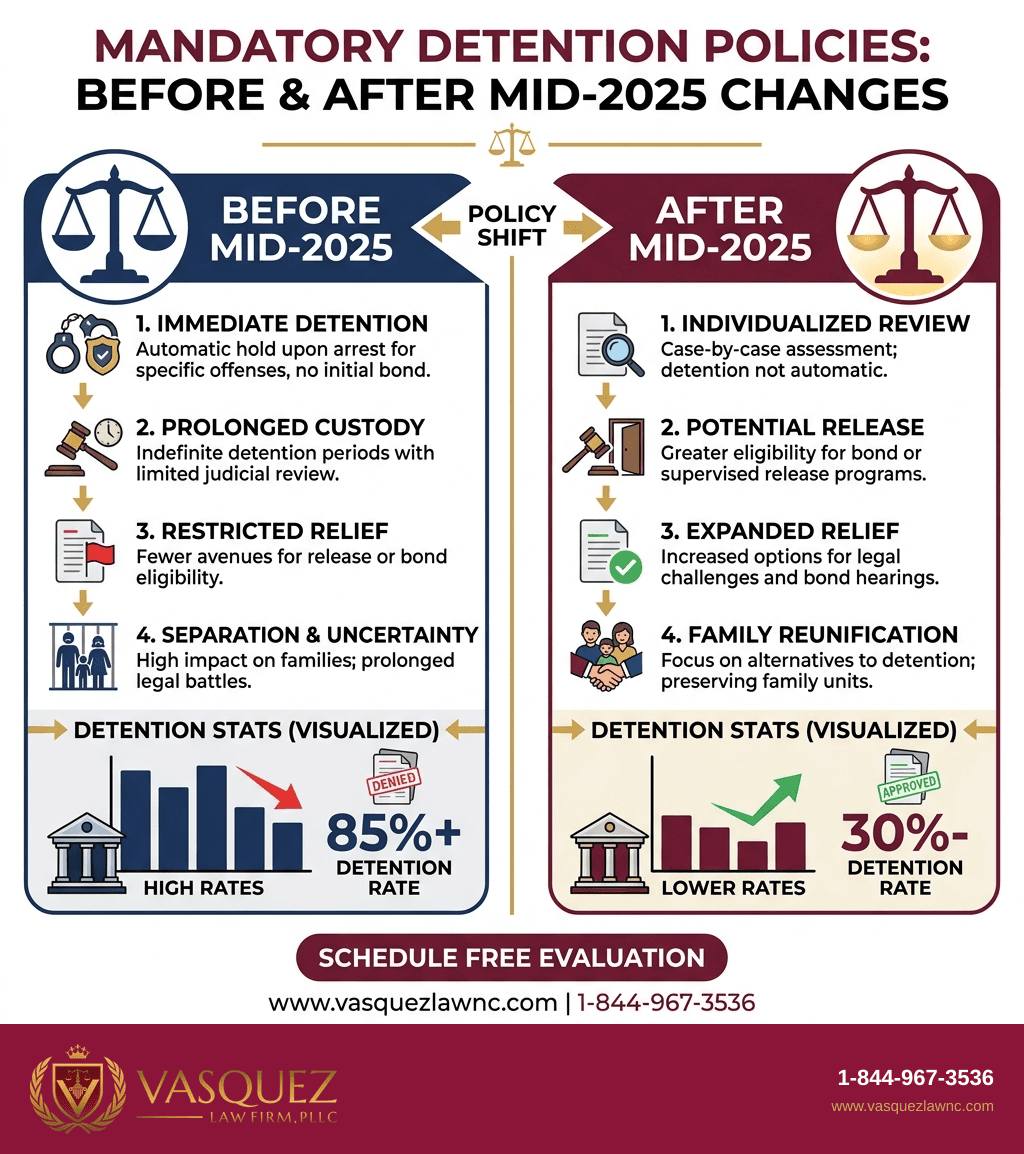
Mandatory detention rules are the same across the country but courts and policies sometimes limit how they apply. For example, a 2026 appeals court decision stopped some expansions of mandatory detention. Still, immigrants nationwide, including in VLF’s areas, face this tough rule.
When to Call a Lawyer Now
- Right after ICE arrest or detention
- When you get a Notice to Appear in immigration court
- If you have a criminal conviction that may cause mandatory detention
- If you think you can get bond but were denied
- If you face removal because of past deportation or illegal reentry
- If you need help collecting documents or evidence
- Before missing any immigration court hearings
- If you get any letters or notices from ICE or EOIR
About Vasquez Law Firm
At Vasquez Law Firm, we mix care with strong defense. Our motto "Yo Peleo®" (I Fight) shows our promise to protect your rights.
- Bilingual Support: Se Habla Español — Spanish-speaking lawyers and staff available
- Service Areas: North Carolina, Florida, and nationwide for immigration
- Experience: Over 30 years helping clients with complex legal issues
- Results: Thousands of successful cases in many practice areas
Attorney Trust and Experience
William J. Vásquez is licensed by the North Carolina State Bar (2011) and the U.S. Courts of Appeals for the 4th, 5th, and 11th Circuits. The firm has offered dedicated legal help since 2011, giving personal attention to each client.
Don't wait to get the help you need. Call us now for fast assistance.
Or schedule a consultation: Free Evaluation | Se Habla Español
Frequently Asked Questions
What are the grounds for mandatory detention?
Mandatory detention is required by the INA for immigrants with certain criminal convictions such as aggravated felonies or specific drug offenses. It applies to those considered flight risks or public dangers, and ICE enforces this detention during removal proceedings without bond. Understanding the grounds helps in assessing your case.
Who is subject to mandatory detention by ICE?
Individuals with felony convictions, certain crimes, or who reentered unlawfully after deportation are subject to mandatory detention by ICE. This includes those in Raleigh, NC and Orlando, FL. They are detained without bond during the immigration process unless rare exceptions apply.
What rights do individuals have during mandatory detention?
Detained individuals have the right to a lawyer, attend hearings, and humane treatment. However, mandatory detention limits bond options, and detainees must cooperate with court procedures. Knowing your rights can improve your chances of relief.
How long can someone remain in mandatory detention?
Detention length varies by case complexity and court backlog. Many cases resolve within months, but some take over a year. Recent decisions require fair procedures but permit detention while removals conclude.
What is INA 236(c) mandatory detention?
INA 236(c) mandates detention without bond for immigrants with specified criminal records during removal. ICE must detain them, and immigration judges have limited authority to grant bond, restricting release under current law.
Can someone in mandatory detention be released on bond?
Generally, no. Mandatory detention removes most bond opportunities. Exceptions are rare, depending on changed circumstances or court errors. Bond hearings require legal motions and are decided case-by-case.
What process follows after an ICE mandatory detention?
After detention, the individual receives an NTA and removal proceedings begin in immigration court. The court will decide removability, and appeals or relief applications may follow. The federal system governs this process nationwide.
How does mandatory detention impact immigration cases in NC and FL?
Mandatory detention affects immigrants in Raleigh and Orlando by requiring custody during removal when qualifying criteria are met. This impacts defense options and freedom during proceedings but knowing your rights and legal options is vital.
Sources and References
- U.S. Citizenship and Immigration Services
- Executive Office for Immigration Review
- Legal Information Institute
Take the first step toward justice today. Our team is standing by to help.
Start Your Free Evaluation Now
Call us: 1-844-967-3536
Se Habla Español - Estamos aquí para ayudarle.


William Vasquez
Founder & CEO, Vasquez Law Firm, PLLC
William Vasquez is the founder and CEO of Vasquez Law Firm, PLLC, a results-driven firm specializing in immigration, criminal defense, personal injury, and workers' compensation. A U.S. Air Force veteran and recipient of the Joint Service Achievement Medal, William is dedicated to fiercely fighting for his clients' rights.
Related Legal Services
Need legal help? Learn more about speak with an immigration lawyer, or contact us for a free evaluation.
You can also visit North Carolina immigration lawyers for more information.