What Is an Executive Order and How It Affects Immigration in 2026
Wondering how executive orders influence immigration in 2026? Learn the legal basis, purpose, and effects on your case. Contact Vasquez Law for help.
Published on July 30, 2026
Talk to an immigration attorney
Free call. A clear plan for your case.
Free & confidential · Se habla espanol · 24/7
Have questions? Talk to an attorney - free evaluation.
Call 1-844-967-3536Worried how the latest immigration news affects you?
Schedule a confidential case review with an immigration attorney - know exactly where you stand.
USCIS Case Status
Check your USCIS case status
Enter your receipt number and get the official status. Free, no registration.
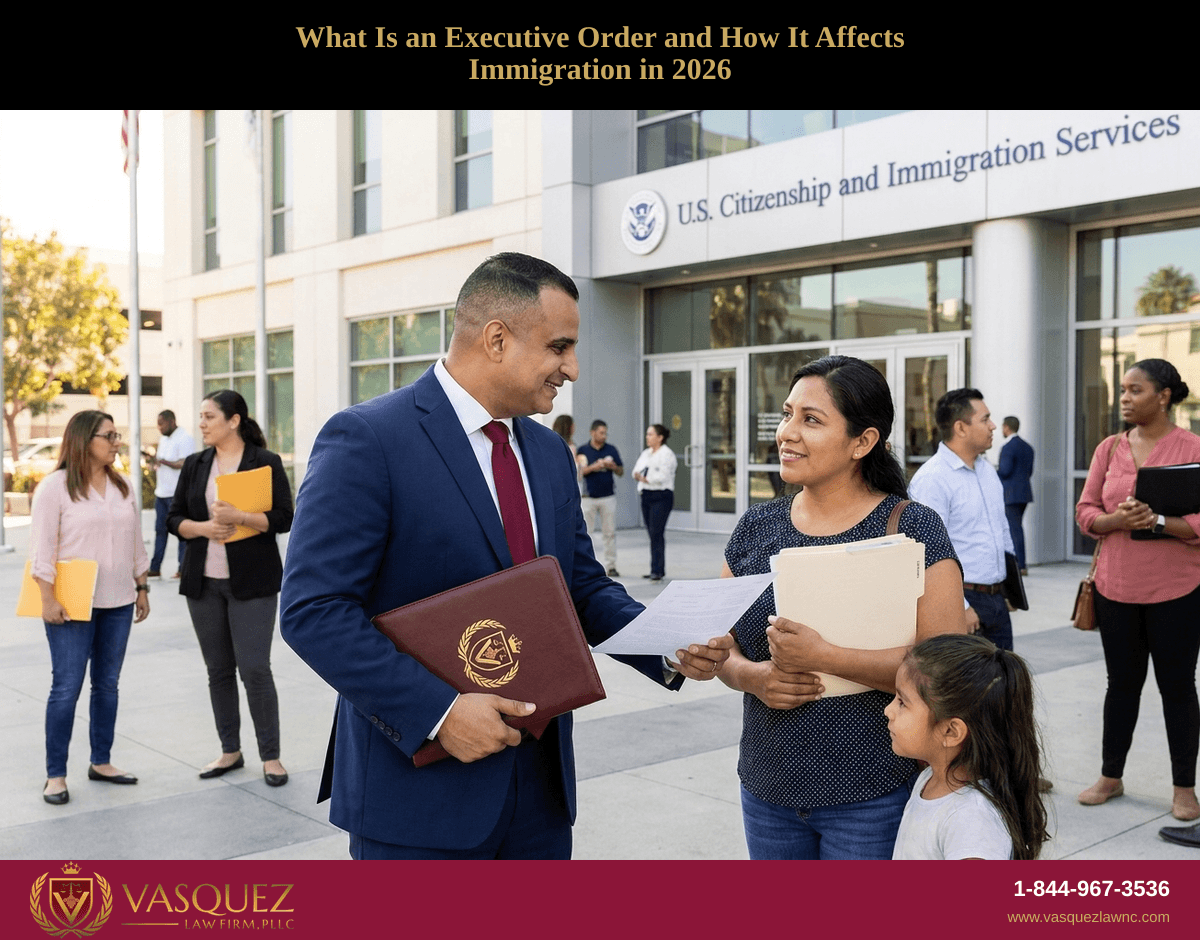
What Is an Executive Order and How It Affects Immigration in 2026
Executive orders are strong instructions that presidents use to manage federal policies, including immigration. In 2026, new executive orders keep changing immigration law and enforcement. These changes especially affect people living in Raleigh, NC, and Orlando, FL. It is important to understand what executive orders are and how they affect your immigration case. This guide explains what executive orders do, their legal basis, limits, and how they are enforced. It will help you know your rights and what to do next.
Need help with your case? Our experienced attorneys are ready to fight for you. Se Habla Español.
Or call us now: 1-844-967-3536
Quick Answer
An executive order is an instruction from the President that manages how the federal government works. This includes immigration enforcement. It tells agencies like USCIS (U.S. Citizenship and Immigration Services) what to focus on. But it cannot change laws made by Congress. In Raleigh and Orlando, these orders affect how immigration cases are handled and enforced.
- Issued by the U.S. President to direct federal agencies
- Used to manage immigration policy enforcement
- Cannot create new laws or override Congress
- Subject to legal limits and judicial review
- Can be challenged in court or revoked by future presidents
Understanding Executive Orders and Their Purpose
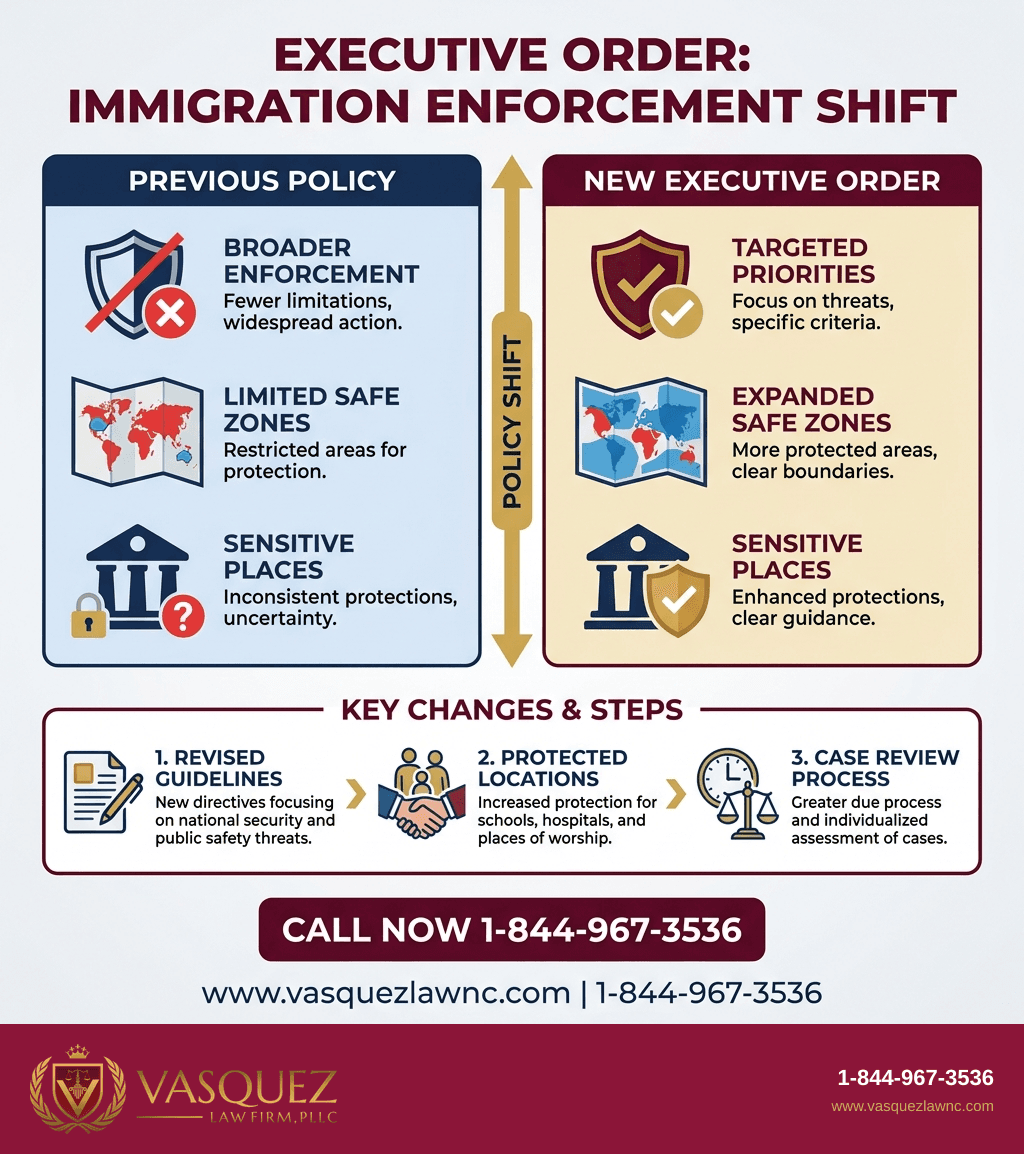
Imagine waking up to find a new presidential executive order has changed how immigration cases are handled. This happens when presidents use executive orders to quickly change immigration policy without waiting for Congress. Executive orders are legally binding instructions from the President to manage federal agencies. Their purpose is often to set policy goals, make government work better, or respond to urgent problems.
In immigration, executive orders can change what enforcement focuses on, affect how applications are processed, or protect some groups from deportation for a time. For example, recent executive orders have focused on reuniting families separated at the border or speeding up work for DACA recipients (Deferred Action for Childhood Arrivals). But executive orders must follow the law. They cannot change immigration laws made by Congress or override the Constitution. Instead, they guide federal agencies like USCIS, ICE (Immigration and Customs Enforcement), and CBP (Customs and Border Protection) on how to carry out policies.
If you want to learn more about executive orders, see our immigration services and how they can affect your case in Raleigh, NC and Orlando, FL.
What Makes an Executive Order Powerful?
Executive orders have the force of law for how federal agencies operate. They let the President set priorities for immigration enforcement or relief programs quickly. For example, an executive order might tell USCIS to speed up work permits for certain immigrant groups. Or it might tell ICE to focus on specific crimes. Because these orders do not need Congress’s approval, they are a flexible way to influence immigration policy fast.
Examples of Executive Orders Impacting Immigration
- Deferred Action Policies: Orders protecting DACA recipients from deportation.
- Visa Processing Changes: Speeding up family-based visa applications.
- Enforcement Directives: Prioritizing removal of certain unauthorized immigrants.
Step-by-Step: How Executive Orders Affect Immigration
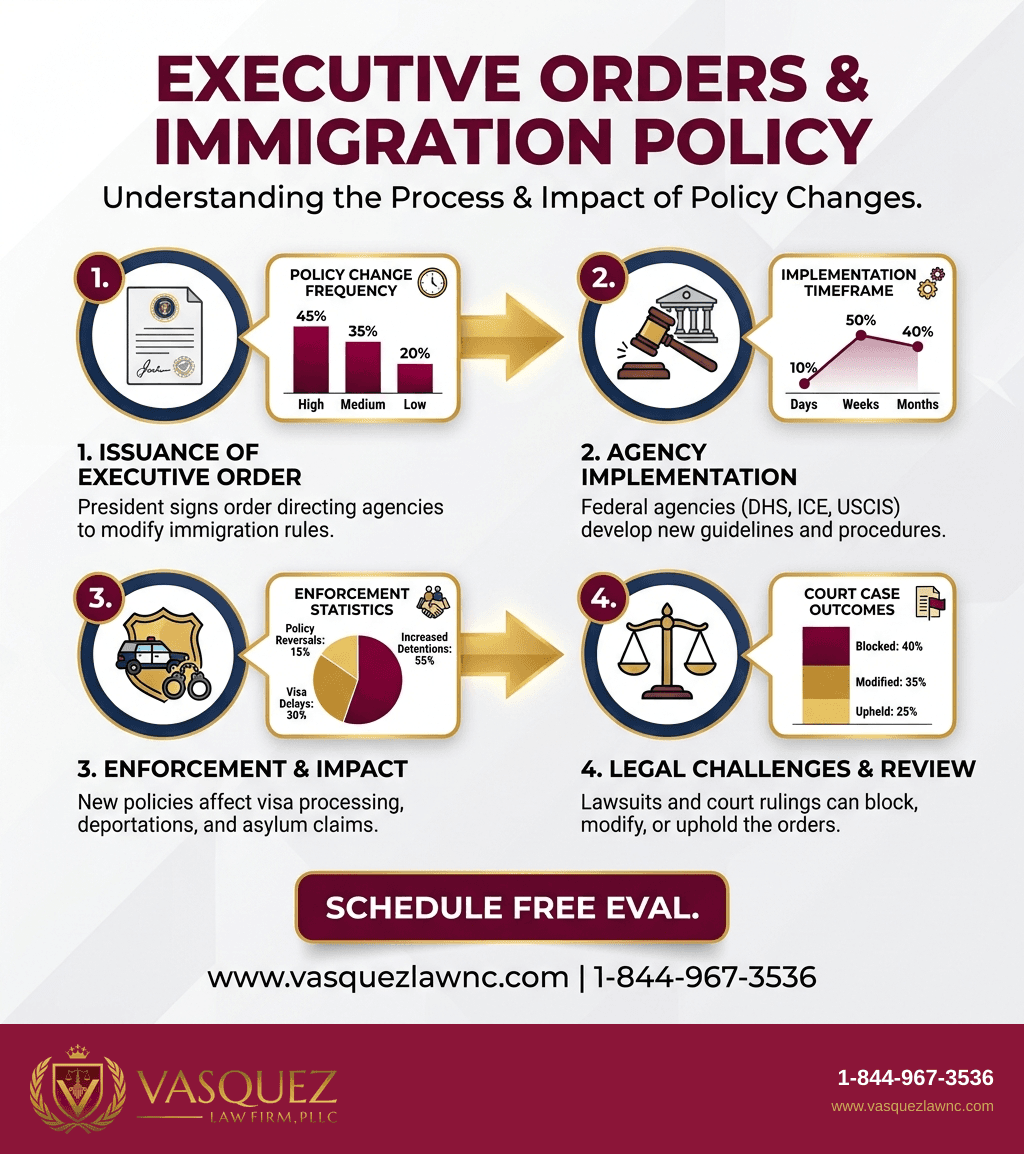
Executive orders follow a clear process from when they are issued to when they are enforced. Knowing this helps people in Raleigh, NC and Orlando, FL understand changes. Here is the process step-by-step:
- Order Issued by President: The President signs the executive order. This can happen during a public announcement or quietly.
- Agency Instructions: The order tells agencies like USCIS, ICE, or the Department of State to follow new policies or change enforcement priorities.
- Policy Implementation: Agencies change forms, add staff, or update how they process cases to follow the order.
- Public Communication: Notices or news releases tell affected immigrants and others about the policy changes.
- Case Processing Changes: Immigration cases may move faster, slower, or have new requirements depending on the order.
During these steps, it is very important to stay informed. Talking to an attorney who knows immigration law will help you understand how an executive order may affect your case.
Key Takeaway
Executive orders are not laws. They guide how immigration laws are enforced by federal agencies.
Documents and Evidence Checklist for Immigration Cases
When executive orders change immigration policies, having the right documents ready can help your case move faster. Here is a checklist for applicants:
- Copies of petitions or applications filed with USCIS (for example, Form I-130, I-485)
- Receipt notices and biometric appointment notices
- Proof that you qualify under new policy rules, like family relationship or DACA status
- Any letters or messages from USCIS, ICE, or immigration courts about your case
- ID documents like passports, birth certificates, or driver’s license
Keeping your files updated helps you respond quickly to changes caused by executive orders. If you do not have these documents organized, contact our office to get help and advice.
Special Consideration: DACA Recipients
DACA recipients should watch executive orders that affect their status closely. Recent orders have extended work permit times and delayed deportation policies. This means you may need to send updated forms or renewals faster than usual. Visit USCIS DACA information for details. You can also contact Vasquez Law Firm for advice tailored to you.
Timeline: What to Expect When an Executive Order Changes Policy
After the President signs an executive order, immigration policy changes usually follow a timeline. Knowing this helps applicants avoid surprises.
- Week 1–2: The President signs the order and agencies get initial instructions.
- Week 3–6: Agencies update their procedures and give guidance to staff.
- Week 7–12: Case reviews and priority changes start; some applicants get notices.
- Month 4 onward: The new policy is fully in effect, including possible interviews or document requests.
Delays can happen, especially if agencies need to hire more staff or build new computer systems. Checking USCIS processing times often can help you track changes affecting your case.
Example: Expedited Family Visa Processing
In 2026, a presidential executive order aimed to reduce family-based visa backlogs by speeding up some petitions. If your petition qualifies under this order, expect notices and updates more quickly. This can shorten wait times from months to weeks.
Common Mistakes and How to Avoid Them
- Ignoring Policy Changes: Not following updates can cause missed deadlines. Stay informed through official sources and legal help.
- Failing to Update Documents: Not sending updated forms or evidence requested because of executive orders can delay your case.
- Assuming Executive Orders Change Laws: Remember, they guide agencies but do not replace immigration laws.
- Not Seeking Legal Counsel: Executive orders can be complex. Talk to an immigration attorney to understand their impact.
- Overlooking Regional Effects: Enforcement can vary by place. NC and FL offices may apply orders differently.
- Missing Appeals or Relief Deadlines: Some orders affect eligibility periods. Watch timelines carefully.
- Relying Only on Public News: Official government announcements and attorney advice are more reliable.
If you remember one thing: Executive orders can greatly affect immigration. Their effects depend on understanding them and acting on time.
Jurisdiction Notes: NC and FL Immigration Enforcement
North Carolina Notes
In Raleigh, NC, federal immigration agencies follow executive orders from 2026 closely. But they may apply them differently because of local resources. Local USCIS offices prioritize petitions based on these orders. ICE enforcement may focus on specific offenses following executive guidance. People in North Carolina should stay updated about local office changes and get legal help to understand enforcement details.
Florida Notes
Orlando, FL immigration offices also follow federal immigration executive orders nationwide. But enforcement focus or processing speed may differ because of caseloads. Florida’s closeness to international arrivals sometimes means more attention on some cases. But protections in executive orders, like those for DACA recipients, apply across the state.
Nationwide Notes
Executive orders apply across the country but can be challenged in courts or Congress. Nationwide, agencies like USCIS update processing priorities. Local offices still have some choice in how they apply policies. Following updates at USCIS and Executive Office for Immigration Review is very important.
When to Call a Lawyer Now
- If an executive order changes your case’s eligibility or processing time.
- If you get conflicting notices from USCIS or ICE after an executive order.
- If you are a DACA recipient with renewal or status questions.
- If you think an order affects your deportation or detention status.
- If you want to make sure your family petition qualifies for faster processing.
- If you don’t understand how federal immigration policies affect local enforcement.
- If you have legal deadlines coming because of changes from executive orders.
- If you need help understanding complex policy changes or preparing documents.
About Vasquez Law Firm
At Vasquez Law Firm, we combine care with strong representation. Our motto "Yo Peleo®" (I Fight) shows our promise to stand up for your rights.
- Bilingual Support: Se Habla Español — Spanish-speaking attorneys and staff available
- Service Areas: North Carolina, plus Orlando, FL and nationwide for immigration
- Experience: Over 30 years helping clients with complex legal matters
- Results: Thousands of successful cases in many practice areas
Attorney Trust and Experience
William J. Vásquez is licensed to practice law in North Carolina (since 2011) and in the U.S. Courts of Appeals for the 4th, 5th, and 11th Circuits. The firm has offered dedicated legal help since 2011, giving personal attention to each client’s case.
Don't wait to get the help you deserve. Call us now for immediate assistance. Se Habla Español.
Frequently Asked Questions
What is the purpose of an executive order?
An executive order allows the President to direct federal agencies to manage government operations and enforce laws effectively. For immigration, these orders can shift enforcement priorities or protect specific groups without needing congressional approval.
Who can issue an executive order?
The President of the United States exclusively issues executive orders. These legally binding directives instruct federal agencies on policies and procedures within the scope of executive authority.
What are the limitations of an executive order?
Executive orders cannot override existing laws or the Constitution. They must operate within established legal frameworks and can be challenged or invalidated by courts if they exceed presidential authority.
How do executive orders affect immigration policies?
Executive orders influence how immigration laws are enforced or implemented by federal agencies. They can change visa processing, deportation priorities, or enforcement discretion, impacting applicants nationwide.
What is an example of a recent executive order related to immigration?
In 2026, an executive order focused on expediting family-based visa applications and enhancing protections for DACA recipients, directing USCIS to prioritize those cases.
How are executive orders enforced?
Agencies like USCIS and ICE enforce executive orders by implementing new guidelines, shifting priorities, and updating case procedures to reflect the president’s directives.
Can an executive order be challenged or overturned?
Yes, courts can rule executive orders invalid if they exceed legal authority. Future presidents can also revoke or amend existing executive orders.
What steps should I take if an executive order affects my immigration case?
Consulting an immigration attorney promptly is essential. Gather all relevant documents and stay updated on official guidance to adjust your application or defense strategy.
Sources and References
- U.S. Citizenship and Immigration Services
- Executive Office for Immigration Review
- Legal Information Institute
Take the first step toward justice today. Our team is standing by to help. Se Habla Español.
Start Your Free Evaluation Now
Call us: 1-844-967-3536
Se Habla Español - We're here to help.

William Vasquez
Founder & CEO, Vasquez Law Firm, PLLC
William Vasquez is the founder and CEO of Vasquez Law Firm, PLLC, a results-driven firm specializing in immigration, criminal defense, personal injury, and workers' compensation. A U.S. Air Force veteran and recipient of the Joint Service Achievement Medal, William is dedicated to fiercely fighting for his clients' rights.
Related Legal Services
Need legal help? Learn more about our immigration legal services, or contact us for a free evaluation.
You can also visit North Carolina immigration lawyers for more information.