How Jaleeyah's Law Changes NC Gang Crime Punishments in 2026
Learn how Jaleeyah's Law impacts gang-related crime penalties in North Carolina. Understand your rights and get a free evaluation from Vasquez Law.
Published on June 4, 2026
Protect your record and your freedom
Free, confidential review. 24/7.
Free & confidential · Se habla espanol · 24/7
Have questions? Talk to an attorney - free evaluation.
Call 1-844-967-3536Protect Your Record and Your Freedom
A confidential case review - available 24/7 for emergencies.
How Jaleeyah's Law Changes NC Gang Crime Punishments in 2026
Jaleeyah's Law, recently passed by the North Carolina House, introduces stricter punishments targeting gang-related criminal activity. This law aims to disrupt gang recruitment and increase penalties for offenders. Individuals charged under these new provisions face tougher consequences. Understanding Jaleeyah's Law is crucial for anyone involved in or accused of gang-related crimes in Smithfield, NC. This guide explains the law’s key points, how it affects cases in North Carolina, and what steps to take if you are impacted. Contact Vasquez Law Firm for knowledgeable criminal defense support in Raleigh, NC.
Need help with your case? Our experienced attorneys are ready to fight for you. Se Habla Español.
Or call us now: 1-844-967-3536
Quick Answer
Jaleeyah's Law, passed in 2026 by the North Carolina House, increases penalties for gang-related crimes including recruiting and violent acts. It aims to reduce gang activity with stiffer punishments and expanded legal tools. Defendants in Smithfield and surrounding areas face enhanced legal risks requiring skilled criminal defense.
- Targets gang recruitment and violence
- Increases prison terms and fines
- Applies statewide, including Smithfield
- Tougher penalties for repeat offenders
- Protects minors from exploitation
Understanding Jaleeyah’s Law and Its Impact
In early 2026, the North Carolina House passed Jaleeyah's Law, a measure designed to aggressively combat gang activity. The law responds to a growing concern about gang recruitment and violence in communities like Smithfield and nearby Johnston County. By targeting those who recruit others into criminal gangs and enhancing penalties for gang-related offenses, the law aims to deter these crimes and protect public safety.
The measure specifically increases punishments for actions like recruiting minors into gangs, committing crimes as part of gang operations, and violent acts associated with gang activity. It sets stiffer sentences for those convicted under its provisions, including longer prison terms and higher fines.
This legislative action aligns with statewide efforts to reduce violent crime rates and disrupt organized gang operations. Law enforcement agencies now have expanded authority to prosecute gang-related crimes more effectively under this updated legal framework.
For individuals accused of gang-related crimes in Smithfield, understanding the scope of Jaleeyah’s Law is critical. The law changes how prosecutors charge offenses and seek punishment, requiring defendants to respond with informed criminal defense strategies.
For more on our firm's ability to help with these legal challenges, visit our criminal defense services page or meet Attorney Vasquez, who has significant experience with gang-related cases.
Additionally, Jaleeyah’s Law emphasizes protecting vulnerable populations, particularly minors, from being coerced or lured into gang affiliations. This focus reflects an understanding that early intervention can prevent lifelong criminal involvement and community harm. For instance, a teenager approached by gang members for recruitment could face legal consequences under this law if the recruiter is prosecuted, helping to break cycles of violence and crime.
The law also impacts the way communities engage with law enforcement and social services. By increasing penalties and clarifying legal definitions, Jaleeyah’s Law encourages cooperation between agencies to identify gang activity early and implement prevention programs. Community leaders in Smithfield are now working closely with police and schools to educate youth about the dangers of gang involvement, complementing the law’s deterrent effect.
In practical terms, this means that individuals charged under Jaleeyah’s Law may find their cases handled with more urgency and scrutiny. For example, a person previously charged with a minor gang-related offense might now face felony charges carrying longer sentences. This shift underscores the importance of legal representation that understands both the letter and the spirit of the law.
Step-by-Step: How Jaleeyah’s Law Works
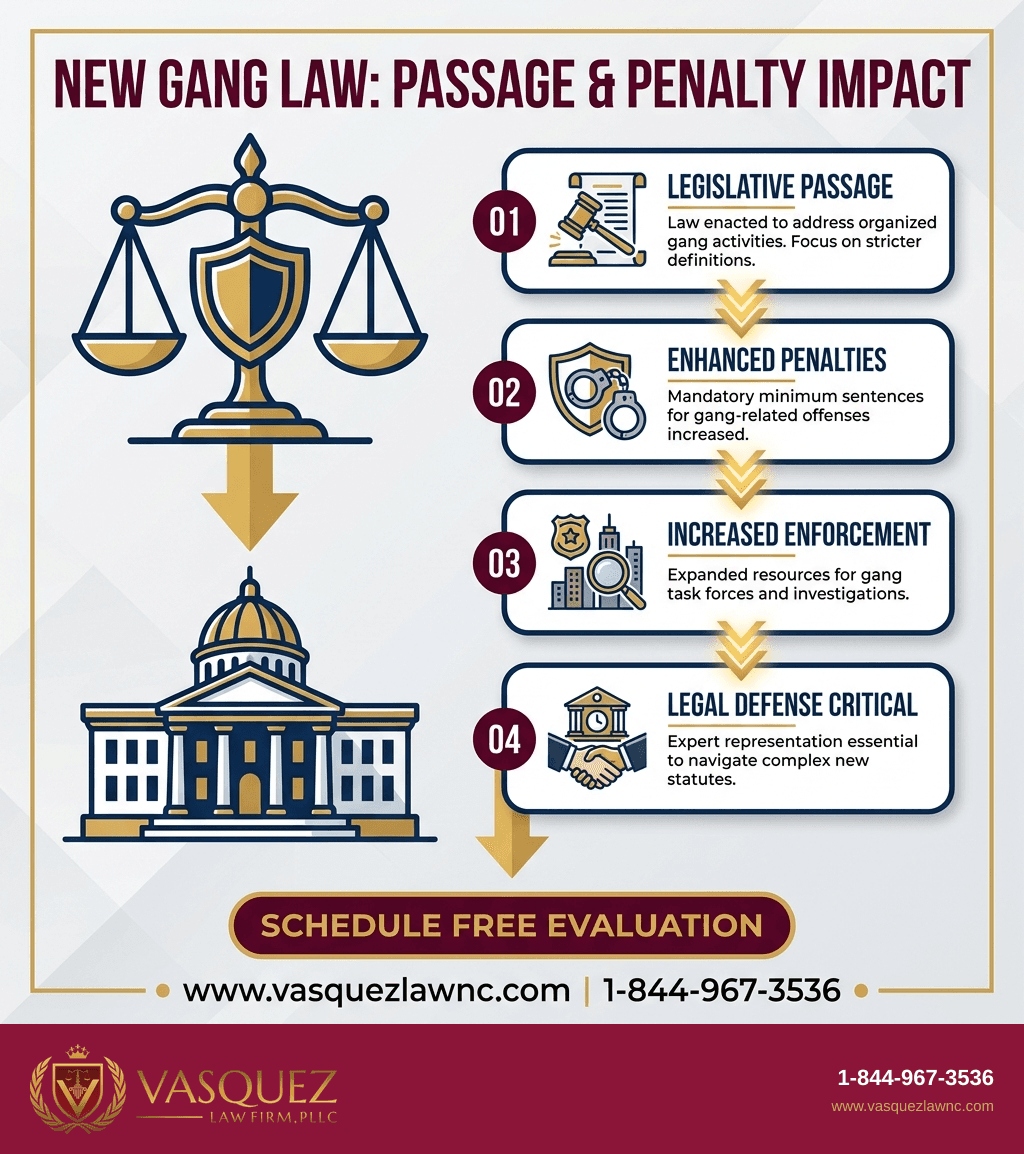
- Legislative Passage: The NC House passed Jaleeyah's Law in 2026 after assessing the rise in gang crime and the need for tougher legal tools.
- Expanded Definitions: The law broadens definitions of gang activity, including explicit coverage of recruitment and coordination of criminal acts as part of gang enterprises.
- Increased Penalties: Offenders face significantly longer sentences. For example, recruiting a minor into a gang may now carry an enhanced sentencing range compared to prior law.
- Enforcement Actions: Prosecutors use these new provisions to charge individuals with gang-related crimes more effectively, often seeking the stiffer punishments allowed.
- Legal Defense Challenges: Defendants must navigate these tougher laws, requiring defense lawyers to prepare carefully tailored strategies.
Being charged under Jaleeyah’s Law in Smithfield means facing a more aggressive legal stance. The person accused should immediately seek advice to understand how the law applies specifically in their case and the possible consequences involved.
Expanded Definitions in Practice
One key element of Jaleeyah’s Law is how it broadens the scope of what constitutes gang activity. For example, previously, mere association with a gang might not have led to enhanced charges. Under the new law, even coordinating or facilitating criminal acts as part of a gang can trigger stiffer penalties. This means that individuals who aid or abet gang crimes, even indirectly, could be prosecuted more harshly.
For instance, if a person provides transportation to gang members committing a crime, they may be charged under Jaleeyah’s Law as an active participant in gang activity. This expansion aims to close loopholes that allowed some offenders to avoid serious consequences by distancing themselves from direct criminal acts.
Examples of Increased Penalties
The law sets specific sentencing enhancements that can dramatically affect outcomes. For example, recruiting a minor into a gang may now carry a prison sentence up to 10 years, where previous penalties were significantly lower. Violent offenses committed as part of gang activities can also result in longer mandatory minimums.
Consider a scenario where an adult is charged with recruiting a 15-year-old into a gang that engages in armed robbery. Under Jaleeyah’s Law, the recruiter could face enhanced charges with more severe sentencing than if the offense occurred outside of gang involvement. This acts as a deterrent aimed at reducing the recruitment of youth into dangerous criminal networks.
Legal Defense Challenges
Defending against gang-related charges under Jaleeyah’s Law requires careful legal strategy. Defense attorneys must analyze evidence to challenge the prosecution’s claims about gang affiliation and activity. For example, proving lack of knowledge or intent can be critical in cases where the defendant is accused of indirect participation.
Defense counsel may also investigate procedural issues, such as the legality of searches or the reliability of witness testimony, to mitigate the impact of enhanced charges. Given the complexity of the law, early intervention by a skilled attorney can make a substantial difference in case outcomes.
Common Mistakes to Avoid with Jaleeyah’s Law
- Ignoring Charges: Failing to respond promptly to gang-related accusations leads to worse outcomes. Always address charges with legal counsel.
- Self-Incrimination: Talking to police without a lawyer may result in unintended admissions harming your defense.
- Failing to Understand Enhanced Penalties: Many defendants do not grasp how much harsher punishments are under this law, leading to ill-prepared defenses.
- Neglecting Evidence Collection: Gathering strong evidence early can support defenses such as mistaken identity or lack of participation in gang activities.
- Underestimating Prosecutors: Prosecutors often aggressively leverage Jaleeyah’s Law features, so taking it seriously is vital.
- Not Consulting Experienced Attorneys: Lawyers unfamiliar with gang-related cases may miss critical defense opportunities available under the new law.
- Overlooking Local Nuances: North Carolina counties like Johnston and Harnett may apply laws with slight procedural differences; knowing these is important.
If you only remember one thing: Immediate and informed legal representation is essential when charged under Jaleeyah's Law to safeguard your rights and minimize penalties.
Additional Considerations for Defendants
One common mistake defendants make is underestimating the importance of early legal intervention. Jaleeyah’s Law empowers prosecutors with tools to pursue enhanced charges quickly, so delays in mounting a defense can lead to missed opportunities to challenge evidence or negotiate plea deals.
Another error is failing to understand the scope of “gang-related” evidence. For example, mere possession of certain symbols or tattoos might be used to imply gang affiliation, but a skilled attorney can challenge the relevance or accuracy of such evidence. Defendants should work closely with counsel to identify and contest any assumptions made by law enforcement.
Moreover, defendants sometimes neglect to inform their attorneys about all details of the case, including interactions with alleged gang members or circumstances surrounding the charges. Full transparency allows attorneys to develop the most effective defense strategies, potentially distinguishing between actual gang involvement and mistaken identity or false accusations.
Lastly, it's important to avoid informal discussions about the case on social media or with acquaintances, as prosecutors may use such information to build their case. Staying silent and letting your legal team handle communications is a wise approach under Jaleeyah’s Law’s stringent provisions.
Timeline and What to Expect in Court
- Initial Arrest and Booking: Once charged, defendants may be held or released on bail pending hearings.
- Preliminary Hearing: Within weeks, a hearing determines if sufficient evidence exists for prosecution to proceed.
- Arraignment: The accused is formally charged and enters a plea. Legal representation is critical here.
- Discovery and Motions: Both sides exchange evidence. Defense may file motions to challenge aspects of the prosecution’s case, especially regarding gang-enhanced charges.
- Plea Negotiations or Trial: Many cases resolve via pleas, but trials are possible if no agreement is reached.
- Sentencing: If convicted, sentencing reflects Jaleeyah’s Law penalties; enhanced terms apply for gang-related conduct.
This timeline may vary, but understanding these stages helps defendants prepare effectively with their lawyers.
Initial Arrest and Booking
At arrest, defendants are often processed at local jails where they are booked and fingerprinted. Depending on the severity of the charges and prior criminal history, judges may set bail or order detention pending further proceedings. Under Jaleeyah’s Law, because of the serious nature of gang-related crimes, bail amounts can be higher or denied altogether in some cases.
For example, a defendant charged with recruiting a minor into a gang might be considered a flight risk or a danger to the community, influencing bail decisions. Early legal advice can help petition for reasonable bail or release conditions.
Preliminary Hearing and Arraignment
The preliminary hearing is the first opportunity for the defense to hear the prosecution’s evidence and challenge its sufficiency. This stage may result in dismissal if the evidence is weak or insufficient to support the charges under Jaleeyah’s Law.
During arraignment, defendants enter pleas such as guilty, not guilty, or no contest. Because of the enhanced penalties and complex nature of gang-related charges, defendants should never enter a plea without consulting an attorney. Strategic pleas or motions at this stage can influence case outcomes significantly.
Discovery, Motions, and Trial Preparation
In the discovery phase, both prosecution and defense exchange evidence, including witness statements, surveillance footage, and forensic reports. Defendants charged under Jaleeyah’s Law often face extensive evidence, including gang expert testimony or social media analysis.
Defense lawyers may file motions to suppress illegally obtained evidence, challenge witness credibility, or question the applicability of gang enhancements. For instance, if evidence of gang affiliation was gathered without proper warrants, a motion to exclude such evidence could be critical in weakening the prosecution’s case.
Plea Negotiations or Trial
Many cases resolve through plea agreements, where defendants may accept reduced charges or sentences in exchange for a guilty plea. However, under Jaleeyah’s Law, prosecutors may be less willing to offer leniency due to the law’s tough stance on gang crimes.
If a case proceeds to trial, the defense must be prepared to counter gang-related allegations with strong legal arguments and factual evidence. Trials can be complex, involving expert witnesses and detailed investigations into the defendant’s activities and associations.
Sentencing Considerations
If convicted, defendants face sentencing that reflects the enhanced penalties outlined in Jaleeyah’s Law. Judges consider factors such as prior criminal history, role in the gang, and the nature of the offense. Sentences may include longer prison terms, higher fines, and mandatory gang-related restrictions post-release.
For example, a defendant convicted of violent gang-related offenses might receive a sentence that includes not only incarceration but also restrictions on contact with gang members upon release, probation conditions, or participation in rehabilitation programs.
Frequently Asked Questions About Jaleeyah’s Law
What is Jaleeyah’s Law?
Jaleeyah’s Law is a North Carolina statute passed in 2026 targeting gang-related crime and recruitment. It increases penalties for those involved in gang activity, aiming to deter violent crime and protect communities. The law specifically addresses recruitment of minors, violent offenses committed by gangs, and coordination of criminal activity within gang enterprises. Its passage reflects an effort to strengthen public safety by disrupting gang influence and reducing organized criminal behavior.
Who does Jaleeyah’s Law apply to?
The law applies to individuals involved in criminal gang activity across North Carolina, such as recruiting others or committing offenses as part of a gang. It affects regions including Smithfield and Johnston County, but is enforced statewide. This means anyone charged with gang-related crimes, regardless of their location within North Carolina, may face enhanced penalties under the law. It targets both active gang members and those who facilitate gang operations, including recruiters, lookouts, and accessories.
What punishments does Jaleeyah’s Law increase?
The law imposes harsher sentences like longer prison terms and increased fines for crimes linked to gangs, including recruiting minors or violent offenses committed in gang contexts. For example, recruiting a minor into a gang can lead to a prison sentence that is substantially longer than previous laws allowed. Violent crimes committed with gang involvement may also carry enhanced mandatory minimum sentences. Fines can be significantly higher to reflect the seriousness of the offenses, serving both as punishment and deterrence.
How does this law affect a criminal defense case?
It raises stakes in gang-related defense cases by allowing prosecutors to seek enhanced penalties. Early legal advice is critical to navigate these complexities and protect defendants’ rights. Defense attorneys must be prepared to challenge not only the underlying criminal charges but also the gang-related enhancements, which can drastically increase sentences. This requires detailed investigation, expert testimony, and strategic motions. Understanding how Jaleeyah’s Law shifts prosecutorial approaches is vital to mounting an effective defense.
What should I do if charged under Jaleeyah’s Law?
Immediately consult an experienced criminal defense attorney. Avoid self-incrimination and gather all evidence relevant to your case to build a strong defense. It’s important not to discuss the charges with law enforcement or others without legal counsel present. Your attorney can help you understand the charges, potential penalties, and defense options. Early action can make a critical difference, including exploring motions to dismiss or suppress evidence, negotiating plea deals, or preparing for trial.
Does Jaleeyah’s Law apply outside North Carolina?
No, it is specific to North Carolina. Other states have their own laws, but this law impacts only NC jurisdictions like Smithfield. Therefore, if an individual is charged with similar gang-related crimes in another state, local laws and penalties will apply. Jaleeyah’s Law was crafted to address unique issues within North Carolina communities and does not have extraterritorial effect.
What is gang recruitment under this law?
Gang recruitment involves persuading or encouraging others to join gangs, especially minors. Jaleeyah’s Law increases penalties for such recruitment activities. This includes direct solicitation, coercion, or offering incentives to join gang activities. For example, a person who approaches a teenager at school or in the community to enlist them in a gang could face criminal charges under this law. The emphasis on protecting minors aims to prevent early involvement in criminal enterprises.
How can Vasquez Law Firm help with Jaleeyah Law cases?
Our firm offers experienced criminal defense for gang-related charges in Smithfield and Raleigh. We help clients understand their rights and craft strong defenses tailored to Jaleeyah’s Law. Attorney Vasquez has extensive experience handling complex gang cases, including challenging evidence, negotiating with prosecutors, and advocating at trial. We provide bilingual support and personalized attention to protect clients’ futures under these challenging legal circumstances.
About Vasquez Law Firm
At Vasquez Law Firm, we combine compassion with aggressive representation. Our motto "Yo Peleo®" (I Fight) reflects our commitment to standing up for your rights. Located in Raleigh, NC, we serve clients in Smithfield and surrounding counties with expert criminal defense, including complex gang-related charges under Jaleeyah’s Law.
- Bilingual Support: Se Habla Español — Spanish-speaking attorneys and staff available
- Service Areas: North Carolina criminal defense services with local knowledge of Smithfield, Johnston, and Harnett counties
- Experience: Over 15 years of combined experience fighting for justice in gang-related and criminal cases
- Results: Skilled representation focused on minimizing penalties and protecting clients’ futures
Attorney Trust and Experience
Attorney Vasquez holds a JD and is admitted to the North Carolina State Bar. With 15 years of criminal defense experience, including gang crime cases, he provides knowledgeable and dedicated counsel. His thorough understanding of Jaleeyah’s Law helps clients in Smithfield draft strong defenses and negotiate effectively with prosecutors.
Attorney Vasquez’s background includes working closely with clients facing serious gang-enhanced charges, developing strategies to challenge the prosecution’s evidence, and advocating for reduced sentences when possible. He emphasizes clear communication and personalized defense plans, ensuring clients understand the legal process and their options at every stage.
His bilingual ability strengthens representation for Spanish-speaking clients, ensuring no detail is lost in translation. This accessibility makes a critical difference in complex cases where cultural and language barriers might otherwise impede effective defense.
Don't wait to get the help you deserve. Call us now for immediate assistance.
Se Habla Español
Sources and References
Take the first step toward justice today. Our team is standing by to help.
Start Your Free Evaluation Now
Call us: 1-844-967-3536
Se Habla Español - Estamos aquí para ayudarle.


William Vasquez
Founder & CEO, Vasquez Law Firm, PLLC
William Vasquez is the founder and CEO of Vasquez Law Firm, PLLC, a results-driven firm specializing in immigration, criminal defense, personal injury, and workers' compensation. A U.S. Air Force veteran and recipient of the Joint Service Achievement Medal, William is dedicated to fiercely fighting for his clients' rights.
Related Legal Services
Need legal help? Learn more about learn about our criminal defense practice, or contact us for a free evaluation.
You can also visit Smithfield criminal defense attorneys for more information.