What Are Indictments and Their Consequences in 2026?
Wondering what indictments mean for your case in 2026? Learn the legal process, consequences, and how to protect your rights. Contact Vasquez Law for help.
Published on June 1, 2026
Protect your record and your freedom
Free, confidential review. 24/7.
Free & confidential · Se habla espanol · 24/7

Have questions? Talk to an attorney - free evaluation.
Call 1-844-967-3536Protect Your Record and Your Freedom
A confidential case review - available 24/7 for emergencies.
What Are Indictments and Their Consequences in 2026?
Indictments are formal criminal charges that start serious legal proceedings. If you or someone you know in Smithfield faces indictments, understanding what they mean in 2026 is crucial. This article explains what indictments are, their legal purpose, consequences, and how criminal defense lawyers in North Carolina approach these cases. It covers common questions like 'Does an indictment mean jail time?' and steps to take after an indictment. If you need guidance, Vasquez Law Firm offers free case evaluations to help protect your rights.
Need help with your case? Our experienced attorneys are ready to fight for you. Se Habla Español.
Or call us now: 1-844-967-3536
Quick Answer
An indictment is a formal criminal charge issued by a grand jury that begins prosecution for serious crimes in North Carolina. It means the government believes there is enough evidence to proceed. Being indicted does not guarantee jail time but starts the legal process requiring a defense strategy.
- Indictments trigger formal criminal trials or pleadings.
- They are issued by grand juries for felony offenses.
- Charges differ from indictments and can be filed by prosecutors directly.
- After indictment, arraignment and court appearances follow.
- Consequences include legal restrictions and potential jail if convicted.
- Early legal help improves outcomes.
Understanding Indictments and Their Purpose
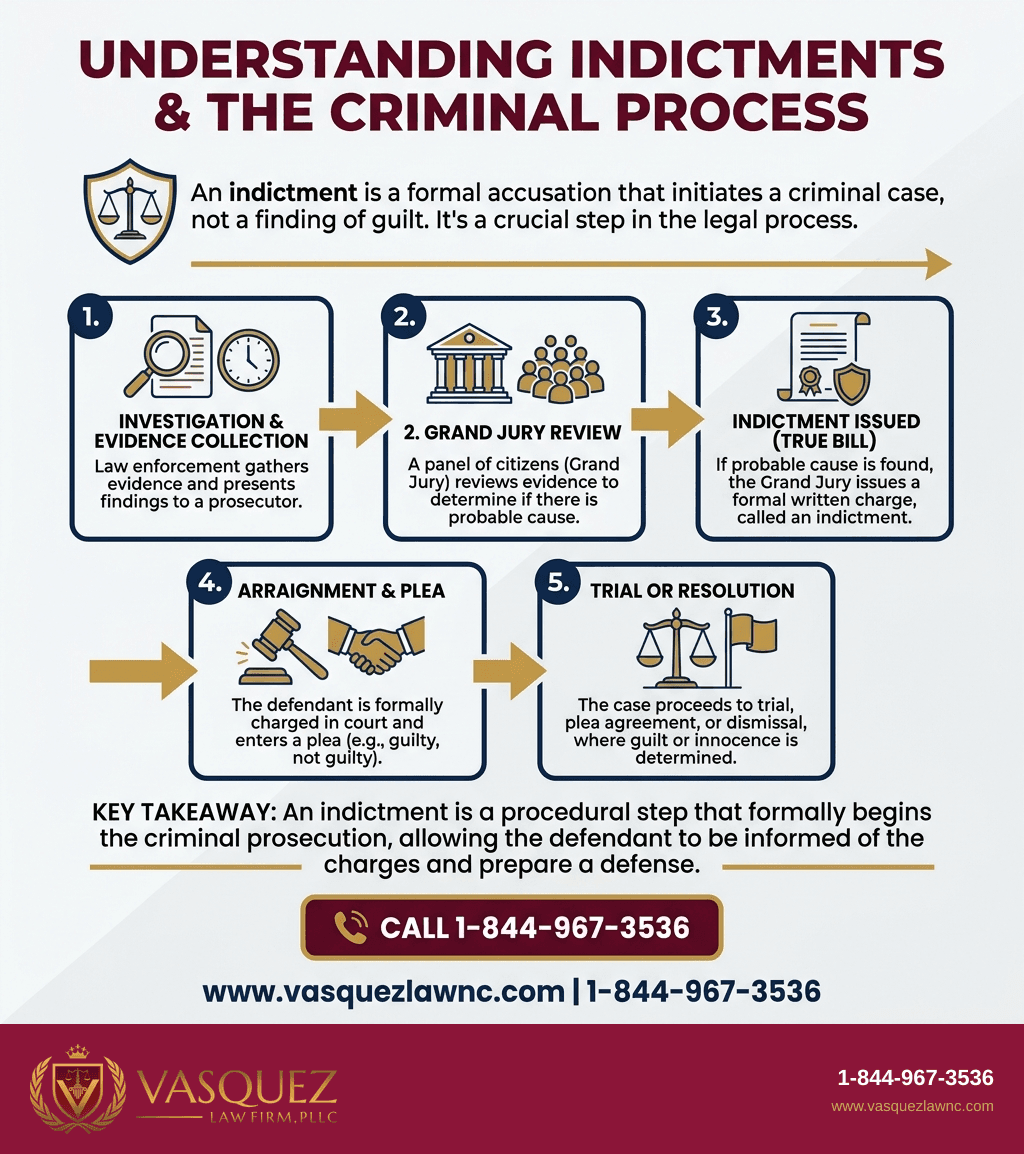
In Smithfield and across North Carolina, indictments serve as a formal accusation against someone alleged to have committed a felony. For example, a grand jury might review evidence against a defendant accused of a serious crime like burglary or drug trafficking and decide there is sufficient cause to charge the individual. This formal charge is called an indictment.
The purpose of an indictment is twofold. First, it protects individuals by requiring a grand jury to find probable cause, so prosecutors cannot bring criminal charges arbitrarily. Second, it officially starts the criminal prosecution, signaling that the accused must respond to serious charges. Unlike misdemeanor charges, indictments generally apply to felonies and require more legal oversight.
Indictments are different from simple charges filed by prosecutors. Charges can be issued without grand jury approval, especially in misdemeanor cases, but indictments require this additional step. This distinction affects how cases proceed and the rights involved. For instance, federal criminal cases almost always begin with a grand jury indictment according to 18 U.S.C. § 3231, giving the federal court jurisdiction to act.
Understanding this difference is critical if you face an indictment or want to comprehend the legal process in Smithfield. Our criminal defense attorneys can explain how indictments work and what they mean for your case.
Indictment Example in a Sentence
"The grand jury handed down an indictment charging the defendant with multiple counts of burglary in Smithfield, North Carolina." This usage shows how indictments function as formal criminal accusations initiating prosecution.
Indictment Pronunciation
The word "indictment" is pronounced as /ɪnˈdaɪtmənt/. Many confuse the silent 'c', but the correct pronunciation drops the 'c' sound, making it "in-dite-ment." This pronunciation is standard across legal and everyday contexts.
Indictment in Spanish
The term "indictment" translates to acusación formal or imputación formal in Spanish, commonly used in legal settings. This term refers to the formal charging document issued after a grand jury review in criminal prosecutions.
Step-by-Step: What to Do After an Indictment
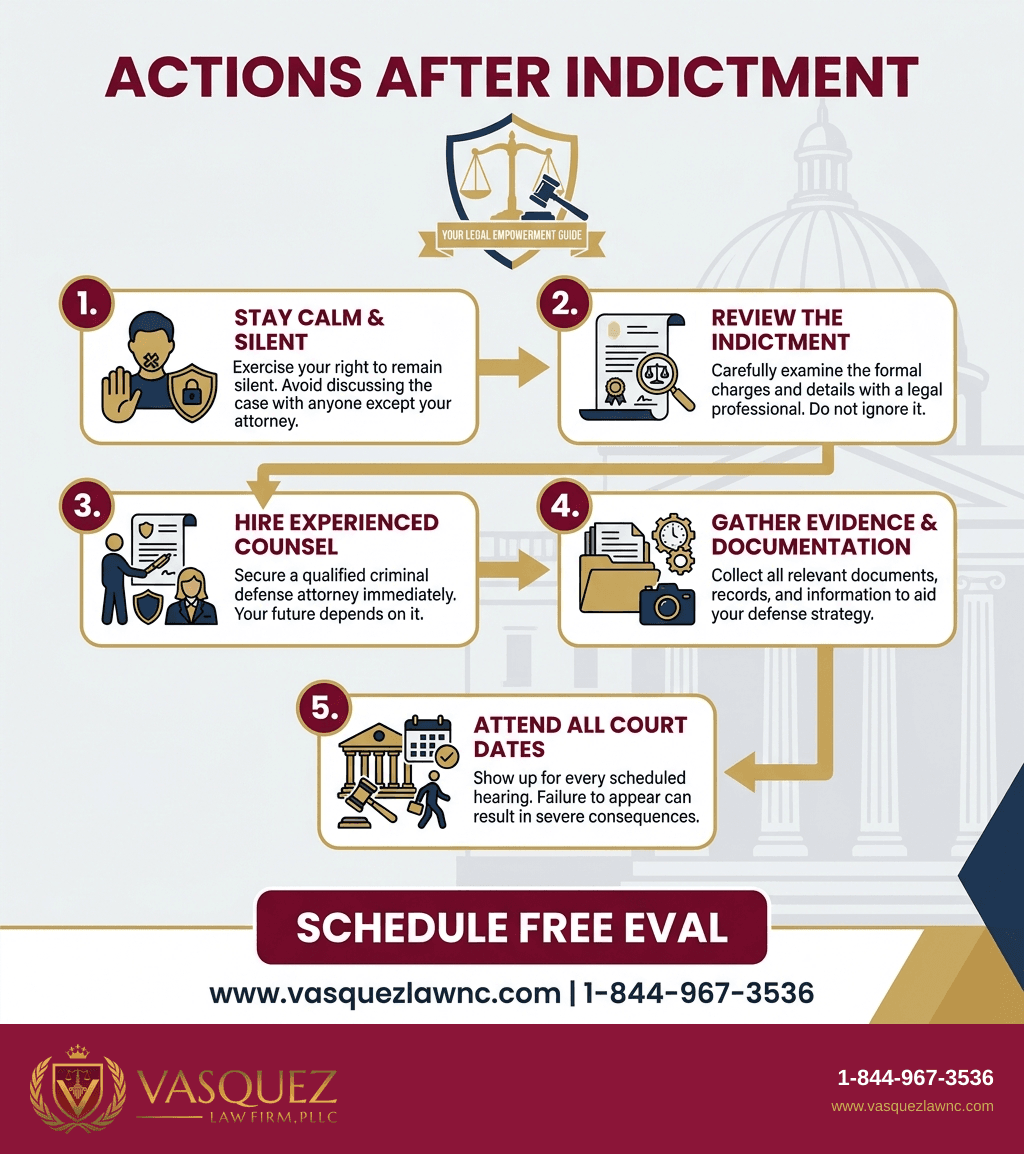
Suppose you have just received notice of an indictment in Smithfield, NC. What are the crucial next steps? Here is a simplified overview:
- Consult a criminal defense lawyer immediately. Indictments mean serious legal proceedings begin. Early legal representation protects your rights and helps prepare your defense.
- Attend your arraignment hearing. This is your first court appearance where you’ll hear the charges, enter your plea, and the court may set bail.
- Review discovery. Your attorney will request evidence from the prosecution and investigate facts to build your case.
- Prepare for pretrial motions. Motions may challenge evidence or request dismissal of charges before trial.
- Consider plea negotiations. Depending on evidence, your lawyer may negotiate plea deals to reduce charges or penalties.
- Prepare for trial if no plea is made. Your defense team will develop a strategy to challenge the prosecution's case.
Each step demands careful attention and prompt action to avoid mistakes that could harm your defense. Contacting an experienced criminal defense attorney like Attorney Vasquez who understands Smithfield's courts can be vital.
Checklist of Immediate Actions After Indictment
- Do not speak to police without your lawyer.
- Never ignore court summons and dates.
- Gather documents and evidence related to the charges.
- Identify witnesses who can support your defense.
- Document all interactions related to the case.
Common Mistakes to Avoid After an Indictment
Failing to handle an indictment properly can jeopardize your case and future freedom. Common errors include:
- Talking to law enforcement without counsel. Statements can be misinterpreted or used against you.
- Missing court hearings. This can lead to warrants for arrest and damage to your case.
- Ignoring legal notices or documents. Respond promptly and seek help reviewing any paperwork.
- Postinappropriate content on social media. Prosecutors often use social media evidence against defendants.
- Trying to handle cases without experienced criminal defense. Indictments imply complex legal processes that need professional help.
- Failing to understand the charges. Ask your lawyer to explain terms like "indictment," "arraignment," and "plea bargains."
If you only remember one thing: Get legal advice immediately after an indictment to avoid these mistakes.
Timeline and What to Expect With Indictments
Indictment timelines vary based on case complexity but generally follow this flow in Smithfield, NC:
- Week 1–2: Grand jury issues indictment if probable cause found.
- Week 2–4: Arraignment hearing occurs; plea entered.
- Month 1–3: Discovery phase where evidence is exchanged.
- Month 3–6: Pretrial motions and potential plea negotiations.
- Month 6+: Trial scheduled if no plea deal achieved.
This timeline can extend in complex or federal cases. Court scheduling depends on local dockets in Johnston County and surrounding areas. Each stage offers opportunities to challenge the case or resolve matters.
Costs and Fees Involved in Indictment Cases
Legal defense costs for indictments vary but may include:
- Attorney fees for consultation, court appearances, motions, and trial preparation.
- Costs for investigators, expert witnesses, and specialists.
- Filing fees for motions and legal documents.
- Potential bail or bond fees depending on circumstances.
- Additional expenses if the case proceeds to lengthy trial.
Early legal consultation helps estimate costs and plan payment options. Vasquez Law Firm offers clear fee structures and free case evaluations to assist clients in Smithfield.
When to Call a Criminal Defense Lawyer
- You receive a grand jury indictment or formal charges.
- You are arrested or summoned to court.
- You are contacted by law enforcement or prosecutors about a serious case.
- You do not understand the charges or legal process.
- You fear providing statements without knowing your rights.
- You want to explore plea options or defense strategies.
- You have missed court or are unsure about your case status.
Prompt legal advice in Smithfield helps safeguard your rights and future.
About Vasquez Law Firm
At Vasquez Law Firm, we combine compassion with aggressive representation. Our motto "Yo Peleo®" (I Fight) reflects our commitment to standing up for your rights.
- Bilingual Support: Se Habla Español — Spanish-speaking attorneys and staff available
- Service Areas: North Carolina criminal defense focusing on Johnston County and Smithfield courts
- Experience: Over 15 years helping clients navigate complex criminal cases
- Results: Thousands of cases handled with a focus on protecting client freedoms
Attorney Trust and Experience
Attorney Vasquez, JD, is admitted to the North Carolina State Bar and has 15 years of criminal defense experience. He understands local Smithfield court procedures and works tirelessly to achieve the best results for clients. Our team is dedicated to personalized attention for every case.
Don't wait to get the help you deserve. Call us now for immediate assistance.
Se Habla Español
Frequently Asked Questions
What is an indictment in criminal law?
An indictment is a formal accusation by a grand jury charging someone with a felony. It starts the prosecution and requires the accused to attend court proceedings. Indictments differ from simple prosecutor charges by requiring this grand jury approval, a critical step in serious cases.
How is an indictment different from a charge?
Charges can be filed directly by prosecutors, often in misdemeanor cases, without grand jury involvement. An indictment is a grand jury's formal approval to charge someone with a felony. The indictment process adds a layer of legal protection and formality.
What happens after an indictment is issued?
After an indictment, you are arraigned in court where you hear charges and enter a plea. The case moves into discovery and pretrial stages, where evidence is reviewed and motions are filed before trial or plea decisions.
Does an indictment mean jail time?
An indictment alone does not mean automatic jail time. Jail decisions depend on the judge's ruling during arraignment or bail hearings. You may remain free on bail unless the court finds you pose a risk.
Can I look up federal indictments in North Carolina?
Yes, federal indictments are public. You can search U.S. District Court records online for the Eastern, Middle, and Western Districts of North Carolina. Legal counsel can assist in obtaining and understanding this information.
What are the consequences of an indictment?
Consequences include formal prosecution, possible jail if convicted, restrictions like travel limitations, and impact on reputation and employment. Early legal help can reduce these risks and help protect your rights.
What is the purpose of an indictment?
Its purpose is to formally charge a defendant based on probable cause found by a grand jury, ensuring that the government has sufficient evidence before proceeding to trial and protecting defendants’ rights.
How can a criminal defense lawyer help after an indictment?
A lawyer reviews evidence, identifies defenses, negotiates with prosecutors, and prepares for trial. Early involvement can challenge weak indictments or reduce charges, guiding defendants through complex legal procedures.
Sources and References
- North Carolina Courts
- U.S. Department of Justice Civil Rights Division
- Legal Information Institute on Federal Indictments
Take the first step toward justice today. Our team is standing by to help.
Start Your Free Evaluation Now
Call us: 1-844-967-3536
Se Habla Español - Estamos aquí para ayudarle.


William Vasquez
Founder & CEO, Vasquez Law Firm, PLLC
William Vasquez is the founder and CEO of Vasquez Law Firm, PLLC, a results-driven firm specializing in immigration, criminal defense, personal injury, and workers' compensation. A U.S. Air Force veteran and recipient of the Joint Service Achievement Medal, William is dedicated to fiercely fighting for his clients' rights.
Related Legal Services
Need legal help? Learn more about our criminal defense law practice, or contact us for a free evaluation.
You can also visit defense attorneys serving Johnston and Harnett counties for more information.